
Review · MUNICH TOURS
National Socialism WWII with licensed guide – private tour
Munich was where Hitler built his political career, and this private walk shows how that happened block by block. I like the clear route from the Feldherrnhalle to Königsplatz and the use of historical photographs, which helps you picture places that now look quite ordinary. I also like that the tour gives space to Munich’s resistance, especially the White Rose group.
The main drawback is time. Two hours covers a lot, so this is a brisk outdoor introduction rather than a slow museum visit. You will see and discuss the NS Documentation Centre at the end, but admission is extra and the actual museum visit comes after the guided walk.
Key points to know before booking
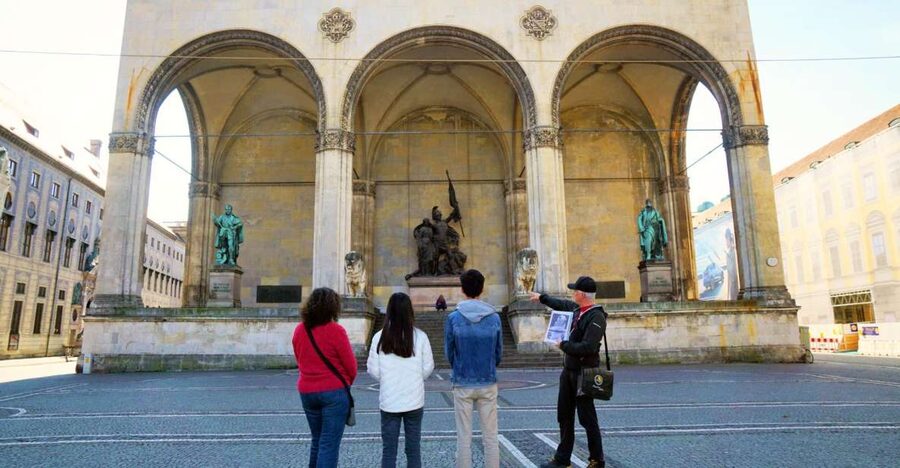
- Munich’s Nazi story begins at Odeonsplatz: Learn why Hitler came to the city, where he lived, and how the 1923 putsch ended at the Feldherrnhalle.
- The White Rose receives proper attention: At LMU, the guide explains the student resistance group and its tragic fate.
- The route connects politics with art: Haus der Kunst and the former Degenerate Art exhibition site show how the regime controlled culture.
- Königsplatz supplies the final chapter: See the former Brown House, Führerbau, Nazi administration buildings, and the present-day documentation centre.
- A private group makes the format flexible: The $259 price covers up to 30 people, which can be good value for a family, school group, or organized party.
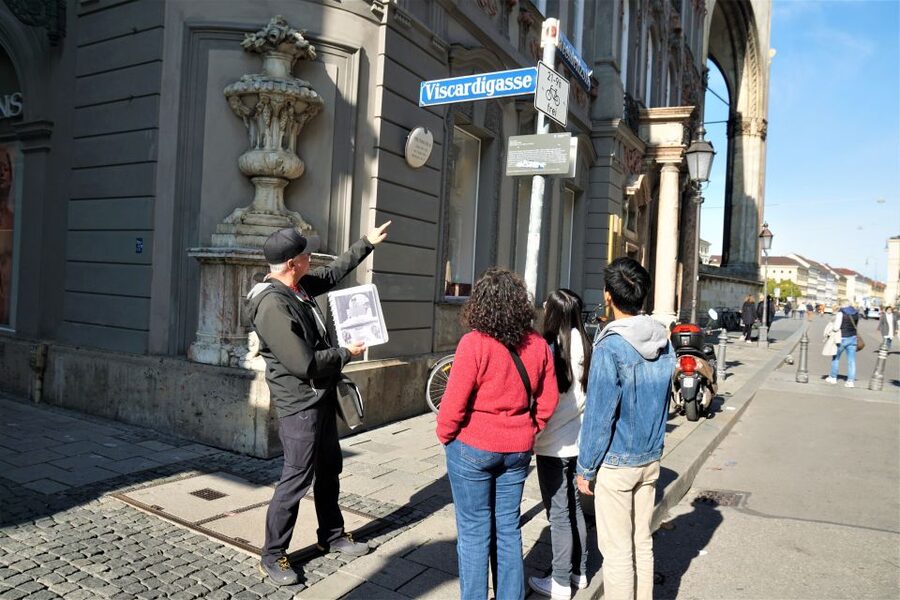
- The guide uses photographs: Historical images add visual context to streets and buildings that have changed over time.
Why Munich is the right place for this difficult history
Munich was not just another city touched by National Socialism. It was the place where Hitler arrived, developed his political career, and helped turn the NSDAP into a national movement. This tour uses the city itself as the classroom.
That setting matters. You are not hearing a list of dates in an isolated room. You are standing at the points where the movement gathered support, staged political theater, built its headquarters, and faced opposition. The route also makes clear that Munich’s story includes both Nazi power and resistance to it.
The tone is serious and educational. The activity information makes clear that it is not intended for people seeking Nazi-themed admiration or political celebration. That is appropriate for the subject, and it tells you what sort of guide experience to expect: historical explanation, discussion of victims and resistance, and a critical look at the regime.
Wolfgang Brehm is identified as the provider and as a guide with more than 10 years of experience. The tour is available in English or German. Some past bookings specifically praised his information and delivery, while one family used the walk as a useful aid for a son studying GCSE history. That makes the experience a good fit for adults, older students, and anyone who wants more context than a simple city walk provides.
More WWII History Tours in Munich
- Munich: Third Reich & WWII Walking Tour
★ 4.6 · 6,181 reviews - Dachau Concentration Camp Memorial Site Tour from Munich by Train
★ 4.5 · 5,637 reviews - Third Reich Walking Tour Munich
★ 4.5 · 4,291 reviews
Starting at the Feldherrnhalle and Odeonsplatz
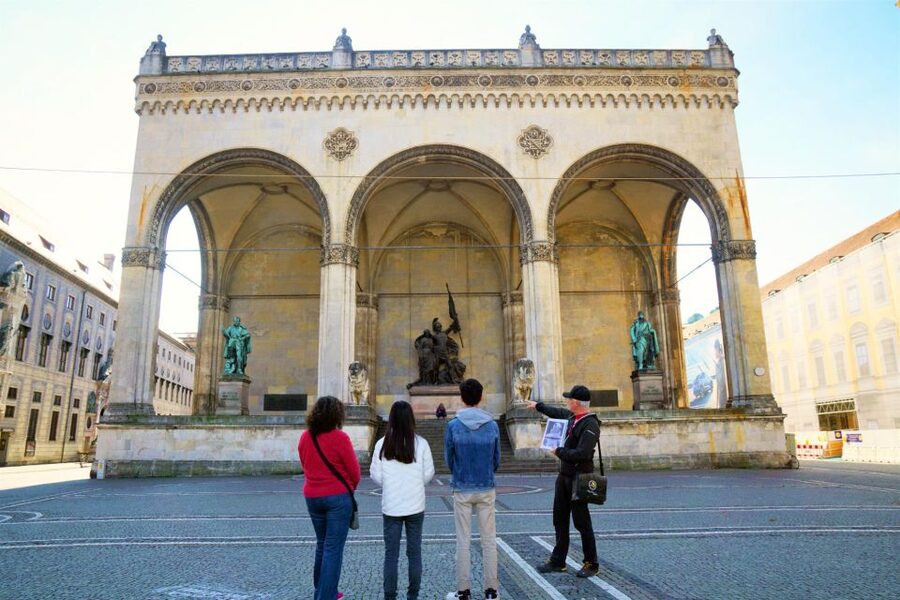
The meeting point is at the steps of the Feldherrnhalle at Odeonsplatz, at Residenzstraße 1. This is a practical starting place because the square puts you directly into one of the most important episodes in Munich’s Nazi past.
The guide begins with Hitler’s arrival in Munich, his early life in the city, and how he made a living before politics took over. This opening gives you the personal and political background needed for the rest of the route. You then learn how the NSDAP began and why Munich became its home base.
The Feldherrnhalle is also where the 1923 Hitler putsch ended. The tour explains the event and identifies the exact location where the confrontation took place. You hear about the former memorial erected for the Nazi putschists who died there, and how the site was later treated under the regime.
The route includes two short guided segments at the Feldherrnhalle, listed as about 10 minutes and five minutes. That suggests a focused explanation rather than a long stop. You should take a moment before the tour to look around the square, because the guide’s account will make the location easier to read.
Resistance in the Hofgarten and at LMU
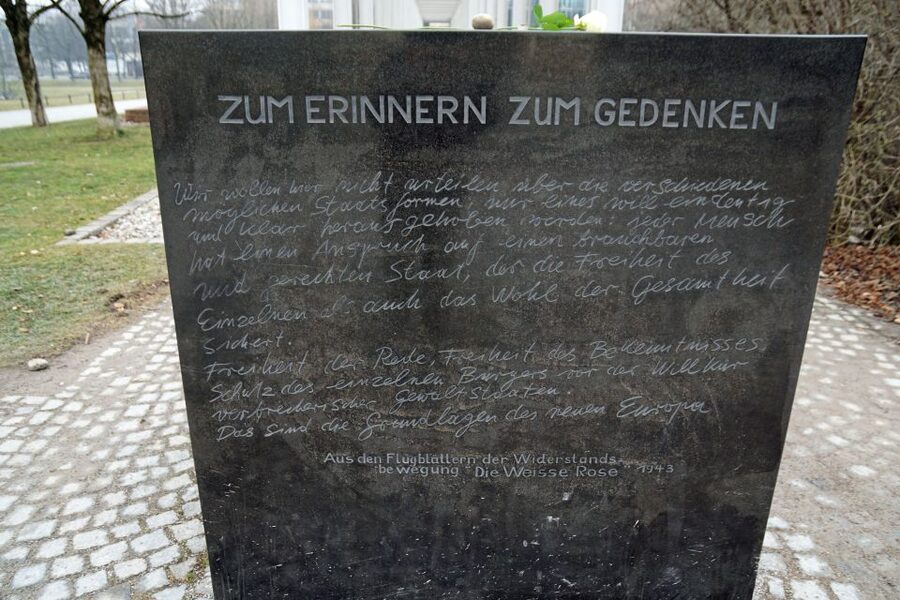
After the Feldherrnhalle, you walk through the court garden, or Hofgarten, and hear about a monument dedicated to resistance fighters. This changes the mood and direction of the tour. The story is no longer only about how the Nazis gained power. It also asks who opposed them, and what happened to those people.
The best-known resistance story comes at Ludwig Maximilian University, known as LMU. Here the guide discusses the White Rose, the student group that produced leaflets criticizing the Nazi regime. The group’s members were arrested and executed, and the tour explains the severity of that repression.
This stop is especially useful for students because the White Rose story is concrete and personal. You are dealing with named young people, printed leaflets, a university setting, and a direct act of opposition. The account also helps prevent the common mistake of treating resistance as something that happened only in distant military or political circles.
The stop at the university is listed at about 15 minutes. That is enough time for a focused explanation, though not enough for a full study of the White Rose or the wider resistance movement. If this is the part of the subject you care about most, listen closely and plan to ask your guide a question during the walk.
The Square of the Victims of National Socialism
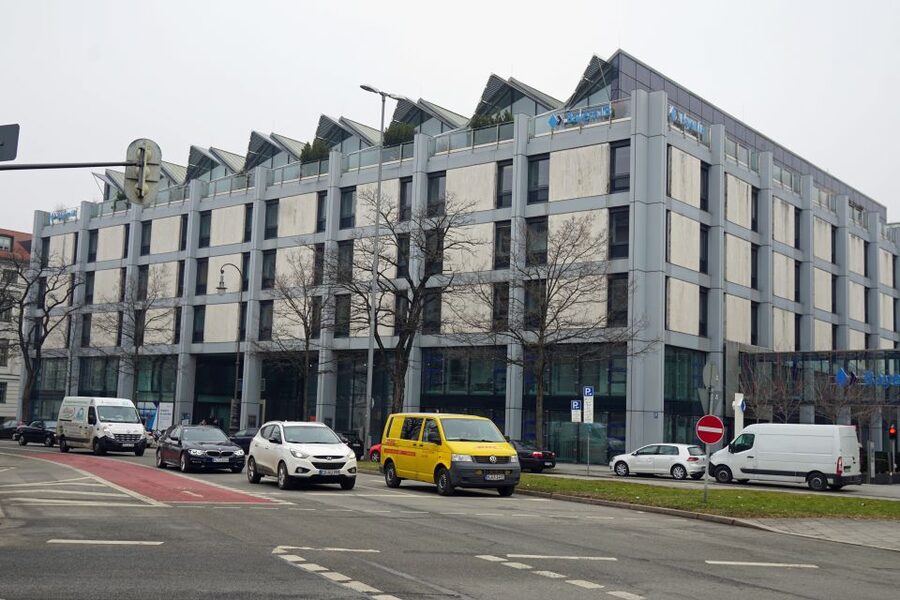
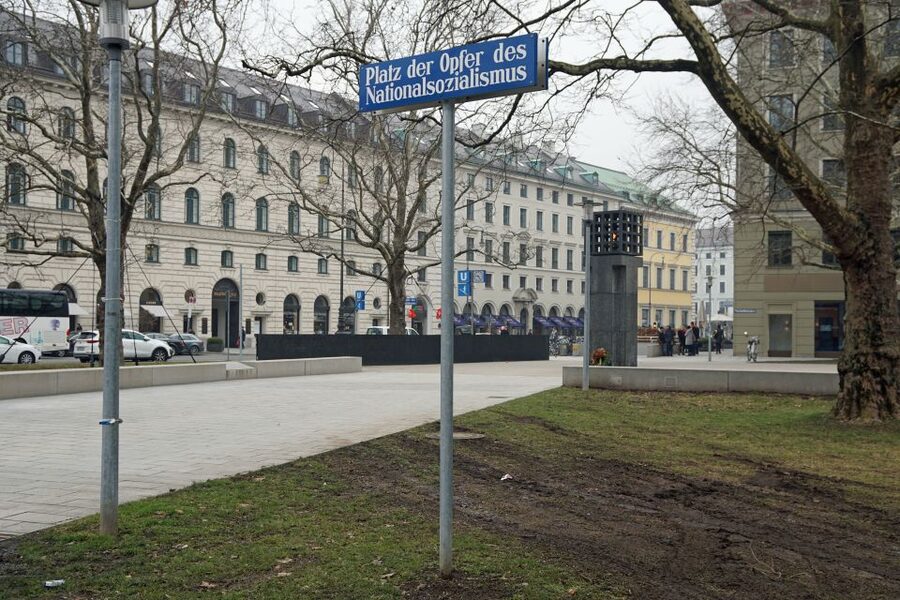
The Square of the Victims of National Socialism provides a necessary pause in the route. Here the guide explains who the victims were, rather than leaving the subject at the level of buildings, leaders, and political events.
That distinction is important. Nazi-era tours can sometimes focus too heavily on architecture and military history. This stop brings the human cost back into view and gives the tour a place to discuss persecution more directly.
The guided portion lasts about 10 minutes. The timing is short, but its position in the route works well. You have just heard about resistance at LMU, and the next stops turn toward the regime’s control over art, public life, and the city’s political centre.
More wartime history tours in Munich:
- From Munich: Dachau Memorial Site Day Tour
★ 4.8 · 2,723 reviews - From Munich: Dachau Memorial Site Half-Day Trip
★ 4.7 · 2,526 reviews - From Munich: Dachau Memorial Site Full-Day Tour
★ 4.9 · 1,406 reviews - Dachau Concentration Camp Memorial Tour with Train from Munich
★ 4.5 · 955 reviews
Haus der Kunst and Nazi control of art
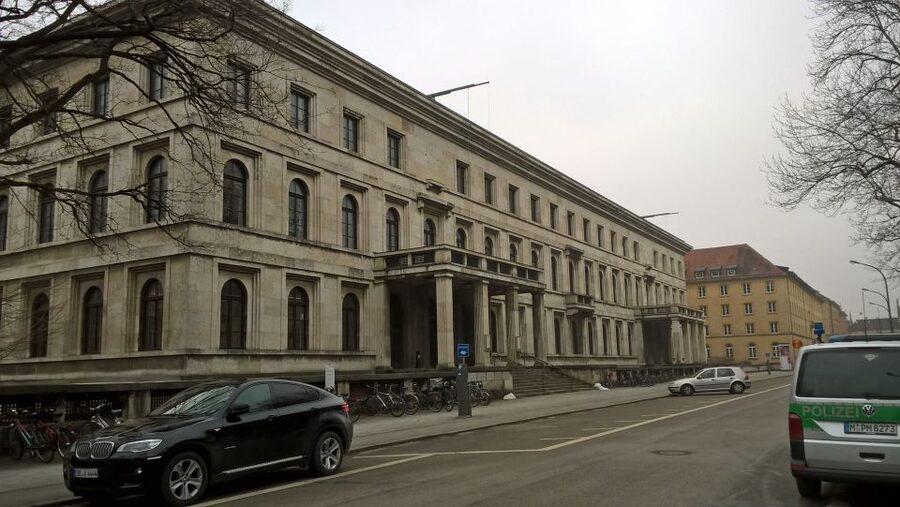
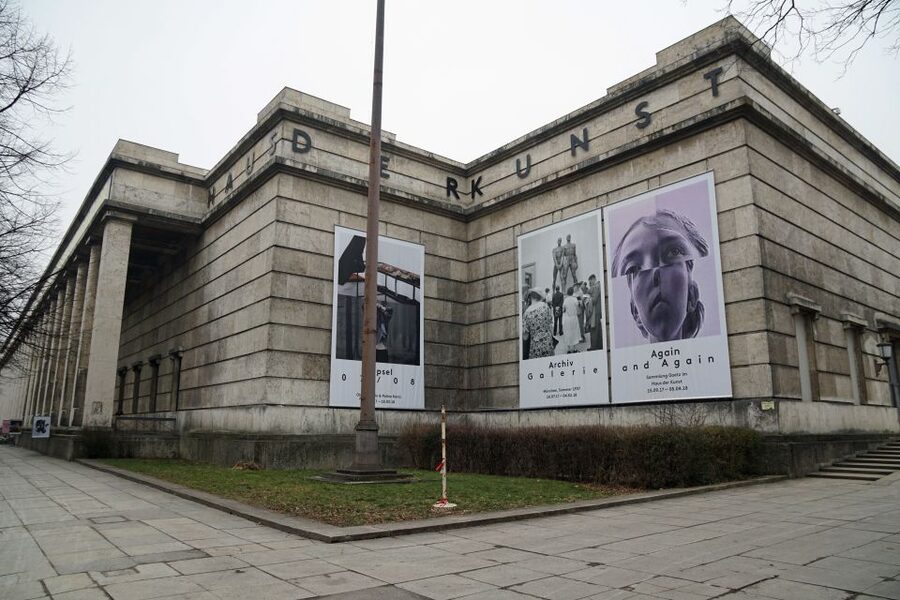
At Haus der Kunst, the guide explains how the Nazis used art for political purposes. The building is tied to the regime’s preferred cultural program, so this stop shows that National Socialism was not only about elections, policing, and war. It also tried to dictate what counted as acceptable German culture.
The tour then points out the location in Galeriestraße where the Degenerate Art exhibition took place. The exhibition attacked art that the Nazis considered politically or racially unacceptable. Seeing the site in relation to Haus der Kunst helps you understand the contrast between art promoted by the regime and art it rejected.
About 15 minutes are assigned to Haus der Kunst. You should not expect an extended visit through the galleries as part of the walking tour. The value here is the guide’s explanation of the places and the photographs used during the experience.
Those photographs are one of the stronger features of the format. Historic images can show the buildings with their original symbols, crowds, and ceremonial use. They help you compare the present streetscape with the way the regime presented Munich to the public.
Munich Residenz and the route through power
The itinerary includes a 10-minute guided stop at the Munich Residenz. The supplied details do not specify an interior visit, so you should understand this as a stop connected to the walking route and its historical explanation, not as a full palace tour.
The Residenz helps place Nazi activity within Munich’s older political centre. The route is not limited to purpose-built Nazi structures. It moves through established civic and royal spaces that were part of the city’s public identity.
This is one reason the walk works better as a connected story than as a list of addresses. You move from the early political movement to state power, resistance, victims, cultural control, and the party headquarters. Each stop adds a different piece.
Karolinenplatz and the people behind Nazi power
At Karolinenplatz, the guide discusses the main sponsors of the Nazis. This is a useful part of the tour because it shifts attention from Hitler and the party to the wider network that helped the movement grow.
Political movements do not operate on speeches alone. Money, influence, institutions, and well-connected supporters also matter. The Karolinenplatz stop gives you a chance to consider how powerful people and organizations contributed to the rise of the regime.
The available details do not give a precise duration for this stop, but it forms part of the route toward Königsplatz. Since the whole walk lasts two hours, the guide has to keep the explanation moving. If you want names or more detail about individual sponsors, ask during the stop.
Königsplatz and the former Nazi party centre
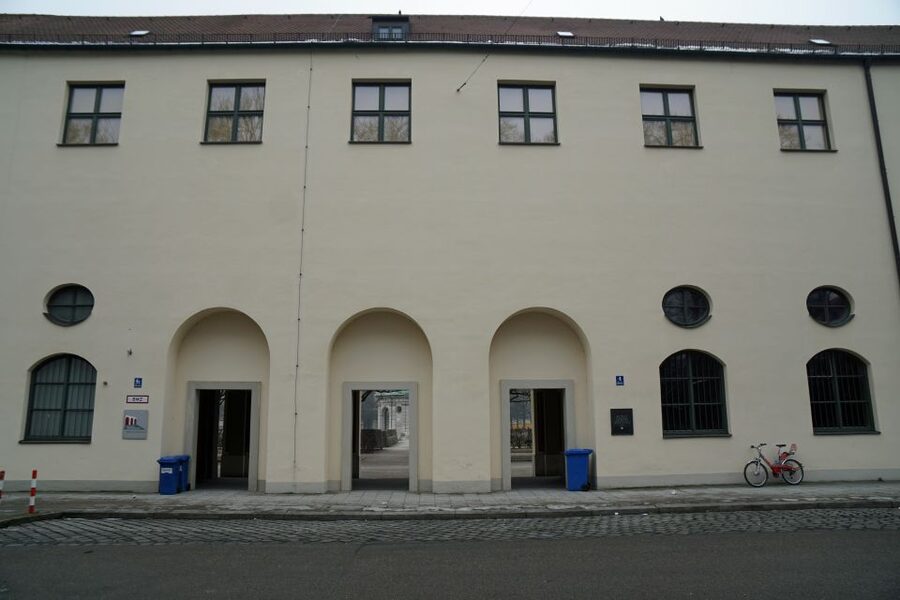
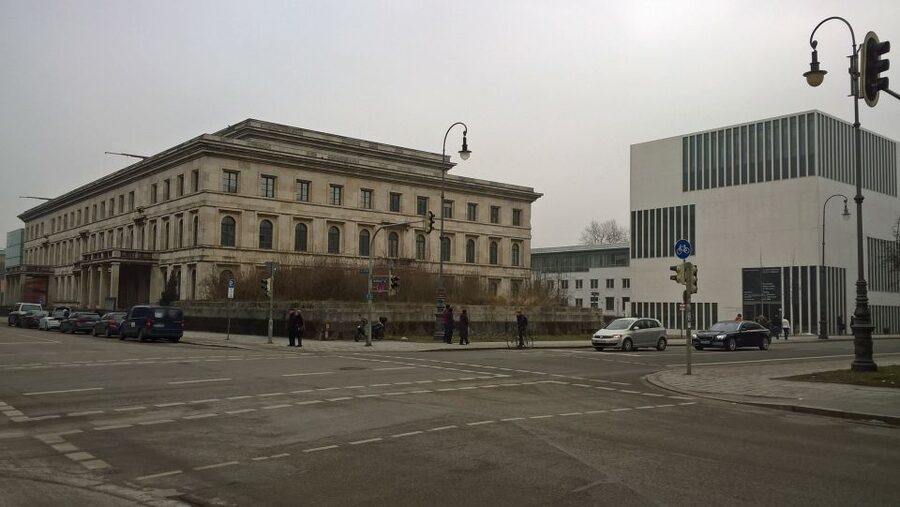
The final area is Königsplatz, with the tour ending at Königsplatz 1. This was the Nazi party centre in Munich, and the route gathers several major sites here.
You hear about the Brown House, the former Nazi headquarters, as well as the Führerbau, the building that contained Hitler’s office. The tour also covers the NSDAP administration. These sites show how the movement developed from a political group into an organized system with offices, leadership buildings, and a carefully designed public presence.
The Führerbau receives about 15 minutes of guided attention. The building is now part of a very different Munich, so the guide’s photographs and explanation are especially useful in showing its earlier role.
The tour ends at the NS Documentation Centre, which opened in 2015. You have the opportunity to go inside after the walk, but admission is not included. This arrangement can work well because the outdoor tour gives you the basic framework first. You can then visit the centre with a clearer sense of where the buildings and events fit.
Allow extra time if you plan to enter. The advertised two hours covers the walking tour, not a full museum visit. Also remember that the guide’s role finishes at the end point unless your booking says otherwise.
What the two-hour format means for you
Two hours is long enough to connect the main sites, but it is not a leisurely pace. The route includes Feldherrnhalle, the Hofgarten area, LMU, the Square of the Victims of National Socialism, Haus der Kunst, the Residenz, Karolinenplatz, and Königsplatz.
You will spend much of the time outdoors. Wear shoes suited to city walking and be prepared to listen while standing. The activity is listed as wheelchair accessible, which is useful for many groups, though the route includes city streets and steps at the starting point.
The private format is the key practical feature. The price is $259 per group of up to 30 people, not $259 per person. For one or two people, that is a significant cost compared with a large shared walk. For a family, school class, or group of friends, the price can be sensible because the total is divided among the group.
A private group also gives you a chance to ask for clarification and adjust the emphasis within the available time. Do not expect the guide to turn two hours into a full seminar, but you can make the walk more useful by saying in advance if your main interest is the White Rose, Nazi architecture, Hitler’s early Munich years, or the role of victims and resistance.
Who will get the most from this Munich history walk
I would choose this tour if you want a guided introduction before visiting the NS Documentation Centre. The route explains why the centre is in this location and gives meaning to the buildings around it.
It also suits families with older children and students. The GCSE history connection is worth noting because the walk links textbook themes to actual streets and sites. Younger children may find the subject and the execution of the White Rose members difficult, so parents should decide based on maturity.
History-minded adults will appreciate the range of subjects. You get political origins, the putsch, Nazi buildings, art policy, sponsors, victims, resistance, and the later documentation of the regime. The tradeoff is that each topic receives only a short treatment.
I would not book it if you want a light sightseeing walk or a tour that avoids painful material. This is a serious look at dictatorship, persecution, and political violence. The provider’s warning about Nazi admirers makes the intended purpose clear.
Practical details, price, language, and cancellation
The tour is private, lasts two hours, and runs in English or German. The guide is described as a certified professional with more than 10 years of experience, and Wolfgang Brehm is the named provider and guide associated with the activity.
You can reserve now and pay later, which helps if your Munich schedule is still taking shape. Cancellation is free up to 24 hours before the start time for a full refund.
The main extra cost is admission to the NS Documentation Centre. Since the museum visit is optional and comes after the walk, you can decide based on your time and interest. I would include it if you want to continue the subject indoors, but do not assume it is part of the $259 group price.
The experience has received a top rating across 14 ratings, with praise focused on the guide’s information, clarity, and ability to keep the subject interesting. German-language feedback also repeatedly describes the walk as informative and worth doing. That fits the design of the tour: its strength is not entertainment, but a clear explanation delivered at the places where events unfolded.
Should you book the National Socialism WWII private tour?
Book it if you want a focused, serious introduction to Munich’s Nazi past and can gather enough people to make the private price work. The route is well chosen, the photographs add useful context, and the inclusion of the White Rose and the victims’ memorial keeps the story from becoming a tour of Nazi buildings alone.
For one person or a couple, $259 is a high price for two hours. A larger group gets much better value, especially if you plan to visit the NS Documentation Centre afterward.
My best use of this tour would be an early visit during your time in Munich, followed by the documentation centre while the locations and names are still fresh. Choose it for context, direct questions, and a serious look at how Munich became the birthplace of National Socialism, not for a casual city stroll.
FAQ
Where does the private tour begin?
It begins at the steps of the Feldherrnhalle at Odeonsplatz, at Residenzstraße 1.
Where does the tour finish?
The walk finishes at Königsplatz 1, 80333 Munich, Germany.
How long does the tour last?
The guided walking tour lasts two hours.
What languages are available?
The live guide is available in English or German.
Is this a private group tour?
Yes. The booking is for a private group, with the stated price covering up to 30 people.
Is admission to the NS Documentation Centre included?
No. You can visit the NS Documentation Centre after the tour, but admission is not included in the tour price.
Is the tour wheelchair accessible?
Yes. The activity is listed as wheelchair accessible.
Can I cancel the booking for a full refund?
Yes. You can cancel up to 24 hours in advance for a full refund.
Just added around Munich
- Pub crawl incl. Oktoberfest museum guided tour with beer tasting (private)★ 5.0 · 5 reviews
- South Tyrolean specialties and wine tasting★ 5.0 · 5 reviews
- Size Matters Beer Tour Munich★ 4.6 · 105 reviews
- Secret Food Tours Munich★ 4.8 · 5 reviews
- Short & sweet: Tasting the Viktualienmarkt★ 4.8 · 37 reviews
- Residence of Munich private tour with skip the line ticket★ 5.0 · 4 reviews
- Munich: Romantic Wine Experience for Two at Viktualienmarkt★ 4.2 · 14 reviews
- Munich: Resistance against Hitler – Historical Walking Tour★ 5.0 · 5 reviews
Munich Tours, compared.

Neuschwanstein & Linderhof Castle-Fairytale Day Tour from Munich
Read our review →
Dachau Concentration Camp Memorial Site Tour from Munich by Train
Read our review →
Munich Hop-On Hop-Off Tour: 1-Day or 2-Day Ticket
Read our review →Browse the lists this tour appears in