
Review · MUNICH TOURS
Munich World War II Sites Including Dachau Concentration Camp
The most powerful part of this full-day experience is the visit to Dachau Concentration Camp Memorial Site, followed by a walk through Munich’s streets where the Nazi movement first gained power. You see the museum, reconstructed cell blocks, crematorium, and administration buildings, then connect those places to the city’s political past.
I like two things here. First, the tour joins Dachau with a Third Reich walking tour, so you learn both what happened at the camp and how Munich became an early center of Nazi power. Second, the guides, including Jake, Ian, Scott, Steve, Nick, and others praised for their clear and respectful approach, add context that is easy to miss on your own.
The catch is the length. This is an approximately eight-and-a-half-hour day with extensive walking, standing, and public transport. Some visitors found the amount of information intense, while others wished they had more time to read Dachau’s exhibits at their own pace.
Key points to know before booking
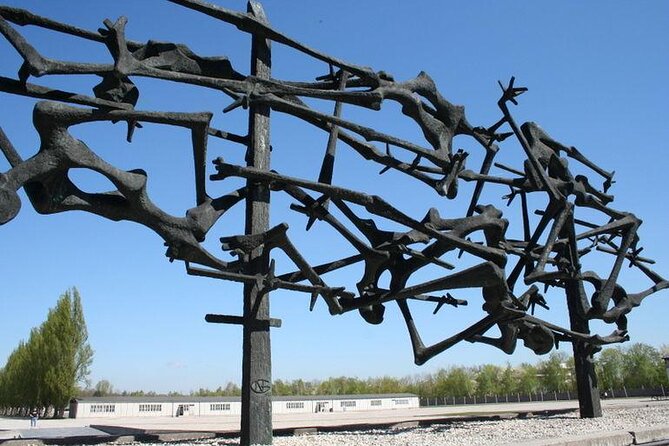
- Dachau takes about three hours: You see the museum, documents, photographs, reconstructed barracks, crematorium, and administration headquarters.
- Munich’s Nazi-era sites come afterward: The city walk covers Marienplatz, the former Gestapo headquarters, the Beer Hall Putsch site, and Königsplatz.
- Public transport is part of the experience: You use a train from Munich and a city bus to reach Dachau, rather than a private coach.
- The day is physically demanding: Expect long periods on foot, few chances to sit, and time outdoors in changing weather.
- The guides receive the strongest praise: Jake, Ian, Scott, Steve, Nick, Connie, Josh, Sam, and others are singled out for clear and considerate presentations.
- The tour is for ages 13 and up: Proof of age may be required, and the group is limited to 25 people.
Why this Munich and Dachau combination matters
Munich is not only a handsome Bavarian city with churches, beer halls, and royal buildings. It was also where Adolf Hitler joined the Nazi Party, where the Beer Hall Putsch took place in 1923, and where important Nazi institutions operated.
That makes this tour useful for visitors who want more than an isolated memorial visit. Dachau shows the machinery of persecution and imprisonment. The Munich walk explains the political setting that helped the Nazi movement grow.
I find that pairing important because it links ordinary city streets with events that changed Europe. A former political headquarters may now look like another city building. A square may feel like an open urban space. Your guide helps you understand what those places represented at the time.
The subject is difficult, and the tour does not treat it as light sightseeing. Still, the city portion includes enough movement and discussion to keep the day from becoming a long museum lecture. The best guides balance facts, personal stories, photographs, and space for questions.
More WWII History Tours in Munich
- Munich: Third Reich & WWII Walking Tour
★ 4.6 · 6,181 reviews - Dachau Concentration Camp Memorial Site Tour from Munich by Train
★ 4.5 · 5,637 reviews - Third Reich Walking Tour Munich
★ 4.5 · 4,291 reviews
Starting at Munich Central Station
You meet the group at Radius Tours on Dachauer Strasse 4 at 9:00 a.m. The office is near München Hauptbahnhof, Munich’s main railway station, which makes the start fairly practical if you are staying in the central area.
The meeting process matters because the first part of the day uses public transportation. Your guide organizes the train and bus journey to Dachau, and the transport costs are covered by the tour. You are not expected to arrange separate tickets or find the memorial site alone.
The public train and bus are less comfortable than a private coach, especially when the bus is crowded. But this choice keeps the price down and makes the tour more accessible. It also avoids pretending that a private bus would transform the journey. The trip is still subject to normal city traffic and transport conditions.
Give yourself extra time to reach the meeting point. The tour begins in the morning, and a late arrival could be difficult once the group has boarded the train.
Arriving at Dachau Memorial Site
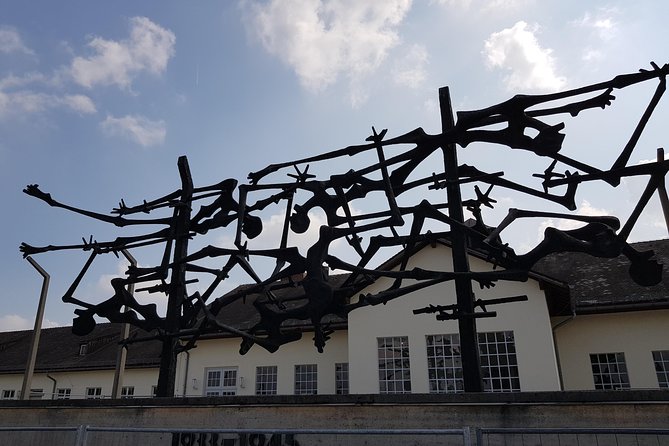
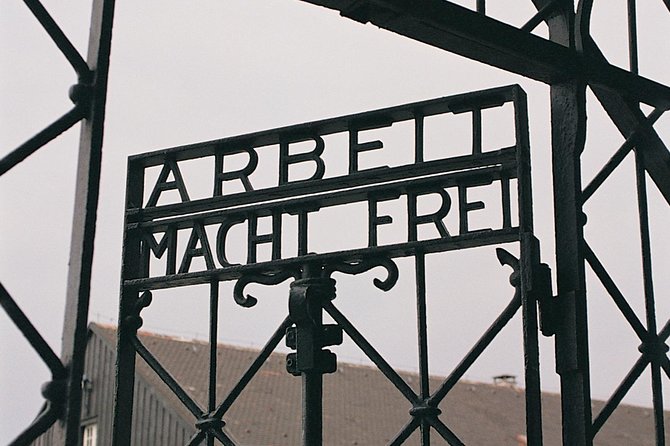
Dachau was the first Nazi concentration camp in Germany and later served as a model for other camps. The memorial site is not simply a single building to enter and leave. It is a broad place of remembrance with open ground, reconstructed structures, exhibits, and difficult evidence of what occurred there.
The tour typically spends about three hours at the memorial. That is enough time to gain a clear understanding of the site, though not enough to read every display in detail. If you like to study every document and panel, you may feel rushed.
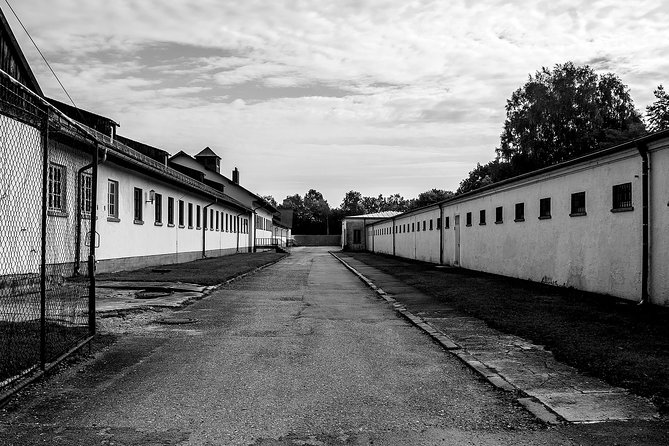
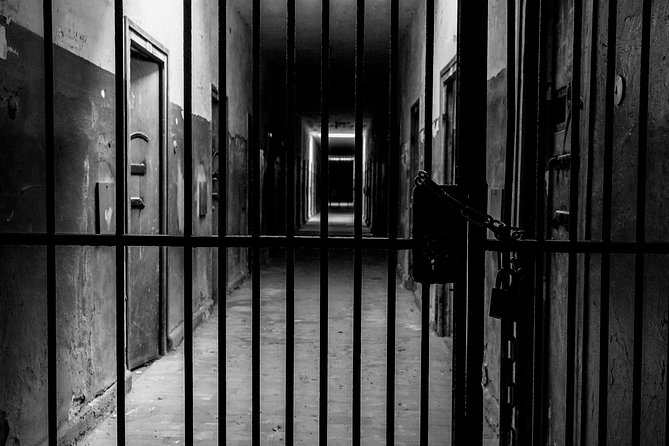
You see photographs, written records, reconstructed cell blocks, the crematorium, and the former administration headquarters. The guide explains how the camp developed and how it functioned, while also bringing attention to people connected with its creation and operation, including Heinrich Himmler.
The reconstructed buildings require careful explanation. They help you understand the physical layout, but not every structure you see is original. This distinction matters. A guide can explain what remains, what was rebuilt, and how the memorial presents the site today.
I would not expect a cheerful sightseeing mood here. The value is educational and reflective. The strongest guides keep the tone respectful without simply reciting dates. Jake, Ian, Scott, Connie, Emmett, and others have been praised for combining clear information with personal stories, firsthand accounts, and a considerate pace.
One useful detail is that the Dachau portion includes bathroom breaks and group management during the transport and visit. That may sound minor, but it matters on a long day with several changes of location.
What the Dachau tour does well
A self-guided visit gives you freedom. You can stop at every panel, return to an exhibit, or spend extra time in one area. The guided visit gives you structure and interpretation.
For a first visit, that structure can be a major advantage. The memorial covers a serious and complicated subject, and the guide can explain how the buildings and documents fit together. You also avoid working out the train and bus route alone.
The strongest part of the guided approach is the human scale. Facts about the camp are necessary, but personal accounts and individual stories make the material easier to understand. Connie was praised for preparing passages from people imprisoned during that period, while other guides have been noted for answering questions and connecting the memorial to the larger rise of the Nazi regime.
There are limits. A three-hour visit cannot cover every exhibit. Some visitors wanted longer at Dachau, and one felt a self-guided visit would have allowed more time with the displays. If Dachau is your main reason for coming to Munich, consider a separate visit so you can set your own pace.
More wartime history tours in Munich:
- From Munich: Dachau Memorial Site Day Tour
★ 4.8 · 2,723 reviews - From Munich: Dachau Memorial Site Half-Day Trip
★ 4.7 · 2,526 reviews - From Munich: Dachau Memorial Site Full-Day Tour
★ 4.9 · 1,406 reviews - Dachau Concentration Camp Memorial Tour with Train from Munich
★ 4.5 · 955 reviews
The break between the two tour segments
After returning to Munich, you get a short break before the city walking tour. The full experience is divided into two parts, rather than one uninterrupted walk.
This is your chance to eat and rest. Food and drinks are not included, so plan to buy lunch or carry something suitable. You should also refill your water supply, since the afternoon includes more walking and standing.
The break helps, but it does not turn the day into an easy outing. The overall schedule runs roughly from 9:00 a.m. until the early evening, with the two sections separated by about an hour. Wear shoes suited to city walking and bring clothing for the weather. The tour operates outdoors in both Munich and Dachau, and conditions can change quickly.
Following the Third Reich through Munich
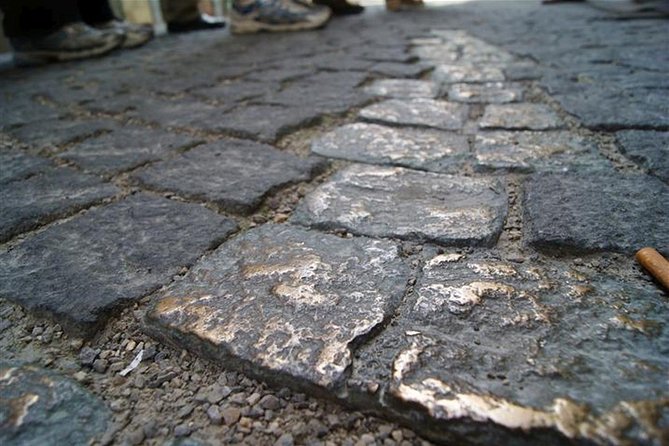
The afternoon walking tour lasts about two and a half hours and moves through Munich’s Old Town. It focuses on the rise and fall of Adolf Hitler and Nazi Germany’s Third Reich, using specific buildings and public spaces as reference points.
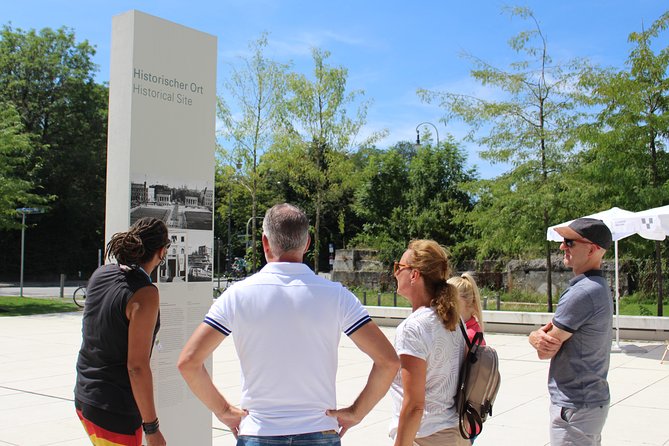
At one stop, you learn about the building where Hitler first joined the Nazi Party. At another, you see the location associated with the former Gestapo headquarters. You also visit the site of the Beer Hall Putsch, the failed 1923 attempt to seize power that became an important part of Nazi mythology.
The walk helps you see how political history is layered onto the modern city. Many buildings have changed, been damaged, rebuilt, or lost important features. Several guides use old photographs to show how the locations looked during the Nazi period. That before-and-after material is especially useful because the present-day streets do not always reveal their past.
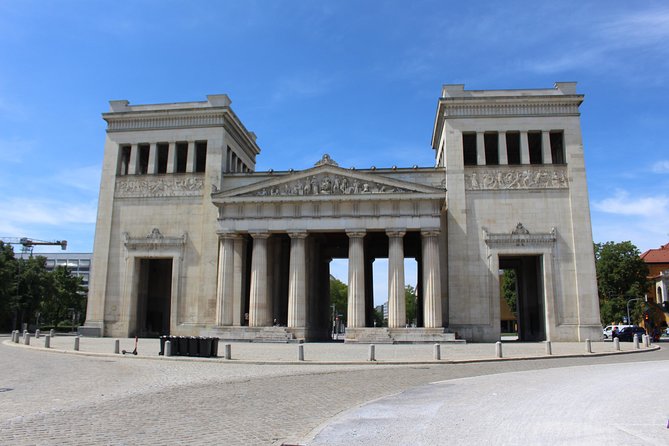
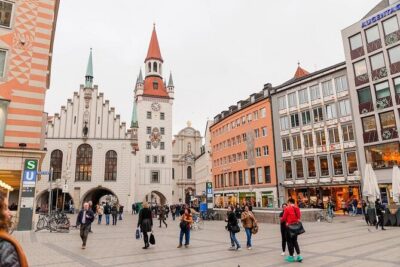
Marienplatz provides a central point for the city section, while Königsplatz is the final stop. Königsplatz was used as a major Nazi Party marching ground, so it gives the tour a powerful closing location. The route ends near Munich Central Station and the Radius Tours office, making it convenient for continuing your evening.
The quality of the city walk depends heavily on the guide’s delivery. Several guides have been praised for energy, humor used with care, and the ability to answer questions. One guide was described as highly informed but too flat in presentation. Another challenge is sound. City traffic, echoes, and distance can make it hard to hear, especially if the group spreads out.
Stay near the guide and speak up if you cannot hear. The group limit is 25 people, which is manageable, but not so small that every position offers a perfect view.
Guide quality and the tone of a difficult subject
The guide is the central reason to choose this tour instead of simply visiting the sites alone. The company uses different guides for the Dachau and Munich sections, so your experience may have two distinct teaching styles.
Names praised in the supplied feedback include Jake, Ian, Scott, Steve, Nick, Connie, Emmett, Josh, Sam, Richard, Mark, Sarah, Franz, and others. Jake is repeatedly described as engaging, serious when needed, and able to answer questions. Ian is praised for making the material feel personal and approachable. Scott receives strong marks for clear explanations, while Connie is noted for finding shade and places to sit during a hot day.
Those details suggest a company with several strong guides, but they also show why experiences can vary. Some people prefer a tightly structured presentation. Others want more time for questions and quiet reflection.
This is not a subject where a guide should try to entertain constantly. The best approach is respectful, clear, and human. Humor may appear during transitions or while discussing Munich, but the memorial itself calls for restraint.
The physical demands of an eight-and-a-half-hour day
You should be comfortable walking and standing for long stretches. The day includes the route around Dachau, train and bus connections, the city walk, and time outdoors at historical sites.
There are not many opportunities to sit. Breaks are provided, including bathroom stops during the Dachau portion, but this is not a relaxed sightseeing tour. One visitor described it as physically demanding, while another noted that the group moved quickly enough that some people struggled to keep up.
Weather matters. On a cold day, you may spend much of the day outside and need warm clothing. On a hot day, shade and water become important. Sensible shoes, water, snacks, and a weather-appropriate layer will improve the experience.
The minimum age is 13, and children under 13 are not allowed to attend. The subject matter is serious, so families should decide in advance if the presentation suits every member of their group.
Is the $105.21 price good value?
At $105.21 per person, the cost is reasonable if you want a guide for both Dachau and Munich. You receive a full Dachau Memorial Site tour, a Third Reich walking tour, local guiding, and organized public transport to the memorial.
The value is strongest for a first-time visitor with limited time. You do not need to plan the train and bus route, research the major Nazi-era locations, or work out how the memorial connects with Munich’s political story.
The price is less appealing if you prefer a slow, independent museum visit. You could spend more time reading at Dachau on your own, and you would have complete control over the city walk. You would also lose the guide’s historical framing and group organization.
The average booking lead time is about 73 days, which suggests that you should reserve ahead during busy travel periods. The group is capped at 25 people, and free cancellation is available up to 24 hours before the start time. If the minimum number is not reached and the operator cancels, you are offered another date or experience, or a full refund.
Who should book this experience?
I would choose this tour if you have one full day for World War II history and want the major sites explained in context. It suits visitors who prefer a planned route, appreciate historical discussion, and do not mind using public transport.
It is also a good fit if Dachau feels intimidating to arrange alone. The guide handles the journey, keeps the group together, and explains what you are seeing.
I would think twice if you dislike long walking days, need frequent seating, or want to read every memorial display without a schedule. In that case, a separate Dachau visit and a shorter Munich walk may suit you better.
Should you book the Munich and Dachau combination?
Book it if you want an efficient, serious introduction to Munich’s Nazi-era past and Dachau, and if you can manage a full day on your feet. The combination offers more context than either stop alone, and the best guides make difficult material clear without losing respect for the victims.
Skip it if you want a slow visit or find concentrated historical instruction tiring. The day can feel like information overload, especially during the Munich section.
For most visitors with limited time, I see this as a strong-value choice. Bring water, lunch money, good shoes, and patience. Stay close enough to hear the guide, and leave room afterward for a quiet evening.
FAQ
How long does the Munich and Dachau tour last?
The experience lasts approximately eight hours and 30 minutes. It begins at 9:00 a.m. and generally finishes near the early evening.
Where does the tour start?
You meet at Radius Tours, Dachauer Str. 4, 80335 Munich, near Munich Central Station.
How do you get to Dachau?
The group travels by public train from Munich and then takes a city bus to the Dachau Concentration Camp Memorial Site. Transport is organized and paid for by the tour operator.
How much time is spent at Dachau?
The Dachau portion lasts about three hours. It includes the museum, photographs, documents, reconstructed cell blocks, crematorium, and administration headquarters.
What Munich sites are included?
The walking tour covers historical locations in Munich’s Old Town, including Marienplatz, the building where Hitler joined the Nazi Party, the former Gestapo headquarters, the Beer Hall Putsch site, and Königsplatz.
Is food included?
No. Food and drinks are not included. You have a short break between the Dachau visit and the Munich walking tour to buy lunch or refreshments.
Can children join the tour?
Only visitors aged 13 and older may attend. Proof of age is required, and children under 13 are not permitted.
What is the cancellation policy?
You can cancel up to 24 hours before the start time for a full refund. Cancellations or changes made less than 24 hours before the start time are not accepted for a refund.
Just added around Munich
- Munich: Express Walk with a Local in 90 minutes★ 5.0 · 7 reviews
- Exploring Munich in a Rikscha★ 4.9 · 33 reviews
- Exploring Munich by Pedicab: Premium Two Hour Tour★ 5.0 · 10 reviews
- Erding: 1-Day Spa Ticket at Therme Erding★ 4.5 · 50 reviews
- Munich: KUNSTLABOR 2 Entry Ticket★ 4.2 · 89 reviews
- Private Van Tour to the Royal Palace of Herrenchiemsee★ 5.0 · 6 reviews
- From Munich: Königssee Day Trip with Boat Ride and Salt Mine★ 4.5 · 93 reviews
- Culinary Haidhausen – The Food Tour★ 4.3 · 4 reviews
Munich Tours, compared.
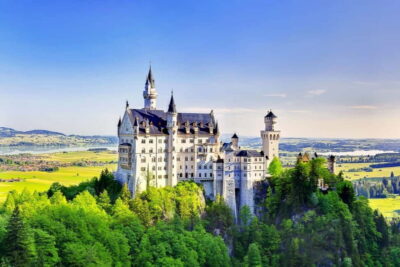

Neuschwanstein & Linderhof Castle-Fairytale Day Tour from Munich
Read our review →
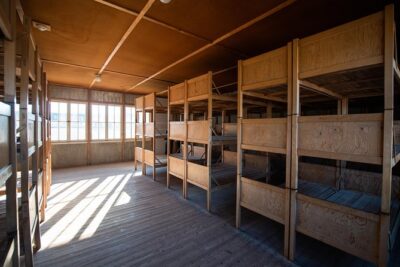
Dachau Concentration Camp Memorial Site Tour from Munich by Train
Read our review →
Munich Hop-On Hop-Off Tour: 1-Day or 2-Day Ticket
Read our review →Browse the lists this tour appears in