
Review · MUNICH TOURS
Munich: Third Reich and World War II Private Guided Tour
Munich’s Nazi past comes into sharp focus on this walk from Marienplatz to Königsplatz. You follow the route of the Beer Hall Putsch, see the Hofbräuhaus where Hitler spoke in 1920, and learn how Munich became the center of the National Socialist movement. The city itself is the classroom.
I like the private format, which gives you room to ask hard questions about Hitler, Nazi supporters, resistance groups, and ordinary citizens. I also like the longer option, which adds the NS Documentation Center and its photographs, films, documents, and media stations. The main drawback is the subject itself: this is a serious, sometimes grim three to four-and-a-half hours, not a light sightseeing stroll.
Key points at a glance
- Follow the Beer Hall Putsch route: Walk from Marienplatz toward Feldherrnhalle and Odeonsplatz, tracing the failed 1923 Nazi attempt to seize power.
- See the Hofbräuhaus connection: Learn how Hitler used Munich’s famous beer hall for an important 1920 political speech.
- Put resistance into the story: Hear about the White Rose Group, a student-led opposition movement based in Munich.
- Read the city’s wartime scars: At Marienplatz, learn how the 1945 bombing destroyed much of central Munich and how the New Town Hall was reconstructed.
- Add the NS Documentation Center: The 4.5-hour version includes an indoor museum visit with photographs, texts, films, and interactive media.
- Keep it personal: This is a private group tour with guides in five languages, including English, German, French, Italian, and Spanish.
Why Munich is the right place for this history
Munich was not simply a backdrop to the Nazi era. It was where the movement gained its early footing, built public support, and developed many of the rituals and symbols later used across Germany.
That makes a walking tour here especially useful. You are not only hearing dates and names in a museum room. You are moving through the streets where political speeches, marches, resistance, and government decisions took place.
The route also helps explain a difficult question: how could a modern city become a center of National Socialism? Your guide addresses Hitler’s rise, the role of his supporters, the resistance within Munich, and the destruction that came at the end of the war.
This is a history tour for people who want context, not just photographs of famous buildings. You should expect discussion of political violence, propaganda, persecution, war, and the moral choices faced by citizens under a criminal regime.
More WWII History Tours in Munich
- Munich: Third Reich & WWII Walking Tour
★ 4.6 · 6,181 reviews - Dachau Concentration Camp Memorial Site Tour from Munich by Train
★ 4.5 · 5,637 reviews - Third Reich Walking Tour Munich
★ 4.5 · 4,291 reviews
Starting at Marienplatz and the New Town Hall
The meeting point is in front of hotel BEYOND by Geisel at Marienplatz 22, opposite St. Peter. Do not go inside the hotel. Its staff are not involved with the tour, so simply wait outside for your guide.
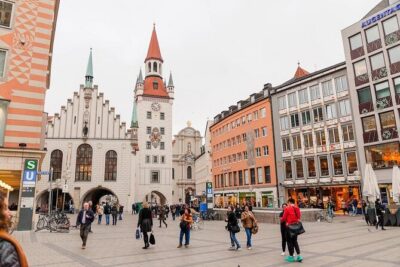
Marienplatz is a strong place to begin because it puts you in the center of Munich’s civic life. Nazi propaganda events were held here, making the square an important setting for understanding how public space can be used to project political power.
You will also look at the Neues Rathaus, Munich’s reconstructed New Town Hall. The building helps explain the physical cost of the war. Bombing in 1945 destroyed much of central Munich, and the rebuilt city now combines older-looking facades with a painful twentieth-century history.
I appreciate this opening because it prevents the tour from treating Nazi history as something that happened only in distant government offices. It happened in the heart of the city, among familiar public buildings and busy streets.
Marienplatz can be crowded, so stay close to your guide during the introduction. The tour is on foot, and the square is also one of Munich’s most active public spaces. A private group makes it easier to hear and to pause when a subject needs more explanation.
Hofbräuhaus and the Nazi Party’s early years
From Marienplatz, the route reaches Hofbräuhaus am Platzl, one of Munich’s best-known beer halls. The building is famous for food, beer, and Bavarian tradition, but its political history is central to this tour.
Adolf Hitler spoke here in 1920 at an event connected with the founding of the National Socialist German Workers’ Party. Your guide explains how the party began, how its ideas were presented to the public, and how Munich became known as the capital of the National Socialist movement.
This stop is valuable because it shows how political extremism can use ordinary social settings. A beer hall was not an isolated military headquarters. It was a public venue where people gathered, listened, argued, and formed political loyalties.
The tour does not treat the Hofbräuhaus as a museum dedicated to the Nazi era. It remains a working beer hall and a major sightseeing stop. That contrast can feel uncomfortable, but it is also useful. You see how a place can carry several layers of meaning at once.
Your guide can also help separate the early party’s image from the later reality of dictatorship and war. That distinction matters. The movement’s beginnings, its propaganda, and its eventual crimes should not be blended into one vague story.
The Beer Hall Putsch route to Feldherrnhalle
The walk then follows the route of the Beer Hall Putsch toward Feldherrnhalle and Odeonsplatz. In 1923, Hitler and his supporters tried to storm the Bavarian Defense Ministry and seize political control.
The attempt failed, but it became an important part of Hitler’s political story. The event helped make him nationally known, and his imprisonment afterward gave him time to write Mein Kampf, his semi-autobiographical political manifesto.
At Feldherrnhalle, the physical setting helps you understand the event as a failed power grab rather than a neat step on the road to dictatorship. The tour can also explain how the Nazis later turned the dead from the putsch into political symbols.
This section is one of the strongest parts of the walk for anyone interested in how movements build myths around defeat. The failed uprising did not end Hitler’s career. Instead, it became propaganda that supported the party’s claim to sacrifice and heroic struggle.
Odeonsplatz adds another layer. Military and government buildings in this area made it a natural setting for political confrontation. You will need to pay attention to your guide’s position, as modern traffic and city activity can make it harder to picture the streets as they appeared in 1923.
More wartime history tours in Munich:
- From Munich: Dachau Memorial Site Day Tour
★ 4.8 · 2,723 reviews - From Munich: Dachau Memorial Site Half-Day Trip
★ 4.7 · 2,526 reviews - From Munich: Dachau Memorial Site Full-Day Tour
★ 4.9 · 1,406 reviews - Dachau Concentration Camp Memorial Tour with Train from Munich
★ 4.5 · 955 reviews
Resistance and the White Rose Group
A good tour of Munich’s Nazi era must include resistance, and this one discusses the White Rose Group. The group was led by five university students who opposed the Nazi regime and distributed anti-Nazi leaflets.
Their story changes the shape of the tour. Munich was not only a city of party rallies and political support. It was also home to people who recognized the danger of the regime and risked their lives to oppose it.
The White Rose was a small movement, and the tour does not suggest that resistance was widespread enough to cancel out Munich’s role in the rise of National Socialism. That balance is important. You hear about courage without losing sight of the larger public failure to stop the dictatorship.
For me, this is one of the most important reasons to choose a private guide. You can ask about the difference between organized resistance, private disapproval, passive obedience, and active support. Those categories matter, especially when you are trying to understand how a dictatorship operates inside an ordinary society.
The exact amount of time spent on the White Rose will depend on your guide and your questions. If this is your main interest, say so at the start. A private tour allows the discussion to follow your priorities more closely than a fixed group walk.
The Monument to the Victims of National Socialism
The route includes the Monument to the Victims of National Socialism. This stop shifts the focus from party power to remembrance and those harmed by the regime.
A memorial cannot tell the whole story on its own. Its value here comes from the explanation around it. Your guide can connect the monument to the earlier stops, showing how propaganda, political violence, and state power led to persecution and war.
This is also a good place to ask about the way Munich remembers its past. The tour encourages difficult questions about the city and its citizens, including their role in the rise and fall of National Socialism.
You may find this stop quieter in tone than the Hofbräuhaus or Beer Hall Putsch section. That change is welcome. A serious history tour needs room for remembrance, not only political chronology.
Führerbau and the Munich Agreement
You will see former Nazi Party office buildings, including Führerbau, or the Führer’s Building. The building is linked to the 1938 Munich Agreement, signed there by Hitler and British Prime Minister Neville Chamberlain.
The agreement is a key moment in the story of appeasement and the approach of World War II. Your guide can place the signing within the wider political crisis and explain why the building mattered to the Nazi leadership.
This stop is especially useful if your knowledge of the war begins with the 1939 invasion of Poland. The tour shows that the road to war included earlier acts of pressure, negotiation, surrender, and political misjudgment.
Führerbau also makes clear how much Nazi power depended on offices, ceremony, and controlled public images. The regime used grand buildings and formal agreements to present its actions as legitimate. The surrounding streets help turn that idea into something visible.
The building itself may not offer the same kind of interior visit as a conventional museum. You are mainly seeing sites from the outside while your guide provides the interpretation. If you want extensive indoor exhibits, choose the longer option.
Königsplatz and the end of the walking route
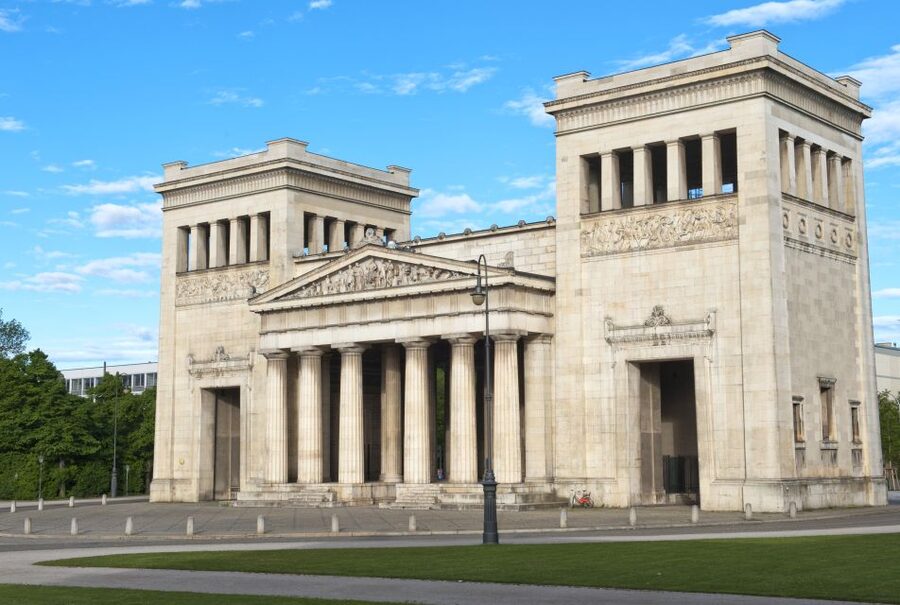
The three-hour walk finishes at Königsplatz. Under the Nazi regime, the square was used for mass rallies and book burning.
Königsplatz is an effective final stop because it brings together architecture, public ceremony, propaganda, and destruction. The square was designed to carry political meaning, and Nazi events used that setting to suggest order, unity, and power.
Book burning is a particularly direct example of how the regime attacked ideas as well as people. It gives the tour a clear reminder that censorship and persecution were not side issues. They were part of the system.
By the time you reach Königsplatz, you have followed a broad arc: the party’s beginnings, Hitler’s attempt to seize power, the creation of Nazi political spaces, resistance, international appeasement, and the memory of victims.
The three-hour option is likely enough if you want a focused outdoor introduction. It covers many locations in a limited time, so some explanations may be brief. Wear comfortable shoes and expect a steady walking pace through Munich’s Old Town.
What the 4.5-hour museum option adds
The longer version adds the Munich Documentation Center for the History of National Socialism. This is the better choice if you want more than a site-by-site overview.
The center’s material includes photographs, documents, texts, film projections, and media stations. The exhibits cover the origin and rise of the Nazi movement, the war period, and Munich after the war.
The museum gives you something the outdoor route cannot: sustained access to original visual and written material. A building can show where an event happened, but a document or photograph can reveal how people described, organized, and experienced it.
Your private guide accompanies you and answers questions about the causes and consequences of National Socialism and World War II. That support matters because museum displays on this subject can be dense. You can ask for clarification instead of moving past a difficult section without understanding it.
Choose 4.5 hours if you have a strong interest in modern German history, want time for questions, or are visiting Munich specifically to study the Nazi period. The trade-off is simple: it takes most of an afternoon and costs more than a standard walking tour, so it may be too much for a short city break packed with other sights.
Price, private value, and group size
The listed price is $311 per person. That is a serious price for a walking tour, especially when the basic version lasts three hours.
The value depends on your group size and your goals. A private historian guide can adjust the pace, explain difficult points in your language, and respond to questions about Hitler, the Nazi Party, resistance, wartime destruction, and postwar memory. For a family or small group sharing the experience, that personal attention may justify the cost.
The 4.5-hour version adds the NS Documentation Center, which makes the higher price easier to assess. You are paying for more guide time and an indoor museum component, not simply a longer walk.
For a solo visitor, $311 per person is harder to defend unless this subject is a major reason for your Munich visit. For a group of friends or relatives, the private format may offer better value than booking several separate places on a general group tour.
The published rating is 4.8 from 20 reviews, and the short comments include clear praise for guides. Mireya was singled out by name for being great, while another booking described the experience as perfect. These comments are brief, so I would treat them as a positive sign about guide quality rather than proof that every departure will be identical. If Mireya is available, you may wish to request her.
Languages, access, and practical planning
Guiding is available in English, German, French, Italian, and Spanish. Confirm your preferred language when booking, especially if the historical detail matters to you.
The tour is wheelchair accessible. Since it is a walking route through central Munich, ask the provider for any route details you need before arrival. The information provided confirms access, but it does not specify the length of every segment or the exact museum route.
The meeting point is easy to identify at Marienplatz, but remember the important detail: meet outside hotel BEYOND by Geisel, not at the hotel desk.
You can cancel up to 24 hours in advance for a full refund, and the reserve-now, pay-later option lets you hold the booking without paying immediately. Those policies are useful if your Munich schedule is still changing.
The tour is offered at different starting times depending on availability. Allow extra time to reach Marienplatz, since arriving late could mean missing the introduction and the first historical explanation.
Who should book this Munich history tour
I would recommend the walk to anyone who wants to understand why Munich matters in the history of National Socialism. It suits adults, students, history-minded families, and visitors who prefer conversation over a standard audio guide.
The private format is particularly helpful if you have specific questions. You can ask about the Beer Hall Putsch, the White Rose, the Munich Agreement, the bombing of 1945, or the behavior of Munich residents without worrying about holding up a large group.
The tour is less suitable if you want a light introduction to Munich or a broad sightseeing tour covering churches, markets, and royal buildings. The route includes famous locations, but its purpose is historical interpretation, not general city orientation.
I would also think carefully about the length. The three-hour option is focused and demanding. The 4.5-hour version is better for serious study, but it requires the time and attention that a museum visit deserves.
Should you book it?
Book this tour if Munich’s role in the Nazi era is a central part of your visit and you want a private guide to connect places, events, and moral questions. The outdoor route gives you a clear structure, while the longer option adds the documents and films needed to understand the period in greater depth.
Choose the three-hour walk for a concentrated introduction. Pay for 4.5 hours if you want the NS Documentation Center and time to ask detailed questions.
At $311 per person, this is not a casual bargain. It is a specialist tour whose value comes from the private guide, the sensitive subject, and the chance to discuss difficult history in the places where it happened. If that is what you came to Munich to understand, it can be money well spent.
FAQ
Where does the Munich Third Reich tour begin?
Meet your guide in front of hotel BEYOND by Geisel at Marienplatz 22, 80331 Munich, opposite St. Peter. Do not enter the hotel, as its staff are not informed about the tour.
How long does the tour last?
The standard walking tour lasts three hours. The longer option lasts 4.5 hours and includes the NS Documentation Center.
Is the NS Documentation Center included in every option?
No. Admission and a guided visit to the NS Documentation Center are included only with the 4.5-hour option.
Is this a private tour?
Yes. The activity is offered for a private group, allowing your guide to answer questions and adjust the discussion to your interests.
Which languages are available?
The tour is available in English, German, French, Italian, and Spanish.
Is the tour wheelchair accessible?
Yes, the activity is listed as wheelchair accessible.
Which Munich sites are included on the walking route?
The route includes Marienplatz, the New Town Hall, Hofbräuhaus, Feldherrnhalle, Odeonsplatz, the Monument to the Victims of National Socialism, Führerbau, and Königsplatz.
Does the tour cover the Beer Hall Putsch?
Yes. You follow the route toward Feldherrnhalle and Odeonsplatz while learning about the 1923 Beer Hall Putsch and its effect on Hitler’s political career.
Does the tour discuss resistance to the Nazi regime?
Yes. The guide discusses resistance groups in Munich, including the White Rose Group led by five university students.
What is the cancellation policy?
You can cancel up to 24 hours before the tour for a full refund. You can also reserve the experience and pay later.
Just added around Munich
- Pub crawl incl. Oktoberfest museum guided tour with beer tasting (private)★ 5.0 · 5 reviews
- South Tyrolean specialties and wine tasting★ 5.0 · 5 reviews
- Size Matters Beer Tour Munich★ 4.6 · 105 reviews
- Secret Food Tours Munich★ 4.8 · 5 reviews
- Short & sweet: Tasting the Viktualienmarkt★ 4.8 · 37 reviews
- Residence of Munich private tour with skip the line ticket★ 5.0 · 4 reviews
- Munich: Romantic Wine Experience for Two at Viktualienmarkt★ 4.2 · 14 reviews
- Munich: Resistance against Hitler – Historical Walking Tour★ 5.0 · 5 reviews
Munich Tours, compared.
Neuschwanstein & Linderhof Castle-Fairytale Day Tour from Munich
Read our review →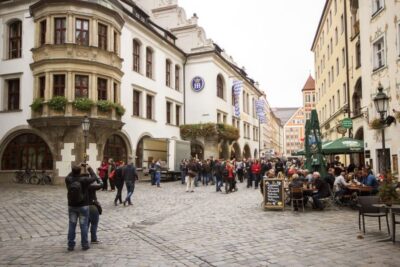
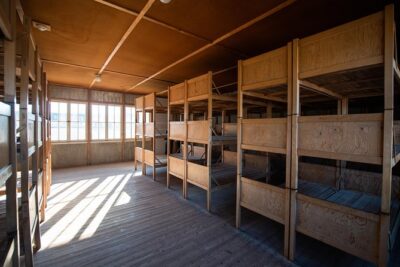
Dachau Concentration Camp Memorial Site Tour from Munich by Train
Read our review →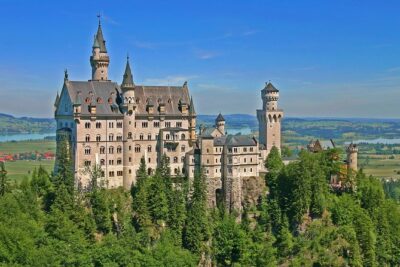
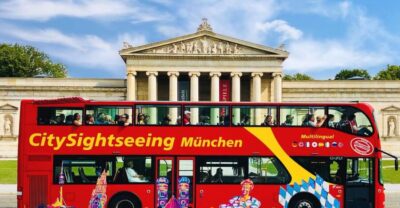
Munich Hop-On Hop-Off Tour: 1-Day or 2-Day Ticket
Read our review →Browse the lists this tour appears in