
Review · MUNICH TOURS
Munich City Walking Tour, includes Third Reich & Viktualienmarkt
Munich’s story comes alive best on foot, and this tour connects the postcard sights with the city’s harder chapters. You move from Frauenkirche and Marienplatz to Hofbräuhaus, the old city gates, Nazi-era history, grand royal squares, and Viktualienmarkt, while your guide explains how Munich works today.
I like the practical city advice, especially the tips on getting around, saving money at other sights, and planning the rest of your stay. I also like the market break, where you can try a bratwurst or potato salad, a pretzel, and Bavarian beer in an everyday setting.
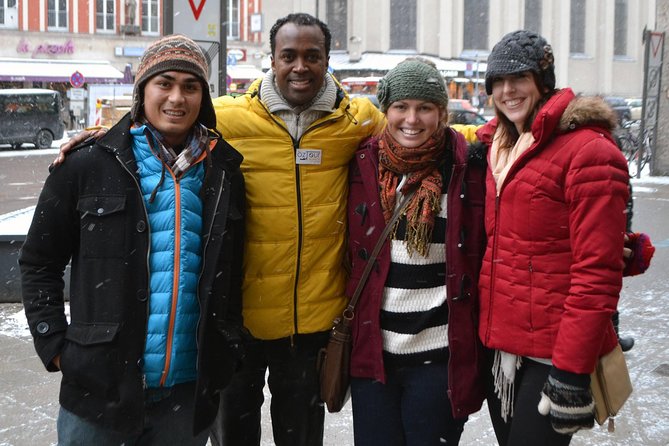
The main caution is pace. This is a talk-heavy walk, with plenty of time spent standing outdoors while the guide explains the past and present. In cold or snowy weather, that can test your patience, and the tour may feel less like a fast sightseeing circuit and more like a moving classroom.
Key points at a glance
- A strong first-day orientation: You get advice on Munich transport, sightseeing, food, city customs, and nearby places to visit.
- Third Reich history handled with care: The tour places Munich’s Nazi-era role within the city’s wider political and social story.
- A mid-tour market stop: Viktualienmarkt offers a chance to buy Bavarian food and beer, but the meal is not clearly included in the tour price.
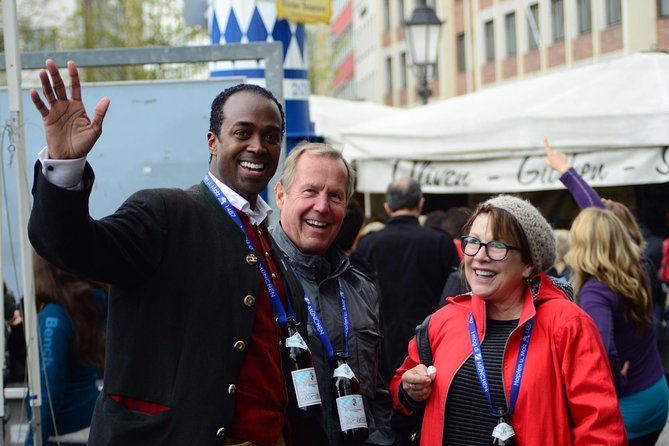
- Well-known guides: Ozzie, also written as Ozzy or Oz, receives especially warm praise for his humor, energy, and broad knowledge. Patrick is also named as a guide.
- Small-group format: Groups can reach 20 people, large enough for social energy but small enough to hear the guide in normal conditions.
- Good value at $31.78: You pay for a 3-hour-15-minute guided introduction, not admission to Munich’s museums or churches.
Why this works best as your first Munich activity
I would place this tour near the start of your Munich visit. Several people used it on arrival and found that the explanations helped them plan the next day. That makes sense: the route gives you a map in your head before you tackle museums, palaces, Christmas markets, or day trips on your own.
The guide does more than point at buildings. You hear how Munich is organized, how the city developed, what the white and blue colors mean in Bavarian life, and how to approach local food and beer culture. You also get advice about visiting other parts of the city and saving money at additional sights.
That broad approach is the tour’s real purpose. If you want a quick checklist of photo stops, this may feel slow. If you want to understand how the old center fits together, and why Munich feels different from other German cities, it offers much more.
The route is in English and lasts about three hours and 15 minutes. You walk between stops, but the guide also pauses for explanations. The pace itself is described as manageable, yet you should expect a fair amount of time on your feet.
More WWII History Tours in Munich
- Munich: Third Reich & WWII Walking Tour
★ 4.6 · 6,181 reviews - Dachau Concentration Camp Memorial Site Tour from Munich by Train
★ 4.5 · 5,637 reviews - Third Reich Walking Tour Munich
★ 4.5 · 4,291 reviews
From Schützenstrasse to Frauenkirche
The meeting point is Schützenstrasse 11, near Munich’s central area. From there, the walk heads toward the old town and Frauenkirche, Munich’s famous twin-towered cathedral.
Frauenkirche is a useful opening stop because it gives you an immediate sense of Munich’s scale and identity. The late Gothic building dates from the 15th century and serves as the seat of the Archbishop of Munich and Freising. Inside, you may see the large interior, historic crypt, and the famous Devil’s Footstep.
The listed visit is brief, about 10 minutes, and admission is free. That timing matters. You are getting context rather than a full church visit, so save extra time if you want to explore the interior at leisure after the tour.
Nearby, the German Hunting and Fishing Museum occupies a former Augustinian church. Its displays cover hunting and fishing in Germany, with stuffed wildlife, old weapons, and the curious Bavarian Wolpertinger creatures. It is an unusual subject for a city walk and helps explain how local traditions mix serious history with playful folklore.
Hofbräuhaus, Platzl, and Bavarian food culture
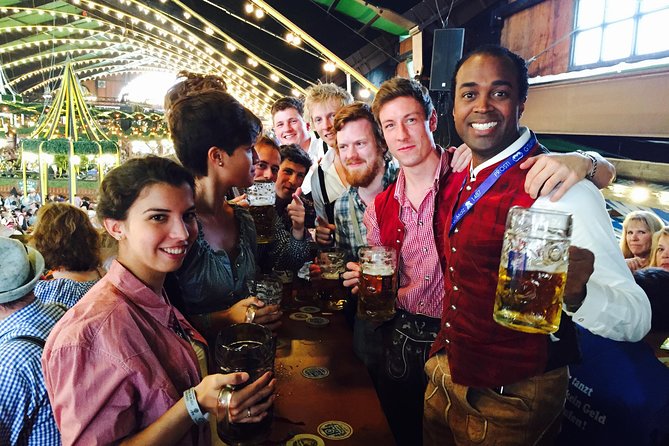
The route includes the Hofbräuhaus, Munich’s most famous beer hall. Founded in 1589 as a royal brewery, it now serves Bavarian beer and hearty food in large historic halls with traditional music.
The stop is listed as about 10 minutes and admission is free. That does not mean your meal or beer is included. The tour pauses later at Viktualienmarkt for food and drink, but the supplied details list the guided tour as included and snacks as not included. Plan to pay separately for anything you order.
Hofbräuhaus is famous, so it can feel highly polished and tourist-friendly rather than like a quiet local tavern. Still, the guide can help you understand why beer halls matter in Bavarian social life, and a brief stop gives you the setting without requiring you to spend an evening there.
Platzl, the square around Hofbräuhaus, adds cobblestones, historic buildings, restaurants, and the ornate Orlandohaus. It is a good place to notice how Munich packages its traditional image for modern city life.
Isartor and Munich’s medieval edges

Isartor is one of the last surviving medieval gates in Munich. Built in 1337 as part of the city walls, it has a central tower, historic frescoes, and the Valentin-Karlstadt Museum, devoted to Bavarian comedian Karl Valentin.
The tour spends only about five minutes here, so you will not have time for the museum. The value is in seeing how the medieval city once controlled entry and how much of the old fortification system has disappeared.
This stop also helps break up the grand palaces and churches. Munich is not only royal squares and monumental facades. Its older defensive structures show the practical city underneath the ceremonial one.
More wartime history tours in Munich:
- From Munich: Dachau Memorial Site Day Tour
★ 4.8 · 2,723 reviews - From Munich: Dachau Memorial Site Half-Day Trip
★ 4.7 · 2,526 reviews - From Munich: Dachau Memorial Site Full-Day Tour
★ 4.9 · 1,406 reviews - Dachau Concentration Camp Memorial Tour with Train from Munich
★ 4.5 · 955 reviews
Marienplatz and the heart of old Munich
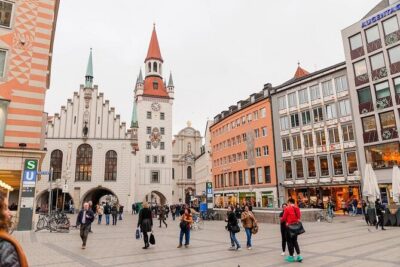
Marienplatz has been Munich’s central square since 1158. Here you see the New Town Hall, the famous Glockenspiel, and the Mariensäule, or Mary’s Column.
The tour allows about 25 minutes, one of the longer stops. That gives you time to take in the square and listen to the guide explain Munich’s civic center. The Glockenspiel is the obvious attraction, but the square also works as a meeting point for understanding the streets that spread into the old town.
The square can be crowded, and the New Town Hall draws constant attention. A guide is useful here because it keeps you from treating the scene as just another European plaza. You learn which nearby shopping streets and sights are worth returning to, and how to orient yourself from this central point.
If you are taking the tour in winter, bring warm layers. Much of the explanation takes place outside, and the cold can make even an interesting account feel long.
Royal Munich at Max-Joseph-Platz and the Maximilianeum
Max-Joseph-Platz introduces Munich’s royal and cultural side. The neoclassical square is named for King Maximilian Joseph and fronts the National Theatre and Munich Residenz.
The stop is short, about five minutes, so think of it as an exterior orientation. The Residenz deserves much longer if you plan to visit its rooms and collections separately. The tour helps you decide how to fit that visit into your schedule.
The route also points out the Maximilianeum, the grand building above the Isar River. King Maximilian II founded it in 1852 to support gifted students, and since 1949 it has housed the Bavarian State Parliament.
That detail gives you a useful bridge from monarchy to modern government. The building is not simply another impressive facade. It reflects changing ideas about education, public service, and state power.
St. Michael’s and St. Peter’s churches
St. Michael’s Church is Munich’s largest Renaissance church. Built in the late 16th century for the Jesuit order, it has a striking exterior and a huge barrel-vaulted ceiling with early Baroque influence.
The tour allows about 10 minutes, with free admission. You can look inside and hear about the royal crypt, which contains Bavarian rulers. The visit is brief, so anyone interested in church art or dynastic history should return independently.
St. Peter’s Church, known locally as Alter Peter, is Munich’s oldest parish church. Its origins reach back to the 12th century, while the interior includes Gothic, Baroque, and Rococo elements. Its 91-meter tower is known for city views, though this walking tour does not include a tower climb.
The listed stop is only five minutes. That is enough to identify the church and understand its place in the city, but not enough for a close look at every altar and side chapel. I would treat both churches as previews, not substitutes for a proper visit.
The Wolfsbrunnen fountain offers a small surprise along the way. Made in 1904 by Heinrich Düll and Georg Pezold, it shows Little Red Riding Hood and a wolf in bronze. The Wolf family commissioned it to mark their name. Details like this are easy to miss when you are rushing between major sights, which is one reason a walking guide can add value.
Munich’s political past at Odeonsplatz
Odeonsplatz is one of the most important stops for understanding Munich’s political story. Designed in the early 19th century by Leo von Klenze, it has Italian-style architecture, the Theatine Church, the Feldherrnhalle, and the Residenz nearby.
The tour allows about 15 minutes here. The square is visually grand, but its importance is not only architectural. Munich played a major role in the rise of National Socialism, and the tour addresses the Third Reich with historical and political context.
The supplied details do not promise a separate museum visit or a long Nazi-era walking route. That distinction is important. If your main goal is an intensive study of Third Reich sites, you may want a dedicated specialist tour or museum visit as well. Here, the subject is woven into a wider account of Munich, Bavaria, Germany, and present-day political life.
Several strong accounts describe the guide connecting past events with current affairs and encouraging the group to think about why the city developed as it did. That approach can be valuable, but it also explains why some sections feel lengthy. You are not just memorizing dates and names.
Karlsplatz and the route’s changing city scenes
Karlsplatz, usually called Stachus, shows another side of Munich. The square grew after the medieval walls were removed and includes the historic Karlstor gate.
The tour spends about 15 minutes here. In summer, a fountain animates the center. In winter, the space can host an ice rink. The setting helps you see how Munich’s old boundaries have become part of modern public life.
By this point, the route has moved through church districts, royal spaces, medieval remnants, political landmarks, and shopping areas. That range is more useful than visiting only the most famous square. You begin to understand Munich as a working city, not just a collection of monuments.
Lunch at Viktualienmarkt
Viktualienmarkt is the tour’s most relaxed stop. The open-air market began as a farmers’ market in the early 19th century and now sells fresh produce, Bavarian specialties, and handmade goods around a beer garden and Maypole.
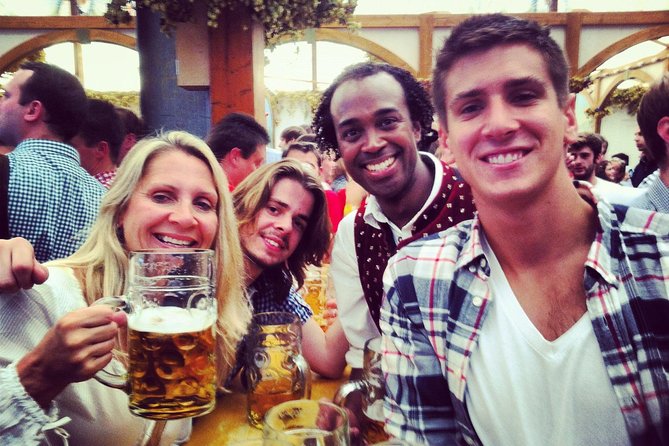
The mid-tour break lasts about 30 minutes. The sample choice is one Bavarian bratwurst, such as regular, spicy, or cheese, or Bavarian potato salad with a pretzel, plus one Bavarian beer and a reusable beer bottle holder. The menu wording suggests a set food-and-drink option, but the inclusion details say snacks are not included, so confirm the exact arrangement when booking.
This pause matters for more than lunch. You get a chance to rest, use the market as a practical food reference, and see how Munich’s eating culture works away from a formal restaurant. If you like the food, you may want to return later for a slower look at the stalls.
The tour ends at Odeonsplatz, not at Viktualienmarkt. That means the market is a break within the route rather than the final destination. Keep track of the group when stepping into shops or food lines. One serious complaint describes a family becoming separated after a short purchase during a stop, so it is sensible to tell the guide before you leave the group.
What the guide adds to the walk
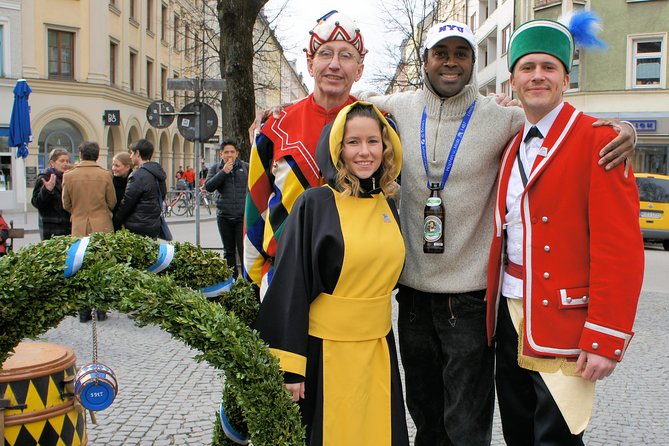
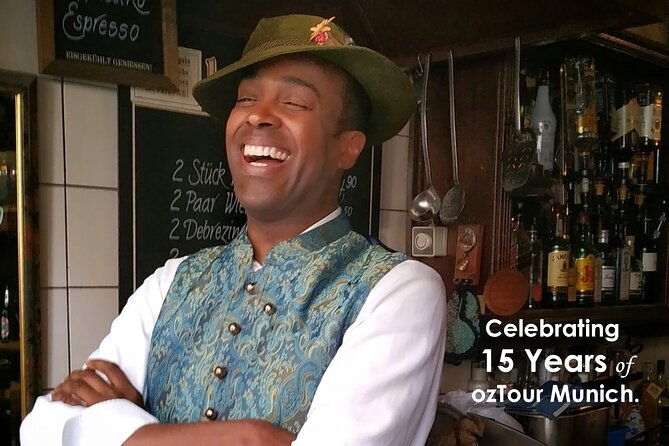
The guide makes or breaks this experience. Ozzie, also referred to as Ozzy or Oz, is repeatedly praised for his humor, warmth, energy, and ability to connect Munich’s past with the present.
His style is not a short script at every landmark. He may explain city planning, Bavarian independence, the meaning of Reich, local customs, current German politics, and ways to save money at other attractions. That is why some people describe the tour as the most informative walking experience they have taken.
You should also know the tradeoff. A few participants felt there was too much narration and too little movement between sights. Standing outside for long explanations was especially difficult in freezing or snowy weather. Families with children may appreciate the guide’s efforts to involve younger members, but children who need constant motion may find the lecture sections tiring.
Patrick is also named as a guide and receives strong praise for being engaging and well informed. You cannot assume which guide you will get, but the available comments suggest that guide quality is a major strength of the experience.
Price, group size, and practical value
At $31.78 per person, this is reasonably priced for more than three hours of guided time in central Munich. You are paying for interpretation, route planning, and local advice rather than entry tickets. The churches and outdoor sights listed here are free, and museum admission, food, and drinks are not part of the basic guided-tour inclusion.
The group can include up to 20 people. That is still a manageable size for a city walk, though the guide’s voice and your position in the group matter more as the number rises. Stay near the guide at crossings and crowded squares.
The tour is offered in English, confirmation arrives at booking, service animals are allowed, and the meeting point is near public transportation. Most people can participate, but the cold-weather comments are worth taking seriously. Wear shoes suited to several hours of city walking and clothing that works when standing still outdoors.
Free cancellation is available up to 24 hours before the start time. Changes or cancellations inside that window are not accepted for a refund.
Who should book this Munich walk?
I recommend it for first-time visitors who want a strong orientation before exploring alone. It suits adults who enjoy history, city planning, politics, architecture, food culture, and practical advice in the same outing.
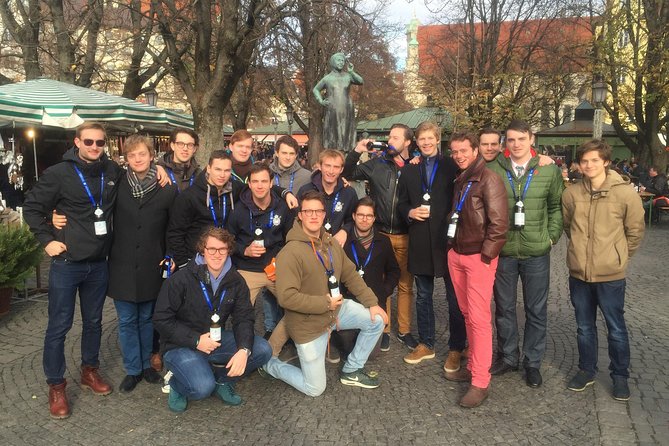
It also works for solo visitors and couples who like meeting other people in a small group. The market stop gives the day a social pause, and the guide’s informal style appears to help the group connect.
I would hesitate if you want a tightly timed tour with little commentary. I would also choose a dedicated Third Reich tour if that subject is your central reason for booking. This experience covers the topic, but it also spends substantial time on Munich’s churches, royal buildings, food culture, and daily life.
Should you book it?
Book this Munich walking tour if you want to get your bearings quickly, understand the city beyond its famous beer hall, and hear history connected to present-day Bavaria. At $31.78, the value is strongest when you use the advice to plan the rest of your visit.
Go prepared for a talk-heavy outdoor walk. Arrive dressed for the weather, keep the group in sight during the market stop, and treat the food and beer as an extra cost unless your booking clearly confirms otherwise.
FAQ
How long does the Munich walking tour last?
The tour lasts approximately 3 hours and 15 minutes.
What language is the tour offered in?
The tour is offered in English.
Where does the tour begin?
The meeting point is Schützenstrasse 11, 80335 Munich, Germany.
Where does the tour end?
The tour ends at Odeonsplatz, Odeonspl. 3, 80539 Munich, Germany.
Is food included in the tour price?
The guided tour is included. Snacks are listed as not included, although the tour pauses at Viktualienmarkt for a Bavarian food and beer break. Confirm the exact food arrangement at booking.
What sights are covered?
The route includes Frauenkirche, the German Hunting and Fishing Museum area, Hofbräuhaus, Isartor, Marienplatz, Max-Joseph-Platz, the Maximilianeum, Platzl, St. Michael’s Church, St. Peter’s Church, Wolfsbrunnen, Odeonsplatz, Karlsplatz, and Viktualienmarkt.
How large can the group be?
The maximum group size is 20 people.
More Walking Tours in Munich
- Munich: Old Town & Viktualienmarkt City Walk in German
★ 4.7 · 2,304 reviews - Munich: Night Watchman Walking Tour
★ 4.7 · 2,092 reviews - Munich Ghosts and Spirits Evening Walking Tour
★ 5.0 · 1,900 reviews - Munich Old Town Walking Tour
★ 4.5 · 1,287 reviews
Just added around Munich
- Munich: Express Walk with a Local in 90 minutes★ 5.0 · 7 reviews
- Exploring Munich in a Rikscha★ 4.9 · 33 reviews
- Exploring Munich by Pedicab: Premium Two Hour Tour★ 5.0 · 10 reviews
- Erding: 1-Day Spa Ticket at Therme Erding★ 4.5 · 50 reviews
- Munich: KUNSTLABOR 2 Entry Ticket★ 4.2 · 89 reviews
- Private Van Tour to the Royal Palace of Herrenchiemsee★ 5.0 · 6 reviews
- From Munich: Königssee Day Trip with Boat Ride and Salt Mine★ 4.5 · 93 reviews
- Dachau Memorial Site Tour With Small Group★ 4.9 · 124 reviews
Munich Tours, compared.
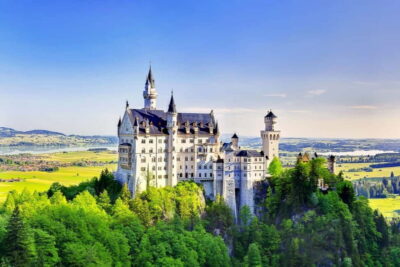
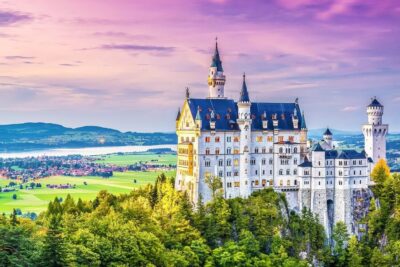
Neuschwanstein & Linderhof Castle-Fairytale Day Tour from Munich
Read our review →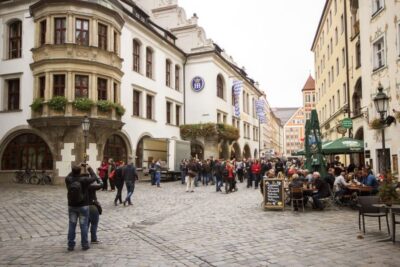
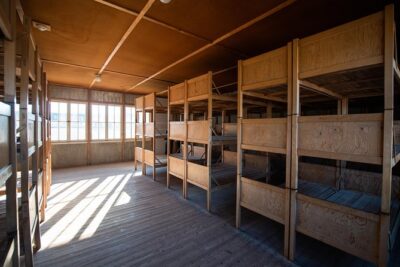
Dachau Concentration Camp Memorial Site Tour from Munich by Train
Read our review →
Munich Hop-On Hop-Off Tour: 1-Day or 2-Day Ticket
Read our review →Browse the lists this tour appears in