
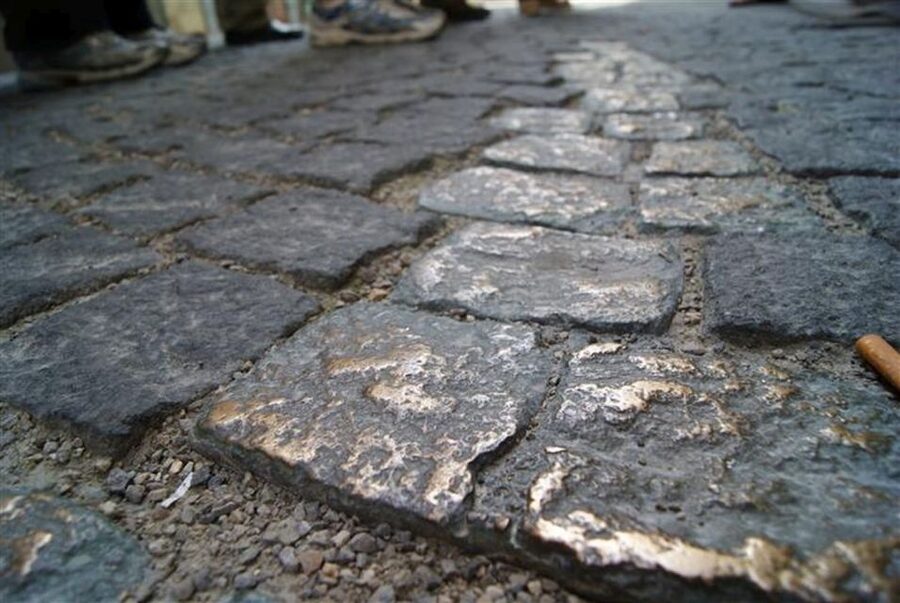
Review · MUNICH TOURS
Munich: Birthplace of the Third Reich Guided Walking Tour
Munich’s connection to the Third Reich becomes painfully clear when you see the actual beer halls, streets, offices, and memorials tied to its rise. This 2.5-hour walking tour links Hitler’s early speeches, the failed putsch, Kristallnacht, and the city’s later effort to remember the people harmed by Nazism.
I like the way the tour joins political history to ordinary city streets, and I like the use of old photographs by some guides to compare past and present. Guides such as Jake, Sam, Nic, Steve, Josh, and Aileen are praised for clear explanations and thoughtful handling of a heavy subject. The main drawback is simple: weather matters, and Munich can be cold, wet, or hot during a long outdoor walk.
Key points at a glance
- Beer halls with a grim political past: See places where Hitler spoke and where early Nazi gatherings took shape.
- A clear story of cause and effect: Follow the movement from failed politics and street violence to dictatorship and war.
- Kristallnacht brought into local focus: Learn about the Munich locations tied to the Night of Broken Glass.
- Nazi buildings beside memorials: Compare surviving party-era structures with places honoring victims and opponents.
- Strong English-speaking guides: Jake, Sam, Steve, Nic, Josh, Aileen, Iain, and others have been praised for clarity, humor, and care.
- Good value at $29: Two and a half hours of guided city history costs little compared with a private tour or museum visit.
Why Munich is the right place for this difficult story
Munich is not simply the backdrop for this tour. It was one of the main settings where the Nazi movement developed, organized, and learned how to attract public support. That makes the city useful for understanding how a political fringe group gained power.
You begin with the conditions that helped the movement grow. The tour explains how Hitler’s failed putsch fit into the larger story, then follows the Nazi Party as it used speeches, propaganda, intimidation, and street violence to gain influence. You are not asked to treat the subject as a parade of famous names. Instead, the guide connects the people and events to the buildings around you.
That local focus is valuable. A textbook can explain the sequence of events, but a walk shows you where speeches were delivered, where party officials worked, and where violence entered daily life. The city center becomes a set of evidence points rather than a list of attractions.
The subject is grim, and the best guides handle it without turning the tour into a theatrical performance. Several guides are praised for using gentle humor to help the group stay engaged, but the humor does not erase the seriousness of the crimes. I would expect the tone to vary slightly by guide, yet the feedback consistently points to clear and careful storytelling.
More WWII History Tours in Munich
- Munich: Third Reich & WWII Walking Tour
★ 4.6 · 6,181 reviews - Dachau Concentration Camp Memorial Site Tour from Munich by Train
★ 4.5 · 5,637 reviews - Third Reich Walking Tour Munich
★ 4.5 · 4,291 reviews
Meeting at Radius Tours and reaching central Munich

The tour meets at the Radius Tours office. Transportation to Munich’s historic center is included, while hotel pickup is not. That distinction matters, so give yourself time to reach the office rather than assuming the tour begins at your hotel.
The stated duration is 2.5 hours. That is long enough to build a proper historical chain, but short enough to fit into a day of sightseeing. The walk ends with drop-off information for postal code 80331 and the Radius Tours office, placing you near the central Munich area.
Starting away from the heart of the old town can also be useful. One morning departure helped a participant avoid the crowds gathering in the main square for celebrations. If you prefer quieter streets and cooler temperatures, an earlier option may be worth choosing when available.
The meeting arrangement is practical, though not luxurious. You are joining a walking tour, not being collected at your hotel. Wear shoes suited to pavement and bring water. One participant specifically wished for a drink stop on a warm day, while others completed the route in freezing weather and heavy rain. The lesson is plain: check the forecast and dress for the day, not the season printed on your itinerary.
The beer halls where the movement found an audience
The early beer halls are among the most memorable parts of the route. These are the places where Hitler gave speeches and where small gatherings helped the Nazi Party build an audience.
The value here lies in scale. Political extremism can sound abstract when you read about it from a distance. Standing outside a real meeting place helps you picture how speeches, loyal supporters, beer, social pressure, and repeated slogans worked together. The guide explains how a movement that began with small gatherings presented itself as a force capable of reshaping Germany.
You should not expect every interior to function as a museum. The focus is on the historic buildings and their role in the story, not on a long indoor exhibition. That makes the guide especially important. The building alone cannot explain why these meetings mattered, but a good account can show how a public room became a place where ideology was spread and political loyalty was tested.
Several guides have been singled out for adding details not covered on similar tours. Steve, in particular, is praised for his command of early twentieth-century German politics, while Jake is often noted for combining energy with clear explanations. A guide may also bring photographs or other visual material. Steve’s binder of historic images was especially useful because it placed the old scenes beside what you can see today.
Following the failed putsch and the road to power
A key strength of this walk is that it does not begin with Hitler already in control. You follow the failed putsch and the methods used to turn political defeat into a later advantage.
That distinction helps you understand the movement’s rise. Failure did not end Hitler’s career. The tour shows how the Nazi Party changed tactics, built organization, sharpened its message, and used public disorder to present itself as the answer to Germany’s problems.
As you walk through the city, the guide describes how Hitler and the Brownshirts fought their way into public life. This is where the tour moves beyond dates and names. You learn how intimidation operated in the streets and how political violence could make ordinary people feel that order required authoritarian rule.
I appreciate this part because it asks the uncomfortable question of how such a movement became possible. The answer is not reduced to one villain or one speech. The walk considers ideology, public fear, propaganda, party organization, and the willingness of people in power to tolerate or use extremists.
The subject can be intense, especially if you already know the broad outline of the period. Even then, the local setting adds detail. One guide, Iain, was praised for handling questions from people who had already read widely on the subject. That suggests the tour can work for both newcomers and serious history fans, provided you are happy with a city walk rather than an academic seminar.
More wartime history tours in Munich:
- From Munich: Dachau Memorial Site Day Tour
★ 4.8 · 2,723 reviews - From Munich: Dachau Memorial Site Half-Day Trip
★ 4.7 · 2,526 reviews - From Munich: Dachau Memorial Site Full-Day Tour
★ 4.9 · 1,406 reviews - Dachau Concentration Camp Memorial Tour with Train from Munich
★ 4.5 · 955 reviews
The Munich building connected to Kristallnacht
The tour stops at the building where Goebbels plotted the Night of Broken Glass, often called Kristallnacht. This is one of the most disturbing moments on the route because it connects a city location to a major escalation of anti-Semitic persecution.
The guide explains why Kristallnacht was more than a night of random violence. It marked a grim step toward the organized destruction of Jewish life and helped move persecution into a more open and brutal phase. Hearing that story at the relevant Munich location gives the event a sharper local meaning.
This stop also shows why the tour requires a respectful tone. The subject involves broken homes, businesses, places of worship, and human lives, not only political strategy. Guides are praised for explaining the stages of Nazi history clearly and for discussing anti-Semitism without softening its consequences.
I would not choose this tour if you want light sightseeing with a few historical facts added in. The route deals directly with racism, political violence, war, and mass murder. It is suitable for readers who want to understand the period and are prepared for difficult material.
Nazi headquarters and the buildings that survived the war
Another major stop is the former official Nazi headquarters. Munich suffered heavy Allied bombing, yet many Nazi-era buildings survived. Seeing those structures today creates an uneasy contrast between physical survival and moral collapse.
The guide uses the buildings to explain the machinery of power. You learn how offices, party institutions, and public spaces helped turn a political movement into a governing system. The architecture does not excuse or glorify the people who used it. Instead, it gives you a way to consider how bureaucracy and propaganda supported violence on a much larger scale.
The surviving buildings also raise questions about memory. Some structures remain because they could be reused, while others are marked by memorials or historic signs. The tour helps you read those choices and understand how Munich has tried to face its past.
Do not expect every Nazi building to look dramatic. Some may appear plain or altered. That is part of the point. The machinery behind dictatorship often worked in offices that looked ordinary. A skilled guide supplies the missing context and helps you see why an unremarkable facade matters.
Memorials to victims and opponents of Nazism
The final section brings you face-to-face with monuments honoring victims and people who resisted Nazism. This gives the walk a needed change in emphasis. You are not left with the impression that Munich’s story belongs only to Hitler and his followers.
The memorials show how public memory works in a city that played a major role in the Nazi rise. They honor people who were persecuted, murdered, or risked everything to oppose the regime. The guide explains not only what the memorials commemorate, but also why remembering them matters now.
This part can be especially affecting because it returns the focus to human beings. Political history can become crowded with organizations and military campaigns. Memorials restore the names, losses, and acts of courage that those broad labels can hide.
One guide ended by connecting a Munich street to the beginning of Kristallnacht and the need for constant vigilance today. That closing idea fits the route well. The purpose is not to admire old party buildings or collect grim facts. It is to understand how prejudice and political violence grow, and why public memory remains necessary.
The guides make or break the walk
The strongest praise goes to the guides. Jake is repeatedly described as energetic, clear, and able to use humor carefully. Sam is praised for extensive command of Munich’s past and for answering questions. Nic is noted for fluent English, friendly presentation, and keeping the group moving.
Steve brings a different strength. His long study of Munich’s neighborhoods and buildings, along with historic photographs, helps you picture the city during the Nazi period. Aileen is praised for clear explanations, good pacing, and making sure the group had breaks and stayed together.
Josh is described as passionate about German history and able to offer a local perspective. Iain is especially appealing to history fans who enjoy asking detailed questions. Dan kept a group engaged through rain, while other guides handled cold temperatures and torrential weather with good humor.
The names and styles may vary on your departure, so you cannot book a particular teaching approach from the information provided. Still, the repeated praise points to a strong guide-led format. Expect storytelling, questions, photographs in some cases, and explanations at each location rather than a silent procession from one address to the next.
Is $29 a fair price for 2.5 hours?
At $29 per person, this is a good-value history tour. You get a live English-speaking guide, transportation to the historic center, and two and a half hours of focused interpretation. That works out to a modest cost for a subject that would be difficult to follow well on your own.
The tour is also cheaper than arranging a private guide, though the information provided does not state the group size for every departure. One description calls it a small-group walk, but you should not assume a private experience. The quality depends heavily on the guide’s ability to speak clearly and manage questions in the group.
You are paying for interpretation, not admission to a major indoor museum. If you want extensive artifacts, galleries, or shelter from bad weather, this is not the right format. If you want to understand why certain Munich buildings and streets matter, the price is sensible.
Free cancellation up to 24 hours before departure and reserve-now, pay-later booking make it easier to fit the walk into a changing schedule. Starting times vary, so check availability before planning your day around it.
Who should book this Munich history walk?
I would recommend it to first-time Munich visitors who want more than the usual old-town sights. It is also a good choice for students, history fans, and anyone trying to understand how Germany’s Nazi past remains visible in the city.
You will get the most from it if you are willing to listen closely and ask questions. The route covers a lot in 2.5 hours, so the pace may feel active. Several guides provide breaks, but you should still bring water and plan for outdoor conditions.
Families with older teenagers may find it worthwhile, though the subject is serious and includes anti-Semitic persecution, political violence, and the road to the Holocaust. Young children are unlikely to gain much from a tour built around this level of historical detail.
I would pair it with independent time at Munich’s other historical sites, but the walking tour gives you a useful framework first. Once you understand the city’s role, later visits to memorials and museums will carry more weight.
Should you book it?
Book this tour if you want a clear, place-based explanation of Munich’s role in the rise of the Third Reich. The beer halls, former Nazi headquarters, Kristallnacht location, wartime buildings, and victim memorials create a strong route, while the guides add the political and human context the streets cannot provide by themselves.
Skip it if you want a relaxed sightseeing walk, indoor comfort, or a short introduction with little detail. For $29, the value is strongest when you come prepared for serious history, changing weather, and two and a half hours on foot.
FAQ
Where does the tour meet?
You meet at the Radius Tours office.
How long does the tour last?
The tour lasts 2.5 hours.
What language is the tour conducted in?
The live tour guide speaks English.
Is transportation included?
Transportation to Munich’s historic center is included.
Is hotel pickup included?
No. Hotel pickup is not included.
What places does the tour cover?
The walk includes historic beer halls linked to Hitler’s early speeches and party gatherings, the former official Nazi headquarters, buildings connected with Munich’s Nazi past, the location where Goebbels plotted Kristallnacht, and memorials to victims and opponents of Nazism.
How much does the tour cost?
The price is $29 per person.
Can I cancel for a full refund?
Yes. You can cancel up to 24 hours in advance for a full refund.
More Walking Tours in Munich
- Munich: Old Town & Viktualienmarkt City Walk in German
★ 4.7 · 2,304 reviews - Munich: Night Watchman Walking Tour
★ 4.7 · 2,092 reviews - Munich Ghosts and Spirits Evening Walking Tour
★ 5.0 · 1,900 reviews - Munich Old Town Walking Tour
★ 4.5 · 1,287 reviews
Just added around Munich
- Munich: Express Walk with a Local in 90 minutes★ 5.0 · 7 reviews
- Exploring Munich in a Rikscha★ 4.9 · 33 reviews
- Exploring Munich by Pedicab: Premium Two Hour Tour★ 5.0 · 10 reviews
- Erding: 1-Day Spa Ticket at Therme Erding★ 4.5 · 50 reviews
- Munich: KUNSTLABOR 2 Entry Ticket★ 4.2 · 89 reviews
- Private Van Tour to the Royal Palace of Herrenchiemsee★ 5.0 · 6 reviews
- From Munich: Königssee Day Trip with Boat Ride and Salt Mine★ 4.5 · 93 reviews
- Culinary Haidhausen – The Food Tour★ 4.3 · 4 reviews
Munich Tours, compared.
Neuschwanstein & Linderhof Castle-Fairytale Day Tour from Munich
Read our review →
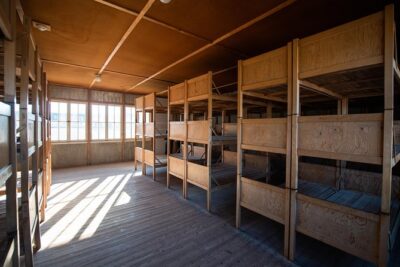
Dachau Concentration Camp Memorial Site Tour from Munich by Train
Read our review →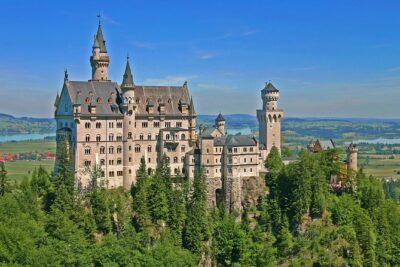
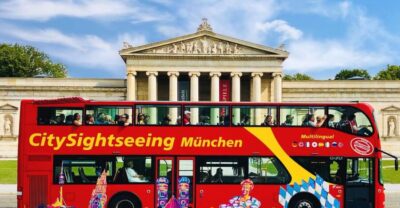
Munich Hop-On Hop-Off Tour: 1-Day or 2-Day Ticket
Read our review →Browse the lists this tour appears in