
Review · LUBECK TOURS
Lübeck: Hanseatic League History Walking Tour
Lübeck’s story comes alive on foot, one brick gable and narrow lane at a time. This 90-minute walk follows the city’s rise as a major Hanseatic trading center, from the Holsten Gate and Trave Harbour to St. Mary’s Church and the old guild halls. The route links famous sights with smaller corners, so you get both the postcard city and the lived-in one.
I like the private format, which gives your group room to ask questions and shape the walk around its interests. I also like the compact route: you see a great deal without giving up half a day. Guides such as Bernd, Chris, and Karin have been praised for clear explanations, energy, and flexibility, including special interest in Lübeck’s courtyards.
The main consideration is the price: $259 for up to six people is a serious fee for 90 minutes. It can be good value for a full group that wants personal attention, but it is harder to justify for one or two people.
Key points to know
- Holsten Gate starting point: Begin at Lübeck’s best-known city gate, then move directly into the story of the Hanseatic city.
- Hanseatic League focus: Learn how merchant connections grew into an association of roughly 300 maritime and inland cities from Riga to Bruges.
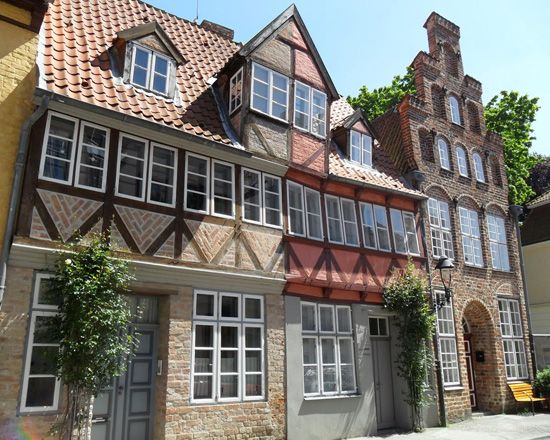
- Historic route: Walk beside the salt storehouses and Trave Harbour, then along Große Petersgrube, one of Lübeck’s oldest streets.
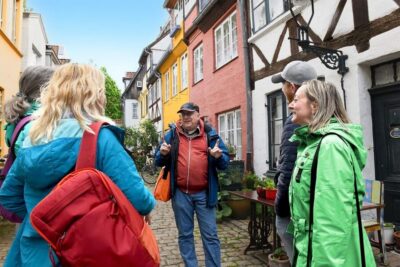
- Architecture up close: See stepped gables, brick buildings, tight lanes, and quiet inner courtyards that are easy to miss alone.
- Private group format: Your party of up to six has a guide to itself, with English and German available.
- Strong guide feedback: Bernd, Chris, and Karin have each received praise for making the city understandable, enjoyable, and well paced.
Why Lübeck is the right place for a Hanseatic history walk
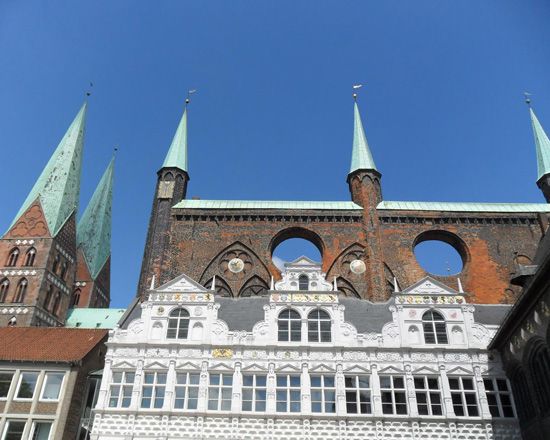
Lübeck is an ideal setting for this subject because the old center still reads like a medieval trading city. Brick churches, merchant houses, harbor routes, guild buildings, and defensive gates all fit into a compact area.
The Hanseatic League was not a single country or a formal kingdom. It grew from links between merchants who needed safer and more dependable sea connections and trade routes. Over time, those merchant ties developed into a confederation of cities that reached across Northern Europe.
The scale was impressive. At its height, the association included about 300 maritime and inland cities, stretching from Riga in the east to Bruges in the west. You do not just hear a list of dates on this walk. The streets and buildings help explain how trade shaped Lübeck’s power.
That is the best reason to take this tour early in your visit. You gain a framework for the city, then recognize the Hanseatic influence when you explore on your own later.
More history-led days in Lubeck:
- Lübeck: Private Historical and Architectural Walking Tour
★ 4.5 · 6 reviews - Leipzig: City History Canal Sightseeing Tour on a Motorboat
★ 4.7 · 6,232 reviews - Berlin: Natural History Museum Entrance Ticket
★ 4.6 · 3,382 reviews
Starting beneath Lübeck’s Holsten Gate
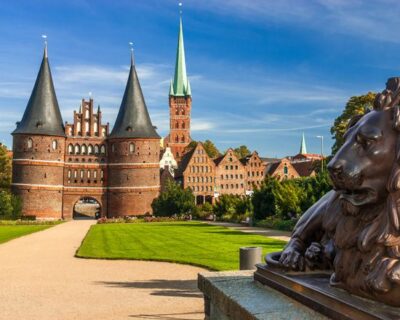
The meeting point is the Holsten Gate, one of Lübeck’s defining landmarks. It is also a useful place to begin because the gate immediately introduces the city as a fortified commercial center.
The route starts near one of four city fortification gates at this wall passage alone. That detail gives the first few minutes real weight. Lübeck was not simply a collection of handsome buildings. It was a protected city with goods, merchants, and valuable access to waterways to guard.
The Holsten Gate is also an easy landmark for a private group to find. You do not need to search for a small shop or hotel entrance. Meet at the gate, connect with your guide, and begin walking into the old center.
A guide can help you read the gate as more than a photo stop. Look for how its heavy brick construction and defensive role contrast with the grand merchant architecture you will see later.
Salt storehouses and the Trave Harbour
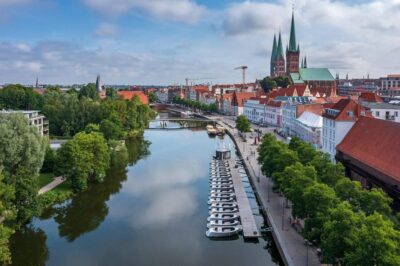
From the Holsten Gate, the walk passes the salt storehouses and the Trave Harbour. This is where the Hanseatic story gains a practical edge.
Salt was a valuable trade product, and the storehouses point to the basic work behind Lübeck’s wealth: goods arrived, were stored, moved, taxed, and shipped onward. The harbor gives you the physical connection between the city and its wider network.
I like this part of the route because it keeps the history grounded. Instead of hearing only about merchant guilds and distant ports, you see the waterway and storage buildings that made trade possible.
The harbor section may feel less ornate than the churches and old lanes later in the walk. That is part of its value. It shows the working side of Lübeck, not just its polished historic center.
Große Petersgrube and Lübeck’s brick character
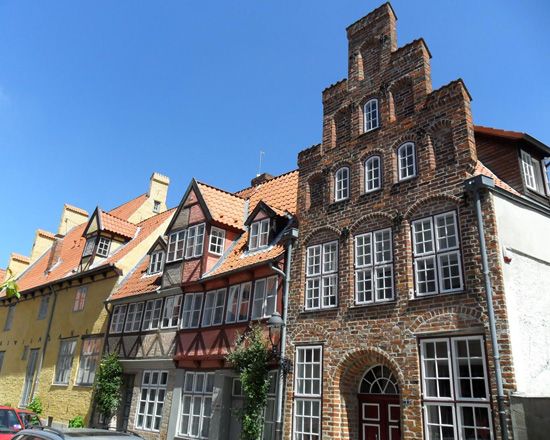
The route continues along Große Petersgrube, one of Lübeck’s oldest streets. This is a strong stretch for architecture, with old brick buildings and stepped gables packed along a narrow urban lane.
The stepped gable is one of the clearest visual markers of northern German architecture. It gives the buildings a distinctive outline, but the real pleasure is seeing how closely the houses sit together. The street feels shaped by trade and limited city space rather than by modern planning.
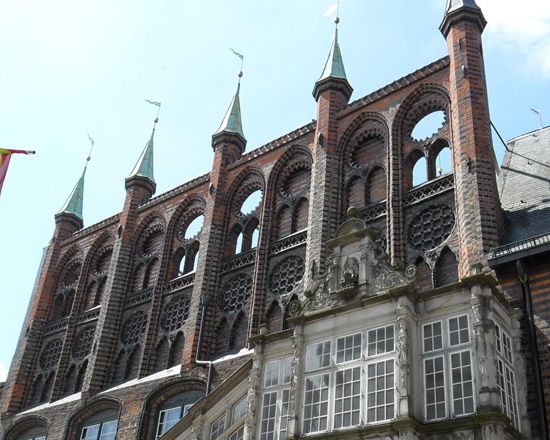
Here, I would slow down and look upward. The details are not only at eye level. Rooflines, brick patterns, and the arrangement of old façades tell you how the city developed.
The narrow street also makes this a walking tour rather than a sightseeing bus experience. You move through spaces too tight for vehicles and see the city at a human pace. Bring comfortable shoes, since the route is entirely on foot and includes old streets and lanes.
More walking tours in Lubeck:
- Lübeck: Express Walk with a Local
★ 4.9 · 10 reviews - Lübeck: Old Town Highlights Private Walking Tour
★ 4.8 · 8 reviews - Discover Berlin Half-Day Walking Tour
★ 5.0 · 9,624 reviews - Berlin: Third Reich and Cold War 2 Hour Walking Tour
★ 4.9 · 6,830 reviews
St. Mary’s Church and the Hanseatic model
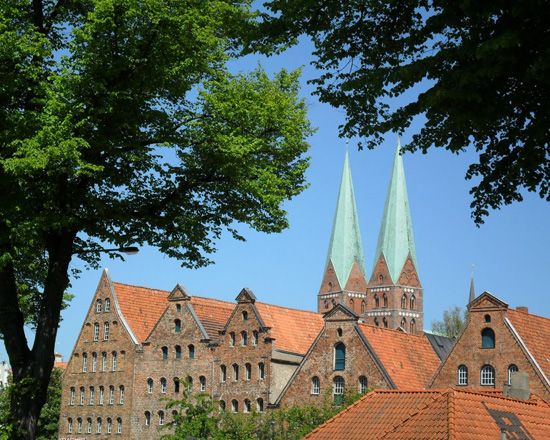
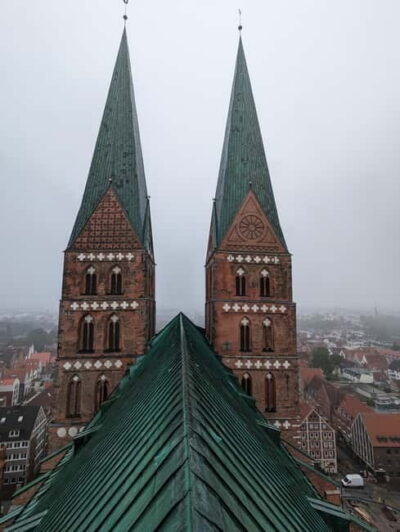
St. Mary’s Church is one of the major stops. Its importance reaches beyond Lübeck because it served as a model for numerous churches in Hanseatic cities around the Baltic region.
That detail helps explain Lübeck’s cultural influence. The city did not only move goods. Its building styles, religious institutions, and civic ideas also traveled through the same network.
You can expect the guide to connect the church to the wider Hanseatic world rather than treating it as an isolated monument. The stop works best for anyone who wants to understand how Lübeck’s position affected northern European architecture and city life.
The tour is focused on outdoor city history, so do not assume that the 90-minute route includes a long interior visit. The supplied details emphasize seeing the church as part of the walking route. If entering St. Mary’s is important to you, ask the guide about the plan at the start.
Buddenbrook House and Lübeck’s literary side
The walk then passes Buddenbrook House, associated with the Mann family. This adds a later cultural layer to the route.
Most of the tour centers on the Hanseatic period from the 12th through the 17th century, but Lübeck’s identity did not end when Hanseatic influence faded. Buddenbrook House connects the old city to the literary world and to the Mann family’s place in Lübeck’s story.
For you, this creates a useful change of mood. The route moves from fortifications and merchant networks to the social and cultural life that continued inside the same old streets.
If literature interests you, this may be one of the stops where a private format pays off. You can ask for more context rather than simply moving on with a large group.
The Schiffergesellschaft guild hall
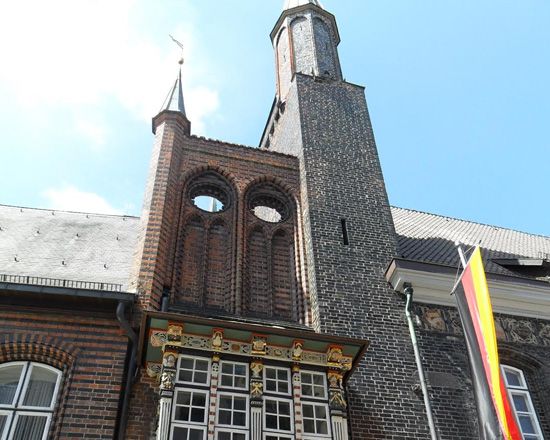
The Schiffergesellschaft is the traditional guild hall where Hanseatic sailors used to stop. It gives the tour another direct link to the people who worked within the trade system.
Guilds mattered because commerce depended on organization, shared rules, and mutual support. The building helps make the Hanseatic League less abstract. You can connect the broad network of cities with the sailors, merchants, and professional groups who kept it functioning.
This is also a good point to notice the difference between Lübeck’s public power and its working communities. City halls and churches show civic and religious authority. A guild hall points to the commercial society that made Lübeck prosperous.
The route does not promise a meal or drinks, and food is not included. The hall is included as a historical sight on the walk, not as a dining stop.
Finishing at the Hospital of the Holy Spirit
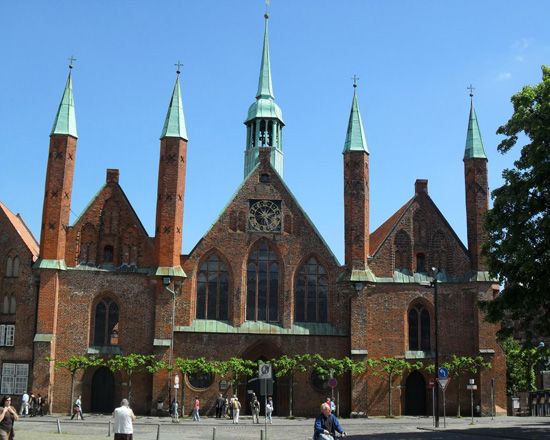
The tour ends at the Hospital of the Holy Spirit, one of Lübeck’s oldest social institutions. Its presence adds an important reminder that medieval city life included care for people who could no longer support themselves.
The final stop is not simply another grand façade. It broadens the story from trade and wealth to civic responsibility and social institutions.
You can also look into one or two romantic backyards here. These small interior spaces are among the most appealing details of Lübeck’s old center. They offer a glimpse of the quieter side of the city, away from the main squares and headline sights.
The ending works well because it leaves you in the old town with more to explore. Your guide may be able to suggest what to see next. Karin, one of the named guides, has been praised for offering useful ideas for independent sightseeing after the official walk.
What the private format changes
This is a private group tour for up to six people. That matters more here than it would on a simple landmark checklist.
Lübeck’s history has many layers, and questions can easily pull a walk in different directions. With your own guide, you can ask about merchant life, churches, architecture, courtyards, or the Mann family without worrying about holding up a large group.
The private format also helps with pace. Some groups will want to stop often for photos and architectural details. Others may prefer a brisk route with more historical explanation. The available feedback points to guides adjusting to those preferences, including requests to see courtyards.
The tradeoff is cost. At $259 per group, the value improves as your party grows. Split among six people, it works out to about $43 per person. For two people, it is about $130 each, before any food or other expenses.
There are no transfers included, so plan to reach the Holsten Gate on your own. The tour lasts 90 minutes, which makes it easy to fit into a day of sightseeing, but it also means the guide must keep the route moving.
Guide quality and language options
The tour is available in English or German. That makes it practical for international groups, German-speaking families, and business groups with people from different countries.
The named guides connected with this experience include Bernd, Chris, and Karin. Bernd has been praised for bringing a large amount of information without making the walk dull, and for responding to requests such as seeing courtyards. Chris has been described as a strong guide for learning about Lübeck. Karin has received praise for her enthusiasm, city explanations, pacing, and suggestions for the rest of the day.
You should not assume a particular guide is guaranteed unless the booking process confirms it. Still, the feedback points to a useful pattern: guides focus on both information and conversation, rather than reciting a fixed speech with no room for questions.
That matters in a city like Lübeck. The best explanation is often the one that answers what you are looking at right now.
Is $259 a fair price for 90 minutes?
The fee is not cheap, but a direct comparison with a large group tour can be misleading. You are paying for a private guide, not simply for admission to a monument. Your group receives 90 minutes of route planning, explanation, and the chance to ask questions without sharing the guide with strangers.
For six people, the price is reasonable if you value personal attention and want a strong introduction to the city. It is especially practical for a family, a group of friends, or a small business gathering.
For one or two people, I would think carefully. The 4.9 rating from 57 reviews suggests a consistently well-received experience, but a high rating does not remove the basic price issue. If you mainly want to see the landmarks and take photos, you may prefer exploring independently. If you want the Hanseatic connections explained as you walk, the guide adds the main value.
The 24-hour cancellation policy and reserve-now, pay-later option also reduce the risk of committing too early. You can cancel for a full refund up to 24 hours before the tour, according to the stated terms.
Who will enjoy this Lübeck walk most?
I would recommend it to you if you like cities explained through streets, buildings, and local stories. It suits first-time visitors who want an orientation, history fans interested in northern European trade, and small groups that prefer a flexible private experience.
It is also a good match for a short stay. In 90 minutes, you cover several of Lübeck’s main sights without spending an entire morning indoors.
Families and mixed-age groups may appreciate the short duration and changing scenery. The route moves from a gate to a harbor, an old street, a church, a literary landmark, a guild hall, and courtyards. That variety helps keep the walk from feeling like one long lecture.
You may want a different plan if your priority is extensive interior access, a food experience, or transportation around the city. Food, drinks, and transfers are not included, and the focus is a guided outdoor walk through the historic center.
Should you book this tour?
Book it if you want Lübeck’s Hanseatic past explained in a compact route, especially if you have four to six people to share the fee. The strongest features are the private format, the carefully connected sights, and the chance to ask about details such as courtyards and traditional architecture.
I would book it near the start of your Lübeck visit, then use the rest of your day to return to the places that catch your interest. If you are traveling alone or as a couple and watching costs closely, compare the $259 group price with independent sightseeing.
For a small group that values a good guide, this is a practical way to understand why Lübeck mattered, how trade shaped the city, and where its Hanseatic character still appears in the brickwork and lanes.
FAQ
Where does the Lübeck walking tour begin?
The tour begins at the Holsten Gate in Lübeck.
Where does the tour end?
The walk ends at the Hospital of the Holy Spirit.
How long does the tour last?
The tour lasts 90 minutes.
What sights are included on the route?
The route includes the Holsten Gate, salt storehouses, the Trave Harbour, Große Petersgrube, St. Mary’s Church, Buddenbrook House, the Schiffergesellschaft guild hall, and the Hospital of the Holy Spirit.
What languages are available?
The live guide is available in English or German.
Is this a private tour?
Yes. It is offered as a private group experience for up to six people.
Are food, drinks, or transfers included?
No. Food, drinks, and transfers are not included.
Can I cancel for a full refund?
Yes. You can cancel up to 24 hours in advance for a full refund.
Just added around Lubeck
- Timmendorfer Strand: SEA LIFE Behind the Scenes Tour★ 4.9 · 15 reviews
- Lübeck zwischen Grusel und Geschichte Truecrime zu Halloween★ 4.9 · 35 reviews
- Lübeck: Old Town Highlights Private Walking Tour★ 4.8 · 8 reviews
- Lübeck: Private Historical and Architectural Walking Tour★ 4.5 · 6 reviews
- Lübeck Day Pass – Day ticket for Lübeck museums★ 4.0 · 15 reviews
- Lübeck: Express Walk with a Local★ 4.9 · 10 reviews
- Lübeck: Backyards and Town Houses Private Guided Tour★ 4.9 · 23 reviews
- Lübeck: Classic Tour of the Hanseatic City★ 4.8 · 64 reviews
Lubeck Tours, compared.
entertaining guided tour to old town highlights
Read our review →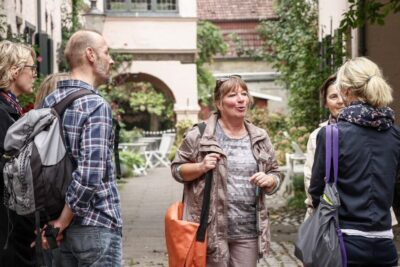

Lübeck zwischen Grusel und Geschichte Truecrime zu Halloween
Read our review →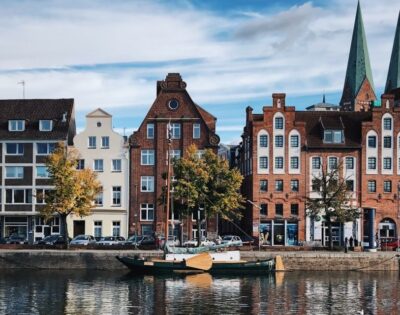
Browse the lists this tour appears in