Review · LUBECK TOURS
Lübeck: Entertaining Tour Through Hidden Courtyards
Lübeck’s best stories are often tucked behind its grand brick façades. This 1.5-hour walking tour leads you through narrow corridors and small courtyards where workers once lived, showing you a side of the Hanseatic city that a standard walk through the main streets can miss. I like the focus on daily life, and I like that the small-group setting leaves room for questions. The one catch is simple: the tour is held only in German.
I also like the way the tour connects architecture to pressure on the medieval city. Lübeck’s population grew quickly, and cramped living quarters had to be created between front buildings. You’ll hear how merchant and shipper widows were housed, too, giving the tour a human angle beyond ships, trade, and wealthy merchants.
Key points to know before booking
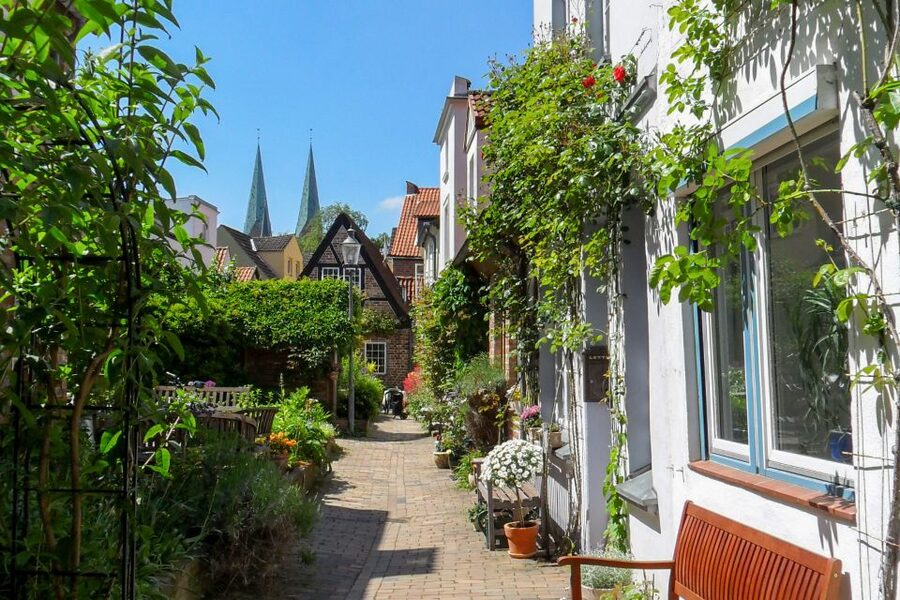
- Medieval corridors and courtyards: Follow narrow paths into tucked-away spaces behind Lübeck’s main buildings.
- A tour about ordinary life: Learn how workers, widows, merchants, and shippers shaped the city’s housing story.
- Hanseatic League context: See how trade and population growth affected the layout of Lübeck.
- Private-group format: A small group makes it easier to ask questions and hear the guide clearly.
- German-language guiding: The tour is conducted in German, with no other language listed.
- Easy planning: The experience lasts 1.5 hours, costs $20 per person, and allows free cancellation up to 24 hours before the start.
Starting at the Burgtor
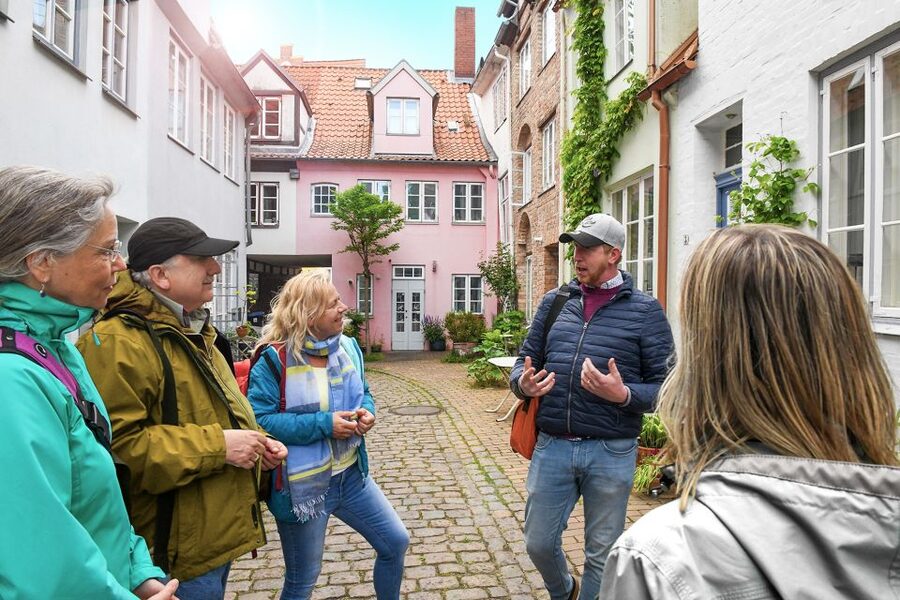
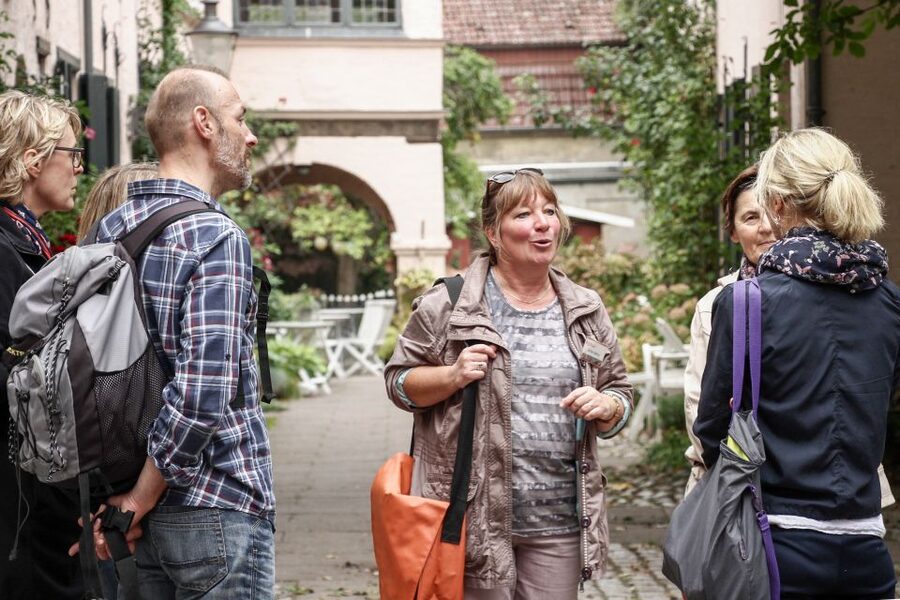
Your meeting point is in front of the Burgtor at Burgtorbrücke 2, on the outside of Lübeck’s old town. Look for the guide carrying an orange bag marked with the k3 logo.
This is a useful starting place because the Burgtor immediately puts you near the historic city center while also hinting at Lübeck’s defensive past. You do not begin inside a museum or at a modern visitor center. You meet outdoors, identify the orange bag, and set off on foot.
I would arrive a few minutes early. The meeting instructions are clear, but this is a street-side meeting point rather than a staffed desk. If you are arriving with children, luggage, or a larger day bag, give yourself extra time to get organized before the walk begins.
The tour is listed as a private group experience. That matters here. Courtyards and corridors are often narrow by nature, so a smaller group is more comfortable than a large crowd. It also gives you a better chance to ask about a particular doorway, passage, or bit of local history.
A few more Germany half-days to weigh up
- Lübeck: 1-Hour Splash Bus City Tour
★ 4.0 · 2,626 reviews - Lübeck: entertaining guided tour to old town highlights
★ 4.7 · 594 reviews - SEA LIFE Timmendorfer Strand Ticket
★ 4.0 · 256 reviews
Why Lübeck’s courtyards matter
At first glance, Lübeck’s historic center can seem to be about handsome brick buildings, merchant houses, churches, and the Hanseatic League. Those sights are important, but this tour takes you behind the façades to see how the city made room for people.
As Lübeck’s population increased during the Middle Ages, open land inside the old town became scarce. New living spaces were fitted into the gaps behind front buildings. That led to narrow, crooked corridors and small courtyards, spaces shaped less by neat planning than by necessity.
This is the part I find most useful. Instead of treating old architecture as a collection of pretty surfaces, the guide explains why the spaces look the way they do. A tight passage becomes evidence of population pressure. A tiny yard tells you something about how urban families and workers lived.
You will visit several of these courtyards and corridors during the walk. The precise route can vary, but the central idea remains the same: step away from the main street and look at the less formal spaces behind it.
Through the narrow corridors
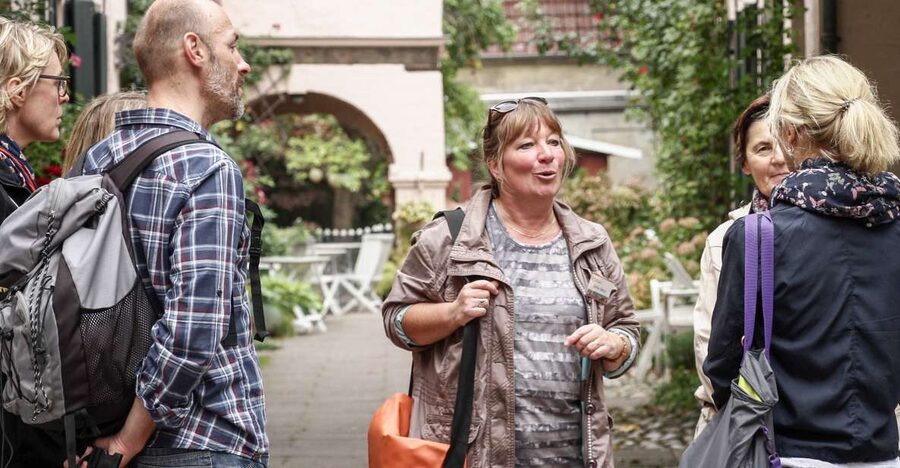
The corridors are the physical heart of the experience. They are smaller, more enclosed, and less obvious than Lübeck’s major sightseeing routes. You may pass through openings that are easy to overlook if you are walking on your own.
The tour description refers to small stalls where workers once lived. These homes help explain the city’s social structure. Lübeck was a major trading center, but its success depended on many people who worked in and around the merchant economy. The narrow housing areas show where ordinary workers fit into that urban system.
You should expect the corridors to feel close and irregular. That is part of their value, but it also means this is not a wide, open walking route. Stay with the group and listen for the guide’s directions as you move between the front buildings and rear courtyards.
The route is designed for discovery rather than speed. In 90 minutes, you will cover a focused part of the old town instead of trying to see every major sight. I prefer that approach for this subject. A quick list of famous buildings would not explain why the less polished spaces are so revealing.
Small courtyards and the story of crowded housing
The courtyards offer a different view of Lübeck from the grand streets. Their scale is smaller, and their purpose was practical. They were created to provide housing in a city where demand for space was rising.
You will hear about the construction of corridors between the front buildings and the homes tucked behind them. The shape of these passages was driven by available space, existing property lines, and the need to reach the rear buildings. The result was a network of passages that can feel almost accidental.
That awkward shape is worth noticing. The crooked lines are not simply decorative quirks. They reflect how an old city adapted over time instead of being rebuilt from scratch according to a clean plan.
The tour also helps you see the difference between Lübeck as a trading power and Lübeck as a place where people had to live. The Hanseatic League provides the broad economic setting, but the courtyards bring the story down to the level of rooms, passageways, and shared urban space.
Same city, a completely different sort of afternoon:
- Berlin: Reichstag, Dome and Government District Guided Tour
★ 4.7 · 18,288 reviews - Berlin: 1-Hour City Tour by Boat with Guaranteed Seating
★ 4.3 · 16,993 reviews - Hamburg: Sex and Crime in St. Pauli Tour for Ages 18+
★ 4.7 · 15,447 reviews - Hamburg: 1.5-Hour Harbor and Speicherstadt Day Cruise
★ 4.6 · 14,200 reviews
Monastery courtyards and housing for widows
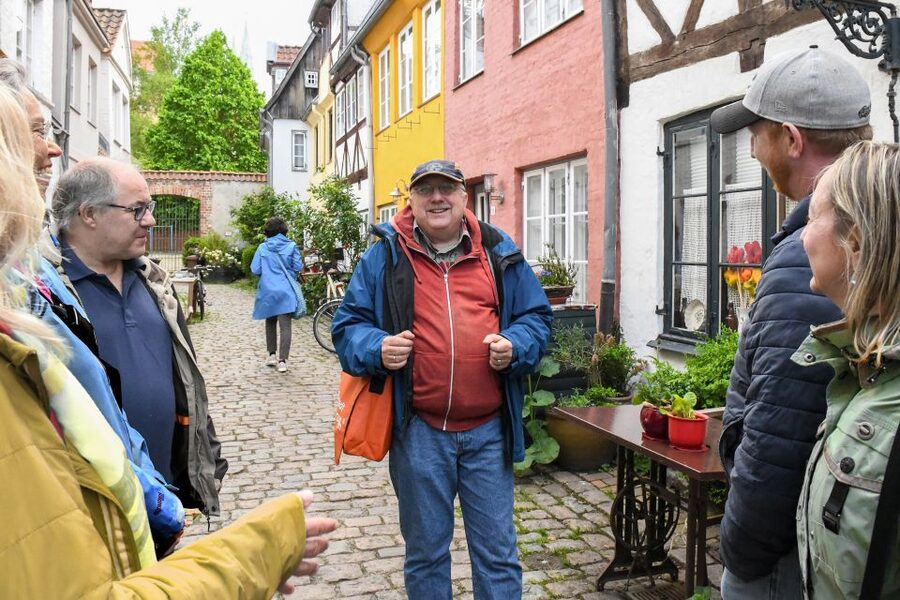
Another important part of the route is the visit to monastery courtyards. These spaces take you into a different chapter of Lübeck’s social history and show that courtyards were not only connected with workers’ housing.
You will learn how merchant and shipper widows were housed at the time. That detail adds welcome balance to the usual Hanseatic story. Lübeck’s merchants and shippers may have built fortunes through trade, but their families still needed support when a husband died.
The monastery courtyards provide a setting for that story. Rather than focusing only on religious architecture, the guide uses these places to explain how housing and social care worked in the medieval city.
I would pay close attention here to the connection between status and living space. Widows from merchant and shipping families were part of Lübeck’s commercial world, yet their housing needs were distinct. The courtyards help make that social difference visible.
Hanseatic trade without a dry lecture
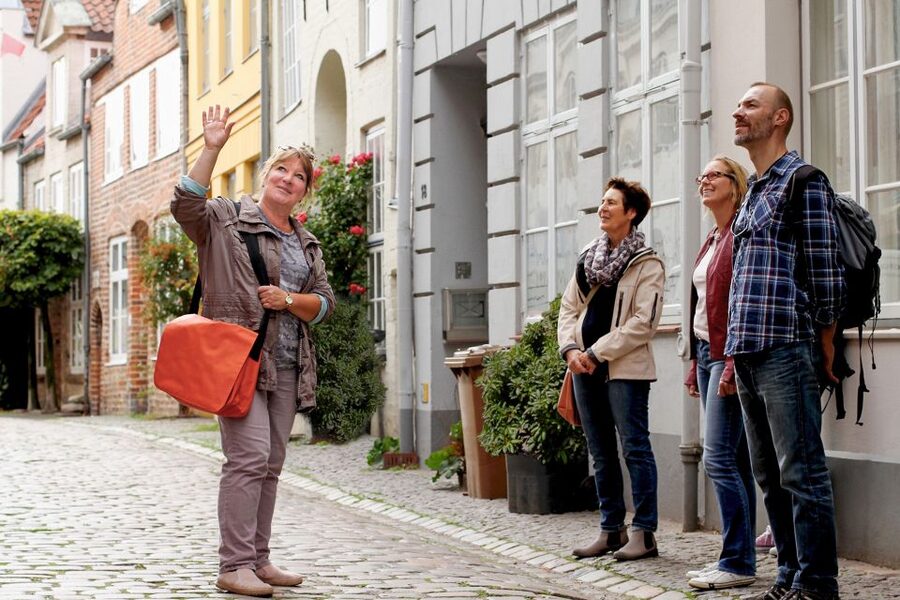
The Hanseatic League can be a difficult subject if it is presented as a list of dates and trading privileges. This tour uses the city itself to make the topic easier to grasp.
You will hear how Lübeck’s role in the Hanseatic League contributed to the city’s growth. As trade expanded, the population increased, and the pressure on available housing became more intense. The courtyards and corridors are therefore tied directly to the city’s economic success.
That is a good way to learn. You are not only hearing that Lübeck was important. You are seeing one result of that importance in the way homes were added behind the main buildings.
The guide also points out special features along the way and supplies background about the places you visit. The tour is described as entertaining, and the strong feedback reflects that it is not meant to be a formal academic talk. The best use of the time is to ask questions when a detail catches your attention.
What the private-group format changes
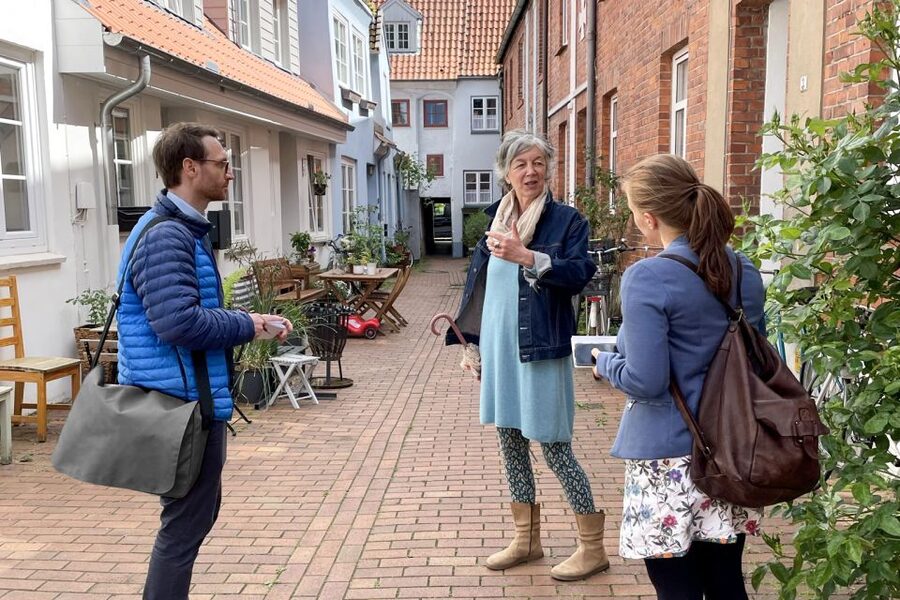
The private-group setup is one of the tour’s strongest practical features. A small group fits the setting better, especially in tight passages where a large party could block the route or make it hard to hear.
The format also makes the walk more personal. One recent booking had only two people, and the guide was able to answer many questions in detail. Another account described the group as small enough for individual questions. That is exactly what I would want on a tour built around places that are easy to miss.
Do not assume private group means a custom itinerary unless that is confirmed when you book. The information provided describes a private group and a set experience focused on courtyards, corridors, Hanseatic history, and former housing. You should expect a guided route rather than a completely bespoke tour.
The guide’s name is not provided in the booking information, so I cannot give you a specific name to look for. The orange k3 bag is the reliable identification detail.
Is $20 a fair price?
At $20 per person, this is a reasonable price for a 90-minute guided walk, especially if you value local context and a small group. You are paying for access to a focused route and for explanations that are difficult to assemble from a quick self-guided stroll.
The value is strongest if you have already seen Lübeck’s main streets and want to understand the city’s less visible spaces. It is also useful at the start of a visit because the Hanseatic League and medieval housing context can sharpen your view of the rest of the old town.
The value is less clear if you want a broad introduction to every major monument. This is not presented as a full city tour. Its subject is narrower: hidden courtyards, corridors, working-class housing, monastery courtyards, widows, and the effects of urban growth.
At 1.5 hours, the tour is short enough to fit before lunch, after arrival, or alongside another Lübeck activity. The duration also keeps the subject from becoming tiring. You get a concentrated history walk rather than a long day on your feet.
Language, pace, and who should book
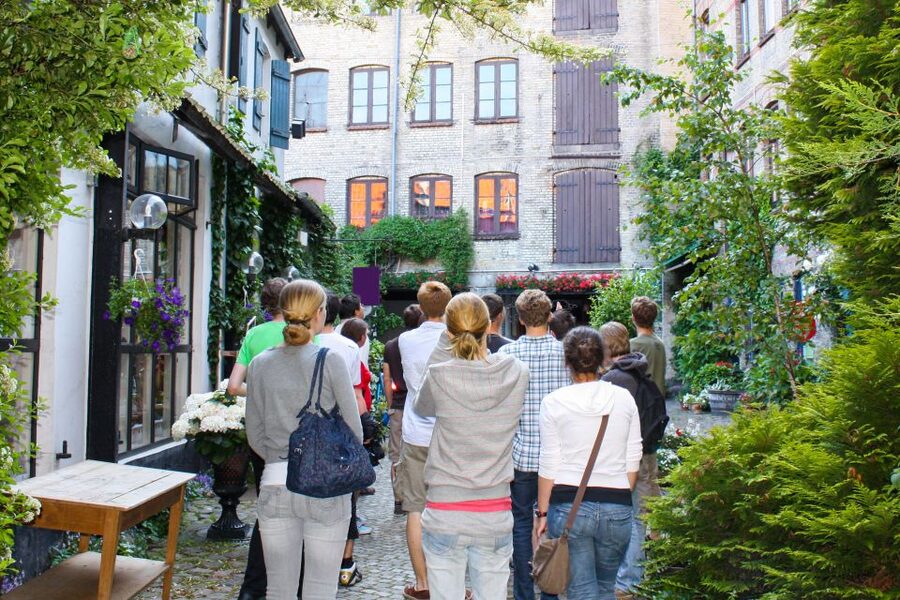
The guide speaks German, and the tour is held in German. This is the main point to settle before paying. If you understand German well, the tour’s small scale and question-friendly format should work nicely. If you do not, the experience may be difficult to follow, since no translation or second language is listed.
I would recommend it to:
- People who have already seen Lübeck’s main sights and want something less obvious
- Visitors interested in urban history and ordinary daily life
- German-speaking couples, families, and small private groups
- Anyone who enjoys short walking tours with plenty of local detail
- Repeat visitors looking for a different side of the old town
Children up to age five can join free. The tour is still a walking experience through narrow passages, so families should consider how comfortably young children manage a 90-minute guided walk.
The tour is also a good match for anyone who likes to ask questions. The small-group setup is not just a booking label here. It affects how well you can hear the guide and how much room there is for follow-up.
Practical planning for the walk
Wear comfortable shoes. The route uses narrow paths and courtyards, and you will spend the full 1.5 hours on foot. No transport is included or needed.
Meet outside the city at the Burgtor, not at a general tourist office. The exact address is Burgtorbrücke 2. Look for the orange bag with the k3 logo.
The tour is offered at scheduled starting times, so check availability for the day you want. You can reserve now and pay later, which is useful if your Lübeck plans may shift. Cancellation is free up to 24 hours before the start for a full refund.
Because the tour takes place in courtyards and corridors, keep your group together. These spaces are the reason to book the experience, but they also require more attention than a broad pedestrian street.
What the strongest feedback tells me
The most consistent praise centers on three things: the route reaches places people might otherwise miss, the explanations are interesting, and the group size allows personal questions.
That combination is important. A tour of courtyards could easily become a short list of doorways and dates. Here, the focus on background information and unusual details gives the spaces meaning. The guide explains not only what you are seeing, but why these passages and homes appeared.
The tone also seems to matter. The walk is described as entertaining and easy to follow, with several comments praising its lively pace. That makes it a better fit for you if you want history presented through stories and visible details rather than a long lecture.
No experience is perfect for everyone. The German-only format is a firm limitation, and the route’s narrow spaces may not suit visitors seeking a broad, relaxed stroll. But for the right audience, the format is focused and well judged.
Should you book Lübeck’s courtyard tour?
Book it if you want to see the old town from behind its main façades and understand how medieval Lübeck housed workers, merchants’ widows, and growing numbers of residents. The $20 price is fair for a private-group walk with a live guide, especially when you are interested in the city’s social history rather than only its major landmarks.
Skip it if you need an English-language tour or want a complete introduction to Lübeck’s churches, gates, and principal monuments. If you speak German and like overlooked corners, narrow passages, and practical history, this is a smart 90-minute addition to your time in the city.
FAQ
Where does the tour meet?
Meet your guide in front of the Burgtor at Burgtorbrücke 2, on the outside of Lübeck’s city center.
How will I identify the guide?
Look for a guide carrying an orange bag with the k3 logo.
How long does the tour last?
The walking tour lasts 1.5 hours.
What language is the tour held in?
The tour is held in German, with a German-speaking live guide.
Is this a private tour?
Yes. The activity is offered for a private group.
What does the tour include?
It includes a walking tour and a live guide.
What will I see?
You will visit courtyards, corridors, monastery courtyards, and former living areas connected with workers, merchants, shippers, and widows.
Will the tour explain the Hanseatic League?
Yes. The guide discusses the Hanseatic League and how Lübeck’s population grew during the Middle Ages.
Can young children join?
Children up to five years old can join free.
Can I cancel for a refund?
Yes. You can cancel up to 24 hours before the tour for a full refund.
Just added around Germany
- Berlin: Battle for Seelow Heights WW2 tour -Clash of Titans★ 5.0 · 27 reviews
- From Berlin: Gardens & Palaces of Potsdam Bike Tour★ 5.0 · 61 reviews
- From Amsterdam: Cologne Private Sightseeing Tour★ 5.0 · 4 reviews
- From Berlin: Historical Gems of Potsdam Private Day Trip★ 4.4 · 4 reviews
- Freiburg: Veni, vidi, vino – wine hike and tasting★ 4.5 · 144 reviews
- From Alken: Return Day Trip by Boat to Cochem★ 4.6 · 141 reviews
- Fritz Haarmann – Die Mördertour★ 4.6 · 41 reviews
- Freiburg: Tour of the city with cathedral visit★ 4.7 · 167 reviews
Lubeck Tours, compared.
entertaining guided tour to old town highlights
Read our review →