
Review · LUBECK TOURS
Lübeck: Classic Tour of the Hanseatic City
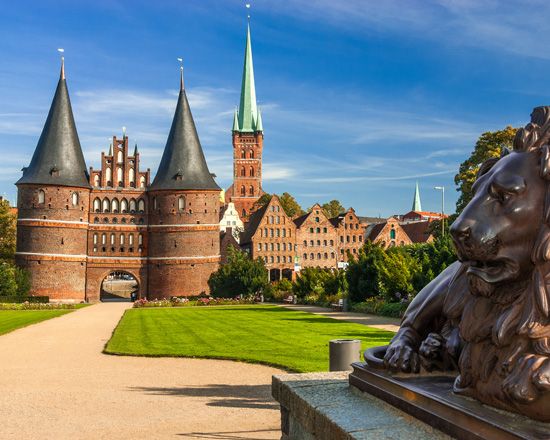
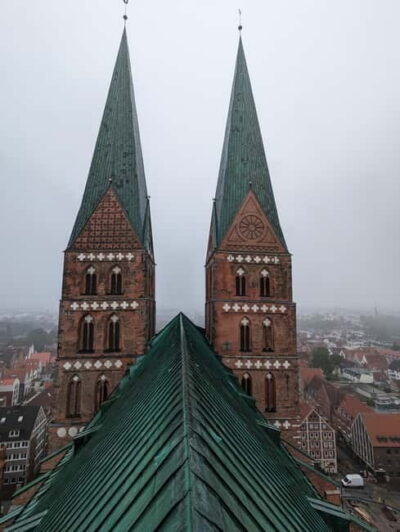
Lübeck’s medieval skyline makes a strong first impression: five great churches, brick merchants’ houses, and the chunky Holsten Gate crowd the view above the old town. This private 90-minute walk gives you the main story without turning your day into a history lecture.
I like the small private group, which keeps the pace flexible and makes it easier to ask about details. I also like the route itself, moving from the Holsten Gate and old port toward the town hall, St. Mary’s, the little Teufelchen, and Buddenbrook-Haus.
The main drawback is time. Ninety minutes is enough for a well-chosen introduction, but not enough for long interior visits or a slow look at every lane. At $259 per group, the price makes the most sense for six people, rather than one or two.
Key points at a glance
- Holsten Gate starting point: Begin beside Lübeck’s most famous landmark and one of the city’s clearest symbols.
- Five major churches: See how Lübeck’s church towers shape the City of Seven Spires skyline.
- Old port and salt warehouses: Follow the route past the area that once powered the city’s trade.
- Private group of up to six: Share one guide with your own party, in German or English.
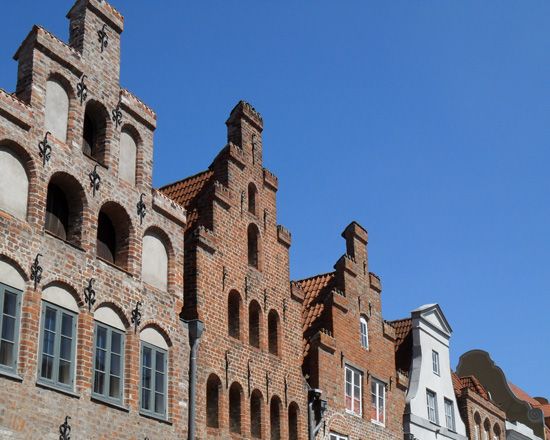
- Hanseatic architecture: Look for brick town houses, decorated façades, and traditional merchants’ homes.
- Guides with strong local insight: Christel and Frau Stump are among the guides praised for their warmth and command of Lübeck’s story.
Why Lübeck works so well on foot
Lübeck is a city where the big picture appears quickly. From the first view near the Holsten Gate, you can see why the old town earned UNESCO World Heritage status in 1987. The city’s brick churches, civic buildings, and merchants’ houses form a remarkably consistent whole.
That unity is the real subject of this tour. You are not simply ticking off separate sights. You are watching a trading city explain itself through its streets, towers, warehouses, and homes.
The walk also gives you a useful introduction to Lübeck as a Hanseatic city. The Hanseatic League connected trading towns around the Baltic and North Sea, and Lübeck became one of the most important centers in that network. The tour uses the city’s buildings to show how commerce shaped daily life and public power.
I find this kind of guided walk especially useful at the beginning of a visit. You get a map in your head, a short history of the city, and a better sense of where to return later for museums, churches, cafés, or a quieter look at the back streets.
A few more Lubeck half-days to weigh up
- Lübeck: 1-Hour Splash Bus City Tour
★ 4.0 · 2,626 reviews - Lübeck: entertaining guided tour to old town highlights
★ 4.7 · 594 reviews - Lübeck: Entertaining Tour Through Hidden Courtyards
★ 4.8 · 483 reviews
Starting beneath the Holsten Gate
The meeting point is directly at the Holstentor, usually called the Holsten Gate in English. This is a practical place to begin because the gate is easy to identify and gives you an instant visual introduction to Lübeck.
Its heavy brick form represents the defensive side of the city. Just beyond it, the old town opens into the historic core, where trade and civic life once centered. The contrast between the gate and the buildings beyond helps you see Lübeck as both a fortified city and a commercial one.
Your guide can set the basic timeline here, then point out how the city’s skyline and street plan developed. Since the tour is private, your group can ask for clarification without worrying about holding up a large crowd.
The gate is also a good place to take your main orientation photographs. Still, do not spend too long here at the start. The tour’s value comes from connecting the gate to the rest of the old town, not from treating it as an isolated photo stop.
The salt warehouses and Lübeck’s port economy
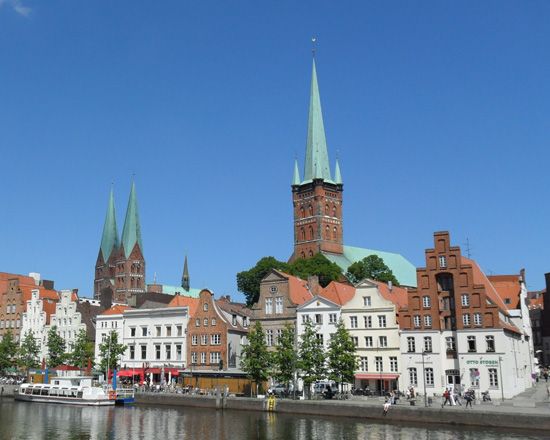
From the Holsten Gate, the route continues toward the Salzspeicherhäusern, the old salt warehouse buildings. These structures recall the practical side of Lübeck’s success. Salt was a vital trade product, used to preserve food, and Lübeck’s port helped move goods through the Baltic region.
This section adds welcome context to the grand churches and town hall. Hanseatic wealth did not appear by magic. It came from ships, storage, trade routes, and the work of merchants who needed warehouses close to the water.
You also pass the former industrial heart of Lübeck, the Port of Lübeck. The port is important because it links the city’s polished historic center to the working world that supported it.
I like this part of the route for that reason. It keeps the tour from becoming a parade of pretty façades. You see where business happened, then learn how that business helped pay for civic buildings and churches.
The short format means you should expect an exterior-focused explanation here. The tour includes a professional guide, but it does not include food, drinks, or transfers, and the itinerary does not promise extended warehouse or port visits.
Lübeck’s town hall and Hanseatic civic power
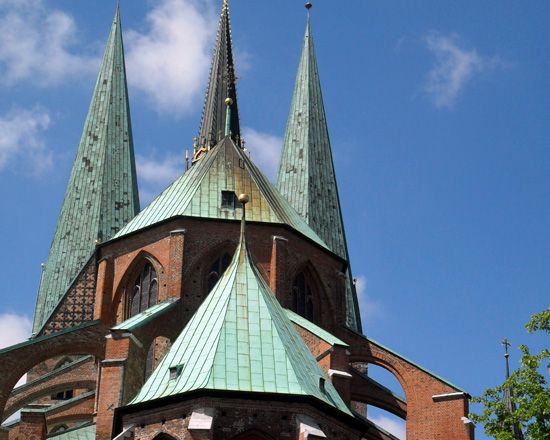
The next major stop is the town hall, one of the best places to understand Lübeck’s political importance. Its traditional Hanseatic architecture reflects the confidence of a city that directed trade and managed its own affairs.
Here, your guide can connect the merchants’ world with the city government. Wealthy trading families needed laws, courts, markets, and a strong civic structure. The town hall represents that public side of Lübeck’s commercial life.
I would pay attention to the relationship between the building and the surrounding streets. Lübeck’s historic center is not just a collection of monuments placed far apart. The civic buildings, churches, and homes sit close together, creating the compact structure that makes walking here rewarding.
Because this is a 90-minute tour, the town hall is likely a storytelling stop rather than a full architectural study. If your main goal is to explore interiors, this experience may feel too brief. If your goal is to understand how the old town fits together, the stop earns its place.
Same city, a completely different sort of afternoon:
- SEA LIFE Timmendorfer Strand Ticket
★ 4.0 · 256 reviews - Lübeck: Electric Boat Rental – without driving licence
★ 4.8 · 174 reviews - Lübeck: Hanseatic League History Walking Tour
★ 4.9 · 57 reviews - Lübeck zwischen Grusel und Geschichte Truecrime zu Halloween
★ 4.9 · 35 reviews
St. Mary’s Church and the five-spire skyline
The route includes St. Mary’s Church, one of Lübeck’s five main churches. Together, these churches create the skyline that gave Lübeck its nickname, the City of Seven Spires.
Even if you only see the church from outside during this walk, it helps to understand its scale and place in the city. Churches were spiritual centers, but they also signaled the wealth and reach of the communities that built them.
Your guide will also draw attention to the other major churches that shape the skyline. The tour description does not promise a full interior visit to all five, so plan on seeing the churches as part of the city’s wider architectural picture.
St. Mary’s is also tied to the route’s small touch of local folklore, the Teufelchen, or little devil. This detail gives the walk a lighter moment after the weightier discussion of trade, power, and religion.
I appreciate that the route includes small human stories like this. A city becomes easier to remember when it has a mischievous character tucked beside its great monuments.
Little streets, decorated houses, and Buddenbrook-Haus
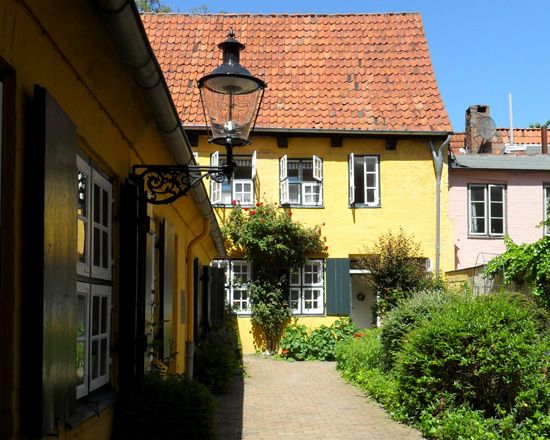
The final part of the walk leads through Lübeck’s smaller streets and decorated houses, ending at Buddenbrook-Haus. This is where the tour shifts from public monuments to private urban life.
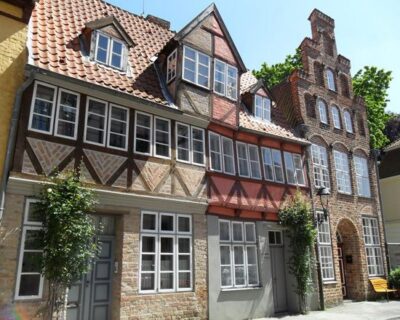
The traditional Kaufmannshäuser, or merchants’ houses, show how successful trading families lived and worked within the old town. Their façades are not merely decorative. They help explain the social world behind Lübeck’s commercial rise.
The smaller lanes also offer a useful change of pace. After the open spaces near the gate, port, and town hall, you get a closer look at the city’s details. Look upward at the decorated façades, around corners, and into the rhythm of the narrow streets.
The connection to the Brothers Mann adds a literary layer. Buddenbrook-Haus is associated with Thomas and Heinrich Mann, and the route follows their footsteps through this part of town. The supplied tour details do not promise entry into the house, so treat it as an exterior destination and literary reference point rather than a museum visit.
This ending works well because it leaves you in the old town, surrounded by places worth exploring at your own speed. You can continue walking afterward, return to a church, or seek out a meal without needing transport back to the starting point.
What the private format changes
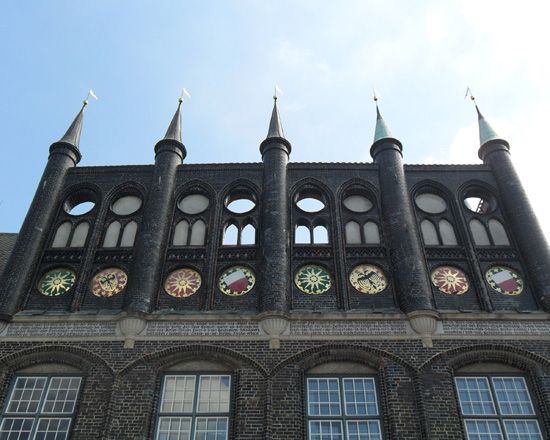
This is a private group tour for up to six people, led in German or English. That arrangement matters more here than it would on a simple landmark visit because Lübeck’s main interest lies in connections between buildings.
With your own group, you can ask why a warehouse mattered, how the churches relate to Hanseatic wealth, or what a particular merchant’s house tells you about city life. You also avoid the stop-and-start rhythm that can come with a large public group.
The guide quality matters a great deal in a short tour. The available guide information includes Christel, sometimes written as Crystal in one English comment, and Frau Stump. The strongest comments highlight friendly manner, clear explanations, and a strong command of Lübeck’s past. One German comment specifically praises the amount of background information, while another describes the city walk as very interesting.
I would still keep your expectations realistic. A 90-minute private walk cannot cover every church, lane, or historical period. You are paying for a focused introduction and a personal guide, not a full-day city program.
Is $259 a fair price?
The listed price is $259 for the group, with up to six people. At the maximum group size, that works out to about $43 per person. For a couple, the same total becomes about $129.50 each, and for a solo visitor it is a substantial cost.
That price is easiest to justify when you have a full group of friends or family. You receive a professional guide, a private setting, and a route that covers the city’s major visual and historical markers. The cost is less attractive if you are traveling alone and mainly want a quick orientation you could manage with your own guidebook.
The tour does not include transfers, food, or drinks. That is not a serious issue in Lübeck because the experience is centered on walking, but you should allow time before or afterward for refreshments and any interiors you want to visit.
The reserve-now-and-pay-later option also gives you some planning flexibility, and cancellation is free up to 24 hours before the tour for a full refund. Those terms are useful if your Northern Germany schedule is still shifting.
Who will get the most from this walk?
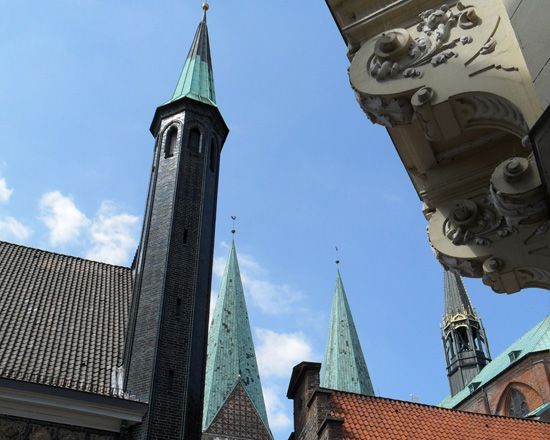
I would choose this tour if you want a clear first look at Lübeck and prefer an explanation of what you are seeing rather than a silent stroll between landmarks.
It suits:
- First-time visitors who want the old town explained in a short session
- Families or friend groups that can divide the group price
- Architecture fans interested in brick Gothic buildings and merchants’ houses
- Readers interested in the Brothers Mann and Buddenbrook-Haus
- Visitors who prefer a private guide in German or English
- People arriving with limited time and wanting the main sights in one route
You may want something else if you need long interior visits, a food experience, transport from your hotel, or a full-day treatment of Lübeck’s museums and churches.
The walk is also a good fit for visitors who enjoy hearing how a city works. The port, salt warehouses, town hall, churches, and homes form a connected story, and that story is more useful than a simple list of landmarks.
Practical tips for making the 90 minutes count
Meet at the Holsten Gate, where the tour begins. Since the route is a walking experience, wear shoes you can use comfortably for an hour and a half, though the supplied details do not specify the exact surface or walking difficulty.
Arrive ready to look at façades and skyline details. The best parts of Lübeck’s character are often above eye level, especially the church towers and decorated house fronts.
If you want to see church interiors or visit Buddenbrook-Haus, plan those separately unless your guide confirms otherwise. The stated route includes these places as parts of the city walk, but it does not list admission or interior access.
Think of the tour as a foundation. Afterward, you will know which streets and buildings deserve a slower second look. That is a better use of 90 minutes than trying to force every possible attraction into one rushed circuit.
Should you book this Lübeck tour?
Book it if you are traveling with several people and want a private introduction to Lübeck’s Hanseatic heart. The route covers the right essentials: Holsten Gate, the old port, salt warehouses, town hall, St. Mary’s, the five-church skyline, merchants’ houses, the Teufelchen, and Buddenbrook-Haus.
I would be more cautious at the full price for one or two people, especially if you are comfortable exploring independently. For a group of six, the cost becomes much easier to defend, and the private guide format gives the walk a personal feel that a large group cannot match.
The strongest reason to choose it is not one single monument. It is the way the tour ties Lübeck’s trade, architecture, literature, and narrow streets into one readable story. If that is the kind of context you want, this short walk is a sound starting point.
FAQ
Where does the tour meet?
The meeting point is directly at the Holstentor, or Holsten Gate.
How long does the tour last?
The walking tour lasts 90 minutes.
Is this a private tour?
Yes. It is offered as a private group experience for up to six people.
What languages are available?
The live guide is available in German or English.
What sights are included in the route?
The route includes the Holsten Gate, the salt warehouse buildings, the former port area, Lübeck’s town hall, the Teufelchen, St. Mary’s Church, smaller historic streets, decorated houses, and Buddenbrook-Haus.
Will I see all five main churches?
The tour highlights Lübeck’s five main churches and their role in the skyline. The supplied details do not state that the tour includes interior visits to all five.
Does the tour include entrance tickets?
Entrance tickets are not listed among the inclusions. The experience includes a professional guide.
Are food and drinks included?
No. Food and drinks are not included.
Is transportation included?
No. Transfers are not included. The experience begins at the Holsten Gate and is a walking tour.
Can I cancel for a refund?
Yes. You can cancel up to 24 hours in advance for a full refund.
Just added around Lubeck
- Timmendorfer Strand: SEA LIFE Behind the Scenes Tour★ 4.9 · 15 reviews
- Lübeck zwischen Grusel und Geschichte Truecrime zu Halloween★ 4.9 · 35 reviews
- Lübeck: Old Town Highlights Private Walking Tour★ 4.8 · 8 reviews
- Lübeck: Private Historical and Architectural Walking Tour★ 4.5 · 6 reviews
- Lübeck: Hanseatic League History Walking Tour★ 4.9 · 57 reviews
- Lübeck Day Pass – Day ticket for Lübeck museums★ 4.0 · 15 reviews
- Lübeck: Express Walk with a Local★ 4.9 · 10 reviews
- Lübeck: Backyards and Town Houses Private Guided Tour★ 4.9 · 23 reviews
Lubeck Tours, compared.
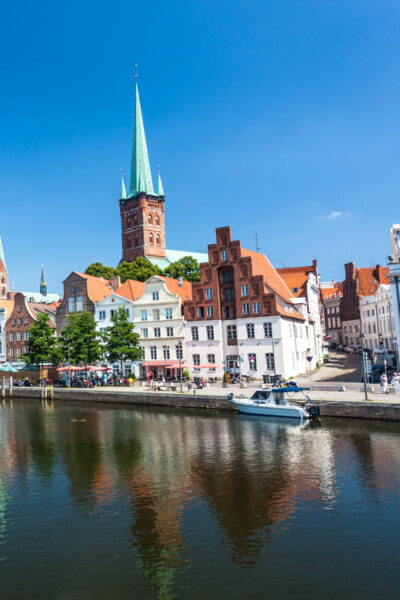
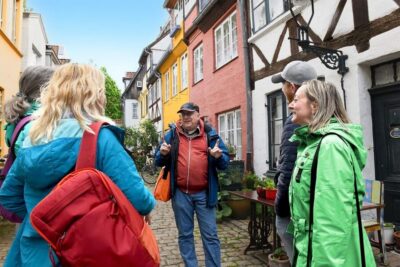
entertaining guided tour to old town highlights
Read our review →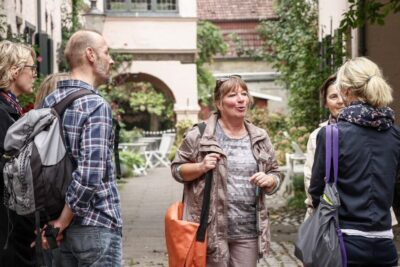

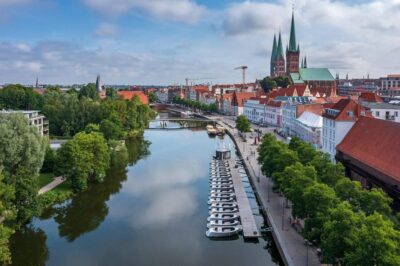
Lübeck zwischen Grusel und Geschichte Truecrime zu Halloween
Read our review →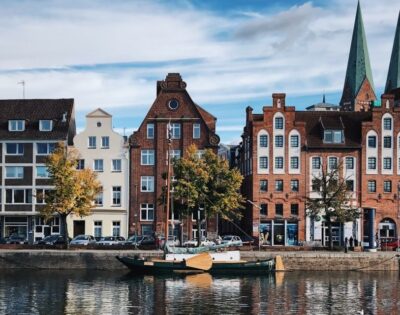
Browse the lists this tour appears in