
Review · BERLIN TOURS
Individual city tour to Potsdam from Berlin
Potsdam packs royal palaces, Cold War drama, and leafy park paths into one easy trip from Berlin. The most memorable moment may be Glienicke Bridge, where American and Soviet spies were exchanged, followed by Sanssouci, Frederick the Great’s elegant Rococo retreat.
I like the private vehicle for up to eight people, since you can avoid the rigid pace of a large group. I also like the mix of famous palaces and smaller corners, including the Dutch Quarter and the Russian-style settlement. Guides Kirsten and Christine are named in the experience feedback, and both are described as friendly and well-informed.
The main trade-off is time. Four and a half hours is enough for a strong overview, but not a slow, thorough visit inside every palace. Entrance fees are extra, and interior visits require availability, so you should decide before arrival whether the outside tour is enough for you.
Key points to know before booking
- Sanssouci is the star attraction: See the palace, terrace, fountains, Ruinenberg, and Frederick the Great’s grave.
- Glienicke Bridge adds Cold War context: This is not just a photo stop. It links Berlin and Potsdam across a famous former border.
- Cecilienhof connects Potsdam to 20th-century politics: The palace hosted the 1945 meeting of Stalin, Churchill, and Truman.
- A private guide changes the pace: Your group alone takes part, with a driver-guide and a vehicle fitted with air conditioning and a microphone.
- The tour covers more than palaces: You also see Babelsberg, the Dutch Quarter, the Russian colony, and an Asian-style café.
- Plan for extra costs: Palace admission, food, and drinks are not included in the $670.74 group price.
Why Potsdam makes a smart half-day from Berlin
Potsdam is close enough to Berlin for a practical half-day outing, yet it feels like a different chapter of German history. The city was shaped by Prussian kings, the German imperial family, and the political powers that redrew postwar Europe.
This private trip works especially well if you want the broad picture without spending a full day arranging trains, local transport, palace tickets, and walking routes. Your driver-guide handles the movement between widely spaced sights while explaining what you are seeing.
The advertised price is $670.74 per group of up to eight people, not per person. That makes the value much better for a full group. At eight people, the transport and guiding cost is spread across the party. For one or two people, it is a costly outing, though you gain a private vehicle, a personal guide, and a pickup option.
The vehicle is described as Business Class, air-conditioned, and equipped with a microphone. Those details matter here. Potsdam’s sights are spread around the city and park areas, so a private ride saves energy between stops. The microphone should also make explanations easier to follow while you are on the move.
The tour lasts about four hours and 30 minutes. That is a good length for a first look, but you should not treat it as a full palace day. The standard plan allows only short stops at Sanssouci and Cecilienhof, and the interior visits are optional, subject to availability and extra admission fees.
A few more Berlin half-days to weigh up
- Berlin: Reichstag, Dome and Government District Guided Tour
★ 4.7 · 18,288 reviews - Berlin: 1-Hour City Tour by Boat with Guaranteed Seating
★ 4.3 · 16,993 reviews - Berlin: Boat Tour Along the River Spree
★ 4.4 · 11,252 reviews
Crossing Glienicke Bridge into Potsdam
The first important stop is Glienicke Bridge, which links former West Berlin with Potsdam. During the Cold War, this was the setting for prisoner and spy exchanges between the United States and the Soviet Union.
The bridge gives you more than a historical marker. From here, you can look across the Havel water and see the parks and palaces spread through the area. It is a useful first stop because it explains why Potsdam has always mattered as a place of access, power, and control.
I would pay close attention to the guide here. A short explanation can turn an ordinary bridge into a scene from the Cold War. The tour does not promise a long walking visit, so the value depends partly on how well your guide uses the stop.
You should also keep your expectations realistic. This is a viewpoint and history stop, not a museum visit. If you want a detailed account of the spy exchanges, ask your guide for more context while you are there.
Babelsberg Castle and its hilltop park
The view of Babelsberg Castle introduces another side of Potsdam. The castle was the summer palace of Hohenzollern King Wilhelm I and now operates as a museum. It sits on a hill above the Havel, with a large park around it.
The setting is part of the appeal. From the outside, you get a sense of how Prussian royalty used elevated ground, water, gardens, and formal buildings to create a grand retreat. The castle is not listed as a scheduled interior visit on this tour, so expect a view and an explanation rather than an extended museum stop.
Babelsberg also helps you understand the scale of Potsdam. The royal residences are not concentrated around one square. They appear across parks and waterways, which is why private transport is useful on a short schedule.
Sanssouci Palace, Frederick the Great’s retreat
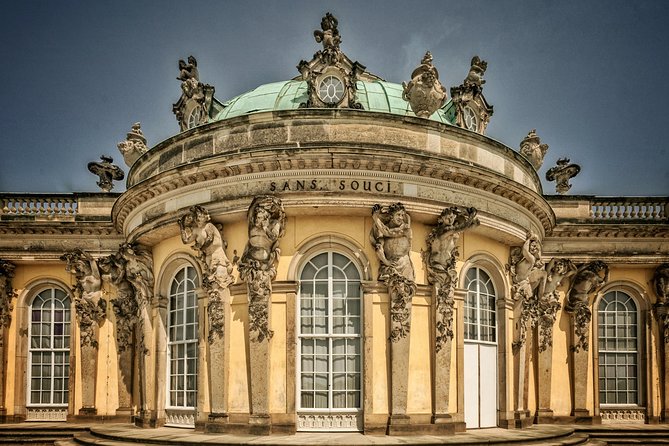
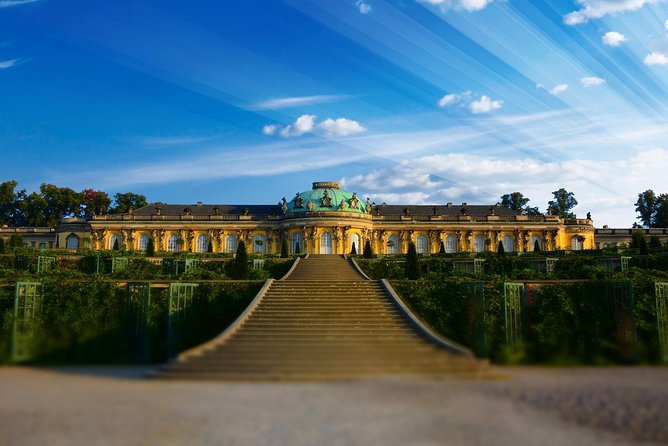
Sanssouci Palace is the central event of the tour. Frederick the Great built this Rococo palace as a private retreat, and its name is commonly translated as without worries. The building is smaller and more intimate than the grand royal complexes many people picture, which is part of its charm.
The planned stop includes the palace, the terrace, Ruinenberg, Frederick the Great’s grave, and views across the grounds. You also get time in Sanssouci Park, where fountains and other royal buildings appear along the paths.
The standard stop is listed as 15 minutes, with another 15 minutes for the park. That is enough to see the key exterior features and take in the setting, but it is short for a complete walk. You will need to stay focused if you want both photographs and the guide’s commentary.
An interior visit can be arranged on request when available. Palace admission is not included, and the tour description specifically advises checking availability. If entering Sanssouci matters to you, arrange tickets ahead of time when possible and make sure the timing fits your pickup and tour schedule. One person on this tour purchased tickets in advance and arrived just in time for a scheduled Sunday entry, which is a useful warning: timed admission can make the day run tightly.
Frederick the Great’s grave is on the terrace beside the palace. It is a simple but meaningful stop, especially if you have been learning about the king’s role in shaping Prussia. The terrace also gives you a clear view down through the gardens.
Same city, a completely different sort of afternoon:
- Discover Berlin Half-Day Walking Tour
★ 5.0 · 9,624 reviews - Berlin: Hop-on Hop-off Bus Tour with Live Commentary
★ 4.3 · 8,579 reviews - Berlin: Government District around the Reichstag Guided Tour
★ 4.7 · 8,447 reviews - Berlin: Reichstag, Plenary Chamber, Cupola & Government Tour
★ 4.6 · 8,422 reviews
Walking through Sanssouci Park
Sanssouci Park is not just a backdrop for the palace. It is a large royal garden with fountains, terraces, and several buildings placed across the grounds. The tour includes a short walk so you can see more than one façade.
You might find the park more rewarding than a quick palace photograph because it shows how the royal estate was designed as a complete setting. From different points, you can look toward other castles and ornamental features. The changing views help explain why the palace was built here.
Still, 15 minutes is a brisk introduction. You will not have time to wander every path or study each fountain. Wear comfortable shoes and listen for the guide’s instructions about where to meet the vehicle. If gardens matter more to you than interiors, ask whether the schedule can give you a little extra time outside.
The other royal buildings around Sanssouci
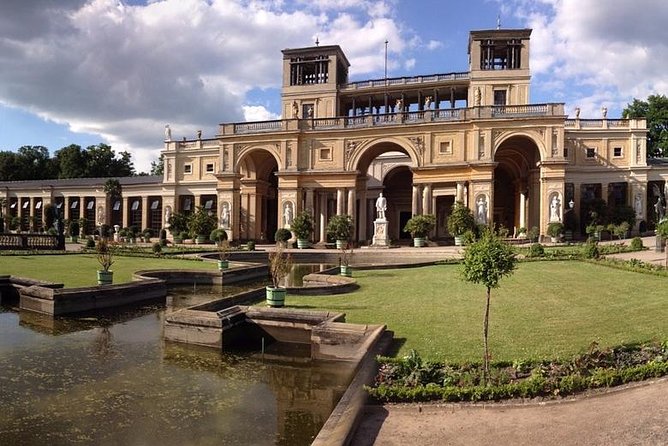
The tour also points out several buildings connected with Sanssouci. One is a large palace from the time of Frederick the Great that was later used by German emperors and is now a museum. The description does not name this stop, so your guide will identify it as you pass or pause nearby.
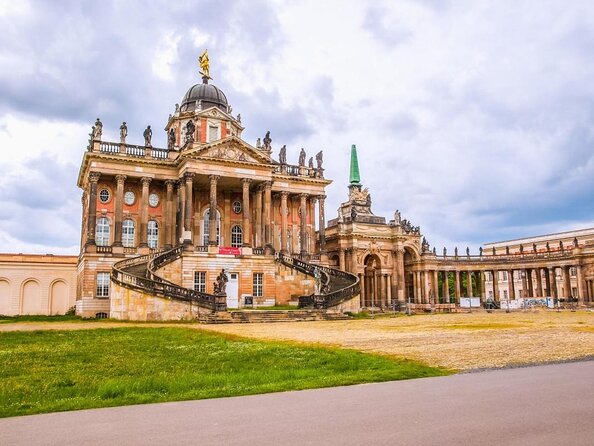
Another building was commissioned by Prussian King Friedrich Wilhelm IV in the style of Italian Renaissance architecture. It partly served as a greenhouse and gives the park a distinctly southern feel. This is a good reminder that Potsdam’s royal designers borrowed styles from across Europe rather than following one uniform plan.
You also see the former guest and reception rooms associated with Frederick the Great beside Sanssouci Palace. These buildings add useful context. The estate was not simply a private house. It was also a place for receiving important people and managing court life.
Because these stops are listed as views rather than full entries, you should think of them as a guided tour of the royal district. They broaden the story without adding a series of admission fees and long indoor visits.
Cecilienhof and the Potsdam Conference
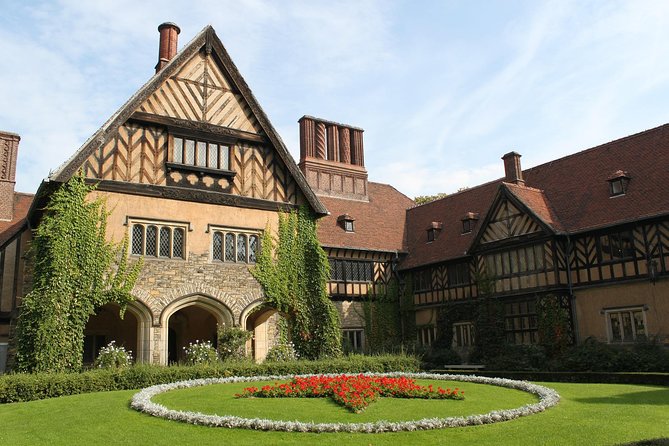
Cecilienhof gives the tour its strongest 20th-century connection. This summer palace was built for the imperial family and later hosted the Potsdam Conference in the summer of 1945.
Stalin, Churchill, and Truman met here to decide major questions about postwar Germany. The palace’s English Tudor style makes the political setting feel even more surprising. From the car park, it is only a short walk to the building, and the scheduled stop is about 10 minutes.
That is enough to see the exterior and understand why the site matters. It is not enough for a slow museum visit, and admission is not included. If you want to go inside, confirm availability and extra costs before the tour.
Cecilienhof is especially worthwhile if you are interested in the Second World War and the division of Europe. Sanssouci shows royal taste and power. Cecilienhof shows the consequences of that era and the decisions that shaped Germany after the war.
The Dutch Quarter and Potsdam’s old town
Potsdam is not only a collection of palaces. In the old town, you see a picturesque area built in the early 18th century by Dutch craftsmen. Its red-brick style reflects the homeland of the builders, and the protected houses now contain shops and cafés.
This is one of the most pleasant changes of pace on the tour. After grand royal buildings and formal parks, the Dutch Quarter feels more like an everyday city district. You may have a chance to pause for a quick look at the streets, but snacks and drinks are not included, and the four-and-a-half-hour schedule may not allow a long café break.
The tour also points out twelve wooden houses built in Russian style as a small settlement in the early 19th century. This unusual group of buildings shows the international influences that shaped Potsdam. The city’s character comes from these compact neighborhoods as much as from its palaces.
Another sight is a café built in an Asian style during the time of Frederick the Great. It is a small but telling detail. Royal parks often included decorative structures meant to suggest distant places, and this building gives you a glimpse of that fashion without requiring a separate museum visit.
How the private format affects the day
This is a private activity, so only your group participates. The maximum group size is eight people. That gives you room to ask questions and lets the guide adjust explanations to your interests, within the fixed duration and site availability.
Pickup is offered, which makes the trip simpler if you are staying in Berlin. The tour can also be combined with a Berlin city tour, according to the operator. If you are trying to cover both cities during a short stay, ask about the timing before booking. Potsdam deserves attention, and adding too much may turn both tours into rushed photo stops.
The driver-guide format is practical because the sights are spread out. You are not left to find each palace on your own, and you avoid arranging separate transport between Glienicke Bridge, Babelsberg, Sanssouci, Cecilienhof, and the old town.
The private format also brings a cost question. A group of six to eight can get solid value from the fixed price. A couple may prefer a less expensive shared excursion, while a family or group of friends may find the privacy worth paying for.
The tour is near public transportation, and service animals are allowed. Most people can participate. Confirmation is provided at booking, and free cancellation is available up to 24 hours before the start time. Changes or cancellations made inside that window are not accepted for a refund.
Who should book this Potsdam tour?
I would choose this tour if you want to see the major Potsdam sights without spending a whole day planning routes. It suits families, small groups, and anyone who values a private guide over the lowest possible price.
It is also a good fit if your interests are divided between royal architecture and modern political history. You get Sanssouci and its gardens, then Cecilienhof and the Potsdam Conference, with Cold War context at Glienicke Bridge.
I would hesitate if your top priority is a long interior visit. Palace entry costs extra, depends on availability, and the standard schedule is short. A dedicated palace visit would give you more time inside, but this tour gives you a much broader view of Potsdam.
Final verdict: a useful private overview with a brisk pace
Book this tour if you want a comfortable, private introduction to Potsdam from Berlin and your group can share the $670.74 cost. Its best feature is the range: royal parks, several palaces, Cold War history, an imperial-era residence, and distinctive old-town neighborhoods in one outing.
Before you confirm, decide whether you want interior admission at Sanssouci or Cecilienhof. Buy or reserve tickets in advance when possible, allow for the extra fees, and accept that the standard tour is an overview rather than a slow museum day.
If that balance suits you, the private vehicle and personal guide make this an efficient way to see Potsdam. If you want extended walks, long café stops, or detailed time inside every palace, choose a longer visit instead.
FAQ
How long does the private Potsdam tour last?
The tour lasts approximately four hours and 30 minutes.
How many people can join the private tour?
The tour is for a private group of up to eight people. Only your group participates.
Is pickup from Berlin available?
Yes. Pickup is offered, and the tour runs from Berlin to Potsdam and back to Berlin.
Are palace entrance fees included?
No. Entrance fees are not included. Interior visits to Sanssouci Palace or Cecilienhof are available on request, subject to availability.
What vehicle is used?
Transportation is provided in a Business Class vehicle with air conditioning and a microphone.
Can I cancel for a full refund?
Yes. You can cancel for a full refund up to 24 hours before the experience start time. Cancellations or changes made less than 24 hours before the start are not accepted for a refund.
Just added around Berlin
- eSIM for Germany and 34 European Countries★ 4.5 · 16 reviews
- Your ticket to The Wall Museum Berlin★ 3.0 · 60 reviews
- Rickshaw Tours Berlin – Groups of up to 16 people with several rickshaws★ 4.0 · 97 reviews
- Warnemuende Shore Excursion: Private Berlin Tour★ 4.5 · 27 reviews
- Walking on the Wall: 3-Hour Tour in Berlin★ 4.5 · 34 reviews
- Love and War in Berlin: Self-Guided Story Puzzle Walk★ 5.0 · 7 reviews
- Warnemuende Shore Excursion: Berlin Private Sightseeing Tour from Rostock★ 5.0 · 4 reviews
- Cold War Berlin – Private Live Virtual Experience★ 5.0 · 4 reviews
Berlin Tours, compared.
Reichstag, Dome and Government District Guided Tour
Read our review →
1-Hour City Tour by Boat with Guaranteed Seating
Read our review →

Reichstag, Plenary Chamber, Cupola & Government Tour
Read our review →
Browse the lists this tour appears in