
Review · BERLIN TOURS
Individual City Tour – Rickshaw Sightseeing in Berlin
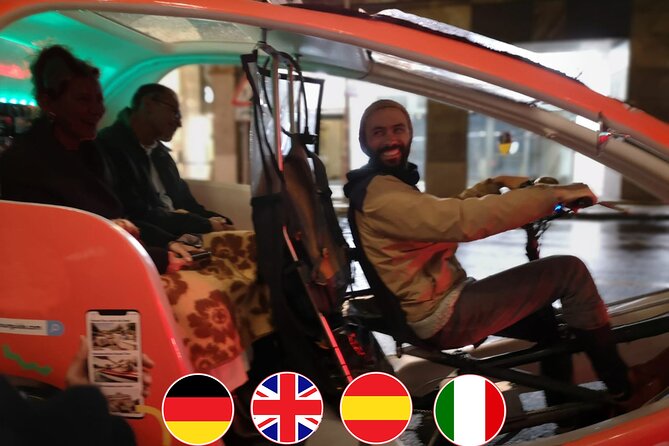
Berlin is spread out, and a private rickshaw lets you cover a surprising amount without wearing out your feet. Your guide pedals through central Berlin, from Alexanderplatz and Museum Island to Checkpoint Charlie, the Wall, Tiergarten, and Brandenburg Gate, often slipping into courtyards and cycle lanes that larger vehicles cannot reach.
I like the private format, which lets you set the pace and ask for the places that matter most to you. I also like the practical warmth: blankets are supplied, and guides have provided hot-water bottles on bitterly cold days. The main drawback is that this is a sightseeing overview, not an in-depth visit inside Berlin’s museums or landmarks.
Key points to know before booking
- Private rickshaw for your own party: You are not sharing the ride with a large group.
- A fast first look at Berlin: The route links major sights across the historic center and Tiergarten.
- Flexible route: Guide Leo, and sometimes Jakob, can adjust the ride around your interests.
- Good for limited mobility: You can see a lot without walking long distances, and one rider was able to bring a walker.
- Cold-weather help: Blankets are included, with hot-water bottles available on especially cold rides.
- Pickup near Museum Island: Hotel or location pickup is free within 2 km, then costs €5 per additional kilometer.
Why a rickshaw works well in Berlin
Berlin is not a compact old town where every major sight sits around one square. Its landmarks are scattered across former East and West Berlin, with broad avenues, parks, memorials, government buildings, and sections of the former Wall spread over a large area.
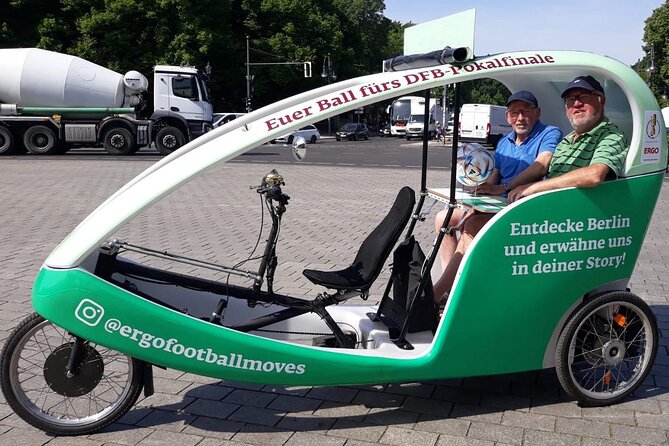
That makes the rickshaw a useful middle ground. You get more ground than on foot, but you are still close to the street and able to stop for photos. A bus can carry you farther, but it cannot easily turn into a small courtyard or pull up close to a monument. A private car offers shelter, but it loses the open-air feel and the ability to use cycle lanes.
The ride is especially useful on your first full day. I would use it to learn how Berlin fits together, mark the places you want to revisit, and get historical background before exploring museums and memorials on your own.
The advertised duration is about one to three hours. A short ride can cover the central highlights, while a three-hour version gives you time for Tiergarten, extra photo stops, and a few less obvious corners. The price is listed at $53.21 per person, so the value depends on your group size and how much walking you want to avoid. For one person, it costs more than public transport. For a private group that wants a personal guide and a broad orientation, it can be a sensible use of time.
A few more Berlin half-days to weigh up
- Berlin: Reichstag, Dome and Government District Guided Tour
★ 4.7 · 18,288 reviews - Berlin: 1-Hour City Tour by Boat with Guaranteed Seating
★ 4.3 · 16,993 reviews - Berlin: Boat Tour Along the River Spree
★ 4.4 · 11,252 reviews
Alexanderplatz, Nikolaiviertel, and Berlin’s older core
The meeting point is the Weltzeituhr, or World Time Clock, at Alexanderplatz. It is an easy place to find and a fitting start because the square connects several layers of Berlin history. It was once near the medieval edge of the city and later became a major center of the former East German capital.
The stop itself is brief, but your guide can use it to explain how Berlin changed from a medieval settlement into a divided twentieth-century city. Do not expect a long stop or a formal visit inside a building. This is your orientation point.
From there, the rickshaw moves toward Nikolaiviertel, the oldest settlement area of Berlin and Cölln, the twin towns that grew into modern Berlin. Much of the quarter was destroyed during the Second World War and rebuilt for Berlin’s 750th anniversary.
Nikolaiviertel is worth seeing because it feels different from the broad, modern spaces nearby. Its reconstructed streets and smaller scale help you picture Berlin before the nineteenth and twentieth centuries reshaped the city. Five minutes gives you a taste, not a full exploration, so note it as a place to return to if old streets and city origins interest you.
Museum Island and the courtyards of Hackesche Höfe
Museum Island comes next, with its major cultural buildings gathered beside the Spree. The complex was commissioned by Prussian kings and has been a UNESCO World Heritage Site since 1999. Berlin Cathedral and the new Berlin Palace are close by, giving you several major sights in one area.
The rickshaw is useful here because you can get close to the buildings, take photographs, and hear the basic story without spending your first hours figuring out the city map. Admission to the museums is not included, and the ride does not replace a proper museum visit. Think of it as a preview that helps you choose where to spend a later afternoon.
The Hackesche Höfe offer a different kind of stop. This enclosed courtyard complex in the old Spandauer Vorstadt district is known for its decorative facades, small backyards, shops, and urban atmosphere. The contrast is part of the appeal: Berlin can shift from monumental state buildings to intimate courtyards within a few minutes.
I especially like this part of the route for visitors who want more than a checklist of famous monuments. The courtyards show how Berlin’s city life works at a human scale. Your guide may also take you into nearby corners that are awkward to reach by car or bus.
Palace of Tears and Bebelplatz
At Friedrichstraße Station, the Palace of Tears recalls the former border crossing between East and West Berlin. Its exit hall was a place of farewells, and the remaining control counters help make the division of the city feel personal rather than abstract.
This is a short stop, but it carries a lot of weight. You can walk through the former control area, which gives the site a physical quality that photographs cannot provide. The rickshaw tour is not a full museum program, so you will need more time if you want the exhibits and detailed displays.
Bebelplatz offers another concentrated history lesson. It is a handsome square surrounded by important cultural buildings, yet it is also linked to the Nazi book burning of May 10, 1933. An underground empty library memorial marks the absence created by that destruction.
This is one of the places where Berlin’s beauty and painful memory sit side by side. I would pay close attention to your guide here, then return on foot if you want time to reflect. The five-minute stop is enough to introduce the site, but not enough for a slow visit.
Same city, a completely different sort of afternoon:
- Discover Berlin Half-Day Walking Tour
★ 5.0 · 9,624 reviews - Berlin: Hop-on Hop-off Bus Tour with Live Commentary
★ 4.3 · 8,579 reviews - Berlin: Government District around the Reichstag Guided Tour
★ 4.7 · 8,447 reviews - Berlin: Reichstag, Plenary Chamber, Cupola & Government Tour
★ 4.6 · 8,422 reviews
Gendarmenmarkt and Checkpoint Charlie
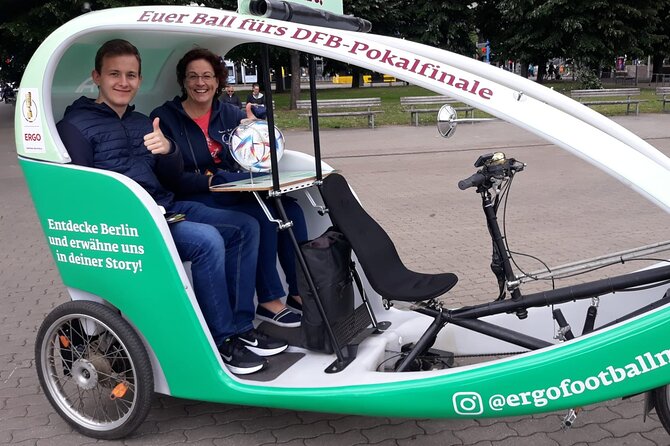
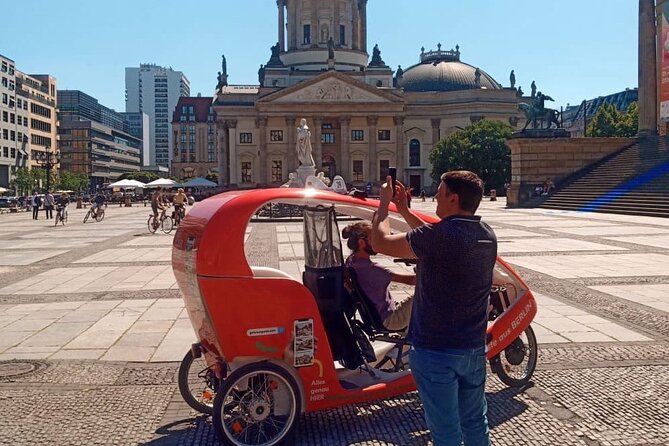
Gendarmenmarkt is one of Berlin’s grandest squares, with a concert hall between two church buildings topped by prominent towers. It gives you a clear sense of the city’s Prussian and cultural ambitions.
The square is mainly a visual stop on this tour. You can take in the full ensemble without committing to an interior visit, and your guide can point out how the buildings relate to one another. Since the route keeps moving, I would use the stop for photographs and make a note to return if architecture or music matters to you.
Checkpoint Charlie brings the story forward to the Cold War. The former crossing is now one of Berlin’s best-known reminders of division, and it was also connected with tragic escape attempts. Its fame means the area can feel more commercial than solemn, so the value here lies in the explanation and the wider context.
Your guide can place the checkpoint within the map of divided Berlin rather than treating it as an isolated photo stop. That is important. The booth and sign are only one small piece of a border system that once cut through ordinary neighborhoods.
Topography of Terror and Potsdamer Platz
The Topography of Terror area includes the longest remaining section of the Berlin Wall in its original condition. It also recalls the institutions of Nazi terror that operated nearby. This is a serious stop, and the Wall section gives you a direct physical link to both the city’s Nazi past and its later division.
The five-minute visit is best treated as an introduction. If you want the full story, return for the indoor and outdoor displays. The rickshaw helps you place this site among the other central landmarks, but it cannot give you the time required for a careful museum visit.
Potsdamer Platz shows yet another Berlin: modern, rebuilt, and shaped by the city’s division. Once a major traffic junction, it was heavily affected by the border and later transformed with striking new buildings.
I like seeing Potsdamer Platz after the older sites because the contrast explains Berlin better than a single period ever could. The city is not one preserved historic center. It is a collection of eras placed next to one another, sometimes elegantly and sometimes abruptly.
A slower ride through Tiergarten
Tiergarten receives the longest listed stop, about 30 minutes, and that extra time matters. This huge park is often called Berlin’s green heart, with paths, bridges, monuments, and broad open spaces.
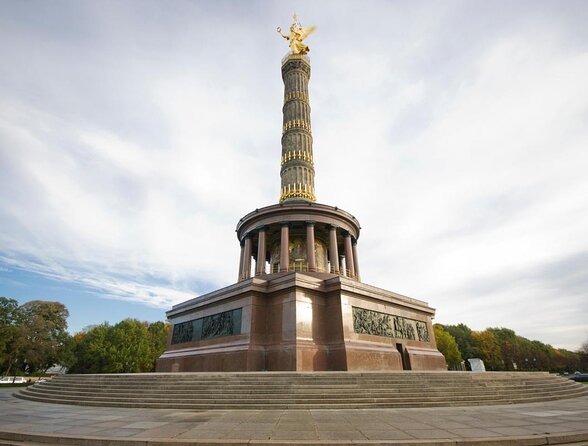
The route passes the Victory Column, Bellevue Palace, the House of World Cultures, the Carillon, and the Soviet Memorial. You also ride through the park itself, which gives your legs a break from pavement and your eyes a break from stone facades.
This is where the rickshaw feels most like a pleasant local ride rather than a moving history lecture. You can watch the park change around you and stop for photographs without having to cross large distances on foot.
The Victory Column commemorates three Prussian victories and is topped by the gilded figure of Victoria. Many people connect it with the Love Parade, but the monument has older military symbolism. The tour does not include admission to the column, so the emphasis is on seeing it from ground level and learning the details that are easy to miss, such as the gilded cannons nearby.
Bellevue Palace, the official residence of the German Federal President since 1994, gives the park a political edge. It began as a prince’s residence, so it also fits the tour’s wider theme of Berlin’s changing centers of power.
The government district and Brandenburg Gate

The government district grew around the Spreebogen near the historic Reichstag building in the period around 2000. It is a useful stop for understanding reunified Berlin, where modern government architecture sits beside older landmarks.
The rickshaw lets you see the area without making a long walk between buildings. You should not expect access to government interiors or the Reichstag from this activity. Instead, you get the outside view and a guide’s explanation of how the district developed.
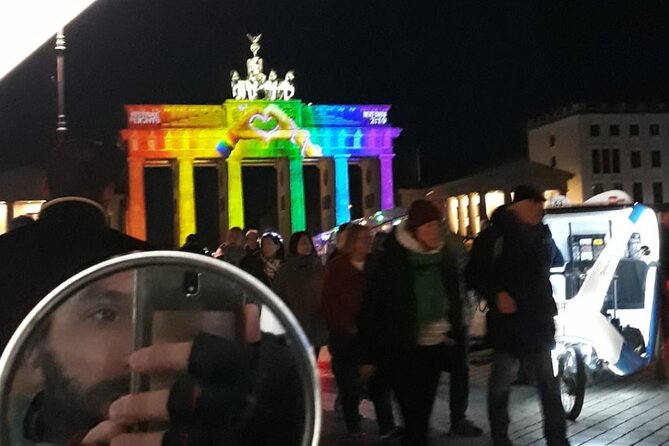
The final major stop is Brandenburg Gate, at the end of Unter den Linden. It is Berlin’s only surviving city gate and the city’s most famous landmark. Its meaning has changed sharply over time: once a royal entrance, later a symbol of division, and now a national symbol of unity.
Ending here makes sense. After seeing medieval Berlin, Prussian Berlin, Nazi-era sites, the Wall, and the Cold War border, you arrive at the monument most closely tied to reunification. The five-minute stop is enough for photos and a clear explanation, though you may want to return later when you can spend more time in the Pariser Platz area.
The guide makes the private format count
The strongest part of this experience is the guide-led storytelling. Leo is the guide most often named in the supplied material, and Jakob also guides some rides. Leo is described as patient, warm, flexible, and able to answer detailed questions, including difficult questions about Adolf Hitler and Eva Braun.
That matters because Berlin’s sights need context. A quick look at Checkpoint Charlie or a Wall fragment tells you very little by itself. A guide who can explain the connection between places, dates, and political systems turns a string of stops into a usable picture of the city.
The private setup also lets you ask for changes. One ride was adjusted to avoid repeating sights that were already planned for the next day. Another was shaped around a teenager’s interests, and a family with young children found a workable mix of history and amusement.
You can also ask to stop for pictures or spend less time at a place that does not interest you. The route is broad, so do not hesitate to say which subjects matter most: Prussian architecture, the Nazi period, the Berlin Wall, reunification, parks, or modern Berlin.
Cold weather, comfort, and access
A rickshaw is open to the air, so temperature matters. Blankets are included in cold weather, and guides have supplied hot-water bottles on freezing days. That is a thoughtful touch, but you should still dress for the conditions rather than rely on the blanket alone.
The ride can suit people who find long walks difficult. One rider with bad knees described the rickshaw as a way to see Berlin without walking, and another person was able to bring a walker and receive help getting on and off. The supplied details say most people can participate, and service animals are allowed.
Still, you should explain any mobility needs before booking. The vehicle is not described as fully wheelchair accessible, and the exact boarding arrangement is not specified. The guide may be able to help, but you should not assume every mobility device will fit.
Music is available by request, and drinks can be ordered separately. Those are small extras, not the reason to book, but they can make a private ride feel more personal.
Pickup, timing, and the real value of the price
The standard meeting point is the World Time Clock at Alexanderplatz, and the ride returns there at the end. Pickup from a hotel or another location within 2 km of Museum Island is free. Beyond that radius, the charge is €5 per kilometer, so confirm the pickup cost before you finalize plans.
The tour is offered in English and includes a mobile ticket. It is booked well ahead on average, about 36 days in advance, which suggests you should reserve early if your dates are fixed.
At $53.21 per person, the price is easiest to justify when you value time, personal attention, and reduced walking. You are not paying for museum admission, drinks, or access to the Victory Column, Bellevue Palace, or other interiors. You are paying for the vehicle, route, guide, flexibility, and a quick connection between far-flung parts of Berlin.
For a solo visitor, the cost may feel high beside a day ticket for public transport. For a couple, family, or small private party, the calculation improves, especially if someone has sore knees, a limited schedule, or little interest in navigating buses and trains.
Who should book this Berlin ride?
I would choose this tour for a first visit, a family group, a multigenerational party, or anyone who wants a broad introduction before choosing where to return. It also suits history fans who like asking questions as they go.
It is less suitable if your main goal is extended museum time, quiet reflection at memorials, or a slow architectural walk. The stops are short, and the route covers a lot. You will see the outside of many places, not study each one in detail.
You should also be comfortable with an open-air ride. The blanket helps in cold weather, but Berlin weather can change quickly. Ask for the longer three-hour version if you want Tiergarten and the major landmarks without feeling rushed.
Should you book the rickshaw tour?
Book it if you want to cover Berlin’s major sights quickly while keeping the experience private and personal. The flexible route, close access, strong guiding, and help for people who struggle with long walks give it real value.
Skip it if you want full visits inside museums and memorials, or if you prefer to explore one neighborhood slowly. For most first-time visitors with limited time, I would use the rickshaw on day one, then return independently to Museum Island, Bebelplatz, the Topography of Terror, or the Palace of Tears for longer visits.
Free cancellation is available up to 24 hours before the start time. Within 24 hours, the fare is not refunded and changes are not accepted.
FAQ
How long does the Berlin rickshaw tour last?
The experience lasts approximately one to three hours, depending on the option booked and the route selected.
Is this a private tour?
Yes. Only your own party participates in the activity.
What language is the tour offered in?
The tour is offered in English.
Where does the tour start?
It starts at the World Time Clock, Alexanderplatz 1, 10178 Berlin.
Where does the tour end?
The ride ends back at the meeting point.
Is hotel pickup available?
Yes. Pickup from hotels or other locations within 2 km of Museum Island is free. Additional distance costs €5 per kilometer.
Are blankets provided in cold weather?
Yes. A warm blanket is included when the weather is cold. Hot-water bottles have also been provided on especially cold rides.
Are drinks included?
No. Drinks can be ordered separately.
Can service animals participate?
Yes. Service animals are allowed.
Just added around Berlin
- eSIM for Germany and 34 European Countries★ 4.5 · 16 reviews
- Your ticket to The Wall Museum Berlin★ 3.0 · 60 reviews
- Walking on the Wall: 3-Hour Tour in Berlin★ 4.5 · 34 reviews
- Rickshaw Tours Berlin – Groups of up to 16 people with several rickshaws★ 4.0 · 97 reviews
- Warnemuende Shore Excursion: Private Berlin Tour★ 4.5 · 27 reviews
- Love and War in Berlin: Self-Guided Story Puzzle Walk★ 5.0 · 7 reviews
- Warnemuende Shore Excursion: Berlin Private Sightseeing Tour from Rostock★ 5.0 · 4 reviews
- Cold War Berlin – Private Live Virtual Experience★ 5.0 · 4 reviews
Berlin Tours, compared.

Reichstag, Dome and Government District Guided Tour
Read our review →
1-Hour City Tour by Boat with Guaranteed Seating
Read our review →




Reichstag, Plenary Chamber, Cupola & Government Tour
Read our review →
Browse the lists this tour appears in