
Review · BERLIN TOURS
From Berlin: Gardens & Palaces of Potsdam Bike Tour
Potsdam packs Prussian palaces, royal gardens, Cold War borders, and the site of the Potsdam Agreement into one remarkably bike-friendly day. This tour lets you cover far more ground than a walking visit, moving from Sanssouci’s grand gardens to the Bridge of Spies without wasting time on Berlin traffic.
I like the included train ride from Alexanderplatz and the comfortable city-cruiser bikes waiting in Potsdam. I also like the way the tour joins royal history to 20th-century politics, with guides such as Thor and Sam bringing both subjects into the same story.
The main consideration is stamina. You ride about 10.5 miles, or 17 kilometers, over roughly four and a half hours, then add the train journey and lunch stop. The route is described as relaxed and mostly flat, but this is still a full day outdoors, and it runs rain or shine.
Key points to know before booking
- The bikes begin in Potsdam: You take the train from Alexanderplatz, so there is no long ride through Berlin before the sightseeing starts.
- Sanssouci is seen from the outside: You explore the grounds and palace exteriors rather than taking an interior palace tour.
- The route links several eras: Prussian rulers, the Potsdam Agreement, and Cold War spy exchanges all fit into one outing.
- The Dutch Quarter provides the lunch stop: Food is not included, and you choose and pay for your own meal.
- Glienicke Bridge is a major finale: This was the famous crossing point for Cold War spy exchanges between East and West.
- The pace suits casual cyclists: The route is described as comfortable for beginners, though the total day is long.
Why Potsdam works so well by bicycle
Potsdam is close to Berlin, but it feels like a separate place. Royal parks spread across a large area, palaces sit behind tree-lined paths, and important Cold War sites are scattered around lakes and former border zones. On foot, you would spend much of the day simply getting between them.
A bicycle solves that problem. You can pause at a palace, ride through the park, stop for photographs, and continue to the next site without repeatedly waiting for buses or trains. The route covers about 17 kilometers in Potsdam, enough to see the main sights without turning the day into a race.
The bikes are city-cruiser style, and the pace is intended to be easy. One rider who described herself as a novice found the bikes simple to handle, while another said the ride was flat and not too crowded. That makes this a good option if you enjoy cycling but do not want a demanding sports ride.
You should still arrive ready to spend much of the day outside. The tour operates in all weather. Rain ponchos are available to buy at the local partner’s shop, with a refund available if you do not use one. That policy is useful, but I would still check the forecast and dress for changeable weather.
More bike days around Berlin:
- Berlin: Sights and Highlights Bike Tour with a Local Guide
★ 4.8 · 2,698 reviews - Berlin Highlights 3-Hour Bike Tour
★ 5.0 · 948 reviews - Berlin City Bike Tour with Beer Garden Stop
★ 5.0 · 917 reviews
From Alexanderplatz to Potsdam by train
The day begins at the Fat Tire Tours office beneath Berlin’s giant TV Tower in Alexanderplatz. Look for the company signs and flags at the tower’s main entrance. This is a central meeting point, but Alexanderplatz can be busy, so allow enough time to locate the office before the start.
The train ride to Potsdam is part of the tour price. The journey takes about 35 minutes according to the tour details, and your bikes are waiting at Potsdam station. That arrangement is one of the strongest practical features here. You avoid transporting a bicycle across Berlin and begin the sightseeing near the destination itself.
Your guide leads the group from the station, explains the route, and sets the riding pace. Guides named in past departures include Thor, Sam, Anthony, Alex, Zoe, Patrick, Joe, and Maria. The quality of the guide matters on a history-heavy tour, and the strongest descriptions of this experience consistently point to friendly guides who explain complicated subjects clearly and answer questions well.
Sanssouci and the Hohenzollern world
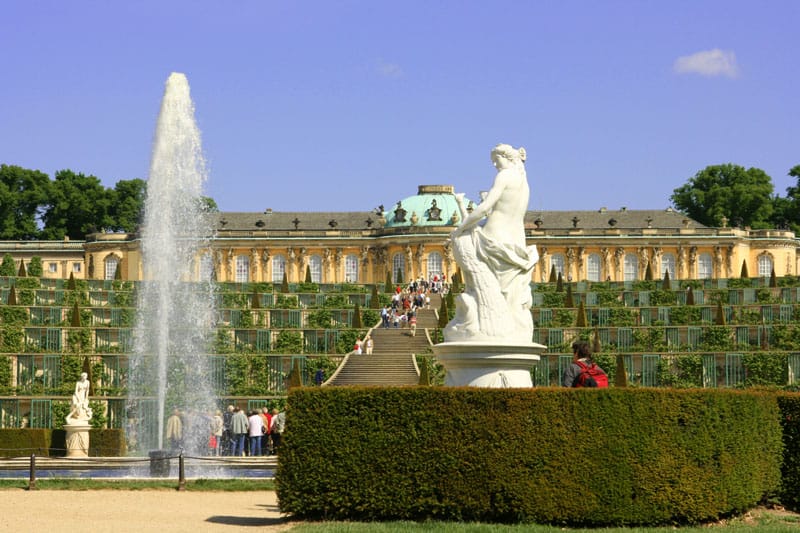
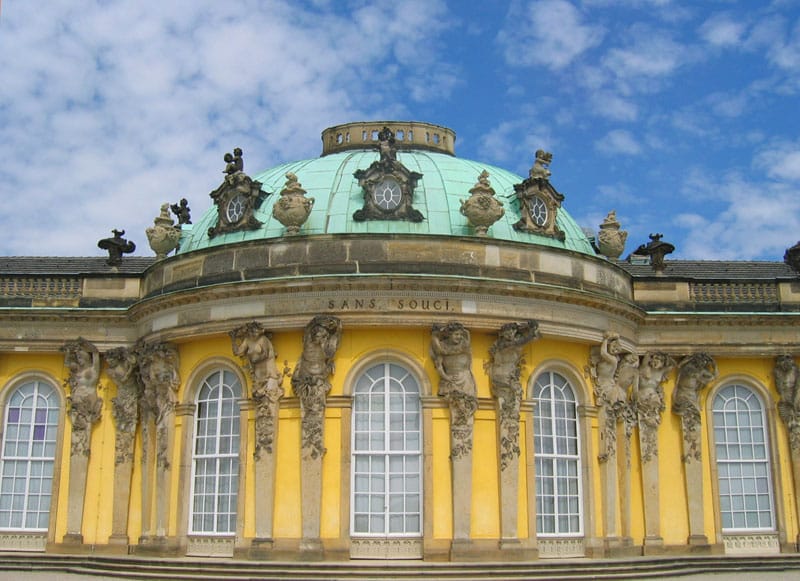
The first major part of the ride focuses on Sanssouci, the best-known palace complex in Potsdam. The name means without cares, a fitting label for a royal retreat built for comfort, leisure, and display. You see the famous palace from outside and cycle through its extensive grounds.
This is not a palace interior tour. That distinction matters if your main aim is to see royal rooms, furniture, and paintings. The reward here is the setting: formal gardens, broad paths, fountains, and a series of buildings that show how the Hohenzollern rulers used architecture to express power and taste.
The guide helps connect the buildings to the people who commissioned them. You hear about the lifestyle of the Prussian royal family, their rivalries, habits, and family dynamics. That personal angle keeps the tour from becoming a dry list of dates.
The route also includes the Chinese Tea House, a decorative garden building that reflects 18th-century European fascination with Chinese design. It is an eye-catching stop and a good reminder that these gardens were designed as theaters of royal pleasure, not simply as parks for public recreation.
The New Palace gives the royal story a different tone. Compared with the more intimate Sanssouci palace, it presents a larger and more ceremonial face of Prussian power. You stop for photographs and context rather than rushing past, which is important in a place where the scale can be easy to miss from a train window or a short walk.
The Orangerie adds another grand viewpoint within the park. From the bicycle, you get a sense of how the palace buildings relate to one another and to the gardens. I like this part of the tour because the movement between sites helps you understand Potsdam as a planned royal setting, not a collection of unrelated monuments.
Potsdam’s historic center and the Dutch Quarter
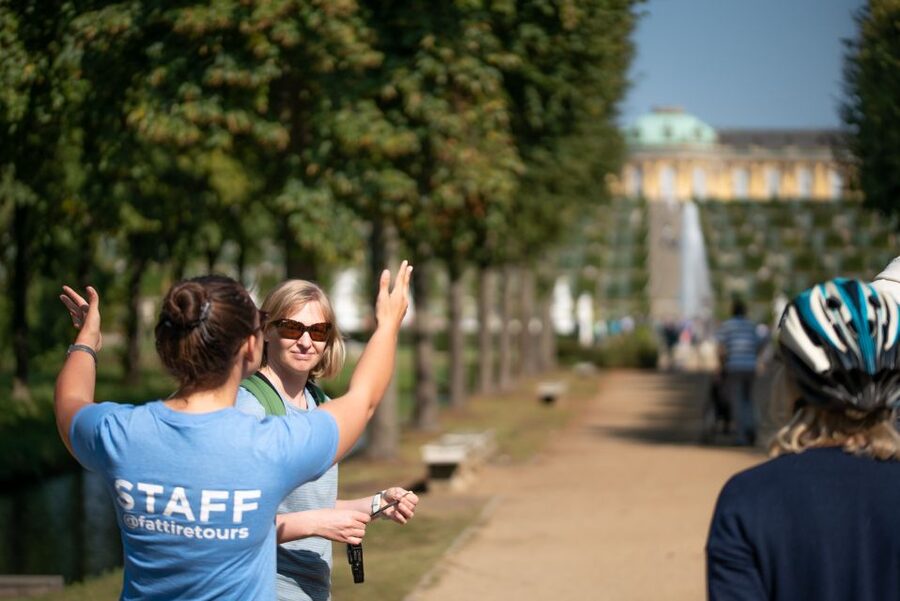
After the palace grounds, the route turns toward central Potsdam. This change of scenery is welcome. You move from royal parkland into a city with streets, shops, university life, and everyday local activity.
The Dutch Quarter is one of the city’s most distinctive areas. Its red-brick buildings and orderly streets reflect an 18th-century plan that brought Dutch craftsmen to Potsdam. The area now provides the planned lunch stop, so you have time to eat in a historic setting.
Lunch is not included in the $100 price. That gives you control over your spending, but remember to budget for it. The available choices can suit different budgets and tastes, according to the tour experience, so you are not locked into one fixed meal.
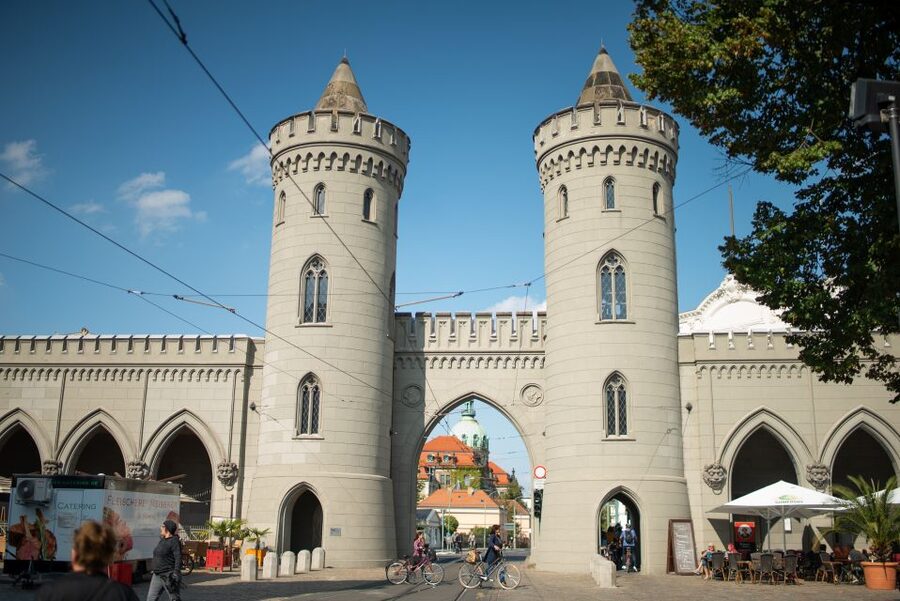
Potsdam’s own Brandenburg Gate is another central stop. It is smaller than Berlin’s famous gate, but it has its own place in the city’s story. Seeing it here helps you keep the day focused on Potsdam rather than treating the town as a side note to Berlin.
The stop in the center also breaks up the cycling. You are not simply pedaling from one palace to another for hours. You get time to eat, look around, take photographs, and hear how Potsdam functions today as a university city.
A few more Berlin half-days to weigh up
- Berlin: Reichstag, Dome and Government District Guided Tour
★ 4.7 · 18,288 reviews - Berlin: 1-Hour City Tour by Boat with Guaranteed Seating
★ 4.3 · 16,993 reviews - Berlin: Boat Tour Along the River Spree
★ 4.4 · 11,252 reviews - Discover Berlin Half-Day Walking Tour
★ 5.0 · 9,624 reviews
The New Garden and the Potsdam Agreement
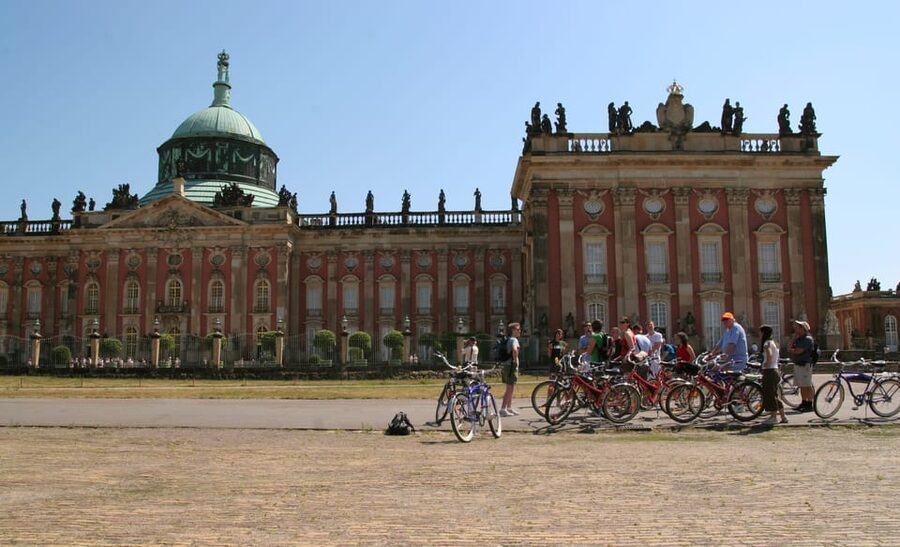
The ride continues through the New Garden, a large park beside the water. The setting is quieter and more open than the central streets, and the route offers another view of how royal estates shaped Potsdam.
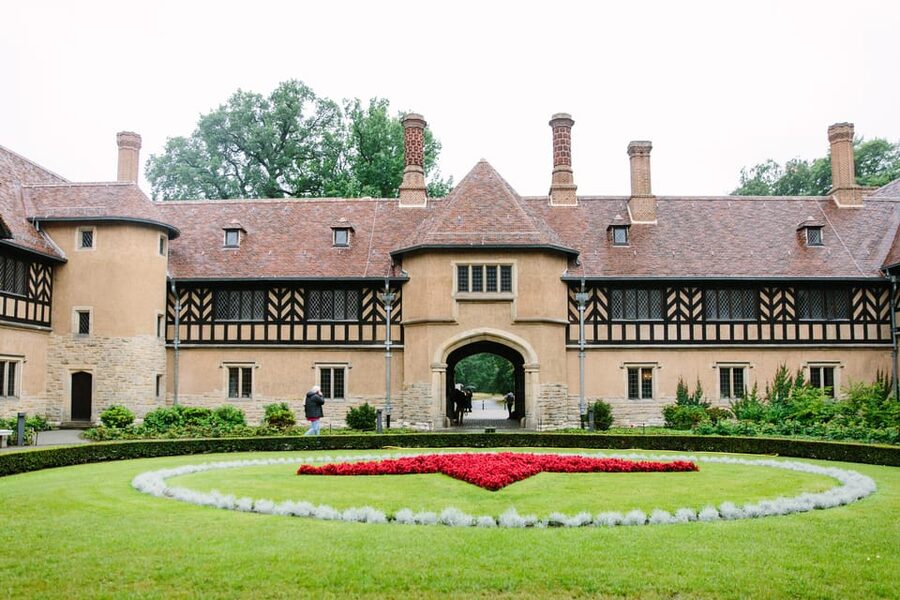
The key stop here is Cecilienhof Palace. This is where Truman, Stalin, and Churchill met in 1945 to settle the Potsdam Agreement. The decisions made here helped define the political shape of Europe after the Second World War.
You see the palace from outside, while the guide explains the meeting and its consequences. If you have mainly studied the war through Berlin’s final battles or the Holocaust, Cecilienhof adds a different chapter: the difficult political settlement that followed the fighting.
This stop is especially valuable because the building looks less like a traditional royal palace than Sanssouci or the New Palace. Its setting and appearance help show the shift from imperial ceremony to modern diplomacy. The guide’s explanation supplies the political context that a quick photograph cannot.
The tour does not ask you to choose between royal history and 20th-century history. It places them side by side. In the morning, you consider how rulers displayed authority through gardens and palaces. Later, you consider how leaders divided influence across Europe in the same city.
Glienicke Bridge and the Cold War border
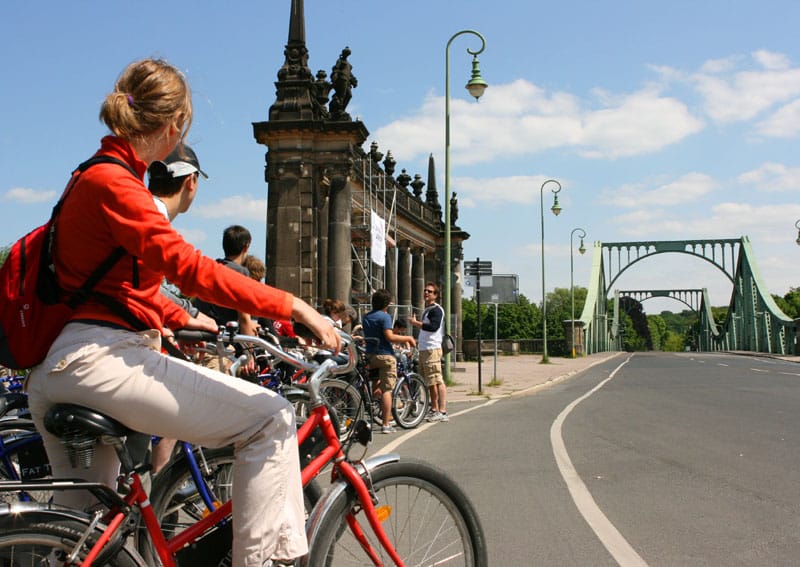
The final part of the ride explores Potsdam’s Cold War past. You pass through the former border zone between West Berlin and East Germany, including stretches once defined by restricted access and no-man’s land.
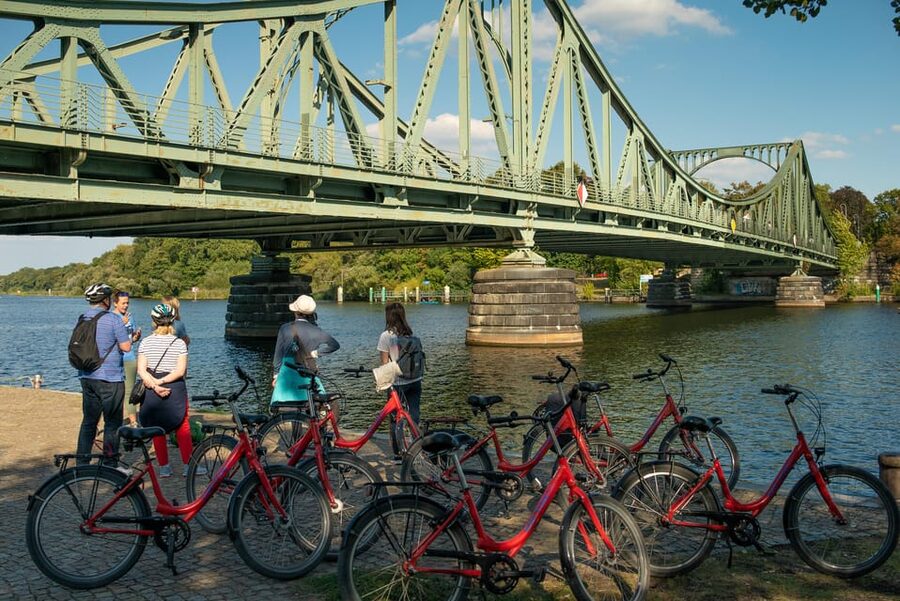
The high point is Glienicke Bridge, often called the Bridge of Spies. During the Cold War, spy exchanges took place here between the United States and the Soviet Union. It is a striking place to discuss that period because the bridge itself is ordinary in appearance, while its political role was anything but ordinary.
Your guide explains how the border divided the area and why this crossing became useful for prisoner and spy exchanges. The story gives physical meaning to Cold War tensions. Instead of hearing only about walls and political speeches, you see the route where East and West met under tightly controlled conditions.
This final section also gives the day a strong narrative arc. You begin with royal power, move to postwar diplomacy, and end with the division of Europe. Potsdam makes those connections unusually clear because the sites are close enough to visit in one continuous ride.
Guide quality and the feel of the ride
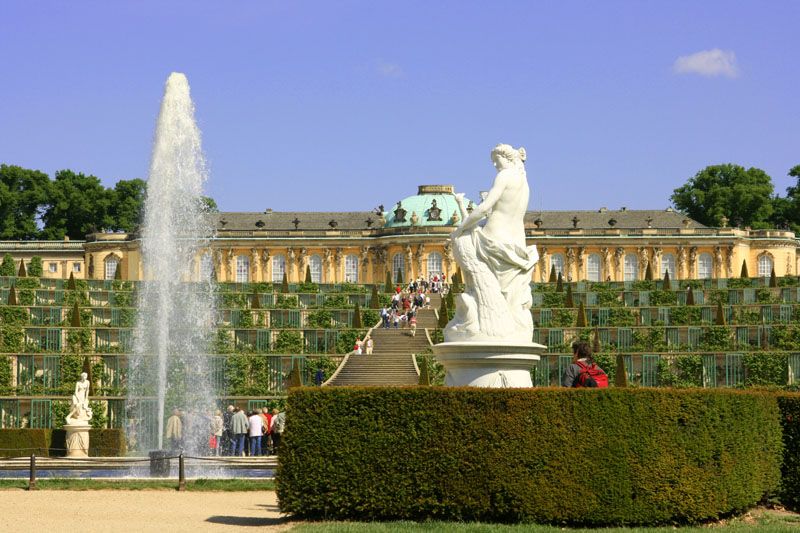
The guide is central to the experience. A bicycle can get you from place to place, but the explanations determine whether the day becomes a useful history lesson or just a pleasant ride past handsome buildings.
Thor and Sam received especially strong praise for their friendly manner and clear explanations. Sam was also described as patient with questions and able to give detail about Potsdam’s past and present. Other guides, including Anthony, Alex, Zoe, Patrick, Joe, and Maria, have led departures over the years.
The best part of the guiding style is the mix of serious events and lighter facts. You get the hard political details, but the presentation is not all dates and formal names. Family stories, personal habits, and small observations make the Prussian period easier to follow.
The tour is conducted in English. If you want a completely private experience or a tightly specialized academic lecture, this may not be the right format. If you want a friendly overview with enough substance to make each stop meaningful, it fits well.
Is $100 good value for this day?
At $100 per person, the price is not low, but several useful costs are already covered. You receive round-trip train transportation from Berlin, a city bike, an optional helmet, and an English-speaking guide. You also get a structured route through places that would be awkward to connect independently.
The value is strongest if you are staying in Berlin and want a simple day trip without arranging regional transport, bike rental, and a route on your own. The included train tickets also remove the worry of figuring out how to carry or rent a bike between cities.
Lunch costs extra, so include that in your day-trip budget. Palace interiors are also not part of the experience, so you are paying for outdoor access, guiding, transport, and the bicycle route rather than a series of indoor admissions.
For me, the price makes sense for someone who values context and convenience. If you only want to see Sanssouci and take a few photographs, an independent visit may cost less. If you want Sanssouci, central Potsdam, Cecilienhof, and Glienicke Bridge in one day, the guided bike format saves time and planning.
Who should book this Potsdam bike tour?
This tour suits adults, older children, teenagers, and casual cyclists who can ride for several hours at an easy pace. A family departure included a nine-year-old who enjoyed the palace side of the day, while teenagers have also found it a good fit.
It is a particularly good choice if Berlin is beginning to feel crowded. Several stops provide a pleasant change from city streets, and the route takes you through gardens, quiet paths, and open areas around the water.
You should think twice if you dislike cycling, want extensive free time at each palace, or prefer indoor museum visits. The tour keeps moving, even at a relaxed pace, and the palaces are seen from the outside.
Pack water, weather protection, and comfortable clothing. The tour runs in rain or shine, and the route includes enough time outdoors that poor clothing could affect your enjoyment. Bring money for lunch, since that meal is not included.
Should you book it?
Book this tour if you want Potsdam to make sense as more than a collection of pretty palaces. You will cover the royal parks, historic center, Cecilienhof, and the Cold War border in one well-planned day, with the train and bicycle logistics handled for you.
Skip it if your priority is palace interiors, a short sightseeing outing, or complete control over your schedule. For most visitors who enjoy history and can manage a 17-kilometer ride, this is one of the better ways to connect Potsdam’s royal, postwar, and Cold War stories.
FAQ
Where does the Potsdam bike tour meet in Berlin?
You meet at the Fat Tire Tours office at the base of the giant TV Tower, or Fernsehturm, in Alexanderplatz. The office is marked with Fat Tire Tours signs and flags.
Is train transportation from Berlin included?
Yes. Round-trip train transportation from Alexanderplatz to Potsdam is included in the tour price. You take the train first, and the bikes are waiting in Potsdam.
How long does the tour last?
The full activity lasts 390 minutes, or 6.5 hours. About 4.5 hours are spent exploring Potsdam and its sights by bicycle.
How far do you cycle?
The route covers about 10.5 miles, or 17 kilometers, in Potsdam and the surrounding areas.
Are bicycles and helmets included?
A comfortable city-cruiser bicycle is included. A helmet is provided, but wearing it is optional.
Is lunch included?
No. The tour stops for lunch in Potsdam’s historic Dutch Quarter, but you pay for your own food.
Which palaces and buildings do you see?
The route includes the exterior of Sanssouci, the Chinese Tea House, the New Palace, the Orangerie, and Cecilienhof Palace. The tour focuses on the grounds and exteriors rather than palace interiors.
Does the tour run in bad weather?
Yes. The tour runs rain or shine. Rain ponchos are available for purchase at the local partner’s shop, and you can receive a refund if you do not use one.
What language is the tour conducted in?
The tour is conducted in English by a live English-speaking guide.
Just added around Berlin
- Berlin: Battle for Seelow Heights WW2 tour -Clash of Titans★ 5.0 · 27 reviews
- From Berlin: Historical Gems of Potsdam Private Day Trip★ 4.4 · 4 reviews
- Berlin: Französischer Dom 360° Panorama & Crémant to go★ 3.9 · 5 reviews
- Explore Berlin Tour: History and Highlights★ 4.7 · 5 reviews
- Berlin: Evening Yacht Cruise with Aperitif & Dinner Upgrade★ 4.6 · 178 reviews
- Berlin: Expats in Berlin Comedy Show Ticket★ 4.7 · 182 reviews
- Berlin: The Epic Comedy Club Friday Night Showcase★ 4.8 · 28 reviews
- Berlin: Fine Dining Breakfast with Champagne in Schoneberg★ 4.9 · 47 reviews
Berlin Tours, compared.
Reichstag, Dome and Government District Guided Tour
Read our review →
1-Hour City Tour by Boat with Guaranteed Seating
Read our review →
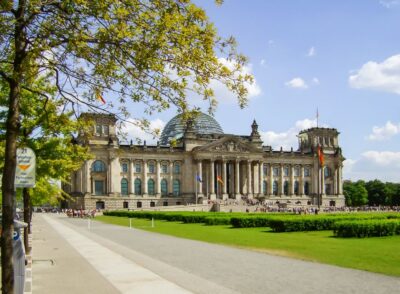
Reichstag, Plenary Chamber, Cupola & Government Tour
Read our review →
Browse the lists this tour appears in