
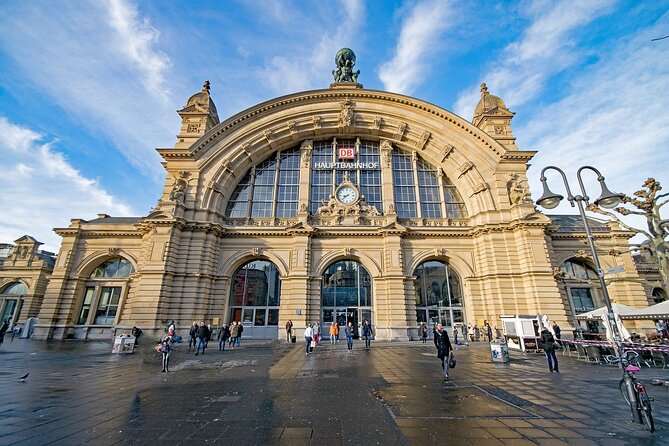
Review · FRANKFURT TOURS
Frankfurt Walking Tour: Explore Top Sights & Hidden Gems
Frankfurt’s story comes into focus on foot, moving from the polished Alte Oper through Goethe’s birthplace, the political heart of St. Paul’s Church, and the old town before crossing the Main at Eiserner Steg. In one compact outing, you get culture, literature, democracy, religion, and city views.
I like the clear route and the small maximum group of 15 people, which should make it easier to hear the guide. I also like the mix of famous sights and useful city orientation, especially the bridge crossing and the old-town stops. The main drawback is pace: 20 minutes at each of seven stops leaves little room for long interior visits or unplanned detours.
Key points at a glance
- Seven central sights in one walk: The route links the Alte Oper, Goetheplatz, Goethe House, St. Paul’s Church, Römerberg, Frankfurt Cathedral, and Eiserner Steg.
- A tour built around big ideas: You’ll encounter German literature, imperial ceremony, democratic change, wartime rebuilding, and Frankfurt’s role as a trading city.
- A useful 11:00 am start: The morning timing gives you a structured first look at central Frankfurt before you explore more on your own.
- A small group cap: No more than 15 participants are scheduled, a practical advantage on city streets and in busy squares.
- A guide-led introduction, not a museum tour: Admission is not included because the focus is the walk and commentary rather than extended visits inside attractions.
- A scenic finish: Eiserner Steg gives you a view along the Main and a clear sense of how the old town connects with Sachsenhausen.
Why this Frankfurt route works so well on foot
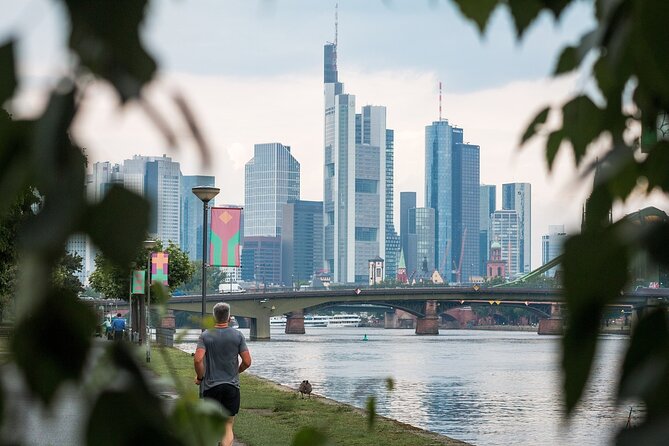
Frankfurt can seem like a city of sharp contrasts. Its modern financial center rises behind a reconstructed old town, while historic squares sit only a short walk from broad shopping streets and formal civic spaces.
This route uses those contrasts well. You begin at the Alte Oper, pass through Goetheplatz, step into the world of Johann Wolfgang von Goethe, then move toward the sites that explain Frankfurt’s political and medieval identity. The walk ends at the Main River, where the city opens into a wider skyline view.
That order matters. You are not simply ticking off monuments. You move from culture and literature into politics, religion, commerce, and geography. For a first visit, this gives you a useful mental map of central Frankfurt.
The tour lasts about two and a half hours, although the included description also calls it a two-hour walking tour. The listed stops allow roughly 20 minutes each, for 140 minutes in total, so you should expect a brisk presentation with time for short explanations and photographs rather than lengthy visits inside every building.
More walking tours in Frankfurt:
- Frankfurt Highlights English Walking Tour
★ 5.0 · 1,203 reviews - Frankfurt on Foot Daily Walking Tour in English
★ 4.9 · 323 reviews - Frankfurt: Private or Shared Walking Tour
★ 4.8 · 156 reviews
Starting at the Alte Oper at 11:00 am
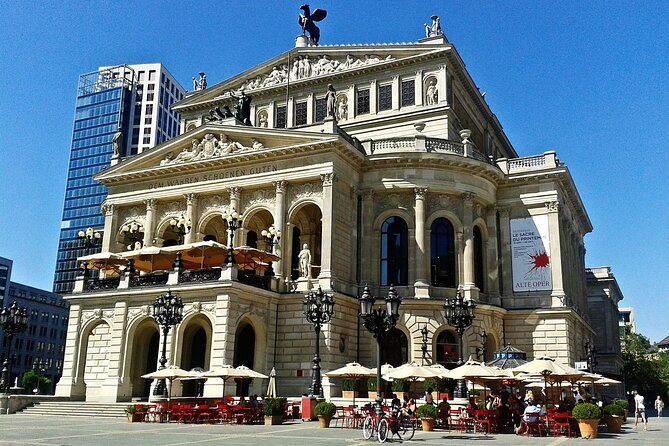
The meeting point is Opernplatz 1, beside the Alte Oper. This is a strong starting place because the building introduces one of Frankfurt’s most important themes: destruction, rebuilding, and civic pride.
The Alte Oper is a grand neo-Renaissance structure that once served as Frankfurt’s main opera house. Its cultural role gives the opening stop more weight than a quick photo opportunity. You’ll hear how the building became a symbol of the city’s ability to restore an important part of its public life after World War II.
You have about 20 minutes here, and admission is free. That means the visit is focused on the exterior and the guide’s explanation. If you want to attend a performance or spend time inside, you’ll need to arrange that separately.
I like beginning here because the setting feels formal and spacious. It gives you a clear starting point before the route moves into more crowded central streets. The 11:00 am start also avoids an extremely early meeting while leaving you most of the afternoon for other plans.
Goetheplatz and the city around it
From the Alte Oper, the walk continues to Goetheplatz, a central square named for Germany’s most famous writer. This stop connects the city’s everyday rhythm with its cultural identity.
The square is surrounded by shops and urban landmarks, so this is less about one preserved monument and more about seeing how modern Frankfurt uses its historic names and references. You’ll get a feel for the city as a place where business, shopping, public space, and literature sit close together.
The 20-minute stop should give the guide time to explain Goetheplatz and its place in Frankfurt without turning the tour into a long architectural lecture. It is also a useful point to notice the contrast between the formal Alte Oper and the more active central streets.
If your main interest is medieval buildings, this may feel like a lighter stop. I would treat it as connective tissue in the route, helping you understand the city before the tour turns toward Goethe’s family home and the old town.
Goethe House and an 18th-century home
Goethe House is one of the most personal stops. This is the birthplace of Johann Wolfgang von Goethe, and it offers a look at the domestic world that shaped one of Germany’s best-known writers.
The value here is not just the name on the building. A birthplace can make a literary figure easier to understand because it shifts attention from famous books to family life, education, surroundings, and early influences. The guide can place Goethe within Frankfurt rather than presenting him as a figure detached from the city.
You’ll have about 20 minutes, and the admission note indicates no included ticket charge for the stop. The tour is still primarily a guided walk, so you should not expect unlimited time inside the house. If Goethe House is a top priority for you, check how much of the interior is covered during the visit and consider returning independently if needed.
This is one of the route’s most distinctive stops. Many city walks mention Goethe in passing, but including his birthplace gives the literary part of Frankfurt a real address.
A few more Frankfurt half-days to weigh up
- Frankfurt: River Main Sightseeing Cruise with Commentary
★ 4.3 · 5,127 reviews - Frankfurt: Hop-On, Hop-Off Grand or Express Bus Ticket
★ 3.9 · 2,088 reviews - Frankfurt: 1-Hour Panorama Boat Cruise on the river Main
★ 4.4 · 1,822 reviews - From Frankfurt: Rhine Valley Day Trip
★ 4.4 · 1,317 reviews
St. Paul’s Church and the birth of modern German democracy
St. Paul’s Church changes the subject from literature to politics. The church hosted the first freely elected parliament in 1848, making it one of the essential places for understanding Germany’s democratic development.
The building’s importance reaches beyond religion. It represents an early attempt to create a national political structure through elected representatives, and it links Frankfurt to the foundations of modern German public life.
A 20-minute explanation is a good fit here. The subject is substantial, but a guide can give you the main facts and explain why the church matters without asking you to read a long exhibit. You’ll want to listen closely, since this is the kind of stop where a few dates and political details help the building make sense.
The tour’s balance is strongest at this point. Goethe House shows how a city can shape an individual, while St. Paul’s Church shows how a city can shape national politics. Together, the stops give Frankfurt more depth than a simple old-town stroll.
Römerberg, Frankfurt’s historic center
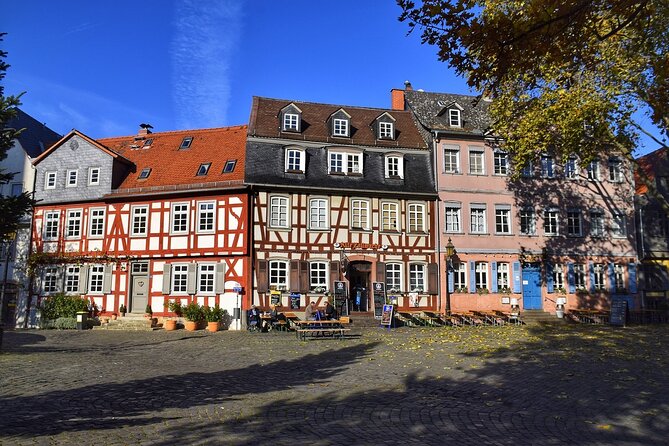
Römerberg is likely to be the most immediately photogenic part of the route. This is Frankfurt’s best-known historic square, framed by timber-framed houses and tied to centuries of civic and commercial life.
The square offers the image many people expect from old Frankfurt: traditional facades, a strong sense of place, and a clear break from the modern streets near the Alte Oper. It is also an important reminder that historic city centers are not only collections of pretty buildings. They are places where markets, public ceremonies, government, and daily commerce have long met.
The 20-minute stop lets you take in the architecture while the guide explains the square’s civic role. You’ll probably want photographs here, but try to give yourself time to look past the facades. The guide’s context is what turns Römerberg from a picture stop into part of Frankfurt’s story.
One practical point: the old town can feel more crowded than the opening section of the walk. A group limit of 15 helps, but you should still stay close to the guide and expect a quicker pace around the square.
Frankfurt Cathedral and the imperial past
Frankfurt Cathedral, also called the Kaiserdom, brings religious and imperial history into the route. Its Gothic form gives you a different architectural mood from the neo-Renaissance Alte Oper and the timber-framed buildings of Römerberg.
The cathedral played a central role in imperial coronations. That fact explains why Frankfurt mattered far beyond its local government and trade. The city was connected to the political structure of the Holy Roman Empire, and this church was part of that ceremonial world.
You’ll have around 20 minutes here. The stop is best understood as a guided introduction to the cathedral’s role and exterior setting, not as a full architectural study. If you want quiet time for prayer, close inspection, or a long interior visit, the fixed schedule may feel short.
Still, this is an important inclusion. Without the cathedral, the route would tell a strong story about writers and democracy but leave out the older religious and imperial forces that shaped Frankfurt.
Crossing the Main at Eiserner Steg
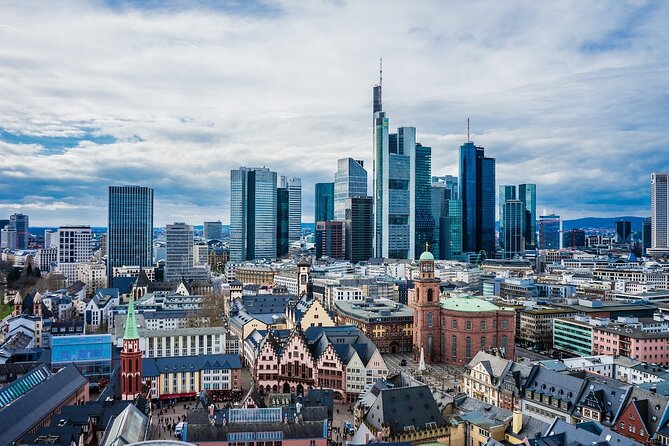
Eiserner Steg is the route’s natural finale. This historic iron footbridge crosses the Main and links the old town with Sachsenhausen.
The bridge gives you something the earlier stops cannot: space to look back. From here, you can see the Frankfurt skyline, the river, and the relationship between the historic center and the district across the water. It is a useful geographic lesson after a tour filled with buildings and dates.
The bridge also makes the ending feel active rather than abrupt. You are not simply stopping beside the last monument. You are moving through the city and seeing how its neighborhoods connect.
The tour ends back at the meeting point, according to the supplied details, even though Eiserner Steg is listed as the final stop. That wording is worth clarifying when you book, since the physical route appears to finish at the bridge while the activity information says it returns to the starting point. Either way, the bridge is a strong place to finish your sightseeing, and it puts you near routes toward Sachsenhausen.
What the guide adds to the walk
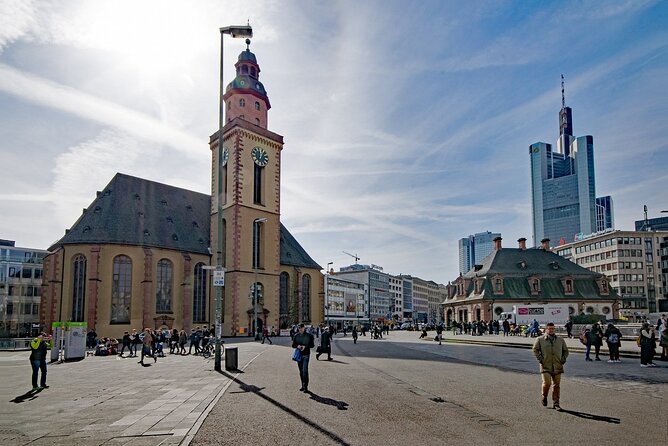
A professional guide is included, and the tour is offered in English. That matters most at St. Paul’s Church, the cathedral, and the Alte Oper, where the buildings need context to become meaningful.
The only named guide information provided is Srishti, who received specific praise for her city knowledge and historical explanations. If Srishti is leading your departure, you can expect the tour’s value to depend heavily on her ability to connect each stop rather than simply list facts.
With a maximum of 15 people, this is smaller than a large coach-style city tour. You should have a better chance of hearing the guide, asking a short question, and staying together through the central streets. It is not a private tour, so the pace and focus will still be shared with the group.
The free walking format also keeps the emphasis on public places. You pay for the guide’s time and local explanation, not for a package of attraction admissions.
Is $32 a fair price?
At $32 per person, this is a reasonable price if you want a structured introduction to central Frankfurt. You receive a professional English-speaking guide, about two to two and a half hours of sightseeing, and a route covering seven major locations.
The value is strongest for a first-time visitor who might otherwise spend part of the day trying to connect these sights alone. The route removes some guesswork and puts the monuments in a sensible order. It also gives you historical connections that are hard to get from a map or quick internet search.
The price is less attractive if you want extended interior access. Admission is not separately included, and each stop is limited to about 20 minutes. You are paying for orientation, explanation, and efficient coverage rather than a series of museum visits.
There is no mandatory gratuity listed. Gratuities are optional, so you can decide at the end based on the guide’s service and your own budget.
Who should book this walk?
I would recommend it to first-time Frankfurt visitors, short-stay visitors, and anyone who wants the city explained through more than shopping streets and modern towers. It suits people who enjoy moving between different subjects, since the route covers opera, literature, politics, medieval civic life, religion, and the river.
It also works well for people who prefer a small shared group rather than a private guide. The 15-person limit keeps the outing personal enough for questions without the cost of a private booking.
You may want a different plan if your main goal is to spend an hour inside Goethe House, study the cathedral in detail, or linger over every building at Römerberg. The schedule is deliberately broad, so you will see a lot but will not explore each place at length.
Wear comfortable shoes and arrive ready to walk for the full session. The route crosses central streets, squares, and a footbridge, and the 20-minute stop pattern keeps the group moving.
Cancellation and practical details
You receive confirmation at booking, and the activity is near public transportation. Service animals are allowed, and most people can participate.
Free cancellation is available up to 24 hours before the local start time for a full refund. Cancellations or changes made less than 24 hours before the 11:00 am start are not accepted for a refund, so check the local time before making last-minute changes.
The activity ends back at the meeting point according to the booking details. Since Eiserner Steg is the final listed sight, confirm the exact ending arrangement with the provider if your onward plans depend on leaving from the river.
Should you book this Frankfurt walking tour?
Book it if you want a well-priced first look at Frankfurt with a clear route and a guide to explain why the buildings matter. The best features are the range of subjects, the small group cap, the inclusion of Goethe House and St. Paul’s Church, and the final Main River crossing.
Skip it if you prefer slow museum visits or independent wandering. At $32, this is a city orientation walk, not an all-access ticket. For most first visits, though, it gives you a useful framework, a handful of memorable places, and enough local context to make the rest of your time in Frankfurt easier to plan.
FAQ
Where does the Frankfurt walking tour start?
The tour starts at the Alte Oper, Opernplatz 1, 60313 Frankfurt am Main, Germany.
What time does the tour begin?
The scheduled start time is 11:00 am.
How long does the walking tour last?
The activity is listed as approximately 2 hours 30 minutes. The included services also describe it as a 2-hour walking tour, so you should allow roughly two to two and a half hours.
What language is the tour offered in?
The tour is offered in English.
How many people can join the tour?
The maximum group size is 15 travelers.
Are attraction admission tickets included?
The tour includes the walking tour and a professional guide. Admission tickets are not listed as an included service, and each stop is marked with a free admission ticket.
Can I cancel for a full refund?
Yes. You can cancel at least 24 hours before the experience start time for a full refund. Cancellations or changes made less than 24 hours before the start time are not accepted for a refund.
Just added around Frankfurt
- magnificent historic Heidelberg, private Tour, from Frankfurt★ 4.5 · 15 reviews
- from Frankfurt: Heidelberg, Mercedes Museum / Schwetzinger Schloß★ 5.0 · 35 reviews
- from Frankfurt: historic treasure Rothenburg, private 1 day Tour★ 5.0 · 9 reviews
- Frankfurt : Private Walking Tour With A Guide ( Private Tour )★ 4.5 · 27 reviews
- Trier Small-Group Day Trip from Frankfurt★ 4.0 · 5 reviews
- The Tales of Frankfurt’s New Old Town: A Self-Guided Audio Tour★ 5.0 · 7 reviews
- Fairytale Rüdesheim and Monastery Eberbach Tour★ 5.0 · 9 reviews
- from Frankfurt – romantic Black Forest & brewery, private tour★ 5.0 · 13 reviews
Frankfurt Tours, compared.
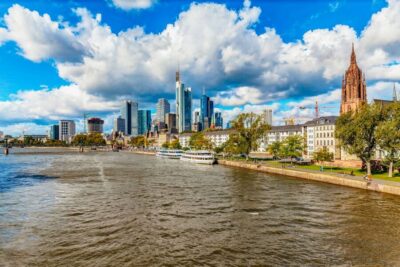
River Main Sightseeing Cruise with Commentary
Read our review →
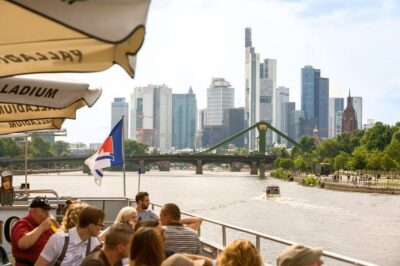
1-Hour Panorama Boat Cruise on the river Main
Read our review →
New Old Town and Highlights German-Language Tour
Read our review →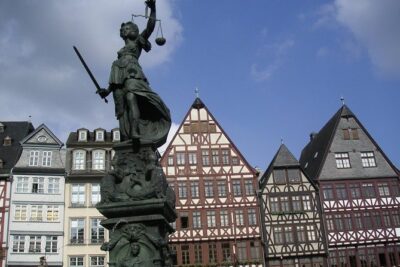
Rhine Valley Trip from Frankfurt including Rhine River Cruise
Read our review →
Browse the lists this tour appears in