
Review · FRANKFURT TOURS
Frankfurt: Private or Shared Walking Tour
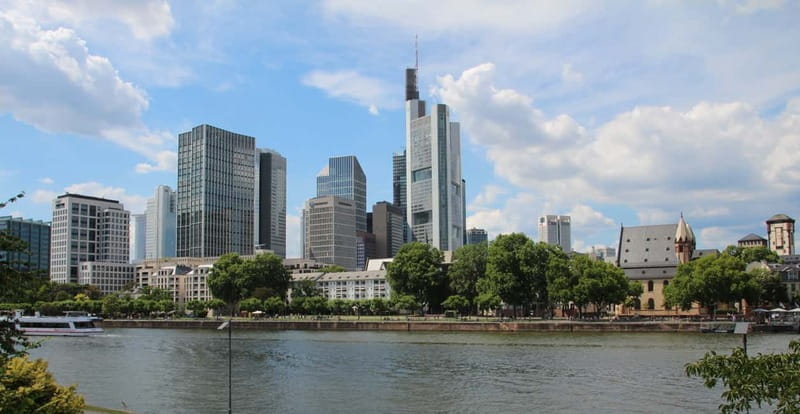
Frankfurt’s appeal comes from its sharp change of scenery: one moment you’re beside the medieval-looking Römer, and a few minutes later the city’s glass towers rise above you. This tour makes that contrast the main event, linking the Eiserner Steg, rebuilt historic center, and modern skyline in a compact walk.
I like the clear route and the focus on places you can actually see, especially the Neue Altstadt and Paulskirche. I also like the useful historical frame: World War II destruction and the 2008 to 2009 renovation explain why Frankfurt can feel both old and newly made. The main drawback is that the tour is conducted in German, so it may not suit you if you need English commentary.
Key points at a glance
- The Eiserner Steg dates to 1868: Begin at Frankfurt’s well-known iron footbridge and use the river setting to get your bearings.
- The Römer anchors the old center: See one of Frankfurt’s best-known historic sights while learning how much of the surrounding area was rebuilt.
- Paulskirche marks a major political moment: The church hosted the first German national assembly.
- The Neue Altstadt is a modern reconstruction: This recent city project gives you a chance to compare newly rebuilt traditional forms with older surviving monuments.
- The format is short and focused: The 1.5-hour walk works well for a first look, a stopover, or the beginning of a longer Frankfurt visit.
- Private and shared options are available: Choose a shared walk for the lower price or a private group if you want a more personal pace.
Frankfurt in 90 minutes: old streets beside glass towers
This walking tour is built around a simple question: what happened to Frankfurt’s historic center, and what did the city choose to bring back?
You begin at the Justitia-Brunnen on Römerberg, a practical meeting point in the heart of the Altstadt. From here, the tour moves through some of Frankfurt’s most recognizable sights before returning to the same place. That makes the route easy to fit into a day of sightseeing, since you do not need to arrange transport back from a distant neighborhood.
The experience lasts 1.5 hours. That is long enough for a proper introduction, but short enough to leave room for a museum, a meal, or time inside the sights on your own. I see this as a city orientation walk rather than a full historical study. You get the main story and the visual highlights, with a guide explaining what you are looking at as you go.
The shared option costs $17 per person, which is a fair price for a guided introduction in a central part of Frankfurt. The private option should appeal most to families, couples, or small groups that value flexibility. A private tour also makes more sense if you want to ask many questions or need the guide to adjust the pace.
More walking tours in Frankfurt:
- Frankfurt Highlights English Walking Tour
★ 5.0 · 1,203 reviews - Frankfurt on Foot Daily Walking Tour in English
★ 4.9 · 323 reviews - Frankfurt Self-Guided Historical Walking Tour
★ 4.0 · 58 reviews
Starting at Justitia-Brunnen on Römerberg
The Justitia-Brunnen is more than a simple place to meet. It puts you directly in Römerberg, the square most closely tied to Frankfurt’s historic center. You will not spend the first part of the tour walking from a station or waiting for the group to reach the sights.
Your guide begins by setting up the city’s story. Frankfurt has traditional-looking buildings, modern office towers, and large areas rebuilt after wartime destruction. Without that background, the old center can look like a collection of attractive facades. With it, the streets become evidence of the choices Frankfurt made after the war.
The German-speaking format is important to note before booking. The listed live tour language is German, and the available information names Sanel as a guide associated with the experience. One private booking received a flexible time adjustment and a shortened tour on a rainy evening, with Sanel still providing detailed insight. That suggests private groups may have more room to discuss timing, but you should not assume every departure will be led by the same person.
Crossing the Eiserner Steg, built in 1868
The first main stop is the Eiserner Steg, an iron footbridge built in 1868. It gives the route a change of scale. Instead of looking only at streets and facades, you get a view across the river and back toward the city.
The bridge also offers a useful opening image for Frankfurt. The city is not trying to hide its modern side. High-rise buildings appear alongside the older center, creating the visual contrast that shapes much of the walk.
You should expect a guided stop rather than a long pause for personal sightseeing. The tour has several important locations to cover, so your guide will keep the group moving. If you want photographs, have your camera ready before you reach the bridge and listen for the guide’s explanation as you walk.
The Eiserner Steg is also a reminder that Frankfurt’s identity has never been limited to one period. The bridge itself belongs to the 19th century, while the skyline nearby reflects a much newer city. That mix is one of the strongest reasons to choose this tour over a walk focused only on medieval buildings.
Understanding what World War II changed
The historical turning point of the tour is the destruction of many grand buildings during World War II. Frankfurt’s center was heavily affected, and the city later faced difficult decisions about what to rebuild, what to replace, and what to leave in modern form.
This context matters because the Altstadt can give you mixed signals. Some buildings look traditional, yet parts of the area are recent. Others have older foundations or historical importance but exist within a rebuilt setting. The guide helps you separate appearance from age.
The renovation of 2008 and 2009 is another key part of the story. You will hear how this major work shaped the center you see today. That makes the walk particularly useful if you want to understand the Neue Altstadt rather than simply photograph it.
I appreciate this focus because it avoids treating Frankfurt’s historic center as a perfectly preserved old quarter. The city’s past includes loss, reconstruction, and modern planning. The tour’s value lies in showing those layers together.
A few more Frankfurt half-days to weigh up
- Frankfurt: River Main Sightseeing Cruise with Commentary
★ 4.3 · 5,127 reviews - Frankfurt: Hop-On, Hop-Off Grand or Express Bus Ticket
★ 3.9 · 2,088 reviews - Frankfurt: 1-Hour Panorama Boat Cruise on the river Main
★ 4.4 · 1,822 reviews - From Frankfurt: Rhine Valley Day Trip
★ 4.4 · 1,317 reviews
The Römer and Frankfurt’s public face
The Römer is one of the central sights on the route. It is the place most people associate with Frankfurt’s old town, and it gives the tour a strong visual center.
Here, your guide can connect the building and square to the wider development of the Altstadt. You will get useful information about the attraction rather than simply stopping for a photograph. Since the tour is designed to compare historic monuments with modern architecture, the Römer also works as a reference point. From this part of the city, the contrast between traditional architecture and office towers becomes especially clear.
The benefit of seeing the Römer with a guide is simple: you do not have to arrive already knowing which details matter. The drawback is that a short walking tour cannot cover every part of the complex or give you the same time as a dedicated architectural visit. If the Römer is a major priority, treat this stop as an introduction and leave time to explore on your own if access and opening conditions allow.
The meeting point is also the ending point, so you can return to Römerberg after the tour and continue at your own pace. That makes it easy to revisit a view or take photographs once the group has finished.
Paulskirche and the first German national assembly
Paulskirche adds political weight to the route. The church is identified as the location of the first German national assembly, making it one of the most important stops for understanding Frankfurt’s place in German history.
This is where the tour moves beyond architecture. You are not only looking at a church or historic building. You are hearing about a major national event that took place in Frankfurt. That gives the city a role in the story of German political development.
I find this stop especially useful for visitors who want more than a list of dates and facades. The tour connects a specific building to a national assembly, helping you see why Frankfurt mattered beyond its role as a commercial center.
Again, time is limited. The walk lasts 90 minutes, so the guide will explain the importance of Paulskirche within the route rather than offer an extended visit inside. Check the tour details carefully if you are hoping for interior access, since the supplied information confirms the stop but does not promise admission or a separate indoor visit.
Seeing the Neue Altstadt after its 2008 to 2009 renovation
The Neue Altstadt is the most unusual part of this experience. It is the latest major project highlighted on the route, and it gives you a direct look at how Frankfurt has chosen to recreate an old-town setting in the modern era.
The phrase new old town captures the point. This is not simply an untouched medieval quarter. It is a recent project designed to bring traditional urban character back to the center after decades of change and destruction.
That makes the area worth seeing with a guide. On your own, you might notice attractive buildings and narrow passages but miss the reason the district exists. The tour explains the renovation and places the project beside older sights such as the Römer and Paulskirche.
I would pay close attention here if you are interested in city planning, architecture, or the difficult question of how a city rebuilds its identity. Some people prefer historic places that survived with little alteration. Others enjoy comparing old forms with new construction. This tour does not ask you to choose. It puts both versions in front of you.
The Neue Altstadt is also a good example of why Frankfurt can surprise first-time visitors. The city is not a single preserved picture from the past. Its center reflects wartime damage, postwar rebuilding, and a recent attempt to restore a more traditional feel.
Shared walk or private group?
The shared tour is the sensible choice for most visitors who want a low-cost introduction. At $17 per person, you get a guide, a central route, and a clear explanation of several major sights without committing half a day.
A shared group may move at a set pace, and the guide has to balance different interests. That is normal for a short city walk. You should expect a structured experience rather than a completely personal itinerary.
The private option costs more than the basic shared price, but it offers a better fit for groups with specific needs. The available information confirms that private groups are offered, and a private booking was adjusted around a different time and shortened duration during rainy weather. I would consider private booking if you are traveling with family, want to ask detailed questions, or need a little more flexibility.
Do not book the private format solely because you expect a different route. The core sights remain the same: the Eiserner Steg, Römer, Paulskirche, and Neue Altstadt. The main advantage is the group setting and the possibility of a more tailored pace.
What the German-language format means for you
The tour’s live language is German. This is the most important practical limitation and should guide your decision.
If you understand German, the format gives you access to a local guide who can explain the city in its own language. The experience is listed as having a 4.8 rating from 156 reviews, and the strongest praise centers on the depth of the historical explanation and the guide’s flexibility. One local participant described Sanel’s explanation as especially thorough, which is a useful sign for German-speaking visitors who want more than a surface-level walk.
If you do not understand German, the main value will be greatly reduced. The sights are easy to see, but the history of the rebuilt center is the part that makes this tour worthwhile. There is no English language option stated in the supplied details, so you should confirm the language before paying.
Timing, meeting point, and booking value
The walk starts and ends at the Justitia-Brunnen on Römerberg. That simple arrangement helps you plan the rest of your day. You can schedule the tour near the beginning of your Frankfurt visit, then use the same central area as a base for further sightseeing.
Starting times vary, so check availability before booking. The 1.5-hour duration is useful for a morning or afternoon gap, and it can also fit well into a longer stop in Frankfurt.
The booking terms are flexible. You can reserve now and pay later, and cancellation is free up to 24 hours before the activity for a full refund. These terms matter if your schedule is uncertain, especially when Frankfurt is one stop in a larger German trip.
At $17 per person, I consider the shared walk good value if you want context quickly. You are paying for the guide’s explanation of why the old center looks the way it does, not just for a route between famous buildings. The price is less compelling if you already know Frankfurt’s history or only want free time for photographs.
Who will enjoy this Frankfurt walking tour?
I would recommend this walk to first-time visitors who want to understand Frankfurt’s central sights before exploring alone. It is also a good choice for anyone curious about reconstruction, architecture, and the tension between historic appearance and modern city life.
The tour suits you particularly well if you:
- Want a short introduction rather than a half-day activity
- Prefer walking between sights instead of arranging transport
- Are interested in World War II’s effect on the city center
- Want to compare the Römer and Paulskirche with Frankfurt’s modern towers
- Speak German or are booking for people who do
- Prefer a private group and a more flexible setting
I would choose something else if you need an English-language tour, want extended interior visits, or prefer a route focused on museums and collections. This experience is mainly about outdoor sights, city history, and the shape of Frankfurt’s center.
Should you book it?
Book this tour if you want the story behind Frankfurt’s unusual mix of reconstructed old town and modern skyline. The Eiserner Steg, Römer, Paulskirche, and Neue Altstadt create a strong route, and the World War II and 2008 to 2009 rebuilding context gives those sights much more meaning.
The $17 shared price is sensible for a 90-minute orientation. Choose private if your group wants more flexibility, and confirm the German language before booking. If those two points work for you, this is a practical way to get your bearings fast and see why Frankfurt looks the way it does today.
FAQ
How long does the Frankfurt walking tour last?
The tour lasts 1.5 hours.
Where does the tour start?
Meet your guide at the Justitia-Brunnen in Römerberg.
Where does the tour end?
The activity ends back at the meeting point.
Is the tour available as a private experience?
Yes. You can choose a private group, depending on the option selected.
What language is the tour conducted in?
The live tour guide language is German.
Can I cancel for a full refund?
Yes. You can cancel up to 24 hours in advance for a full refund.
Just added around Frankfurt
- Frankfurter Kunstverein: Admission ticket★ 3.7 · 54 reviews
- Welcome to Frankfurt: Private Tour with a Local★ 4.7 · 81 reviews
- Frankfurt: Verbrecherjagd und gefährlich leckeres Schnitzel★ 4.4 · 22 reviews
- Frankfurt: Walking Tour – discover the city with VR glasses★ 4.2 · 12 reviews
- Frankfurt: Struwwelpeter Museum Entry Ticket w/Audio Guide★ 4.5 · 22 reviews
- Frankfurt: Unique E-Bikes Tours★ 4.8 · 22 reviews
- Frankfurt: “The Sandman” Nightmarish Walking Tour★ 4.4 · 45 reviews
- Frankfurt Self-Guided Historical Walking Tour★ 4.0 · 58 reviews
Frankfurt Tours, compared.
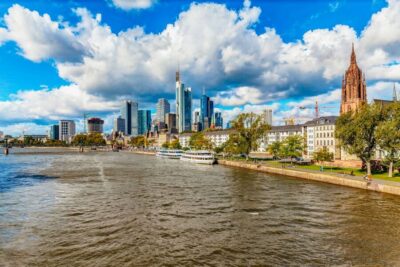
River Main Sightseeing Cruise with Commentary
Read our review →
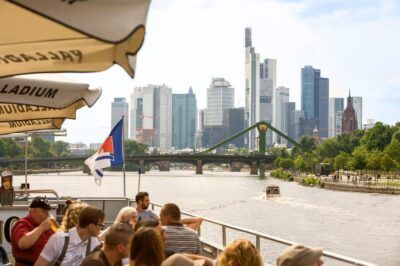
1-Hour Panorama Boat Cruise on the river Main
Read our review →
New Old Town and Highlights German-Language Tour
Read our review →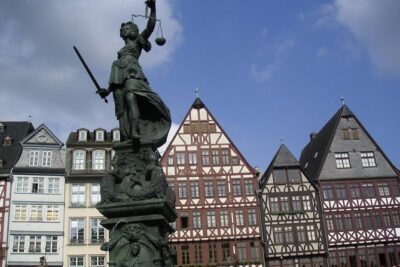
Rhine Valley Trip from Frankfurt including Rhine River Cruise
Read our review →
Browse the lists this tour appears in