
Review · FRANKFURT TOURS
Frankfurt: New Old Town and Highlights German-Language Tour
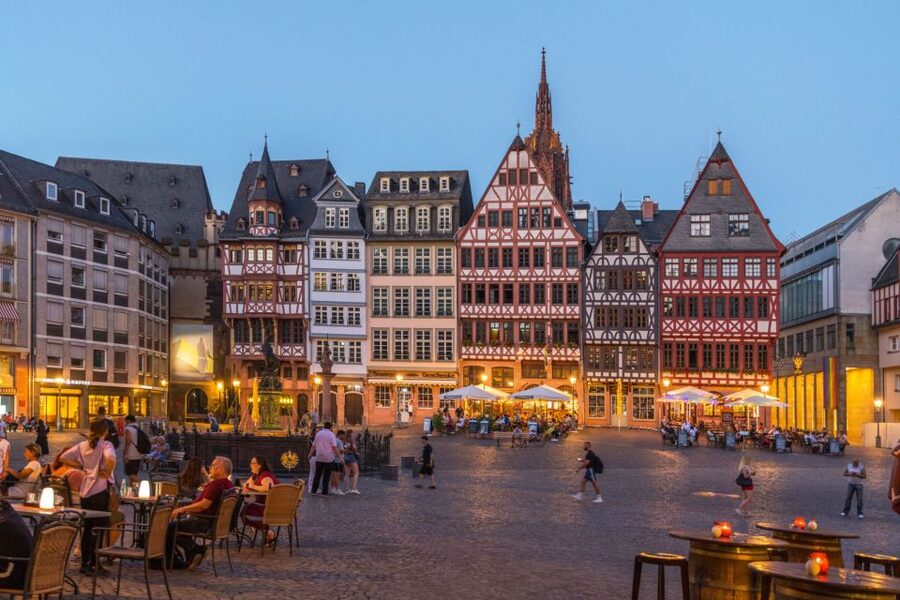
Frankfurt’s New Old Town is the curious heart of this walk: a carefully rebuilt quarter where half-timbered façades, narrow lanes, and modern city life meet. From Römerberg, you move through the old centre to the cathedral, St. Paul’s Church, the Eiserner Steg footbridge, and the Museumsufer.
I like the tour’s compact route and its focus on Frankfurt’s past and present rather than a single grand monument. I also like the low $21 price, especially because the walk includes a certified guide and several major sights. The main consideration is language: this is a German-language tour, so it will not suit you if you need full explanations in English.
Key points at a glance
- Reconstructed medieval-looking centre: See Frankfurt’s half-timbered New Old Town and learn why this quarter was brought back to life.
- Römerberg starting point: Begin in front of the Römer, Frankfurt’s City Hall, beside the 700-year-old central square.
- Democracy at St. Paul’s Church: Hear about the place where important German democratic developments began.
- Short, manageable route: The 1.5-hour walk does not demand a full day of sightseeing.
- Classic skyline photo stop: Cross or admire the Eiserner Steg, with views toward the Main and Frankfurt’s towers.
- German only, wheelchair accessible: A practical choice for German speakers who want a guided city introduction.
Why Frankfurt’s New Old Town makes a good first stop
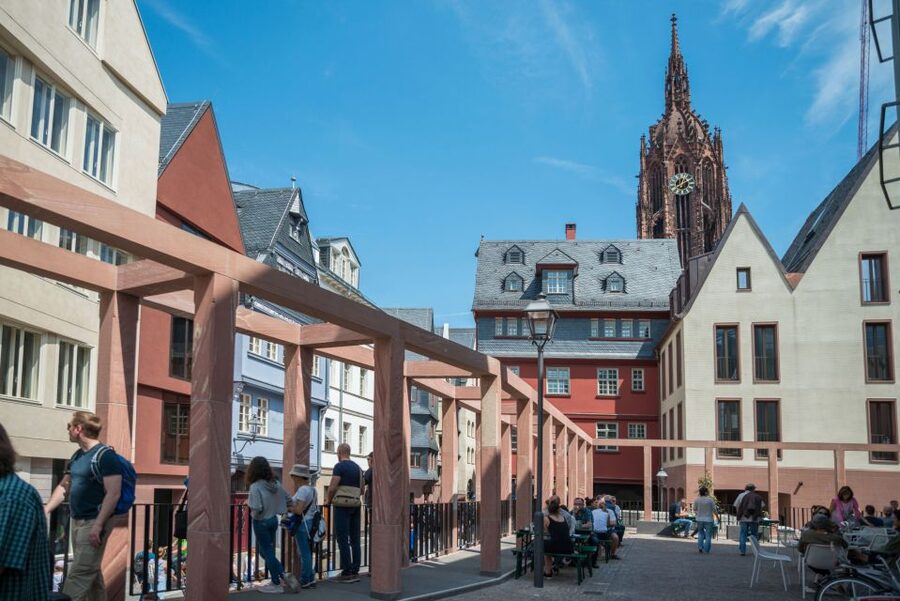
Frankfurt is often reduced to its airport, banking towers, and trade-fair halls. That misses the city’s older centre, where the New Old Town gives you a quick lesson in how Frankfurt has tried to reconnect with its past.
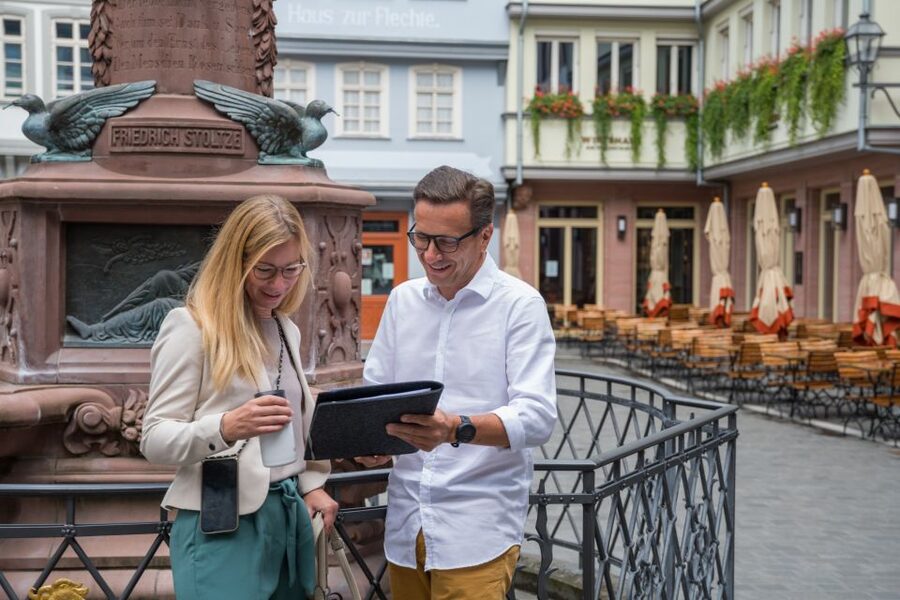
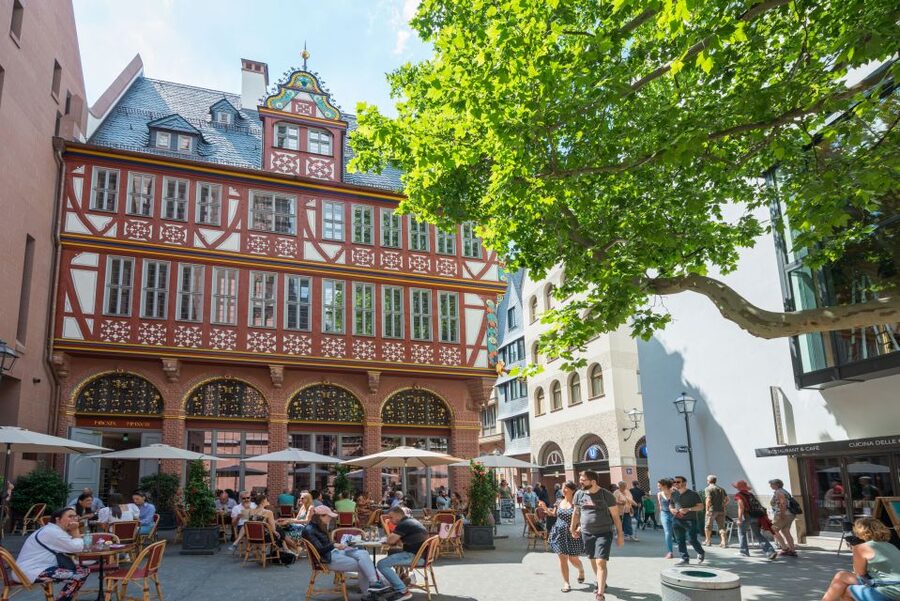
The quarter was recently reconstructed in a historically inspired style. As you stroll through its winding lanes, you’ll see half-timbered façades and buildings designed to recall the old centre. The result is not an untouched medieval district. It is a modern reconstruction, and that distinction matters. You are looking at a new version of an old place, created to restore part of Frankfurt’s lost appearance.
I find that this makes the area especially useful for a short introduction. You can see the visual language of old Frankfurt without spending hours in a museum. At the same time, the guide can explain the difference between original buildings, reconstructed elements, and the city that surrounds them today.
The tour begins in front of the Römer at Römerberg, so you start in one of Frankfurt’s most important public spaces rather than at a remote meeting point. From there, the walk connects the rebuilt centre with older landmarks and the modern skyline.
More Old Town Walking Tours in Frankfurt
- Heidelberg Castle and Old Town Tour from Frankfurt
★ 4.0 · 587 reviews - Frankfurt: Highlights and New Old Town English-Language Tour
★ 4.7 · 96 reviews - Guided Axe Throwing Experience in Frankfurt Altstadt
★ 5.0 · 93 reviews
Römerberg and the Römer: Frankfurt’s historic stage
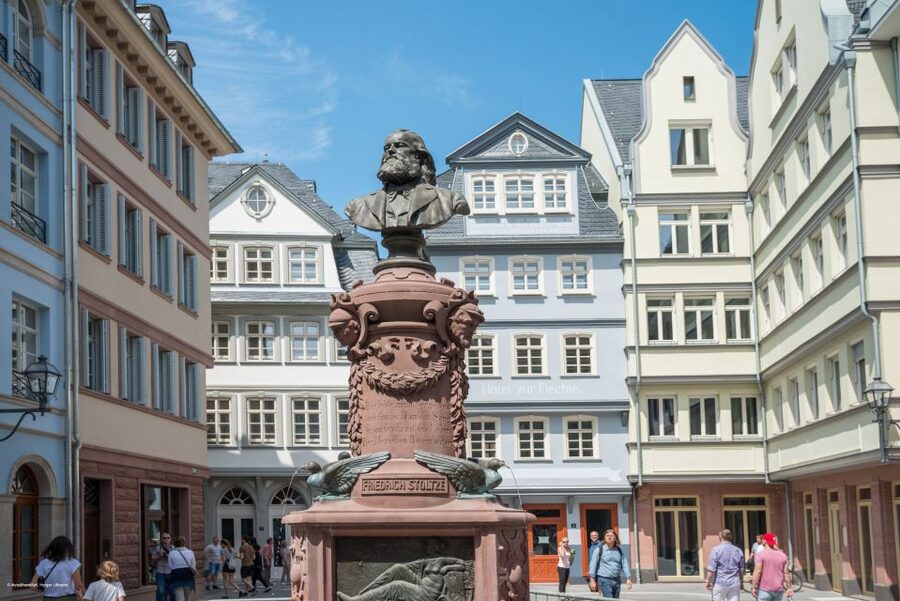
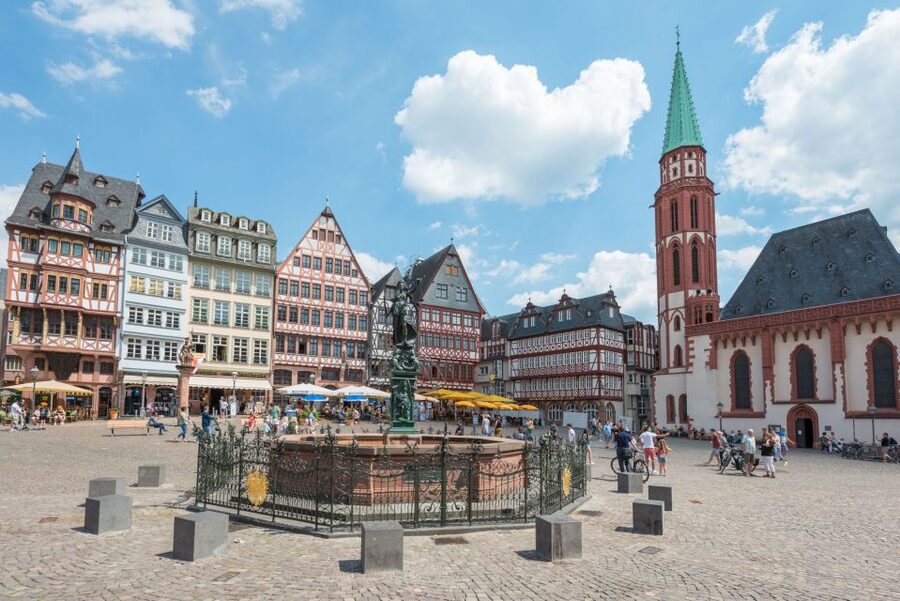
Römerberg is the natural place to begin. The square has been part of Frankfurt’s civic life for around 700 years, and it remains one of the city’s most recognisable scenes.
The Römer, Frankfurt’s City Hall, gives the square its visual focus. Its stepped gables and historic façades are among the city’s signature sights. Meeting directly in front of it also keeps the start simple. You do not need to search for a hidden office or navigate a complicated transit connection.
Your guide uses this area to set the story in motion. Frankfurt’s history is not presented as a string of unrelated dates. The square helps explain how commerce, civic power, public ceremony, and urban change shaped the centre.
This is also where you get your first clear look at the mix of old and new. Half-timbered buildings and reconstructed façades sit within reach of contemporary streets and high-rise towers. Frankfurt’s modern financial district is never far away, which gives the city a character quite different from a town that preserved only its old centre.
One practical point: Römerberg can feel exposed on a hot day. During a particularly warm departure, guide Sascha made an effort to move the group from one patch of shade to the next. That is a small detail, but it tells you what matters on a walking tour. Summer visitors should bring water, a hat, and comfortable shoes.
Wandering the reconstructed lanes
The New Old Town is best understood on foot. Its lanes are short, close together, and designed for looking upward and around corners. A guide adds context that you would miss by simply taking photographs of the façades.
You’ll encounter the colourful half-timbered style associated with old Frankfurt, along with the sense of a compact neighbourhood rebuilt around historic forms. The point is not that every stone is ancient. The point is that the city has recreated a central district that reflects what Frankfurt once looked like.
That raises an interesting question: how authentic can a reconstruction be? The tour gives you a way to consider that without turning the walk into an architectural lecture. You see a place that is both historical reference and recent urban project.
Several guides have been praised for making this material easy to follow. Frank, David, and Gabriella are among the guides who have led departures associated with the tour. David has also used before-and-after images to show how the centre changed, a useful aid when the present-day streets do not immediately reveal what stood there before.
The walk is described as leisurely, and one past participant specifically appreciated that it did not involve a great deal of walking. Still, this is an outdoor walking tour, so you should expect to remain on your feet for much of the 90 minutes. The route is wheelchair accessible, which makes it a practical choice for many visitors, though the information provided does not describe every surface or any specific step-free route detail.
The cathedral and Frankfurt’s older centre
The cathedral is another major stop on the route. Its presence helps shift the story from the reconstructed New Old Town to Frankfurt’s older religious and civic core.
You’ll get more from this stop if you pay attention to how close the cathedral is to Römerberg and the rebuilt quarter. Frankfurt’s centre is compact, and the tour makes that easy to see. The main sights are not scattered across distant neighbourhoods. They form a walkable chain.
The cathedral also gives the guide a chance to place Frankfurt in a wider historical setting. The tour covers the city’s development from Roman times to the present, according to one detailed account of the route. That broad span is useful when you are trying to understand why Frankfurt became an important centre rather than merely collecting pretty views.
Do not expect a full interior visit or a long cathedral talk based on the information provided. This is a city highlights walk, not a specialist church tour. The value comes from the connection between the sights and the larger story.
More old town walks in Frankfurt:
- Frankfurt: Old Town Historical Walking Tour in German
★ 4.7 · 43 reviews - Frankfurt: Main Tower with Tickets and Guided Old Town Tour
★ 5.0 · 17 reviews - Frankfurt: Old Town Crime Mystery Game
★ 4.3 · 14 reviews - Frankfurt – Old Town Historic Walking Tour
★ 4.9 · 7 reviews
St. Paul’s Church and the story of German democracy
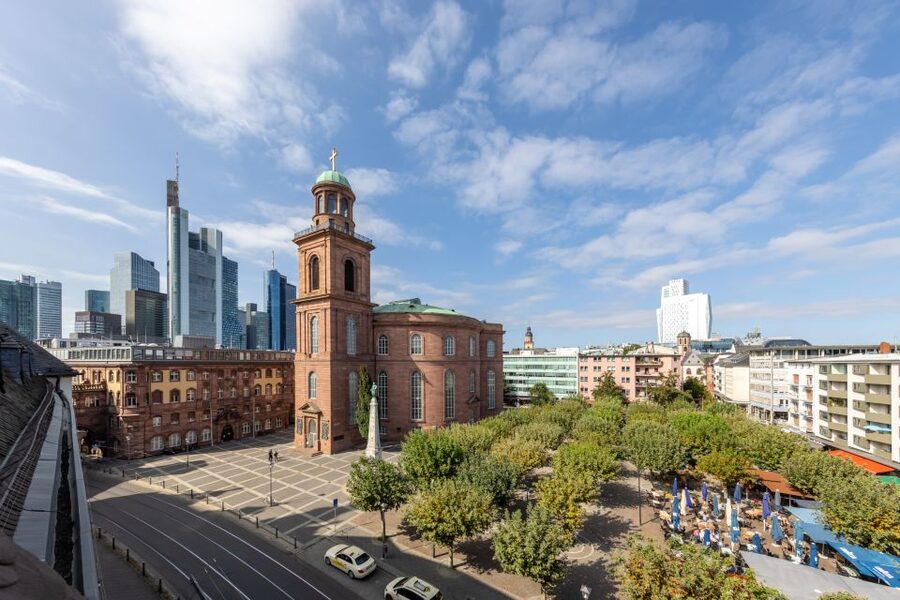
St. Paul’s Church brings a different kind of history into the walk. Here, the focus turns to German democracy and the role Frankfurt played in its early development.
That subject gives the tour more weight than a simple old-town stroll. You are not only hearing about architecture and city government. You are also learning how Frankfurt became linked with political change and public debate.
The guide’s storytelling matters most at this point. A good explanation can make a plain exterior meaningful, especially if you do not already know why St. Paul’s Church is important. The tour’s strongest guides have been praised for clear historical explanations, gentle humour, and an ability to connect centuries of change in a way that feels manageable.
For children, this may be the least immediately exciting section. One family found the tour somewhat dull, particularly for the children, and very hot weather made that departure harder. If your family needs constant movement or visual spectacle, the church and civic history may test their patience. Older children and teenagers who enjoy politics, buildings, or city stories may get more from it.
Eiserner Steg and the Frankfurt skyline
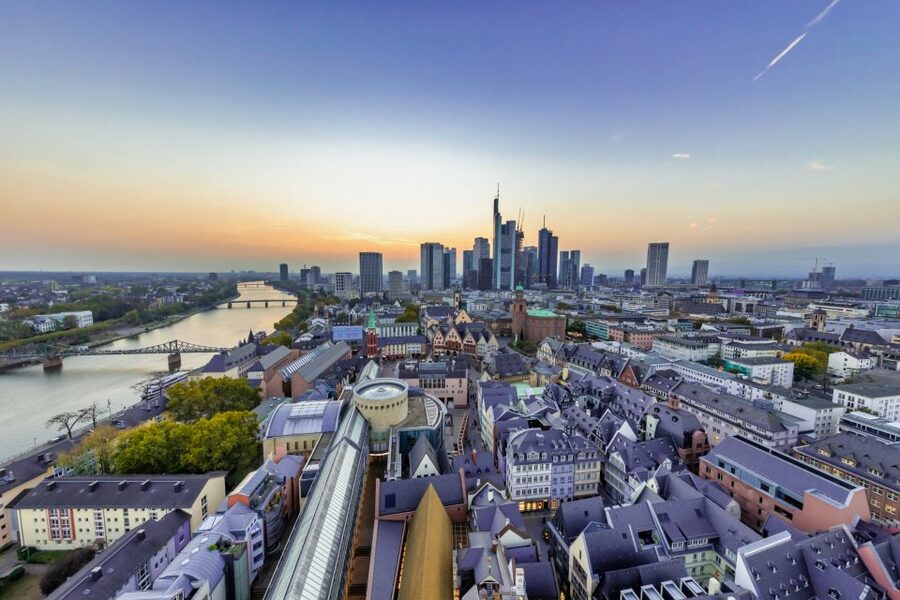
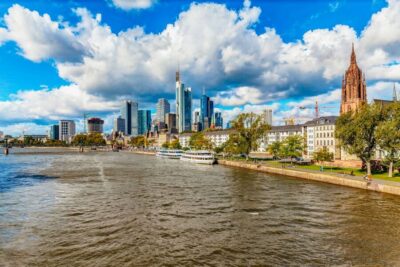
The Eiserner Steg, or Iron Footbridge, provides the tour’s strongest photo opportunity. This pedestrian bridge crosses the Main and offers a different view of Frankfurt, with the city skyline rising behind the older centre.
The bridge helps you see the city as a whole. From the old square and narrow lanes, you move to a broad view that includes the river and the towers. That contrast is one of the pleasures of Frankfurt: its historic centre is close to a modern skyline that announces the city’s financial importance.
You should think of this as a viewing and orientation stop rather than a long bridge excursion. The walk includes the footbridge and skyline views, but the supplied details do not promise extended free time for photographs or a separate river cruise.
If you want a good picture, keep your camera ready before you reach the bridge. The Eiserner Steg is popular, and the bridge itself is a passageway as well as a viewpoint. Your guide’s commentary can also help you identify what you are seeing across the river.
A glimpse of Museumsufer and its 39 museums
The Museumsufer, or Museum Embankment, adds a cultural note to the final part of the route. Its 39 museums make the riverfront one of Frankfurt’s main museum areas.
This tour only offers a glimpse, so you should not book it expecting admission to the museums or detailed gallery visits. Its real use is planning. After hearing about the embankment, you can decide if you want to return later for a longer museum visit.
That is one reason I like the route for a first day in Frankfurt. It introduces several areas without asking you to commit to a full schedule. You see the old centre, the cathedral, St. Paul’s Church, the bridge, the river, and the museum district. Then you can choose where to spend more time.
The Museumsufer also reinforces the tour’s main idea: Frankfurt is not only a reconstructed old town or a business centre. It is a city with civic, religious, political, artistic, and commercial layers packed into a relatively short sightseeing route.
The guide makes the difference
A city walk succeeds or fails on the guide’s ability to explain, pace, and read the group. The strongest feedback for this experience focuses on those human details.
Guides have been praised for being informative, warm, graceful, and able to add small jokes without losing the historical thread. One guide handled a larger-than-usual group while keeping the commentary clear enough to hear. Another adapted kindly when a participant had accidentally booked the German departure despite speaking only English.
That last point is worth treating as a bonus, not a plan. The tour is advertised in German, and you should book it only if you can follow spoken German comfortably. A helpful guide may make an effort to assist, but you cannot count on receiving a full translation.
The tour’s broad time span also makes guide quality important. Moving from Roman-era Frankfurt to the present in 90 minutes requires selection. You will hear the main ideas, not every detail. That is a good format for a first orientation, but history specialists may want a longer or more focused tour afterward.
Is $21 good value for 90 minutes?
At $21 per person, this is a reasonably priced introduction to central Frankfurt. You are paying for a certified German-speaking guide, a structured route, and historical interpretation at several key sights.
The value is strongest if you are in Frankfurt for a short stay or want help deciding what to explore next. Instead of spending 90 minutes wandering without context, you get a clear route through the New Old Town and nearby highlights.
It is less compelling if you already know Frankfurt well or want entry into museums and interiors. The tour is primarily an outdoor walk, and the listed price does not include museum admission or a separate attraction visit.
I also like the flexibility. You can reserve now and pay later, and cancellation is free up to 24 hours before the start for a full refund. Those terms are useful when weather or a changing city schedule might affect your plans.
Who should book this German-language walk?
I would choose this tour for German-speaking visitors who want a short, guided introduction to Frankfurt’s centre. It is particularly well suited to first-time visitors, people on a brief stop, and anyone interested in how a modern city rebuilt part of its old core.
It also works for anyone who prefers a gentle route over a demanding all-day walking tour. The 1.5-hour duration leaves room for lunch, a museum, or independent sightseeing afterward.
You might choose something else if you need English commentary, want a deep focus on one subject, or prefer lots of time inside buildings. Families should consider their children’s interest in history and the weather. In strong summer heat, even a short walk can feel long.
Should you book it?
Book this tour if you want the main Frankfurt sights tied together by a German-speaking guide, especially the reconstructed New Old Town, Römerberg, St. Paul’s Church, Eiserner Steg, and Museumsufer. The modest price, short duration, wheelchair accessibility, and strong overall rating of 4.7 from 1,316 ratings make it an easy addition to a city visit.
Skip it if you cannot follow German or if you want museum entry and extensive interior tours. For the right audience, this is a practical first look at Frankfurt, with enough history to give the city’s old stones and modern towers some meaning.
FAQ
How long does the Frankfurt New Old Town tour last?
The guided walking tour lasts 1.5 hours.
What language is the tour conducted in?
The tour is conducted in German with a live German-speaking guide.
Where does the tour meet?
The meeting point is in front of the Tourist Information Office Römer at Römerberg 27, 60311 Frankfurt am Main.
What sights are included?
The route includes the New Old Town, the Römer, Römerberg, the cathedral, St. Paul’s Church, the Eiserner Steg pedestrian bridge, and a glimpse of the Museumsufer and its 39 museums.
Is the tour wheelchair accessible?
Yes, the activity is listed as wheelchair accessible.
How much does the tour cost?
The price is $21 per person.
Can I cancel the booking?
Yes. You can cancel up to 24 hours in advance for a full refund. You can also reserve now and pay later.
Just added around Frankfurt
- Frankfurter Kunstverein: Admission ticket★ 3.7 · 54 reviews
- Welcome to Frankfurt: Private Tour with a Local★ 4.7 · 81 reviews
- Frankfurt: Verbrecherjagd und gefährlich leckeres Schnitzel★ 4.4 · 22 reviews
- Frankfurt: Private or Shared Walking Tour★ 4.8 · 156 reviews
- Frankfurt: Walking Tour – discover the city with VR glasses★ 4.2 · 12 reviews
- Frankfurt: Struwwelpeter Museum Entry Ticket w/Audio Guide★ 4.5 · 22 reviews
- Frankfurt: “The Sandman” Nightmarish Walking Tour★ 4.4 · 45 reviews
- Frankfurt: Unique E-Bikes Tours★ 4.8 · 22 reviews
Frankfurt Tours, compared.
River Main Sightseeing Cruise with Commentary
Read our review →
1-Hour Panorama Boat Cruise on the river Main
Read our review →
Rhine Valley Trip from Frankfurt including Rhine River Cruise
Read our review →
Browse the lists this tour appears in