
Review · FRANKFURT TOURS
Frankfurt: Walking Tour – discover the city with VR glasses
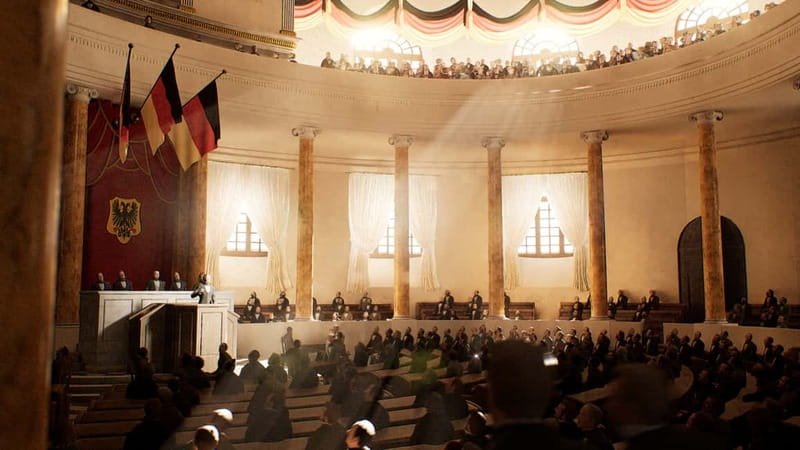
Frankfurt’s past appears right in front of you on this compact VR walking tour, with moving scenes layered over places you can see today. At Paulskirche, you can watch the National Assembly of 18 May 1848 return to life, then compare the old city with modern Frankfurt at Römerberg.
I like the direct comparison between past and present, and I like that a live German-speaking guide adds facts and keeps the group moving. The 45-minute length also fits neatly into a busy day.
The main catch is the language: the tour is in German, and the VR headset is only one part of the experience. If you want a long, detailed city tour or entry to the full TimeRide Frankfurt 1891 exhibition, this is not the right ticket.
Key points at a glance
- See 1848 inside Paulskirche: Use 360-degree virtual scenes to watch the first National Assembly meet.
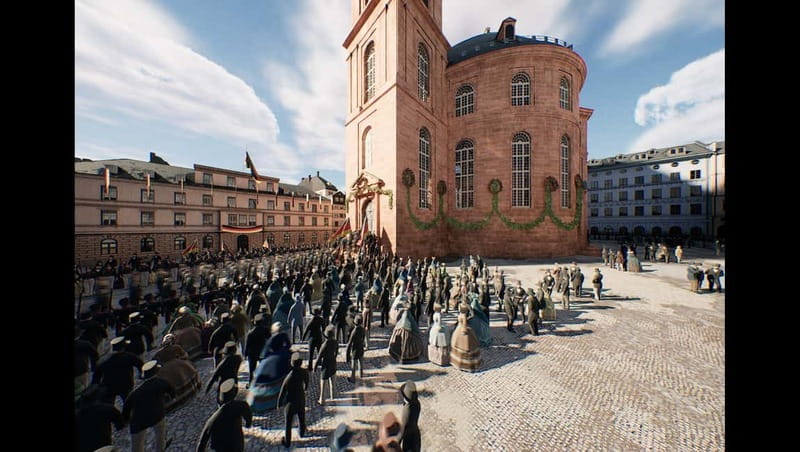
- Compare old and new Frankfurt: Look from Paulsplatz and Römerberg at virtual versions of the city that once occupied the same ground.
- Trace German democracy: The route connects Frankfurt’s 1848 parliament with the fall of the Berlin Wall.
- Keep it short: The full experience lasts 45 minutes, with roughly 10 minutes at TimeRide, 10 at Paulsplatz, 15 at St. Paul’s Church, and 10 at Römerberg.
- Stay outside for the exhibition: The tour does not include admission to the TimeRide Frankfurt 1891 exhibition.
- Plan for German: The live guide speaks German, and the tour runs in rain or shine.
Frankfurt’s past, placed over the city you see
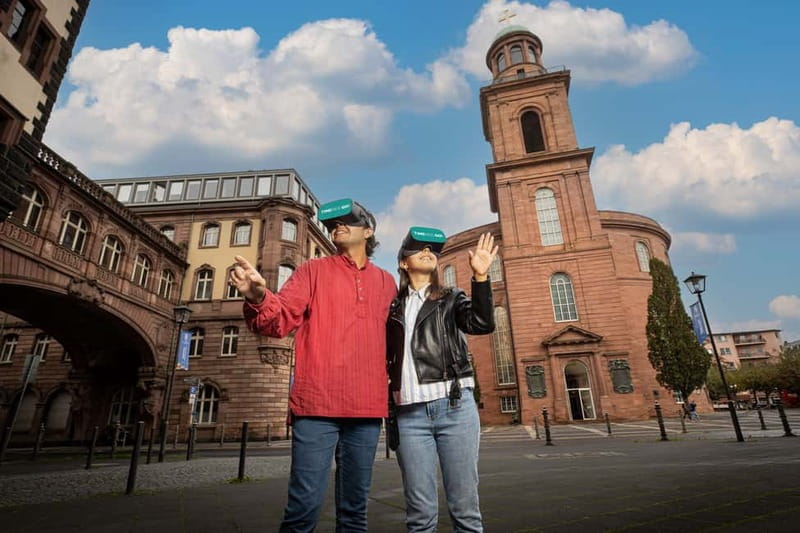
TimeRide Go! takes a simple idea and makes it useful: look at Frankfurt today, put on the mobile VR glasses, and see how the same place looked at another point in time. This works best in a city where modern streets sit close to major historical sites.
The tour covers a wide stretch of German history, from the Romans at the Limes to the fall of the Berlin Wall. That is a lot of ground for 45 minutes, so you should expect a brisk introduction rather than a full history course.
The strongest focus is Frankfurt’s role in German democracy. The key date is 18 May 1848, when the first freely elected National Assembly met in Frankfurt’s Paulskirche. The VR scenes bring you into the ceremonial arrival and early debates, giving the event a human scale that a plaque or timeline cannot provide on its own.
I like this approach because you do not just hear that Frankfurt played an important political role. You are placed at the actual squares and buildings where the story unfolded. The virtual views give the locations a before-and-after quality, while the live guide helps explain what you are seeing.
More walking tours in Frankfurt:
- Frankfurt Highlights English Walking Tour
★ 5.0 · 1,203 reviews - Frankfurt on Foot Daily Walking Tour in English
★ 4.9 · 323 reviews - Frankfurt: Private or Shared Walking Tour
★ 4.8 · 156 reviews
Starting at TimeRide and getting oriented
The tour begins and ends at TimeRide Frankfurt. Arrive ready to start on time, since the route is short and each stop has a set place in the schedule.
The first stop at TimeRide lasts about 10 minutes. Here, you receive the mobile VR headset and begin the guided introduction. The exact setup is not described in detail, but the equipment is included in the price, so you do not need to arrange a separate rental.
This opening section sets up the wider German story. You may move from the Roman frontier to later political turning points before the main focus shifts to Frankfurt. The broad time span gives you a useful frame, though visitors who want detail on every era may find the treatment quick.
The headset is mobile, which matters. You are not sitting through a fixed presentation in one room. You walk between sites, then use the virtual scenes at the places they describe. That combination makes the experience feel more like a guided city walk with a visual history lesson attached.
Paulsplatz and the return of 1848
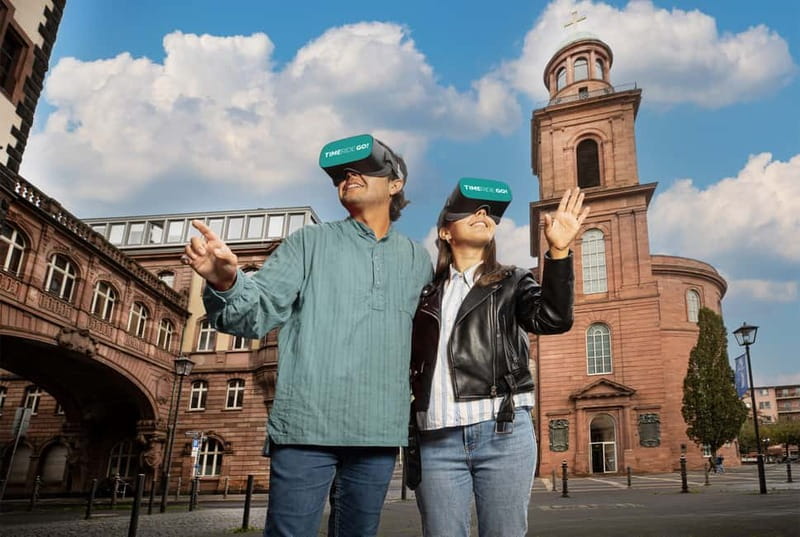
From TimeRide, the route leads to Paulsplatz, with about 10 minutes devoted to visiting, walking, and guided sightseeing. Paulsplatz is important because it places you directly beside St. Paul’s Church, the building most closely linked with Frankfurt’s democratic story.
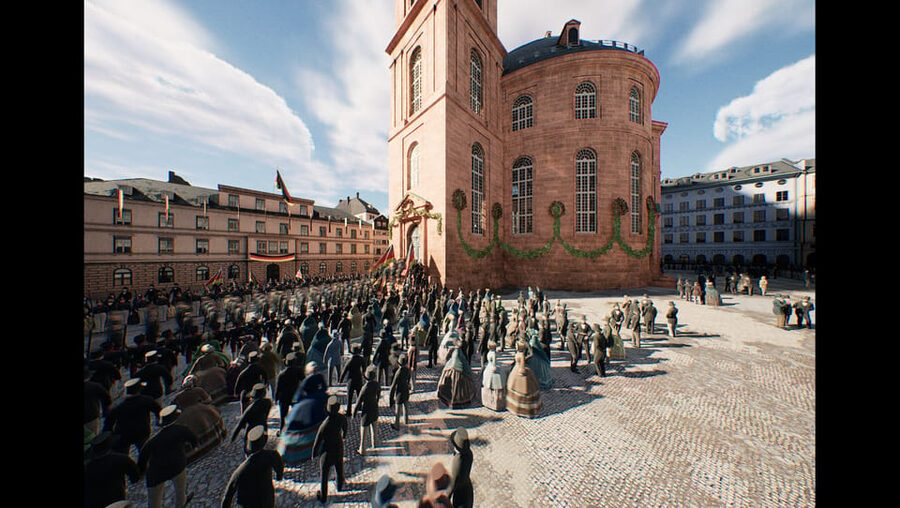
This is where the tour begins to focus on the National Assembly. Through the VR glasses, you see virtual reconstructions of the square and nearby city, helping you picture Frankfurt during the 19th century rather than relying only on the modern buildings around you.
The advantage of using VR here is clear. Historical events can feel remote when you encounter them as dates in a guidebook. Seeing a reconstructed setting at the same location helps you connect the event with the ground beneath your feet.
You should keep your expectations realistic. This is a 10-minute stop, not a long exploration of Paulsplatz or a chance to study every building. The value comes from the comparison between the virtual past and the real square, with the guide supplying the essential context.
Inside St. Paul’s Church and the National Assembly
The tour then spends about 15 minutes at St. Paul’s Church, the longest stop on the route. This is the centerpiece of the experience.
The virtual scenes recreate excerpts from the emotionally charged session of 18 May 1848. You can see the ceremonial entry and early arguments of the National Assembly in 360-degree scenes. The aim is to give you the sense of being present as the assembly began its work.
The VR reconstructions also show what Paulskirche looked like at the time and explain the roles of important figures in the National Assembly. That historical detail gives the headset experience more substance than a simple old-photo comparison.
I especially like this stop for visitors who want to understand why Frankfurt is described as the cradle of German democracy. The tour links the building’s physical appearance with the political hopes and disputes that filled it. You are not just looking at impressive architecture. You are learning why this church became such a powerful symbol.
The church itself also deserves your attention without the headset. Take a moment to notice the architecture and scale of the building around you. The virtual material works best when you keep switching your attention between the real structure and the reconstructed version.
One point to remember: the experience provides a guided visit around the site, but the supplied information does not promise a separate admission visit or an extended interior tour beyond the scheduled stop. The 15 minutes pass quickly.
A few more Frankfurt half-days to weigh up
- Frankfurt: River Main Sightseeing Cruise with Commentary
★ 4.3 · 5,127 reviews - Frankfurt: Hop-On, Hop-Off Grand or Express Bus Ticket
★ 3.9 · 2,088 reviews - Frankfurt: 1-Hour Panorama Boat Cruise on the river Main
★ 4.4 · 1,822 reviews - From Frankfurt: Rhine Valley Day Trip
★ 4.4 · 1,317 reviews
Römerberg and Frankfurt in the 19th century
The final major stop is Römerberg, where the tour spends about 10 minutes. This square is one of Frankfurt’s most recognizable public spaces, and it gives the VR comparison a strong visual setting.
Here, a virtual view of Frankfurt during the Gründerzeit, the period of major 19th-century economic and urban growth, is placed against the present-day cityscape. The contrast helps you see how much the city changed and how much historical meaning still clings to the square.
Römerberg also lets the guide connect Frankfurt’s local story with wider German history. The route moves through later turning points until it reaches the fall of the Berlin Wall. The tour presents that event as a symbolic victory for democracy, with roots reaching back to the debates of 1848.
That connection is one of the tour’s more ambitious ideas. Frankfurt did not cause every later change in German history, of course, but the experience uses the city’s democratic tradition as a thread linking the National Assembly with the events of 1989. In 45 minutes, this gives you a clear story to carry away.
The drawback is time. Römerberg receives only around 10 minutes, so you will not get a full architectural or social history of the square. Think of it as the final comparison point and a concise conclusion to the historical route.
What the VR glasses add, and where they do not
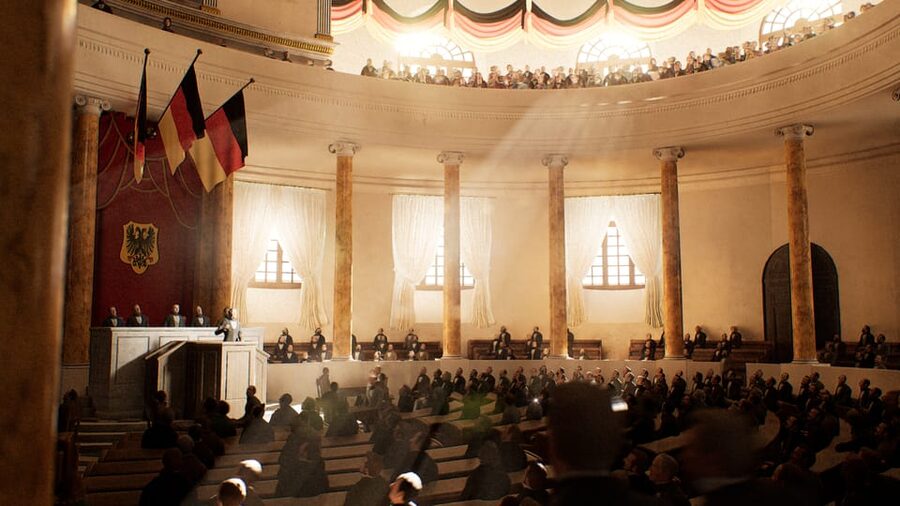
The VR glasses are most helpful when the virtual image matches the exact place where you are standing. At Paulsplatz, Paulskirche, and Römerberg, the comparison has a clear purpose. You can look at the current setting, then see an earlier version of it without leaving the site.
The 360-degree scenes are also useful for the National Assembly sequence. A still image can show clothing, walls, and faces, but moving scenes can suggest the activity of a formal gathering, including the ceremonial entry and heated early discussions.
Still, the technology is not the whole tour. You will not wear the glasses continuously for 45 minutes. The experience alternates between walking, listening to the guide, looking at the real city, and viewing virtual scenes.
That balance is a strength for some people and a weakness for others. I like it because you remain connected to Frankfurt rather than spending the whole visit inside a digital world. If you are booking specifically for a long VR attraction, the short headset sections may feel limited.
The guide matters here. The live German-speaking guide provides the facts and stories that make each virtual scene understandable. Without that spoken context, the old views could become attractive but confusing images.
Price, timing, and what you actually receive
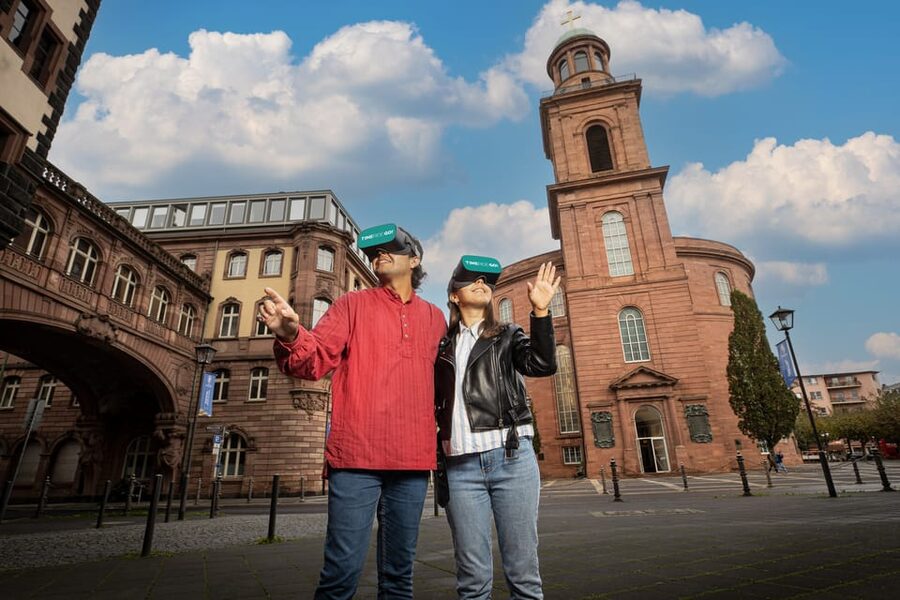
The price is $26 per person for 45 minutes. That is a reasonable price if you want a focused introduction to Frankfurt’s political history and enjoy trying a technology-based format.
The value is strongest when you treat this as a compact orientation. You receive the headset, a live guide, and a route through three important central locations. You also avoid spending time figuring out how to connect the sites yourself.
The value is weaker if you want a long walking tour, a broad architectural survey, or entry to the TimeRide Frankfurt 1891 exhibition. Admission to that exhibition is not included, so check your booking carefully if you want both experiences.
The short duration can be an advantage. You can fit the tour around meals, museum visits, or a train connection, provided you leave enough time to reach the meeting point. It is also a manageable choice if you do not want a half-day activity.
The tour operates in rain or shine. Bring weather-appropriate clothing and shoes, since the route includes outdoor walking between the stops. The information provided does not give a group size, so you should not book expecting either a private tour or a guaranteed small group.
Accessibility, age, and language
The tour is listed as wheelchair accessible. A direct account from a wheelchair user describes the route as manageable and notes that the guide paid close attention during the headset sections. That is useful reassurance, though you may still want to confirm any personal mobility needs before booking.
The experience is not suitable for children under six. The material focuses on political and historical events, so older children and adults are likely to get more from the National Assembly scenes and the links between 1848 and 1989.
The live tour is in German. This is the single most important booking consideration for international visitors. If you do not understand German, the visuals may still be interesting, but you will miss the guide’s explanations, historical links, and stories.
There is no listed alternative language for this activity. Confirm the language before paying, especially if you are booking for a mixed-language group.
Who will enjoy this 45-minute route?
I would recommend the tour most strongly to:
- First-time visitors who want a quick introduction to central Frankfurt
- People interested in German democracy and the 1848 National Assembly
- Families with children aged six or older who enjoy visual technology
- Visitors who prefer a short activity rather than a full city tour
- Anyone curious about comparing historical reconstructions with real streets and buildings
- Wheelchair users seeking a listed accessible activity in the city center
It may not suit you if you want a detailed English-language explanation, a long historical walk, or extensive time inside Paulskirche. It also may not be the best choice if you dislike headsets or find virtual scenes less engaging than original objects and documents.
The experience works especially well as an introduction before exploring Frankfurt on your own. After seeing the earlier versions of Paulsplatz and Römerberg, you may notice the city’s changes more clearly during the rest of your visit.
Booking and practical details
You meet at TimeRide Frankfurt, and the tour returns there at the end. The full route takes 45 minutes, with the approximate sequence running from TimeRide to Paulsplatz, St. Paul’s Church, Römerberg, and back to TimeRide.
You can cancel up to 24 hours before the start for a full refund, and the reserve-now, pay-later option keeps your plans flexible. Starting times vary, so check availability for the date you want.
The experience includes the VR headset and tour guide. It does not include admission to the TimeRide Frankfurt 1891 exhibition.
The tour includes outdoor walking and runs in all weather. Arrive at the meeting point before the scheduled start, wear suitable shoes, and remember that the guide’s language is German.
Should you book the TimeRide VR walking tour?
Book it if you want a short, visually engaging introduction to Frankfurt’s role in German democracy. The Paulskirche scenes are the strongest reason to go, and the direct comparison between past and present gives the central city a new sense of depth.
Skip it if you need English, want a traditional historical tour, or expect a full visit to the TimeRide exhibition. At $26, the tour offers fair value for the headset, guide, and three-location route, but its appeal depends on enjoying the mix of technology and walking.
For a German-speaking visitor with 45 minutes to spare, this is a smart way to meet Frankfurt’s political past without committing half a day. For everyone else, check the language and exhibition details first.
FAQ
How long does the Frankfurt VR walking tour last?
The tour lasts 45 minutes. The route includes about 10 minutes at TimeRide, 10 minutes at Paulsplatz, 15 minutes at St. Paul’s Church, and 10 minutes at Römerberg.
Where does the tour begin and end?
The tour begins at TimeRide Frankfurt and returns to the same meeting point at the end.
What language is the tour in?
The live tour guide speaks German. No other guide language is provided for this activity.
Is admission to the TimeRide Frankfurt 1891 exhibition included?
No. Admission to the TimeRide Frankfurt 1891 exhibition is not included in this tour.
Is the tour wheelchair accessible?
Yes. The activity is listed as wheelchair accessible. A wheelchair user also reported that the experience was manageable and that the guide provided attentive assistance during the VR sections.
What happens if it rains?
The tour runs rain or shine. You should be prepared for outdoor walking in changing weather.
Just added around Frankfurt
- Frankfurter Kunstverein: Admission ticket★ 3.7 · 54 reviews
- Welcome to Frankfurt: Private Tour with a Local★ 4.7 · 81 reviews
- Frankfurt: Verbrecherjagd und gefährlich leckeres Schnitzel★ 4.4 · 22 reviews
- Frankfurt: Private or Shared Walking Tour★ 4.8 · 156 reviews
- Frankfurt: Struwwelpeter Museum Entry Ticket w/Audio Guide★ 4.5 · 22 reviews
- Frankfurt: “The Sandman” Nightmarish Walking Tour★ 4.4 · 45 reviews
- Frankfurt: Unique E-Bikes Tours★ 4.8 · 22 reviews
- Frankfurt Self-Guided Historical Walking Tour★ 4.0 · 58 reviews
Frankfurt Tours, compared.
River Main Sightseeing Cruise with Commentary
Read our review →
1-Hour Panorama Boat Cruise on the river Main
Read our review →
New Old Town and Highlights German-Language Tour
Read our review →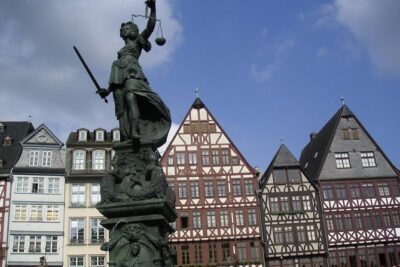
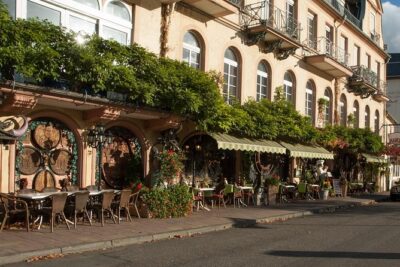
Rhine Valley Trip from Frankfurt including Rhine River Cruise
Read our review →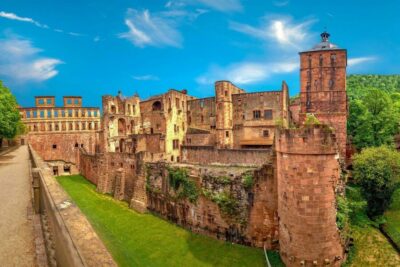
Browse the lists this tour appears in