
Review · FRANKFURT TOURS
Frankfurt: Must-See Attractions Walking Tour with a Guide
Frankfurt reveals its character quickly on foot: medieval town hall buildings, a grand cathedral, a river crossing with skyline views, and sleek financial towers all sit within a compact central area. This private two-hour walk gives you a guide to connect those pieces instead of leaving you to guess what matters.
I especially like the chance to shape the route around your interests, and the practical advice you receive for the rest of your stay. Guides such as Chris, Annibal, Ellyn, Heidrun, and Florin have been praised for clear English, personal service, history knowledge, and even taking good family photos.
The main drawback is time. Frankfurt has more sights than two hours can reasonably cover, and several stops are viewed from outside or passed on the way. If you want museum interiors, market food, or a slow cathedral visit, you may need to adjust the route or arrange extra time.
Key points at a glance
- Private guide for your group: There is no one else sharing the walk, so you can ask questions and change the emphasis as you go.
- A strong first look at central Frankfurt: The route links the Römer, cathedral, Iron Footbridge, Goethe House, St. Paul’s Church, Kleinmarkthalle, and Old Opera House.
- Good for history and architecture: You move from medieval civic buildings to imperial church architecture, postwar politics, art, and modern finance.
- Useful local guidance: Your guide can suggest other things to do and help arrange tickets for visits you want to make.
- Several languages available: Tours are offered in English, Spanish, and German.
- Flexible booking terms: You can cancel up to 24 hours before the start for a full refund and reserve without paying immediately.
Why this private Frankfurt walk works well
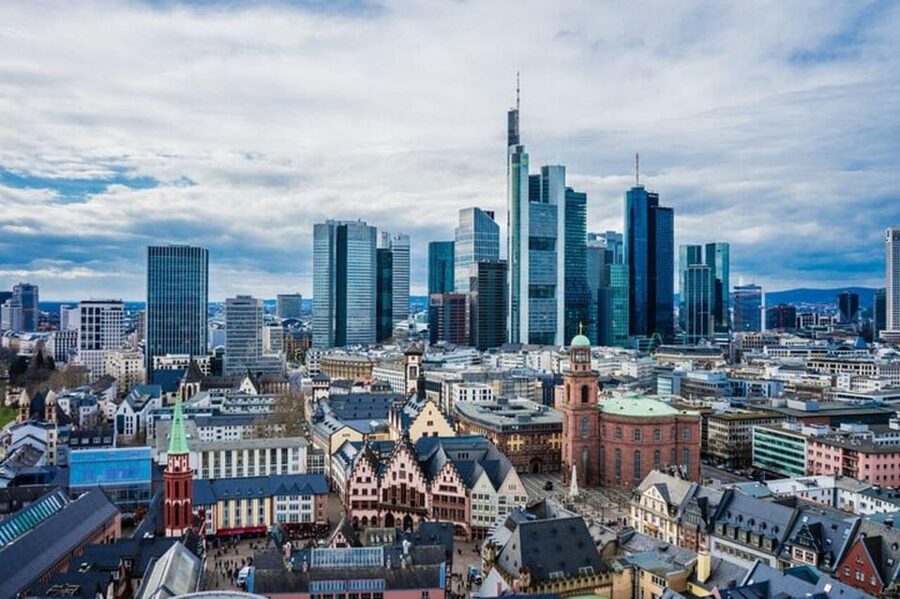
Frankfurt can feel confusing at first. The city center is compact, but its story is not. Medieval buildings sit beside reconstructed streets, the River Main separates the old center from the museum district, and the banking quarter rises only a short walk from historic squares.
A private guide helps you make sense of that contrast. You are not simply collecting photographs of the Römer and cathedral. You can ask why Frankfurt became important, how its political role changed, and how the old center fits beside the modern financial district.
The private format matters most for families, couples, and small groups with different interests. You might want architecture while someone else cares about food or literature. The guide can place more weight on the subjects you care about instead of following a fixed speech.
The tour costs $53 per person. That is fair value if you use the guide for orientation, context, photographs, and planning the rest of your visit. It is less compelling if you only want to tick off landmarks quickly, since many of the sights are easy to see on your own and the two-hour limit keeps the pace brisk.
More walking tours in Frankfurt:
- Frankfurt Highlights English Walking Tour
★ 5.0 · 1,203 reviews - Frankfurt on Foot Daily Walking Tour in English
★ 4.9 · 323 reviews - Frankfurt: Private or Shared Walking Tour
★ 4.8 · 156 reviews
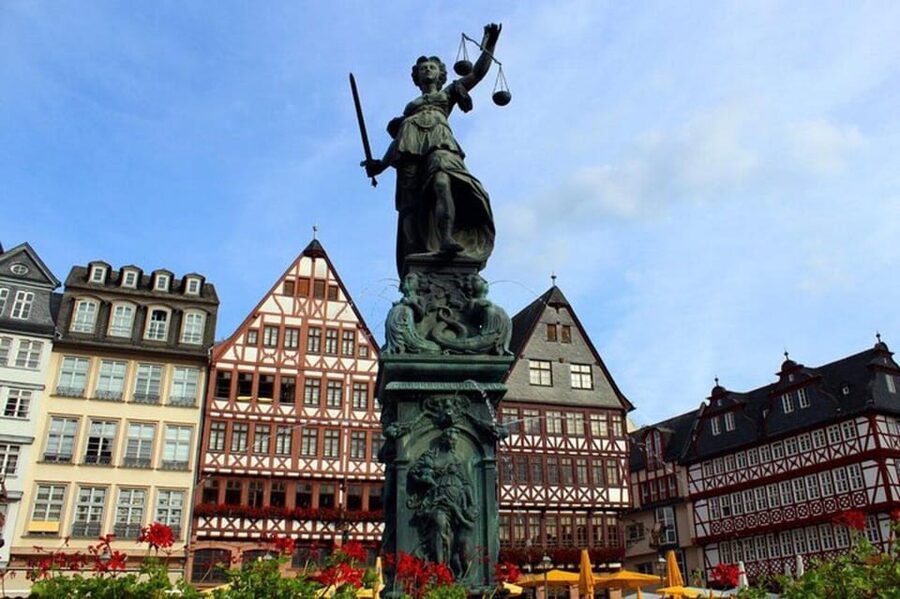
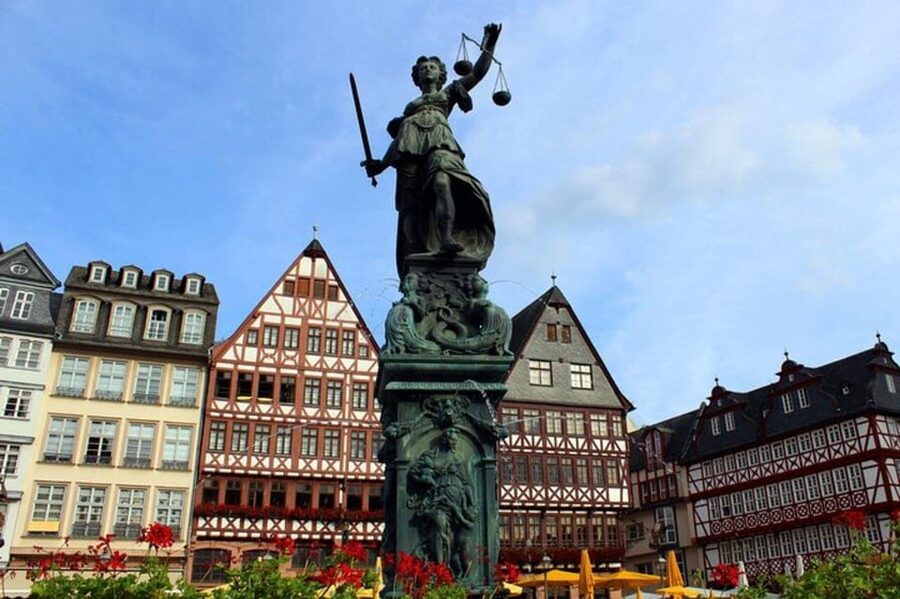
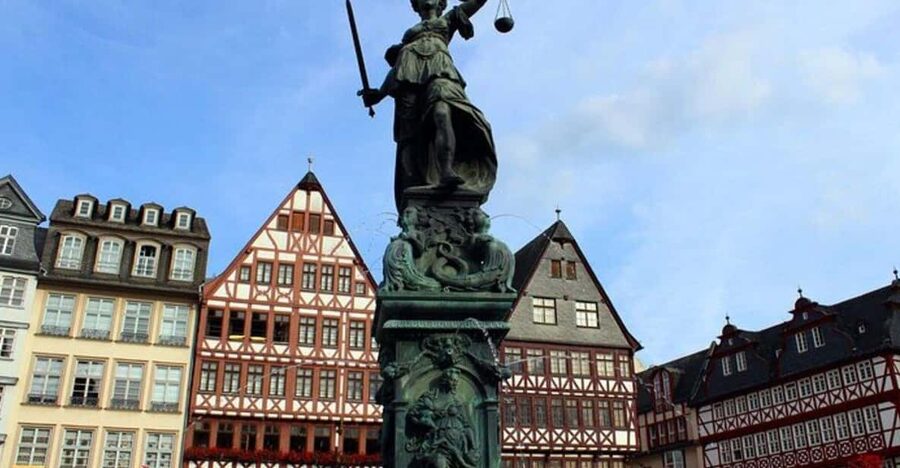
Starting at the Fountain of Justice
The meeting point is near the Fountain of Justice, in the heart of Frankfurt’s old center. This is a sensible place to begin because you are already close to the Römer, the city’s best-known historic square.
Your guide starts by placing the square in context, then leads you into the old center. This opening is useful on a first visit because you can get your bearings before walking toward the river and the newer parts of the city.
Confirm the exact meeting spot with the tour team before you set out. The information describes the start as near the Foundation of Justice, while the attraction is generally known as the Fountain of Justice. A quick check avoids a needless hunt around the square.
The Römer and Frankfurt’s medieval center
The Römer is the natural centerpiece of the walk. It is a group of nine medieval houses that has served as Frankfurt’s city hall for more than 600 years.
The buildings are not just a pretty façade. They represent Frankfurt as a self-governing trading city and remain tied to civic life. Weddings and civil registrations still take place here, giving the old complex a role beyond tourism.
A guide can point out the parts that are easy to miss when you are taking photographs. You will also learn how the city hall functioned and why this square became such an important meeting place.
Allow yourself a little patience here. The Römer area can be crowded, and a two-hour walk does not leave much time for lingering. If this is the place you most want to study, tell your guide at the start so the route can give it proper attention.
Frankfurt Cathedral and the imperial past
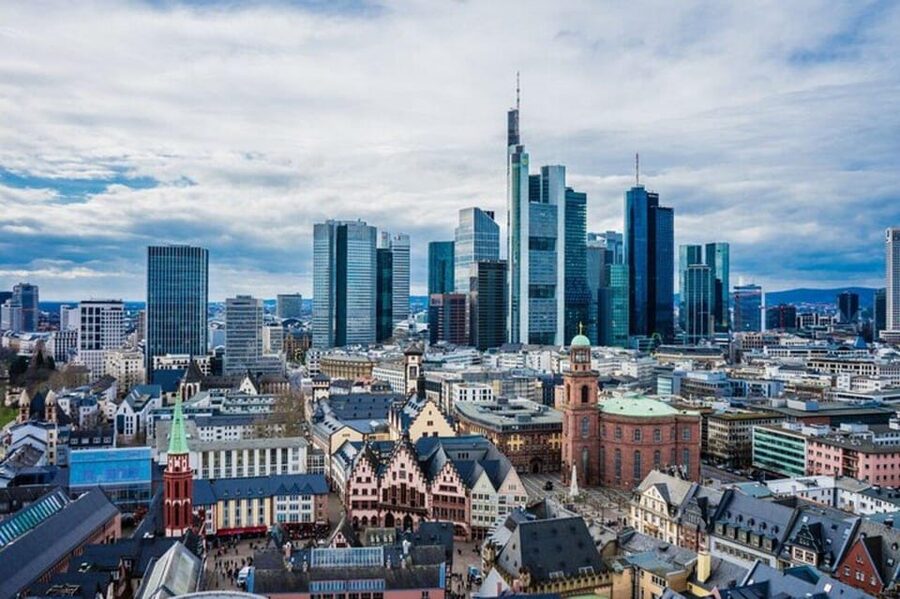
From the Römer, the route continues to Frankfurt Cathedral, also called St. Bartholomew’s Cathedral. It is the city’s largest Roman Gothic church, with a tall tower, vaulted ceilings, and an impressive organ.
The cathedral has a special political importance. During the era of the Holy Roman Empire, it was linked with the election and coronation of German kings and emperors. That helps explain why the church is more than a religious monument. It became a symbol of unity and imperial power.
Your guide provides the background that makes the interior easier to read. Look up at the vaulting, note the scale of the tower, and pay attention to how different the church feels from the civic buildings outside.
The description promises a guided visit, but it does not specify how long you will spend inside or whether every area is open on the day. Church services and operating hours can affect access, so this is another reason to identify your priorities before the walk begins.
A few more Frankfurt half-days to weigh up
- Frankfurt: River Main Sightseeing Cruise with Commentary
★ 4.3 · 5,127 reviews - Frankfurt: Hop-On, Hop-Off Grand or Express Bus Ticket
★ 3.9 · 2,088 reviews - Frankfurt: 1-Hour Panorama Boat Cruise on the river Main
★ 4.4 · 1,822 reviews - From Frankfurt: Rhine Valley Day Trip
★ 4.4 · 1,317 reviews
Crossing the Iron Footbridge
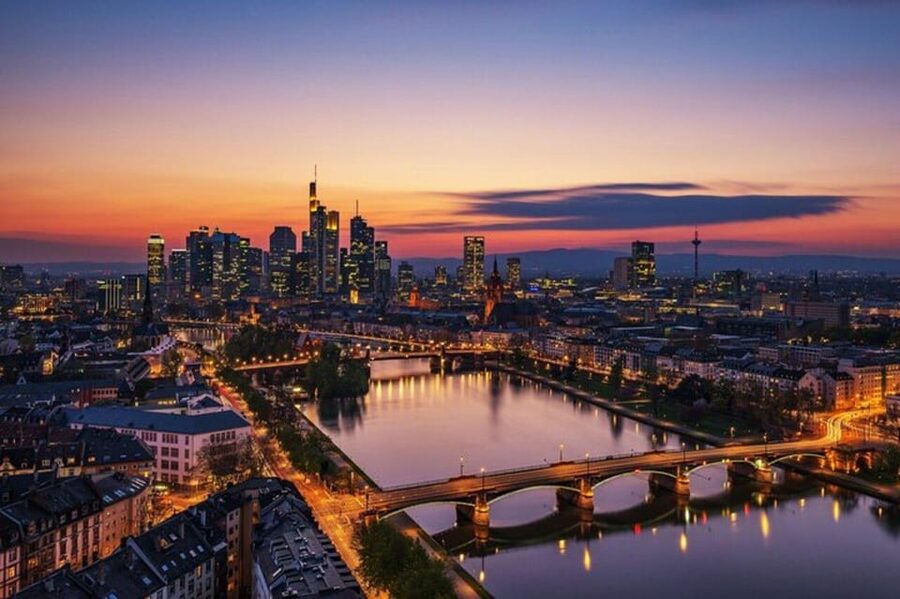
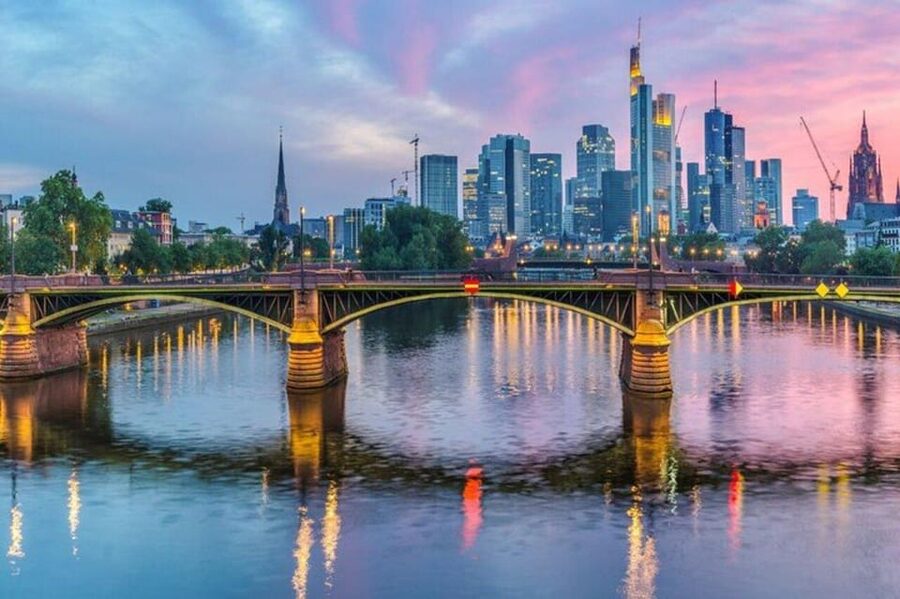
The Iron Footbridge, or Eiserner Steg, gives the tour a change of pace. Instead of studying façades and interiors, you cross the River Main and look back at Frankfurt from the water.
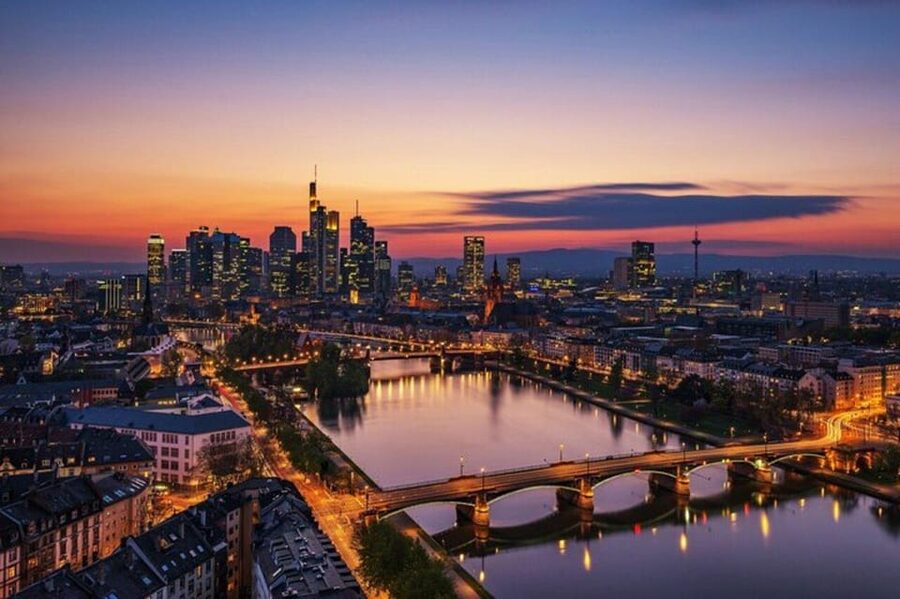
The bridge is historic and offers broad views toward the city skyline. It is one of the best points on this route for seeing the old and new Frankfurt together: church towers and historic buildings on one side, modern high-rises on the other.
This is also a good place for photographs. The guide may help frame your group with the skyline behind you. Several guides, including Annibal and Chris, have been praised for taking photos during the walk, which is a useful personal touch when you are traveling with family or as a couple.
Keep the weather in mind. A bridge crossing offers little shelter, and the walk remains outdoors even if the sky turns gray. Comfortable shoes and a light rain layer make sense.
Goethe House and the literary side of the city
The Goethe House is the birthplace and childhood home of Johann Wolfgang von Goethe, one of Germany’s best-known writers. The visit adds a literary thread to a route otherwise focused on civic, religious, and political landmarks.
You can learn about Goethe’s early life and see the setting connected with his first works. That personal angle helps balance the grand public buildings earlier in the walk. Instead of only hearing about emperors, politicians, and institutions, you meet the city through one of its most important writers.
The information describes a guided visit to Goethe House, but the two-hour schedule includes many stops. Ask your guide whether you will enter or mainly discuss the building from outside. If Goethe is a major reason for booking, you may want help arranging a separate, longer visit.
The tour team can assist with booking tickets for visits you want to make. That does not mean every admission is included, so ask clearly about any ticket cost before committing to an interior visit.
St. Paul’s Church and the politics of 1848
St. Paul’s Church is one of Frankfurt’s key political sites. It hosted the first Frankfurt Parliament in 1848, an important attempt to create a united and constitutional Germany.
The church is therefore remembered not only as a place of worship but also as a symbol of German democracy. Your guide can explain why the parliament mattered and why this building remains tied to national political memory.
This stop is valuable if you like the story behind the stones. A quick photograph tells you little. A guide gives you the reason the church belongs on a must-see route, even though its political importance may not be obvious at first glance.
The stated itinerary does not list St. Paul’s Church as a separate stop, though the longer description includes it. Mention it when you meet your guide. A private tour gives you a better chance of fitting it in, but the schedule may require a choice between extra time here and a slower visit elsewhere.
Kleinmarkthalle and Frankfurt’s food culture
Kleinmarkthalle brings everyday Frankfurt into the walk. This indoor market sells fresh foods and local delicacies, offering a useful break from monuments and formal city squares.
I like this part because markets show how a city eats and shops. You can see a more practical side of Frankfurt and get ideas for a snack or later meal. Food and drinks are not included, so bring money if you want to buy something.
Time is the issue. A market rewards wandering, browsing, and stopping for a bite, while this tour has several other landmarks to cover. You may pass through quickly unless you ask to make food a central part of the route.
The guide can also offer suggestions for other places to eat. One particularly personal tour described a stop at an Afghan restaurant for kebabs, along with time spent sharing lunch. That longer experience was unusual, not part of the guaranteed two-hour schedule, but it shows how a private guide may adapt when time and interests allow.
The Städel Museum and the financial district
The route passes the Städel Museum, one of Frankfurt’s major art museums. The attraction is included as a point of orientation rather than a full museum visit, so you should not expect time to explore its collection during this walk.
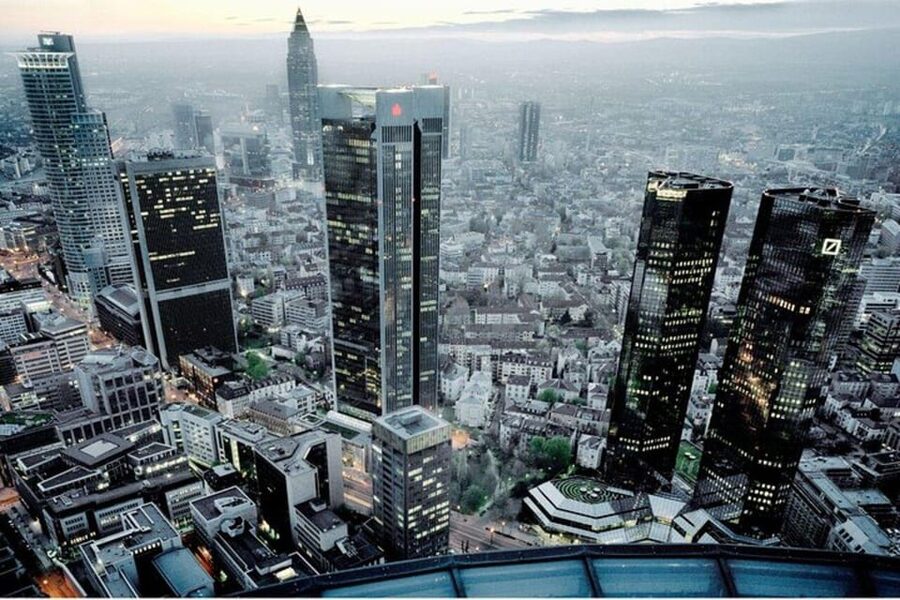
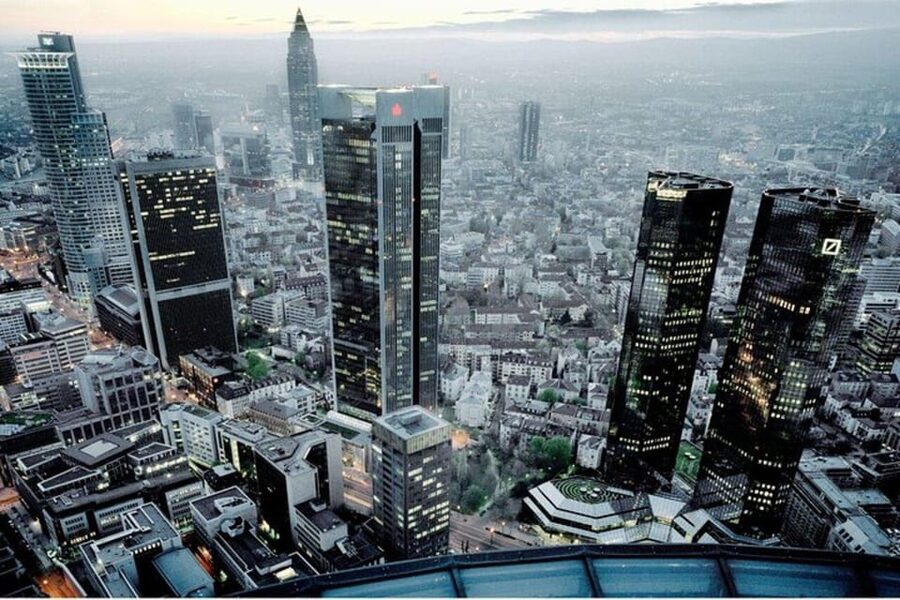
That is not a weakness if your goal is a city overview. Your guide can explain where the museum is and help you decide if it deserves a return visit. The same applies to the Eurotower, a skyscraper that once served as the seat of the European Central Bank.
These stops show Frankfurt’s range. You move from medieval civic buildings to art, finance, and the modern city. A guide is especially useful here because the contrast can otherwise feel random.
If you want to enter the Städel Museum or spend time around the Eurotower, ask for a revised plan. The experience includes help booking desired visits, but admission tickets and food are not included.
Finishing at the Old Opera House
The Old Opera House, or Alte Oper, is the grand architectural finish described for the route. Its ornate exterior and Opera Square reflect Frankfurt’s long connection with music and performance.
The building has hosted major operas and concerts, and the square in front gives you space to appreciate the façade. After the tighter medieval streets, the setting feels formal and open.
The Old Opera is a good final stop because it adds the arts to a walk that has already covered government, religion, politics, literature, food, and finance. You leave with a broad picture of the city rather than a narrow tour of one district.
The route details are slightly mixed: the longer description ends at the Old Opera, while the itinerary says you arrive back at the Fountain of Justice. Ask your guide where the walk will actually finish. That matters if you have a train, dinner reservation, or another timed visit.
How the guides shape the experience
The guide is the main reason to choose this tour instead of using a map. The available languages are English, Spanish, and German, and the guide is assigned to your private group.
Chris has received particularly strong praise for adapting the walk to architecture, history, and local culture. He has also been described as patient with delays and good at communicating. Ellyn was praised for her enthusiasm and for waiting when a flight arrived late.
Annibal has been praised for his detailed history explanations, humor, personal care, photography, and willingness to extend a visit when both sides had spare time. Heidrun has been credited with arranging special access through local relationships. These details are not promises that every tour will include extra hours or after-hours entry, but they show why the individual guide matters.
You cannot necessarily request a particular guide, so approach the experience as a private framework rather than a guaranteed personality match. Tell the company what you care about, and ask your guide at the start to shape the two hours around it.
Timing, pace, and practical value
Two hours is enough for a useful first look, not a complete Frankfurt visit. You will cover several central sights, but the walk will need to keep moving if you want to include the cathedral, bridge, Goethe House, market, political sites, and Old Opera.
The private format helps. You do not wait for a large group, and you can skip a sight that does not interest you. Still, you cannot make every stop into a full visit within the allotted time.
The tour includes walking and public transport unless you select an option that changes that arrangement. Food and drinks are not included. Ticket-booking help is included, but entry fees are separate unless clearly stated otherwise.
Wheelchair access is available. Because the route includes streets, a footbridge, public spaces, and possible indoor visits, tell the provider about your needs before the start so the guide can plan sensibly.
The cancellation policy is friendly: cancel up to 24 hours ahead for a full refund. You can also reserve now and pay later, which helps if your Frankfurt plans are still shifting.
Who should book this Frankfurt tour?
I would choose this walk if you have only a short stay, are visiting Frankfurt for the first time, or want a local person to connect the city’s old and new sides. It also fits families and private groups who want to stop for photos, ask plenty of questions, or change the balance between history, architecture, food, and local culture.
It is a good match for airport stopovers and short business trips, provided your timing is realistic. A late arrival may be manageable, as one guide has waited for delayed participants, but you should contact the provider rather than assume an open-ended start.
I would be more cautious if your main goal is a long museum visit, a sit-down meal, or detailed access to every interior. In that case, use the walk as an orientation and schedule the Städel Museum, Goethe House, or cathedral separately.
Should you book it?
Book this tour if you value a personal guide more than a rigid sightseeing checklist. The strongest benefits are the private format, flexible subject matter, useful city advice, and the chance to understand why Frankfurt’s landmarks matter.
At $53 per person, it offers solid value for a small group that uses the guide well. Ask early to focus on your top three priorities, clarify which buildings you will enter, and confirm whether the walk ends at the Old Opera or returns to the Fountain of Justice.
Skip it if you are happy exploring the central sights alone and do not need background or recommendations. For most first-time visitors, though, this is a sensible way to get oriented quickly, then spend the rest of the trip returning to the places that caught your interest.
FAQ
How long is the Frankfurt walking tour?
The tour lasts two hours. The schedule includes several central landmarks, so the pace may be brisk if you want to cover the full route.
Is the tour private?
Yes. The experience is private and exclusive to your group, with no other participants added.
Which languages are available?
The live guide is available in English, Spanish, and German.
What sights are included?
The route includes the Fountain of Justice, Römer, Frankfurt Cathedral, Iron Footbridge, Goethe House, and Old Opera House. The longer route description also includes St. Paul’s Church, Kleinmarkthalle, the Städel Museum, and the Eurotower.
Are food, drinks, and entry tickets included?
No. Food and drinks are not included. The tour team can help arrange tickets for visits you want to make, but ticket costs are not listed as included.
Is the tour wheelchair accessible?
Yes, the activity is listed as wheelchair accessible. The tour also uses walking and public transport unless you select a different option.
Just added around Frankfurt
- Frankfurter Kunstverein: Admission ticket★ 3.7 · 54 reviews
- Welcome to Frankfurt: Private Tour with a Local★ 4.7 · 81 reviews
- Frankfurt: Verbrecherjagd und gefährlich leckeres Schnitzel★ 4.4 · 22 reviews
- Frankfurt: Private or Shared Walking Tour★ 4.8 · 156 reviews
- Frankfurt: Walking Tour – discover the city with VR glasses★ 4.2 · 12 reviews
- Frankfurt: Struwwelpeter Museum Entry Ticket w/Audio Guide★ 4.5 · 22 reviews
- Frankfurt: “The Sandman” Nightmarish Walking Tour★ 4.4 · 45 reviews
- Frankfurt: Unique E-Bikes Tours★ 4.8 · 22 reviews
Frankfurt Tours, compared.
River Main Sightseeing Cruise with Commentary
Read our review →
1-Hour Panorama Boat Cruise on the river Main
Read our review →
New Old Town and Highlights German-Language Tour
Read our review →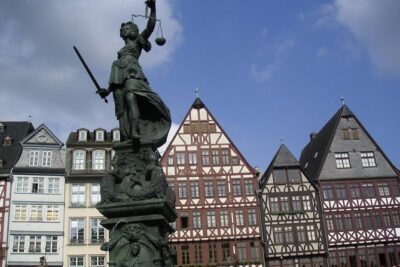
Rhine Valley Trip from Frankfurt including Rhine River Cruise
Read our review →
Browse the lists this tour appears in