
Review · HISTORICAL TOURS
Dessau: Guided Walking Tour through History
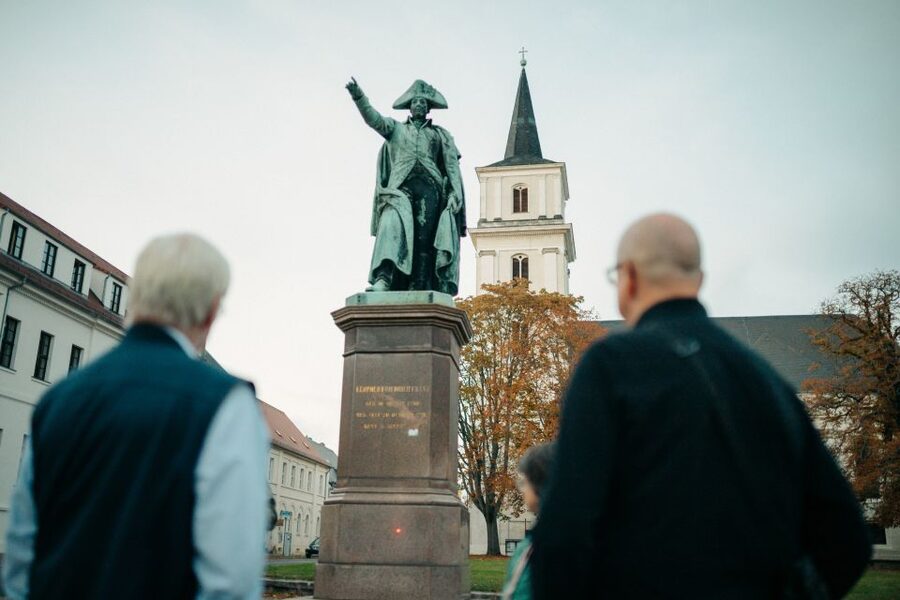
Dessau’s story is much bigger than Bauhaus. This 1.5-hour city walk connects an eight-century past with the people and ideas that shaped modern Germany, from Moses Mendelssohn and Kurt Weill to Walter Gropius and Wassily Kandinsky.
I like the way the tour uses small anecdotes to make urban spaces easier to read, and I like its broad cast of characters. The route also brings up an unusual link with the Basic Law, Germany’s constitution, rather than sticking to the usual architecture talk.
The main drawback is simple: the tour is conducted in German only, and 90 minutes gives you an introduction rather than a full study of Dessau. It also runs rain or shine, so dress for the forecast.
Key points about the Dessau history walk
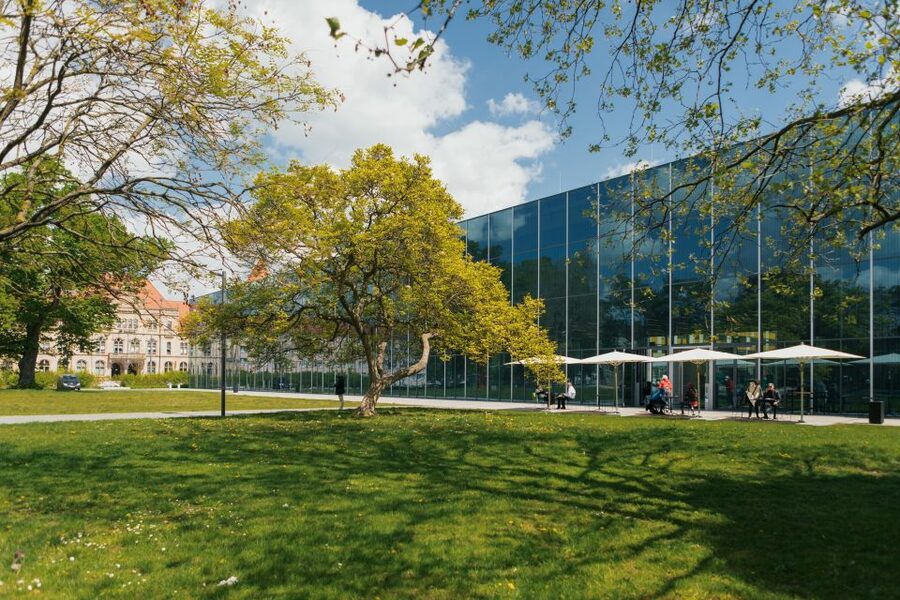
- Eight centuries in 90 minutes: The tour moves from princely Dessau to the Bauhaus era and beyond.
- Bauhaus with local context: You learn why the school came to Dessau, not just where its famous buildings are.
- Many names, one city: Friedrich Wilhelm Erdmannsdorff, Hugo Junkers, Kurt Weill, Walter Gropius, and others help frame the story.
- Anecdotes make the route lively: Short stories and local details help turn ordinary city spaces into places with meaning.
- German-language guiding: You need enough German to follow the live commentary.
- Useful, flexible booking: The tour costs $13 per person, lasts 1.5 hours, and allows free cancellation up to 24 hours ahead.
Why Dessau makes a good history walk

Dessau-Roßlau can be easy to underestimate. It is not a city where every corner announces its importance. Instead, its story comes from layers: princely culture, Enlightenment thinking, music, industry, aviation, modern design, and postwar Germany.
That makes a guided walk especially useful. You can see a square, street, or civic building without knowing why it matters. A local guide supplies the connections. The tour aims to show how the city changed over roughly 800 years and how different periods still speak to one another.
I like this approach because it does not treat Dessau as a one-subject destination. Bauhaus is a major reason many people come here, but the city also produced or attracted artists, architects, industrialists, musicians, and political thinkers. The walk gives you a framework before you go farther into the city on your own.
The tour is also a good choice if you prefer history in manageable portions. At 90 minutes, it is long enough to establish a clear sense of place but short enough to fit around a museum visit, train connection, or afternoon sightseeing plan.
More history-led days in Germany:
- Leipzig: City History Canal Sightseeing Tour on a Motorboat
★ 4.7 · 6,232 reviews - Berlin: Natural History Museum Entrance Ticket
★ 4.6 · 3,382 reviews - Leipzig: 1.5-Hour Historical Walking Tour in German
★ 4.7 · 2,217 reviews
From Prince Leopold III Friedrich Franz to an evolving city
One of the historical threads reaches back to Prince Leopold III Friedrich Franz. His name represents the period when Dessau was shaped by court culture, planning, and ambitious ideas about how a city and its surroundings should look.
You will not get a specialist lecture on every ruler or building in Dessau. Instead, the guide uses major figures and public spaces to show how power and taste affected the town. This is valuable because it places later movements, including Bauhaus, in a longer local story.
The tour also brings in Friedrich Wilhelm Erdmannsdorff, a major figure associated with the cultural and architectural life of the region. His inclusion helps show that Dessau was involved in new artistic and intellectual currents long before the twentieth century.
For you, the practical benefit is context. A building is easier to remember when you know who commissioned it, what ideas it expressed, or how it fit into the city at the time. The tour’s central theme is change, and that keeps the past from feeling like a row of disconnected dates.
Moses Mendelssohn and the city’s wider intellectual life
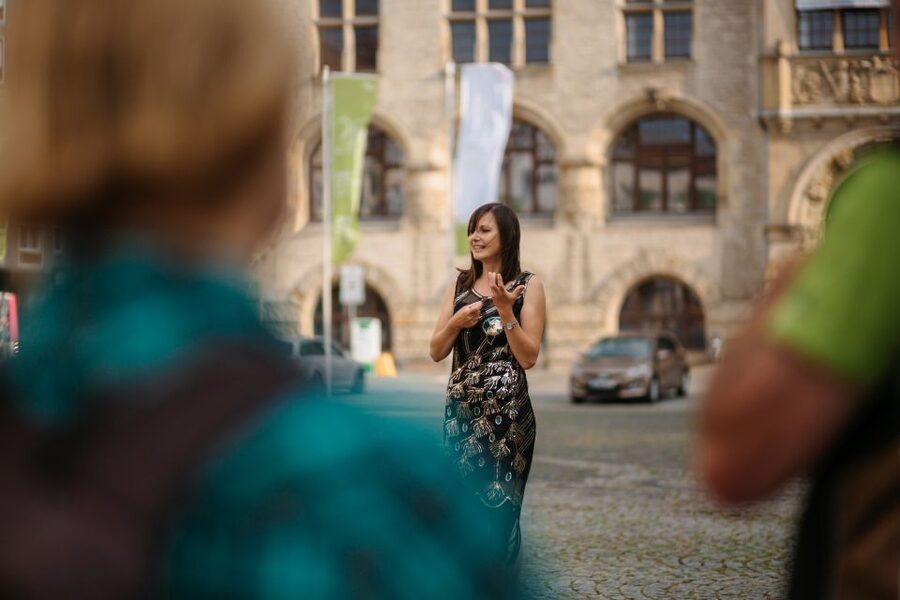
Moses Mendelssohn is another important name connected with Dessau’s story. His presence broadens the tour beyond royal history and architecture into questions of education, philosophy, religion, and public life.
The exact amount of time given to each person can vary with the guide and the group. Still, the inclusion of Mendelssohn signals that this is not only a tour of grand buildings. It also looks at the ideas and people that gave the city a place in wider German culture.
That is one of the walk’s strongest features. You are not simply shown what to photograph. You are encouraged to see Dessau as a place where different traditions met and where local figures later became better known outside their birthplace.
This is also where the tour may suit repeat visitors. Two local participants said they learned something new about their own city, and they especially enjoyed the smaller anecdotes. That tells me the walk is not aimed only at first-time visitors. It can add fresh details even if you already know the main streets.
How Bauhaus came to Dessau
Bauhaus is likely to be the headline subject for many people booking this tour. Dessau was central to the school’s development, and the walk explains how Bauhaus came to the city, rather than treating it as an isolated design brand.
That distinction matters. You may already know the names Walter Gropius and Wassily Kandinsky, or you may be arriving with only a general sense that Dessau is linked with modern architecture. A city walk can show how the movement fitted into local politics, urban planning, industry, and the city’s changing identity.
The tour does not promise an extended visit inside every Bauhaus site. It is a walking introduction through the city center and its historical setting. If Bauhaus is your main reason for coming, use this experience to get your bearings and then allow extra time for dedicated Bauhaus sights separately.
I like that the guide places Gropius and Kandinsky beside older figures such as Erdmannsdorff. That comparison makes the city’s contrasts clear. Dessau was not suddenly modern in one afternoon. It passed through several cultural phases, and Bauhaus became one especially famous chapter.
The walk may also help you avoid seeing Bauhaus as a set of clean lines without human stories. The school’s arrival affected the city, and the city provided the setting in which its ideas were tested and remembered.
More walking tours in Germany:
- Discover Berlin Half-Day Walking Tour
★ 5.0 · 9,624 reviews - Berlin: Third Reich and Cold War 2 Hour Walking Tour
★ 4.9 · 6,830 reviews - Munich: Third Reich & WWII Walking Tour
★ 4.6 · 6,181 reviews - Berlin: Discover Berlin Walking Tour
★ 4.9 · 5,998 reviews
Kurt Weill, Hugo Junkers, and Dessau’s famous sons
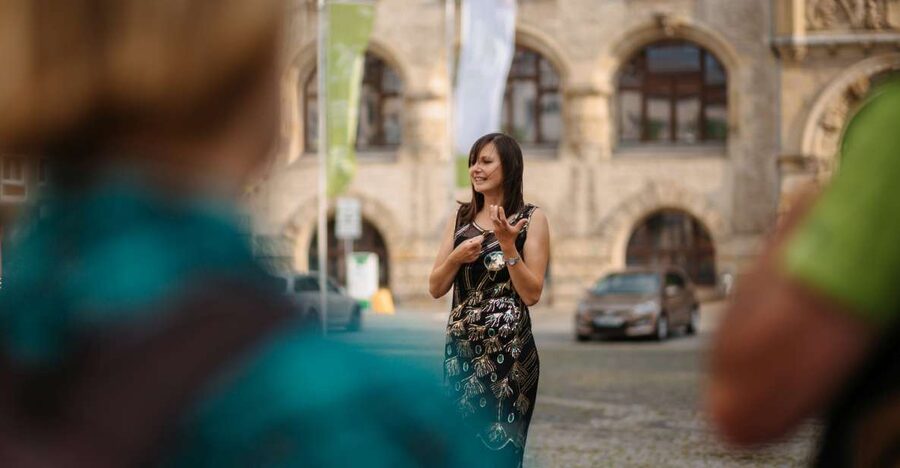
The tour asks why some of Dessau’s children are better known abroad than they are in their birthplace. That is a useful question for a city walk because it turns biography into a way of seeing place.
Kurt Weill brings music into the picture. Hugo Junkers adds industry and aviation. Walter Gropius and Wassily Kandinsky bring architecture, design, and modern art. Max and Wilhelm Müller add further local names to the story.
You should not expect a full biography of each person in 90 minutes. The value lies in the links. A guide can show how several people from the same city went in very different directions, and how their work helped connect Dessau with international culture, technology, and politics.
This part should appeal to you if you enjoy finding the local roots of famous names. It also keeps the tour from becoming too formal. The human stories, family connections, and unexpected details are likely to be easier to remember than a list of dates.
The two short comments available about the experience point to this strength. One called the walk informative and noted the interesting places. Another specifically asked for more small anecdotes after enjoying them. I would treat that as a useful clue: pay attention to the side stories, because they may be the most memorable part of the route.
The Basic Law connection
A particularly unusual promise of the tour is its explanation of what Dessau has to do with the Basic Law. Since the Basic Law is the foundation of modern Germany’s constitutional system, this subject adds a political layer to a walk otherwise known for art, architecture, and city history.
The supplied details do not specify the exact location or story used to explain this connection, so I would not book the tour expecting a long constitutional lecture. Instead, expect the guide to use Dessau’s own past to show how local events and people connect to larger German history.
This is the kind of detail that can change the way you remember a city. You may arrive thinking of Dessau mainly as a Bauhaus center. You leave with a broader picture that includes public institutions, national history, and the way a city’s identity can shift over time.
It also gives the walk a useful modern edge. The tour is not locked in the age of princes or the Bauhaus school. It tries to explain how Dessau’s past reaches into the Germany you see today.
Bringing city-center spaces to life
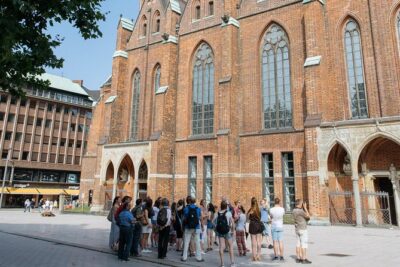
The tour focuses on urban spaces and lesser-known details in the city center. Since the route is guided on foot, you get the benefit of seeing places in sequence rather than viewing isolated sights from a vehicle or reading separate labels.
That matters in Dessau because historical meaning can be spread across ordinary-looking streets and public areas. A guide can point out a detail you might miss, explain how a space changed, or connect one location to a person introduced earlier.
The wording suggests a route built around discovery rather than a long list of formal admissions. You should expect exterior views and explanations during the walk. The supplied information does not promise museum entry, interior visits, or a particular number of stops, so plan those separately if they are essential to you.
I find this kind of tour most useful at the beginning of a stay. Once you understand the city’s basic shape and major themes, later visits to museums or Bauhaus sites have more meaning. You also have a chance to note places you want to revisit at a slower pace.
The route is wheelchair accessible, which is an important practical point. Since the tour takes place outdoors and continues in bad weather, accessible does not mean weather-free or free from every surface challenge. If mobility is a concern, bring any specific questions to the provider before booking.
What $13 buys you
At $13 per person, this is a modestly priced introduction to Dessau. The real value is not in the number of sights checked off. It is in the guide’s ability to connect eight centuries, several major personalities, Bauhaus, and the Basic Law within a short walk.
That price works especially well if you are new to the city and want a quick orientation. A private guide or specialist architecture tour would likely offer more depth, but this experience gives you a broad base at a low cost.
You should keep your expectations in proportion. Ninety minutes cannot give equal attention to Prince Leopold III Friedrich Franz, Mendelssohn, Weill, Junkers, Gropius, Kandinsky, the Müllers, and every historical period in Dessau. Think of it as a well-shaped introduction, not a complete course in local history.
The 4.6 rating from 40 bookings suggests a consistently strong experience, while the individual scores also show that the tour may not be perfect for everyone. The praise centers on information, interesting places, and anecdotes. That matches the tour’s main purpose and helps explain why the price is fair.
Language, weather, and timing
The live guide speaks German, and the tour is offered in German only. You will get the most from it if you can follow normal spoken German, including names, dates, and historical explanations.
If your German is limited, you may still enjoy the visual side of the walk, but you should not assume that written translations or an English-language guide will be available. This is the clearest reason for some visitors to choose a different experience.
The tour runs for 1.5 hours and takes place rain or shine. Bring a coat, umbrella, or sun protection as needed. Comfortable shoes are sensible for any walking tour, though the supplied information does not specify the exact distance or surfaces.
You show your voucher at the ticket counter before the tour begins. The meeting point is therefore tied to that ticket counter, and you should allow enough time to find it before the start. Starting times vary, so check availability for your chosen date.
Free cancellation is available up to 24 hours in advance for a full refund. You can also reserve now and pay later, which helps if your German trip is still taking shape.
Who should book this Dessau tour?
I would choose this walk if you want a broad local introduction rather than a single-topic Bauhaus lecture. It suits first-time visitors, history fans, architecture enthusiasts, and people who like learning through personalities and anecdotes.
It also makes sense for residents or repeat visitors. The fact that local participants learned new things shows that the guide may bring out details you have missed on your own.
Families with older children might find the changing subjects easier to follow than a narrow architectural tour, though the German-only format is an important limit. Students and visitors with an interest in modern Germany may appreciate the connection between local history, Bauhaus, industry, music, and the Basic Law.
I would hesitate if you need English guiding, dislike outdoor walks in uncertain weather, or want extensive interior access. I would also avoid treating this as your only Bauhaus activity. It works best as the city-wide introduction that gives later sightseeing a clearer shape.
Should you book the 90-minute history walk?
Book it if you want Dessau to make sense as more than the home of Bauhaus. For $13, you get a compact walk through the city’s changing story, with useful links between rulers, thinkers, artists, industrial figures, architects, and modern Germany.
The strongest reason to go is the guide’s use of anecdotes and connections. The main reason to pause is the German-only commentary and the rain-or-shine format.
If those conditions suit you, this is a practical first step in Dessau. Take the walk early in your visit, listen for the smaller stories, and use what you learn to decide which museums, buildings, and city-center places deserve a second look.
FAQ
Where does the tour begin?
You should show your voucher at the ticket counter before the tour begins. The supplied information does not give a street address for the meeting point.
How long does the walking tour last?
The tour lasts 1.5 hours.
How much does the tour cost?
The listed price is $13 per person.
What language is the tour conducted in?
The live tour guide speaks German. German is the only language listed for the experience.
Is the tour wheelchair accessible?
Yes, the tour is listed as wheelchair accessible.
Does the tour run in bad weather?
Yes. The tour takes place rain or shine.
Can I cancel and receive a refund?
Yes. You can cancel up to 24 hours before the tour for a full refund.
Can I reserve now and pay later?
Yes. The reserve now and pay later option lets you book without paying at the time of reservation.
What subjects does the tour cover?
The walk covers Dessau’s 800-year history, the arrival of Bauhaus, the city’s connection with the Basic Law, and local figures including Prince Leopold III Friedrich Franz, Friedrich Wilhelm Erdmannsdorff, Moses Mendelssohn, Kurt Weill, Max and Wilhelm Müller, Hugo Junkers, Walter Gropius, and Wassily Kandinsky.
Just added around Germany
- Berlin: Battle for Seelow Heights WW2 tour -Clash of Titans★ 5.0 · 27 reviews
- From Berlin: Gardens & Palaces of Potsdam Bike Tour★ 5.0 · 61 reviews
- From Amsterdam: Cologne Private Sightseeing Tour★ 5.0 · 4 reviews
- From Berlin: Historical Gems of Potsdam Private Day Trip★ 4.4 · 4 reviews
- Freiburg: Veni, vidi, vino – wine hike and tasting★ 4.5 · 144 reviews
- From Alken: Return Day Trip by Boat to Cochem★ 4.6 · 141 reviews
- Fritz Haarmann – Die Mördertour★ 4.6 · 41 reviews
- Freiburg: Tour of the city with cathedral visit★ 4.7 · 167 reviews
Historical Tours, compared.
City History Canal Sightseeing Tour on a Motorboat
Read our review →

Browse the lists this tour appears in