
Review · DRESDEN TOURS
Elbfloren: Historical city tour
Dresden’s old center packs an astonishing amount into a walk of about two hours. This tour follows Augustus the Strong from Dresden Castle to the Frauenkirche, Fürstenzug, Zwinger, cathedral, and Semper Opera House, with a short look inside the castle and the church when opening hours allow.
I like the clear Baroque-era focus, which gives the walk a strong story instead of a loose parade of buildings. I also like the guide’s emphasis on background and amusing details about Augustus the Strong, something that can make Dresden’s grand stonework feel more human.
The main point to weigh is language: this is a German-only tour. The Frauenkirche visit also depends on opening hours, and paid museum or performance admissions are not included.
Key points to know before you book
- Two hours in Dresden’s historic center: The route covers the city’s main Baroque sights without requiring public transport.
- A look inside the Frauenkirche when open: You see more than the famous exterior, but church access is not guaranteed at every starting time.
- Augustus the Strong provides the story: The tour connects Dresden’s buildings with the ruler who shaped much of its Baroque image.
- Castle, Zwinger, and Theaterplatz included: You receive a short guided castle visit and a guided walk through the Zwinger area.
- German-speaking guide only: This suits German speakers best, since the explanations and humor depend on the language.
- Low price, focused coverage: At $15 per person, the tour is priced as an orientation walk rather than a full museum experience.
Dresden’s Baroque center in one compact walk
I think the route works because Dresden’s major sights sit close together. You begin at Dresden Castle, move toward the Frauenkirche, continue through the old royal complex and Zwinger, and finish at Theaterplatz. There is little wasted time crossing town.
That matters in Dresden. The historic center is not a place where you need a bus tour to understand the main sights. A walking route lets you notice the relationships between the buildings: royal residences, ceremonial courtyards, churches, palaces, and opera all gathered within a small area.
The pace is likely to feel purposeful. Two hours is enough for a guided introduction, but not enough for long museum visits or detailed architectural study. I would treat this as a first look that helps you decide where to return on your own.
The tour is offered by Touristik-Service Dresden Natalie Blau and uses a live German-speaking guide. The available information does not name the individual guide, so you should not expect to request a particular person. The strong point is the format: a local guide gives the buildings a connected story rather than leaving you to read isolated plaques.
More history-led days in Dresden:
- Dresden: Guided Beer Tour of the Historic Old City
★ 4.8 · 95 reviews - Leipzig: City History Canal Sightseeing Tour on a Motorboat
★ 4.7 · 6,232 reviews - Berlin: Natural History Museum Entrance Ticket
★ 4.6 · 3,382 reviews
Starting at Dresden Castle and the royal quarter
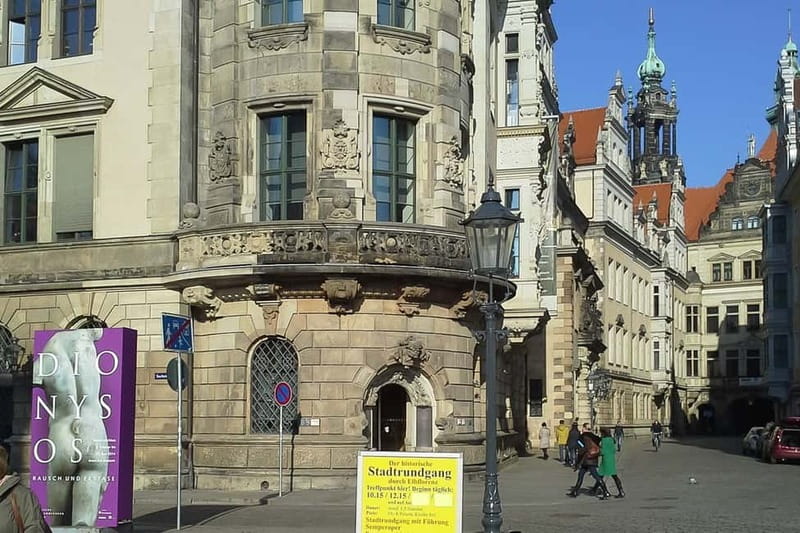
The meeting point is in front of Dresden Castle, at the corner of Schlossstraße and Taschenberg, beneath the sign. This is a sensible place to begin because the castle anchors the historic center and introduces Dresden as a city shaped by Saxon rulers.
The castle itself is not simply a backdrop. It was part of the royal world associated with Augustus the Strong, and the tour includes a short guided visit. You get an introduction to the imposing building and a look at the stable yard, a space tied to court life and ceremony.
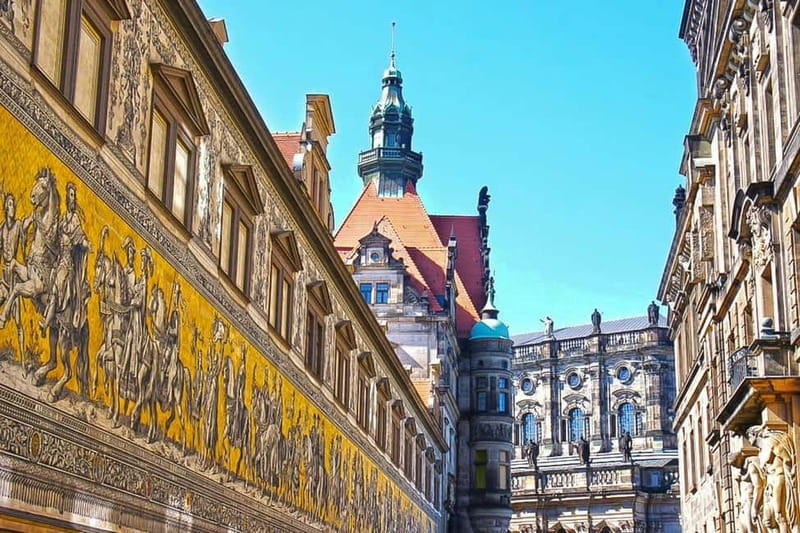
The stable yard leads naturally to the Fürstenzug, or Procession of Princes. This long wall image is one of Dresden’s most recognizable historical works, showing Saxon rulers in a grand procession. It gives the guide a useful place to explain Saxon history and the personalities behind the monuments.
You also get a glance at the Taschenbergpalais. The stop is brief, so do not expect an extended palace visit or a full interior tour. Still, the building helps show how tightly royal Dresden was arranged around courtyards, residences, and ceremonial routes.
I like this opening because it puts the political story first. Before you reach the grand church and palace gardens, you learn who paid for Dresden’s splendor and how the court used these spaces.
Entering the Frauenkirche, Dresden’s defining church
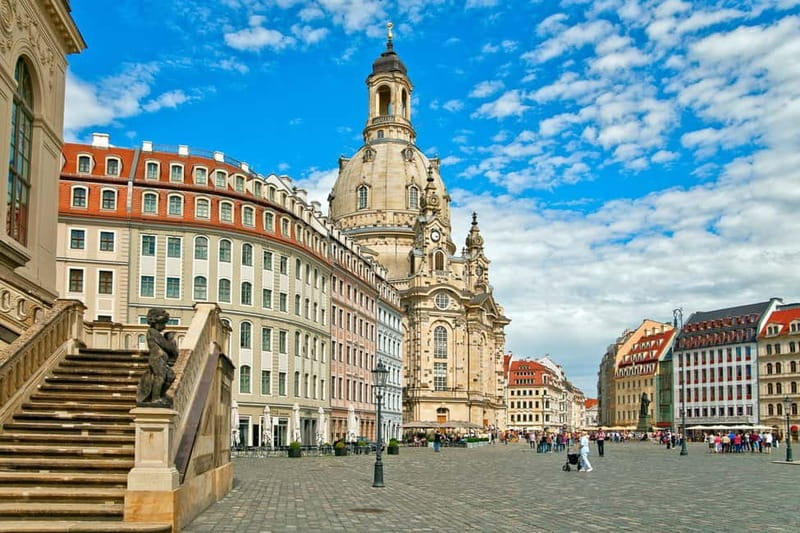
From the castle, the walk continues toward the Frauenkirche, Dresden’s most famous landmark. Its broad stone dome and carefully restored exterior make it easy to understand why the city is often called Florence on the Elbe.
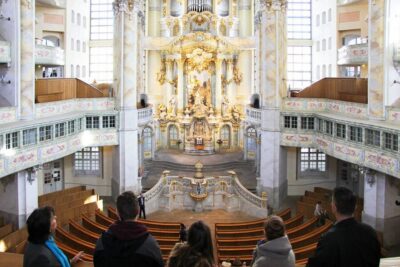
The important detail is that the tour includes a chance to see the interior, not just the outside. That makes a real difference. The interior has a different effect from the church façade, with its large central space and carefully restored Baroque design. A guide can help you read the building as a place of worship and as a major part of Dresden’s recovery.
Access depends on opening hours. If the church is closed for services, events, or another reason, the guide cannot guarantee an interior visit. Check the timing when you book, and keep your plans flexible if seeing inside is a top priority.
Dogs are not allowed inside churches, and pets are not allowed on the activity. The tour is wheelchair accessible, which is useful in a compact historic district where smooth access can vary from one old building entrance to another.
The church stop also gives you a moment to compare old and new Dresden. The building was completely restored after wartime destruction, so the experience is not only about Baroque architecture. It is also about how Dresden rebuilt one of its central symbols.
Reading the Fürstenzug and stable yard
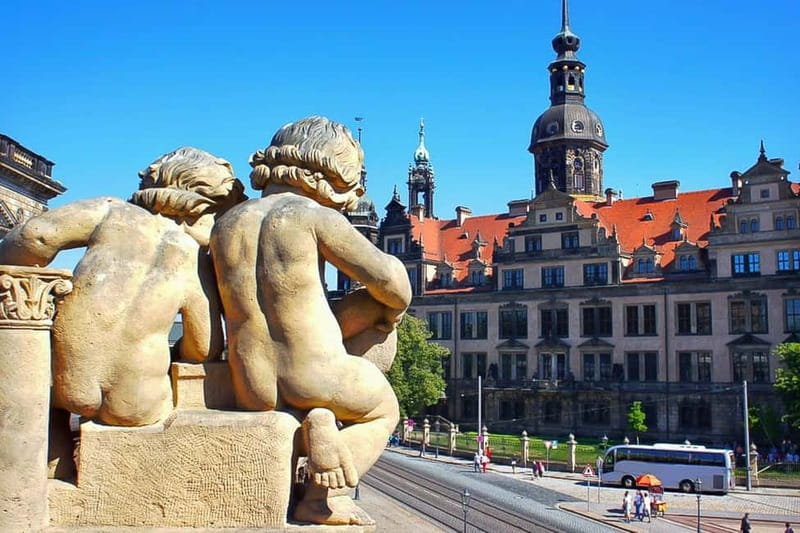
The route to and around the Fürstenzug is one of the most useful parts for visitors who want more than photographs. The artwork represents Saxon rulers in sequence, giving the guide a ready-made timeline for the region’s past.
You should look closely at the scale and detail rather than rushing past. The wall is long, and the figures are arranged as a formal procession. It is the sort of sight that can blur into the background if you do not know why it matters.
The guide also ties this section to Augustus the Strong. His name appears often in Dresden, but the tour aims to make the man behind the title more memorable through stories, interesting facts, and amusing details. The supplied information specifically points to the tour’s storytelling and background, so this is where the German narration matters most.
If you understand German well, the humor should add warmth to what might otherwise feel like a formal history lesson. If you do not, the visual sights remain worthwhile, but you will miss the main service you are paying for.
The stable yard adds another layer. It shows how the castle complex functioned as a working royal setting, not just a grand façade for visitors. You will not receive a full museum visit here, but the short guided look helps connect Dresden’s court culture with the buildings around it.
A few more Dresden half-days to weigh up
- Dresden: Semperoper Tickets and Guided Tour
★ 4.7 · 12,102 reviews - Dresden: The Original Night Watchman Tour in Lantern Light
★ 4.6 · 6,653 reviews - Dresden: Semperoper and Old Town Tour
★ 4.8 · 5,735 reviews - Dresden: River Sightseeing Boat Cruise
★ 4.3 · 5,323 reviews
The Zwinger, Dresden’s late Baroque showpiece
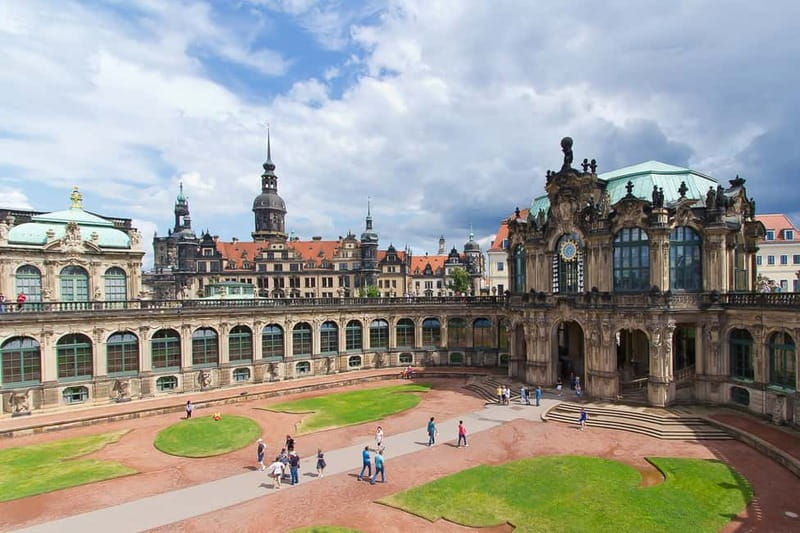
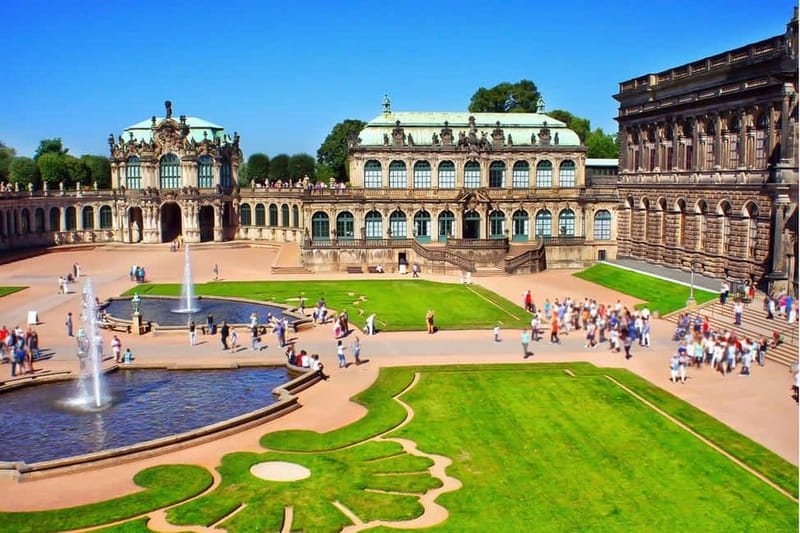
The Zwinger is the visual high point for many people on this route. Its courtyards, pavilions, arcades, and sculptural decoration create the kind of late Baroque setting that gives Dresden its grand reputation.
The tour includes a guided visit to the Zwinger area, but entrance to the Zwinger is not included. That wording matters. You receive the guide’s explanation and access to the relevant touring area, but any museum admission or separate paid entry is your responsibility.
The Zwinger was designed for court display and ceremony, so the guide can explain why the complex feels more theatrical than practical. Look beyond the ornament. The layout was meant to impress, frame movement, and create a sense of royal power.
I like having the Zwinger placed after the castle and Fürstenzug. By this point, you have heard about the rulers and court culture that produced such buildings. The decoration then feels connected to a political message, not just pretty stonework.
Allow time for a second visit if the Zwinger appeals to you. Two hours is enough to see its main spaces with a guide, but not enough to explore all museum collections. Museum visits are specifically excluded, so plan another block of time if you want to see the art inside.
Finishing at Theaterplatz
The walk ends at Theaterplatz, where the cathedral and Semper Opera House face the open square. This is a strong finish because it gathers religion, royal ceremony, and high culture in one view.
The cathedral adds another important part of Dresden’s story. After seeing the Protestant Frauenkirche, you can appreciate the contrast with the Catholic court church. The tour does not promise a full cathedral interior visit, so the focus here is the building and its place in the square.
The Semper Opera House brings the route into the world of music and performance. Entrance is not included, and this is not an opera house tour. You see the exterior and learn about its role in Dresden’s cultural center, which is enough for an orientation walk.
The end point is back at the original meeting point. That makes planning simple. You can continue exploring the old center, return to the castle museums, visit the Zwinger collections, or arrange an opera house visit separately.
What $15 buys you in Dresden
At $15 per person, this is an inexpensive way to get a guided introduction to the historic center. You are paying for two hours with a live guide, a connected route, a short guided castle visit, a guided Zwinger experience, and the possibility of entering the Frauenkirche.
The value is strongest if you want context. A self-guided walk can show you the same façades, but it will not necessarily explain Augustus the Strong, Saxon history, the Fürstenzug, or the court purpose of the Zwinger in a single route.
The price does not cover museum admission, entry to the Zwinger, or entry to the Semper Opera House. That keeps the basic cost low, but you need to budget separately for any interiors you want to visit in depth.
The advertised skip-the-ticket-line feature may save time where it applies, but it should not be confused with included admission to every building. Ask at booking if a specific paid site is important to your plans.
Free cancellation up to 24 hours before the start gives you useful flexibility. You can also reserve now and pay later, which helps if you are still arranging your Dresden schedule.
Who will get the most from this tour
I would choose this tour if you are visiting Dresden for the first time and want the main historic sights explained in a short block. It is especially useful at the start of a stay, when you need to understand the city center before deciding which interiors deserve more time.
German speakers should get the full benefit. The guide’s storytelling, background, and amusing comments are a major part of the experience, and those elements do not carry over easily if you understand little German.
The tour also suits visitors who prefer walking to transport. The route stays in the historic center and links the castle, church, royal courtyards, Zwinger, cathedral, and opera house without a long transfer.
Families may appreciate the two-hour length and the stories about Augustus the Strong, though the tour remains a historical walk rather than a children’s activity. Anyone using a wheelchair can book it, as the activity is listed as wheelchair accessible.
You may want something else if you need a full castle museum visit, a detailed art tour, or an English-language explanation. You should also avoid bringing a dog, since pets are not allowed and dogs cannot enter the churches.
Practical advice for choosing a start time

Check the available start times before booking, especially if the Frauenkirche interior is the reason you want this tour. The church visit depends on opening hours, so a different departure time may improve your chance of seeing inside.
Arrive at the Dresden Castle meeting point with enough time to find the corner of Schlossstraße and Taschenberg. Look for the sign beneath which the group meets. The activity returns to this same point, so you do not need to arrange a separate pickup or find your way across town afterward.
Wear comfortable walking shoes. The tour is only two hours, but it covers several major sights and includes outdoor courtyards and public squares. Dresden’s central monuments are close together, yet you will spend the activity on foot.
Think of the route as a framework. If you want to visit the castle museums, Zwinger collections, or Semper Opera House interior, schedule those separately after the tour. The guide gives you the setting and sequence, while independent visits provide the longer look.
The final call
Book this tour if you want a low-cost, German-language introduction to Dresden’s Baroque center, especially if Augustus the Strong, the Frauenkirche, and the Zwinger are high on your list. Its strongest feature is the way the guide connects major buildings with Saxon history and lively background.
Skip it if you need English, want extensive interior visits, or prefer to explore at your own pace. For German speakers who value clear storytelling, the $15 price makes this a sensible first walk through Dresden, with the important caveat that church access depends on opening hours and paid museum admissions come separately.
FAQ
Where does the Dresden historical tour start?
It starts in front of Dresden Castle, at the corner of Schlossstraße and Taschenberg, under the sign.
Where does the tour finish?
The activity ends back at the original meeting point by Dresden Castle.
How long does the tour last?
The walking tour lasts two hours.
What language is the tour conducted in?
The tour is conducted in German by a German-speaking guide.
Is the Frauenkirche interior included?
You may visit the interior of the Frauenkirche, but access depends on the church’s opening hours.
Is a castle visit included?
A short guided tour at Dresden Castle is included.
Is the Zwinger included?
The tour includes a guided visit to the Zwinger, but entrance fees to the Zwinger are not included.
Is admission to the Semper Opera House included?
No. Entrance to the Semper Opera House is not included.
Are museum visits part of the tour?
No. Museum visits are not included.
Is the tour wheelchair accessible?
Yes, the activity is listed as wheelchair accessible. Pets are not allowed, and dogs cannot enter the churches.
Just added around Dresden
- Freiberg: Scavenger Hunt Self-Guided Walking Tour★ 4.6 · 7 reviews
- Radebeul: Scavenger Hunt Self Guided Tour★ 4.6 · 9 reviews
- Discover Germany’s most exciting photo illusion world!★ 4.7 · 26 reviews
- Dresden: New Year’s Eve Concert at the Zwinger★ 4.8 · 20 reviews
- Dresden: Zwinger Skip-the-Line & 2-Day Hop-On Hop-Off Bus★ 4.5 · 160 reviews
- Dresden: Guided City Walk and Panometer Entrance Ticket★ 4.5 · 176 reviews
- Dresden: Shared Small Group Walking Tour in English★ 4.8 · 172 reviews
- Dresden with a touch of Xmas: English small group tour★ 4.7 · 41 reviews
Dresden Tours, compared.


The Original Night Watchman Tour in Lantern Light
Read our review →




Browse the lists this tour appears in