
Review · BERLIN TOURS
Delicious Deutsch: Learn German while creating German Breakfast
German breakfast is more than coffee and a roll. In Berlin, Frühstück can become a long, social meal, and this private class turns that tradition into a language lesson. You’ll handle fresh produce, discuss ingredients, follow recipes, and use German for real tasks instead of memorizing phrases from a page.
I like the hands-on format, especially for beginners who need a reason to speak. I also like the chance to learn about local food, Berlin culture, and cooking from Kit, a warm host who has welcomed families and adjusted meals for dietary needs.
The main drawback is a practical one: the listing says the start time is 9:30 pm, which does not fit a breakfast class. Confirm the time before paying, and remember that the $110 price does not include transportation.
Key points to know before booking
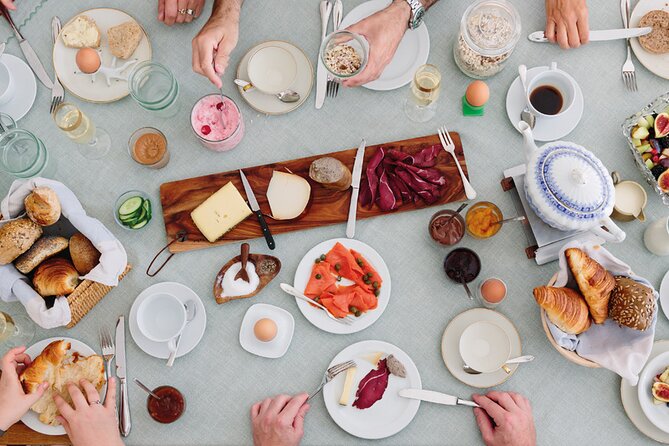
- German through cooking: You practice words for ingredients, tools, actions, and recipes while using them.
- Fresh produce takes center stage: The experience involves seeing, touching, preparing, cooking, and tasting food.
- Kit leads a personal class: Past sessions describe her as an inviting host who includes children and adapts to dietary restrictions.
- A private activity: Only your group participates, which gives you more room to speak and ask questions.
- Market culture may be part of the experience: Previous sessions included an outdoor farmer’s market and conversations with vendors.
- Check the schedule carefully: Breakfast is listed for about three hours, but the stated start time is 9:30 pm.
German begins with a cutting board, not a classroom
The best idea here is simple: language becomes easier when you need it for something in front of you. If you are holding an apple, herb, bowl, or knife, you have a clear reason to learn the German word. If you are mixing or preparing food, verbs have a job to do.
That makes this a better fit for people who find ordinary language lessons too abstract. A beginner can start with basic food words and short instructions. Someone at an intermediate level can work on describing flavors, asking questions, and following a recipe in German.
The class is designed for beginner to intermediate levels. You should not expect an academic grammar course. Instead, the learning comes through repeated use. You hear a word, connect it with an object or action, and then use it yourself.
The sensory side is useful, too. Sight, touch, smell, taste, and sound all reinforce the lesson. You are not just hearing the name of an ingredient. You are looking at it, picking it up, preparing it, and eating it. That combination can help the vocabulary stick after the class ends.
A few more Berlin half-days to weigh up
- Berlin: Reichstag, Dome and Government District Guided Tour
★ 4.7 · 18,288 reviews - Berlin: 1-Hour City Tour by Boat with Guaranteed Seating
★ 4.3 · 16,993 reviews - Berlin: Boat Tour Along the River Spree
★ 4.4 · 11,252 reviews
Meeting Kit in Berlin’s Schöneberg area

The meeting point is Goltzstraße 36, 10781 Berlin. The area is near public transportation, so you can reach it without arranging a private car. Private transportation is not included, and the activity returns to the same meeting point when it ends.
Kit is the host named in the available descriptions of the cooking sessions. Her role goes beyond explaining a recipe. She brings the food, language, and local context together, and the sessions can include conversation about German food, Berlin, and local customs.
A private format matters here. Language learners often hold back in a large group, especially when they are unsure of pronunciation. With only your own party participating, you can ask Kit to repeat a word, slow down, or explain a phrase without feeling that you are delaying everyone else.
This setup also works well for families. Kit has made a point of including children in the cooking process, helping younger participants feel involved rather than simply waiting for the meal. If you are booking with children, tell the host about their ages and interests in advance.
Shopping for breakfast and learning the words
Past sessions with Kit have included a visit to an outdoor farmer’s market. The precise breakfast route is not fully detailed, so you should confirm whether market shopping is part of your scheduled version. Still, the market element fits the class perfectly.
At a market, German vocabulary has an immediate purpose. You can learn the names of fruits, vegetables, herbs, meats, dairy products, and baked goods while looking at the actual items. You may also hear useful phrases connected with quantity, freshness, price, and preference.
The market is valuable for another reason. It gives you a view of how local food is bought and discussed. Kit has relationships with vendors and can point out ingredients she likes to cook with, along with seasonal items. That kind of explanation is more useful than a generic list of German foods.
The shopping stage also lets you shape the meal. Previous sessions began by discussing interests and food preferences before selecting ingredients. If you have dietary restrictions, explain them when booking. Kit has accommodated them before, but you should not assume every request can be handled at the last minute.
One caution: the available descriptions refer both to breakfast and to earlier lunch-focused sessions. The provider name also includes market tour, cooking class, and lunch. Ask what food you will prepare, how long the market portion lasts, and whether the meal is breakfast or lunch.
Preparing a German breakfast at home
After selecting food, you return to the cooking setting at the meeting point. The information describes a home-based class, and past sessions took place in Kit’s home. That gives the activity a personal feel rather than the staged atmosphere of a large demonstration kitchen.
You take part in the work. That can include washing, cutting, handling, mixing, preparing, and cooking fresh ingredients. The important point is that you are not simply watching Kit prepare a plate while she speaks German at you.
The recipe becomes your lesson plan. You learn the names of ingredients and cooking tools, but also the action words needed to make the meal. Instructions such as cut, stir, add, taste, and serve are easier to remember when you perform them.
You should also expect conversation about food customs and modern German life. A breakfast table offers a natural opening to discuss how people eat, what they serve, and how meals fit into daily routines. Kit has also shared information about German culture and Berlin’s past during her cooking sessions.
The class is not presented as a formal tour of Berlin’s major sights. You will not be moving from museum to monument. The local insight comes through food, shopping, conversation, and the host’s own knowledge of the city.
Same city, a completely different sort of afternoon:
- Discover Berlin Half-Day Walking Tour
★ 5.0 · 9,624 reviews - Berlin: Hop-on Hop-off Bus Tour with Live Commentary
★ 4.3 · 8,579 reviews - Berlin: Government District around the Reichstag Guided Tour
★ 4.7 · 8,447 reviews - Berlin: Reichstag, Plenary Chamber, Cupola & Government Tour
★ 4.6 · 8,422 reviews
What you actually learn in three hours
Three hours is enough for a useful introduction, but not enough to become fluent. I would view the language goal realistically. You are paying for practical exposure and a memorable setting, not a complete German course.
A beginner can gain a small set of useful words and phrases connected with:
- Ingredients and fresh produce
- Cooking equipment
- Basic preparation and serving actions
- Taste, texture, and preference
- Questions about food and quantities
- Simple instructions and replies
An intermediate learner can use the same setting to stretch further. You might describe what you are doing, ask Kit to explain a technique, or compare German food customs with those from home.
The strength of this method is repetition. You hear language at the market, again while unpacking ingredients, again during preparation, and again at the table. Each stage gives the same vocabulary a new context.
You will get more from the lesson if you make an effort to speak, even with mistakes. Ask Kit to correct pronunciation and repeat important words. If you stay quiet while she does all the explaining, the cooking may still be enjoyable, but the language benefit will be smaller.
The breakfast table is part of the lesson
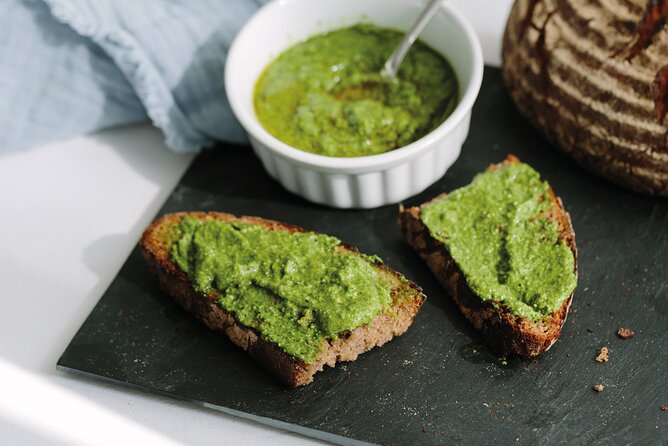
Breakfast is included in the price, and the meal is the reward for the work you have done. That sounds obvious, but it changes the mood of the class. You are not completing an exercise and then leaving. You are using the language around a real meal.
A German breakfast can also be a useful cultural subject because it is often built from several simple components rather than one elaborate dish. The class promises an elaborate breakfast, though the exact menu is not provided. That means you should ask about the planned dishes if certain ingredients matter to you.
The meal offers a chance to review the words from earlier in the session. You can talk about what you like, describe the flavors, and ask questions about how the food is served. Even a basic phrase becomes easier to recall when it is linked to something you have just cooked and tasted.
I like that the experience treats food as culture, not just fuel. Past sessions included discussion of German food in general, Berlin, local ingredients, and cooking ideas. That wider context gives the class more value than a recipe alone.
Still, do not book this expecting a restaurant meal prepared entirely for you. The point is participation. If you want a quiet breakfast with no instruction or kitchen work, choose a conventional food tour instead.
Why the private format changes the value
The $110 cost is reasonable if you want three hours of private instruction, a meal, and a personal cultural exchange. It is less attractive if you are comparing it with a basic group cooking class where the main goal is simply to eat.
The value depends heavily on group size. Only your group participates, but the total number of people in your group is not stated. A couple or small family can receive much more direct attention than a large private party.
You also avoid the usual language-class problem of mixed skill levels in a public group. Kit can adjust the pace for beginners and give an intermediate speaker more room to talk. Families can work at a speed that keeps children involved.
The price includes breakfast, but not transportation. Since the meeting point is near public transit, that extra cost should be modest, though the exact amount depends on where you stay in Berlin.
The experience is non-refundable and cannot be changed after booking. The operator may cancel if the minimum number of participants is not reached, in which case you are offered another date or experience, or a full refund. Because of the strict policy, I would confirm the time and menu before committing.
Who will enjoy this most
I would recommend this to you if you want a personal Berlin activity that combines food and language. It suits beginners who want useful German without sitting in a classroom, and intermediate learners who want relaxed conversation.
It is also a strong choice for families. Children can handle ingredients and take part in preparation, while adults gain cultural background and cooking ideas. Tell Kit about the children beforehand so she can help include them.
Food-minded visitors will appreciate the market side, especially if local, seasonal, and sustainable ingredients matter to you. Past sessions included discussions about fresh, local food and sustainable meat and produce, along with visits to food vendors and a local shop for wine.
I would be more cautious if you want a fixed sightseeing itinerary. The experience centers on cooking, food, and conversation. It is not designed to cover Berlin’s main attractions.
I would also hesitate if you dislike uncertainty. The exact menu is not given, and the breakfast format appears alongside descriptions of lunch sessions. The stated 9:30 pm start time is another reason to ask questions before booking.
Details to settle before you pay
The biggest issue is the schedule. A breakfast class at 9:30 pm seems inconsistent, so contact the provider and confirm the actual start time. Do not rely on the assumption that the displayed time is a typo.
Ask whether the outdoor market visit is included in your version. It appears in earlier sessions and in the provider’s name, but the current summary focuses on creating breakfast.
You should also confirm:
- The exact breakfast menu
- How dietary restrictions are handled
- The number of people in your private group
- Whether children are welcome in your party
- Where the cooking portion takes place
- How much walking is involved
- Whether any drinks or extra purchases cost more
Service animals are allowed, and the meeting point is near public transportation. Confirmation is issued at booking. These are useful practical details, but they do not replace checking the unusual start time.
Should you book Delicious Deutsch?
Book it if you want active language practice, a home-style meal, and a closer look at Berlin food culture. The strongest parts are the private setting, the market connection, the chance to work with real ingredients, and Kit’s ability to include families and accommodate dietary needs.
Skip it if you want a standard sightseeing tour, a polished restaurant meal, or a guaranteed menu with no kitchen participation. I would also wait to book until the provider confirms the start time and explains whether your session includes the market.
For the right person, $110 buys more than breakfast. It buys a useful reason to speak German, a meal you helped create, and a personal conversation about how Berlin eats. Just verify the details first.
FAQ
Where does the experience begin?
It begins at Goltzstraße 36, 10781 Berlin, Germany.
Where does the experience end?
The activity ends back at the meeting point.
How long does the experience last?
It lasts approximately three hours.
What time does the experience start?
The provided information lists a 9:30 pm start time. Since the activity focuses on German breakfast, confirm the correct start time before booking.
Is transportation included?
No. Private transportation is not included. The meeting point is near public transportation.
Is this a private activity?
Yes. Only your group participates.
What is included in the price?
Breakfast is included. The listed price is $110.
Just added around Berlin
- eSIM for Germany and 34 European Countries★ 4.5 · 16 reviews
- Your ticket to The Wall Museum Berlin★ 3.0 · 60 reviews
- Walking on the Wall: 3-Hour Tour in Berlin★ 4.5 · 34 reviews
- Rickshaw Tours Berlin – Groups of up to 16 people with several rickshaws★ 4.0 · 97 reviews
- Warnemuende Shore Excursion: Private Berlin Tour★ 4.5 · 27 reviews
- Love and War in Berlin: Self-Guided Story Puzzle Walk★ 5.0 · 7 reviews
- Warnemuende Shore Excursion: Berlin Private Sightseeing Tour from Rostock★ 5.0 · 4 reviews
- Cold War Berlin – Private Live Virtual Experience★ 5.0 · 4 reviews
Berlin Tours, compared.

Reichstag, Dome and Government District Guided Tour
Read our review →
1-Hour City Tour by Boat with Guaranteed Seating
Read our review →

Reichstag, Plenary Chamber, Cupola & Government Tour
Read our review →