
Review · BERLIN TOURS
Day trip through multicultural city landscapes & photo highlights
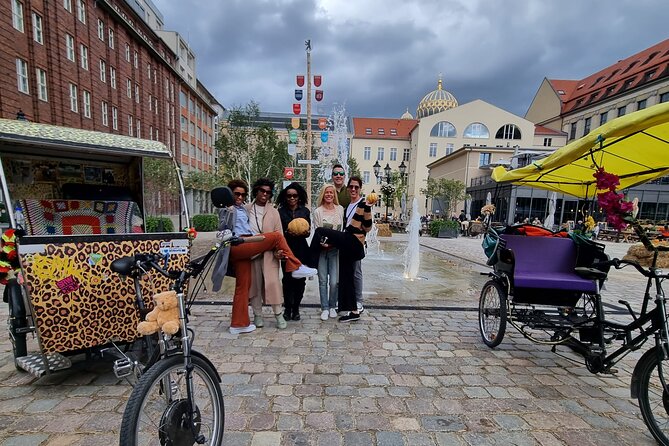
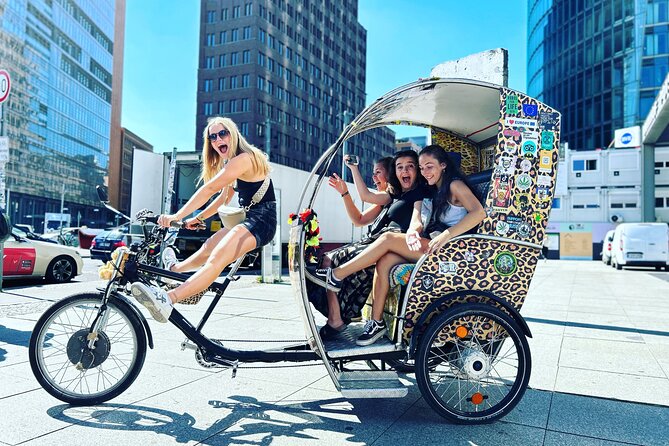
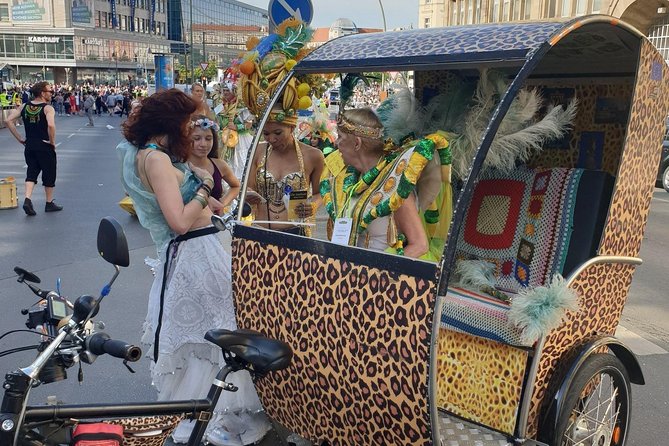
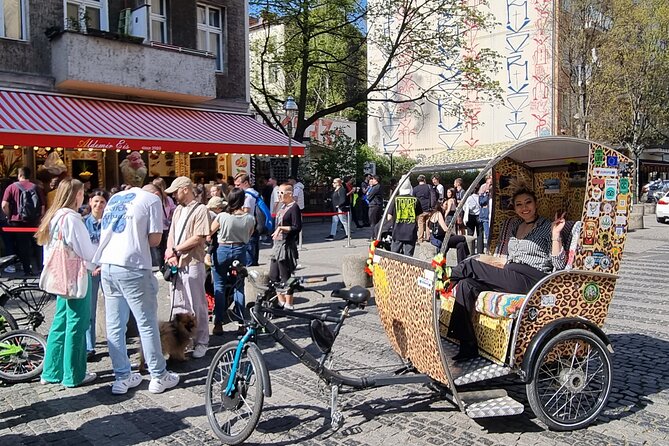
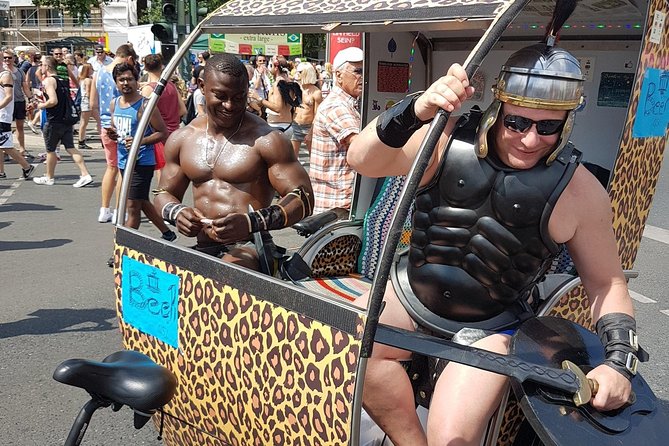
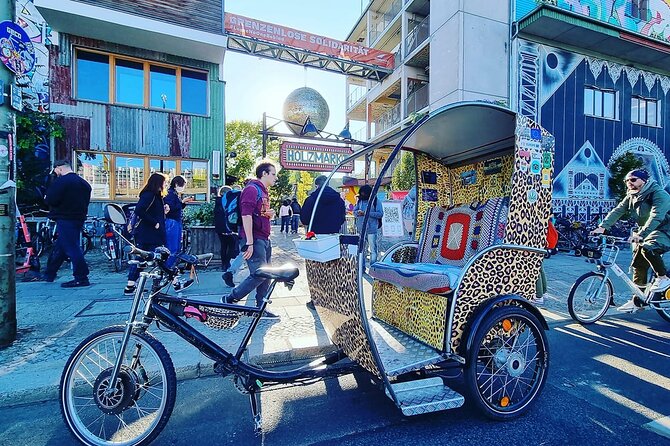
Berlin is a city built for a ride like this. Its major sights are spread across a wide area, while its best local flavor often appears in small lanes, parks, shopping streets, and neighborhood corners. A private rickshaw with guide Leo lets you cover an impressive amount without wearing out your feet.
I like the flexible route and the way the tour mixes famous sights with places such as Bergmannstraße, Oranienstraße, Admiralbrücke, and the former Tempelhof Airport. I also like the practical format: pickup is offered, the ride is private, and coffee, tea, and alcoholic drinks are included. The main drawback is the short stop time at many landmarks, so this works better as a city overview than as a museum or memorial visit.
Key points at a glance
- Private rickshaw touring: Your group rides with Leo rather than joining a large coach.
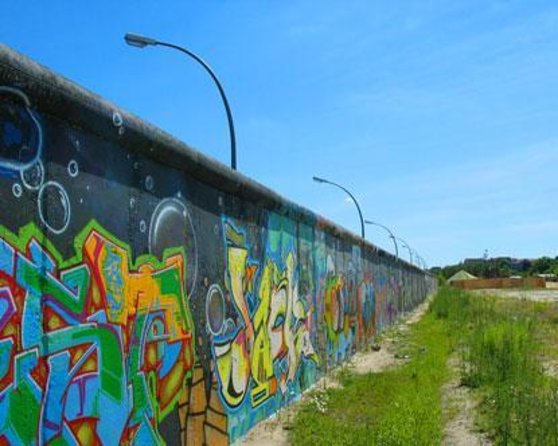
- Major sights in one outing: Brandenburg Gate, the Reichstag, Checkpoint Charlie, Museum Island, Alexanderplatz, and the Berlin Wall are all part of the route.
- Neighborhood Berlin: The ride reaches Bergmannstraße, Oranienstraße, Görlitzer Bahnhof, and Kreuzberg streets that add a local side to the central monuments.
- Good for photographs: The open vehicle gives you quick views and photo opportunities without the blocked sightlines of a bus.
- Pickup and drinks included: Pickup is offered from hotels, cafés, and Berlin Central Station, with coffee, tea, and alcoholic beverages included.
- Plan for changing conditions: The tour lasts about three to six hours, depends on good weather, and may include many brief stops.
Why a rickshaw works well in Berlin
Berlin is too large to understand from one square or one avenue. The Brandenburg Gate, Museum Island, former Wall sites, Kreuzberg, and Tempelhofer Feld each tell a different part of the city’s story. Connecting them on foot takes serious time, while public transport gives you less context between stops.
The rickshaw offers a useful middle ground. You get the range of a vehicle with the close-up feel of a small tour. The route can reach pedestrian areas and narrow lanes that cars cannot use easily, which is one reason this format is more than a simple ride past monuments.
Your group has the vehicle to itself, and the guide can respond to your interests. If you want more photographs, you can ask for them. If a neighborhood catches your attention, you can spend more time there, subject to the day’s route and timing.
The open design also helps with sightseeing. You can look to both sides, take photographs, and get a sense of how Berlin’s grand avenues connect with its parks and residential districts. Still, this is not a substitute for a full walking tour. At some stops, the listed time is only one to five minutes.
A few more Berlin half-days to weigh up
- Berlin Complete in one day
★ 5.0 · 222 reviews - From Berlin: Sachsenhausen Concentration Camp Day Trip
★ 4.7 · 52 reviews - Private Tour: Potsdam Day Trip from Berlin
★ 4.5 · 43 reviews
From Brandenburg Gate to the government quarter
The day begins with one of Berlin’s clearest symbols, the Brandenburg Gate. Built from 1788 to 1791, the sandstone gate was designed by Carl Gotthard Langhans the Elder and modeled in part on the gateways of the Athens Acropolis. Friedrich Wilhelm II wanted it to provide a formal end to Unter den Linden, Berlin’s grand boulevard.
The gate is free to view, and it makes an easy first photograph. Look beyond the columns, since the sightline toward Unter den Linden helps explain why the monument was built where it was.
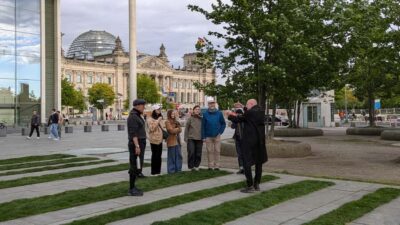
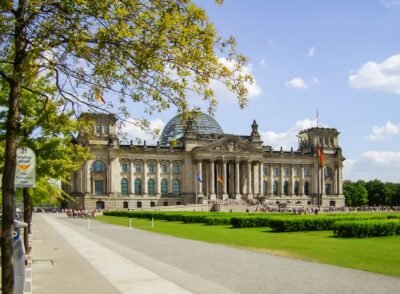
The Reichstag is a short but important stop. Its walls are tied to several turning points in German history, including Philipp Scheidemann’s 1918 proclamation of the republic, the 1933 Reichstag fire, and the Soviet flag raised on the building in April 1945.
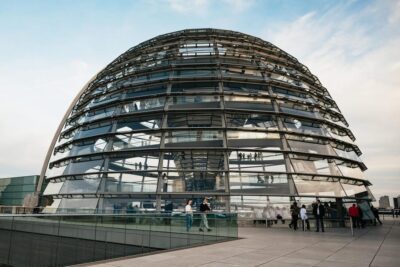
You should think of this as an exterior orientation unless your booking includes a separate interior arrangement. Admission is not included, and the stop is listed at about five minutes. The building’s famous glass dome requires more time and separate planning.
Nearby, the German Chancellery offers a sharp contrast in style. Its high central building, glass walls, concrete pillars, and glazed courtyards give it an open, modern appearance. The side wings are more compact, with offices arranged around atriums.
The Soviet War Memorial in Tiergarten adds a sobering historical note. Two T-34 tanks flank a bronze Red Army soldier, while inscriptions honor Soviet troops and graves lie toward the rear of the memorial. Admission is free, but the stop is brief, so treat it as a quick look and photograph rather than a full memorial visit.
Tiergarten and Potsdamer Platz show two Berlins
Tiergarten is more than a patch of greenery beside the Reichstag. It began as a royal hunting ground and was reshaped in the 19th century by Peter Joseph Lenné into an English-style public park. The roughly 200-hectare area includes monuments, bridges, the Victory Column, the Federal President’s Office, the House of World Cultures, and the English Garden beside a pond.
I like this part of the ride because it gives you breathing room between heavy historical sites. The city can feel dense and monumental, but Tiergarten shows how much open space Berlin keeps within the center.
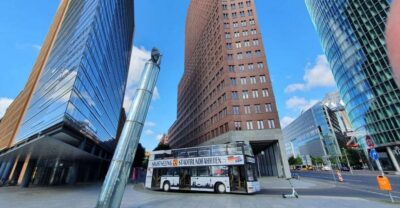
Potsdamer Platz then brings you back to modern city life. Once divided by the Wall and later rebuilt as a planned district, it now gathers high-rise buildings, cafés, cinemas, shops, and a large shopping arcade. The area was designed as a complete quarter rather than a single isolated building, so it is worth looking at the full arrangement of towers and public spaces.
The stop itself is very short, around two minutes. You will get the idea quickly, but you will not have much time for shopping or a film unless you return later on your own.
Nazi history and the scars left in stone
The Topography of Terror occupies the former site of the main Nazi police and SS institutions. Between 1933 and 1945, the Secret State Police, the SS leadership, and the Reich Security Main Office operated here. The location makes the subject especially direct: this was a working center for planning and controlling Nazi crimes.
The outdoor area is free, and the tour gives you a useful first orientation. If you want to read the full documentation, return later with more time. Five minutes is enough to recognize the site, not enough to study its exhibits in detail.
The nearby Gropius Bau is devoted to cultural history, modern art, and photography. It is an attractive building and a useful option for a return visit, but admission is not included. The same practical point applies to the Berlin Wall Memorial. You may see a section or marker during the ride, but the memorial deserves a separate visit if the Wall is a major reason for your trip.
Checkpoint Charlie is another quick stop. During the Cold War, it was the best-known crossing controlled by the Americans in divided Berlin. It was used by foreign visitors, staff of the West German Permanent Representation, and East German officials.
The checkpoint is free to view, but the modern setting can feel busy and commercial. I would use this stop to understand the location, take a photograph, and then rely on the guide’s explanation rather than expecting a preserved border crossing.
Same city, a completely different sort of afternoon:
- Berlin: Reichstag, Dome and Government District Guided Tour
★ 4.7 · 18,288 reviews - Berlin: 1-Hour City Tour by Boat with Guaranteed Seating
★ 4.3 · 16,993 reviews - Berlin: Boat Tour Along the River Spree
★ 4.4 · 11,252 reviews - Discover Berlin Half-Day Walking Tour
★ 5.0 · 9,624 reviews
Friedrichstrasse, Gendarmenmarkt, and Bebelplatz
Friedrichstrasse runs north to south through central Berlin and became a major shopping street after reunification. The stretch between Checkpoint Charlie and Friedrichstrasse Station gives you a quick look at the city’s commercial center and its changing architecture.
Gendarmenmarkt is one of Berlin’s most elegant squares. It began in the late 17th century in an area settled by French Huguenots and changed names several times before receiving its current name in 1799. The square is framed by the German Cathedral, the French Cathedral, and the Konzerthaus.
The German Cathedral now houses a five-floor exhibition on the development of liberal parliamentary democracy in Germany. Admission is not included. The Konzerthaus is a major work by architect Karl Friedrich Schinkel, with roots reaching back to a small comedy theater opened in 1776 under Frederick the Great.
These are good places to ask Leo for a slower pass or a photograph. The planned stop is about five minutes at Gendarmenmarkt, with only a couple of minutes at the individual buildings.
Bebelplatz carries a darker memory. On May 10, 1933, the Nazis burned more than 20,000 books here, targeting authors and ideas they labeled un-German. A memorial beneath the square recalls the event with empty bookshelves visible below ground.
The memorial is easy to miss if you do not know where to look. Give it your full attention during the short stop. It is one of the smallest sights on the route, yet one of the most powerful.
Museum Island, the cathedral, and old Berlin
Museum Island occupies the northern part of the Spree Island and brings five major museums together in a UNESCO-listed complex. The buildings were created over roughly a century, and restoration has continued since the late 1990s, along with work on a new reception building.
The tour gives you an outside view and basic orientation. Museum Island admission is not part of the ride, so plan a return visit if you want the Pergamon Museum, Neues Museum, or other collections. Five minutes is enough to see the setting, not the museums themselves.
Berlin Cathedral dominates the riverfront with its large dome. The building served as the Hohenzollern court and cathedral church and was rebuilt between 1894 and 1905 under Emperor Wilhelm II. Admission is not included, and the three-minute stop is best used for photographs and a quick explanation.
Alexanderplatz shifts the mood again. Known locally as Alex, it is a major square and transport hub, and one of the most visited places in central Berlin. The square is broad, practical, and shaped by several periods of rebuilding. You may find it less graceful than Gendarmenmarkt, but it helps show how Berlin functions as a working city.
Nikolaiviertel offers a more old-fashioned setting. Recreated for Berlin’s 750th anniversary in 1987, it presents an open-air version of old Berlin after much of the original quarter was destroyed. The Nikolaikirche is the focal point.
The Neptune Fountain nearby is easy to recognize. Neptune holds his trident in a basin, while four female figures represent the Elbe, Rhine, Oder, and Vistula rivers. The stop is only about a minute, so it is a passing view rather than a full visit.
The East Side Gallery and Kreuzberg’s local side
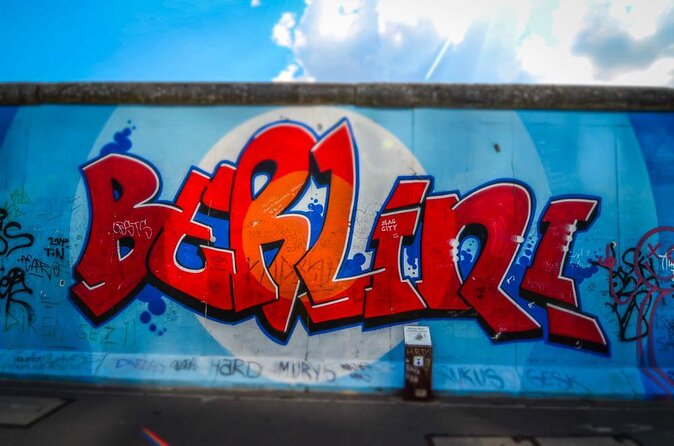
The East Side Gallery is a 1.3-kilometer painted section of the former Berlin Wall along the Spree. More than one hundred wall paintings cover the surviving stretch, making it the longest open-air gallery of its kind.
This is one of the route’s best photo opportunities, but the paintings are spread out. A quick pass lets you see the scale. If you want to study individual works, you will need to return on foot.
The ride then moves into Kreuzberg, where the tone becomes less formal. Bergmannstraße and its side streets combine old apartment buildings, small shops, cafés, and international restaurants. It gives you a sense of daily neighborhood life rather than official Berlin.
The Landwehrkanal runs through several Berlin districts, including Kreuzberg, Neukölln, Tiergarten, and Charlottenburg. Built between 1845 and 1850, it supported the movement of building materials during Berlin’s industrial growth. Today it provides a calmer route through the city.
Admiralbrücke is a popular summer meeting place beside the canal. Its cobblestones, old gas lanterns, and sunset views create a relaxed atmosphere. Local rules call for the bridge to be cleared at 10 p.m. because of noise, so an evening visit should not be treated as an all-night stop.
Oranienstraße is more active, with small shops, bars, restaurants, and nightlife. The street’s international character is part of what makes Kreuzberg useful on this tour. You see a Berlin that is social, mixed, and lived in, rather than arranged for sightseeing.
Görlitzer Bahnhof brings another layer of change. The former station opened in the 1860s and once handled passengers and military trains. The site is now Görlitzer Park, with lawns, sports areas, playgrounds, and a children’s farm.
Tempelhofer Feld and Park am Gleisdreieck
Tempelhofer Feld is the former Tempelhof Airport, including its large terminal hall and more than 300 hectares of open airfield. Flight operations ended, and the site opened to the public in 2010. A 2014 referendum shaped plans to protect and manage the open space with public participation.
The field is one of Berlin’s most unusual public places because the openness is the attraction. Instead of buildings crowding the view, you get broad runways and a huge sense of space. The tour’s five-minute stop gives you a first look, but a longer return visit is worthwhile if you want to walk, cycle, or spend time around the former airport buildings.
Park am Gleisdreieck shows another approach to city planning. The former railway area lay unused after the Second World War, and plants and wildlife took hold. Local residents pushed for a permanent public park, which eventually replaced the neglected rail land with a green area shaped by its industrial past.
I like ending in these districts because they show Berlin’s habit of reusing difficult spaces. Airports, rail yards, former borders, and old industrial corridors have become places for public life.
Price, timing, and what you receive
At $140.77 per person, this is not the cheapest way to see Berlin. Its value depends heavily on group size. Since the activity is private, the cost makes more sense for a small group that wants its own vehicle, a flexible pace, and door-to-door pickup.
The ride lasts about three to six hours. That wide range matters. A three-hour outing is a fast survey, while a longer ride gives you more room for photographs, questions, and neighborhood stops. Ask about the expected duration when booking if your schedule is tight.
Private transportation, a photographer, music on request, a guide, and pickup are included. Coffee, tea, and alcoholic beverages are also included, which adds a social touch, though you should not mistake the drinks for a meal.
Good weather is required. Free cancellation is available up to 24 hours before the start time, and a weather cancellation brings either another date or a full refund. Service animals are allowed, public transport is nearby, and most people can participate. The tour returns to the meeting point.
Who should book this Berlin ride?
I would choose this for a first day in Berlin, especially if you want to see the city’s main sights before deciding where to spend more time. It also suits anyone who finds long walks tiring or wants a private way to cover a wide area.
The tour is particularly useful for photographers. You can move from grand neoclassical buildings to Wall paintings, canals, parks, and neighborhood streets in a single outing. Leo’s rickshaw can also reach small pedestrian areas that cars cannot easily access.
I would not choose it as your only experience if your priority is museum interiors, detailed memorial visits, or long historical discussions at each stop. Many stops last only a few minutes, and several attractions require separate admission.
The best plan is to use the ride as your Berlin framework. Mark the places that interest you, then return by public transport or on foot. Ask Leo to point out which stops deserve more time later.
Should you book it?
Book this tour if you want an efficient, private introduction to Berlin with a strong mix of monuments and neighborhoods. The most praised qualities are clear: Leo takes you through parks and small pedestrian lanes, reaches places cars cannot easily enter, and helps you see a great deal in about three hours without exhausting yourself.
Skip it if you want a slow museum day or a full walking tour focused on one period. At this price, the strongest value comes from sharing the rickshaw with a small group and using the flexible route to get your bearings fast.
FAQ
How long does the Berlin rickshaw tour last?
The experience lasts approximately three to six hours. The exact length can vary with the route, timing, and stops.
Is hotel pickup available?
Yes. Pickup is offered from hotels, cafés, and Berlin Central Station.
Is the tour private?
Yes. Only your group participates in the activity.
What language is the tour offered in?
The tour is offered in English.
Is transportation included?
Yes. Private transportation by rickshaw is included.
Are drinks included?
Coffee, tea, and alcoholic beverages are included. Music is available on request.
Are admission tickets included?
Many outdoor sights are free to view, but admission to places such as the Reichstag interior, Gropius Bau, the German Cathedral, the Konzerthaus, Berlin Cathedral, and some Wall or museum facilities is not included.
What happens if the weather is poor?
The experience requires good weather. If it is canceled because of poor weather, you can choose another date or receive a full refund. You can also cancel for a full refund up to 24 hours before the start time.
Just added around Berlin
- eSIM for Germany and 34 European Countries★ 4.5 · 16 reviews
- Your ticket to The Wall Museum Berlin★ 3.0 · 60 reviews
- Walking on the Wall: 3-Hour Tour in Berlin★ 4.5 · 34 reviews
- Rickshaw Tours Berlin – Groups of up to 16 people with several rickshaws★ 4.0 · 97 reviews
- Warnemuende Shore Excursion: Private Berlin Tour★ 4.5 · 27 reviews
- Love and War in Berlin: Self-Guided Story Puzzle Walk★ 5.0 · 7 reviews
- Warnemuende Shore Excursion: Berlin Private Sightseeing Tour from Rostock★ 5.0 · 4 reviews
- Cold War Berlin – Private Live Virtual Experience★ 5.0 · 4 reviews
Berlin Tours, compared.
Reichstag, Dome and Government District Guided Tour
Read our review →
1-Hour City Tour by Boat with Guaranteed Seating
Read our review →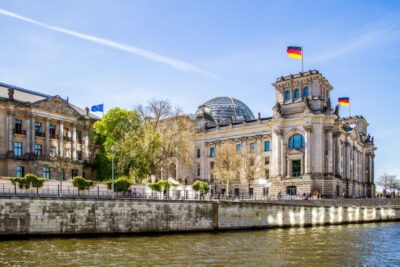

Reichstag, Plenary Chamber, Cupola & Government Tour
Read our review →
Browse the lists this tour appears in