
Review · BERLIN TOURS
Clash of Titans: Battle for Seelow Heights WW2 tour
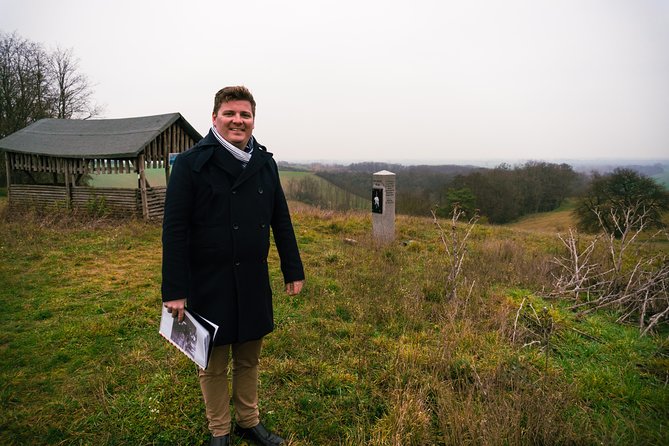
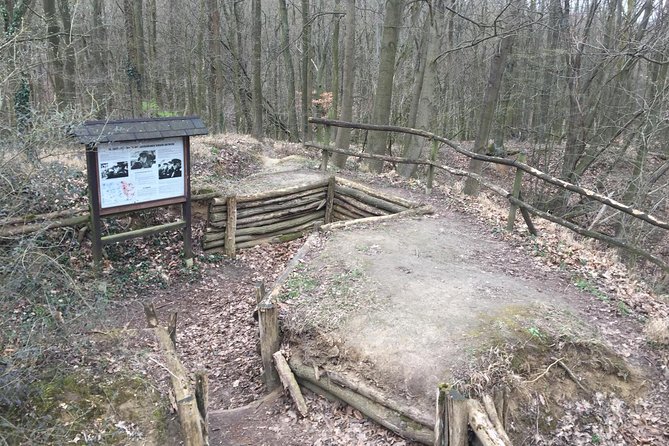
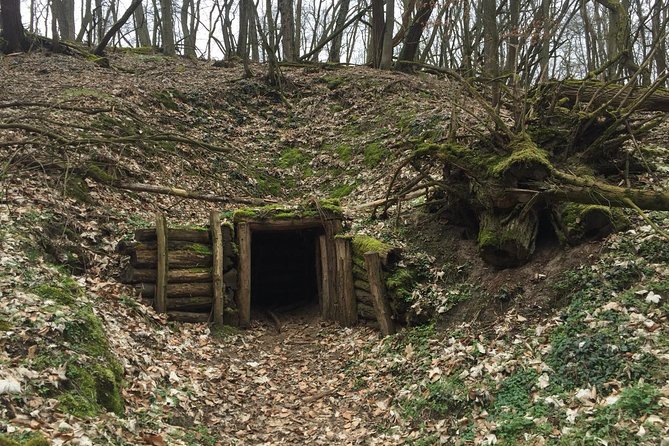
The most revealing part of this tour is not the museum. It is standing in the woods at Reitwein, beside surviving trenches and the remains of a command bunker, while looking across the ground Soviet troops had to cross in April 1945. The battle suddenly becomes a matter of distance, mud, artillery, and fear rather than arrows on a map.
I like two things in particular: the small group, limited to seven, and the way the day follows the battle from the opening assault to the German withdrawal. I also like that guides such as Matt, Matthew Menneke, and Steve use maps, photos, and clear explanations rather than assuming you already know the Eastern Front.
The main consideration is the distance from Berlin and the rough walking. You spend about seven hours on the road and at battlefield sites, with paths through woodland and fields, so sturdy footwear and weather-ready clothing matter. Lunch is not included, and hotel pickup arrangements should be confirmed before you set out.
Key points to know before booking
- The real battlefield is the main attraction: Walk among surviving trenches, bunker remains, former command posts, and defensive positions.
- The Seelow museum sets the scene: Its 3D model shows the Soviet bunker and trench network you later visit in person.
- The group is capped at seven: That gives you room to ask detailed questions and keeps the day personal.
- The battle is explained in sequence: You follow the Soviet advance from Reitwein toward Seelow and Berlin.
- Expect a full day outside central Berlin: The tour begins at 9:15 am and lasts about seven hours.
- Bring boots and money for food: Some walking is off the beaten path, and lunch is not part of the listed price.
Why Seelow Heights matters
Berlin has no shortage of World War II sites, but many focus on the final days in the city. Seelow Heights takes you farther east, to the battle that opened the direct route toward Berlin in April 1945.
The fighting here formed part of the Berlin offensive. Soviet and Polish forces attacked German defenses positioned on and around the heights, facing difficult ground and intense fire. The figures alone show the scale: the Soviet 1st Belorussian Front gathered 768,000 infantry, including 78,556 soldiers from the Polish 1st Army, along with 3,059 tanks, 16,934 artillery pieces and mortars, and 3,279 combat aircraft.
Those numbers can feel remote in a book. The value of this tour is that your guide keeps returning to the ground itself. You see the routes, slopes, woods, railway line, and open fields that shaped the battle.
The battle was also brutal and costly. The tour does not treat it as a tidy military puzzle. It addresses the confusion, heavy losses, desperate defensive actions, and civilian and military suffering connected to the final battles of the war.
A few more Berlin half-days to weigh up
- Berlin: Reichstag, Dome and Government District Guided Tour
★ 4.7 · 18,288 reviews - Berlin: 1-Hour City Tour by Boat with Guaranteed Seating
★ 4.3 · 16,993 reviews - Berlin: Boat Tour Along the River Spree
★ 4.4 · 11,252 reviews
The Seelow museum gives you the battle map
Your first stop is the Seelow Heights memorial and museum, Gedenkstätte Seelower Höhen. The museum visit lasts about 40 minutes, with admission included.
Your guide begins with an explanation of the Berlin-Seelow offensive. This introduction is important because the battlefield is spread across several towns and rural sites. Without a map, a bunker in the woods or a railway station can seem like an isolated curiosity.
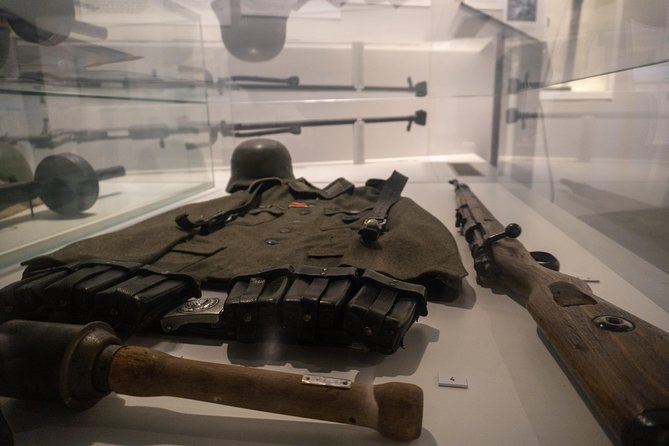
The most useful display is a 3D model showing the Soviet 1st Belorussian Front bunker and trench network. You will later visit parts of that same system, so the model gives you a sense of how the positions connected.
After the guide’s introduction, you have time to look around the museum at your own pace. The stop is not huge, and that suits the day. You are not spending hours indoors before reaching the places where the battle occurred.
I especially appreciate this order. You first receive the basic timeline and military layout, then test your understanding at the actual sites. Guides bring additional maps and photographs, which helps if you are interested in troop movements or need a simpler explanation of the battle.
Reitwein reveals the opening assault
From Seelow, the vehicle makes the short trip to Reitwein. Today, the town may appear quiet and ordinary, but its position made it important in the Soviet advance.
The Soviet 1st Belorussian Front began its assault on Seelow from this area. It was also part of the route toward Berlin. Your guide explains why this starting point mattered and how the forces were arranged before the attack.
This is a good place to listen rather than expect a grand memorial. The appeal is the contrast between a modest town and the huge military operation connected with it. The ordinary setting makes the scale harder to grasp, not easier.
The stop is listed at about 20 minutes. That keeps the tour moving, but it also means the experience depends heavily on your guide’s explanation. Matt and Steve have been described as especially good at adjusting their talks to the people in the vehicle, from serious military-history readers to visitors with little prior knowledge.
Walk through Zhukov’s bunker and trenches
A short walk from Reitwein leads into the forest. This is one of the strongest parts of the day, but also the section that demands the most from your legs and footwear.
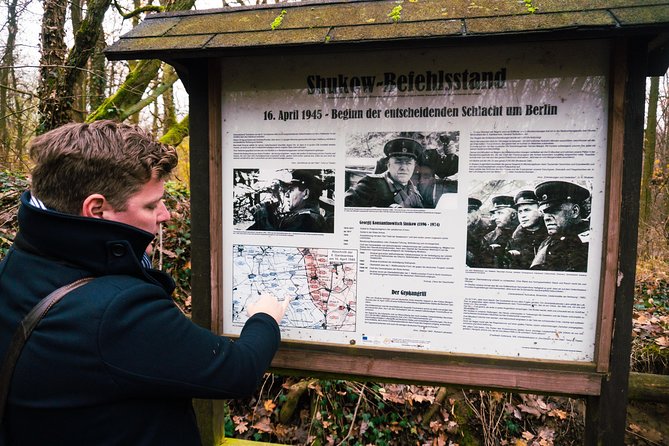
The remains of trenches and bunker positions can still be seen among the trees. The tour includes the location associated with Marshal Georgy Zhukov’s command bunker and observation point. From here, he directed the battle.
You do not simply look at a sign and move on. The guide explains how the Soviet command position related to the German defenses and the ground ahead. Standing in the trees gives you a better feel for the limited visibility and the difficulty of understanding a large battle from ground level.
Allow about 30 minutes for this stop. That may not sound long, but it is enough for a focused walk and explanation. The forest paths are not presented as a polished city attraction. You might encounter uneven ground, so sturdy boots are sensible even in dry weather.
This is where the tour feels most different from a standard Berlin history excursion. You are not seeing a reconstructed set or a display behind glass. You are looking at physical traces in the place where decisions and attacks took place.
Same city, a completely different sort of afternoon:
- Discover Berlin Half-Day Walking Tour
★ 5.0 · 9,624 reviews - Berlin: Hop-on Hop-off Bus Tour with Live Commentary
★ 4.3 · 8,579 reviews - Berlin: Government District around the Reichstag Guided Tour
★ 4.7 · 8,447 reviews - Berlin: Reichstag, Plenary Chamber, Cupola & Government Tour
★ 4.6 · 8,422 reviews
Dolgelin shows the German defensive problem
The tour then continues to Dolgelin Railway Station, identified with the command post of Colonel Scheunemann, commander of the 303rd Infantry Division.
The railway setting helps explain how German forces organized their defense. The guide discusses the positions on the heights and the difficult ground faced by Soviet and Polish troops. The area became what the tour describes as a shooting gallery, an exposed killing zone for troops trying to cross under fire.
This stop lasts about 20 minutes. It is short, but it adds a useful German viewpoint to the earlier discussion of the Soviet command position. You are not shown only the route of the attackers. You are also asked to consider the defensive lines, weapons, and visibility that made the advance so dangerous.
The railway station itself is not a conventional attraction with a long visit. Its value is geographical. The guide turns an everyday place into part of a clear sequence: Soviet forces gathered, attacked, met German defenses, and pushed west toward Berlin.
Lietzen combines wartime graves with older Germany
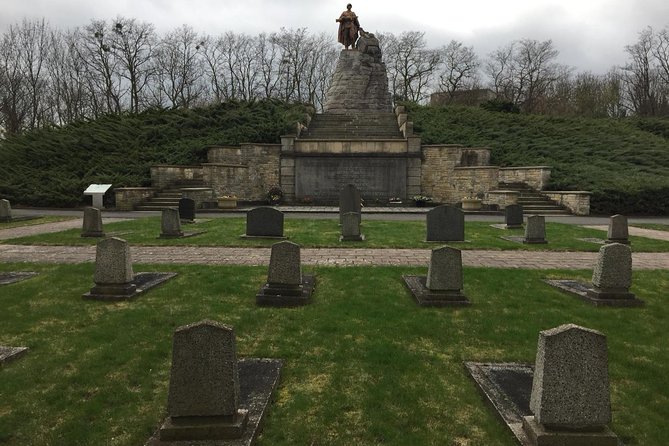
At Lietzen, the tour pauses at a German field cemetery for about 30 minutes. This is a quiet change of pace after the command positions and trench walk.
The cemetery has been expanded since German reunification as more wartime remains are found and added to the graves. That detail gives the site a continuing quality. The battle is not only something recorded in books, because the physical evidence and human remains still appear.
Your guide also points out the town’s older buildings. Lietzen is associated with a manor house dating from 1252 and what is said to be Germany’s oldest barn. These medieval details may seem far removed from 1945, but they provide useful contrast. The same small settlements that survived centuries of earlier history became military corridors during the final months of World War II.
The stop is not designed as a full medieval sightseeing visit. Think of it as a short pause that connects the battlefield to the older communities around it. If your main interest is armor and artillery, this will be a quieter segment. I still find it worthwhile because it keeps the day from reducing the area to a military diagram.
Jahnsfelde tells the cost of withdrawal
The final battlefield stop is Jahnsfelde, where the tour focuses on two grim episodes.
One is the former German field hospital, now associated with a sports field. The hospital was attacked by Soviet aircraft despite its Red Cross markings. The other is the last stand of the 3rd Battalion of Artillery Regiment 18.
As Soviet armor advanced during the German withdrawal, the battalion was caught at a crossroads and quickly established defensive positions. It reportedly destroyed about 100 tanks, but the cost was severe: eight officers and more than 160 other personnel were killed, more than two-thirds of the battalion were wounded, and every gun was lost.
The stop lasts about 20 minutes. It is not a grand monument visit. Its force comes from the story and the plainness of the site. A sports field does not look like a battlefield, yet the guide explains what happened there and why the position mattered.
This section also helps correct a common misunderstanding about the final months of the war. German forces were collapsing, but the retreat could still produce fierce local resistance and terrible losses. Soviet victory was not effortless, and the people caught in the path of the advance paid heavily.
The drive back follows the Soviet route
After Jahnsfelde, you begin the return to Berlin along the original route of the Soviet advance. This part of the day gives the separate stops a stronger connection.
The vehicle is air-conditioned and includes Wi-Fi and a small bottle of water. That matters because you are covering scattered sites rather than walking between them. The driving time also gives your guide room to explain the wider Eastern Front and answer questions.
The group size is one of the tour’s strongest practical features. With a maximum of seven people, you can ask for clarification without trying to compete with a coachload. Guides have also been praised for keeping the group together and paying attention to the slowest walker.
Some descriptions of the day include a traditional German lunch stop, and the food has been warmly described. Still, lunch is not included in the advertised price, so bring money and confirm the day’s exact meal plan. The guide may also make practical comfort stops, but you should not treat those as a replacement for planning your own needs.
You return to Berlin after roughly seven hours. The listed meeting point is Alexanderplatz at Dircksenstraße 2, with a 9:15 am start. Two-way hotel transfers are advertised, while some pickup arrangements may involve an extra charge, so confirm the exact pickup point when booking.
What the $167.74 price really covers
At $167.74 per person, this is not a cheap half-day outing. The price makes more sense when you consider what it would take to reach these rural sites independently.
The cost includes the air-conditioned vehicle, museum admission, Wi-Fi, and water. More importantly, it includes transport between places that do not form an easy public transport sightseeing route. You are paying for the battlefield interpretation as much as the drive.
A self-guided visit could cost less in admission fees, but you would need to connect Reitwein, the forest bunker area, Dolgelin, Lietzen, and Jahnsfelde while also understanding what you are seeing. That is a difficult task without local research and a car.
The value is strongest for a small group that wants context at each stop. It is weaker if you want a relaxed scenic drive, a conventional museum day, or a low-cost way to fill a few spare hours in Berlin.
Lunch is extra. Hotel pickup may also require clarification or an additional payment, depending on your arrangement. Ask about both before committing so the final cost does not surprise you.
Who should take this battlefield tour
I would choose this tour if you have a serious interest in World War II, military history, battlefield archaeology, or the final Soviet advance on Berlin. It also suits you if you have already seen central Berlin’s major war sites and want to understand the battle beyond the city streets.
You do not need to be an expert. The strongest guide descriptions point to an approach that works for both dedicated history readers and newcomers. Matt, also identified as Matthew Menneke, has been praised for detailed explanations, humor, maps, personal attention, and a willingness to answer questions. Steve has also been described as an enthusiastic history specialist who connected well with younger and older family members.
The tour can work for solo visitors because the small group format encourages conversation. It also suits couples and families with older children who can manage a full day and rough paths.
I would hesitate if you dislike long drives, outdoor walking, cemeteries, or difficult wartime subjects. This is not a light sightseeing trip. The discussion includes mass death, wounded soldiers, destroyed units, and attacks on a field hospital.
Wear sturdy footwear. One account specifically recommends boots for the fields, and that is sensible advice. Carry a rain layer and dress for changing weather, since the tour depends on suitable conditions and may be canceled if the weather is poor.
Is the Seelow Heights tour worth your day?
For the right visitor, yes. The tour gives you something Berlin itself cannot: a chance to walk through the actual positions connected with the final battle for the German capital.
I value the sequence. The museum explains the operation, Reitwein introduces the Soviet starting point, the forest reveals trenches and command positions, Dolgelin explains the defenses, Lietzen adds the human and civilian setting, and Jahnsfelde closes the day with the violence of the retreat.
The main weakness is practical rather than historical. You spend much of the day moving between rural locations, and the ground is not always easy. But that same remoteness is why a guided vehicle tour is useful.
Book it if you want a focused Eastern Front experience and are prepared to give up most of a day in Berlin. Skip it if you only have a short city break or prefer indoor museums. If you do book, confirm hotel pickup, bring money for lunch, and wear boots. The tour has earned a five-star rating from 71 reviews, with 100 percent recommending it, and the strongest praise centers on the guides’ preparation, warmth, and ability to make the battle understandable on the ground.
FAQ
Where does the tour start?
The listed starting point is Alexanderplatz, at Dircksenstraße 2, 10179 Berlin, Germany.
What time does the tour begin?
The scheduled start time is 9:15 am.
How long does the experience last?
The tour lasts approximately seven hours.
How many people can join the tour?
The maximum group size is seven travelers.
Is the tour offered in English?
Yes. The experience is offered in English.
Is museum admission included?
Yes. Admission to the Seelow Heights memorial museum is included.
Is transportation included?
Yes. An air-conditioned vehicle is included, and two-way hotel transfers are advertised. Confirm the exact pickup arrangement before the tour, since some hotel pickup arrangements may involve an additional charge.
Is lunch included?
No. Lunch is not included in the tour price.
Do I need sturdy footwear?
Sturdy footwear is strongly advisable because part of the tour includes walking through forest, fields, trenches, and other areas away from paved paths.
What happens if the weather is poor?
The experience requires good weather. If the operator cancels because of poor conditions, you will be offered another date or a full refund.
What is the cancellation policy?
You can cancel at least 24 hours before the start time for a full refund. Cancellations or changes made less than 24 hours before the start time are not accepted for a refund.
Just added around Berlin
- eSIM for Germany and 34 European Countries★ 4.5 · 16 reviews
- Your ticket to The Wall Museum Berlin★ 3.0 · 60 reviews
- Walking on the Wall: 3-Hour Tour in Berlin★ 4.5 · 34 reviews
- Rickshaw Tours Berlin – Groups of up to 16 people with several rickshaws★ 4.0 · 97 reviews
- Warnemuende Shore Excursion: Private Berlin Tour★ 4.5 · 27 reviews
- Love and War in Berlin: Self-Guided Story Puzzle Walk★ 5.0 · 7 reviews
- Warnemuende Shore Excursion: Berlin Private Sightseeing Tour from Rostock★ 5.0 · 4 reviews
- Cold War Berlin – Private Live Virtual Experience★ 5.0 · 4 reviews
Berlin Tours, compared.

Reichstag, Dome and Government District Guided Tour
Read our review →
1-Hour City Tour by Boat with Guaranteed Seating
Read our review →




Reichstag, Plenary Chamber, Cupola & Government Tour
Read our review →