
Review · BREMEN TOURS
Bremen: Walking Tour of Historic Schnoor District
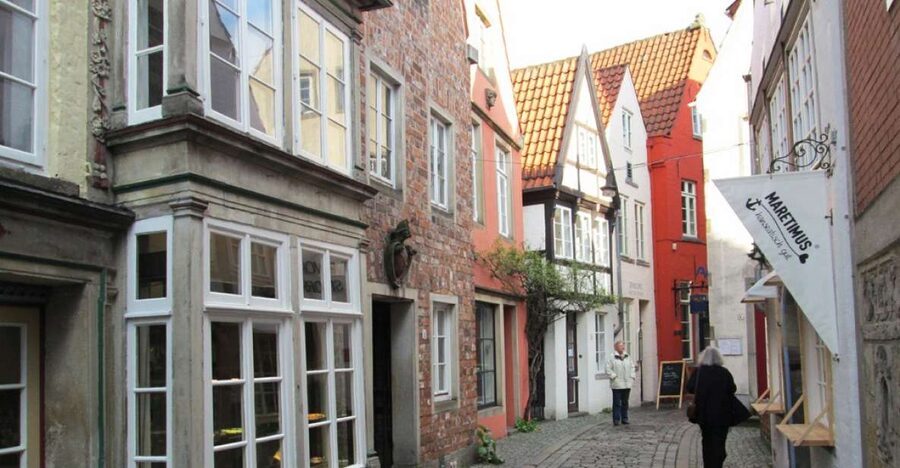
Schnoor is Bremen at its most intimate: a knot of narrow lanes where small houses press together like beads on a string. The quarter reaches back to the Middle Ages, yet it feels lively rather than frozen in time, with goldsmiths, tea rooms, and shops selling local handicrafts.
I like the way this tour connects pretty buildings with real details, from the Franciscan monastery that once occupied the area to Haus Schnoor 15 and Packhaus Schnoor 2. I also like the price: $14 for an hour is a sensible way to get your bearings before exploring on your own. The main drawback is simple: the tour is in German, lasts only one hour, and all buildings are viewed from the outside.
I especially like that a good guide can add character to streets you might otherwise photograph and pass by. Guide Sönke has been praised for his funny local stories and warm Bremen personality, but guide assignment is not guaranteed. Bring comfortable shoes, since Schnoor’s lanes are made for walking, not rolling.
Key points about Bremen’s Schnoor walking tour
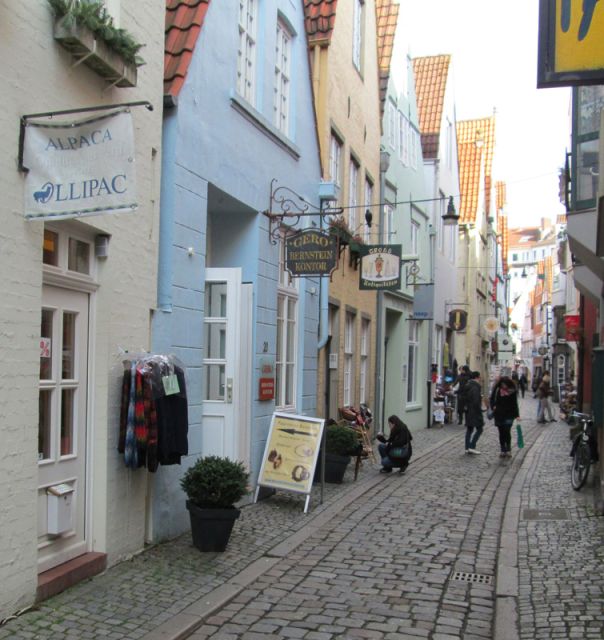
- Medieval lanes in a compact quarter: See Schnoor’s tight passageways and preserved houses without committing to a long city tour.
- Historic buildings from several periods: Look for Gothic, Baroque, Renaissance, Classicist, and Historicist details in one small area.
- Important sites viewed outside: The route includes St. John’s Church, Brasilhaus, Packhaus Schnoor 2, and reconstructed historic facades.
- A German-speaking guide: Expect the tour to be conducted in German, with local stories and background on Schnoor’s inhabitants.
- Shared or private format: You can choose a regular group or a private group if that option is available for your booking.
- Good value at $14: The low price works best for travelers who want context, orientation, and a short introduction rather than interior visits.
Entering Schnoor from Die Glocke
The tour begins in front of Die Glocke concert hall at Domsheide 6. Your guide waits with a sign reading Bremen Tour Guide, so the meeting point should be fairly easy to identify near the city center.
This is a useful starting point. You meet in a recognizable public spot before moving into the tighter streets of Schnoor, where it is easier to lose your sense of direction. The walk itself lasts one hour, so the tour is easy to fit before lunch, after a city-center visit, or between other plans.
I would arrive a few minutes early. The supplied meeting details do not describe a hotel pickup or transportation, so plan to make your own way to Die Glocke. Comfortable shoes matter more here than fancy footwear. Schnoor is known for winding lanes and old buildings, and the tour is entirely on foot.
The guide speaks German. That is important when you compare this experience with Bremen tours offered in other languages. If you understand German, you can expect more than a photo stop: the guide explains the quarter, its buildings, and the people who lived there. If you do not understand German, this tour may be a poor fit, since no other language is listed.
More history-led days in Bremen:
- Bremen: Historic old town tour with Geo Epoche
★ 3.3 · 5 reviews - Leipzig: City History Canal Sightseeing Tour on a Motorboat
★ 4.7 · 6,232 reviews - Berlin: Natural History Museum Entrance Ticket
★ 4.6 · 3,382 reviews
Why Schnoor feels different from the rest of Bremen
The name Schnoor is tied to the quarter’s old craft and working life, and the district still feels physically close and handmade. Little houses line narrow paths, with upper floors and facades packed into a very small area.
The first known written reference to Schnoor dates to the 13th century. Around that time, a Franciscan monastery was built at the edge of what is now the quarter. Only the monastery church remains, but that surviving link gives the neighborhood a useful thread through time.
Many houses from the 17th and 18th centuries remain in their original form. You can see why the area has a romantic appeal, but the charm is more convincing when the guide explains how the buildings changed and who used them. Pretty facades alone can blur together. A short story about a house, a trade, or a former resident gives each one a clearer place in the quarter.
The tour also introduces several building styles. Gothic brickwork, Renaissance and Baroque details, later Classicist forms, and Historicist recreations appear close together. You do not need a background in architecture to enjoy this. The guide’s job is to point out the details you might miss, such as the shape of a facade or the way a later building echoes an earlier style.
St. John’s Church and the Franciscan connection
St. John’s Church is one of Schnoor’s key landmarks. The present Catholic church was built in the 14th century in red-brick Gothic style, a form closely associated with northern Germany.
Because the tour sees the church from outside, your attention goes to its exterior shape, brickwork, and place within the old quarter. You should not expect a church visit or interior lecture. The information provided specifically says that the buildings are viewed only from outside, so this is an architectural stop rather than a full religious-site visit.
The church also helps explain Schnoor’s long connection with religious life. The earlier Franciscan monastery was built on the edge of the area, and the monastery church is the part that survives. That connection gives the neighborhood more depth than a collection of attractive old homes.
I like this part of the tour because it shows how a small district can contain several layers of Bremen’s past. You get medieval religious architecture, later domestic buildings, and modern shops in a short walk. The tradeoff is that the one-hour format cannot spend much time at any single site.
Haus Schnoor 15, known as Brasilhaus
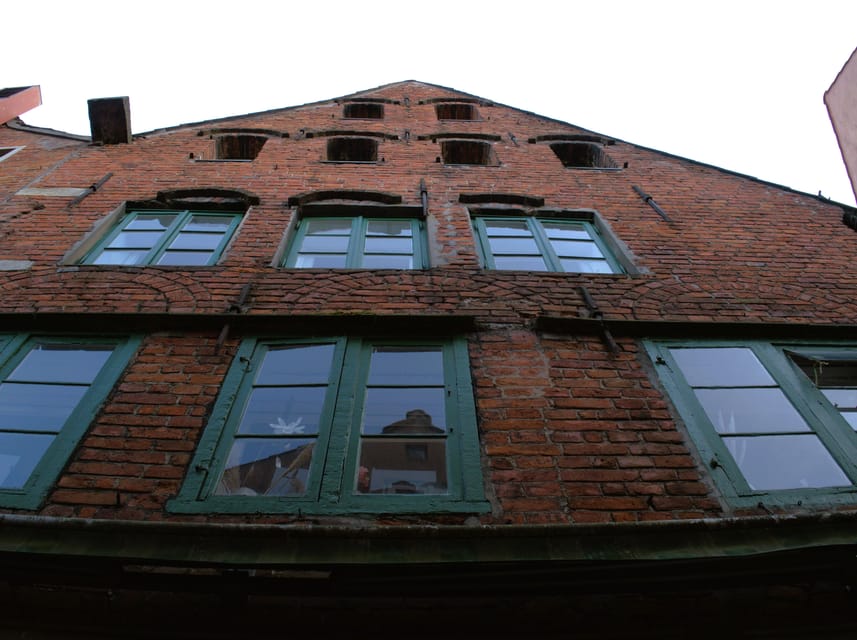
One of the oldest secular buildings on the route is Haus Schnoor 15, also called Brasilhaus. The term secular simply means it was not a church or monastery building, and that distinction matters. Religious buildings often survive for reasons that ordinary homes do not, so a preserved house offers a different look at everyday life.
Brasilhaus dates back to the 15th century. Its value is not just its age. It helps you picture Schnoor as a place where people lived and worked in tightly packed homes, rather than as a district designed only for visitors.
The guide can also explain how some houses were recreated according to historical specifications. That is a useful point to keep in mind: old-looking does not always mean untouched. Schnoor includes original buildings and careful reconstructions, and a good explanation helps you tell the difference.
Since there is no interior access, your visit focuses on the outside details. Take time to look upward. In a narrow street, the upper stories can be more revealing than the shop windows at ground level. The tour gives you the background, but you should still leave room to pause and inspect the buildings yourself.
More walking tours in Bremen:
- Bremen: Walking Tour in German with Night Guard
★ 4.7 · 2,922 reviews - Bremen: City Center Guided Walking Tour
★ 4.5 · 2,709 reviews - Bremerhaven: Sailor’s yarn, legends and sea walking tour
★ 4.7 · 33 reviews - Bremen: Private Walking Tour with a Professional Guide
★ 4.2 · 22 reviews
Packhaus Schnoor 2 and the shape of old trade
Packhaus Schnoor 2 is another notable secular building and dates to the 15th century. Its name points toward storage and trade, which adds a practical side to the district’s story.
The Schnoor quarter is easy to romanticize. Small houses and winding lanes make excellent photographs, but buildings such as Packhaus remind you that this was also a working neighborhood. Goods had to be stored, moved, and sold. Homes were not simply decorative cottages.
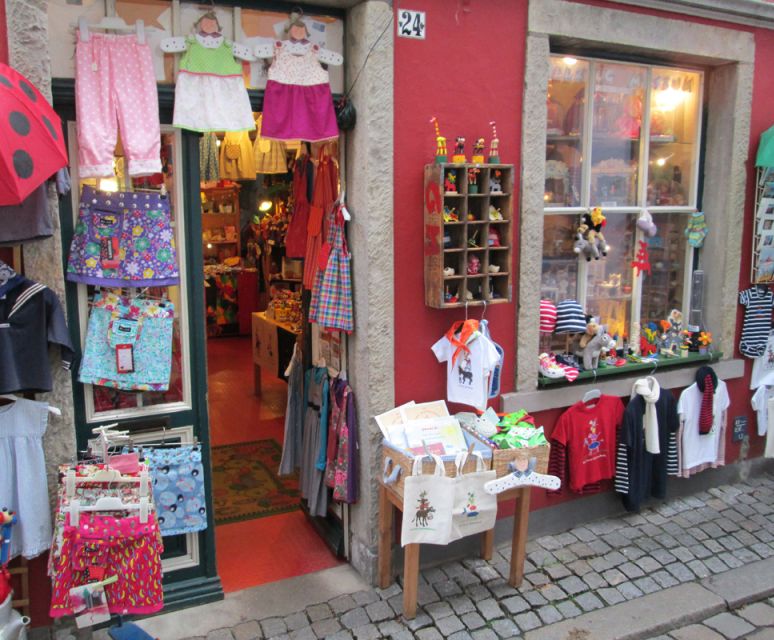
The route also passes shops connected with present-day craft, including goldsmiths and stores selling local handicrafts. This is one of the stronger links between old and new Schnoor. The quarter is not presented as an empty museum. It remains a place of small businesses, though the buildings and streets carry much older forms.
I would not plan on a long shopping session during the tour. An hour is short, and the guide has several architectural and historical points to cover. Instead, note the shops that interest you and return after the walk. That way, you can listen without feeling rushed.
Half-timbered houses, tea rooms, and reconstructed facades
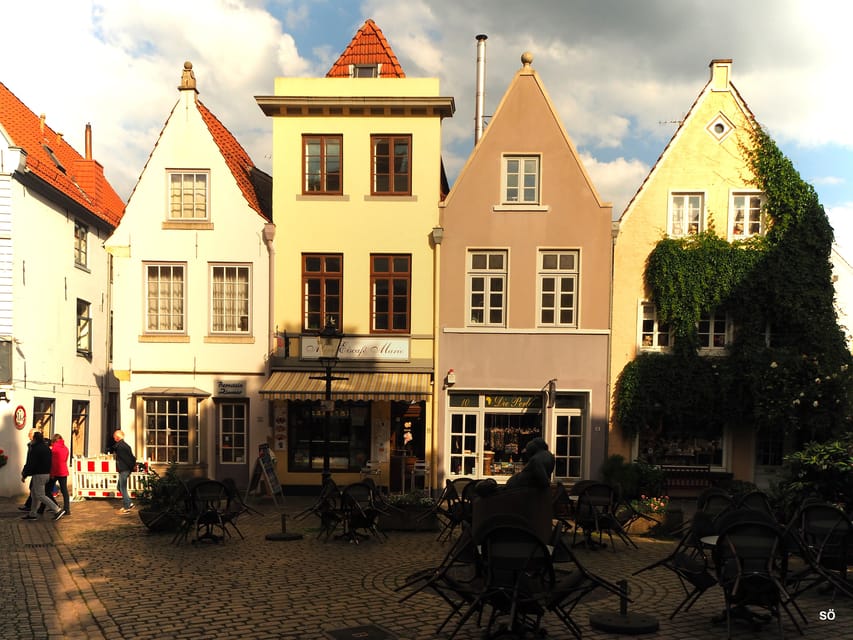
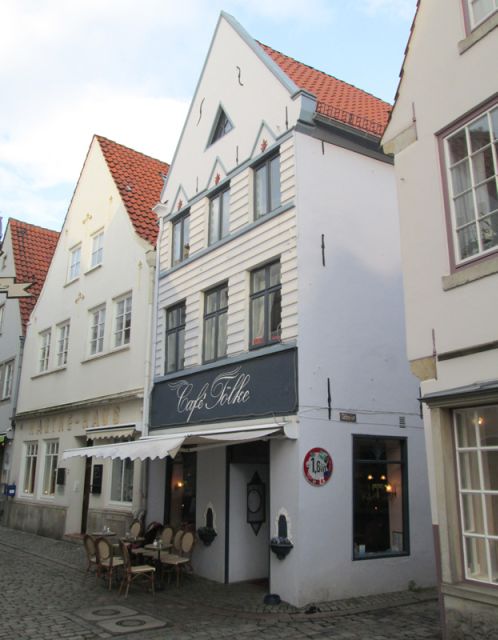
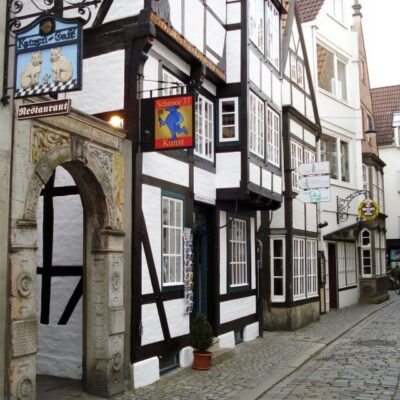
The tour includes a half-timbered house with a tea room. Half-timbering is one of the visual features many people expect in northern German old quarters, but Schnoor’s version is especially effective because the buildings sit so close together.
You may also see structures that now consist only of facades. These buildings once stood elsewhere and were recreated in Schnoor according to historical specifications. This is a detail worth hearing from a guide because it complicates the usual old-town picture. The quarter contains original fabric, restored structures, and historically styled elements.
That does not make the area less interesting. It simply means you should appreciate Schnoor as a preserved historic district shaped by repair and reconstruction, not as a perfectly untouched time capsule. The outside-only format makes this distinction even more important.
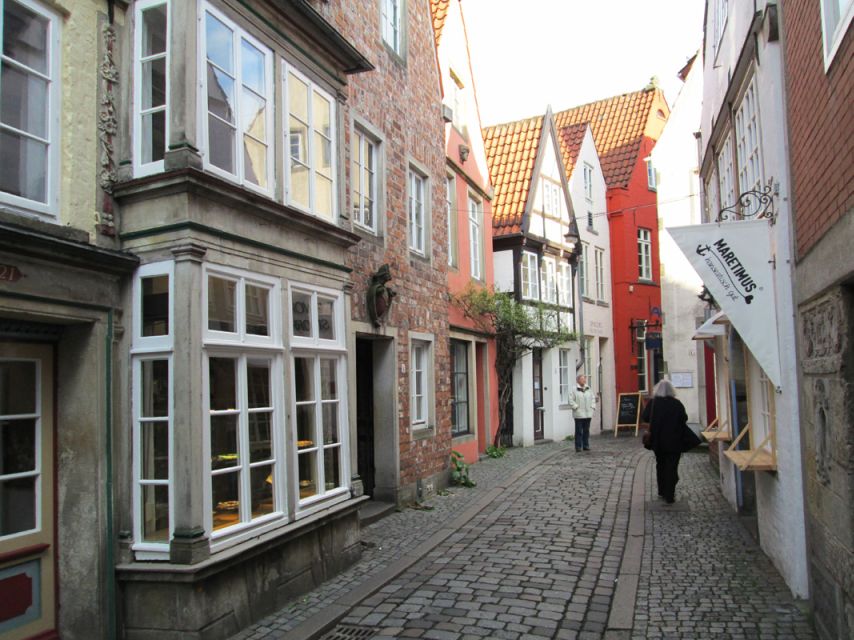
The mix of house types also gives the tour visual variety. One lane may show half-timbering, another red brick, another a more formal facade shaped by Classicism or Historicism. The guide explains how these styles sit together, while you get the pleasure of moving through a changing set of narrow views.
What the guide adds in one hour
The strongest part of this experience is the guide’s storytelling. Recent praise for guide Sönke focuses on his humor, local warmth, and ability to tell funny and interesting stories about Schnoor and Bremen. One comment describes him as a lovable Bremen original who kept the group engaged and made the tour enjoyable.
That kind of personality matters in a compact old quarter. Without a guide, you can see the lanes and houses, but you may not know why a building matters or which details are original. With a good guide, a short walk can make the district easier to understand.
The tour is also described as informative and entertaining, with local jokes woven into the explanation. You should expect a relaxed walk rather than a formal lecture. Still, the language is German, so the value depends heavily on your ability to follow German storytelling.
A private option is available. A private group may suit you if you want a more focused pace or prefer asking questions as you go, though the supplied details do not specify the maximum group size or the exact private-tour price. The shared version is the better value if you mainly want an introduction to Schnoor.
Is $14 a fair price?
At $14 per person, this tour is priced as a short orientation walk, not a full-day cultural program. I think that is fair. You get a live guide, a structured route, and context for several of Bremen’s oldest buildings without paying for admission to museums or attractions.
The value is highest if Schnoor is new to you. The quarter is compact, and you could walk through it on your own, but the guide helps separate an ordinary old house from an important one. That saves you from simply taking pictures of every facade and missing the best stories.
The price includes the guided walk. Food and drinks are not included, and none are needed for a one-hour route. You can browse the tea room and handicraft shops separately, but the tour itself is focused on walking and interpretation.
If you have already spent a lot of time in Schnoor and want interior visits, the value drops. This experience does not include entry inside the houses or church. It is best seen as a guided introduction, followed by your own return visit if a particular shop or building catches your attention.
Who should book this walk?
I would recommend it to first-time visitors to Bremen, architecture fans, and anyone who prefers a short guided activity with a strong sense of place. It also works well for people who want a gentle introduction to the city before exploring alone.
The tour suits German-speaking visitors best. The listed tour language is German, and the most praised feature is the guide’s spoken storytelling, including humor and local anecdotes. If you do not understand German, look for a tour offered in a language you can follow instead.
The one-hour length is useful for families and busy itineraries, though the narrow streets and walking format may not suit everyone. Wheelchair users should not book this activity, as it is specifically listed as unsuitable for wheelchair users.
You should also choose your shoes with care. Comfortable footwear is the only stated item to bring, but it is good advice for a quarter built around winding pedestrian lanes and close-set historic buildings.
My booking advice for Schnoor
Book this tour if you want the old quarter to make sense, not just look attractive. At $14, it is a low-cost way to learn why St. John’s Church, Brasilhaus, Packhaus Schnoor 2, and the reconstructed facades matter.
Skip it if you need an English-language tour, want to enter historic buildings, or prefer a long, detailed city-wide walk. The experience is short, German-only, and exterior-focused.
For the right visitor, it offers a useful balance: a guide gives you the stories, then Schnoor gives you time to wander back through the lanes at your own pace. Bookable cancellation is available up to 24 hours before the start for a full refund, and you can reserve now and pay later, which helps if your Bremen plans are still shifting.
FAQ
Where does the Schnoor walking tour meet?
The meeting point is in front of Die Glocke concert hall at Domsheide 6, Bremen, 28195. The guide waits with a sign saying Bremen Tour Guide.
How long does the tour last?
The walking tour lasts one hour. Starting times depend on availability when you book.
What language is the tour conducted in?
The live tour guide speaks German. German is the only language listed for this activity.
Are the buildings open to the public during the tour?
No. The buildings are viewed from the outside only. The route focuses on exterior architecture, streets, facades, and the stories connected with the quarter.
Is a private tour available?
Yes. A private group option is available. The standard experience is a shared walking tour, with the private format offered as an option.
Is the tour suitable for wheelchair users?
No. The activity is listed as unsuitable for wheelchair users. Comfortable shoes are recommended for all participants.
Just added around Bremen
- Bremerhaven: Fish Bite Guided Walking Tour★ 4.8 · 13 reviews
- Bremen: Public Tour of the Town Hall in English★ 4.6 · 207 reviews
- Bremerhaven: Sailor’s yarn, legends and sea walking tour★ 4.7 · 33 reviews
- Bremen: Übersee Museum Entrance Ticket★ 4.3 · 59 reviews
- Bremen Schwachhausen: Crime Mystery Tour★ 3.6 · 4 reviews
- Bremen Tour: Full-Day Canoe Rental on the Wümme River★ 4.8 · 4 reviews
- Bremen: Night Watchman Guided Tour for Children (in German)★ 4.7 · 77 reviews
- Bremen: Historic old town tour with Geo Epoche★ 3.3 · 5 reviews
Bremen Tours, compared.

Bremerhaven: German Emigration Center Entrance Ticket
Read our review →

Old Town Tour with Costumed Performer & Tour Guide
Read our review →Browse the lists this tour appears in