
Review · BERLIN TOURS
Berlín y el Nacionalsocialismo. Group Tour in Spanish
Berlin’s Nazi past is not confined to a museum. It is spread across ordinary streets, government buildings, memorials, and empty spaces where the most destructive regime in modern German history once directed its war. This four-hour Spanish-language walk connects those places and explains how Hitler moved from political instability to total power.
I like the route for two clear reasons: it links big events to real addresses, and it includes less familiar subjects such as the planned Germania capital and the persecution of Sinti and Roma. Guides Sam, Martín, and Celia have each received especially warm praise for clear explanations, patience, and strong command of the subject. The main drawback is the length. Four hours on foot, with pauses, can feel demanding, and the tour does not include your AB public transport ticket.
Key points to know before booking
- Follow Hitler’s rise from Versailles to dictatorship: The tour begins with the Treaty of Versailles and the Weimar Republic, giving you the political setting behind National Socialism.
- See the Rome-Berlin-Tokyo Axis from the outside: Italian and Japanese embassy areas help explain Germany’s wartime partnerships.
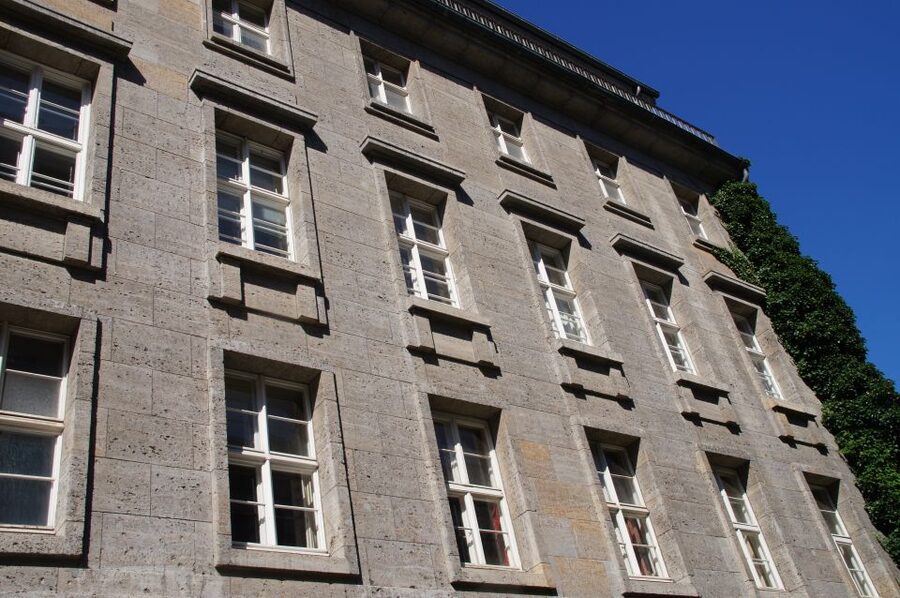
- Walk along Wilhelmstrasse: Former ministries, including the Luftwaffe Ministry and Propaganda Ministry, show how power was organized in Nazi Berlin.
- Pause at a major memorial: The Memorial to the Sinti and Roma Victims of National Socialism brings Nazi persecution beyond the most familiar story.
- End near Hitler’s bunker site: The former Führer Chancellery area provides a sober account of Hitler’s final days.
- Plan for transport separately: You need a Berlin public transport ticket for zones AB, and it is not included in the $29 price.
A walking lesson in how Berlin became Nazi Berlin
The tour starts at Alexanderplatz, beside the Fernsehturm, which is a useful meeting point in modern Berlin. Look for the green flag marked tours en español, next to the only entrance to the television tower and near Espresso House, between the tower and Alexanderplatz station.
From there, your guide sets the political stage. The story begins with the Treaty of Versailles and the Weimar Republic, rather than dropping you straight into Hitler’s dictatorship. That choice matters. It helps you understand the anger, economic strain, political fights, and public fears that created an opening for extremist politics.
You will hear how Hitler rose within that unstable setting, and how the Nazi movement turned political support into one-party rule. The strength of this approach is that it treats the Third Reich as a process, not a sudden event. You get the cause and effect before reaching the government offices and wartime sites.
I would pay close attention to the discussion of Hitler’s senior allies. Joseph Goebbels receives particular attention for his propaganda programs, which shows how the regime used communication, public spectacle, and repeated messages to shape opinion. This part is useful because it moves beyond Hitler as a single villain and explains the machinery that helped his government function.
The opening section can also make the tour feel more like a history class than a sightseeing walk. If you prefer a quick list of buildings, you may find the early explanation slow. If you want the places to make sense, the background is necessary.
A few more Berlin half-days to weigh up
- Berlin: Reichstag, Dome and Government District Guided Tour
★ 4.7 · 18,288 reviews - Berlin: 1-Hour City Tour by Boat with Guaranteed Seating
★ 4.3 · 16,993 reviews - Berlin: Boat Tour Along the River Spree
★ 4.4 · 11,252 reviews
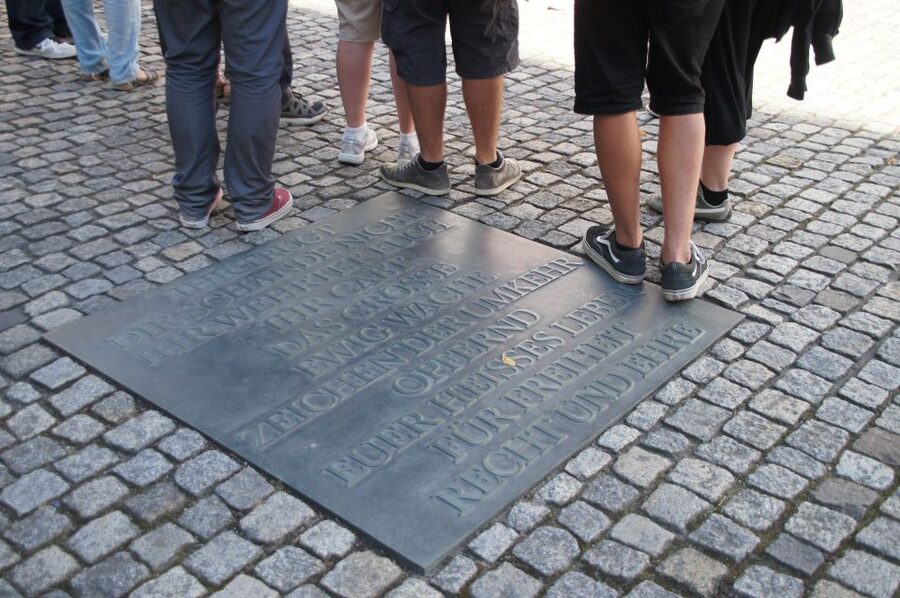
The Memorial to Sinti and Roma victims
One of the most important pauses is at the Memorial to the Sinti and Roma Victims of National Socialism. This stop widens the focus of the tour and reminds you that Nazi persecution targeted many groups, not only the Jewish population most commonly associated with Holocaust history.
The memorial is valuable because it connects the state’s racial ideology to specific communities and human loss. Your guide can place the memorial within the wider system of Nazi persecution, helping you understand how discrimination became exclusion, deportation, and murder.
I find this kind of stop especially important on a tour about power. Government ministries and military offices can make history feel abstract. A memorial brings the human cost back into view.
Allow time for a quiet pause here. The tour covers many subjects, and the memorial is one place where you may want to listen rather than rush toward the next address. The supplied information does not specify how long the group remains at each stop, so the rhythm may depend on the guide and the day.
Germania, Hitler’s imagined world capital
Your guide also discusses the Nazi plan for Germania, the proposed rebuilding of Berlin as a giant capital for a future world empire. This was not simply a building project. It reflected the regime’s fantasy of permanent power, racial hierarchy, and a capital designed to display domination.
The topic helps you read Berlin’s government district in a new way. Streets and ministries were not planned as neutral civic spaces in the Nazi imagination. They were part of a political stage, designed to make the state appear massive, orderly, and unstoppable.
This is one of the more distinctive parts of the walk. Many visitors know the broad outline of Hitler’s war, but fewer have considered how the regime wanted Berlin itself to communicate power. The discussion of Germania shows the link between architecture, propaganda, and political control.
Do not expect a complete architectural tour of every surviving Nazi-era structure. The experience is built around historical interpretation while walking between key locations. The value comes from the connection among places, not from entering a large number of buildings.
The Axis outside the Italian and Japanese embassies
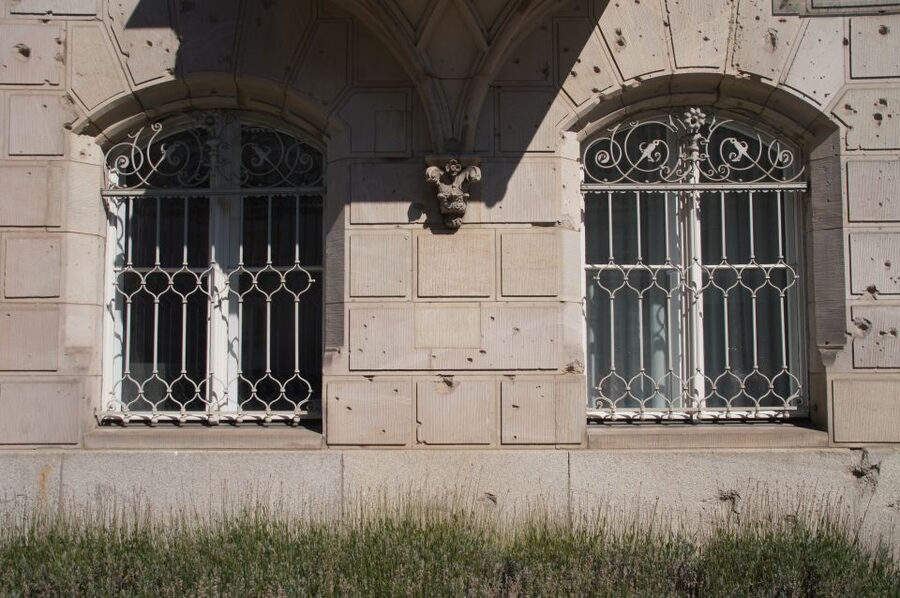
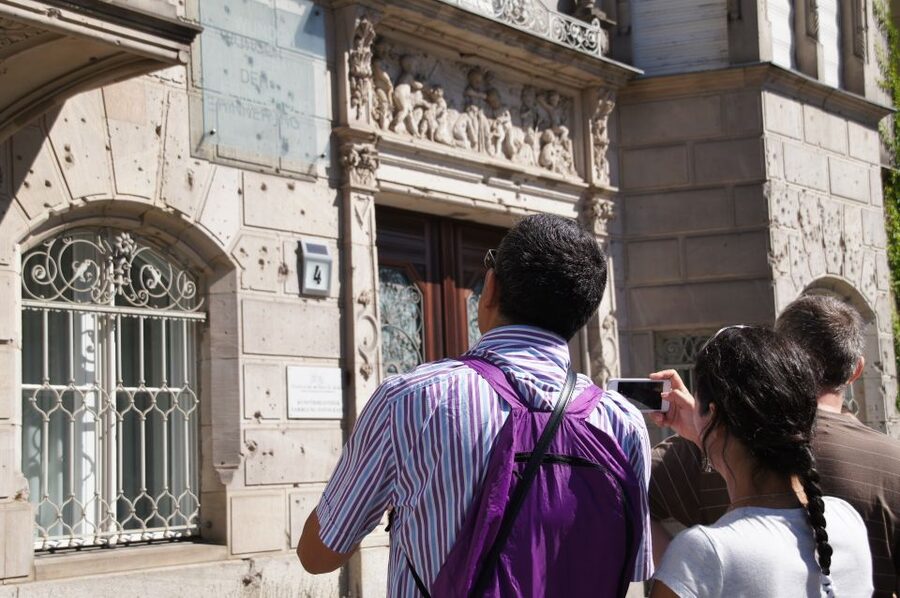
The route then turns to Germany’s relationship with Italy and Japan. In front of the Italian and Japanese embassies, you learn about the Berlin, Rome, and Tokyo Axis and the practical meaning of those alliances.
This is a good example of the tour’s use of location. Instead of discussing wartime diplomacy in a classroom, the guide places the subject in the district where those foreign missions represented Germany’s international partners. You can connect the political agreements to the actual city around you.
The stop also helps separate alliance language from reality. The Axis was not just a slogan on a map. It involved governments with shared ambitions, separate interests, and military cooperation. The tour’s stated focus is the historical relationship, so expect explanation rather than an embassy interior visit.
The embassy section may be less visually dramatic than the bunker site. Its value comes from context, especially if you want to understand the Third Reich as an international power rather than only a German domestic dictatorship.
Same city, a completely different sort of afternoon:
- Discover Berlin Half-Day Walking Tour
★ 5.0 · 9,624 reviews - Berlin: Hop-on Hop-off Bus Tour with Live Commentary
★ 4.3 · 8,579 reviews - Berlin: Government District around the Reichstag Guided Tour
★ 4.7 · 8,447 reviews - Berlin: Reichstag, Plenary Chamber, Cupola & Government Tour
★ 4.6 · 8,422 reviews
Wilhelmstrasse and the offices of war
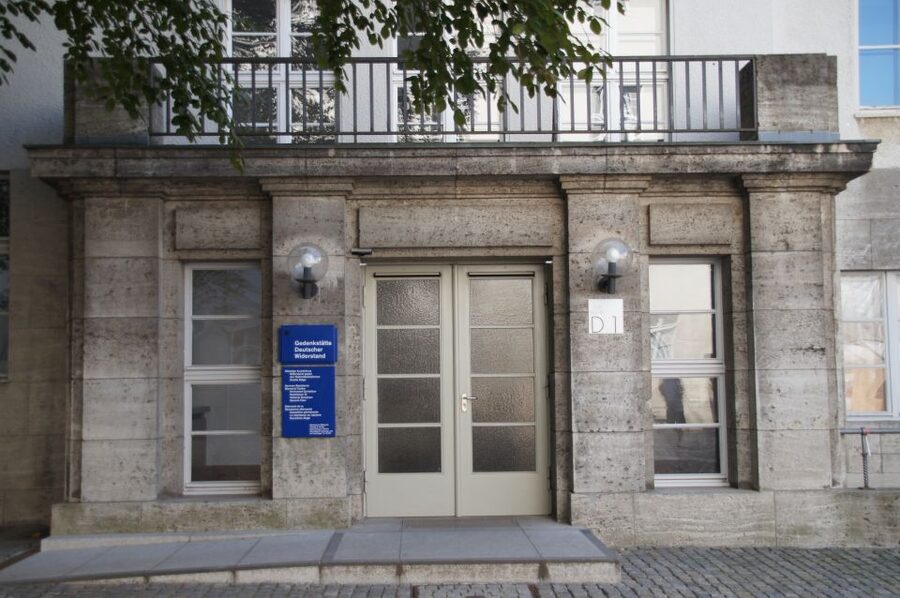
Walking along Wilhelmstrasse brings the story to the government machinery of Nazi Germany. The street was associated with major state offices, and the tour points out the Luftwaffe Ministerium, or Air Defense Ministry, along with the former Nazi Propaganda Ministry.
These buildings help explain how the regime organized military power and public messaging. The Luftwaffe Ministry connects the street to Germany’s air force and war planning. The Propaganda Ministry connects it to Goebbels and the effort to control news, culture, public mood, and the image of the state.
I like this section because it shows that dictatorship depends on offices, staff, paperwork, and communication. The most famous Nazi crimes did not happen in isolation from government. They were supported by institutions and officials working across the capital.
The walk along Wilhelmstrasse also makes the past easier to picture. You are not just hearing a list of ministries. You are moving through the former center of political authority, with the guide explaining what each department did and why its location mattered.
The practical catch is that some sites may be easier to understand through the guide’s account than through what remains visible. War damage, demolition, rebuilding, and changes to the city mean that the historic setting is not preserved as one complete Nazi-era district. Bring your attention, not just your camera.
Reaching Hitler’s final headquarters
The tour ends at the former Führer Chancellery site, where you hear about Hitler’s final days in the bunker. This is a strong endpoint because the walk has taken you from political beginnings to the collapse of the regime.
The bunker itself is not presented as a grand attraction. The important point is the exact location and the story attached to it. Hitler spent his final days there as Berlin was surrounded and the Nazi government disintegrated. The tour explains what happened at the end and identifies where the Chancellery once stood.
I appreciate the decision to finish here rather than treat the bunker as a sensational object. The subject can attract morbid curiosity, but a serious guide should keep the focus on historical facts and the consequences of the regime.
This final stop also gives the four-hour route a clear arc. You start with the political conditions that helped Hitler gain power, walk through the institutions that supported his government, and finish at the site where that government met its final days.
What the Spanish-language format adds
A tour in Spanish can make a major difference when the topic includes political terms, military structures, propaganda, and several layers of chronology. You can ask questions in your own language and follow the links among Versailles, the Weimar Republic, the Axis powers, Nazi ministries, and the bunker without constantly translating in your head.
The strongest guide feedback is specific. Sam is praised for exceptional attention and information. Martín is described as an excellent guide, while Celia is noted for patience, knowledge, and willingness to help. Those details suggest a guiding team that can make the material accessible, but your exact guide is not guaranteed.
The rating is 4.8 from 36 reviews, which is a strong result for a history walk. One four-star comment described the tour as detailed but found some pauses unnecessary. That is a useful warning: the experience aims for depth, and not every stop will hold your attention equally.
If you already know Nazi history well, you may want to tell the guide what interests you most. The route covers a wide span, so your best experience will come from asking focused questions about architecture, propaganda, military power, persecution, or Hitler’s final days.
Price, pace, and practical value
At $29 per person, this is reasonably priced for a four-hour guided walk in central Berlin. You are paying for a long, organized explanation of sites that can be difficult to interpret on your own. The value is strongest if you want historical links, not simply a checklist of addresses.
The price does not include an AB public transport ticket. You need to arrange that separately, and you should have a valid ticket ready before the tour begins. Since the meeting point is at Alexanderplatz and the tour is a walking experience, transport is mainly relevant for reaching the start or continuing afterward, but the organizer specifically requires the AB card for the tour.
Four hours is enough time to create a serious narrative, but it is also a commitment. Wear comfortable shoes and bring water. The information provided does not give a group size or exact distance, so you should not assume a small private walk or a short stroll.
The tour is listed as wheelchair accessible. If you need detailed information about surfaces, toilets, seating, or the exact route, ask before booking, since those details are not provided.
You can cancel up to 24 hours before the start for a full refund, and the reserve-now, pay-later option keeps your schedule flexible. Starting times vary, so check availability for the date you want.
Who should book this Berlin history walk?
I would recommend it to anyone who wants to understand how Nazi power operated inside Berlin. It suits first-time visitors who need a clear framework, history-minded visitors who want to connect locations with events, and Spanish speakers who prefer a guide who can explain difficult material in Spanish.
It is also a good choice if you have already seen major museums and want to place that information on the city streets. The route adds political geography: ministries on Wilhelmstrasse, embassy connections, memorial space, the Germania plan, and the bunker site.
You may want a different experience if you prefer indoor exhibits, extensive museum collections, or a shorter walk. This is not a casual city stroll. The subject is grim, the route is long, and the tour asks you to listen closely for much of the afternoon.
I would also avoid booking it as your only Berlin activity on a packed day. Four hours, plus time to reach Alexanderplatz and continue afterward, deserves room in your schedule.
My verdict on Berlín y el Nacionalsocialismo
Book this tour if you want a serious, location-based explanation of Nazi Berlin in Spanish. The route covers more than Hitler’s bunker. It explains the road from Versailles and the Weimar Republic to dictatorship, propaganda, military administration, international alliances, racial persecution, and the collapse of the regime.
The best reasons to choose it are the Spanish-language format, the broad historical arc, and the mix of famous and less familiar stops. The main cautions are the four-hour walking pace, the need to buy your own AB transport ticket, and the fact that some locations are remembered through explanation rather than preserved as complete historic sites.
At $29, the tour offers good value for a visitor who wants the city itself to serve as the classroom. Guides such as Sam, Martín, and Celia have earned strong marks for clarity, patience, and helpfulness. If those are the qualities you need in a guide, this is a sensible way to examine one of Berlin’s hardest subjects.
FAQ
What language is the tour conducted in?
The tour is conducted in Spanish by a live Spanish-speaking guide.
How long does the tour last?
The walking tour lasts four hours.
How much does the tour cost?
The listed price is $29 per person.
Where is the meeting point?
Meet beside the green flag marked tours en español, next to the only entrance to the Fernsehturm at Alexanderplatz. It is between the television tower and Alexanderplatz station, beside Espresso House.
Do I need a public transport ticket?
Yes. You need a Berlin public transport ticket for zones AB, and it is not included in the tour price.
Is public transportation included?
No. Public transport tickets for zones AB are not included.
Is the tour wheelchair accessible?
Yes, the activity is listed as wheelchair accessible.
Can I cancel for a refund?
Yes. You can cancel up to 24 hours in advance for a full refund.
Do I have to pay when I reserve?
No. The reserve-now, pay-later option lets you book without paying immediately.
What places does the tour cover?
The route covers Nazi-era sites and subjects including Hitler’s rise, the Weimar Republic, Goebbels’s propaganda programs, the Memorial to the Sinti and Roma Victims of National Socialism, the Germania plan, the Italian and Japanese embassies, Wilhelmstrasse, the Luftwaffe Ministry, the Nazi Propaganda Ministry, and the former Führer Chancellery and bunker site.
Just added around Berlin
- eSIM for Germany and 34 European Countries★ 4.5 · 16 reviews
- Your ticket to The Wall Museum Berlin★ 3.0 · 60 reviews
- Walking on the Wall: 3-Hour Tour in Berlin★ 4.5 · 34 reviews
- Rickshaw Tours Berlin – Groups of up to 16 people with several rickshaws★ 4.0 · 97 reviews
- Warnemuende Shore Excursion: Private Berlin Tour★ 4.5 · 27 reviews
- Love and War in Berlin: Self-Guided Story Puzzle Walk★ 5.0 · 7 reviews
- Warnemuende Shore Excursion: Berlin Private Sightseeing Tour from Rostock★ 5.0 · 4 reviews
- Cold War Berlin – Private Live Virtual Experience★ 5.0 · 4 reviews
Berlin Tours, compared.

Reichstag, Dome and Government District Guided Tour
Read our review →
1-Hour City Tour by Boat with Guaranteed Seating
Read our review →




Reichstag, Plenary Chamber, Cupola & Government Tour
Read our review →