

Review · BERLIN TOURS
Berlin: Hansaviertel “The City of Tomorrow” Guided Tour
Berlin’s Hansaviertel is a living exhibit of postwar modernism. Rebuilt for the 1957 International Building Exhibition, it was meant to show how a spacious, ordered city of tomorrow might look. This two-hour walk lets you read that idea through real buildings, from the Gropius-Haus to the Van den Broek House.
I like the tour’s focus on architecture with political context, rather than architecture as a string of pretty facades. I also like that guides such as Tobias and Mr. Schwabe bring humor, patience, and plenty of background to the walk. The main drawback is timing: winter tours may finish later in the day, and two hours on foot will suit you best if you are comfortable walking between several sites.
Key points
- The 1957 International Building Exhibition: Learn why Hansaviertel became West Berlin’s answer to East Berlin’s Karl-Marx-Allee.
- A remarkable collection of architects: See work linked to Walter Gropius, Arne Jacobsen, Alvar Aalto, Oscar Niemeyer, and other major modernist figures.
- More than private homes: The route includes the Berlin Pavilion, Hansaplatz U-Bahn station, a library, hospital, church, and Academy of Art.
- Tobias is a recurring guide favorite: His approach is described as friendly, funny, patient, and deeply informed.
- A quieter side of Berlin: This is a good choice if you want to move beyond the city’s usual wall, palace, and museum circuit.
- Practical value: At $23 per person, the tour gives you two hours of guided interpretation in English or German, with free cancellation up to 24 hours before the start.
Why Hansaviertel tells a different Berlin story
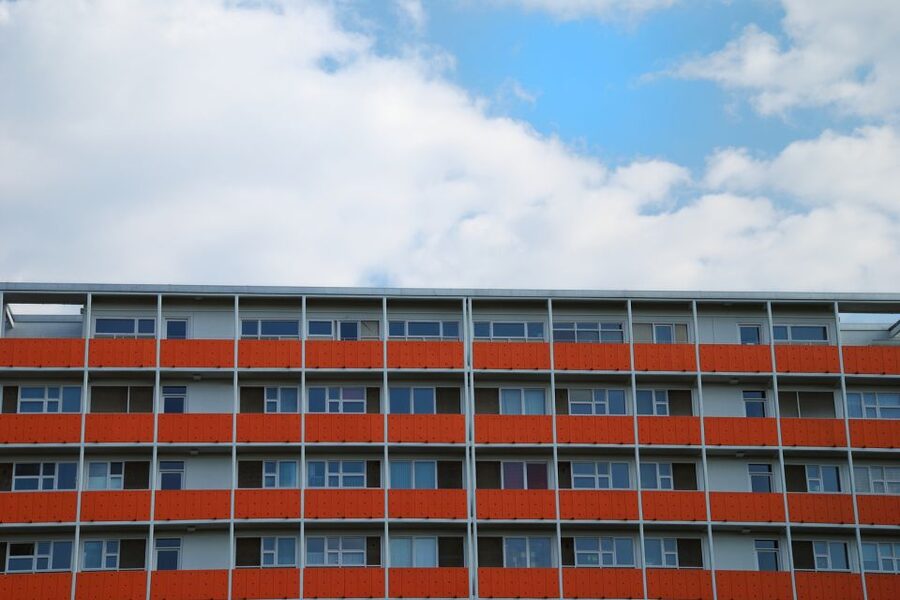
Hansaviertel sits near the Tiergarten, but it feels far removed from Berlin’s grand ceremonial avenues. Its importance comes from what happened after wartime destruction, when planners used the area for a bold experiment in urban design.
The International Building Exhibition of 1957, known as Interbau, brought together German and international architects. Their assignment was not simply to replace damaged housing. They were asked to present a new way of living, with apartment buildings, open space, public services, and transport arranged as part of one plan.
That idea matters because Berlin was divided, and architecture had become part of the political argument. West Berlin wanted to present a modern, open alternative to the monumental socialist housing built along Karl-Marx-Allee in the eastern part of the city. Hansaviertel was the western response: less formal, more spread out, and filled with different architectural voices.
I find this context more useful than a basic list of dates. It helps you understand why a housing district received such ambitious buildings and why the area still matters today. You are not just looking at mid-century apartment blocks. You are seeing a public statement about how a postwar city should function.
A few more Berlin half-days to weigh up
- Berlin: Reichstag, Dome and Government District Guided Tour
★ 4.7 · 18,288 reviews - Berlin: 1-Hour City Tour by Boat with Guaranteed Seating
★ 4.3 · 16,993 reviews - Berlin: Boat Tour Along the River Spree
★ 4.4 · 11,252 reviews
Starting with the Berlin Pavilion and Müller-Rehm/Siegmann House
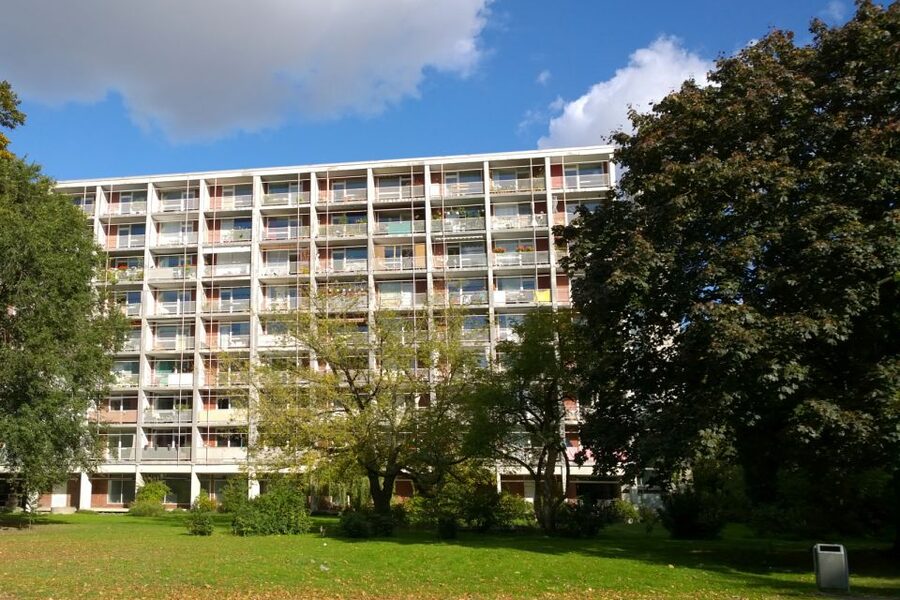
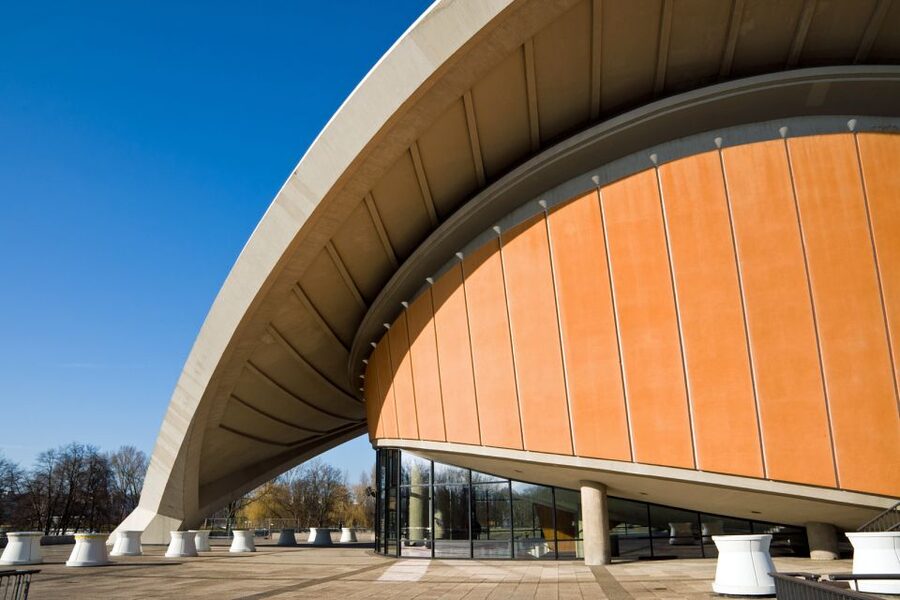
The route includes the Berlin Pavilion, which offers a clear starting point for the district’s design story. From here, your guide can explain the goals of Interbau and show how Hansaviertel was planned as a structured, spacious city.
That phrase is important. The district was designed around separation and openness rather than a tightly packed street wall. Buildings sit among trees and open areas, giving you room to view their shapes from a distance. The result can feel calm, but it also raises a useful question: does a planned modern city feel welcoming, or does it feel slightly detached from street life?
The Müller-Rehm/Siegmann House gives you an early chance to look closely at residential design. A guided explanation helps you notice details that are easy to miss on your own, such as the way a building meets its surroundings and how private housing was treated as part of a larger civic project.
Do not expect an old-town walking tour. There are no medieval lanes or decorated facades here. The appeal is in proportion, materials, placement, and the tension between individual buildings and the overall plan.
Gropius-Haus and the practical side of modernism
The Gropius-Haus is one of the route’s key architectural stops. Its name points to Walter Gropius, founder of the Bauhaus and one of the best-known figures in modern architecture. Here, the tour gives you a chance to connect Hansaviertel with the wider modernist movement.
Modernism is sometimes presented as a simple style: clean lines, plain surfaces, and little ornament. The better way to read these buildings is to ask what they were trying to do. How much light might an apartment receive? How does a block relate to shared open space? What does the design suggest about privacy, community, and daily life?
Your guide can put those questions into a Berlin setting. Hansaviertel was not built as an isolated art project. It was intended as a working district, and its buildings had to serve ordinary residents as well as impress architecture fans.
That makes this stop useful even if you are not an expert. You do not need to know Bauhaus theory before arriving. A good guide turns visual details into plain ideas, and Tobias is repeatedly praised for doing exactly that with a friendly and engaging manner.
Kaiser-Friedrich Memorial Church and the Swedish House
The Kaiser-Friedrich Memorial Church adds a different scale and mood to the route. Churches often carry older associations, but in Hansaviertel the building also belongs to the district’s postwar story. Its presence shows that the new neighborhood was not meant to consist only of housing.
The so-called Swedish House broadens the international theme. Hansaviertel brought together architects from Germany and other countries, so the district can feel like a small survey of postwar design approaches. You will see that there was no single look for the city of tomorrow.
This variety is one of the strongest reasons to take the tour with a guide. On your own, you might notice that one building is taller, another more sculptural, and another more restrained. The commentary explains why that mix was deliberate and how the buildings fit the exhibition’s wider goals.
I also appreciate the contrast between idealism and reality. Modern planning promised better light, air, space, and housing. Yet no urban plan solves every problem, and the open arrangement may not appeal to people who prefer lively, traditional streets. The tour gives you room to think about both sides rather than treating the district as a perfect success.
Same city, a completely different sort of afternoon:
- Discover Berlin Half-Day Walking Tour
★ 5.0 · 9,624 reviews - Berlin: Hop-on Hop-off Bus Tour with Live Commentary
★ 4.3 · 8,579 reviews - Berlin: Government District around the Reichstag Guided Tour
★ 4.7 · 8,447 reviews - Berlin: Reichstag, Plenary Chamber, Cupola & Government Tour
★ 4.6 · 8,422 reviews
Hansaplatz station, library, and hospital
The Hansaplatz U-Bahn station shows that transport was part of the plan from the beginning. A city cannot function through housing alone. Residents need ways to move, and a modern district needs public facilities close at hand.
The station is also a reminder that Hansaviertel was designed as a complete neighborhood. The Hansaviertel Library and Hansaviertel Hospital add civic functions to the route. These stops may sound less dramatic than a famous architect’s house, but they are vital to understanding the original plan.
I like this part of the walk because it shifts attention from iconic buildings to daily life. A library tells you something about public culture. A hospital tells you something about social infrastructure. A U-Bahn station tells you how the district was connected to the rest of Berlin.
You may find the hospital and library less visually striking than the major residential buildings. That is fair. Their value is mainly in the story they tell about planning, not in the sort of facade that dominates a photograph.
Van den Broek House and Schwippert House
The Van den Broek House and Schwippert House return the focus to residential architecture. These buildings help show how different architects approached the same broad assignment.
Rather than rushing past, you will want to compare them. Look at their massing, windows, balconies, and relationship to the ground. Notice how the designs balance repetition, since housing needs many similar units, with enough variation to avoid feeling completely anonymous.
This is where Tobias’s style appears especially useful. The guide has been praised for answering questions patiently and adding humor without turning the tour into a comedy routine. That combination matters on an architecture walk, where technical explanations can otherwise become dry.
The route is also a good reminder that private homes can have public importance. These houses were part of a major exhibition and a larger argument about modern urban life. You are looking at places intended for residents, but also at examples meant to influence architects and planners beyond Berlin.
The Academy of Art and the final ideas of Interbau
The Academy of Art is another major stop and one of the route’s strongest cultural markers. Its inclusion makes clear that Hansaviertel was not simply a housing estate. The district was planned with institutions and shared civic life in mind.
By this stage, the walk has introduced homes, religious architecture, transport, healthcare, books, and the arts. That broad range gives the tour a useful structure. You begin with the grand idea of a new city, then see how that idea was expressed in separate parts of daily life.
The Academy also helps bring the international character of the exhibition into focus. Hansaviertel was designed by a group of architects rather than one local office, and the result is intentionally varied. Some buildings may appeal to you more than others. That is part of the fun, since the district invites comparison instead of offering one uniform style.
If you have visited Berlin’s major museums and memorials already, this walk gives you a different way to think about the city’s turbulent past. It deals with war, division, reconstruction, and competing political visions through buildings rather than exhibits.
How the two-hour format works for you
Two hours is long enough to establish a clear story without turning the outing into a full-day architecture study. The pace is described as leisurely, which should allow time to stop at the main buildings and listen to explanations.
You should still wear comfortable shoes. The experience is a walking tour, and the route covers multiple sites across the district. Wheelchair access is available, though the exact meeting point and route details can vary with the option you book, so check those specifics before paying.
The tour is offered in English and German with a live guide. English-speaking visitors should look for an option in their language when booking. The listed meeting point may change depending on the selected option, and tours can also be arranged from specific points at certain times.
Winter timing deserves attention. One booking note suggests that a start and finish earlier in the day could be more convenient during the darker months. If you book between late autumn and winter, check the starting time and plan for fading daylight and colder conditions.
What $23 buys you in Berlin
At $23 per person, this is a sensible price for a two-hour guided walk, especially if architecture or postwar Berlin is high on your list. You are paying for a live explanation of a district that can be difficult to interpret through casual sightseeing.
The value depends on your interests. If you mainly want famous landmarks and dramatic photo stops, Hansaviertel may feel too quiet and specialized. If you like understanding why a neighborhood looks the way it does, the price is easier to justify.
The tour also offers free cancellation up to 24 hours before the start and a reserve-now, pay-later option. Those terms make it easier to fit into a changing Berlin schedule. They do not replace checking the meeting point, language, and start time for your particular booking.
A private or specially arranged starting point may be possible at certain times, but the exact details are not given. Ask before booking if that option matters to your plans.
The guide can make or break an architecture walk
The strongest recurring praise goes to the guides, especially Tobias. He is described as personable, funny, patient, and passionate, with the ability to explain both the buildings and the wider history of Berlin.
That matters here because Hansaviertel does not always announce its importance. You may pass a residence or public building without knowing why it was built, who designed it, or what argument it represented. The guide supplies that missing layer.
Mr. Schwabe is also singled out for high-level information and a kind, approachable manner. Guide assignments can vary, so you should not assume Tobias will lead every departure. Still, the consistent emphasis on clear explanations and a friendly tone suggests that the experience is built around interpretation rather than a memorized script.
Past participants have also used the tour as a starting point for further exploration, including a related tour about Karl-Marx-Allee. That pairing makes historical sense because the two districts represent contrasting postwar visions of Berlin.
Who should book this Hansaviertel walk
I would choose this tour if you:
- Like 1950s architecture, Bauhaus, or modern urban planning
- Want a quieter part of Berlin beyond the main tourist circuit
- Enjoy connecting buildings to politics and social history
- Prefer a live guide to reading plaques or walking with a phone map
- Have already seen the central landmarks and want a fresh angle
- Are curious about the contrast between West Berlin and East Berlin planning
You may want to skip it if you dislike architectural discussion or want a fast-moving sightseeing route. The district’s pleasures are subtle. There is no single grand monument that carries the entire outing.
Families with older children and students of design may find plenty to discuss. The walk is wheelchair accessible, but because the tour covers several outdoor locations, confirm the meeting point and route details when selecting your booking.
Should you book the City of Tomorrow tour?
Book it if you want Berlin explained through its postwar buildings rather than only through war memorials and Cold War checkpoints. The combination of the 1957 exhibition, international architecture, public services, and Berlin’s division gives the walk real substance.
The best reason to go is the guide-led interpretation. Tobias and Mr. Schwabe are noted for making complex material friendly and understandable, and that is exactly what this district needs. At $23, two hours is a fair exchange for a focused look at an area many Berlin visitors miss.
Skip it if your schedule is tight and your main goal is the city’s headline sights. For everyone else, especially architecture fans and repeat visitors, Hansaviertel offers a thoughtful change of pace. Check the language, meeting point, and winter start time, then bring comfortable shoes and a willingness to look closely.
FAQ
How long does the Hansaviertel tour last?
The walking tour lasts two hours.
How much does the tour cost?
The listed price is $23 per person.
Which languages are available?
The tour is available with a live guide in English or German.
Is the tour wheelchair accessible?
Yes, the activity is listed as wheelchair accessible.
What buildings and sites are included?
The route includes the Berlin Pavilion, Müller-Rehm/Siegmann House, Gropius-Haus, Kaiser-Friedrich Memorial Church, Swedish House, Hansaplatz U-Bahn station, Hansaviertel Library, Hansaviertel Hospital, Van den Broek House, Schwippert House, and Academy of Art.
What is the focus of the tour?
The tour focuses on Hansaviertel’s architecture, its postwar history, and the principles of modern urban development used for the 1957 International Building Exhibition.
Who may guide the tour?
Guides can vary by departure. Tobias and Mr. Schwabe are among the guides associated with the experience.
Can I cancel the booking?
You can cancel up to 24 hours in advance for a full refund. A reserve-now, pay-later option is also available.
Just added around Berlin
- eSIM for Germany and 34 European Countries★ 4.5 · 16 reviews
- Your ticket to The Wall Museum Berlin★ 3.0 · 60 reviews
- Walking on the Wall: 3-Hour Tour in Berlin★ 4.5 · 34 reviews
- Rickshaw Tours Berlin – Groups of up to 16 people with several rickshaws★ 4.0 · 97 reviews
- Warnemuende Shore Excursion: Private Berlin Tour★ 4.5 · 27 reviews
- Love and War in Berlin: Self-Guided Story Puzzle Walk★ 5.0 · 7 reviews
- Warnemuende Shore Excursion: Berlin Private Sightseeing Tour from Rostock★ 5.0 · 4 reviews
- Cold War Berlin – Private Live Virtual Experience★ 5.0 · 4 reviews
Berlin Tours, compared.

Reichstag, Dome and Government District Guided Tour
Read our review →
1-Hour City Tour by Boat with Guaranteed Seating
Read our review →




Reichstag, Plenary Chamber, Cupola & Government Tour
Read our review →
Browse the lists this tour appears in