
Review · BERLIN TOURS
Berlin: Guided Bike Tour to Explore the Highlights
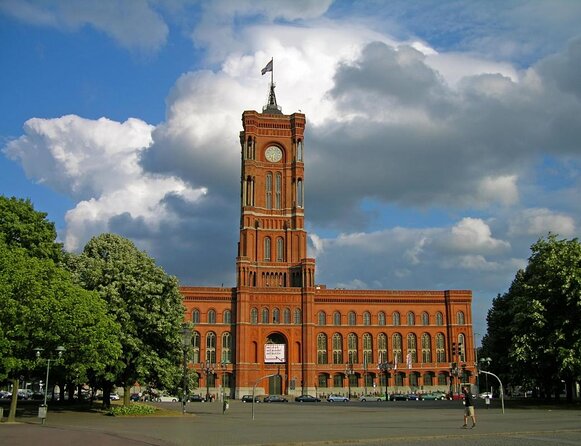
Berlin makes sense from a bicycle. Its major sights are spread across a broad central district, yet many sit along calm streets, park paths, and open public spaces. In three hours, this tour links Brandenburg Gate, Museum Island, the Reichstag, and Checkpoint Charlie with enough time to hear the story behind each place.
I especially like the relaxed pace and the chance to get your bearings quickly. I also like that each guide designs a slightly different route, so the experience can feel personal rather than rehearsed. The main consideration is the history-heavy focus. If you want a strong introduction to Berlin’s twentieth-century past, this is a fine fit. If you mainly want art, food, or neighborhood life, you may find the route less varied.
Key points to know before you book
- Three hours covers a lot: You see central Berlin’s best-known sights without spending the day on foot.
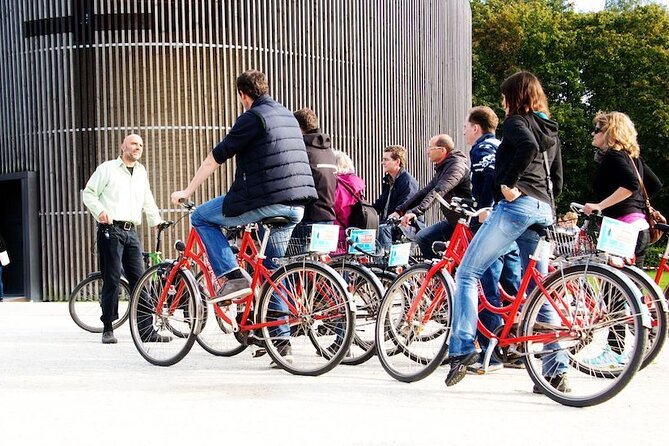
- The bikes are included: A sturdy bicycle and helmet are provided, with a comfortable pace rather than a hard workout.
- The route carries serious history: Expect substantial discussion of Nazism, the Holocaust, the Cold War, Berlin’s division, and reunification.
- English and German routes differ: Checkpoint Charlie is included in the English version, while Prenzlauer Berg is included in the German version.
- Small groups help: The group size ranges from 4 to 15 people, making questions and conversation easier than on a large coach tour.
- You return to the starting point: The tour begins and ends at Free Berlin Bike Tours & Rental on Poststraße 11.
Why Berlin works so well by bicycle
Berlin is not a compact old town where every sight sits around one square. The city’s story is spread across several districts and open areas. A bike lets you move between them quickly, while still giving you a street-level view of the city.
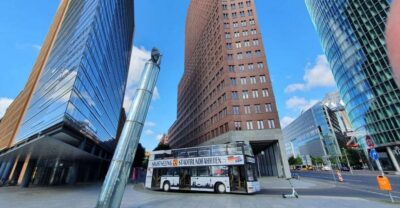
That matters at places such as Potsdamer Platz. You need to understand how the area changed over time, but you also need to see its scale. On a bike, you can pass from old civic buildings to modern towers and then on toward the former Berlin Wall zone without losing half an hour to public transport.
The route is described as half-day, but the ride itself lasts about three hours. That is a useful length for a first morning or afternoon in Berlin. You get an overview, then you can return later to the museums or memorials that interest you most.
The riding is not presented as strenuous. Several guides, including Jake, Simone, Luka, and Marius, are praised for keeping a comfortable pace while still covering plenty of ground. The bicycles are light and sturdy, and the tour includes helmets. You should still be comfortable riding in an urban setting and be prepared for changing weather.
More bike days around Berlin:
- Berlin: Sights and Highlights Bike Tour with a Local Guide
★ 4.8 · 2,698 reviews - Berlin Highlights 3-Hour Bike Tour
★ 5.0 · 948 reviews - Berlin City Bike Tour with Beer Garden Stop
★ 5.0 · 917 reviews
Nikolaiviertel and Berlin’s early beginnings
The meeting point is at Free Berlin Bike Tours & Rental, Poststraße 11, in central Berlin. The first stop is Nikolaiviertel, a small area with an old-town feel near the Spree.
This is a useful opening because Berlin can seem modern, scattered, and hard to place at first. Nikolaiviertel gives you a sense of the city’s older roots before the tour moves into its royal, political, and twentieth-century chapters.
The area’s present appearance was created in the late 1980s, so do not expect an untouched medieval quarter. That is part of the point. Berlin has repeatedly rebuilt, rearranged, and reinterpreted itself. A short stop here helps you notice that the city’s past is often presented through reconstruction rather than preserved in a continuous old fabric.
You also pass near the Berlin TV Tower, one of the city’s clearest visual markers. The tower opened in 1969 and was then the second tallest in the world. From street level, it helps you orient yourself as the route moves around central Berlin.
Bebelplatz and the warning beneath the square
Bebelplatz is one of the most powerful stops on the ride. The square is surrounded by grand buildings, including Berlin’s oldest university, the former opera house, St. Hedwig’s Cathedral, and other historic structures. It has the look of a classic ceremonial center.
Beneath the square is the Book Burning Memorial, a stark reminder of the Nazi book burnings. A glass panel in the pavement gives a view into an underground room lined with empty bookshelves. The emptiness does the work. You do not need a large monument to understand what was lost.
This is one of the places where the tour’s serious tone becomes clear. Guides spend time explaining the political setting and the public nature of the book burnings. The stop is short, around ten minutes, but the subject may lead to longer discussion depending on the guide and the group.
Near Bebelplatz, you also hear about Humboldt University and the minds associated with it, including Albert Einstein and Karl Marx. The university remains part of Berlin’s working city, not just a decorative historic building. Some guides have studied there, which can add a personal note to the explanation.
Checkpoint Charlie and the Cold War city
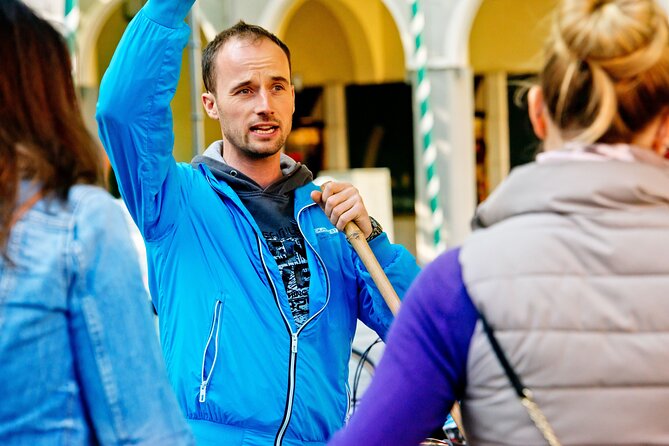
Checkpoint Charlie is included in the English version of the tour. It was the best-known border crossing between East and West Berlin during the Cold War, and its name has become shorthand for the divided city.
The stop itself can feel busy and commercial, with modern buildings and souvenir activity around the famous guardhouse replica. That contrast is worth noting. The physical border has disappeared, but the site remains one of Berlin’s most recognizable symbols.
A good guide helps you look past the photo opportunity. The important subject is not only the booth or the sign. It is the system of walls, controls, restricted movement, escape attempts, and competing political powers that once shaped daily life here.
If you are booking in German, check the route carefully. Prenzlauer Berg is listed for the German version, while Checkpoint Charlie is specifically included in the English version. The two options do not cover exactly the same stops.
A few more Berlin half-days to weigh up
- Berlin: Reichstag, Dome and Government District Guided Tour
★ 4.7 · 18,288 reviews - Berlin: 1-Hour City Tour by Boat with Guaranteed Seating
★ 4.3 · 16,993 reviews - Berlin: Boat Tour Along the River Spree
★ 4.4 · 11,252 reviews - Discover Berlin Half-Day Walking Tour
★ 5.0 · 9,624 reviews
Potsdamer Platz, from nightlife to no man’s land
Potsdamer Platz offers one of Berlin’s most striking before-and-after stories. Before the Second World War, it was associated with traffic, entertainment, and the nightlife of the 1920s. During Berlin’s division, it became part of the empty zone between East and West.
After reunification, the area turned into one of Europe’s largest construction sites. The modern result is a busy commercial quarter of offices, shops, public spaces, and high-rise buildings.
You may not find the architecture as emotionally direct as the memorials or the Brandenburg Gate, but the stop is valuable because it shows Berlin’s attempt to rebuild a center after decades of separation. The guide can connect the urban design you see now with the political geography that came before it.
This is also where traveling by bike pays off. You can grasp the distance between districts and see the changing character of the city in motion. A walking tour could cover the same places, but the gaps between them would take more time.
The Holocaust Memorial and the weight of memory
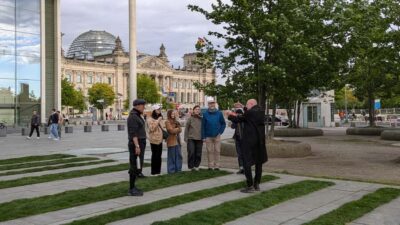
The Memorial to the Murdered Jews of Europe is made up of thousands of concrete slabs arranged across a large open field near Brandenburg Gate. The ground changes under your feet as you move between them, and the blocks vary in height.
The tour gives you a chance to hear how Germany presents this difficult subject in the center of its capital. The memorial does not try to soften Nazi crimes or hide them behind a distant museum display. It places remembrance directly in the daily life of the city.
The stop requires respect and attention. It is not simply another place to photograph. Your guide may explain the memorial’s purpose, the lack of individual names on the surface, and the way its design creates uncertainty and disorientation. The official stop lasts about ten minutes, so you may want to return later if you need more quiet time.
Some riders have found the historical commentary especially thorough, while one critique noted that the tour could feel too focused on the Second World War. That is a fair warning. The subject is central to understanding Berlin, but the balance between Nazi history, Cold War history, art, and everyday city life depends partly on your guide.
Tiergarten and Brandenburg Gate
After the memorial, the route moves toward the Tiergarten, Berlin’s large central park. Its name means Garden of the Animals, a reference to its earlier use as a hunting ground rather than its present role as a city park.
The park offers a change of pace. After the dense political history of Bebelplatz, Checkpoint Charlie, and the memorial, you get open space and a chance to ride without stopping at every building. This part can make the three-hour route feel less like a string of lectures and more like a genuine city ride.
Then comes Brandenburg Gate, Berlin’s signature monument. It has served as a royal entrance, a Napoleonic trophy, a Nazi-era backdrop, a Cold War symbol, and a celebration point after reunification.
The gate is one of the busiest photo stops on the route, so do not expect solitude. Its importance is not only architectural. It represents the way Berlin’s political meaning has changed while the structure remained in place.
This is a good moment to ask your guide for practical advice on what to revisit later. Guides such as Jake and Reiko are praised for offering suggestions beyond the formal stops, which can help you shape the rest of your stay.
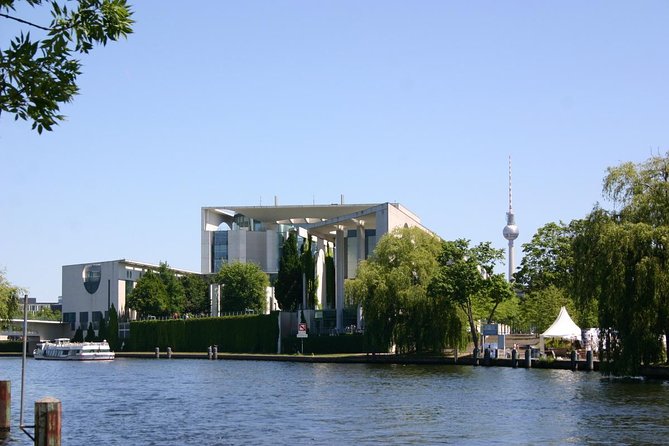
The Reichstag and Berlin’s transparent government quarter
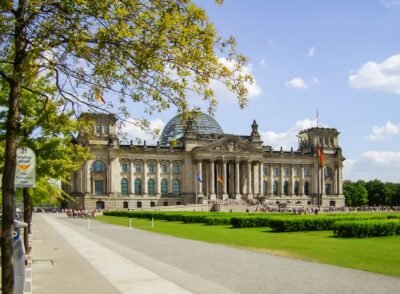
The Reichstag is Germany’s parliament and one of the most recognizable buildings in the government quarter. Its glass dome is designed to suggest openness and public access, and it sits in sharp contrast to the building’s complicated political past.
The bike tour usually gives you the outside view and the surrounding setting rather than a full visit inside. If you want to enter the dome, you will need to treat that as a separate plan. The tour is useful for explaining why this building matters, but it does not replace a dedicated visit.
The nearby government quarter shows how much of Berlin’s political center was reshaped after reunification. Modern offices and public buildings sit beside historic structures, making this another stop where the city’s past and present are visible at the same time.
Guides often add lighter stories here, including jokes about the building sometimes being compared with the United States Capitol. The humor can help after the heavier memorial stops, though the tone varies. One critical comment found the use of strong language unnecessary, so families may want to tell the guide if they prefer a more careful style.
Museum Island and the Spree Athens
The ride ends its major sightseeing sequence at Museum Island, a group of major museum buildings along the Spree. The architecture is the attraction from the bike, especially the formal facades and the way the complex shapes the riverfront.
You will not have time to explore the museums during this tour. That limitation is important. The bike ride gives you orientation and a useful sense of the area, but you need a separate ticket and several hours if you want to see the collections properly.
Museum Island is often called Berlin’s Spree Athens because of its classical buildings and cultural role. It is an excellent final stop because it points you toward a different side of the city. After focusing on war, dictatorship, division, and reunification, you finish with Berlin as a major center of art and scholarship.
The tour returns to the original meeting point. That makes it easy to continue your day from a known location, though you should leave time afterward if you plan to enter one of the museums.
The guide can shape the entire ride
The company uses a Free-Berlin concept in which guides design their own routes. That gives the ride a more personal feel, but it also means the exact balance of detail and humor can vary.
Jake is repeatedly praised for being funny, approachable, and able to adjust the route to group interests. Simone is described as passionate about Berlin and German history, while Marius is praised for giving extra effort and answering questions. Luka is singled out for making the three-hour route especially useful to a first-time visitor.
Rufus is described as bringing a political science background to the tour, with serious discussion of Holocaust and Berlin Wall history. Other guides have been praised for perfect English and for keeping the timing on track.
There is one practical caveat. One English-language ride was difficult to follow because the guide’s English was not strong enough for the subject matter. Another rider felt the guide was still gaining experience and was distracted by smoking. These appear to be individual guide issues, not a stated feature of the tour, but they explain why the guide can make a major difference.
Price, group size, and who gets the most value
At $42.34 per person, the tour is reasonably priced for a three-hour guided activity that includes the bicycle, helmet, and professional guide. You are not paying for museum admission, food, or drinks, so compare it with the cost of renting a bike and finding your own way between the sights.
The strongest value comes from the amount of orientation you get. In a short visit, you can identify the places worth revisiting and learn how they connect. The tour also saves energy compared with walking across central Berlin, while giving you more contact with the streets than a bus ride.
Groups range from 4 to 15 people. A group of 15 is not intimate, but it is still manageable for a city ride. Children are welcome, and infant seats can be provided on request. Children must be accompanied by an adult. Since the commentary can be serious and detailed, the format may suit older children and teenagers better than very young children.
The tour operates in all weather. Dress for rain, wind, or sun, and wear clothes suitable for cycling. Free cancellation is available up to 24 hours before the start time. If the minimum group size is not met and the operator cancels, you are offered another option or a full refund.
Who should book this Berlin bike tour?
I would choose this tour if you are visiting Berlin for the first time, have only a few days, and want a clear introduction before exploring on your own. It is also a good match if you enjoy history, ask questions, and prefer a relaxed ride to a strenuous cycling outing.
It works particularly well at the beginning of a stay. After three hours, you will know where Museum Island, Brandenburg Gate, the Reichstag, Checkpoint Charlie, Potsdamer Platz, and the Holocaust Memorial sit in relation to one another.
I would hesitate if your main goal is Berlin’s art scene, food culture, or residential neighborhoods. The English route gives more attention to Cold War and twentieth-century political history than to gallery life. Also check the language option carefully, since the English and German tours include different stops.
My call: book it for orientation, context, and efficient sightseeing, especially if Jake, Simone, Luka, Marius, or another strong guide is leading the ride. Think of it as a well-paced first chapter, not a complete study of Berlin. Use the route to mark the places you want to revisit slowly.
FAQ
How long is the Berlin guided bike tour?
The tour lasts approximately three hours.
What sights are included?
The route includes Nikolaiviertel, Bebelplatz and its Book Burning Memorial, Checkpoint Charlie in the English version, Potsdamer Platz, the Holocaust Memorial, Tiergarten, Brandenburg Gate, the Reichstag, and Museum Island.
Is Prenzlauer Berg included in the English tour?
No. Prenzlauer Berg is listed as a stop for the German version. Checkpoint Charlie is specifically included in the English version.
Are bicycles and helmets provided?
Yes. The bicycle and helmet are included in the price.
What languages are available?
The experience operates in English, German, and French, depending on the option selected.
Can children join the tour?
Yes. Children are welcome, but they must be accompanied by an adult. Infant seats can be provided on request.
Where does the tour start and finish?
It starts at Free Berlin Bike Tours & Rental, Poststraße 11, 10178 Berlin, Germany, and ends back at the same meeting point.
Just added around Berlin
- eSIM for Germany and 34 European Countries★ 4.5 · 16 reviews
- Your ticket to The Wall Museum Berlin★ 3.0 · 60 reviews
- Walking on the Wall: 3-Hour Tour in Berlin★ 4.5 · 34 reviews
- Rickshaw Tours Berlin – Groups of up to 16 people with several rickshaws★ 4.0 · 97 reviews
- Warnemuende Shore Excursion: Private Berlin Tour★ 4.5 · 27 reviews
- Love and War in Berlin: Self-Guided Story Puzzle Walk★ 5.0 · 7 reviews
- Warnemuende Shore Excursion: Berlin Private Sightseeing Tour from Rostock★ 5.0 · 4 reviews
- Cold War Berlin – Private Live Virtual Experience★ 5.0 · 4 reviews
Berlin Tours, compared.
Reichstag, Dome and Government District Guided Tour
Read our review →
1-Hour City Tour by Boat with Guaranteed Seating
Read our review →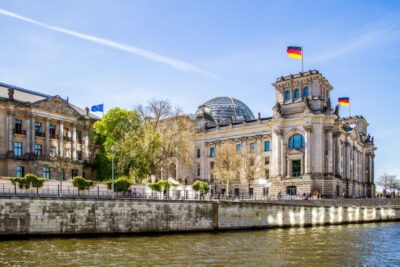

Reichstag, Plenary Chamber, Cupola & Government Tour
Read our review →
Browse the lists this tour appears in