
Review · BERLIN TOURS
Berlin City Tour by Private Car
Berlin’s story comes into sharp focus on this private-car tour, which links the modern skyline at Potsdamer Platz with the Cold War divide at Checkpoint Charlie and the solemn Holocaust Memorial. You get a fast, well-planned look at central Berlin without wrestling with public transport or long walks between districts.
I like the personal format and the help with mobility. I also like that guide Shadi is praised as a careful driver who explains the city rather than simply pointing at monuments. The main drawback is time: seven stops in about four hours means you will get an overview, not a full visit to each site.
Key points
- Private car and pickup: Your group travels together, with pickup offered and no strangers sharing the vehicle.
- Seven major Berlin sights: The route covers modern Berlin, Prussian Berlin, Nazi-era remembrance, East Berlin, and Cold War landmarks.
- English-language guiding: The tour is offered in English, with Shadi named as a guide associated with especially attentive service.
- Useful for limited mobility: A car reduces the amount of walking between widely separated sights.
- Mostly an orientation tour: The stops are designed for context, photos, and short walks rather than lengthy museum visits.
- Flexible cancellation: You can cancel up to 24 hours before the start for a full refund, subject to the stated weather and minimum-group conditions.
Berlin in four hours: a useful first look
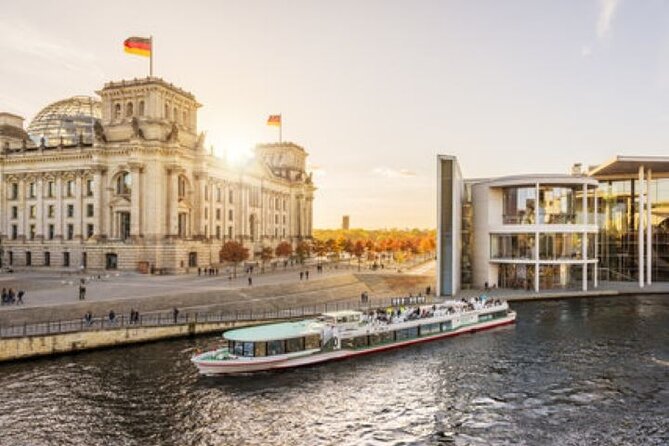
This tour works best as a concentrated introduction. You move through the city by car, stopping at places that explain different chapters of Berlin’s past. The sequence feels broad: modern rebuilding at Potsdamer Platz, Prussian power at Brandenburg Gate, Nazi persecution at the Holocaust Memorial, East Berlin at Alexanderplatz, and Cold War division at the Berlin Wall and Checkpoint Charlie.
The private setup matters. You are not waiting for a large group to gather, and your guide can focus on your questions and pace. The description does not promise a luxury vehicle or a particular car model, so book it for the personal guiding and efficient route, not for a special automobile.
The planned visits total about 235 minutes, while the tour is advertised as approximately four hours. That leaves little room for long interior visits. Think of this as a moving history lesson with stops, not a day of museum touring.
A few more Berlin half-days to weigh up
- 5hours: Guide, Chauffeur & Photographer in Berlin private Tour
★ 5.0 · 66 reviews - Potsdam City Tour by Private Car
★ 5.0 · 10 reviews - Hamburg: 3-Hour Limousine Tour with Driver-Guide
★ 4.5 · 56 reviews
Potsdamer Platz and Berlin’s new center
Potsdamer Platz is a smart place to begin because it shows how quickly Berlin can change. Once a border strip divided by the Wall, it later became one of Europe’s most famous building zones. Today, modern towers and busy public spaces fill what was once a scar through the city.
Your 40 minutes here should give you time to get oriented, look at the architecture, and hear how the area changed after reunification. The location is also linked with major cultural events, including the Berlinale film festival and the huge concert known as The Wall.
I like this opening because it prevents you from seeing Berlin as only an old European capital. The city’s modern face is part of the story. The possible weakness is that the stop can feel abstract if you want a preserved Cold War site right away. Your guide’s explanation is important here, since much of the history is about what used to occupy this ground.
Brandenburg Gate and the old Prussian city
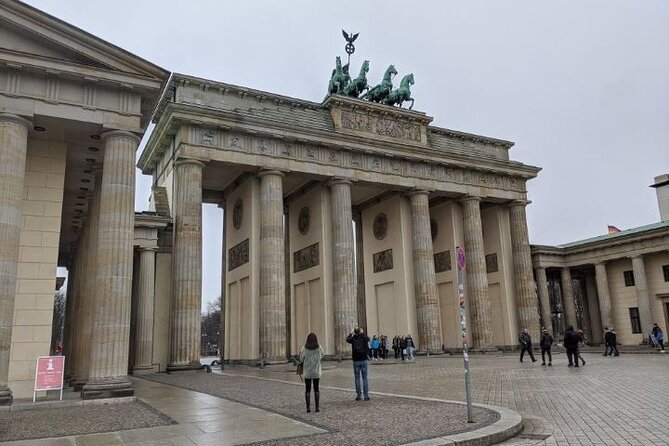
From Potsdamer Platz, the tour moves into Berlin’s grandest historical setting. Brandenburg Gate was built between 1788 and 1791 for Prussian King Friedrich Wilhelm II, based on the monumental gateways of the Athenian Acropolis. Its Doric columns give it the formal look of a classical temple entrance.
Allow about 40 minutes. That is enough to walk around, take in the proportions, and hear why the gate became such a powerful political symbol. Its meaning has changed repeatedly, from a royal entrance to a backdrop for division and, later, a symbol of German unity.
This is one of those places where a guide adds real value. A quick photograph does not explain why the gate mattered during the Cold War or why it carries such emotional weight today. You may find the area crowded, and the monument itself is open space rather than an indoor attraction, so the experience depends on your guide’s storytelling and the time of day.
The Holocaust Memorial calls for quiet attention
The Memorial to the Murdered Jews of Europe is close to Brandenburg Gate, but its mood is entirely different. The field of concrete stelae creates a stark, disorienting space in the middle of central Berlin. The visit is intended for remembrance and reflection, not casual sightseeing.
The scheduled 25 minutes is short but suitable for a respectful stop among the stelae. You can walk through part of the memorial and consider the scale and layout before continuing. The tour description does not specify an interior visit to the underground Information Centre, so do not assume that the four-hour route includes it.
I appreciate that the itinerary gives this place its own stop rather than treating it as a quick photo opportunity. You should be prepared for a serious pause here. This is not a site to rush through while chatting loudly or posing for playful pictures.
Same city, a completely different sort of afternoon:
- Berlin: Reichstag, Dome and Government District Guided Tour
★ 4.7 · 18,288 reviews - Berlin: 1-Hour City Tour by Boat with Guaranteed Seating
★ 4.3 · 16,993 reviews - Berlin: Boat Tour Along the River Spree
★ 4.4 · 11,252 reviews - Discover Berlin Half-Day Walking Tour
★ 5.0 · 9,624 reviews
Alexanderplatz shows East Berlin in motion
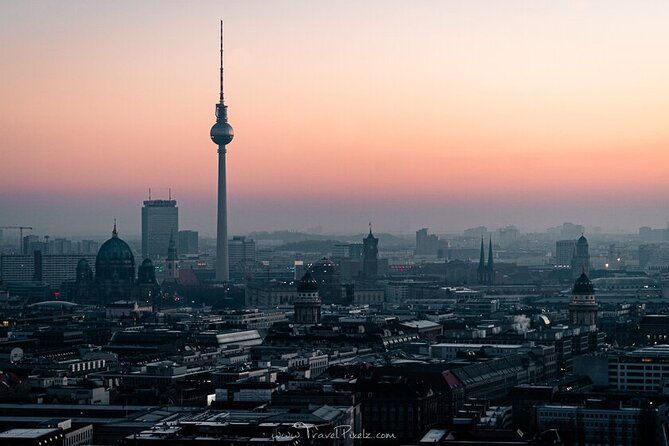
Alexanderplatz gives you a different view of the capital. The square and surrounding district connect historic Berlin with the broad, urban character of the former East Berlin. The route also points toward several nearby sights, including Nikolaiviertel, Berlin City Hall, the Fountain of Friendship between Peoples, the Pleasure Garden, the TV Tower, and the Berlin World Clock.
You have about 30 minutes here, so expect highlights rather than a detailed walk through every one of these places. Your guide can help you understand how the area fits together, but the stop will not allow much time at each landmark.
The strength of Alexanderplatz is variety. In one area you can see medieval-looking streets at Nikolaiviertel, civic buildings, socialist-era symbols, and the high TV Tower. The drawback is that the district can feel visually scattered if you do not have a guide to connect the pieces. This is exactly the kind of stop where a short explanation makes a large urban area easier to read.
The Berlin Wall Memorial adds the human story
The Berlin Wall Memorial brings the Cold War into sharper focus. The Wall divided Berlin into East and West and restricted East Berliners from reaching the western sectors. It was not just a concrete barrier. It separated families, neighborhoods, and political systems.
The planned visit lasts about 30 minutes. That is enough for a concise explanation and a look at the surviving memorial setting, but it is not enough for every display or a slow study of the whole site. Your guide can explain the difference between the physical wall, the border system, and the wider political conflict.
I like the placement of this stop after Alexanderplatz. You first see the former East Berlin as a living city, then confront the barrier that once controlled movement through it. The story becomes less about abstract superpower rivalry and more about ordinary people who could not cross their own city freely.
If the Berlin Wall is your main reason for visiting Berlin, you may want to return on your own for a longer visit. This tour gives you context and a practical first look, but the short timetable limits how much you can absorb.
Checkpoint Charlie and the 1961 tank standoff
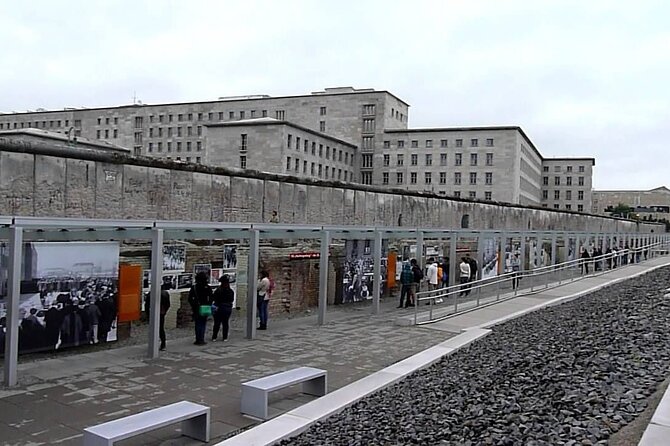
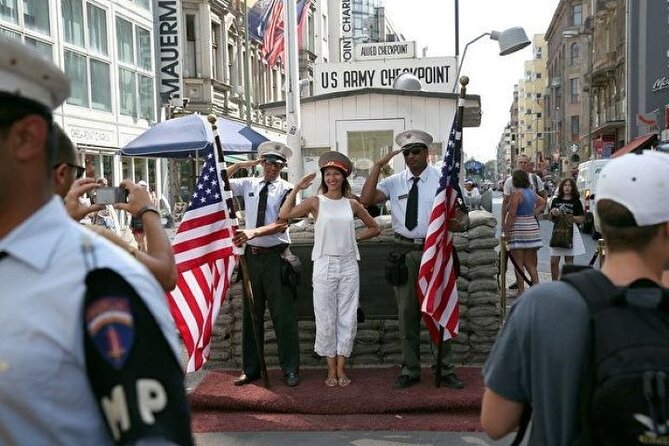
Checkpoint Charlie is perhaps the best-known Cold War border crossing in Berlin. It connected the American sector with East Berlin and became a symbol of the city’s division. In 1961, American and Soviet tanks faced one another here during the Berlin Crisis, bringing the Cold War close to open conflict.
The stop lasts around 30 minutes. That gives you time to hear the basic story, see the famous checkpoint setting, and take photographs. The site is central and easy to recognize, but the modern surroundings can make it feel more commercial than solemn.
This is where a guide helps separate history from stage set. The checkpoint booth and surrounding displays are memorable, but the location has been heavily shaped by tourism. Use the stop to understand what happened here, then judge it as a historical marker rather than expecting a perfectly preserved border crossing.
The Jewish Museum connects objects with lives
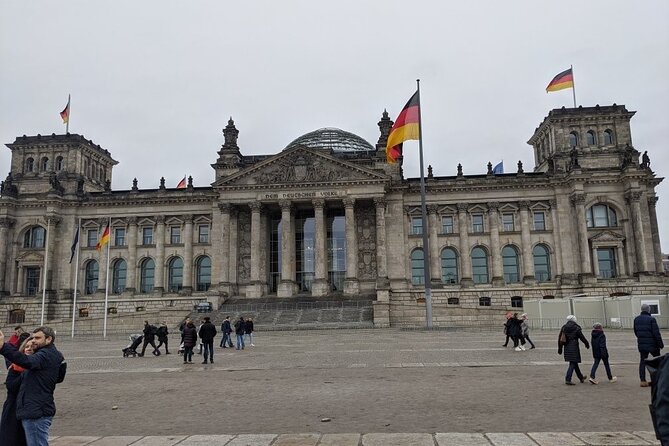
The final listed stop is the Jewish Museum Berlin, devoted to Jewish life and Jewish history in Germany through exhibitions, art, and personal stories. The tour description highlights special exhibitions dealing with historical subjects, current issues, and Jewish creators.
You have about 40 minutes. That can work for a focused introduction, but it is not enough to see everything in a large museum. The information provided does not specify which exhibition will be open or whether admission is included, so confirm the exact museum arrangements before booking if this stop is especially important to you.
The museum adds needed depth to the day. The Holocaust Memorial is a place of public remembrance, while the Jewish Museum can offer a more personal view of communities, culture, and individual lives. Together, they prevent Berlin’s Jewish history from being reduced to one period of persecution.
What the private format changes
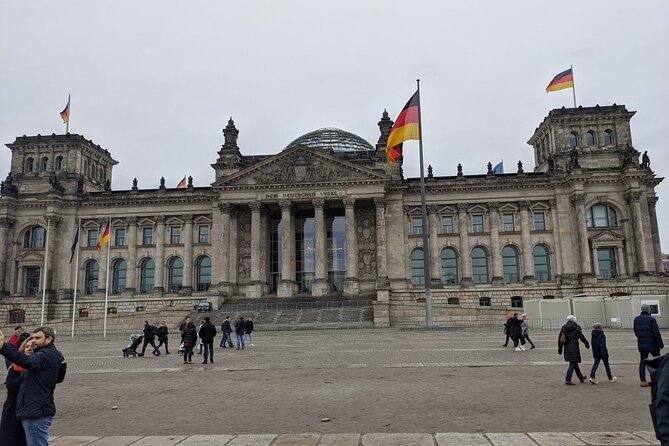
A private tour is especially useful in Berlin because the key sights are spread across a large area. You can cover more ground with less physical effort, and pickup is offered. The tour is also a good fit if one member of your group has mobility issues. A previous booking included a participant with limited mobility, and the private-car arrangement was chosen for that reason.
The group size is limited to your own party. That gives you more freedom to ask questions, pause for clarification, or adjust your attention at a stop. It does not mean the itinerary is fully custom-built, however. The seven listed locations create a clear route, and the four-hour duration leaves limited space for major changes.
The experience is offered in English. If you want a tour in another language, this is not the right choice based on the information available.
Is $355.04 per person good value?
At $355.04 per person, this is not a budget sightseeing tour. The price makes the most sense for a small group that values a private vehicle, direct pickup, and personal guiding. If several people share the experience, the cost may feel more reasonable than arranging separate transport and a private guide for the same sights.
The value is less convincing if you only want transportation between photo stops. Berlin’s public transport reaches many central sights, and independent visitors can see several landmarks without paying for a private tour. You are paying for the guide’s explanations, the convenience of staying together, and the ability to cover a lot of ground in a short window.
Shadi is specifically praised as a careful driver and a thoughtful guide who explains Berlin’s history. That combination matters on a city tour. A safe driver makes the car portion comfortable, while a guide who can put each location into context turns a string of monuments into a connected story.
The price is harder to justify if you want extended museum time. The itinerary gives the Jewish Museum 40 minutes and the other stops 25 to 40 minutes each, so this is built around breadth. For depth, you would need to return to selected sites later.
Who should book this Berlin tour?
I would recommend it to first-time visitors with only part of a day, families or friends who want a private setting, and people who prefer not to manage Berlin’s transport system. It also suits anyone who needs to reduce walking between distant locations.
It is a good opening tour for a longer stay. After four hours, you will know which places deserve a second visit. You might return to the Berlin Wall Memorial, spend several hours at the Jewish Museum, or explore the area around Alexanderplatz at a slower pace.
I would be more cautious about booking it as your only Berlin experience. The route is broad, and the schedule is tight. If you already know the central sights or want specialist detail on one period, a tour focused on the Wall, Jewish Berlin, or museums could serve you better.
When booking, contact the provider with questions about pickup, the vehicle, the exact guide, and the Jewish Museum arrangements. The pickup details simply ask you to text or write with questions, so clear communication before the day is sensible.
Cancellation and practical planning
You can cancel up to 24 hours before the local start time for a full refund. Changes made less than 24 hours before departure are not accepted, and a late cancellation is not refunded.
The experience requires good weather. If poor weather causes cancellation, you are offered another date or a full refund. A minimum number of participants is also required, and if that condition is not met, you are offered another date or experience, or a full refund.
Confirmation is provided when you book. The tour is near public transportation, and most people can participate, but the private car is the main help for anyone who finds a long day of walking difficult.
Should you book it?
Book this tour if you want a personal overview of Berlin’s major historical zones in a single morning or afternoon, especially if pickup and reduced walking matter to you. The route gives you a strong first map of the city, and an attentive guide such as Shadi can add meaning that a standard sightseeing drive cannot.
Skip it if you want long museum visits, a slow look at each memorial, or the lowest possible price. For everyone else, this is a useful, compact introduction, best followed by independent time at the places that catch your interest.
FAQ
How long does the Berlin City Tour by Private Car last?
The tour lasts approximately four hours.
What language is the tour offered in?
The experience is offered in English.
Is pickup available?
Yes. Pickup is offered, and you can text or write the provider with questions about the pickup details.
Is this a private tour?
Yes. Only your group participates in the private tour or activity.
Which Berlin sights are included?
The route includes Potsdamer Platz, Brandenburg Gate, the Memorial to the Murdered Jews of Europe, Alexanderplatz, the Memorial of the Berlin Wall, Checkpoint Charlie, and the Jewish Museum Berlin.
How much does the tour cost?
The listed price is $355.04 per person.
Can I cancel for a full refund?
Yes. You can cancel at least 24 hours before the experience start time for a full refund. Poor weather or failure to meet the minimum number of travelers may also result in an alternative date or a full refund.
Just added around Berlin
- eSIM for Germany and 34 European Countries★ 4.5 · 16 reviews
- Your ticket to The Wall Museum Berlin★ 3.0 · 60 reviews
- Warnemuende Shore Excursion: Private Berlin Tour★ 4.5 · 27 reviews
- Walking on the Wall: 3-Hour Tour in Berlin★ 4.5 · 34 reviews
- Rickshaw Tours Berlin – Groups of up to 16 people with several rickshaws★ 4.0 · 97 reviews
- Love and War in Berlin: Self-Guided Story Puzzle Walk★ 5.0 · 7 reviews
- Warnemuende Shore Excursion: Berlin Private Sightseeing Tour from Rostock★ 5.0 · 4 reviews
- Cold War Berlin – Private Live Virtual Experience★ 5.0 · 4 reviews
Berlin Tours, compared.

Reichstag, Dome and Government District Guided Tour
Read our review →
1-Hour City Tour by Boat with Guaranteed Seating
Read our review →




Reichstag, Plenary Chamber, Cupola & Government Tour
Read our review →
Browse the lists this tour appears in