Review · BERLIN TOURS
Berlin: Berlin Story Bunker Entry Ticket
The most striking part of the Berlin Story Bunker is the setting itself: a real Second World War bunker used for an exhibition on Nazi Germany and Berlin’s role as the center of power. You move through a chronological story, from Imperial Berlin to the fall of the Berlin Wall, with photographs, short films, installations, and an audio guide.
I like the clear timeline and the freedom to set your own pace. I also like the replica of Hitler’s Führerbunker, which gives the final section a stark physical focus. The main drawback is the sheer amount of reading and walking. Two hours is enough for a brisk visit, but you need three to six hours to take in much of the material.
Key points before you go
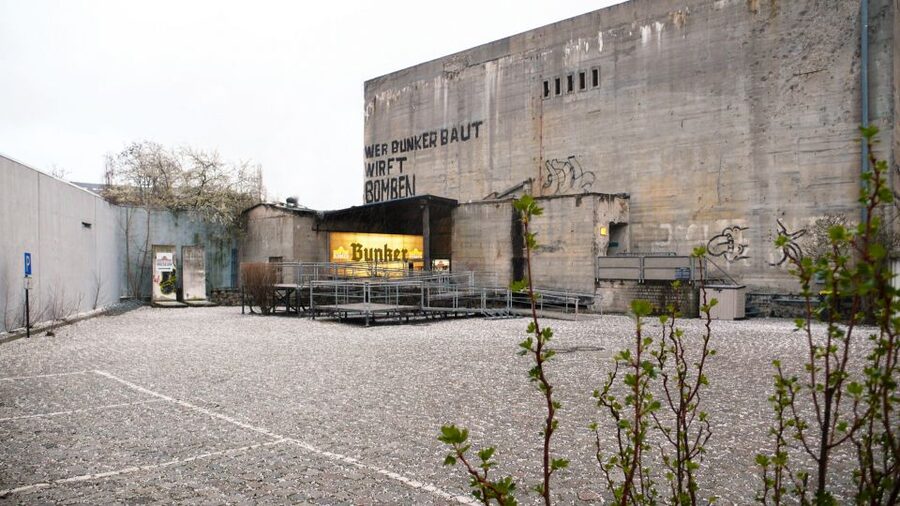
- A real wartime bunker: The exhibition takes place inside the large Berlin Story Bunker near Anhalter Bahnhof.
- Fifty information stations: Expect a serious amount of reading, photographs, installations, and short films.
- A full historical timeline: The story runs from Imperial Berlin through National Socialism, World War II, and the Berlin Wall.
- Audio guide included: English, German, Spanish, French, Italian, Danish, Dutch, Russian, Hebrew, Portuguese, and Ukrainian are available.
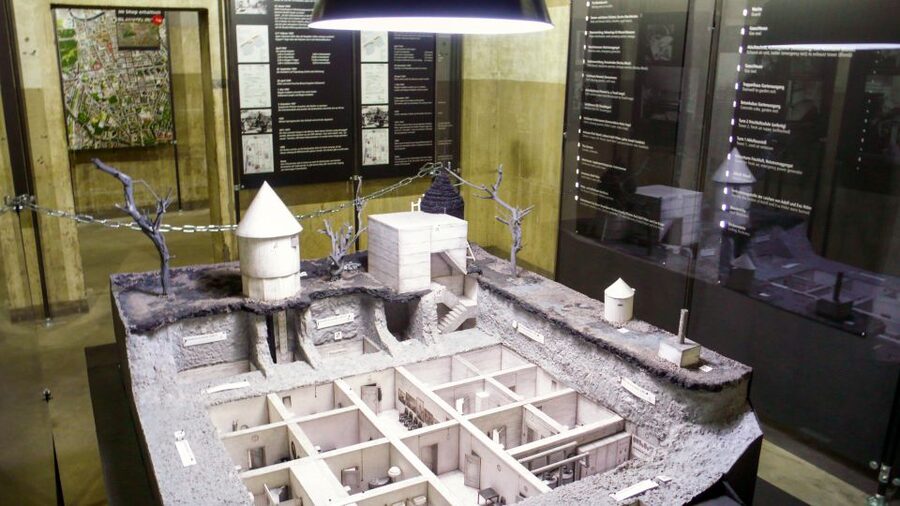
- The Führerbunker section: A full-scale replication and model help explain the final days of Hitler’s regime.
- Plan for stairs and standing: The experience is not suitable for people with mobility impairments, and comfortable shoes matter.
Inside the Berlin Story Bunker near Anhalter Bahnhof
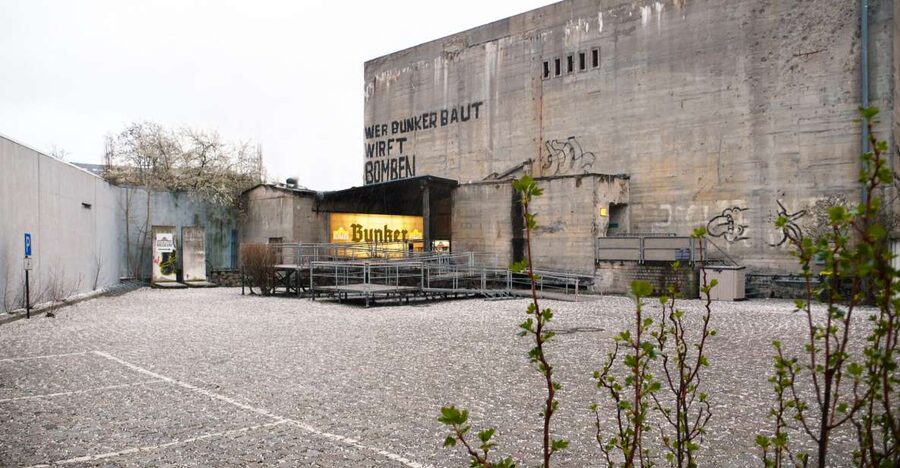
The entrance is at the Berlin Story Bunker, Schöneberger Str. 23a, near Anhalter Bahnhof and Potsdamer Platz. The location is useful if you are already exploring central Berlin’s wartime and Cold War sights, but the exhibition itself deserves more than a quick stop between other attractions.
This is not a small display of military objects. It is a large, text-heavy museum arranged across several levels, with around 50 stations. You follow the story through large installations, printed photographs, film sequences, and audio commentary.
The bunker’s concrete interior shapes the mood. It feels enclosed and serious, though visitors have described the rooms as mostly large, with fans in some areas. If enclosed spaces make you uneasy, keep that in mind. One person found it mildly claustrophobic, while another found the building comfortable enough. Your experience may depend on how busy it is and how sensitive you are to underground rooms.
The museum does not try to make this history light or easy. Some photographs are graphic. That is appropriate to the subject, but you should prepare younger visitors carefully. The exhibition deals with dictatorship, racism, war, mass violence, and the consequences of political extremism in direct terms.
A few more Berlin half-days to weigh up
- Berlin: Reichstag, Dome and Government District Guided Tour
★ 4.7 · 18,288 reviews - Berlin: 1-Hour City Tour by Boat with Guaranteed Seating
★ 4.3 · 16,993 reviews - Berlin: Boat Tour Along the River Spree
★ 4.4 · 11,252 reviews
A chronological walk through Berlin’s history
The strongest feature here is the order of the story. Instead of dropping you into an isolated display about Hitler or the bunker, the exhibition follows Berlin across more than 800 years.
You begin with earlier periods of the city’s development before moving toward the Imperial era. This gives you a wider frame for understanding how Berlin became Germany’s political center. The early sections are useful if you know Berlin mainly through its Nazi and Cold War landmarks, since they show that the city’s story did not begin in 1933.
As you continue, the exhibition explains Hitler’s rise to power, the growth of National Socialism, and the machinery of the dictatorship. The material focuses on how power was gained and used, rather than treating Hitler as an isolated figure. You see the political setting, the propaganda, and the wider system that allowed the regime to rule.
The audio guide helps you keep track of this progression. It provides a spoken overview for each part, while the boards and images add more detail. You can listen and move on, or pause to read closely. That flexibility is important because the amount of information varies from station to station.
You will not get the most from the museum if you try to rush through every panel. I would treat the audio guide as your basic route and then choose the subjects that matter most to you for slower reading. If you have a serious interest in the period, you could easily spend several hours here.
The National Socialist era and World War II
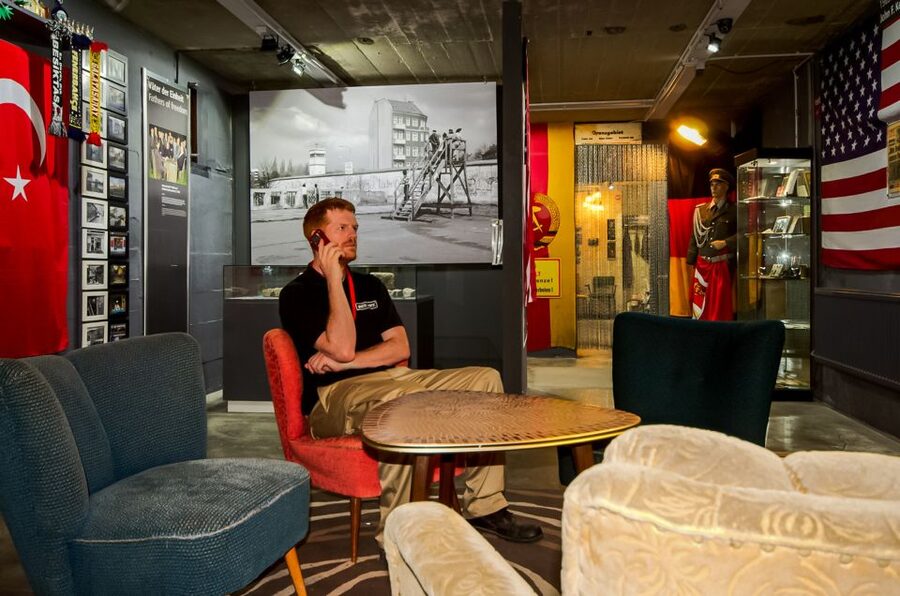
The middle sections are the emotional core of the visit. Here the exhibition follows the Nazi regime from its rise through its reign of terror and the Second World War.
The material is presented with photographs, documents, posters, newspapers, films, and large visual displays. There are not many physical artifacts compared with a traditional museum, so this is primarily a museum of information and images. If you expect rooms filled with uniforms, weapons, and personal objects, you may find the format different from what you imagined.
What you gain instead is a broad account of how Berlin functioned as the regime’s center of power. The city was not just a backdrop to events elsewhere. Political decisions, propaganda, repression, and military command were tied closely to Berlin.
The directness is one reason I find this type of museum valuable. It does not soften the history or make the subject into a story about one famous man alone. The displays connect Hitler’s personal story with the wider political and social disaster around him.
Some photographs are difficult to look at. You should not bring young children without thinking about their age and ability to handle the subject. An 11-year-old with a strong interest in history may follow the material well, but the museum is still intense, and parents should decide how much detail is suitable.
The audio guide is available in 11 languages, including English, Spanish, French, German, Italian, Danish, Dutch, Russian, Hebrew, Portuguese, and Ukrainian. Chinese is not listed among the available choices, so check the language options carefully if you need a different language.
Hitler’s bunker and the final section
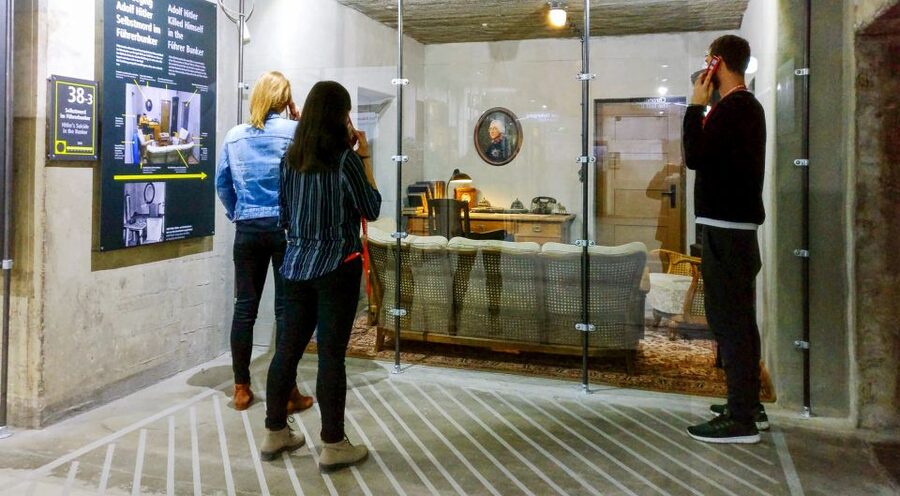
The lower bunker area contains the full-scale replication and model of Hitler’s Führerbunker. This is the part many people are most curious about, but it works best after you have followed the earlier sections.
Seeing a model or reconstruction gives you a sense of the setting where the Nazi leadership spent the final days of the war. It is not simply a dramatic photo opportunity, and photography is not allowed inside. The restriction is worth respecting, especially given the subject matter.
The reconstruction is not a substitute for the original bunker. The original site is not presented as an intact attraction here. Instead, the model helps you understand the physical environment and the grim end of the regime after the museum has explained the events leading up to it.
This final area can feel especially bleak because the building and subject reinforce one another. If you visit only for the Führerbunker replica, you will miss the context that gives it meaning. Allow time for the earlier displays first.
Same city, a completely different sort of afternoon:
- Discover Berlin Half-Day Walking Tour
★ 5.0 · 9,624 reviews - Berlin: Hop-on Hop-off Bus Tour with Live Commentary
★ 4.3 · 8,579 reviews - Berlin: Government District around the Reichstag Guided Tour
★ 4.7 · 8,447 reviews - Berlin: Reichstag, Plenary Chamber, Cupola & Government Tour
★ 4.6 · 8,422 reviews
From postwar Berlin to the Berlin Wall
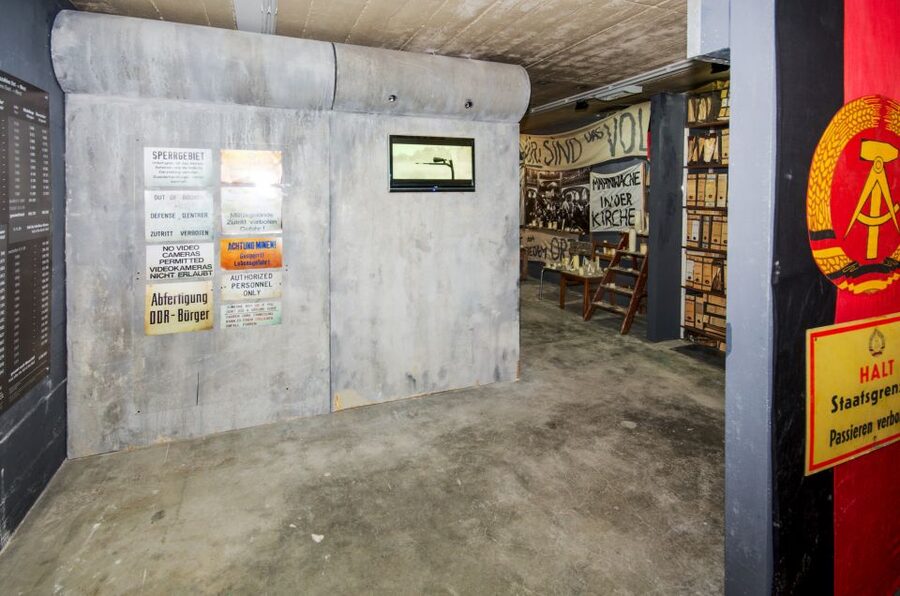
The story does not stop in 1945. The audio guide continues through Berlin’s postwar division and the eventual fall of the Berlin Wall.
This is a useful closing section because it shows that the city’s upheaval did not end with the defeat of Nazi Germany. Berlin remained divided, politically charged, and physically split for decades. The transition from World War II to the Cold War gives the visit a broader sense of the city’s modern identity.
The Berlin Wall material also helps connect the bunker to the rest of your sightseeing. After the museum, you can look at surviving wall sections and former border sites with a better understanding of how Berlin moved from dictatorship to division and then reunification.
The exhibition’s timeline is especially helpful if you are new to Berlin’s history. It gives you a basic framework for many places you will see around the city, even if you later visit specialist museums for more detail.
How long should you allow?
The official ticket is valid for one day, but the practical question is how much of that day you want to spend underground with the displays.
For a quick overview, allow about 90 minutes to two hours. That means using the audio guide, reading selected panels, and moving at a steady pace. You will understand the main sequence, but you will not absorb everything.
For a more satisfying visit, plan three to four hours. This gives you time to listen, read, study photographs, watch some film clips, and spend time in the Führerbunker section without racing toward closing time.
If you are the type of person who reads every panel, six hours is possible. The material is dense enough that some people run out of time before reaching the end. I would not schedule this immediately before another fixed appointment.
Last entrance is at 5:30 PM. Check the available starting times before booking, and arrive with enough time for the amount of reading you want to do. Comfortable shoes are a must. You will walk, stand, and use stairs, and the building is not suitable for people with mobility impairments.
There are chairs in parts of the exhibition, which helps if you need regular breaks. The interior can feel warm, so light clothing and water are sensible. Food and drinks are not part of the ticket, though a cafe and toilets are reported on site.
Using the audio guide well
The audio guide is included with admission and gives you a structured way through the museum. I would use it as a guide rather than as the only source of information.
The boards contain far more detail than the spoken commentary can cover. Start with the audio at each section, then read the panels that catch your attention. This approach keeps the visit from becoming an exhausting attempt to read everything while also listening.
The device is fairly simple to operate, but entering station numbers can be slightly awkward. A number such as 5 may sometimes jump to 105. Using the next function as you move through the sections can be easier than typing every number manually.
You are free to move at your own speed. Nobody is pushing you through a group itinerary, so you can pause at a photograph, skip a panel, or return to a section. That makes the ticket a good fit for independent museum visits.
Some people prefer to listen quickly and continue. Others will want to stop often. The museum accommodates both styles, but your time estimate should match your habits. If you read carefully, do not believe that a one-hour plan will be enough.
Photography rules and the tone of the visit
Photography and video recording are not allowed inside. Cameras are also listed as not allowed, so follow the museum’s rules rather than assuming a phone camera is acceptable.
This may disappoint you if you like to document every stop, but it suits the tone of the exhibition. The displays include graphic images and sensitive historical material. Put the phone away and give the museum your full attention.
The tone is sober and direct. You will see unfiltered images of war and persecution, along with material about fascism and racism. This is not a light family attraction or a quick photo stop.
The serious presentation is also why the visit can be so affecting. You are not simply looking at a famous building or a theatrical reconstruction. You are being asked to consider how a dictatorship gained control, how violence became policy, and what remained after the war.
Is the $21 ticket good value?
At $21 per person, the ticket is good value if you use the museum as a major half-day activity. The audio guide is included, the ticket is valid for one day, and the amount of material is substantial.
The value is less clear if you plan to stay for only an hour. You can see the main points quickly, but the museum’s strength lies in its detail. The more time you give it, the more reasonable the price becomes.
You should also compare the experience with your interests. If you want a traditional museum centered on original artifacts, this may not be your ideal choice. Much of the visit involves reading, photographs, films, and installations. If you want a broad account of Berlin and National Socialism in one location, the ticket offers a lot.
Flexible booking adds practical value. You can cancel up to 24 hours in advance for a full refund, and the reserve-now, pay-later option lets you hold a place without paying immediately. Those terms are useful when your Berlin schedule is still changing.
Who will get the most from this museum?
I would recommend the Berlin Story Bunker to you if you want a serious introduction to Berlin’s political history and have several hours available.
It suits:
- First-time visitors who want a clear timeline before visiting other historic sites.
- Adults and older children with a real interest in World War II.
- Independent museumgoers who prefer to set their own pace.
- Visitors who appreciate photographs, documents, short films, and written explanation.
- Anyone who wants to understand the connection between Hitler’s regime, Berlin, the war, and the later division of the city.
It may not suit you if you dislike long reading sessions, have limited time, or want a hands-on museum with many original objects. It is also a poor choice if stairs, standing, warm rooms, or enclosed spaces are difficult for you.
The subject is not gentle. You should choose another activity if you want an upbeat break from sightseeing. But if you are ready for difficult material presented in a direct way, the bunker gives you a serious look at the forces that shaped Berlin.
Should you book the Berlin Story Bunker?
Book it if you want a detailed, self-guided history experience and can spare at least three hours. The real bunker setting, chronological layout, wide language choice, and Führerbunker reconstruction give the visit a clear identity.
Plan your day around it rather than squeezing it into a spare hour. Wear comfortable shoes, bring water, and expect a lot of reading and standing. Do not bring a camera for use inside, and prepare yourself for graphic images.
I would skip it only if you want a short attraction, a light museum, or a collection focused mainly on artifacts. For an honest, demanding account of Berlin under National Socialism, the war, and the city’s later division, this is one of the more useful stops near Potsdamer Platz.
FAQ
Where is the Berlin Story Bunker?
The ticket office is at Schöneberger Str. 23a, 10963 Berlin, near Anhalter Bahnhof and Potsdamer Platz.
How long is the Berlin Story Bunker ticket valid?
The ticket is valid for one day.
How much time should I allow for the visit?
You can see the main material in about 90 minutes to two hours, but three to four hours is more suitable if you want to read and listen carefully. Some visitors may want up to six hours.
Is an audio guide included?
Yes. An audio guide is included with admission.
Which audio guide languages are available?
The available languages are Spanish, English, French, German, Italian, Danish, Dutch, Russian, Hebrew, Portuguese, and Ukrainian.
Can I take photographs or record video inside?
No. Cameras, photography, and video recording are not allowed inside.
Is the museum suitable for people with mobility impairments?
No. The experience is listed as unsuitable for people with mobility impairments, and the visit includes walking, standing, and stairs.
Can I cancel the booking?
Yes. You can cancel up to 24 hours in advance for a full refund. You can also reserve now and pay later.
Just added around Berlin
- From Berlin: Gardens & Palaces of Potsdam Bike Tour★ 5.0 · 61 reviews
- Berlin: Battle for Seelow Heights WW2 tour -Clash of Titans★ 5.0 · 27 reviews
- From Berlin: Historical Gems of Potsdam Private Day Trip★ 4.4 · 4 reviews
- Berlin: Französischer Dom 360° Panorama & Crémant to go★ 3.9 · 5 reviews
- Explore Berlin Tour: History and Highlights★ 4.7 · 5 reviews
- Berlin: Evening Yacht Cruise with Aperitif & Dinner Upgrade★ 4.6 · 178 reviews
- Berlin: Expats in Berlin Comedy Show Ticket★ 4.7 · 182 reviews
- Berlin: The Epic Comedy Club Friday Night Showcase★ 4.8 · 28 reviews
Berlin Tours, compared.
Reichstag, Dome and Government District Guided Tour
Read our review →
1-Hour City Tour by Boat with Guaranteed Seating
Read our review →
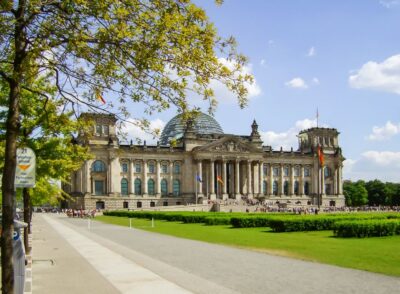
Reichstag, Plenary Chamber, Cupola & Government Tour
Read our review →