
Review · BERLIN TOURS
Berlin Battlefield Tour – Operation Berlin 1945 (Small Group)
The most powerful part of this tour is the way modern Berlin suddenly turns into a battlefield map. You begin beside the glass-and-steel Hauptbahnhof, then walk toward bridges, government buildings, and open ground where the final fighting of April and May 1945 unfolded. At the Reichstag, the story narrows from army movements to the men who raised the Soviet banner on the roof.
I like the small group of no more than 15 people, which gives you room to ask questions and hear the guide clearly. I also like the route itself: it moves through central Berlin instead of keeping you in a museum room, and bottled water plus rain ponchos are provided when needed. The main drawback is that this is a walking tour with a strong military focus, so poor weather or limited interest in World War II could make the 2.5 hours feel demanding.
Key points
- Follow the Soviet advance: Track the route of the Soviet 3rd Shock Army from Moltke Bridge toward the Reichstag.
- See the battle sites in today’s city: Visit Moltkebrücke, the former Himmler House, Platz der Republik, the Reichstag, and Weidendammer Brücke.
- Keep the group personal: The tour accepts a maximum of 15 people, leaving time for questions and discussion.
- Hear the final rooftop story: Learn how Sergeants Yegorov and Kantariya raised special banner No. 5 over the Reichstag.
- Finish near Friedrichstrasse: The final stop is about 50 meters from the S and U-Bahn station, making the next part of your day easy.
- Plan for the sky: The tour depends on good weather, although rain ponchos are supplied if needed.
Why Operation Berlin works best on foot
Operation Berlin 1945 is not a sightseeing circuit in the usual sense. You do not enter a string of grand interiors or check off famous monuments from a coach. Instead, you walk between ordinary city streets and major government buildings while the guide reconstructs what happened there during the final battle for Berlin.
That approach matters because the physical distances are part of the story. The route from Berlin Central Station to the Reichstag shows how close the final fighting came to the heart of the German government. At the same time, the modern city can make the past hard to picture. Your guide must explain the vanished walls, damaged bridges, artillery positions, and open ground that no longer appear at street level.
The tour lasts about two and a half hours. That is long enough to build a clear sequence, but short enough to fit into a day of sightseeing. I would set aside extra time before the start if you want to arrive calmly, since the first meeting point is on the southern side of Berlin Hauptbahnhof at Ella-Trebe-Straße 9.
A few more Berlin half-days to weigh up
- Berlin: Reichstag, Dome and Government District Guided Tour
★ 4.7 · 18,288 reviews - Berlin: 1-Hour City Tour by Boat with Guaranteed Seating
★ 4.3 · 16,993 reviews - Berlin: Boat Tour Along the River Spree
★ 4.4 · 11,252 reviews
Berlin Hauptbahnhof to Moltke Bridge
The opening ten minutes take place near the modern main station. This is a useful contrast: you begin in one of Berlin’s busiest transport areas, surrounded by contemporary architecture, while the guide sets the scene for the battle that took place more than seven decades ago.
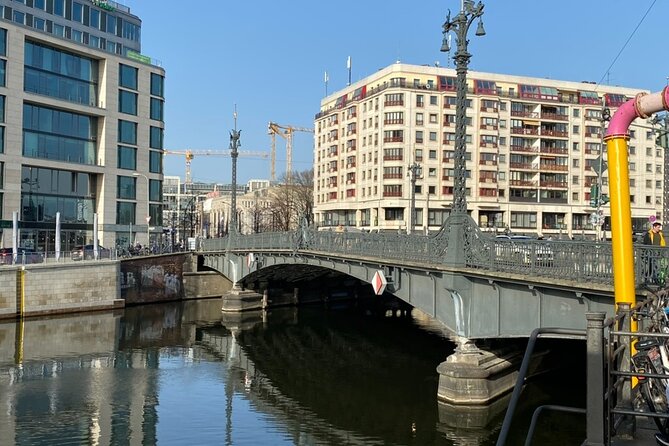
From there, you walk to Moltke Bridge, or Moltkebrücke. The ornate red sandstone bridge became a key position during the last battle. Here the guide explains the Soviet 3rd Shock Army’s direction of attack and the problems faced by both the advancing Soviet forces and the German defenders.
This first battlefield stop is short, around ten minutes, but it gives the rest of the walk a framework. You start to see the route not as a series of unrelated landmarks but as a line of advance. I find that useful for anyone who knows the broad outline of the Battle of Berlin but struggles to place the events on a map.
The bridge is also a good reminder that urban fighting is shaped by crossings. A bridge can control movement, slow an advance, or turn into a killing zone. The tour does not ask you to imagine an abstract front line. You are standing beside one of the places where the route into central Berlin became fiercely contested.
Himmler House and room-to-room combat
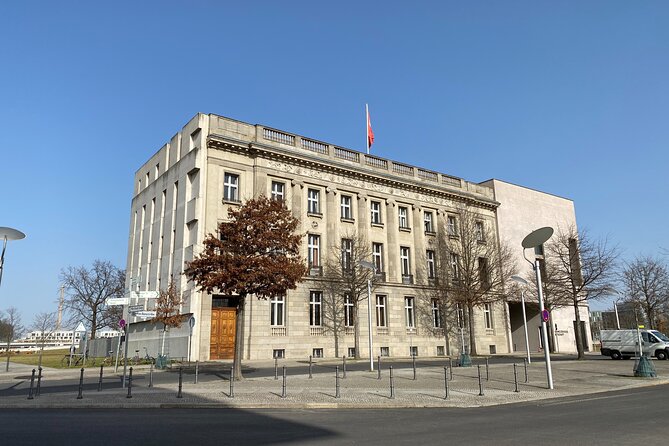
After crossing Moltke Bridge, the group reaches the Bundeskanzleramt area. The building discussed here was once the Interior Ministry and was nicknamed the Himmler House in the old diplomatic quarter.
The guide describes the Soviet artillery barrage and the close fighting that followed inside the building. The phrase room-to-room combat can sound clinical until you connect it to a government structure filled with corridors, stairways, offices, and defenders. This section shifts the scale of the tour from army movements to direct combat inside a building.
You should expect the subject matter to be grim. The tour deals with the last days of Nazi Germany and the destruction of Berlin, not a softened version of the past. That frankness is one reason the route suits people with a serious interest in military history.
The stop lasts about ten minutes. It is not a museum visit, and no admission ticket is required. The value comes from the explanation and the setting. The present-day government district does not look like a battlefield, so a strong guide is especially important here.
Crossing the open ground at Platz der Republik
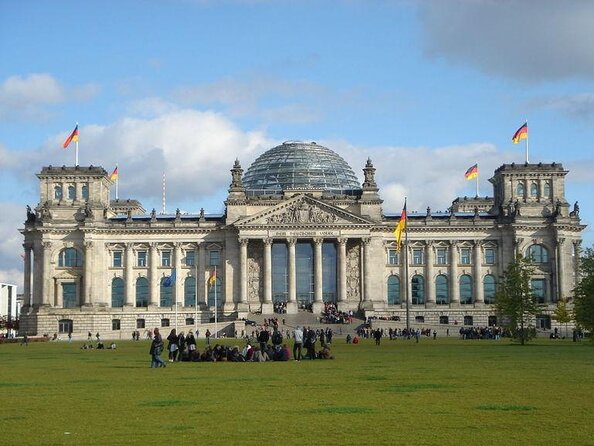
The walk continues to Platz der Republik, the site of the former Königsplatz. Here you look toward the open ground that Soviet rifle divisions had to cross before reaching the Reichstag.
The guide describes a 300-meter stretch as a moon-like zone of destruction. That detail gives you a sense of exposure. A short distance on a map can become a deadly obstacle when the ground is shelled, watched, and defended.
This is one of the tour’s best stops for understanding scale. Photographs and books often compress a battle into arrows and dates. At Platz der Republik, the guide turns those arrows into a physical distance that you can see and walk beside.
The stop is again about ten minutes. The pace is brisk, but the route does not appear overloaded with minor sites. Each location supports the same central story: Soviet forces pressing into the government center while German defenders tried to hold the last positions around it.
If you have mobility concerns, keep in mind that the experience involves walking between all six locations. The supplied information says most people can participate, but it does not give a total walking distance or promise step-free conditions along the whole route. You can ask the provider about your needs before booking.
Same city, a completely different sort of afternoon:
- Discover Berlin Half-Day Walking Tour
★ 5.0 · 9,624 reviews - Berlin: Hop-on Hop-off Bus Tour with Live Commentary
★ 4.3 · 8,579 reviews - Berlin: Government District around the Reichstag Guided Tour
★ 4.7 · 8,447 reviews - Berlin: Reichstag, Plenary Chamber, Cupola & Government Tour
★ 4.6 · 8,422 reviews
The Reichstag and the final Soviet banner
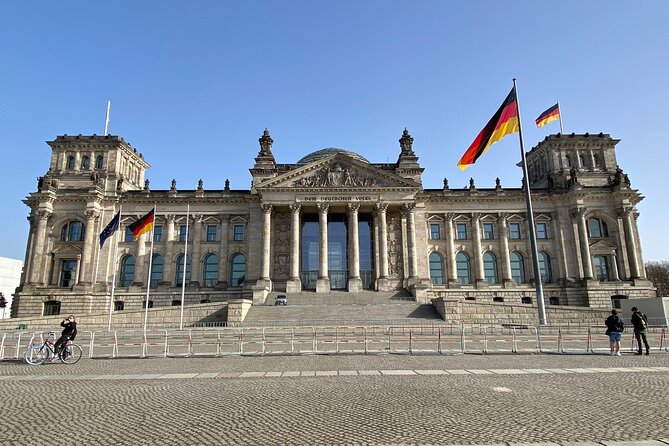
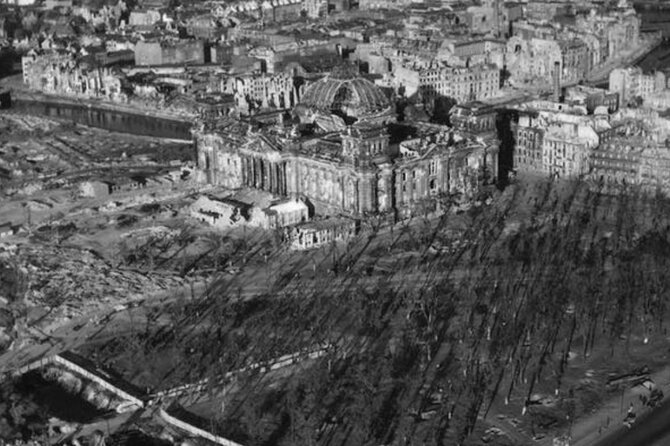
The Reichstag is the emotional center of the tour. As you approach the building, the guide links the nearby fighting to Hitler’s final hours in the Führerbunker, located only a few hundred meters away.
That short distance makes the ending of the Nazi regime feel concentrated. The tour does not treat the Reichstag as just a famous photograph. It explains why the building became such an important military and political target during the final days.
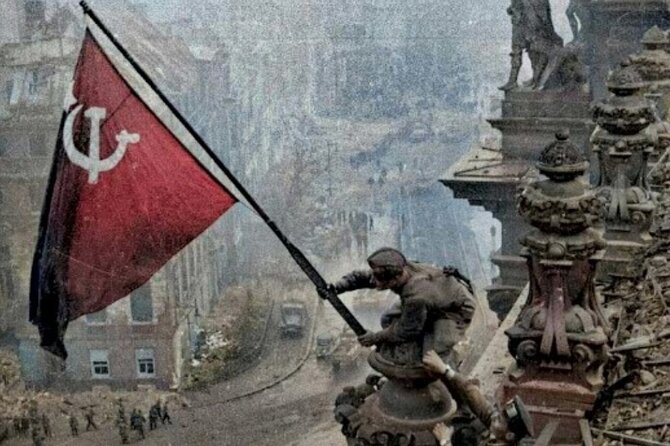
At the foot of the Reichstag, you hear the story of Soviet Sergeants Yegorov and Kantariya and the raising of special banner No. 5 on the roof. The banner signified the end of the battle, at least in the powerful public image that followed. This stop receives about twenty minutes, making it the longest pause on the route.
You should not expect entry into the Reichstag from the information provided. The experience takes place outdoors and discusses the building from the surrounding area. That is worth knowing if you are hoping for a dome visit or an interior tour. The reward here is the battlefield account, not access inside the building.
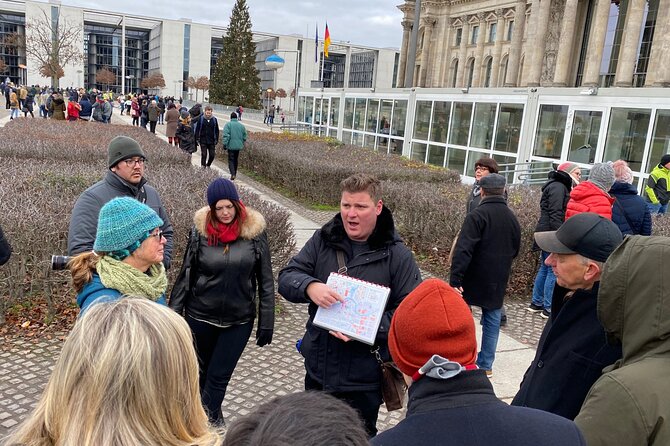
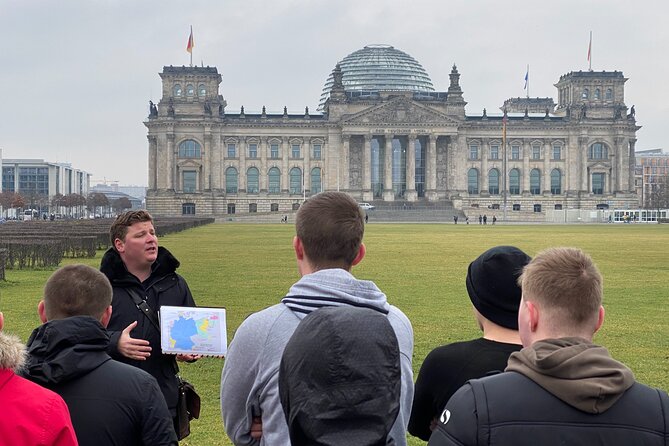
This is also where the guide’s skill matters most. A small group helps because the story contains names, movements, and competing claims that can be easy to lose in a larger crowd. One detailed account specifically praises Jochen as a guide and describes the small group as helpful for extended questions, including discussion with a history-focused son.
Weidendammer Bridge and the last breakout
The final stop is Weidendammer Brücke, about fifteen minutes after the Reichstag section. During the last days of the battle, this was one of the few bridges still intact across the Spree.
The guide explains the fighting on the night of May 1, 1945, when forces attempted a breakout from the area of the Führerbunker. The account ends on a violent note, with the bridge becoming the scene of heavy losses.
Ending here gives the tour a strong geographic finish. You are not returned to the starting point, so the route feels like an advance through the city rather than a loop. The bridge is also practical for the rest of your day. It is roughly 50 meters from Friedrichstrasse station, with both S-Bahn and U-Bahn connections.
Ask the guide how best to reach your next destination before you leave. The tour provider specifically points to this central transport link, and it is a useful feature if you have museum plans, a restaurant booking, or another walking tour afterward.
What the small group adds
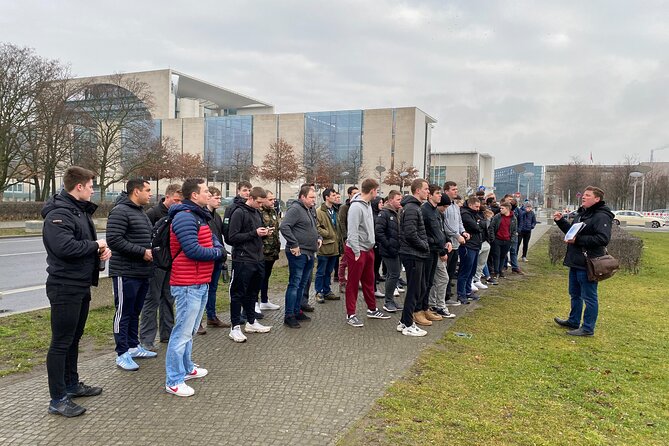
The maximum group size is 15 people. That is not a private tour, but it is small enough to keep the guide close and make questions realistic.
I would value this format most if you already have some background and want to ask about specific units, decisions, or locations. One particularly strong account describes extended discussion between the guide and a history enthusiast. That suggests the format can work for both a general introduction and a more detailed conversation, provided the group stays engaged.
The experience is offered in English. Guide Jochen is named in one account, but guide assignments can vary, so I would not book on the assumption that he will lead every departure. The important point is that the tour is built around spoken explanation rather than audio devices or a printed route.
A group of 15 can still feel busy at narrow points or near major roads. You may also find that the pace favors moving the story forward rather than lingering at every location. That is a fair trade for covering six connected sites in roughly 150 minutes.
Price, weather, and practical value
At $54.01 per person, the tour sits in a reasonable range for a focused, English-language walk lasting about two and a half hours. You are paying mainly for the guide’s battlefield interpretation and the carefully connected route, not for museum entry or transport.
That distinction helps you judge the value. If you want a guide to explain how the final attack developed from bridge to government district, the price is sensible. If you mainly want to see the Reichstag, you can do that without booking a tour. The cost earns its keep only if you care about the military story and want the sites put into context.
Water is provided, and rain ponchos are available if needed. Still, dress for outdoor conditions and wear comfortable shoes. The tour requires good weather and can be canceled if conditions are poor or if the minimum number of participants is not reached. In either case, you are offered another date or experience, or a full refund.
You can cancel for a full refund up to 24 hours before the start time. Changes or cancellations inside that 24-hour window are not accepted, so keep that cutoff in mind when arranging a tightly packed Berlin schedule.
The tour is near public transportation at both ends, though the start and finish are different places. That is convenient, but it also means you should check the route to Hauptbahnhof in advance rather than assume the endpoint is the meeting point.
Who should book this Berlin battlefield walk
I would choose this tour if you want:
- A clear account of the Battle of Berlin tied to real locations
- A small English-speaking group with time for questions
- A walking route through central Berlin rather than a general city tour
- Specific attention to the Reichstag, Soviet advances, and the final breakout
- A compact experience that fits before or after other central Berlin plans
It is a particularly good match for families with older children or teenagers who already enjoy military history. The account involving a history-focused son suggests that the guide can support more detailed questions, not just deliver a fixed speech.
I would be more cautious if you dislike outdoor walking, find wartime violence upsetting, or want to enter the Reichstag. The tour does not include admission tickets, and the supplied details describe outdoor stops only. You should also allow for weather changes, since the experience depends on suitable conditions.
Should you book Operation Berlin 1945?
Book it if you want to understand how Berlin’s final battle moved through the government district, and if seeing the actual bridges and open spaces matters to you. The route is compact, the group size is controlled, and the final stop near Friedrichstrasse makes the tour easy to fit into a larger day.
I would skip it if you are looking for a broad introduction to Berlin or a relaxed monument walk. This is a serious military-history tour, with grim subject matter and a steady outdoor pace. For the right audience, the $54.01 price buys something more useful than a list of dates: it gives you a physical sense of where the last battle happened and why those places mattered.
FAQ
Where does the Berlin Battlefield Tour begin?
The tour begins at Ella-Trebe-Straße 9, on the southern side of Berlin Central Station, also called Hauptbahnhof.
Where does the tour end?
It ends at Weidendammer Brücke in central Berlin. The bridge is about 50 meters from Friedrichstrasse S-Bahn and U-Bahn station.
How long does the tour last?
The tour lasts approximately 2 hours and 30 minutes.
What language is the tour offered in?
The tour is offered in English.
How large is the group?
The tour has a maximum of 15 participants.
Does the tour enter the Reichstag?
The provided details describe an outdoor visit to the foot of the Reichstag and do not include admission inside the building.
What happens if the weather is poor?
The tour requires good weather. If it is canceled because of poor conditions, you will be offered a different date or experience, or a full refund.
Just added around Berlin
- eSIM for Germany and 34 European Countries★ 4.5 · 16 reviews
- Your ticket to The Wall Museum Berlin★ 3.0 · 60 reviews
- Rickshaw Tours Berlin – Groups of up to 16 people with several rickshaws★ 4.0 · 97 reviews
- Warnemuende Shore Excursion: Private Berlin Tour★ 4.5 · 27 reviews
- Walking on the Wall: 3-Hour Tour in Berlin★ 4.5 · 34 reviews
- Love and War in Berlin: Self-Guided Story Puzzle Walk★ 5.0 · 7 reviews
- Warnemuende Shore Excursion: Berlin Private Sightseeing Tour from Rostock★ 5.0 · 4 reviews
- Cold War Berlin – Private Live Virtual Experience★ 5.0 · 4 reviews
Berlin Tours, compared.

Reichstag, Dome and Government District Guided Tour
Read our review →
1-Hour City Tour by Boat with Guaranteed Seating
Read our review →




Reichstag, Plenary Chamber, Cupola & Government Tour
Read our review →