Review · BERLIN TOURS
Berlin: 75-minute Trabi Safari
Berlin’s Trabi Safari turns sightseeing into a small mechanical adventure. You sit behind the wheel of a Trabant, the famously basic car of the former GDR, and chug through the city in a convoy. The car has a column-mounted gearshift, a two-stroke engine, modest power, and controls that can feel strange for the first few minutes.
I like the way the tour combines major sights with a real piece of Berlin’s divided past. I also like the live radio commentary, which keeps you connected to the guide even when the cars spread out at traffic lights. The main drawback is price: at $93 per person, you are paying a premium for the novelty, and the short 75-minute route leaves you wanting more.
Key points to know before you book
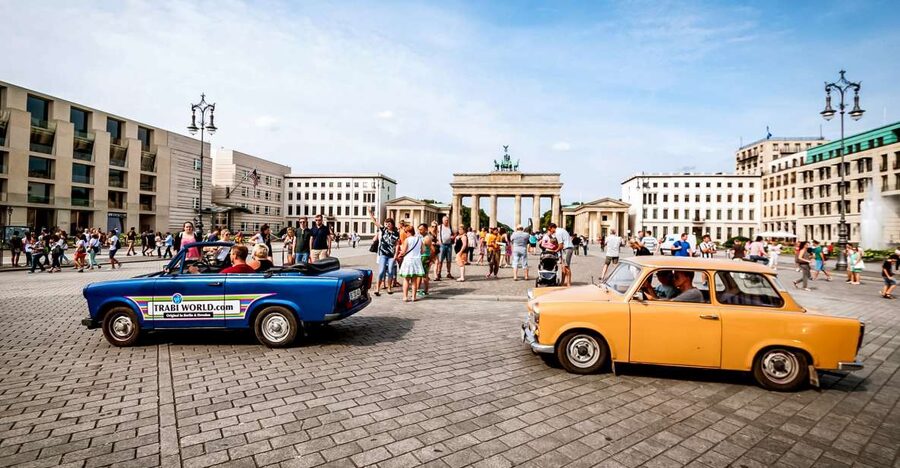
- You drive the Trabant yourself: This is not a ride in a vintage car. You learn the controls, handle the traffic, and follow the convoy.
- The route covers both sides of Berlin: Expect Potsdamer Platz, Brandenburg Gate, Unter den Linden, the Berlin Cathedral, Checkpoint Charlie, the East Side Gallery, and Oberbaum Bridge.
- The cars stay together with help from the guide: Traffic lights may split the convoy, but the guide waits and gives directions by radio.
- Two people can share the driving: A stop halfway allows drivers to change places, making the experience work well for couples and friends.
- The car is part of the history lesson: Its slow pace, basic design, and awkward gearshift offer a feel for everyday motoring in the former GDR.
- Read the driving conditions carefully: You must be at least 18, hold a Class B license, and accept an insurance deductible of EUR 850.
Why a Trabant makes Berlin sightseeing more fun
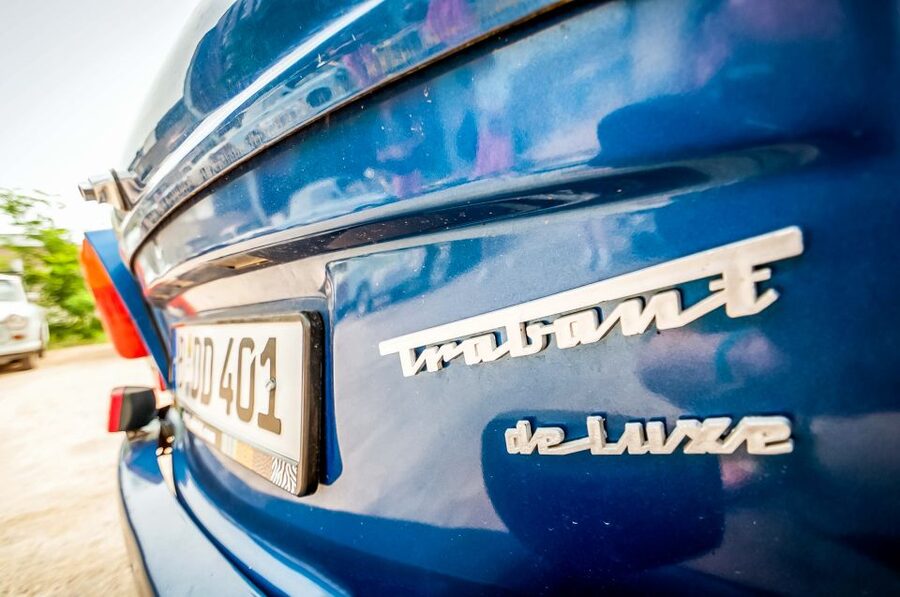
The Trabant was the everyday car of East Germany, officially known as the German Democratic Republic. It was built with a small two-stroke engine and a body made partly from duroplast, a hard plastic material used in place of much steel. The result was light, noisy, slow, and wonderfully memorable.
That history matters because the car fits Berlin better than a polished vintage sports car would. You are not simply posing beside an old vehicle. You are driving a symbol of ordinary life behind the Iron Curtain through streets that once belonged to two separate political systems.
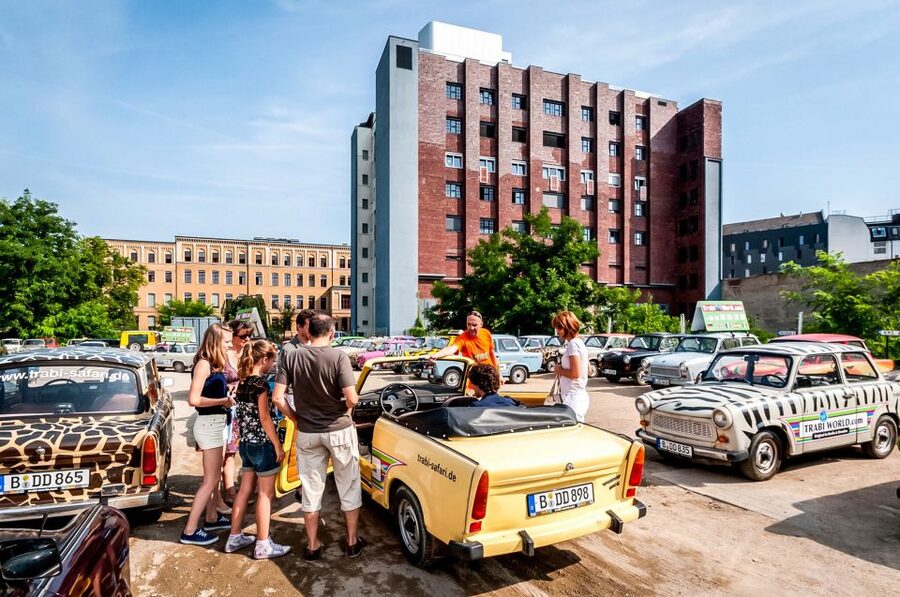
The first minutes are spent at TrabiWorld, at Zimmerstraße 97 to 100 on the corner of Wilhelmstraße. An instructor explains the car, the column gearshift, the clutch, and the convoy rules. Guides such as Thomas, Axel, Harold, Simon, and Charlie have been praised for mixing clear instructions with dry humor, though your guide will depend on the departure.
The car may feel awkward at first, especially if you normally drive a modern automatic. The steering, gear change, brakes, and engine response require attention. One particularly useful feature is the guide’s explanation of what to do if you fall behind or become separated from the convoy. That preparation makes the experience feel controlled rather than reckless.
Once everyone is ready, the cars pull out together. You quickly discover that the Trabant is not built for speed. It is built for grins, photographs, and a steady tour through central Berlin.
More safari days around Berlin:
- Düsseldorf: Altbier-Safari Beer Walking Tour
★ 4.4 · 1,150 reviews - Dresden: 2 hour 15-Minute Trabi Safari
★ 4.9 · 197 reviews
Driving a column-shift Trabant through city traffic
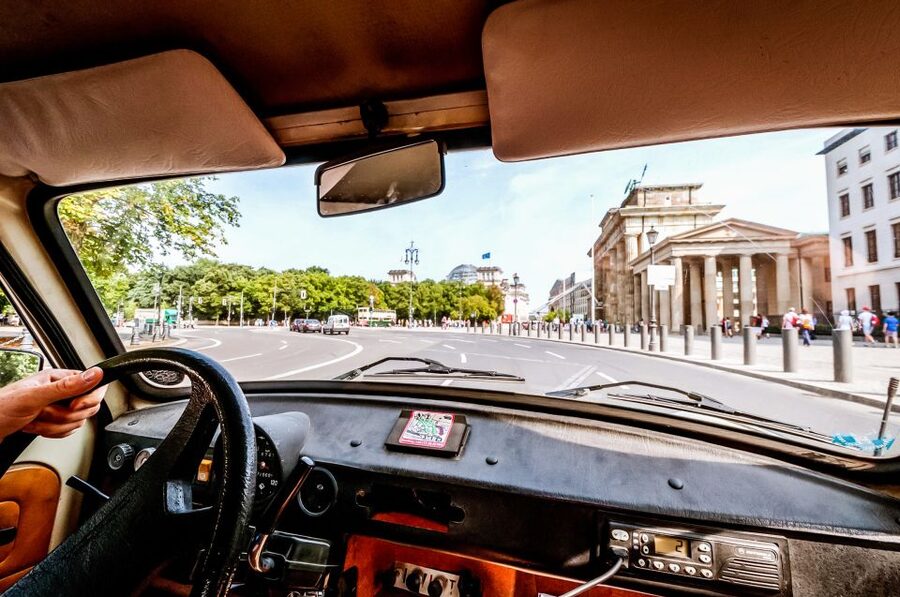
The driving is the heart of the experience, and it is also the part you should think about most carefully. A manual Trabant has a gearshift mounted behind the steering wheel, an arrangement that can be unfamiliar even to drivers who use a stick shift at home.
You may need a few attempts to find the right rhythm. The small engine has limited power, and the car’s old-fashioned controls do not respond like those in a current rental car. Several people have described the first corners as nerve-racking, but also say the controls become easier after a short time.
The tour is managed as a convoy, with a guide’s car leading the way and radio commentary reaching each Trabant. The radio is especially useful because the cars can be separated by red lights. You are not expected to guess the route or catch up at speed. The convoy waits around the next corner when needed.
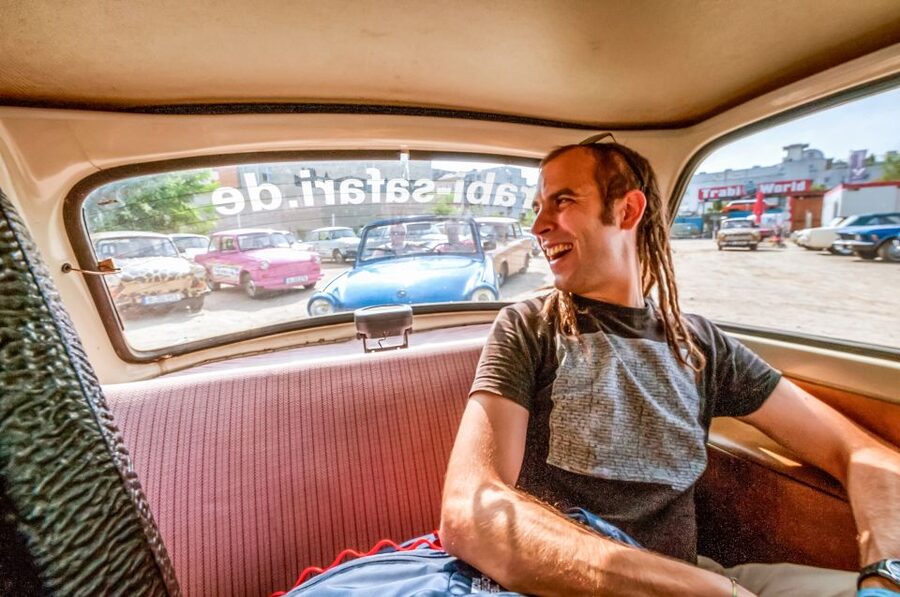
The Trabant’s noise is part of the fun, but it can affect the commentary. Make sure the radio is loud enough before setting off. The car’s small cabin, engine sound, and cobbled streets create an authentic old-car experience, but they also mean this is not a quiet sightseeing trip.
The route is conducted in English or German, with audio commentary available in both languages. You should still expect to concentrate on driving. This is best understood as a guided drive with sightseeing, not a conventional bus tour where you can stare out of the window the whole time.
From Zimmerstraße to Checkpoint Charlie
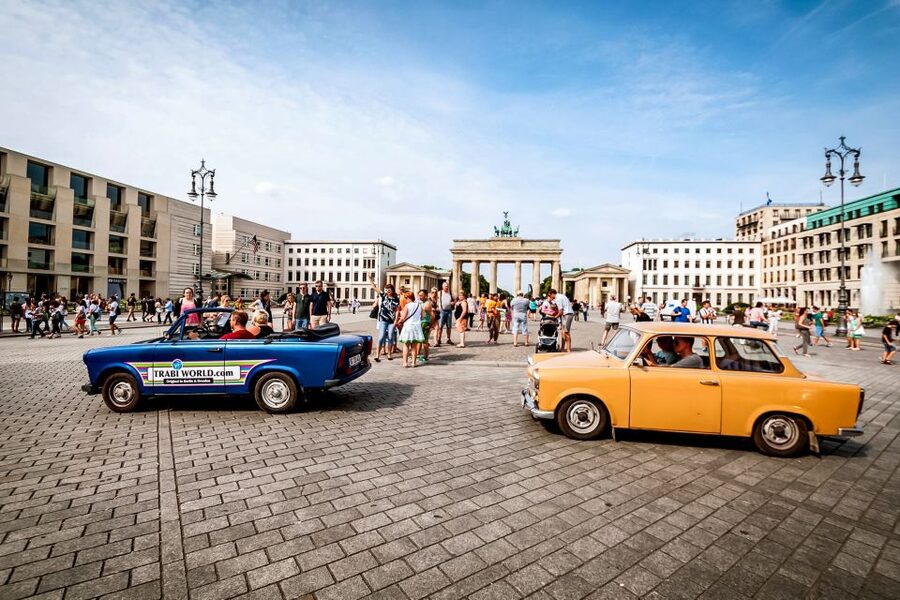
The meeting point puts you close to Checkpoint Charlie and several central Berlin sights. That is fitting, since Zimmerstraße runs through an area once shaped by the Berlin Wall and its border crossings.
The guide begins with the car’s story and the practical details. You receive technical instruction, learn how the convoy operates, and get help before entering traffic. This opening is short but important. If you have not driven a left-hand-drive car before, or have not used a manual transmission for years, pay close attention rather than treating the briefing as a formality.
Checkpoint Charlie is one of Berlin’s best-known Cold War sites. The modern checkpoint hut is a reconstruction, and the surrounding streets are heavily visited, but arriving in a Trabant gives the stop a useful connection to the period. You are moving through a former border zone in one of the cars associated with East Germany.
The tour does not replace a museum visit. It gives you a quick visual introduction, then carries you onward. For a fuller look at the car and its place in East German life, TrabiWorld’s Trabi Museum is a sensible follow-up.
Potsdamer Platz and the city rebuilt after division
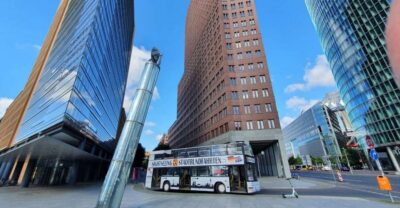
Potsdamer Platz helps show how dramatically Berlin has changed. Before the Second World War, it was a major urban crossroads. After the war and the division of the city, the area became a no man’s land near the Wall. Today it is filled with modern buildings and broad public spaces.
Seeing it from a Trabant creates a useful contrast. You are sitting in a car that represents scarcity and slow change while passing through one of the city’s most modern redeveloped districts.
The route also passes the Brandenburg Gate, Berlin’s best-known landmark. During the Cold War, the gate stood in the restricted area beside the Wall and could not function as a normal city gateway. After reunification, it became a symbol of a newly connected Berlin.
You may not stop for a long visit at each landmark. The value is in the sequence: old East German car, former border zone, rebuilt business district, Brandenburg Gate, and historic boulevard. If you want detailed architectural visits, plan those separately.
A few more Berlin half-days to weigh up
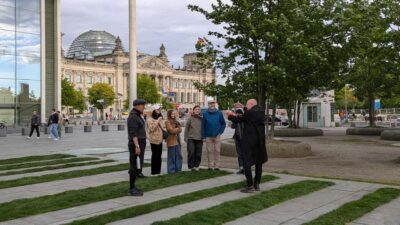
- Berlin: Reichstag, Dome and Government District Guided Tour
★ 4.7 · 18,288 reviews - Berlin: 1-Hour City Tour by Boat with Guaranteed Seating
★ 4.3 · 16,993 reviews - Berlin: Boat Tour Along the River Spree
★ 4.4 · 11,252 reviews - Discover Berlin Half-Day Walking Tour
★ 5.0 · 9,624 reviews
Unter den Linden and the Berlin Cathedral
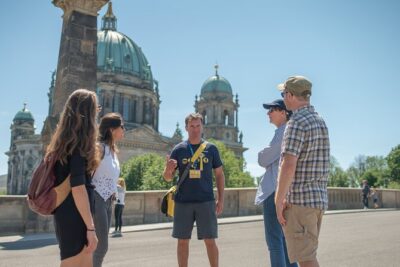
Unter den Linden is one of central Berlin’s grand avenues. The route gives you a moving view of the boulevard and the buildings around Museum Island, including the Berlin Cathedral.
The cathedral is easy to recognize by its large dome and ornate exterior. From a slow-moving Trabant, you have more time to look around than you would from a fast car, although traffic and the need to stay with the convoy can limit how long you focus on any one building.
This portion of the drive works well early in a Berlin visit. You get a feel for the layout of central Berlin and see how the main sights relate to one another. Several people have found the tour useful for getting their bearings before exploring the city on foot.
The tradeoff is that you will not get the interior detail or historical depth of a walking tour. Think of the Safari as an entertaining first look, then return to the places that catch your interest.
Red City Hall, the TV Tower, and East Berlin
The route continues toward the Rotes Rathaus, or Red City Hall, and the Berlin TV Tower. These landmarks help shift the tour toward the former East Berlin.
The TV Tower rises above Alexanderplatz and remains one of the clearest signs of the former socialist center of the city. The Red City Hall, with its red brick facade, serves as a strong visual marker nearby. From inside a Trabant, the setting feels less like a standard sightseeing circuit and more like a short trip through several layers of Berlin’s past.
The East Berlin section is where the car feels most appropriate. The vehicle was designed for ordinary families, not luxury or performance. Its slow speed and rattling character make you notice the streets in a way a smooth modern vehicle might not.
The East Side Gallery is another important stop along the route. This long stretch of surviving Wall is covered with murals and painted works. It is both a memorial and an open-air art site, and the Trabant makes an appealing photographic subject against the Wall art.
Guides may take photographs of the cars and participants at places such as the Brandenburg Gate and the Wall artwork. Do not assume that every departure includes the same photo opportunities, but be ready for cameras. The bright colors of some cars, including pink Trabants, attract plenty of attention from people along the street.
Oberbaum Bridge and the convoy experience
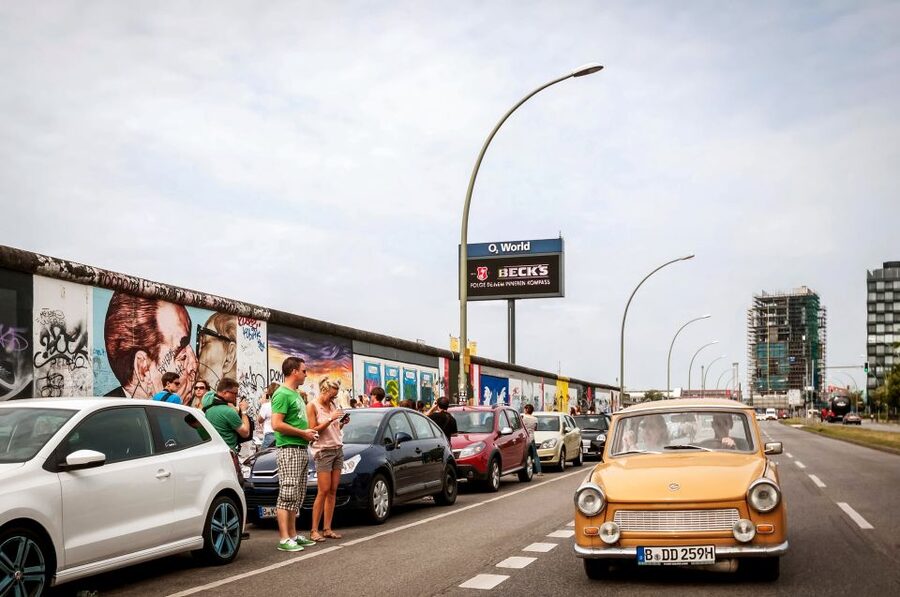
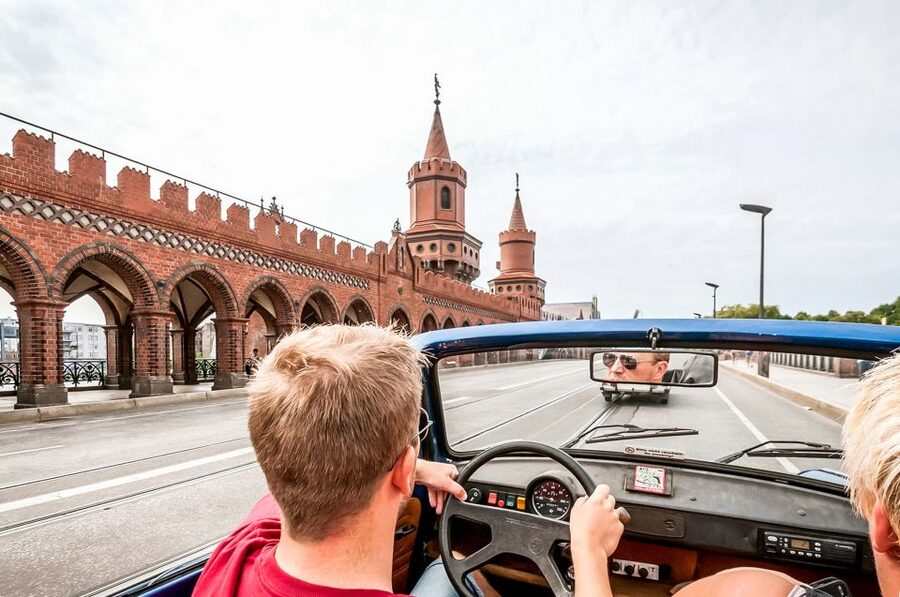
Oberbaum Bridge is one of Berlin’s most recognizable bridges, with red brick towers and a striking connection between former East and West Berlin districts. The bridge crosses the Spree between Kreuzberg and Friedrichshain and is a strong visual moment near the end of the route.
The bridge also shows why the convoy format matters. You are not wandering through the city on your own. Other Trabants are ahead and behind, and the guide keeps the group moving as a unit.
Traffic lights can separate the cars. This is normal, not a sign that something has gone wrong. The guide waits and uses the radio to keep everyone informed. If you are placed at the back of the convoy, you may experience a few extra pauses, but the group is designed to stay together.
The convoy creates much of the tour’s public energy. People point, smile, wave, and take photographs as the cars pass. You should be comfortable attracting attention. If you prefer to blend into the background, this may feel tiring. If you like a bit of theater, it is one of the best parts.
Swapping drivers and fitting four people inside
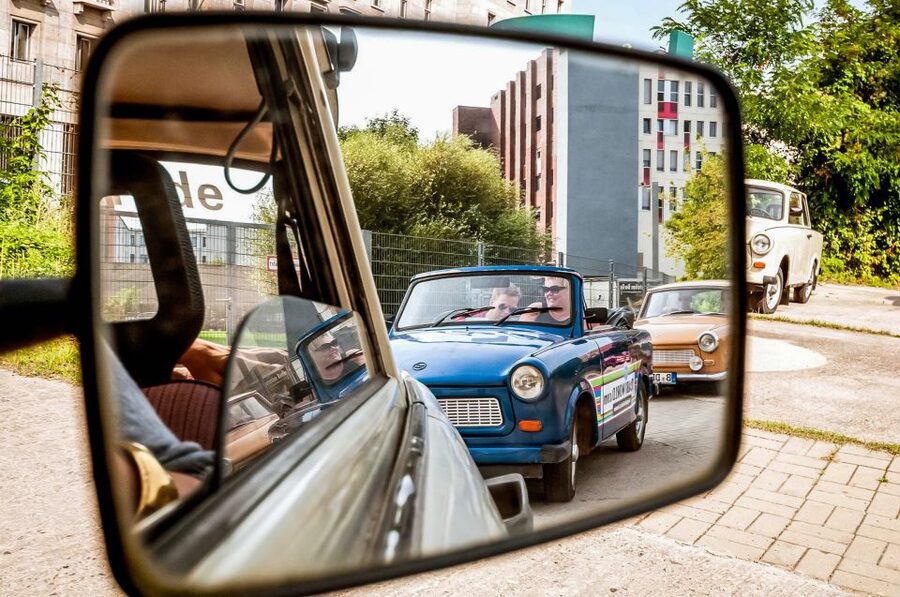
Each booking receives its own Trabant, and the car is not shared with another booking. A maximum of four people, or 330 kilograms in total, is allowed in one car. Every participant needs a ticket, including drivers, co-drivers, passengers, and children. Children can receive a free ticket, but they still need to be included in the reservation.
The four-person limit is practical rather than luxurious. Tall passengers may find the cabin tight, particularly in the rear. People around 1.8 to 1.9 meters tall have found the seating cramped, so consider your group’s height and comfort before booking four adults in one car.
If two adults want to drive, the tour includes a stop where you can change places. This makes the $93 per-person cost easier to justify for a pair who both want time at the wheel. If only one person drives, the other passenger can concentrate on the views and commentary.
Some departures may offer an automatic or electric Trabant option, but you should confirm this before booking if you cannot drive a manual car. The standard experience is built around learning the unusual controls, so do not assume an alternative vehicle will always be available.
What the $93 price really buys you
At $93 per person, this is not a budget way to see Berlin. You can walk past many of the same landmarks for free, and a conventional sightseeing bus may cover more ground with less effort.
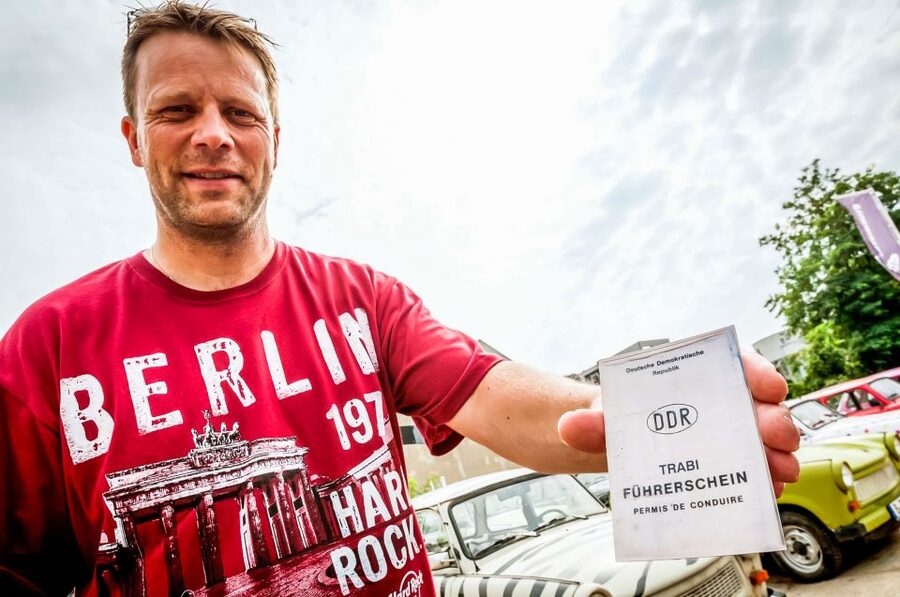
The price makes more sense if you value the driving experience itself. You receive technical instruction, a guide at the head of the convoy, live radio commentary, fuel, unlimited tour mileage, third-party vehicle damage insurance, and a Trabant driver’s license as a souvenir.
The license is a small touch, but it gives the activity a clear ending. You are not only taking photographs of a curious car. You have learned to operate one and driven it through a capital city.
There is an insurance deductible of EUR 850, so read the conditions before you commit. That figure does not mean you will pay it automatically, but it is an important financial consideration when driving an old vehicle in city traffic.
The experience offers good value for couples, families with older children, and driving enthusiasts who want something they cannot easily repeat elsewhere. It offers weaker value if you mainly want a thorough history tour or a low-cost introduction to Berlin’s sights.
Who should book the Trabi Safari?
I would put this near the top of the list for anyone who enjoys cars, Cold War history, or unusual city tours. It also suits a first visit because the route links many central sights and gives you a rough sense of Berlin’s geography.
It can work well for a solo driver too. You do not need to arrive with a group, and the convoy provides structure. Couples can swap drivers, while families can share one car if they fit within the size and weight rules.
You should be at least 18, hold a Class B driving license, and be fit to drive. If driving on the right side of the road, using a manual gearbox, or handling an unfamiliar car makes you very anxious, this may not be the relaxing sightseeing option you want.
The tour may suit some people with mobility limits because it reduces the need for a long walking route, but the supplied information does not promise specific accessibility arrangements. Contact TrabiWorld before booking if you need help with seating, transfers, or vehicle access.
Book for the experience, not simply for the list of sights. The Brandenburg Gate and Cathedral are bonuses. The real attraction is learning a stubborn old car, joining a convoy, and becoming part of Berlin’s street scene for 75 minutes.
Practical details for a smoother drive
Bring your driving license. You need it to take the wheel, and a Class B license is required.
Arrive with enough time for the technical briefing. The pre-drive explanation covers the engine, manual gearbox, convoy procedure, and what to do if you become separated. The more attention you give here, the more relaxed you will feel once you reach traffic.
If you have not driven a manual transmission for years, expect a short learning curve. If you normally drive on the left, allow extra concentration for Berlin’s road layout. The guides are there to help, but you remain responsible for driving your car.
Sunday may be a comfortable choice if you can select your timing, since one departure found less traffic and more room to enjoy the route. The tour operates in varying conditions, so prepare for the possibility of rain and remember that a Trabant is not sealed and quiet like a modern vehicle.
The tour can be canceled up to 24 hours ahead for a full refund, and a reserve-now, pay-later option is available. Starting times vary, so check the schedule when choosing your date.
Should you book this Berlin Trabant tour?
Book it if you want to drive a genuine piece of GDR-era culture and do not mind paying for novelty. The combination of a patient guide, radio commentary, major Berlin sights, and the chance to swap drivers makes the 75 minutes easy to enjoy.
Skip it if you want a cheap, quiet, in-depth history tour, or if cramped seating and old-car controls sound unpleasant. For everyone else, this is an unusually good way to get your bearings, see both former sides of Berlin, and collect a story far more memorable than another ride in a standard sightseeing vehicle.
FAQ
Where does the Trabi Safari begin?
The meeting point is TrabiWorld, Zimmerstraße 97 to 100, at the corner of Wilhelmstraße in Berlin.
How long does the tour last?
The driving experience lasts 75 minutes.
Do I drive the Trabant myself?
Yes. Each booking receives its own Trabant, and participants drive in a guided convoy.
Can two people share the driving?
Yes. A stop halfway through the route allows two drivers to change places.
How many people can fit in one Trabant?
A maximum of four people is permitted, with a total weight limit of 330 kilograms or 727 pounds.
Do children need tickets?
Every participant needs a ticket, including children and passengers. Children can receive a free ticket.
What driving license do I need?
You must be at least 18 and hold a Class B driving license.
What sights does the route pass?
The route passes Potsdamer Platz, Brandenburg Gate, Unter den Linden, Berlin Cathedral, Rotes Rathaus, the TV Tower, East Side Gallery, Oberbaum Bridge, and Checkpoint Charlie.
Is commentary available in English?
Yes. The live tour and audio commentary are available in English and German.
What insurance is included?
Third-party vehicle damage insurance is included, with a deductible of EUR 850.
Just added around Berlin
- From Berlin: Gardens & Palaces of Potsdam Bike Tour★ 5.0 · 61 reviews
- Berlin: Battle for Seelow Heights WW2 tour -Clash of Titans★ 5.0 · 27 reviews
- From Berlin: Historical Gems of Potsdam Private Day Trip★ 4.4 · 4 reviews
- Berlin: Französischer Dom 360° Panorama & Crémant to go★ 3.9 · 5 reviews
- Explore Berlin Tour: History and Highlights★ 4.7 · 5 reviews
- Berlin: Evening Yacht Cruise with Aperitif & Dinner Upgrade★ 4.6 · 178 reviews
- Berlin: Expats in Berlin Comedy Show Ticket★ 4.7 · 182 reviews
- Berlin: The Epic Comedy Club Friday Night Showcase★ 4.8 · 28 reviews
Berlin Tours, compared.
Reichstag, Dome and Government District Guided Tour
Read our review →
1-Hour City Tour by Boat with Guaranteed Seating
Read our review →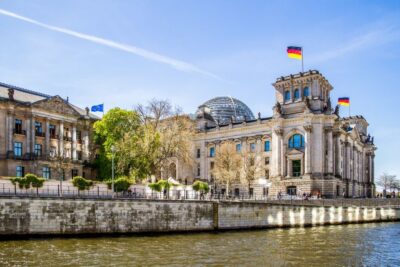
Reichstag, Plenary Chamber, Cupola & Government Tour
Read our review →