
Review · AUGSBURG TOURS
Augsburg: Historical Highlights Private Walking Tour
Augsburg packs 2,000 years of history into an easy old-city walk. You’ll trace its beginnings as a Roman colony founded in 15 B.C., then follow the city through imperial power, the Fugger family’s wealth, Mozart’s family tree, and the sharp pen of Berthold Brecht.
I like the private format, which lets you ask questions and shift the emphasis as you go. I also like the route’s unusual mix of big civic monuments and personal stories, from Augsburg’s remarkable Town Hall to the birthplace of Wolfgang Amadeus Mozart’s father. The main concern is price: at $362 for up to 15 people, it makes far better sense for a full group than for one or two people.
Key points about Augsburg’s two-hour private walk
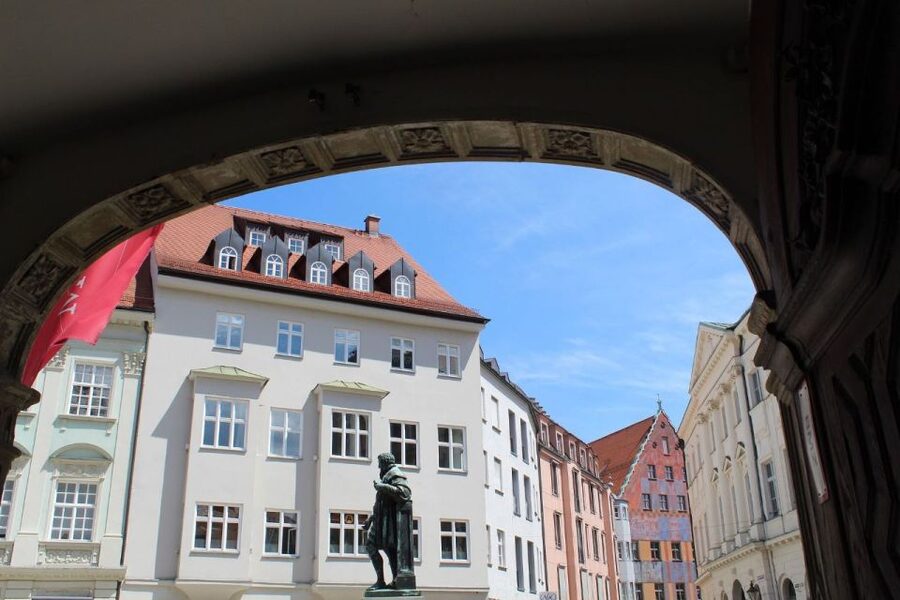
- Roman Augsburg began in 15 B.C., giving the tour a clear starting point far older than the city’s medieval churches and grand civic buildings.
- The Town Hall is the architectural centerpiece, described as the first building in the world with six floors.
- The Fuggerei connects money with social care, as the Fugger family created the oldest social settlement in world history.
- Music and literature receive equal billing, with stops tied to Mozart’s father and the writer and artist Berthold Brecht.
- Your guide can adjust the focus, useful if your group prefers architecture, local people, political history, or culture.
- The tour ends at SchaezlerPalais, a palace that survived World War II without a scratch.
Why Augsburg makes a good two-hour walking tour
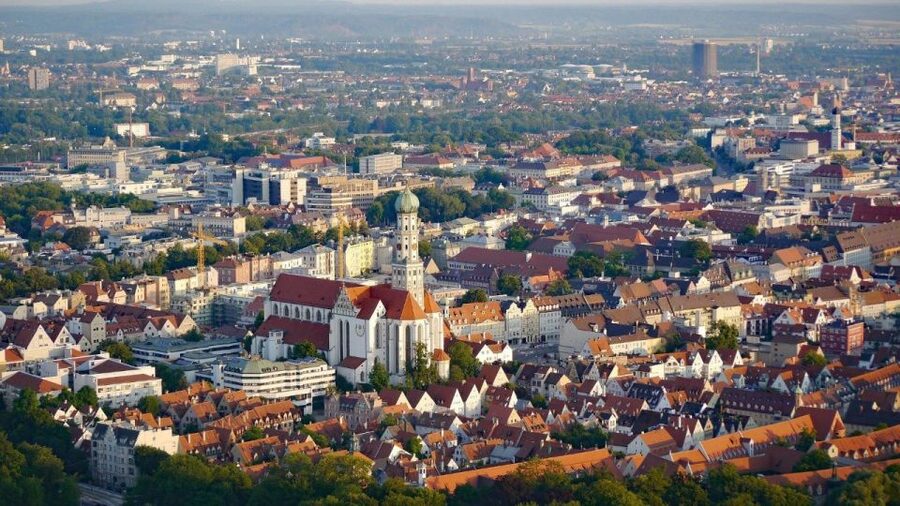
Augsburg is Germany’s third-oldest city and the capital of Swabia in Bavaria. Those labels can sound grand on paper, but the appeal becomes clearer once you see how many eras sit close together in the old city.
The tour begins at the Fuggerei, so you start with one of Augsburg’s most distinctive institutions rather than with a generic square. From there, the walk can explain how Roman foundations, medieval trade, Renaissance wealth, religious change, and modern cultural life all shaped the same city.
Two hours is enough for a strong introduction, not enough for every museum or interior. That is an important distinction. You are paying for a guided overview with context and local conversation, not a full-day city program.
I find this length useful on a first visit. You get your bearings quickly, then you can decide which places deserve a return visit. It also fits neatly before lunch, an afternoon train, or another Augsburg attraction.
More history-led days in Germany:
- Leipzig: City History Canal Sightseeing Tour on a Motorboat
★ 4.7 · 6,232 reviews - Berlin: Natural History Museum Entrance Ticket
★ 4.6 · 3,382 reviews - Leipzig: 1.5-Hour Historical Walking Tour in German
★ 4.7 · 2,217 reviews
From Roman colony to Swabian capital
Augsburg’s Roman beginning gives the tour a firm historical spine. Founded in 15 B.C. as a Roman colony, the settlement grew into the capital of a province in the Roman Empire.
Your guide can use that early period to explain why Augsburg mattered. This was not simply a small town that happened to survive for a long time. Its Roman role gave it political weight, and later trade and finance helped keep it important.
The value of this part is not just the date. A good guide can show you how to read a modern city through its past. Augsburg is now a Bavarian regional capital, but its public buildings and old streets reflect a much older position of influence.
Because the tour is private, you can ask for more Roman context if ancient history is your priority. If you are more interested in later Augsburg, you can keep this opening section brisk and spend more time on the Fugger family or the city’s cultural figures.
The Town Hall and Augsburg’s civic ambition
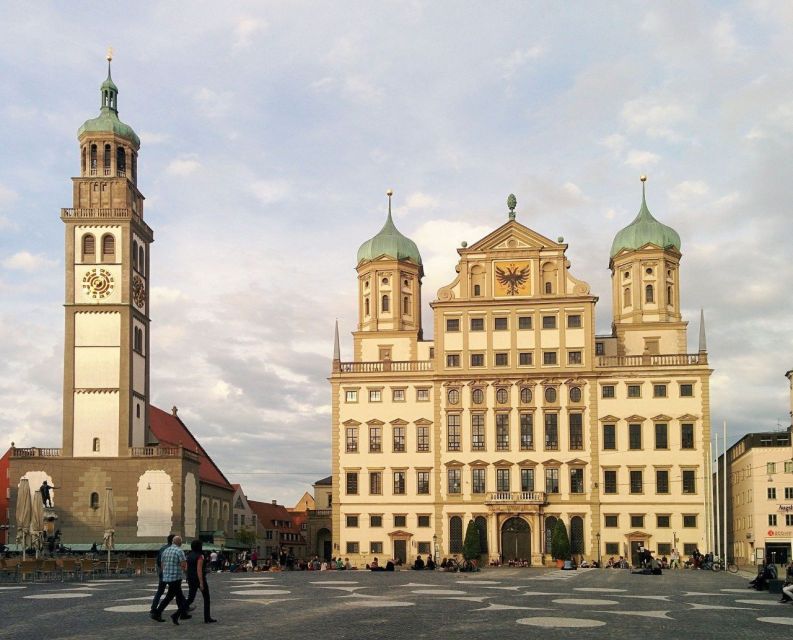
The Augsburg Town Hall is one of the key sights on the route. It is presented as the first building in the world to have six floors, a detail that gives the building a memorable place in architectural history.
The important point is not only its height. A large town hall tells you what a city wanted the world to see about itself. Augsburg’s civic center reflects money, confidence, and the desire to present local power on a grand scale.
You should expect the guide to explain the building as part of Augsburg’s political and economic story rather than as an isolated photo stop. That approach makes the architecture easier to understand. The Town Hall becomes evidence of what the city could afford and how it viewed its own place in Europe.
Entrance fees are not included, so check what your booking covers if you hope to go inside a paid site. The tour is still useful if much of the walk is viewed from public streets, but you should not assume that a guided explanation includes admission to every interior.
The Fuggerei: wealth with a social purpose
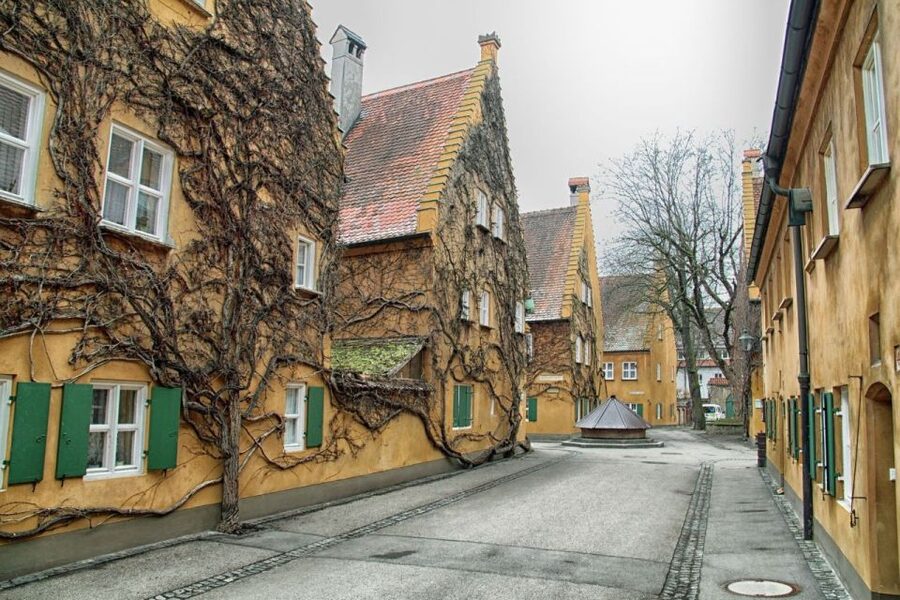
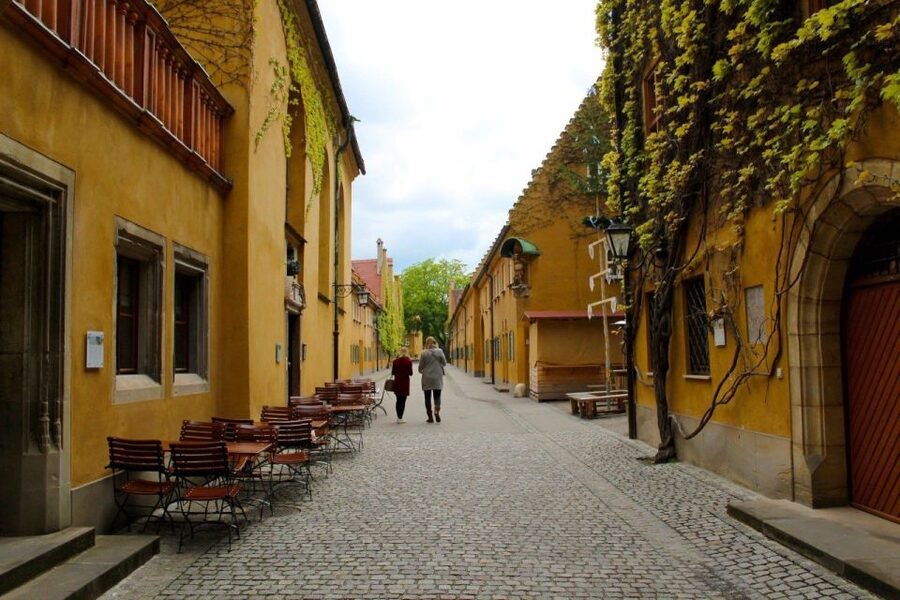
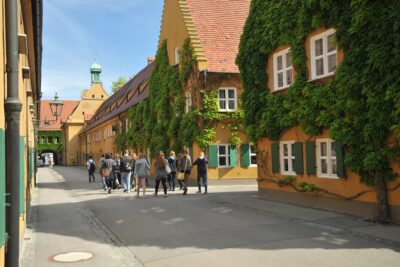
The Fuggerei is both the meeting point and one of the tour’s major subjects. Founded by the Fugger family, it is described as the oldest social settlement in world history.
This is where Augsburg’s financial story becomes personal. The Fugger family made its fortune through commerce and finance, yet the Fuggerei is remembered for providing housing for people in need. That contrast gives the tour more substance than a simple tale of rich merchants and grand buildings.
Starting here is practical. You do not have to search for an obscure meeting spot in the old city, and the first major story begins right away. It also means you should arrive ready to walk, since the Fuggerei is a proper starting point rather than merely a nearby landmark.
Ask your guide how the settlement fits into the wider history of Augsburg. The private setting gives you a chance to connect the Fugger family’s wealth with the Town Hall, the city’s public image, and the wider growth of Augsburg.
The tour information does not promise admission to the Fuggerei, and entrance fees are excluded. If you want to explore an interior or paid area, confirm the plan before the walk begins.
More walking tours in Germany:
- Discover Berlin Half-Day Walking Tour
★ 5.0 · 9,624 reviews - Berlin: Third Reich and Cold War 2 Hour Walking Tour
★ 4.9 · 6,830 reviews - Munich: Third Reich & WWII Walking Tour
★ 4.6 · 6,181 reviews - Berlin: Discover Berlin Walking Tour
★ 4.9 · 5,998 reviews
Mozart’s father and the value of a small story
One of the more unexpected stops is the birthplace of Wolfgang Amadeus Mozart’s father. This is a useful reminder that Augsburg’s importance is not limited to rulers, merchants, and buildings.
A birthplace can look modest beside a grand town hall, but family connections often make a city memorable. Here, you get a link between Augsburg and one of Europe’s best-known musical families. The story adds a personal thread to a tour that otherwise moves through civic and economic history.
I especially like this kind of stop because it rewards curiosity. You may arrive in Augsburg expecting Roman remains and Renaissance architecture, then discover that the city also played a part in the life of Mozart’s family.
The available information does not identify the exact guide assigned to a booking, so you should not expect to choose a named guide. The tour is offered in English or German, with a local professional guide leading the walk.
Berthold Brecht’s birthplace and modern Augsburg
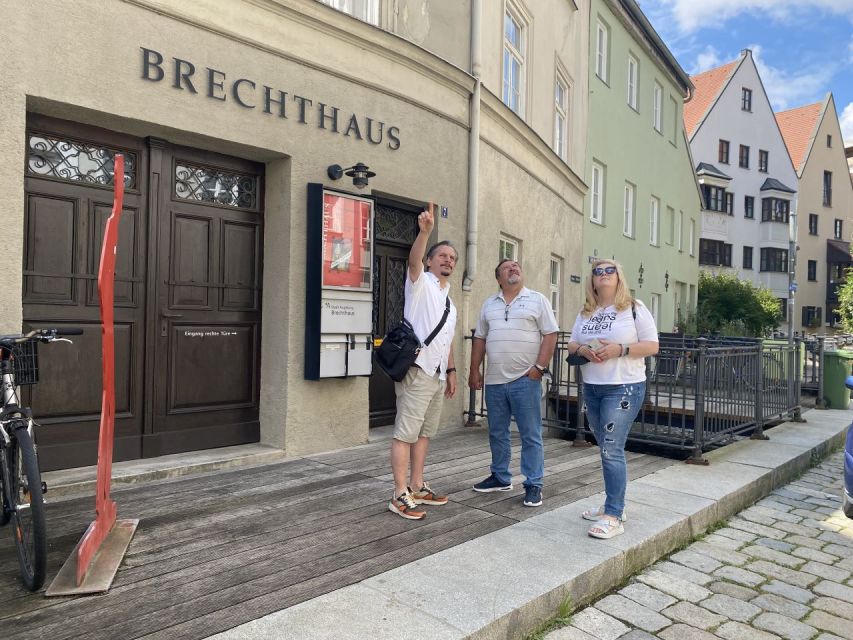
The route also includes the birthplace of Berthold Brecht, the acclaimed German artist and writer. This moves the story forward from Augsburg’s ancient and commercial past into its modern cultural life.
Brecht gives the city a different voice. The Fugger story is about wealth, power, and public duty. Brecht’s connection points toward literature, criticism, and the individual’s view of society. Putting both figures into one short walk helps you see Augsburg as more than a preserved old town.
The birthplace is meaningful even if you are not a Brecht specialist. You can treat it as a compact introduction to an important local figure, then decide later if you want to explore his work in greater detail.
This is also a good place to use the tour’s customization option. If someone in your group cares about German literature, ask the guide to give Brecht more time. If not, you can keep the stop concise and return to architecture or Roman Augsburg.
SchaezlerPalais: a graceful final stop
The walk ends at SchaezlerPalais, a palace that survived World War II without a scratch. That detail gives the final stop unusual weight.
Augsburg was not untouched by the war, so a surviving palace offers a sharp contrast with the damage that affected many German cities. The building lets you end the tour with a story about survival, preservation, and the luck of individual structures.
The palace also provides a change of mood after the practical and political subjects earlier in the walk. You move from Roman administration to merchant wealth, then to famous families and writers, before finishing with an elegant historic building.
The supplied details do not say that admission is included or that the tour enters the palace. Treat SchaezlerPalais as the finishing landmark unless your guide confirms an interior visit. Since entrance fees are excluded, budget separately for any paid admission you choose.
What the private format changes
The private group is the strongest practical feature of this experience. You are not sharing the walk with a large mixed crowd, and the guide can respond to your interests on the spot.
That matters in Augsburg because the city offers several good ways to tell its story. You might want the Roman chapter, the Fugger family, architecture, music, literature, or the city’s wartime survival. A fixed group tour has to give everyone the same balance. This one can shift.
You can also ask for clarification without worrying about interrupting a large group. If a place name, family connection, or date leaves you puzzled, stop and ask. The best use of a private tour is conversation, not simply following a person from one landmark to the next.
The group limit is 15 people. For a family, group of friends, or organized party, that can be a sensible arrangement. For a couple, the same flat price becomes harder to justify.
Is $362 a fair price?
The listed price is $362 per group, with up to 15 people included. At the maximum size, that works out to about $24 per person, before any entrance fees. For a large group, the price can be reasonable, especially if you value a private guide and the ability to shape the walk.
For two people, the calculation changes sharply. You are paying $181 each for two hours before admissions, which is a premium compared with a standard public city walk. One piece of booking feedback specifically called the price too high compared with a comparable 115 euro tour, so price-sensitive couples should compare options carefully.
That does not make the tour poor value. It means the value depends on what you want. If you need a private English or German tour at a particular time, want a local guide focused on your group, and have several people sharing the cost, the arrangement becomes more attractive.
If you are traveling alone or as a pair, look closely at the private benefit. You are buying flexibility and personal attention, not a longer itinerary or included museum tickets.
Timing, language, and walking comfort
The experience lasts two hours, with starting times dependent on availability. That makes it easy to place on a day in Augsburg, but you should check the available time before building a tight schedule around it.
The tour is offered in English and German. If your group includes people with different language needs, clarify the preferred language at booking so the walk is comfortable for everyone.
You meet at the Fuggerei. Plan to be there before the scheduled start, since the tour begins from that landmark and not from a hotel or transport hub.
This is a walking tour through the old city, and it is not suitable for wheelchair users. The supplied information does not give a route length, surface details, or the number of stairs, so ask the provider directly if anyone in your group has mobility concerns.
Who will get the most from this Augsburg tour?
I would recommend this experience to a group that wants a clear first look at Augsburg without spending half a day in a museum. It is especially useful for people who like history told through places and personalities.
It suits you if you want:
- A private guide rather than a fixed public group
- A short introduction to Augsburg’s Roman, medieval, and modern chapters
- A mix of architecture, social history, music, and literature
- The chance to adjust the emphasis during the walk
- An English or German tour for a group of up to 15
It is less suitable if you want detailed interior visits, extensive museum time, or a low-cost tour for one or two people. The two-hour length keeps the pace manageable, but it also limits how long you can spend at each stop.
How to prepare for a better walk
Before you meet at the Fuggerei, choose two subjects your group cares about most. You might pick Roman Augsburg and the Fugger family, or the Town Hall and Brecht. Sharing those interests at the start helps the guide use the private format well.
Keep your expectations clear about admissions. Entrance fees are not included, and the information provided does not promise entry to every landmark. Ask at the beginning which sights you will see from outside and which, if any, include interior access.
Give yourself room after the tour if you want to continue exploring. The walk introduces the Town Hall, Fuggerei, Mozart connection, Brecht birthplace, and SchaezlerPalais, but two hours is an orientation rather than a complete study of Augsburg.
The cancellation policy is friendly for uncertain plans: you can cancel up to 24 hours in advance for a full refund. You can also reserve now and pay later, which helps if your German itinerary is still changing.
Should you book the Augsburg Historical Highlights Private Walking Tour?
Book it if you are traveling with a group and want a flexible, story-led introduction to Augsburg. The Roman origin, Fugger settlement, Town Hall, Mozart family connection, Brecht birthplace, and SchaezlerPalais give the walk a strong range of subjects.
For two people, compare the $362 group price with other local walking tours before committing. For a larger party, the cost per person improves, and the private format becomes much easier to defend.
My practical verdict: this is a well-focused way to get your bearings and understand why Augsburg matters. Just confirm the starting time, language, and any desired admissions, then tell the guide what your group most wants to see.
FAQ
Where does the Augsburg walking tour meet?
The meeting point is the Fuggerei.
How long does the tour last?
The tour lasts two hours.
How much does the private tour cost?
The price is $362 per private group of up to 15 people.
Is the tour private?
Yes. It is a private guided tour for your group.
Which languages are available?
The live guide is available in English and German.
Are entrance fees included?
No. Entrance fees are not included in the tour price.
Is the tour suitable for wheelchair users?
No. The activity is listed as not suitable for wheelchair users.
Just added around Germany
- From Berlin: Gardens & Palaces of Potsdam Bike Tour★ 5.0 · 61 reviews
- Berlin: Battle for Seelow Heights WW2 tour -Clash of Titans★ 5.0 · 27 reviews
- From Amsterdam: Cologne Private Sightseeing Tour★ 5.0 · 4 reviews
- From Berlin: Historical Gems of Potsdam Private Day Trip★ 4.4 · 4 reviews
- Freiburg: Veni, vidi, vino – wine hike and tasting★ 4.5 · 144 reviews
- From Alken: Return Day Trip by Boat to Cochem★ 4.6 · 141 reviews
- Fritz Haarmann – Die Mördertour★ 4.6 · 41 reviews
- Freiburg: Tour of the city with cathedral visit★ 4.7 · 167 reviews
Augsburg Tours, compared.

Augsburg’s Water Management System – City Walking Tour
Read our review →
Classic city tour in the World Heritage City of Augsburg
Read our review →
Browse the lists this tour appears in