
Review · AUGSBURG TOURS
Augsburg’s Water Management System – City Walking Tour
Augsburg’s water story is written into its streets. On this two-hour walk, you follow Lech canals, grand fountains, and old waterworks instead of treating the city’s UNESCO designation as a distant museum label. The clever part is seeing how water shaped daily life, industry, and the look of the Old Town.
I like the route for two reasons: it combines big sights such as the Augustus Fountain with quieter corners in the Lech quarter, and it keeps the subject tied to real places under your feet. The main consideration is that the tour leans toward dates and facts. If you prefer personal tales and anecdotes, the experience may feel more like a history lesson than a lively story walk.
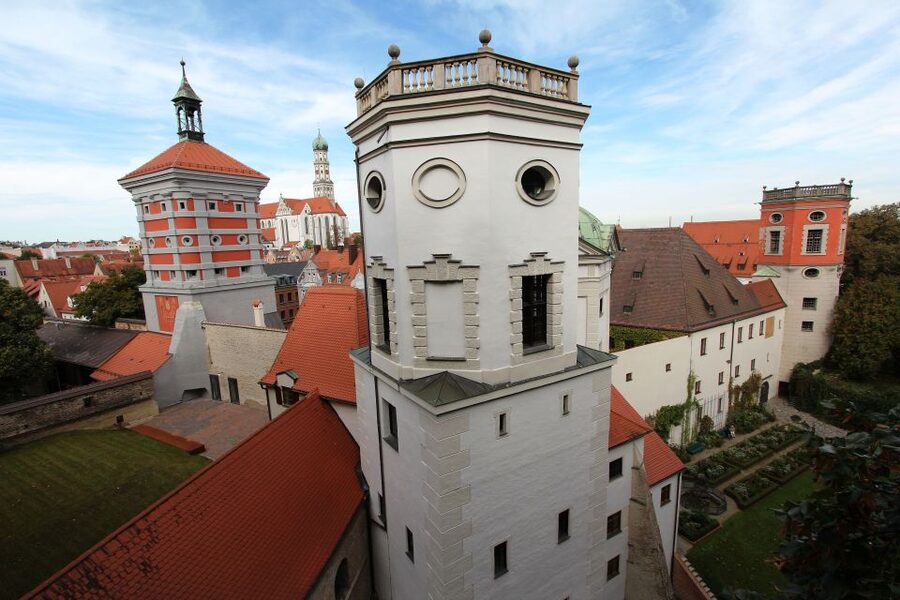
- Rotes Tor waterworks: See the oldest existing waterworks in central Europe.
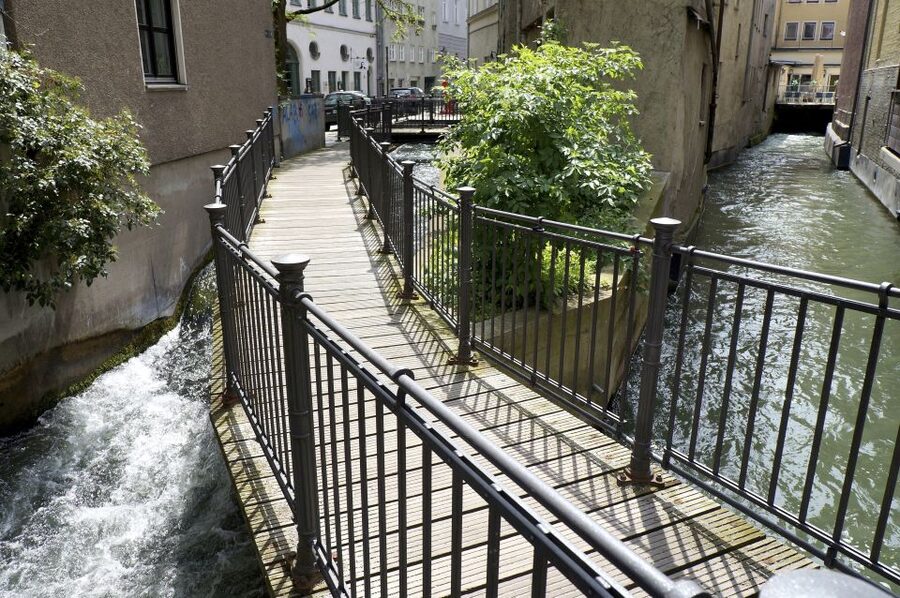
- Lech quarter canals: Walk beside narrow historic channels and red-roofed houses.
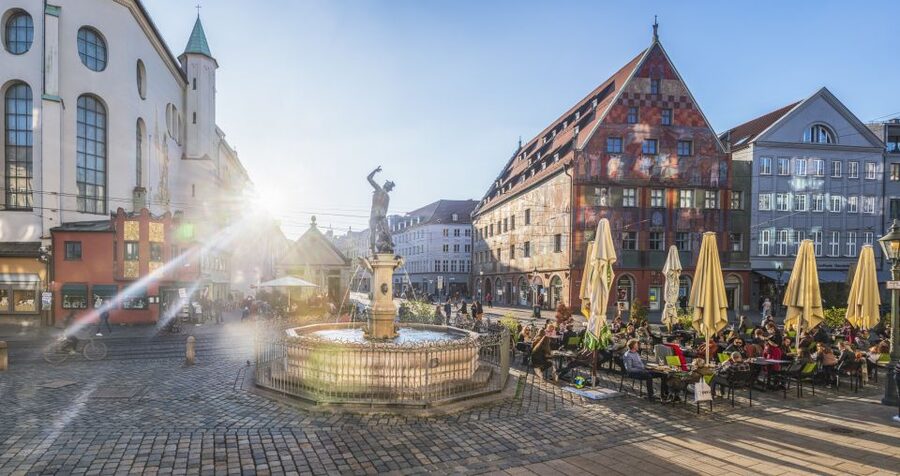
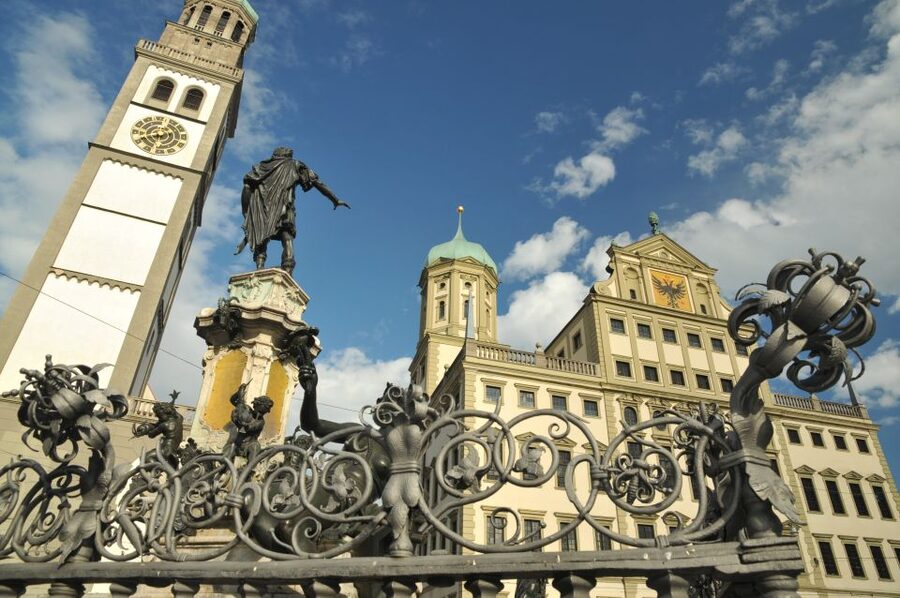
- Three major fountains: Visit the Augustus, Merkur, and Herkules fountains.
- UNESCO focus: Learn about several of the 22 parts of Augsburg’s water management system.
- Two-hour format: A compact introduction that fits neatly into a day in Augsburg.
- Free audio option: Bring your smartphone, headphones, and internet connection for elysium® sound amplification.
Why Augsburg’s Water System Makes a Good City Walk
Augsburg is easier to understand once you notice the water. The city’s canals are not simply pretty strips of moving water. They are part of a carefully managed system that helped supply homes, power workshops, support fountains, and shape urban growth over many centuries.
This tour gives you a way to connect those pieces. You begin near the Tourist Information Center, in the heart of the city, then walk through the Old Town toward the Lech quarter and Rotes Tor. The route covers several of the 22 elements linked to Augsburg’s UNESCO World Heritage Site.
That number matters. You will not see every part of the entire system in two hours, but you will encounter enough major features to understand why Augsburg received international recognition. The guide explains the links between water supply, public works, architecture, and civic life.
I like this approach because it gives familiar sights a second meaning. A fountain becomes more than decoration. A canal becomes more than a photogenic line beside a street. A waterworks building becomes evidence of planning and engineering.
The tour currently carries a 4.5 rating from 168 ratings, and the strongest praise centers on how clearly the subject is explained. Guide Brigitte Plonner, in particular, has been singled out for making Augsburg’s water management easy to grasp and for continuing with a very small group rather than canceling. That is useful to know if you value a personal guide who can respond to questions.
Starting in Augsburg’s Old Town
Meet your guide in front of the Tourist Information Center. From there, the tour heads into Augsburg’s Old Town, where cobblestone streets set the pace.
Wear proper walking shoes. Cobblestones are part of the charm, but they can be tiring in thin soles or poor weather. You should also dress for the forecast, since this is an outdoor walk with no promise of long indoor breaks.
The opening section helps you get your bearings. Instead of beginning with an abstract lecture about water management, the guide places the system in the city around you. You see fountains, streets, canals, and buildings as parts of one working network.
The Old Town section is also helpful for first-time visitors who want a quick orientation. A two-hour guided route can show you which public spaces deserve a closer look later. If you have only one day in Augsburg, this walk gives you a solid framework for exploring on your own afterward.
Do not expect entry into a string of museums. Entry tickets are not included, and the activity is built as a walking tour through public areas. That keeps the price modest and the route focused, but it also means your enjoyment depends on listening and looking closely rather than collecting indoor attractions.
More walking tours in Germany:
- Discover Berlin Half-Day Walking Tour
★ 5.0 · 9,624 reviews - Berlin: Third Reich and Cold War 2 Hour Walking Tour
★ 4.9 · 6,830 reviews - Munich: Third Reich & WWII Walking Tour
★ 4.6 · 6,181 reviews
The Augustus, Merkur, and Herkules Fountains
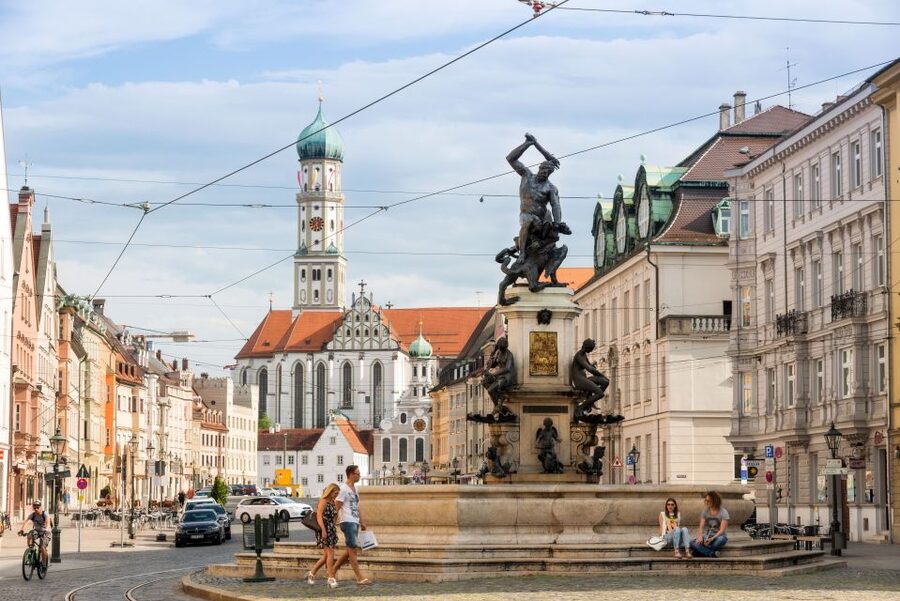
The fountains are among the most rewarding stops because they make the water system visible at street level. You see the Augustus Fountain, Merkur Fountain, and Herkules Fountain, each offering a different visual anchor for the city.
The Augustus Fountain is the headline sight in this group. Its scale and setting make it an easy place to appreciate Augsburg’s public investment in water. The guide adds the facts that turn the fountain from a quick photograph into part of a wider civic story.
The Merkur Fountain and Herkules Fountain broaden that picture. Together, the three stops show how fountains could serve public spaces while also expressing wealth, power, and artistic ambition. The tour does not treat them as isolated monuments. It connects them to the infrastructure behind the water.
This is where the walk works best for me. You get architecture and sculpture, but the guide keeps returning to the practical question: how did water reach the city, and why did managing it matter so much?
A possible weakness is the level of detail. Some sessions focus heavily on historical dates and facts, with fewer personal stories or anecdotes. That suits you if you enjoy a clear chronology and named milestones. If you want a guide to perform the city through colorful characters, ask questions early and use the small-group setting to encourage conversation.
Walking the Lech Quarter Canals
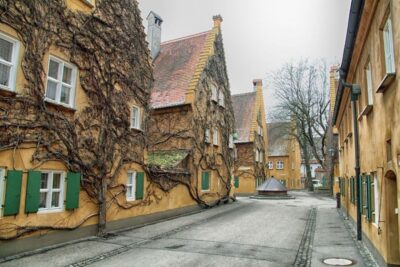
The route then reaches the Lech quarter, one of the most atmospheric parts of the experience. Here, small canals run alongside red-roofed houses and cobblestone lanes.
This section provides a welcome change from the larger fountains. The canals are narrower and more intimate. You see water as part of the neighborhood itself, not only as a grand feature in a central square.
The Lech quarter helps explain why Augsburg’s water system is worth seeing in person. A diagram could show channels and flow. A walk beside the canals lets you notice their scale and relationship to homes and streets. You begin to understand that water management was woven into ordinary urban life.
It is also the best part for photographs, though the route is more than a photo stop. Take time to look at how the canals sit within the old streetscape. The combination of moving water, house fronts, and uneven paving gives this section a strong sense of place.
The tour remains outdoors here, so rain can affect the mood. One session took place in wet weather, and the factual delivery felt especially dry. That is not a criticism of the route itself, but it is a useful warning: choose weather-appropriate clothing and be ready for the experience to feel more serious than atmospheric if conditions are poor.
Rotes Tor and the Oldest Existing Waterworks
The walk finishes at the waterworks by the imposing Rotes Tor. This is the key stop for anyone interested in the practical side of Augsburg’s system.
The waterworks are described as the oldest existing waterworks in central Europe. That claim gives the stop real weight, but the value comes from seeing the site after walking past the canals and fountains. By this point, you have already encountered the city’s water in public spaces and neighborhood channels. Rotes Tor brings the infrastructure into focus.
You should listen closely here. The tour explains Augsburg’s long effort to manage and supply water, but it is not primarily a technical engineering visit. One useful distinction from the tour’s feedback is that the focus falls more on the history of water supply than on detailed technology.
That makes the experience accessible. You do not need a background in engineering to follow the guide. At the same time, someone hoping for a close technical breakdown of pumps, mechanics, or construction methods may find the explanation less detailed than expected.
The tour does not include entry tickets to attractions. The supplied information describes a visit to the waterworks at Rotes Tor, but it does not promise admission inside every building. Plan on an exterior-focused walking experience unless the guide or booking details confirm access on your date.
A few more Germany half-days to weigh up
- Augsburg: Walking Tour with Fuggerei
★ 4.6 · 2,245 reviews - Augsburg: Illuminated Guided Evening Walking Tour
★ 4.6 · 67 reviews - Classic city tour in the World Heritage City of Augsburg
★ 4.0 · 41 reviews - Historical Walking Tour of Augsburg
★ 4.9 · 10 reviews
How the Guides Shape the Experience
The tour is available in German and English with a live guide. The guide matters here because Augsburg’s water system is not self-explanatory. Canals and fountains are easy to see, but their connection requires explanation.
Brigitte Plonner has received especially strong praise for making the subject clear and keeping the tour engaging through conversation. One notable point is that she led the walk even with only three participants. That suggests the experience can work well as a small, direct exchange rather than a speech delivered to a crowd.
You should still set your expectations carefully. The guiding style can vary. Some sessions have been described as very informative but focused mainly on historical facts and dates, with limited anecdotes. Another short description praised the guide as a good narrator, while several ratings called the tour interesting and worth repeating.
I would book this if you like guides who explain context and answer questions. I would be more cautious if you need constant entertainment or a story-driven performance. The subject itself is unusual enough to carry the walk, but the delivery may feel formal.
The optional elysium® sound amplification system is a thoughtful extra. You use your own smartphone, headphones, and internet connection. It is free of charge, and it may help you hear the guide more clearly, especially if street noise or group spacing makes listening difficult.
What Two Hours and About $20 Get You
The listed price is about $20 per person. The detailed price information gives a base cost of 14 euros plus a 3 euro administration fee, so check the final amount in your booking currency before paying.
For that fee, you receive a two-hour guided walking tour and the option to use the sound amplification system. Food, drinks, and entry tickets are not included. The value depends on how much you want interpretation rather than admission to a paid attraction.
I consider the price fair for a specialist city walk. Augsburg’s water management system is spread through the city, and a guide saves you from piecing together the canals, fountains, and waterworks on your own. You are paying for the explanation and route design, not for a large indoor exhibit.
The tour also offers reserve now and pay later booking, plus free cancellation up to 24 hours before the start time. Those terms are useful if your schedule in Bavaria is still shifting. The activity also offers skip-the-ticket-line access, though the walk itself does not include attraction entry.
Wheelchair access is listed as available. Since the route includes cobblestones and historic streets, you may still want to confirm the exact conditions for your date if surface comfort is a major concern.
Who Should Book This Augsburg Tour
I would recommend this walk to first-time visitors who want a focused introduction to Augsburg. It is also a good match for anyone interested in urban engineering, public fountains, historic neighborhoods, or UNESCO sites that are experienced outdoors rather than behind glass.
Families with older children may find the canals and fountains easier to connect with than a long museum lecture. The two-hour length is manageable, though the factual style may suit children who enjoy history more than those who need frequent hands-on activity.
Architecture fans will appreciate the route through the Old Town and Lech quarter. Photographers should like the contrast between monumental fountains and small canal streets. The Rotes Tor stop adds a strong final point to the walk.
I would not choose this as my only activity if I wanted detailed access to waterworks interiors or a technical engineering demonstration. The tour explains the history of water supply and shows important sites, but it does not promise entry tickets or an in-depth mechanical study.
Bring comfortable shoes, weather-ready clothing, your smartphone, headphones, and an internet connection if you want the optional audio support. Meet in front of the Tourist Information Center, and allow enough time to arrive without rushing.
My Verdict on Augsburg’s Water Management Walk
Book this tour if you want Augsburg to make more sense as a living city, not just a collection of old buildings. The walk links the Augustus, Merkur, and Herkules fountains with the Lech quarter canals and the Rotes Tor waterworks, giving you a clear route through one of Europe’s most unusual urban systems.
The biggest strength is the subject itself, backed by guides who can explain why these features matter. Brigitte Plonner’s warm, committed approach is a particularly good sign for visitors who value direct conversation. The main limitation is the factual tone some guides use, with more dates than stories.
At about $20 and two hours, this is a sensible add-on to an Augsburg day. Choose it for context, canals, fountains, and a clear introduction to the UNESCO water system. Skip it only if you want a highly technical tour or guaranteed indoor attraction access.
FAQ
How long is the Augsburg water management tour?
The walking tour lasts two hours.
Where does the tour meet?
Meet your guide in front of the Tourist Information Center.
What languages are available?
The tour is offered in German and English.
What sights are included on the route?
The walk includes parts of Augsburg’s Old Town, the Lech quarter canals, the Augustus Fountain, Merkur Fountain, Herkules Fountain, and the waterworks at Rotes Tor.
How many parts of the UNESCO water system will I see?
The route visits several of the 22 elements that make up Augsburg’s water management system.
Is the Rotes Tor waterworks the oldest in central Europe?
The Rotes Tor site is described as the oldest existing waterworks in central Europe.
Is the tour wheelchair accessible?
Yes, the activity is listed as wheelchair accessible.
Is the audio amplification system included?
Yes. The optional elysium® sound amplification system is free of charge. You need your own smartphone, headphones, and internet connection.
Are entry tickets, food, or drinks included?
No. Entry tickets to attractions, food, and drinks are not included.
What should I bring?
Bring comfortable shoes and clothing suited to the weather. If you want to use elysium®, also bring your smartphone, headphones, and an internet connection.
Just added around Germany
- Berlin: Battle for Seelow Heights WW2 tour -Clash of Titans★ 5.0 · 27 reviews
- From Berlin: Gardens & Palaces of Potsdam Bike Tour★ 5.0 · 61 reviews
- From Amsterdam: Cologne Private Sightseeing Tour★ 5.0 · 4 reviews
- From Berlin: Historical Gems of Potsdam Private Day Trip★ 4.4 · 4 reviews
- Freiburg: Veni, vidi, vino – wine hike and tasting★ 4.5 · 144 reviews
- From Alken: Return Day Trip by Boat to Cochem★ 4.6 · 141 reviews
- Fritz Haarmann – Die Mördertour★ 4.6 · 41 reviews
- Freiburg: Tour of the city with cathedral visit★ 4.7 · 167 reviews
Augsburg Tours, compared.
Classic city tour in the World Heritage City of Augsburg
Read our review →
Browse the lists this tour appears in