

Review · BERLIN TOURS
Berlin: Walking Tour of the Top 10 Sightseeing Attractions
Berlin compresses centuries of upheaval into a few city blocks, and this tour makes that contrast its main subject. In two hours, you move from the modern Paul-Löbe-Haus and Federal Chancellery to the Reichstag, Brandenburg Gate, Holocaust Memorial, and the grand squares of old Berlin. The guide’s job is to connect those places, not just point at them.
I like the fast overview and the route’s mix of famous sights and less obvious historical stops, especially Bebelplatz and Lustgarten. I also like the human touch: guides such as Max have allowed time for photos and questions, while another guide extended the tour well beyond the scheduled finish. The main consideration is pace. Four kilometers and more than ten major stops in 120 minutes leaves little time for long pauses or interiors.
Key points to know before booking
- A 4-kilometer route links modern government Berlin with the old royal center.
- The Brandenburg Gate is only one part of the story, with the Reichstag, Holocaust Memorial, Gendarmenmarkt, and Museum Island also included.
- Bebelplatz adds real historical weight, focusing on the Nazi book burning rather than only postcard views.
- English, German, and Spanish tours are available, with private and small-group options.
- The route is designed for orientation, not detailed museum visits or extended time inside landmarks.
- At $82 per person, value depends on the guide and group size, since the tour lasts two hours and is primarily outdoors.
Why this short Berlin walk works
Berlin can be confusing on a first visit. Its major sights are spread across several districts, and the city’s history does not unfold in a neat line. A royal boulevard may lead to a Nazi-era memorial, then to a Cold War landmark, then to the seat of today’s parliament.
This walk gives you a usable mental map. You begin opposite the Federal Chancellery, cross the government quarter, reach the Brandenburg Gate, and then continue down Unter den Linden toward Museum Island. That progression helps you see Berlin as a city rebuilt and reinterpreted many times.
The guide adds the thread that a map cannot provide. You’ll hear about Prussian power, the Nazi period, the Cold War, and the fall of the Berlin Wall. The tone includes Berlin humor, so the presentation should feel conversational rather than like a formal lecture.
Still, keep your expectations in check. This is a sightseeing walk, not a museum tour. The schedule allows time to look, listen, and take photos, but not to enter every building or study each site at length.
More walking tours in Berlin:
- Discover Berlin Half-Day Walking Tour
★ 5.0 · 9,624 reviews - Berlin: Third Reich and Cold War 2 Hour Walking Tour
★ 4.9 · 6,830 reviews - Berlin: Discover Berlin Walking Tour
★ 4.9 · 5,998 reviews
Starting at Paul-Löbe-Haus and the government quarter
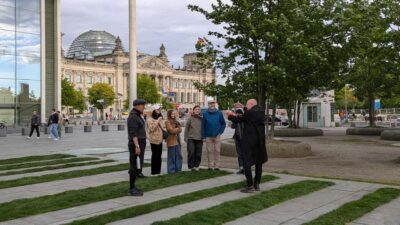
Meet in front of the main entrance of the Paul-Löbe-Haus at Konrad-Adenauer-Straße 1. The building sits opposite the Federal Chancellery, placing you in the middle of Germany’s present-day political district from the first minute.
The opening view includes the Chancellery, Berlin Central Station, and the Bell Tower in Tiergarten. It is a useful introduction because modern Berlin looks very different from the imperial city farther east. The clean lines and broad spaces of the government district reflect the capital’s post-reunification role.
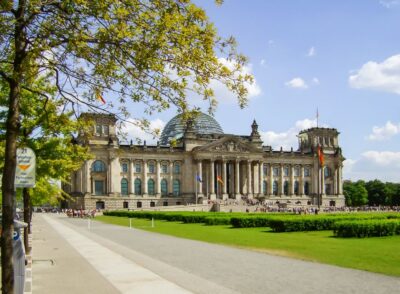
From here, the route moves toward the Reichstag, home of the German Parliament. Your guide explains the building’s place in Berlin’s political story and points out how its setting changed after reunification.
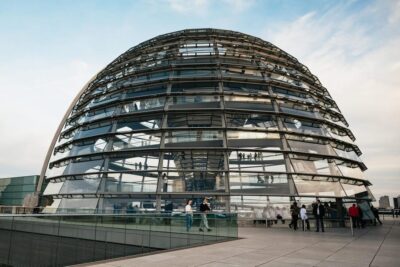
You should not expect a parliamentary visit during this walk. The Reichstag is a guided sightseeing stop, and the listed route does not include an interior tour or dome entry. If the building is high on your list, treat this walk as a first look and arrange any separate visit on your own.
The Reichstag and Brandenburg Gate
The Reichstag leads naturally to Berlin’s most famous landmark, the Brandenburg Gate. The gate once marked the edge of the city and later became a powerful symbol of division, reunification, and political change.
This is one of the best places for photographs, and the schedule includes a photo stop. Your guide can help place the gate in context rather than leaving you with a quick picture and a date. Nearby, you’ll see the American and French embassies, the Hotel Adlon, and the long line of Unter den Linden stretching east.
The view also reaches toward the Victory Column and the Soviet War Memorial. Even without visiting those sites, seeing them from the gate helps you understand how different periods of German and European history sit close together.
I like this part of the tour because it avoids treating Brandenburg Gate as an isolated monument. The surrounding buildings and distant landmarks show how much political meaning has gathered around one entrance to the city.
The drawback is that the area can feel crowded and exposed, especially when the weather is poor. You will need to listen while standing outdoors, and the guide may need to keep the group moving to stay on schedule.
Walking Unter den Linden toward the old center

From Brandenburg Gate, you follow Unter den Linden, Berlin’s best-known historic boulevard. The avenue links the western side of the old city with Museum Island and the former royal center.
The route is especially useful for first-time visitors because it gives you direction. Instead of seeing Berlin’s landmarks as separate points, you watch the city change as you walk east. Government buildings and embassies give way to grand institutions, ceremonial spaces, and landmarks tied to Prussian rule.
The guide’s stories are the main reason this stretch matters. A boulevard can look impressive without telling you much. With explanation, its buildings become part of a larger story about emperors, revolutionaries, dictatorship, war, and reunification.
You should wear shoes that can handle steady walking. The full route covers about 4 kilometers, and the tour keeps a fairly brisk rhythm because the guide has many stops to cover.
A few more Berlin half-days to weigh up
- Berlin: Reichstag, Dome and Government District Guided Tour
★ 4.7 · 18,288 reviews - Berlin: 1-Hour City Tour by Boat with Guaranteed Seating
★ 4.3 · 16,993 reviews - Berlin: Boat Tour Along the River Spree
★ 4.4 · 11,252 reviews - Berlin: Hop-on Hop-off Bus Tour with Live Commentary
★ 4.3 · 8,579 reviews
Gendarmenmarkt and its three major buildings
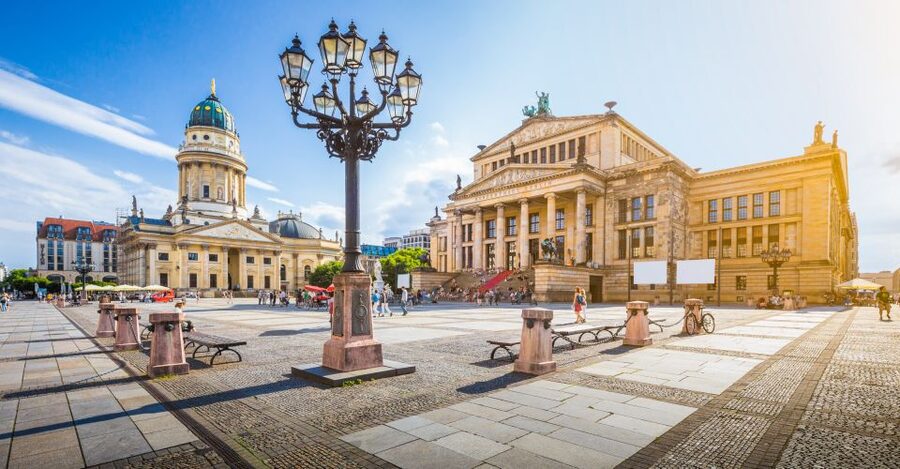
Gendarmenmarkt is one of Berlin’s most handsome squares and one of the tour’s strongest architectural stops. It brings together the German Cathedral, French Cathedral, and Konzerthaus in one carefully framed urban space.
The square also gives the guide a chance to explain Berlin beyond the best-known twentieth-century events. You’ll see how religious, royal, and civic architecture shaped the old city.
The two cathedrals are easy to confuse at a glance, so this is a place where clear commentary helps. The Konzerthaus completes the composition and gives the square its formal, balanced feel.
There is no listed interior admission here. You’ll see the buildings from outside and hear their place in Berlin’s development. That is enough for an overview, but if you care about architecture or concert halls, you may want to return later with more time.
Bebelplatz and the memory of book burning
Bebelplatz is a smaller stop with a much heavier subject. The square is connected to the Nazi book burning of 1933, and the guide discusses that event as part of Berlin’s political history.
This is an important choice in a rapid city tour. It prevents the walk from becoming a parade of grand facades and royal monuments. You are asked to pause and consider how public spaces can carry painful memories as well as beauty.
The itinerary includes guided explanation and some free time here. That small amount of space in the schedule matters. You can look around, take in the square, and let the subject settle before continuing.
Bebelplatz may be less instantly familiar than Brandenburg Gate, but I would not treat it as a filler stop. It gives the tour moral and historical balance, especially for anyone trying to understand Berlin’s twentieth century.
Potsdamer Platz and Berlin’s modern reset
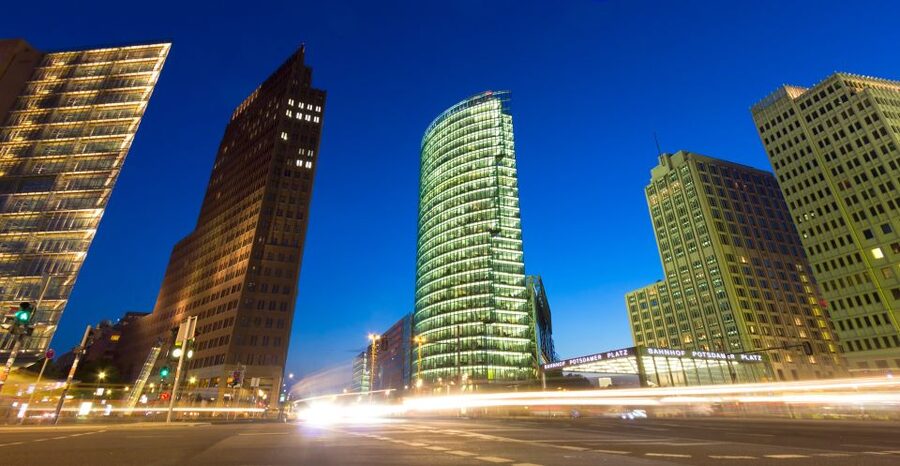
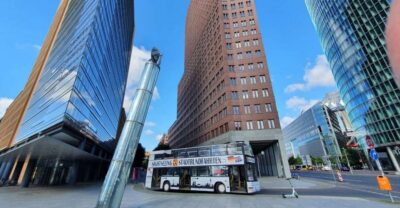
Potsdamer Platz adds another sharp change of mood. It is included as a guided sightseeing stop and helps show how Berlin rebuilt major parts of the city after the Wall fell.
The area is a useful counterpoint to Unter den Linden and Gendarmenmarkt. Instead of old stone and royal associations, you see the city’s modern side and its effort to create a new urban center.
Because the tour is short, your stop here is an overview rather than a detailed architectural walk. The guide’s explanation is what makes the location useful. You get a sense of how Berlin’s divided past gave way to a connected capital, without spending the rest of your day in a single district.
Lustgarten, Berlin Cathedral, and Museum Island
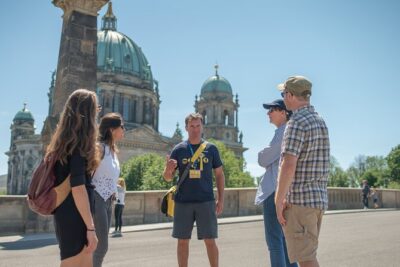
The route finishes in the historic center around Lustgarten, Berlin Cathedral, and Museum Island. Lustgarten is closely tied to Prussian history, and its open setting gives you a good view of the cathedral and nearby landmarks.
Berlin Cathedral is one of the city’s most recognizable buildings. Its large dome and ornate exterior make it a natural photo stop, but the guide also places it within the former royal center rather than presenting it as a stand-alone church.
Museum Island adds cultural weight to the final section. The route includes a guided sightseeing stop, but it does not include museum entry. That distinction matters. You’ll get orientation and exterior context, not time inside the collections.
The New City Palace is also part of the sights presented along this stretch. From the palace area, you can look toward the Berlin TV Tower, which gives you a striking view across the old center and the newer city beyond.
This ending works well because you finish near Friedrichsbrücke, close to major central sights and public spaces. You can continue exploring on foot after the guide leaves, or use the area as a starting point for a museum visit later.
What the guide adds to the experience
The tour depends heavily on the person leading it. The route is strong, but the same landmarks can feel flat if the explanations are rushed or vague.
The available guide languages are English, German, and Spanish. The guides are described as certified local professionals, and the feedback points to several useful habits: answering questions, allowing photo time, adjusting the pace, and adding information when the group wants more.
Max is specifically praised for answering questions and giving people time to take photographs and absorb the information. Another guide is described as extending the tour well past two hours, while a separate private tour guide received praise for clear and competent storytelling.
That tells you what to look for during the walk. Ask questions when a site catches your interest, especially at the Reichstag, Brandenburg Gate, and Bebelplatz. A good guide can turn a familiar monument into a place with political and personal meaning.
The humor is part of the advertised approach, but it should be seen as seasoning, not the main course. Berlin humor can make difficult subjects easier to approach, but the serious history still needs room to breathe.
The pace, group size, and practical comfort
Two hours is enough to get your bearings, but it is not enough for a slow tour. You will walk from the government quarter through the historic center, stopping often for short explanations and photographs.
The stated distance is approximately 4 kilometers. That is manageable for most people, and the tour is listed as suitable for all ages and fitness levels. Even so, comfortable shoes and a water bottle are sensible choices. You will be outdoors in all weather conditions, so dress for the forecast.
Private and small-group formats are available. This can make a major difference at a busy monument. A smaller group is easier to hear, easier to keep together, and more likely to leave room for questions.
The walk is wheelchair accessible according to the activity details. If you need a specific arrangement, confirm the practical details when booking, since the tour moves across several public areas rather than staying in one building.
The starting point is specific, but give yourself time to find the Paul-Löbe-Haus entrance. The tour runs daily at 10:00 AM and 2:00 PM, with availability shown at booking.
Is $82 a fair price for two hours?
At $82 per person, this is not a cheap casual stroll. The price makes the most sense if you want a live guide, a planned route, and a quick introduction to Berlin’s central sights without organizing the sequence yourself.
You are paying for interpretation and convenience more than admission tickets. The walk is primarily outdoors, and the listed stops do not include entry to the Reichstag, Berlin Cathedral, or the museums of Museum Island.
The value improves if you choose a private or small-group format, especially if you have limited time in Berlin or want to ask many questions. A standard group booking may feel less worthwhile if you already know the city well or prefer to linger at each monument.
I would compare the cost with your schedule. If this is your first morning in Berlin, the tour can save you time and help you decide where to return. If you have several days and enjoy researching routes yourself, you may prefer to visit these public sites independently and spend the money on a museum or interior tour.
Free cancellation up to 24 hours before the activity and reserve now, pay later terms also make it easier to fit into a changing itinerary.
Who should book this Berlin walking tour?
I would recommend it most strongly to first-time visitors who want a clear overview in one morning or afternoon. Families and mixed-age groups may also appreciate the short format, humor, and steady succession of recognizable landmarks.
It suits you if you want history explained in plain language and prefer walking to sitting on a bus. It is also useful early in a Berlin stay, since the route connects several districts and gives you ideas for later visits.
It may not suit you if you want museum interiors, long architectural discussions, or a slow photography walk. History fans who already know the central sights may find the pace too quick for detailed study.
The tour is also a good fit for anyone who wants to ask questions. The strongest guide experiences described here involve personal attention, time for photos, and answers tailored to the group rather than a fixed speech delivered at every stop.
FAQ
How long is the Berlin sightseeing tour?
The tour lasts two hours, or 120 minutes, and covers approximately 4 kilometers on foot.
Where does the tour begin?
You meet in front of the main entrance of the Paul-Löbe-Haus at Konrad-Adenauer-Straße 1, opposite the Federal Chancellery.
Where does the tour finish?
The walk finishes at Friedrichsbrücke near Berlin’s central historic sights.
Which languages are available?
Live guides are available in English, German, and Spanish.
Does the tour include museum or building entry?
The activity includes guided sightseeing at the listed landmarks, but the provided details do not include admission to the Reichstag, Berlin Cathedral, or Museum Island museums.
Can I cancel or pay later?
You can cancel up to 24 hours in advance for a full refund. Reserve now and pay later terms are also available.
Should you book it?
Book this tour if you want a fast, story-led introduction to Berlin and like having a local guide connect the Reichstag, Brandenburg Gate, Nazi-era memorial sites, Gendarmenmarkt, and Museum Island.
The best reason to choose it is the combination of coverage and context. You see the headline landmarks, but you also stop at Bebelplatz and hear about the city’s darker chapters. Just remember that $82 buys a guided overview, not a series of interior visits.
For a first day in Berlin, a small group or private booking, and comfortable walking shoes, this can be a smart way to get oriented. If you prefer a slow pace or already know Berlin’s center, choose a longer specialist tour instead.
Just added around Berlin
- From Berlin: Gardens & Palaces of Potsdam Bike Tour★ 5.0 · 61 reviews
- Berlin: Battle for Seelow Heights WW2 tour -Clash of Titans★ 5.0 · 27 reviews
- From Berlin: Historical Gems of Potsdam Private Day Trip★ 4.4 · 4 reviews
- Berlin: Französischer Dom 360° Panorama & Crémant to go★ 3.9 · 5 reviews
- Explore Berlin Tour: History and Highlights★ 4.7 · 5 reviews
- Berlin: Evening Yacht Cruise with Aperitif & Dinner Upgrade★ 4.6 · 178 reviews
- Berlin: Expats in Berlin Comedy Show Ticket★ 4.7 · 182 reviews
- Berlin: The Epic Comedy Club Friday Night Showcase★ 4.8 · 28 reviews
Berlin Tours, compared.
Reichstag, Dome and Government District Guided Tour
Read our review →
1-Hour City Tour by Boat with Guaranteed Seating
Read our review →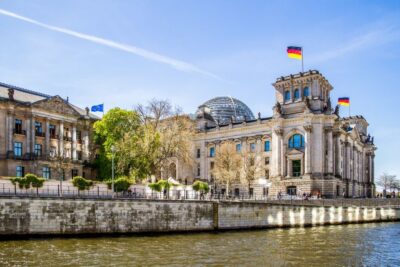
Reichstag, Plenary Chamber, Cupola & Government Tour
Read our review →
Browse the lists this tour appears in