Review · BERLIN TOURS
Berlin: The Feuerle Collection Guided Tour and Entry Ticket
The Feuerle Collection puts ancient Khmer sculpture, Imperial Chinese furniture, and modern art inside a former WWII telecommunications bunker. I like the unusual setting and the way the underground lake becomes part of the museum’s quiet, carefully controlled atmosphere.
I also like the sharp contrast between old and new works, especially the pairing of Asian antiquities with contemporary pieces by Nobuyoshi Araki and Adam Fuss. The main drawback is time: one hour is brief, and the gallery visit can feel closer to 35 or 40 minutes, so you may wish for longer with the collection.
Key points to know
- A WWII bunker becomes an art setting: John Pawson transformed the former telecommunications bunker into a spare, atmospheric museum.
- Three eras meet in one visit: You see Khmer sculpture from the 7th to 13th centuries, Imperial Chinese furniture, and contemporary photography and sculpture.
- The underground lake matters: It is not just a curious feature. Its water, light, and silence help shape the mood of the collection.
- The tour is guided in English: Your guide explains Désiré Feuerle’s ideas and the links between objects from distant periods and cultures.
- Plan for a quiet, focused hour: Cellphones, cameras, video, food, drinks, pets, and touching the art are not allowed.
- The audience is adult-focused: Children under 16 are not admitted, and the experience suits visitors who enjoy slow-looking more than a busy museum circuit.
Entering Berlin’s former telecommunications bunker
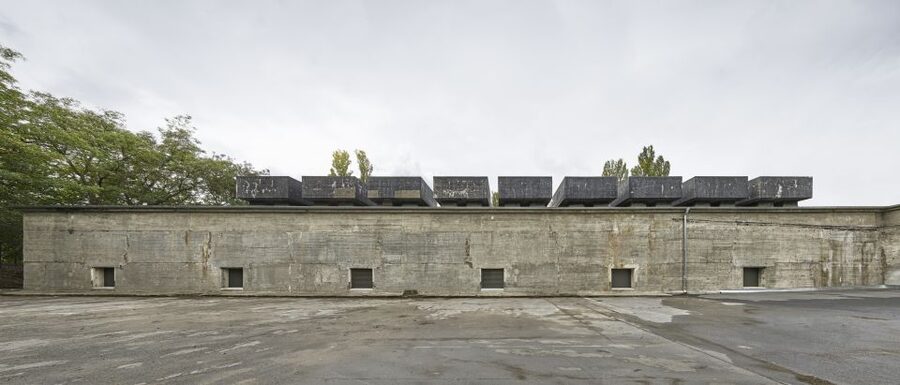
The first surprise is the building. You do not enter a bright, traditional gallery with broad windows and a familiar museum layout. You meet at the entrance of The Feuerle Collection and step into a former World War II telecommunications bunker, a heavy structure given a new life through John Pawson’s restrained design.
That setting changes how you look at the art. The bunker’s enclosed rooms, hard surfaces, and low-key lighting create a sense of distance from the city above. I like that the architecture does not simply hold the objects. It sets the pace for you.
The design is spare rather than decorative. There is little visual clutter competing with the sculptures and furniture, so small details become easier to notice. A carved figure, a lacquered surface, or the shape of a stone seat can command the room without needing a large label or dramatic display.
You should arrive ready for a quiet visit. This is not the sort of museum where you rush from one popular object to the next while checking your phone. Cellphones and cameras are prohibited, along with video recording, food, and drinks. You also cannot touch the exhibits.
A few more Berlin half-days to weigh up
- Berlin: Reichstag, Dome and Government District Guided Tour
★ 4.7 · 18,288 reviews - Berlin: 1-Hour City Tour by Boat with Guaranteed Seating
★ 4.3 · 16,993 reviews - Berlin: Boat Tour Along the River Spree
★ 4.4 · 11,252 reviews
How the one-hour guided tour unfolds
The experience begins with an English-speaking guide who leads you through the collection. The guide is important here because the objects come from different periods and regions. Without some explanation, the connections between an ancient Southeast Asian sculpture and a modern photograph may not be immediately clear.
The tour lasts one hour, with the collection presented as a focused sequence rather than a long museum circuit. That short length works well if you want an unusual cultural stop between larger Berlin sights. It also means you need to pay attention from the start.
Allow the full hour in your schedule. The gallery portion may feel shorter, with one recent experience lasting around 35 to 40 minutes. That can be frustrating if you prefer a slow visit, especially since the collection rewards close looking. On the other hand, the compact format keeps the experience from becoming tiring or overly academic.
The guide explains the approach of Désiré Feuerle, an art connoisseur known for placing Asian antiquities beside contemporary art. This idea shapes the entire visit. You are not simply looking at separate rooms devoted to separate periods. You are being asked to compare forms, materials, mood, and visual tension across centuries.
Khmer sculpture from the 7th to 13th centuries
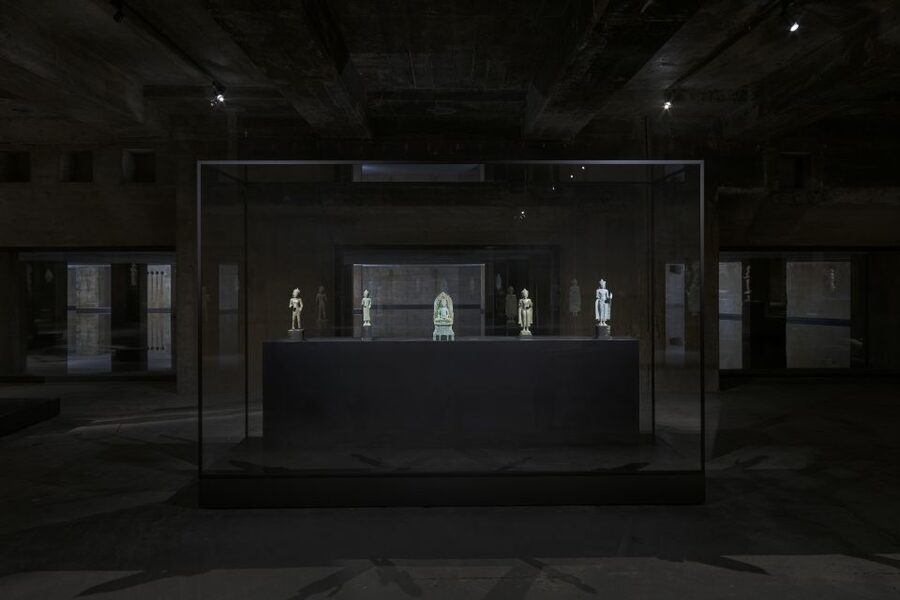
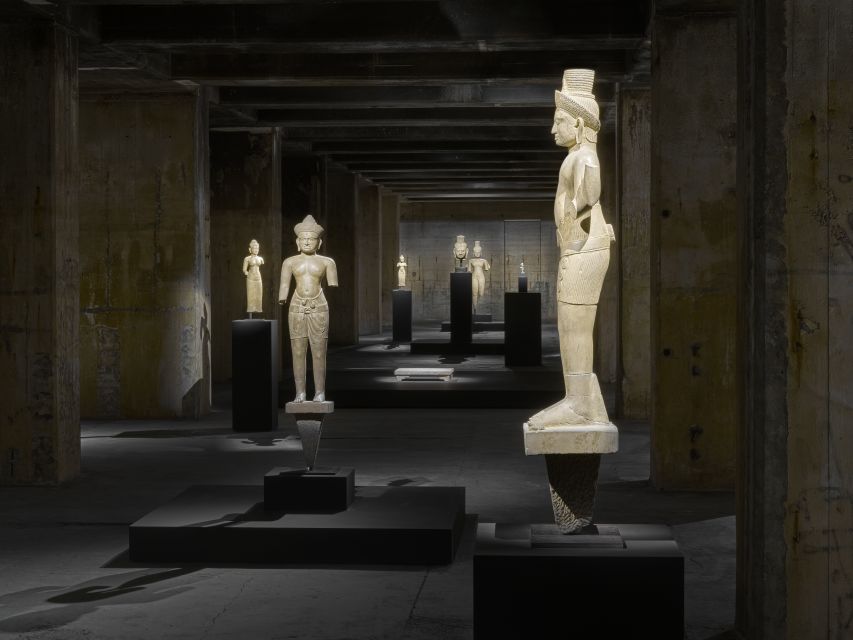
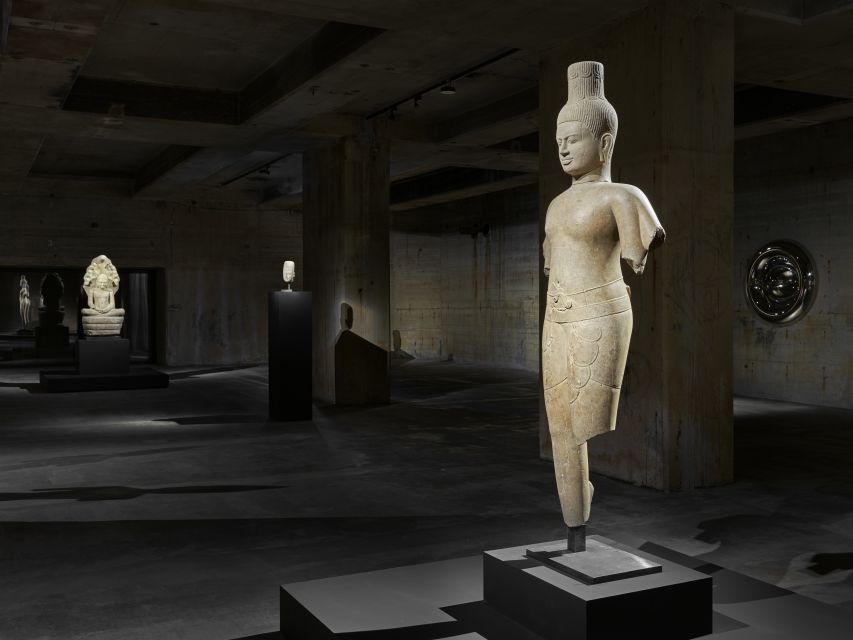
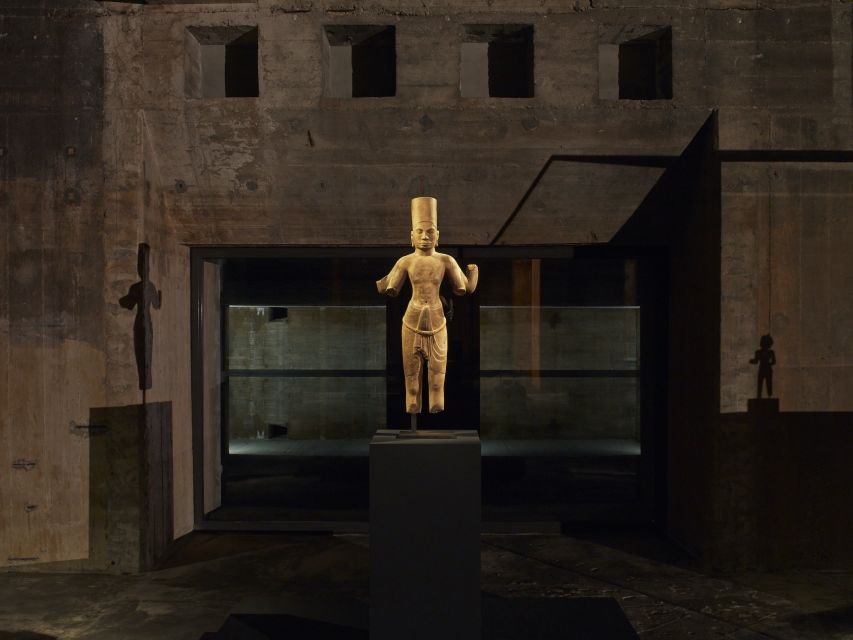
One part of the tour focuses on Khmer sculpture dating from the 7th to the 13th century. These works include stone, bronze, and wood pieces from ancient Southeast Asia.
The range of materials matters. Stone has a sense of weight and permanence, while bronze can suggest a more refined surface and sharper detail. Wood brings another quality altogether. Together, the works give you more than a single idea of Khmer art.
Your guide helps place these pieces in the larger story of the collection. The objects are not shown as isolated archaeological fragments. Their forms and surfaces are set against the contemporary works nearby, allowing you to notice similarities and differences that may otherwise pass by.
I find this strongest when you look at the sculptures without trying to force a neat connection. A modern work does not need to resemble an ancient figure to belong beside it. The comparison may come through shape, stillness, texture, or the way each piece changes the room around it.
This section will appeal most to you if you enjoy sculpture and material detail. If your main interest is Berlin history, the bunker itself may catch your attention more than the Khmer objects. The guide helps, but the tour assumes you are willing to give the art your attention.
Imperial Chinese furniture and lacquer work
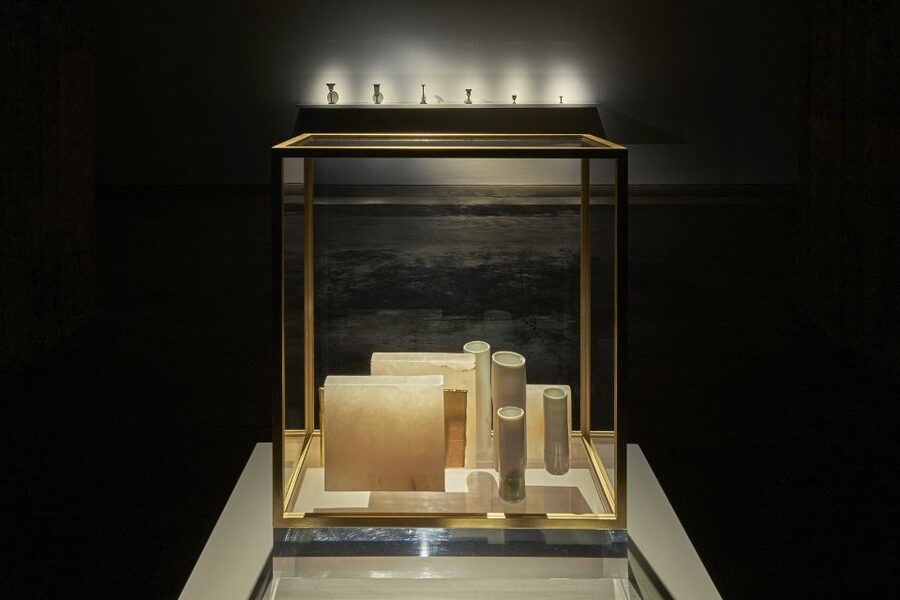
The collection also includes Imperial Chinese furniture, with intricate examples made from lacquer and stone. These pieces show how useful objects can also carry great visual force.
Furniture is easy to overlook in a museum because it has a practical purpose. Here, the scale and finish encourage you to look at it as sculpture. Lacquer can appear smooth and controlled, while stone furniture brings a different sense of mass. The contrast gives the rooms variety without breaking the calm mood.
I like this part because it asks you to slow down. You may first notice the outline of a table, chair, or cabinet. Then you begin to see the surface work, the construction, and the care taken with materials. The guided format gives you a reason to look longer instead of moving on after a quick glance.
The Imperial Chinese pieces also help explain why the collection is not a standard display of contemporary art in an unusual building. Ancient furniture has a strong presence here, and its placement beside modern works is deliberate. You are encouraged to consider function, beauty, age, and context at the same time.
Same city, a completely different sort of afternoon:
- Discover Berlin Half-Day Walking Tour
★ 5.0 · 9,624 reviews - Berlin: Hop-on Hop-off Bus Tour with Live Commentary
★ 4.3 · 8,579 reviews - Berlin: Government District around the Reichstag Guided Tour
★ 4.7 · 8,447 reviews - Berlin: Reichstag, Plenary Chamber, Cupola & Government Tour
★ 4.6 · 8,422 reviews
Contemporary art beside ancient objects
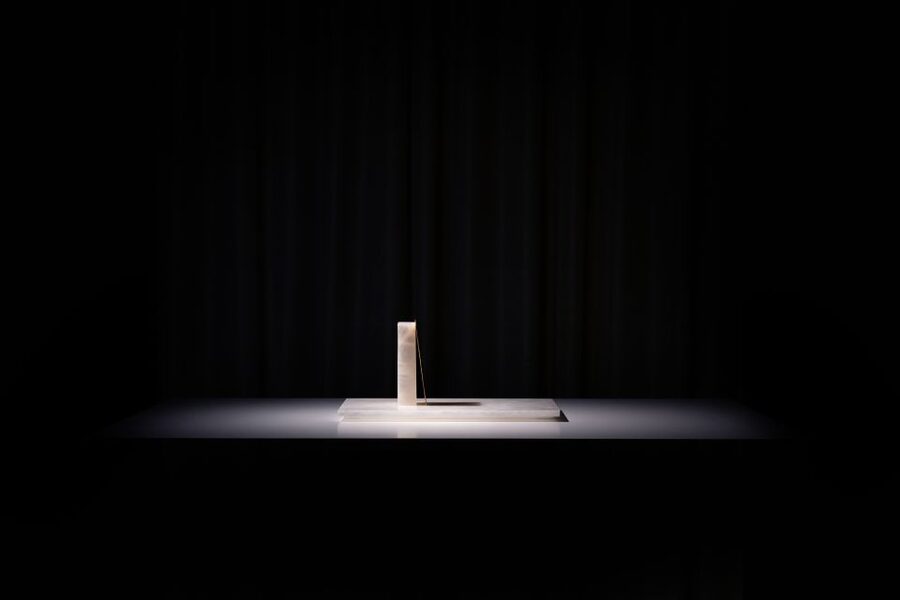
Contemporary artists represented in the collection include Nobuyoshi Araki and Adam Fuss. Their works provide a modern counterpoint to the Khmer sculpture and Chinese furniture.
This is the part that will divide opinion. If you like museums arranged by period, the pairings may feel unexpected. If you enjoy seeing familiar categories challenged, the arrangement gives you plenty to think about.
The collection’s central idea is that art from different cultures and centuries can speak to one another. That conversation may come through darkness, repetition, the human body, texture, or the use of empty space. The guide explains why these works were selected together, but you still have room to form your own response.
I appreciate that the experience does not treat contemporary art as a separate bonus room. It is part of the argument. The ancient objects gain a new setting, while the modern works receive the visual weight of the historic pieces around them.
Do not expect a large survey of contemporary art. The visit is about selected contrasts, not quantity. You will not see dozens of artists or a wide overview of modern movements. Instead, you get a compact presentation built around a particular point of view.
The underground lake and John Pawson’s light design
The underground lake is one of the collection’s most unusual features. Its presence fits the building’s below-ground character and works with the lighting to create a measured, almost suspended mood.
You should not think of the lake as a separate attraction with a long viewing platform or a scenic outdoor stop. It is part of the museum’s atmosphere. The water helps make the bunker feel removed from ordinary city life, and the controlled light keeps your attention on the relationship between space and objects.
This is also where the building’s design becomes most important. John Pawson’s renovation does not try to hide the bunker’s severe character. Instead, the clean lines and limited visual noise make the rooms feel intentional. The art, light, architecture, and water are meant to be experienced together.
Some visitors may find this quiet presentation powerful. Others may find it too dark, too sparse, or too solemn. That is a fair concern. The collection does not aim for the easy excitement of a crowded gallery filled with bright colors and explanatory panels. You need to be comfortable with atmosphere doing part of the storytelling.
A note of caution: the Scent Room may not always be available. If that feature is important to you, ask about its status before booking or on arrival. The supplied information does not promise access to it on every tour.
Why the pairings matter
Désiré Feuerle’s main contribution is the decision to put Asian antiquities and contemporary art into direct conversation. This was an unusual approach when the collection began, and it remains the reason the visit feels different from a conventional historical museum.
When you look at a 7th-century sculpture beside a modern photograph, you may first focus on the gap between them. One belongs to a distant religious and cultural setting. The other comes from a modern artist with a very different visual language.
The tour asks you to move beyond that first reaction. Look for shared qualities rather than identical meanings. Does a work use darkness to control your attention? Does the shape of a body or object echo another piece across the room? Does the empty space around an object make it feel more powerful?
You do not need specialist art knowledge to take part. You only need curiosity and a willingness to look for a few extra seconds. The guide supplies context about Feuerle and the collection, while the arrangement gives you visual questions to consider.
This approach also has limits. Because the display follows a strong personal vision, you are seeing one collector’s argument rather than a complete account of Asian art or contemporary art. That makes the experience distinctive, but it also means you should not treat it as a broad survey museum.
Is 25 dollars a fair price for one hour?
At 25 dollars per person, the cost is reasonable if you value the guide, the building, and the unusual presentation as much as the number of objects. You are paying for entry to a specialized collection and an English-language museum tour, not for a full afternoon of galleries.
The price becomes less attractive if you judge museums by time alone. A one-hour visit can feel short, especially if the actual viewing period is around 35 to 40 minutes. You may leave wanting more space to study the furniture, sculpture, and contemporary art.
I would compare this with the rest of your Berlin plans. If you have already visited major museums and want something focused and different, the Feuerle Collection adds a strong change of pace. If you have only one museum visit available in Berlin, you may prefer a larger institution with more works and longer opening hours.
The current rating is 4.6 from 55 reviews, and the strongest themes are clear: visitors value the quiet, the unified presentation, the building, and the unusual combination of ancient and modern art. One repeat visitor described returning twice, which makes sense if you enjoy spaces that reveal more on a second look.
Who should book this experience?
I would recommend it to you if you enjoy:
- Contemporary art shown outside a standard gallery setting
- Asian sculpture, furniture, and decorative arts
- Architecture with a strong mood
- Guided visits that explain a collector’s point of view
- Quiet museums where you can look without a crowd
- Short cultural experiences that fit into a larger Berlin day
The tour is not suitable for children under 16. It is also a poor match if you want an informal visit where you can take photos, send messages, or carry a drink through the rooms.
Wheelchair access is available, which makes the experience more practical for visitors who need an accessible museum setting. The tour is offered in English, and the guide, museum tour, and entrance ticket are included. Food and drinks are not included and are not allowed inside.
Free cancellation is available up to 24 hours before the experience for a full refund. You can also reserve now and pay later, which helps if your Berlin schedule is still changing.
My take on the Feuerle Collection
I like this experience because it offers something Berlin does well: a serious art idea in an unexpected place. The bunker, underground lake, controlled lighting, and unusual object pairings work together to create a visit you are unlikely to confuse with a standard museum stop.
The strongest feature is the overall presentation. Ancient Khmer sculpture, Imperial Chinese furniture, and contemporary art are not merely placed in the same building. They are arranged to make you compare them.
The main weakness is the short visit. If you are the type who studies every object closely, you may feel hurried. The missing Scent Room on some visits is another small disappointment, though it does not define the collection.
Book it if you want a quiet, adult-focused hour with a guide and a clear artistic point of view. Skip it if you need a large museum, a broad collection, or a flexible visit with photography. For the right audience, the 25 dollar ticket offers a memorable look at art, architecture, and atmosphere in one compact stop.
FAQ
Where does the Feuerle Collection tour meet?
You meet at the entrance of The Feuerle Collection in Berlin.
How long does the guided tour last?
The advertised duration is one hour. The gallery portion may feel shorter, around 35 to 40 minutes on some visits.
What language is the tour offered in?
The live guided tour is offered in English.
What does the ticket include?
The ticket includes an English-speaking guide, the museum tour, and entrance to The Feuerle Collection.
Is The Feuerle Collection wheelchair accessible?
Yes. The experience is listed as wheelchair accessible.
Are children allowed on the tour?
No. The experience is not suitable for children under 16.
Can I take photos or use my cellphone inside?
No. Cameras, cellphones, and video recording are not allowed. You also cannot touch the exhibits.
Can I cancel or pay later?
Yes. You can cancel up to 24 hours in advance for a full refund. A reserve now and pay later option is also available.
Just added around Berlin
- From Berlin: Gardens & Palaces of Potsdam Bike Tour★ 5.0 · 61 reviews
- Berlin: Battle for Seelow Heights WW2 tour -Clash of Titans★ 5.0 · 27 reviews
- From Berlin: Historical Gems of Potsdam Private Day Trip★ 4.4 · 4 reviews
- Berlin: Französischer Dom 360° Panorama & Crémant to go★ 3.9 · 5 reviews
- Explore Berlin Tour: History and Highlights★ 4.7 · 5 reviews
- Berlin: Evening Yacht Cruise with Aperitif & Dinner Upgrade★ 4.6 · 178 reviews
- Berlin: Expats in Berlin Comedy Show Ticket★ 4.7 · 182 reviews
- Berlin: The Epic Comedy Club Friday Night Showcase★ 4.8 · 28 reviews
Berlin Tours, compared.

Reichstag, Dome and Government District Guided Tour
Read our review →
1-Hour City Tour by Boat with Guaranteed Seating
Read our review →


Reichstag, Plenary Chamber, Cupola & Government Tour
Read our review →