Review · BERLIN TOURS
Berlin Battlefield Tour – Operation Berlin 1945
The most striking part of this Berlin tour is that the battlefield is still woven into the modern city. You walk from the central station toward Moltke Bridge, Platz der Republik, the Reichstag, and Weidendammer Bridge while the guide explains how tanks, artillery, bridges, and desperate defenders shaped the final days of the war. The focus is narrow and serious: Berlin in 1945, not a general tour of Nazi Germany.
I like the small-group format and the use of then-and-now photographs and maps. They give you something solid to look at while the guide explains street fighting, command decisions, and the Soviet assault. I also like that the tour reaches the Weidendammer Bridge, where the story moves beyond victory at the Reichstag to the German break-out and the human cost of defeat.
The main drawback is value. At $57 per person, or close to €50 at the price noted by one participant, this costs more than many general Berlin walks. It also takes place rain or shine, and a full 150 minutes on foot calls for good shoes.
Key points about Berlin’s final battle
- The Reichstag is the central objective: You follow the approach to the building that became the symbolic prize of the Soviet advance.
- Moltke Bridge sets the military scene: This crossing helps explain why bridges and access routes mattered so much in the last street battles.
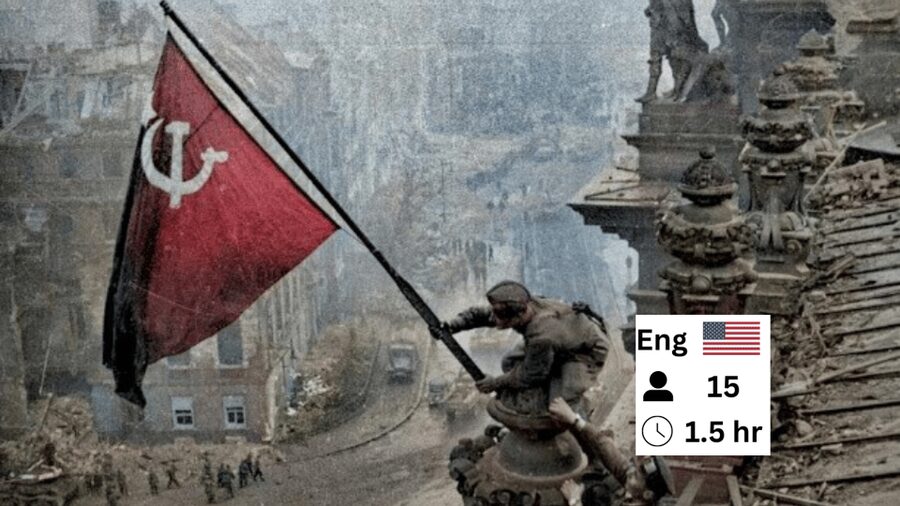
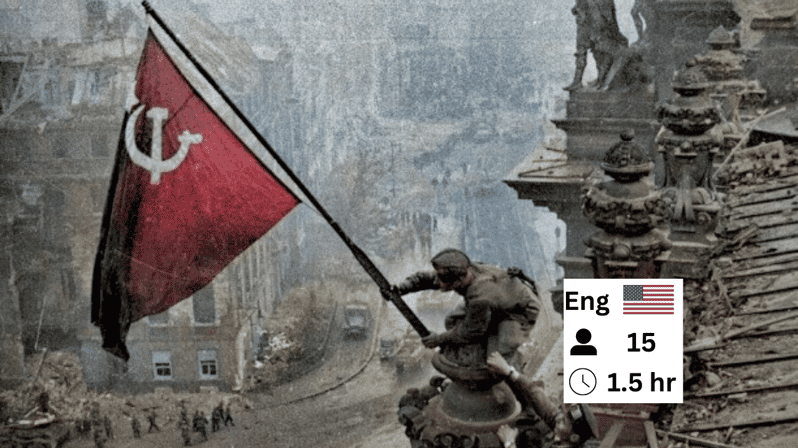
- The tour tackles the Soviet flag-raising story: The guide addresses the familiar image and the less tidy truth behind it.
- You finish at Weidendammer Bridge: The final stop brings in desperation, escape attempts, and the German break-out.
- Jochen has earned special praise: His command of the subject and ability to bring events to life were singled out after a May 2025 tour.
- Prepare for weather and walking: The route is accessible and umbrellas are supplied, but comfortable shoes, water, snacks, and rain gear are sensible.
What this Berlin battlefield walk is really about
This is not a sightseeing loop with a few wartime facts added along the way. It is a focused study of the Battle of Berlin, especially the fight around the Reichstag during the last phase of World War II in Europe.
You follow the movement of the battle through key crossings and open spaces. The guide explains military strategy, the choices made by Soviet and German commanders, and the experience of soldiers and civilians caught in the fighting. That combination matters. Maps can show you where units moved, but personal stories help explain what those movements meant on the ground.
The tour also promises to examine the Soviet flag raising at the Reichstag, including the parts of the well-known story that are often simplified or presented as a clean, heroic moment. I would book this walk if you want a closer look at how wartime images are made and how the final victory was recorded.
Expect a sober tone. The advertised material refers to heroism, bravery, desperation, hope, and carnage. This is not a light historical outing, and the subject deserves the serious treatment the route appears designed to provide.
A few more Berlin half-days to weigh up
- Berlin: Reichstag, Dome and Government District Guided Tour
★ 4.7 · 18,288 reviews - Berlin: 1-Hour City Tour by Boat with Guaranteed Seating
★ 4.3 · 16,993 reviews - Berlin: Boat Tour Along the River Spree
★ 4.4 · 11,252 reviews
Starting at Berlin Central Station
You meet outside the MEININGER Hotel Berlin Hauptbahnhof at Ella-Trebe-Straße 9, on the south side of Berlin Hauptbahnhof. This is a useful starting point because the station is a major transport hub, though the hotel entrance can be easy to miss if you are hurrying through the area.
Arrive 10 minutes early. The guide is supposed to hold a blue umbrella outside the hotel. One participant had trouble finding the guide when a promised visual marker was not available, so I would not rely on the umbrella alone. Keep the tour phone number handy and look carefully around the hotel entrance if the group is not obvious.
The route begins with a viewpoint and an introductory guided walk. This opening section takes about 20 minutes. It gives you time to settle into the subject before reaching the more specific battlefield locations.
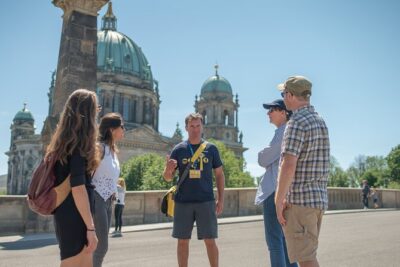
The small-group format should help here. A guide can point out details, answer questions, and adjust the explanation to the group more easily than on a large coach excursion. The tradeoff is that the tour depends heavily on the individual guide. Jochen received especially strong praise for his command of the subject, so his presence would be a real plus.
Moltke Bridge and the fight for access
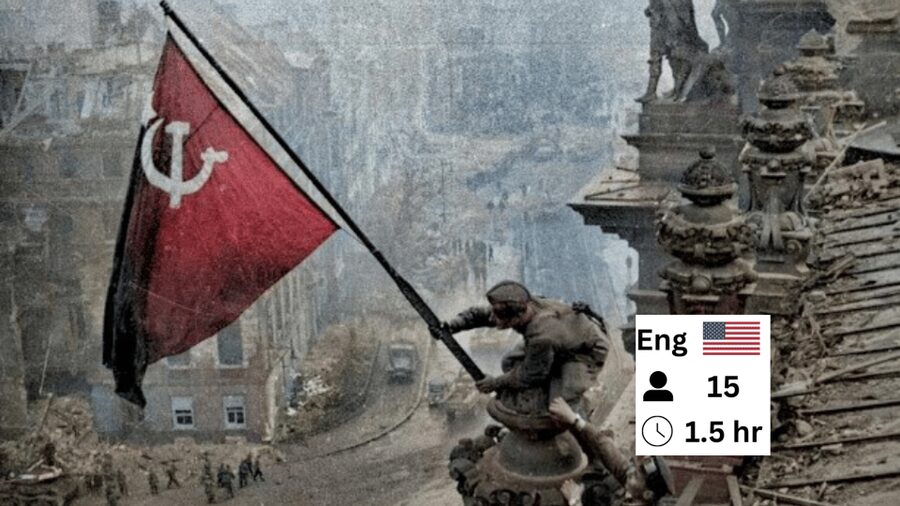
The walk to Moltkebrücke takes about 20 minutes. The bridge is not just a pleasant crossing over the Spree. It was a strategically important route during the assault on central Berlin, and the guide uses it to explain why control of bridges could shape the next stage of an urban battle.
This is where military geography becomes easier to grasp. On a map, a bridge can look like a simple line between two points. In a city under fire, it can decide how troops, armor, ammunition, and supplies move. It can also become a trap, a defensive line, or a hard-won route forward.
Your guide is expected to connect the physical setting with the decisions made by Soviet and German commanders. That is one of the tour’s strongest ideas. Instead of treating the battle as a list of dates, you get a sense of how each position affected the next move.
The stop includes guided sightseeing and walking, with some passing by rather than a long stationary visit. If you want a tour with frequent indoor breaks or a museum-style presentation, this will feel active. If you learn best by seeing places in sequence, the movement is a strength.
Platz der Republik and the approach to the Reichstag
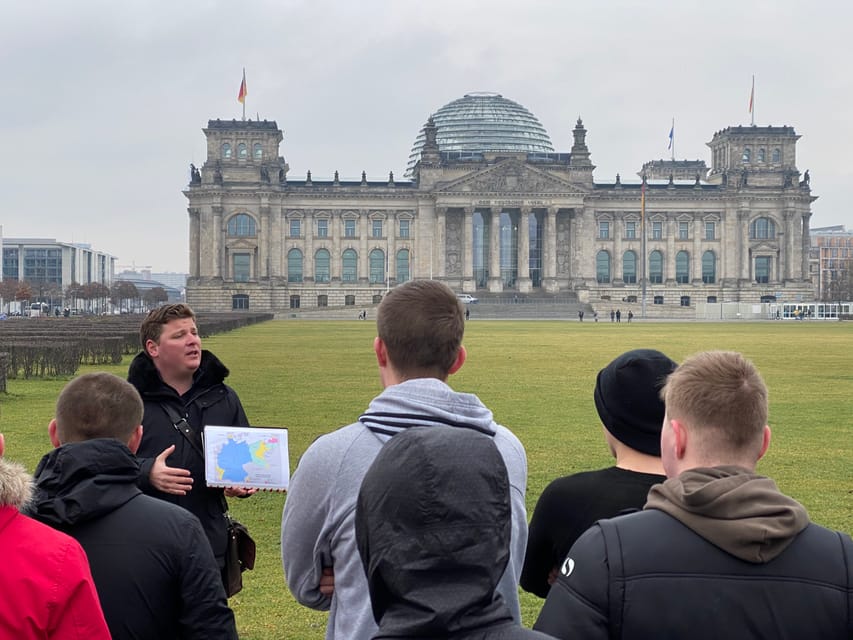
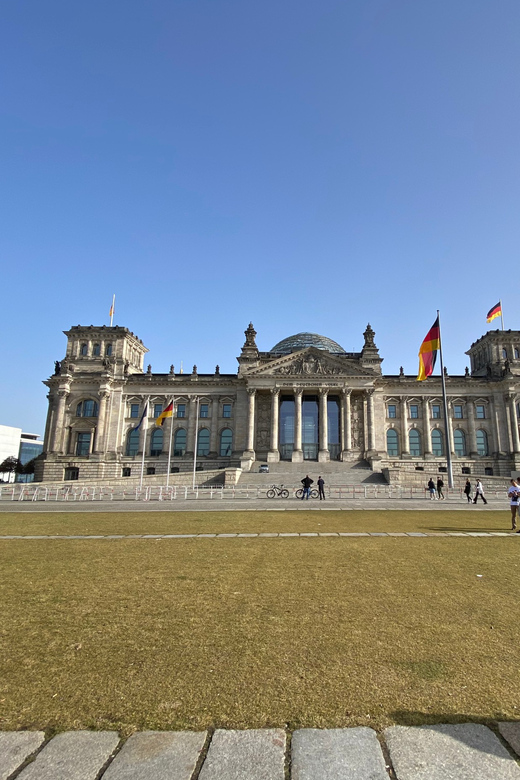
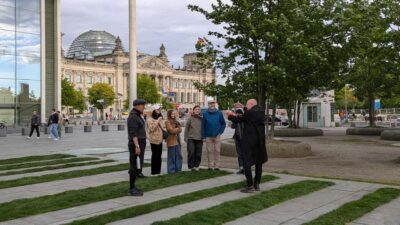
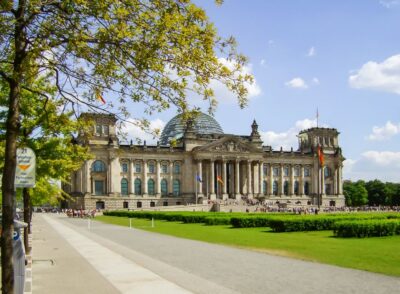
The next major section brings you to Platz der Republik, beside the Reichstag. The visit and guided walk take about 20 minutes. Here the tour shifts toward the Soviet assault and the building that became the primary symbolic objective of the advance.
The Reichstag had political meaning, but the fighting around it also involved ordinary military problems: approach routes, defensive positions, artillery, and communication. The guide’s job is to make those layers clear without reducing the story to a single photograph or a single flag.
I would pay close attention to the maps and then-and-now images at this point. Modern Berlin can make the wartime scene hard to picture. Photographs help restore the destroyed streets, barricades, troops, and damaged buildings that once filled the area.
The tour also covers the intense street battles and stories of courage under extreme pressure. The useful question is not only who won the ground, but what it took to gain a few streets or reach a single building. That is where a specialist guide can add value beyond a standard city walk.
Same city, a completely different sort of afternoon:
- Discover Berlin Half-Day Walking Tour
★ 5.0 · 9,624 reviews - Berlin: Hop-on Hop-off Bus Tour with Live Commentary
★ 4.3 · 8,579 reviews - Berlin: Government District around the Reichstag Guided Tour
★ 4.7 · 8,447 reviews - Berlin: Reichstag, Plenary Chamber, Cupola & Government Tour
★ 4.6 · 8,422 reviews
The Reichstag and a famous wartime image
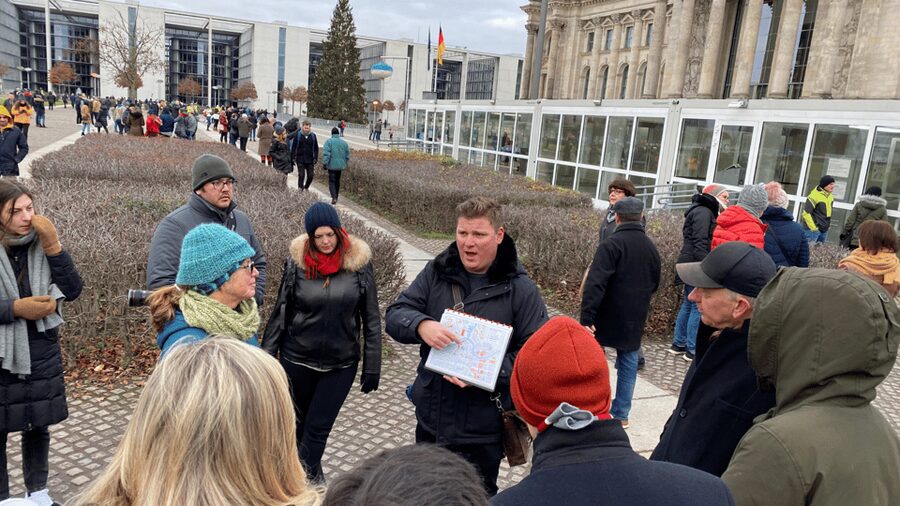
The Reichstag section lasts about 30 minutes, making it the longest listed stop. You pass by the building with a guided explanation rather than receiving a full interior visit. Plan on seeing the Reichstag from the outside and hearing how the assault unfolded around it.
This distinction matters. If you want to go inside the Reichstag dome, this tour does not include that visit. The focus is the 1945 battlefield and the political and military importance of the building, not modern parliamentary architecture.
The Soviet flag raising receives special attention. The tour presents the familiar image while also addressing the version of events that has been edited, staged, or simplified over time. Since the supplied description uses strong language about the truth that Soviet authorities did not want known, I would expect a provocative account rather than a routine explanation.
A good guide should separate documented events from later propaganda and explain why the image became so powerful. You may find the subject especially worthwhile if you are interested in how photographs, symbols, and official stories shape public memory.
The atmosphere here can feel surprisingly ordinary. Tourists, cyclists, traffic, and modern government buildings surround the area. That contrast is useful rather than distracting. It reminds you that the battle took place in a living city, not on a preserved military field.
Weidendammer Bridge and the German break-out
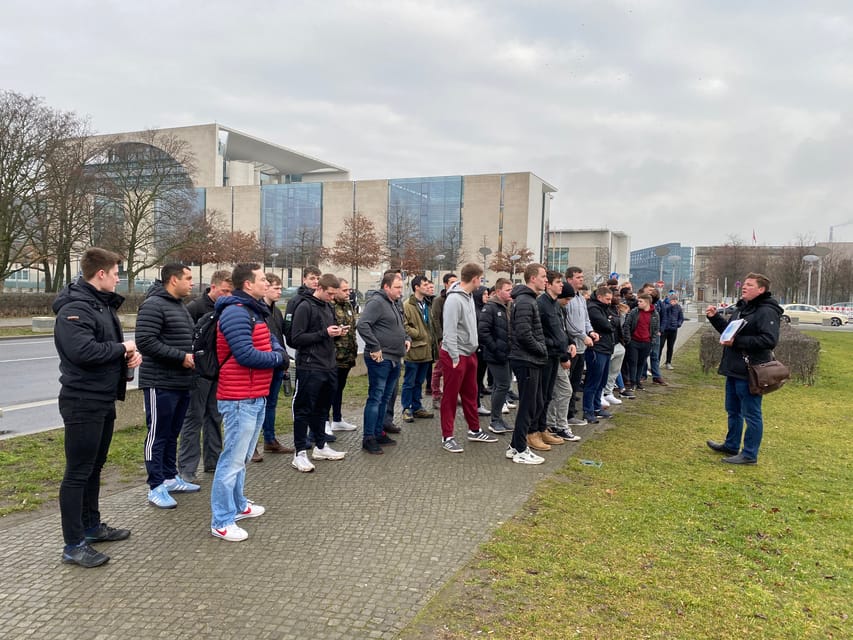
From the Reichstag, the route continues to Weidendammer Brücke. The walk and guided visit take about 20 minutes, and the tour ends here.
This final stop changes the emotional direction of the story. The Reichstag represents the Soviet objective and the public image of victory. Weidendammer Bridge brings you to the later phase, when German forces and civilians faced collapse, attempted escape, and the possibility of breaking out of the encircled center.
The tour describes this area through stories of desperation, hope, and carnage. That makes the bridge an important ending. You do not leave with a neat impression that the battle ended the moment the flag appeared. You hear about what happened after the symbolic high point, when people still had to make decisions in a city being destroyed around them.
Ending at the bridge also gives the route a clear narrative shape. You begin with the approach, move through the main assault, and finish with the final struggle to get out. It is a more thoughtful conclusion than simply returning to the starting point.
There is no information that transport back to the station is included, so plan your next step from Weidendammer Bridge. The guide can likely tell you where you are, but you should not assume a return transfer forms part of the tour.
How the guide and materials shape the experience
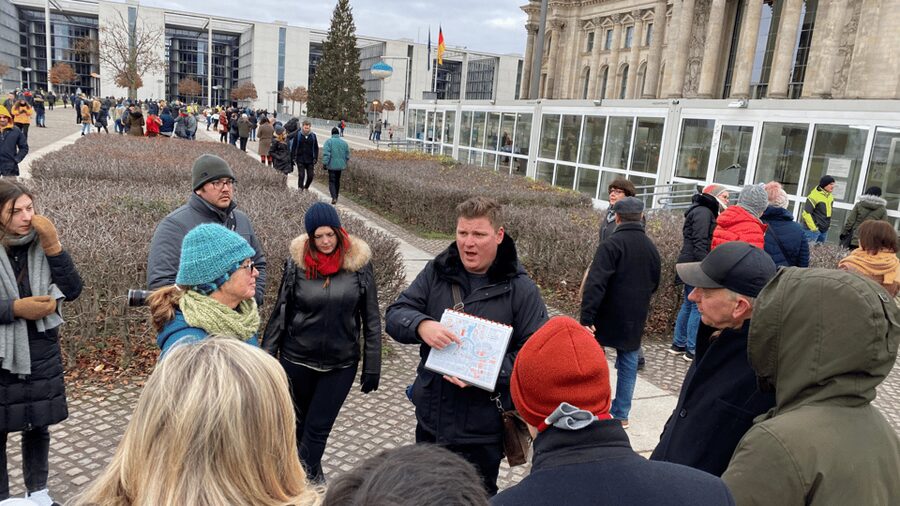
The tour is led in English and includes an expert guide, maps, and then-and-now photographs. Those materials are not decoration. They help bridge the gap between the present-day streets and the battle scenes described during the walk.
The guide’s skill is especially important because the route does not appear to include large museum displays or preserved fortifications. Much of the history must be built through explanation. Jochen was praised for his impressive command of the subject and for bringing the events to life, which is exactly what you need on a battlefield walk through a changed urban setting.
Another participant described the tour as informative and said it covered many important landmarks. That matches the route: you see several locations rather than spending the entire time at one building. The walk gives you a broad account of the final assault while keeping the Reichstag as its anchor.
The small group is also described as exclusive. No maximum size is provided, so I would not assume an especially tiny group. Still, a small-group setting usually makes it easier to hear the guide and ask about details such as command decisions, the flag-raising account, or the German break-out.
The experience is wheelchair accessible. Because the route involves walking between outdoor locations, you may still want to confirm the exact conditions for your needs before booking. The supplied information does not describe the surface, slopes, or rest points.
Walking time, weather, and what to bring
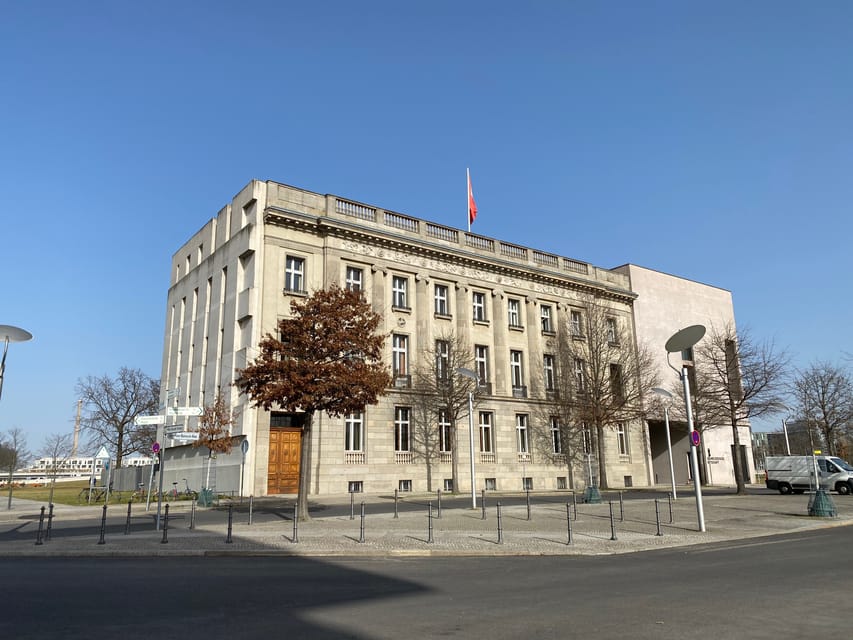
The activity lasts 150 minutes. Listed sections include about 20 minutes at the starting viewpoint, 20 minutes around Moltke Bridge, 20 minutes at Platz der Republik, 30 minutes around the Reichstag, and 20 minutes at Weidendammer Bridge, with the rest used for walking and transitions.
That is a substantial amount of time on your feet. Wear comfortable shoes, bring water, and pack a small snack. The tour takes place rain or shine, so a raincoat or umbrella is wise even though umbrellas are supplied throughout the year when it rains.
The weather can affect how much you enjoy the history. Rain may make the walk less comfortable, but it can also give the streets a more somber feel. Do not count on that poetic benefit, though. Bring proper rain gear and treat the umbrella as a useful backup, not your whole plan.
The meeting information specifies a blue umbrella, while one participant referred to a pink umbrella that had been left behind. Since the marker may not always be reliable, arrive early and be prepared to contact the tour provider if you cannot find the guide.
Is $57 a fair price?
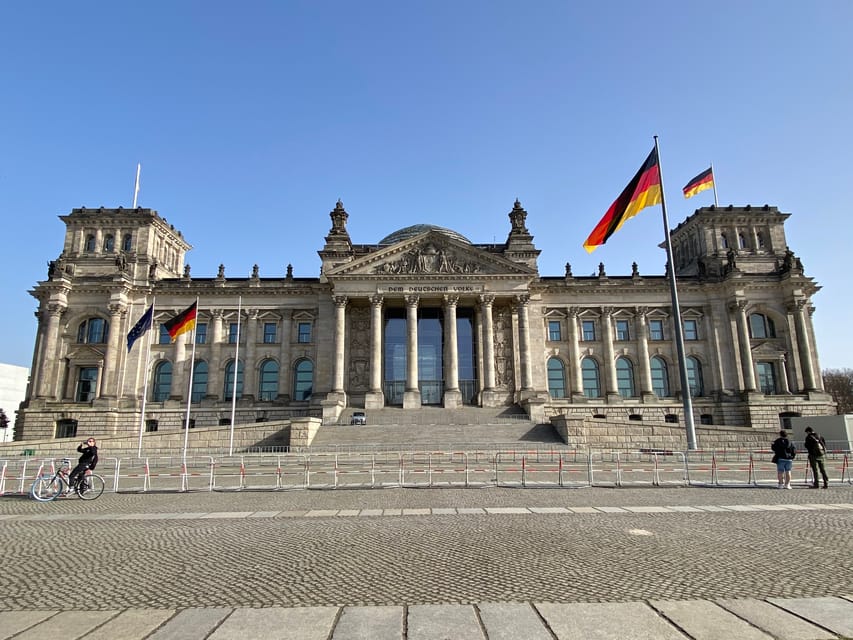
At $57 per person, this is a specialist tour rather than a budget city walk. One participant felt that nearly €50 was high compared with other Berlin tours. That concern is fair, especially if you are comparing it with free walks or inexpensive general-history tours.
The value depends on your interest. If you only want a quick explanation of the Reichstag, you can learn plenty from a standard Berlin tour or museum visit. If you want the final battle treated as its own subject, with battlefield locations, command decisions, Soviet strategy, the flag-raising story, and the German break-out, the added focus may justify the cost.
You are also paying for a live English guide, a small-group setting, maps, photographs, and a route that connects several sites. The tour does not include a meal, transport, or entry to the Reichstag. Its value rests almost entirely on the quality of the interpretation.
The high overall score of 4.7 from 32 ratings suggests that the content has worked well for many people, but the mixed price reaction is worth taking seriously. I would consider it good value for a serious WWII student, military-history enthusiast, or repeat Berlin visitor who wants a focused subject. I would hesitate if your main goal is a broad introduction to Berlin or a low-cost walking tour.
Who will get the most from this tour?
You are likely to enjoy it most if you:
- Already know the basic outline of the war and want a closer look at April 1945.
- Like military strategy, maps, and the effect of terrain on decisions.
- Prefer a walking tour with a clear historical theme.
- Want to examine the Reichstag as a wartime objective, not simply a modern landmark.
- Are interested in propaganda, photographs, and how the Soviet victory was represented.
- Can manage 150 minutes outdoors in changing weather.
Families with older children may find the route useful if they are ready for difficult subjects. The descriptions of carnage, desperation, and sacrifice are not softened into a simple adventure story.
You may prefer another activity if you want interior exhibits, a short visit, or a general overview of Berlin’s many periods. This walk is narrow by design, and that is both its appeal and its limit.
Should you book Operation Berlin 1945?
Book it if Berlin’s final battle is a main reason you are visiting the city. The route turns familiar places into military positions and shows how the Soviet advance moved toward the Reichstag before ending at the desperate scenes around Weidendammer Bridge.
I especially like the progression from Moltke Bridge to the Reichstag and then to the break-out story. The guide’s explanation is the key factor, and Jochen’s strong reputation suggests what a good tour leader can add. Just keep your expectations practical: you are walking through present-day Berlin, not a preserved battlefield, and the price is above that of many general tours.
Arrive early, wear sturdy shoes, prepare for rain, and confirm the guide’s meeting marker if needed. For a focused, serious look at the war’s final street battles, I would book it. For a cheap overview of Berlin, I would spend the money elsewhere.
FAQ
Where does the Berlin Battlefield Tour begin?
The tour begins outside the MEININGER Hotel Berlin Hauptbahnhof at Ella-Trebe-Straße 9, 10557 Berlin, on the south side of Berlin Central Station.
Where does the tour finish?
The tour ends at Weidendammer Brücke.
How long does the tour last?
The activity lasts 150 minutes, or two and a half hours.
What language is the tour conducted in?
The live tour guide speaks English.
How much does the tour cost?
The listed price is $57 per person.
Is the tour wheelchair accessible?
Yes, the tour is described as wheelchair accessible.
Does the tour operate in bad weather?
Yes. The tour takes place rain or shine. Umbrellas are supplied throughout the year in case of rain, and you should also bring an umbrella or raincoat, comfortable shoes, water, and snacks.
Just added around Berlin
- From Berlin: Gardens & Palaces of Potsdam Bike Tour★ 5.0 · 61 reviews
- Berlin: Battle for Seelow Heights WW2 tour -Clash of Titans★ 5.0 · 27 reviews
- From Berlin: Historical Gems of Potsdam Private Day Trip★ 4.4 · 4 reviews
- Berlin: Französischer Dom 360° Panorama & Crémant to go★ 3.9 · 5 reviews
- Explore Berlin Tour: History and Highlights★ 4.7 · 5 reviews
- Berlin: Evening Yacht Cruise with Aperitif & Dinner Upgrade★ 4.6 · 178 reviews
- Berlin: Expats in Berlin Comedy Show Ticket★ 4.7 · 182 reviews
- Berlin: The Epic Comedy Club Friday Night Showcase★ 4.8 · 28 reviews
Berlin Tours, compared.
Reichstag, Dome and Government District Guided Tour
Read our review →
1-Hour City Tour by Boat with Guaranteed Seating
Read our review →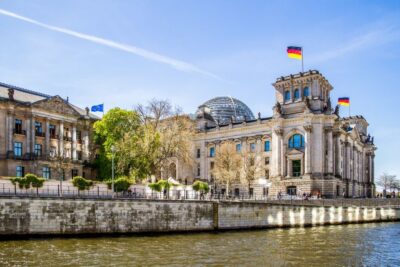
Reichstag, Plenary Chamber, Cupola & Government Tour
Read our review →