
Review · BERLIN TOURS
Private Tour of David Bowie’s West-Berlin
David Bowie’s West Berlin comes into focus through places rather than museum displays: Hansa Studios, Zoo Station, KaDeWe, a former nightclub, and the apartment building where he lived from 1976 to 1978. The route also follows locations named in his later song Where Are We Now?, linking his Berlin years with the city you see today.
I like the private format, which keeps the group to your own party of up to eight, and I like the mix of walking and short train rides. Guide Martin also brings in architecture, German culture, and twentieth-century history, not just Bowie trivia. The main drawback is that several stops are exterior views, so this is a street tour, not a series of interior visits.
Key points about Bowie’s West Berlin
- Hansa Studios gives the tour its musical center, with time for photographs and a Bowie animation in the studio window.
- The route connects two eras of Berlin, from the divided city of the 1970s to the rebuilt Potsdamer Platz of today.
- You visit real Bowie haunts, including KaDeWe, the former Dschungel site, Neues Ufer, and Hauptstraße 155.
- Martin adapts the conversation, with past tours covering Bowie, architecture, the Holocaust, and German culture.
- Public transport is part of the route, so expect a mix of walking and train travel rather than a vehicle-based sightseeing tour.
- The $285.07 group price makes more sense with several people, especially for a party of four to eight.
Start with Berlin’s changing center at Potsdamer Platz
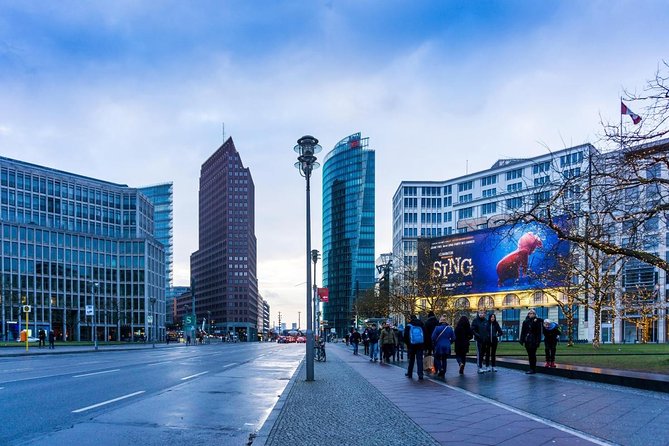
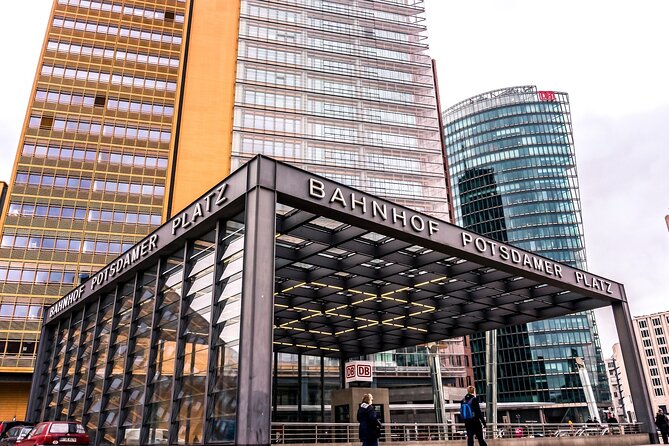
The tour opens at Potsdamer Platz, a useful place to think about how much Berlin has changed. In Bowie’s day, this was not the polished urban center you see now. The square had spent years cut off and neglected beside the Berlin Wall, and its revival after reunification created one of the city’s sharpest before-and-after scenes.
That contrast gives the tour a strong opening. You are not simply looking for a plaque that says Bowie was here. You are looking at a place he referenced in Where Are We Now? and considering how a once divided, nearly empty zone became a modern transport and commercial center.
The listed meeting point is Deutsche Kinemathek at Mauerstraße 79, while the first sightseeing stop is Potsdamer Platz. Confirm the precise meeting arrangement when you book, since the starting address and first stop are not identical. The tour uses a mobile ticket, and confirmation arrives at booking.
Expect about 15 minutes here. That is enough for an introduction and some orientation, but not a long architectural lecture. If Potsdamer Platz interests you, ask Martin how the area’s role changed across the divided and reunited city. His tours are not limited to music, and that wider context is part of the appeal.
A few more Berlin half-days to weigh up
- Berlin: Reichstag, Dome and Government District Guided Tour
★ 4.7 · 18,288 reviews - Berlin: 1-Hour City Tour by Boat with Guaranteed Seating
★ 4.3 · 16,993 reviews - Berlin: Boat Tour Along the River Spree
★ 4.4 · 11,252 reviews
Hansa Studios, where the Berlin sound took shape
From Potsdamer Platz, you walk toward Hansa Studios. This is the stop most likely to matter to Bowie fans, since he recorded much of his Berlin Trilogy here. The studio is tied to Low, Heroes, and Lodger, though the exact scope of the trilogy and its recording locations can lead to a longer conversation if you want one.
You should expect an exterior visit rather than a studio session or museum entry. The tour allows around 20 minutes to take photographs and look at the building, including a large animated Bowie image displayed in one of the windows. That visual detail gives you something concrete to seek out, even if you cannot go inside.
Hansa Studios also rewards a little imagination. Bowie’s Berlin was not a tidy themed attraction. It was a working city, and the significance of the building comes from what happened inside it and from the artists connected with the place. A good guide can make that connection clear without turning the stop into a generic fan pilgrimage.
I would bring headphones or listen to the Berlin-era albums before the tour, but do not expect the guide to provide audio equipment. The value here lies in location, explanation, and the chance to place the music in a real Berlin setting.
Zoo Station and the shadow of Christiane F.
The next section uses Berlin’s train system to reach City West and Bahnhof Zoologischer Garten, usually called Zoo Station. The ride is not dead time. It helps you move from the area around Hansa Studios toward the part of West Berlin associated with Bowie’s nightlife and the film Christiane F.
Christiane F. was a major Bowie fan, and she and her friends spent time around Zoo Station when it had a much rougher reputation. Bowie’s music formed the soundtrack of the film based on her book, with his songs used by the production. The station therefore carries two connected stories: Bowie’s own West Berlin years and the way his music became linked with a stark portrait of young life in the city.
The stop lasts about 15 minutes. Do not expect the station to look exactly as it did in the 1970s. That is part of the point. The tour asks you to compare the current station with its former image, rather than pretend the old atmosphere survived unchanged.
This section suits visitors who want more than a list of recording sites. Martin’s past work has included the Holocaust, architecture, and German history, so you can reasonably expect the discussion to widen beyond celebrity facts. If you only want song titles and studio anecdotes, you may find the broader approach more than you need.
KaDeWe, Bowie’s everyday Berlin
Kaufhaus des Westens, better known as KaDeWe, brings the story down to ordinary habits. Bowie used the department store for groceries, and it appears in Where Are We Now? That detail is appealing because it shows a daily side of his life. Famous musicians still need food, errands, and familiar places to shop.
The visit is planned for around 15 minutes, with no admission charge included or required for the stated stop. You will view the department store as part of the route, rather than take a guided shopping tour through its departments.
KaDeWe also helps explain the social geography of West Berlin. It was an established City West institution, far removed from the atmosphere of a recording studio or late-night bar. Placing it beside Hansa Studios and Zoo Station gives the tour a fuller picture of Bowie’s routine.
You could extend your own visit here before or after the tour, but the three-hour schedule leaves little room for shopping. Treat this stop as a cultural marker and a Bowie reference point, not a retail break. If you want to buy something, return later on your own.
Same city, a completely different sort of afternoon:
- Discover Berlin Half-Day Walking Tour
★ 5.0 · 9,624 reviews - Berlin: Hop-on Hop-off Bus Tour with Live Commentary
★ 4.3 · 8,579 reviews - Berlin: Government District around the Reichstag Guided Tour
★ 4.7 · 8,447 reviews - Berlin: Reichstag, Plenary Chamber, Cupola & Government Tour
★ 4.6 · 8,422 reviews
The former Dschungel site, where nightlife has moved on
At Nürnberger Strasse 53, Martin points out the former location of the Dschungel. The club no longer exists, but the address remains. Bowie was said to be there often, reportedly almost every night, making this one of the more personal stops on the route.
The absence of the club is important. You are seeing a place where a famous nightlife scene has disappeared, not entering a preserved venue with original furniture and music. That can feel slightly anticlimactic if you expect a dramatic interior, but it also reflects the tour’s larger theme: West Berlin has changed, and the old city cannot simply be reconstructed for visitors.
Allow about 15 minutes. This is a good place to ask Martin about Bowie’s routine in the city and the role of nightlife in his Berlin period. The stop connects the public figure with the less formal side of his life, when he was known around local haunts rather than sealed inside a celebrity bubble.
I appreciate this kind of address-based storytelling. A former club site can look ordinary, but knowing what once happened there changes how you read the street. You will need to supply some of the imagination yourself.
Neues Ufer and a possible final drink
The route then reaches Neues Ufer, formerly called Anderes Ufer. This was a local gay bar where Bowie spent time, often stopping for a nightcap. It was open around the clock in that period, which made it a practical late-night stop as well as a notable part of his social life.
The scheduled visit is brief, about 10 minutes. Having a drink is optional, and the tour ends later at Bowie’s former home, so do not assume the bar is the final stop. Still, many people choose to return for a drink after the tour, when they can stay longer without watching the clock.
This is one of the tour’s most useful stops for understanding the social setting around Bowie’s Berlin years. It points to the city’s gay nightlife and to the circles in which he moved. The address is not only a music reference. It adds a piece of local culture that a standard Bowie biography may treat too briefly.
Check your energy and schedule before deciding to linger. A drink is not included, and coffee, tea, tickets, and similar personal costs are also outside the tour price. The stop itself is included as part of the guide’s service.
Hauptstrasse 155, the quiet end to the story
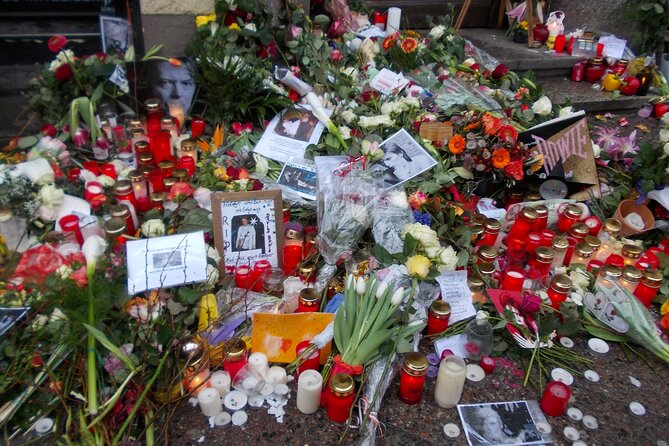
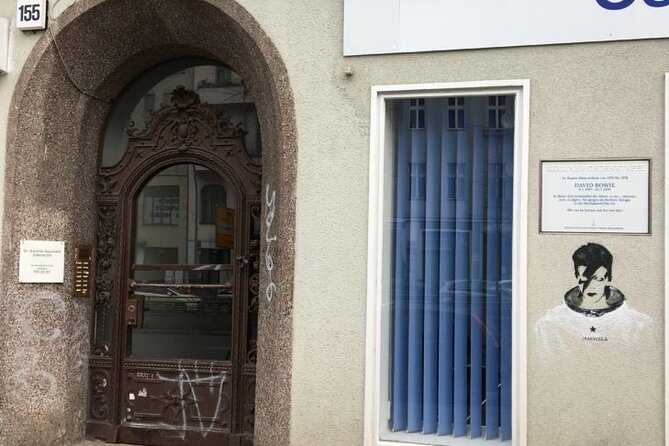
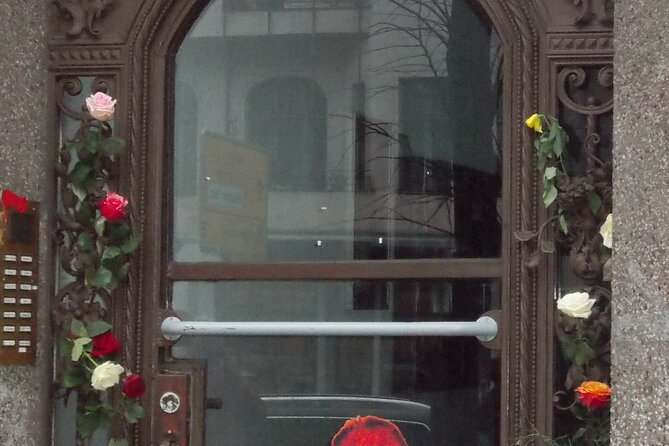
The tour concludes at Hauptstrasse 155 in Schöneberg, the building Bowie called home for almost three years, from 1976 through 1978. This is a residential address, not a museum. You will look at the exterior and the ledge where fans often leave flowers, candles, and other tributes.
The planned time here is about 15 minutes, but the emotional weight can make it feel longer. After seeing studios, stations, shops, and clubs, you finish at the place most directly connected with Bowie’s daily life. It is a quiet ending, and it avoids the forced grand finale common to celebrity tours.
The address also makes the tour practical. The end point is near the former home, not back at Potsdamer Platz or the original meeting location. Plan your onward route from Schöneberg. Since public transport is used during the tour, Martin can likely help you understand the general connection, but the supplied details do not promise onward transport or a hotel drop-off.
Look for the flowers and candles, but treat the building as someone’s home. This is a place for observation and respect, not a photo opportunity that should disturb residents.
What Martin adds beyond Bowie facts
The strongest reason to book this as a private tour is the guide. Martin is the named guide, and his approach reaches beyond music. He has led tours dealing with architecture, the Holocaust, German culture, and history, and he has also built a custom tour around a young visitor’s GCSE history curriculum.
That matters here because Bowie’s Berlin is inseparable from the city around him. You will get more from Potsdamer Platz if you understand what division did to the area. Zoo Station means more if you place its former reputation beside the film Christiane F. Hansa Studios means more if you see it as part of a working neighborhood rather than a shrine.
A private setting also gives you room to shape the discussion. A group of up to eight can ask questions without competing with a large coach party. If your group includes both serious Bowie fans and people who know only the major songs, tell Martin early. The tour can then spend more time on music, city history, architecture, or cultural life.
The available comments about Martin consistently point to his professionalism, wide subject range, and ability to inspire further interest in German culture. Those are useful strengths for this tour, since the route covers several kinds of history in only three hours.
Walking, trains, timing, and physical effort
This is a three-hour tour with walking and train rides. It is not a bus tour, and tickets or other transport costs are not included in the stated price. You should be comfortable walking between stops, entering and exiting stations, and standing for portions of the route.
A moderate level of physical fitness is advised. The schedule gives short blocks of time at most locations: 15 minutes at Potsdamer Platz, KaDeWe, Zoo Station, the Dschungel site, and Hauptstrasse 155; 20 minutes at Hansa Studios; and 10 minutes at Neues Ufer. Those timings keep the tour moving but leave little room for extended shopping or long café breaks.
Service animals are allowed, and the route is near public transportation. The information provided does not promise full step-free access at every point, so contact the operator if mobility needs are a concern.
Wear shoes suited to city walking and keep your ticket on your phone. Since this is a private activity, you do not have to match the pace or interests of strangers, but you should still expect a fairly brisk urban route.
Is $285.07 a fair group price?
At $285.07 for up to eight people, the price is easiest to justify when shared by a family or small group. For eight, it works out to roughly $36 per person. For four, it is about $71 per person. For one or two people, the cost feels much steeper, even though the private format remains a benefit.
You are paying for three hours of guiding, route planning, cultural context, and the freedom to ask questions. You are not paying for museum admission, drinks, meals, or a private vehicle. Most stops are free exterior locations, so the value depends on how much you want interpretation rather than access.
I would choose this tour for a group with at least four people, especially if someone in the party cares deeply about Bowie and someone else wants Berlin history. The price is harder to defend if you want a conventional sightseeing tour with interiors, transport included, and many formal attractions.
The free cancellation policy is helpful. You can cancel up to 24 hours before the start time for a full refund. Changes or cancellations made inside that window are not accepted for a refund, based on local time.
Who should book this West Berlin walk?
You should book if you want to stand at real places tied to Bowie’s life and music, and if you enjoy connecting pop culture with urban history. It works especially well for Bowie fans, music historians, visitors interested in divided Berlin, and families who want a private guide rather than a large group.
It also suits curious visitors who do not know every album. Martin’s wider interests mean the discussion can include architecture, German culture, and the Holocaust, giving the route value beyond celebrity sightseeing.
You may want something else if your priority is entering recording rooms, seeing costumes, hearing live audio, or spending time inside former clubs. Hansa Studios, the Dschungel, and Bowie’s home are viewed from outside, and several places have changed greatly since the 1970s.
Should you book it?
Book this tour if the idea of following Bowie through ordinary city addresses appeals to you. The best moments are not grand attractions. They are the links between a song, a former club, a department store, a train station, and a residential doorway in a city that has moved on.
I would book it for a small group and prepare by listening to Where Are We Now? and the Berlin Trilogy beforehand. That preparation will make each stop sharper, while Martin’s broader view of Berlin should keep the tour from becoming a string of fan-only references.
Skip it if you need included transport, indoor access, or a low-cost solo activity. For the right audience, though, this is a focused and personal way to read West Berlin through Bowie’s years there.
FAQ
How long does the David Bowie West Berlin tour last?
The tour lasts approximately three hours.
How many people can join the private tour?
Your private group can include up to eight people.
What is included in the price?
Guiding services are included. Coffee, tea, tickets, and similar personal expenses are not included.
Where does the tour start?
The listed meeting point is Deutsche Kinemathek, Mauerstrasse 79, 10117 Berlin. The first sightseeing stop is Potsdamer Platz, so confirm the exact meeting arrangement when booking.
Where does the tour end?
The tour ends at Hauptstrasse 155 in Berlin, near David Bowie’s former home.
Will I visit inside Hansa Studios?
The supplied details describe time to photograph Hansa Studios and view the Bowie animation in one of its windows. They do not state that interior access is included.
Is public transportation used during the tour?
Yes. The route includes train rides between parts of West Berlin, along with walking between stops.
Can I cancel for a full refund?
Yes, if you cancel at least 24 hours before the experience start time. Cancellations or changes made less than 24 hours in advance are not accepted for a refund.
Just added around Berlin
- eSIM for Germany and 34 European Countries★ 4.5 · 16 reviews
- Your ticket to The Wall Museum Berlin★ 3.0 · 60 reviews
- Walking on the Wall: 3-Hour Tour in Berlin★ 4.5 · 34 reviews
- Rickshaw Tours Berlin – Groups of up to 16 people with several rickshaws★ 4.0 · 97 reviews
- Warnemuende Shore Excursion: Private Berlin Tour★ 4.5 · 27 reviews
- Love and War in Berlin: Self-Guided Story Puzzle Walk★ 5.0 · 7 reviews
- Warnemuende Shore Excursion: Berlin Private Sightseeing Tour from Rostock★ 5.0 · 4 reviews
- Cold War Berlin – Private Live Virtual Experience★ 5.0 · 4 reviews
Berlin Tours, compared.

Reichstag, Dome and Government District Guided Tour
Read our review →
1-Hour City Tour by Boat with Guaranteed Seating
Read our review →




Reichstag, Plenary Chamber, Cupola & Government Tour
Read our review →