Review · BERLIN TOURS
Modern Berlin Private Walking Tour: Diverse, Vibrant and Exciting German Capital
Berlin’s modern story is best understood not from a coach window, but on foot, where old Wall traces, painted facades, Turkish food streets, restored courtyards, and new cafés sit close together. This private tour links Mitte, Kreuzberg, Friedrichshain, Prenzlauer Berg, and the East Side Gallery in one city walk.
I like the private format because your guide can adjust the pace and explain what interests you most. I also like the focus on Berlin after reunification, including the city’s hard questions about gentrification, identity, and change. The main drawback is simple: covering so many districts in only three to four hours can feel brisk, and the tour does not include food or drinks.
Key points at a glance
- Five Berlin districts in one outing: Move beyond the usual postcard sights and compare Mitte, Prenzlauer Berg, Kreuzberg, and Friedrichshain.
- A 1.3-kilometer Wall gallery: The East Side Gallery gives you colorful public art and a direct connection to Berlin’s divided past.
- Private English-speaking guide: Only your group takes part, with guides such as Josh, Maria, Joerg, Stefano, and Juan named in guest feedback.
- A tour about modern Berlin: Expect discussion of reunification, immigration, art, startups, music, and gentrification.
- Hotel pickup is available: You can arrange pickup from your accommodation or meet at Reichstagufer 17.
- Good for first-time orientation: You cover a lot quickly, but should plan a second visit if you want long stops or museum time.
Berlin after reunification, seen street by street
This is not a standard tour of Brandenburg Gate, the Reichstag, and Museum Island, although Mitte brings you near that central historic zone. The focus is the city Berlin became after 1990: a place still working through division while building a new identity.
That makes the tour useful early in your stay. You can use it to get your bearings, then return later to the areas that catch your interest. A local guide also helps connect places that can seem unrelated when you visit them alone.
The private setup matters here. Berlin’s neighborhoods do not fit neatly into a single story. Mitte feels central and polished in places, Kreuzberg has strong immigrant and activist roots, Prenzlauer Berg has shifted from bohemian district to family-friendly address, and Friedrichshain mixes former East Berlin streets with nightlife and creative businesses.
Your guide can explain those contrasts rather than giving you a list of dates. Josh is described as personable and able to hold the attention of teenagers. Maria’s tour focused closely on modern Berlin, while Joerg adjusted the rhythm to suit both the group’s intellectual and physical needs. Stefano provided an alternative route for people who had already covered the classic sights, and Juan Montiel was praised for welcoming questions.
More walking tours in Berlin:
- Discover Berlin Half-Day Walking Tour
★ 5.0 · 9,624 reviews - Berlin: Third Reich and Cold War 2 Hour Walking Tour
★ 4.9 · 6,830 reviews - Berlin: Discover Berlin Walking Tour
★ 4.9 · 5,998 reviews
Mitte: Berlin’s center keeps changing
The tour begins at Reichstagufer 17, close to the central Mitte area, unless you arrange pickup elsewhere. Plan on about 30 minutes here, enough for an introduction rather than a full tour of the district’s museums and monuments.
Mitte is where Berlin’s past and present meet most clearly. The area once symbolized a divided capital. Since reunification, it has become a central address for galleries, cafés, boutiques, startups, and creative businesses. Brandenburg Gate and Museum Island sit alongside newer commercial and cultural spaces.
I like this opening because it gives your guide room to frame the rest of the day. You are not just seeing attractive streets. You are looking at how a capital rebuilt itself after the Wall came down.
Mitte’s restored courtyards are a particularly useful detail. They offer a quieter counterpoint to the grand avenues and major monuments. One Spanish-language account singled out the courtyards and the main avenue of former East Berlin as especially picturesque, so ask your guide to include these details if the route allows.
The limitation is time. Thirty minutes cannot cover the district in depth, and there is no admission to a museum included. If Museum Island is high on your list, treat this tour as an introduction and return for a separate visit.
East Side Gallery: the Wall becomes public art
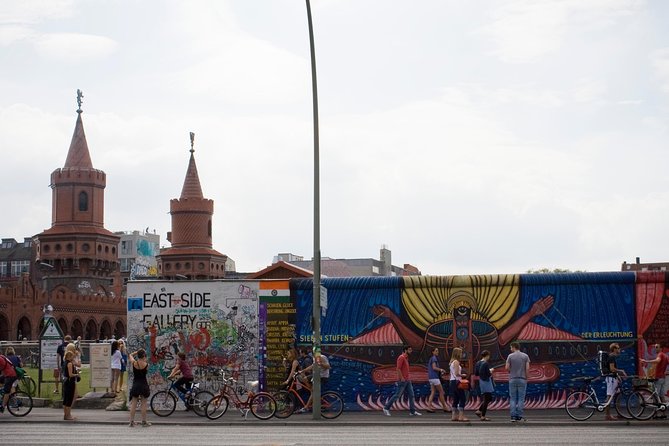
The East Side Gallery takes about 20 minutes. This is a short stop, but it carries a lot of weight. The gallery runs for 1.3 kilometers along one of the longest remaining sections of the Berlin Wall, with murals created by artists from around the world in 1990.
The paintings turn a former barrier into an open-air display about freedom, peace, hope, and political change. You can see why this section has become one of Berlin’s most recognizable places. It links a painful chapter in the city’s past to the creative energy that followed reunification.
Your guide can add the missing context. Without explanation, the murals may look like a long series of colorful walls. With context, they become part of a larger question: what should a city do with a structure that divided families and neighborhoods?
Twenty minutes is enough for a quick look and orientation, but not for studying every mural. The gallery is also a popular public attraction, so this may be one of the less quiet parts of the walk. If you want time for photographs or close attention to the art, ask how the stop will be handled before booking.
Prenzlauer Berg: from counterculture to polished city living
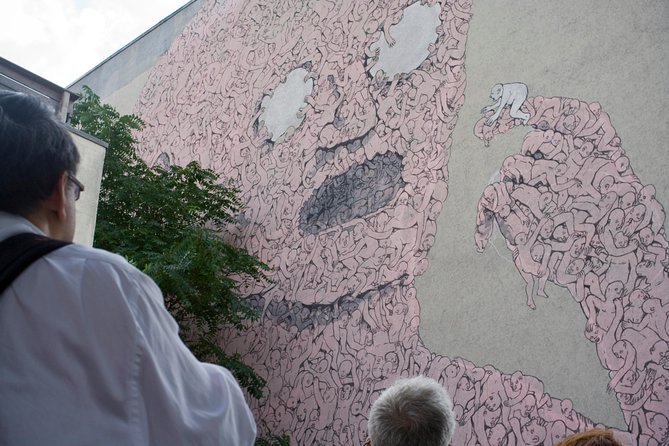
The planned stop in Prenzlauer Berg lasts about 40 minutes, making it one of the longer neighborhood visits. That extra time helps you see how dramatically Berlin’s social geography has changed since reunification.
Prenzlauer Berg was once associated with artists, students, and people drawn to low rents and a countercultural atmosphere. Restored historic buildings, cafés, boutique shops, and restaurants have since brought a more polished feel. Young families and professionals now shape much of the district.
This is an important stop because it complicates the easy idea that Berlin is simply edgy and inexpensive. The neighborhood still has galleries, cultural centers, and community spaces tied to its earlier identity, but its transformation raises real questions about who gets to remain in a changing city.
I would pay close attention here to your guide’s local examples. A good explanation can show how a street changes when buildings are renovated, rents rise, and new businesses arrive. The private format gives you a better chance to ask about those changes than a large group tour.
The tradeoff is that Prenzlauer Berg may feel more orderly and comfortable than the rougher image some people expect from Berlin. If you want only underground clubs and raw street art, this stop may seem too tidy. If you want to understand how Berlin has changed, it earns its place.
A few more Berlin half-days to weigh up
- Berlin: Reichstag, Dome and Government District Guided Tour
★ 4.7 · 18,288 reviews - Berlin: 1-Hour City Tour by Boat with Guaranteed Seating
★ 4.3 · 16,993 reviews - Berlin: Boat Tour Along the River Spree
★ 4.4 · 11,252 reviews - Berlin: Hop-on Hop-off Bus Tour with Live Commentary
★ 4.3 · 8,579 reviews
Kreuzberg: immigrant roots and independent spirit
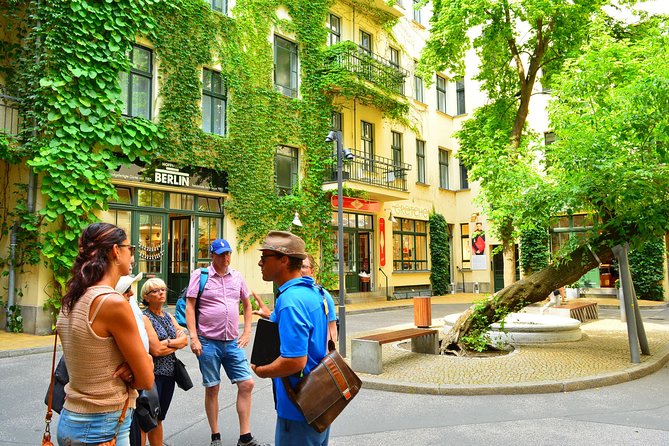
Kreuzberg receives about 35 minutes. This district developed at the former edge of West Berlin and became known for immigrants, artists, activists, musicians, and alternative groups. Its identity remains tied to protest, creative expression, and strong community life.
Street art, international restaurants, cafés, galleries, and old industrial spaces show the district’s mix of cultures and eras. The area has also changed through gentrification, with trendier businesses moving into buildings and spaces once used by alternative communities.
A particularly useful local detail from the tour feedback is the Turkish quarter and the connection to Hasir, the restaurant associated with the creation of the kebab. That stop gives the neighborhood a practical human story. Food culture is not an accessory here. It is part of how Berlin’s immigrant communities helped shape the city.
You should not expect a meal to be included. Food and drinks are extra, so budget separately if you want to stop at Hasir or another eatery. The guide can point out the place, but the tour price does not cover what you order.
Kreuzberg may be the most rewarding district for people who want Berlin’s social history rather than only its monuments. It is also a place where the short schedule can feel limiting. Thirty-five minutes offers a useful taste, not a full neighborhood exploration.
Friedrichshain: East Berlin, music, and change
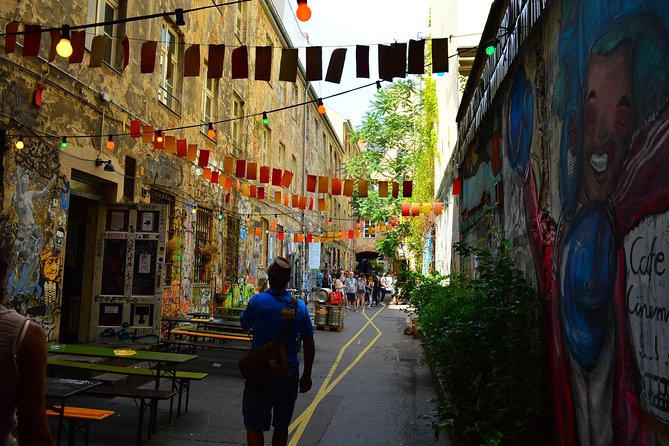
The final neighborhood stop is listed as Friedrichshain and lasts about 35 minutes. The supplied description repeats some of Kreuzberg’s background, but the broader route clearly treats Friedrichshain as part of the city’s former East Berlin and post-reunification story.
Friedrichshain is closely linked with the East Side Gallery area and with Berlin’s mix of street art, music, creative spaces, cafés, and renovated industrial buildings. Here, your guide can help you compare the district with Kreuzberg, which lies across the Spree and shares the larger Friedrichshain-Kreuzberg borough.
That comparison is one of the route’s strengths. You are not seeing isolated attractions. You are watching neighboring districts develop different identities while also facing similar pressure from new businesses and rising demand.
The stop is free, as are all the listed neighborhood visits. Still, the price is paying for the guide’s time and interpretation, not admissions. If you want to enter museums, galleries, or restaurants, those costs are separate.
Because Friedrichshain comes late in the tour, consider your energy level. The overall walk is listed at three to four hours, and the timed stops add up to about 160 minutes before transfers and discussion. Wear comfortable shoes, and dress for the weather. The tour operates in all weather conditions.
What $179.84 per person buys you
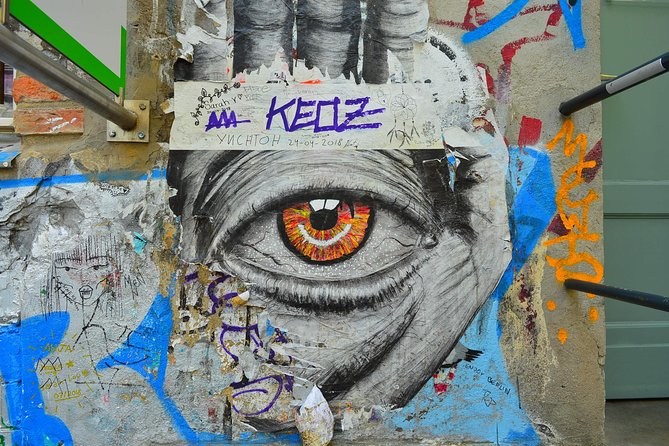
At $179.84 per person, this is not a budget walking tour. The value depends heavily on your group size and how much you care about having a guide to yourselves.
For one or two people, the price is a serious splurge. For a family or small group, private pricing can look better, especially with group discounts available. You are paying for a local professional guide, hotel pickup if arranged, an English-language experience, and the ability to shape the conversation around your interests.
There are no entrance fees listed, and no food or drinks are included. That makes the tour’s value depend on interpretation rather than included attractions. I would choose it for context, efficient orientation, and flexibility, not as a way to bundle paid sights into one ticket.
The private format is especially useful if your group includes children, teenagers, older adults, or people with different interests. One guide adjusted the rhythm to a group’s physical and intellectual needs, which is exactly the kind of flexibility that a large scheduled walk cannot promise.
Ask about the route between districts before you commit. The experience is described as a walking tour, but the stops are spread across Berlin. Pickup is offered, and different departure times are available, yet the details of any transfers between distant areas are not specified.
Who will get the most from this walk
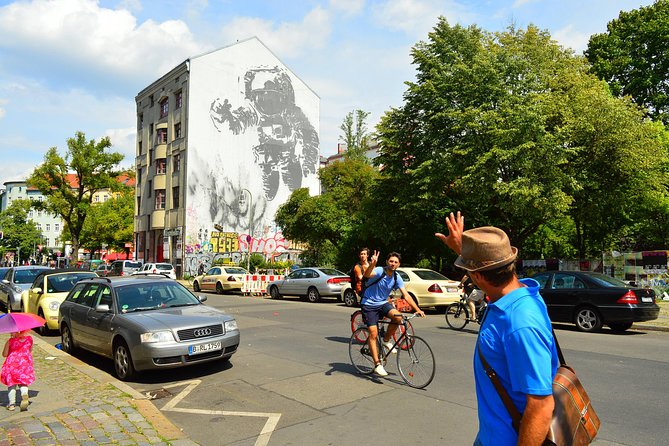
I would recommend this tour to you if you want a fast but thoughtful introduction to Berlin’s recent past. It suits first-time visitors who have already seen, or plan to see, the standard monuments and want a closer look at neighborhoods.
It also works well for families. The private setting lets you pause for questions, and Josh’s ability to engage two 15-year-old daughters suggests that the subject can be made accessible to younger visitors without reducing it to a children’s tour.
You may also like it if you have already taken a classic Berlin sightseeing tour. Stefano was able to create an alternative experience for people who had covered the familiar highlights the previous day.
I would hesitate if you prefer museums, long photography stops, or a relaxed café-and-food walk. The schedule covers a lot of ground, and none of the listed stops includes an admission ticket or meal.
Practical details before you book
Pickup can be arranged from your accommodation, or you can meet centrally at Reichstagufer 17, 10117 Berlin. The activity returns to the meeting point, according to the supplied details.
Different departure times are offered, so select the time that fits your day. Confirmation is normally sent at booking. If you book within two days of departure, confirmation can take up to 48 hours and remains subject to availability.
The tour operates in all weather. Wear shoes suited to several hours on city streets and bring clothing for rain, wind, or sun. Service animals are allowed, the route is near public transportation, and most people can participate.
Free cancellation is available until 24 hours before the start time for a full refund. Changes or cancellations inside that window are not accepted for a refund.
Should you book the Modern Berlin Private Walking Tour?
Book it if you want Berlin explained through its neighborhoods rather than reduced to a checklist of famous buildings. The strongest parts are the private guide, the post-1990 focus, the contrast between districts, and the chance to ask questions as you go.
The named guides bring different strengths. Josh is a good fit for families with teenagers, Joerg for groups that need a flexible pace, Stefano for visitors who have already done the usual sights, and Juan for people who want an open conversation. Maria is a sensible match if modern Berlin is your main interest.
Skip it if $179.84 per person feels too high for a tour with no meals or admissions, or if you want to spend a full morning in just one district. For everyone else, this is a useful way to see how Berlin’s divisions, migrations, art scenes, and redevelopment continue to shape daily life.
FAQ
How long does the Modern Berlin Private Walking Tour last?
The tour lasts approximately three to four hours.
What neighborhoods does the tour visit?
The route includes Mitte, the East Side Gallery area, Prenzlauer Berg, Kreuzberg, and Friedrichshain.
Is the tour private?
Yes. Only your group participates in the private activity.
Is the tour offered in English?
Yes. The experience is offered in English.
Is hotel pickup available?
Yes. You can request pickup from your accommodation or meet the guide at a central location.
Where does the tour start?
The listed meeting point is Reichstagufer 17, 10117 Berlin, Germany.
Does the tour include food or drinks?
No. Food and drinks are not included in the price.
Does the tour operate in bad weather?
Yes. It operates in all weather conditions, so dress appropriately.
Can I cancel for a full refund?
Yes, if you cancel at least 24 hours before the experience starts. Cancellations made less than 24 hours before the start time are not refunded.
Just added around Berlin
- eSIM for Germany and 34 European Countries★ 4.5 · 16 reviews
- Your ticket to The Wall Museum Berlin★ 3.0 · 60 reviews
- Walking on the Wall: 3-Hour Tour in Berlin★ 4.5 · 34 reviews
- Rickshaw Tours Berlin – Groups of up to 16 people with several rickshaws★ 4.0 · 97 reviews
- Warnemuende Shore Excursion: Private Berlin Tour★ 4.5 · 27 reviews
- Love and War in Berlin: Self-Guided Story Puzzle Walk★ 5.0 · 7 reviews
- Warnemuende Shore Excursion: Berlin Private Sightseeing Tour from Rostock★ 5.0 · 4 reviews
- Karl-Marx-Allee Tour: Life and Architecture in East Berlin★ 5.0 · 19 reviews
Berlin Tours, compared.
Reichstag, Dome and Government District Guided Tour
Read our review →
1-Hour City Tour by Boat with Guaranteed Seating
Read our review →

Reichstag, Plenary Chamber, Cupola & Government Tour
Read our review →