
Review · BERLIN TOURS
Jewish Berlin: Walking tour The Old Jewish Quarter (private 3 Hours tour)
Berlin’s Jewish story is not contained in one preserved quarter. It is scattered through Berlin-Mitte, in synagogue sites, courtyards, memorials, a cemetery, and ordinary-looking streets that carry painful memories. This private walking tour connects those places and follows Jewish life in Berlin from its early beginnings to the Nazi period and beyond.
I especially like the chronological approach, which helps you make sense of the stops instead of collecting disconnected facts. I also like the private format and hotel pickup: your guide can adjust the pace, answer difficult questions, and set the tone for your own group. The main drawback is that three hours is a tight window, and some stops are brief. This is best for depth at selected sites, not for seeing every Jewish institution in Berlin.
Key points
- A scattered Jewish quarter brought together: The route explains why Berlin has no single intact old Jewish district.
- Private guiding for up to eight people: Your group can ask questions and set the pace without strangers joining in.
- History told through real people: Moses Mendelssohn, Otto Weidt, and the women of Rosenstrasse give the past a human scale.
- Hotel pickup saves time: You begin from your hotel lobby rather than finding an unfamiliar meeting point.
- Several stops are free: The value lies in the guide’s interpretation, not admission fees.
- Plan for respectful dress: Men need a head covering for the optional cemetery entrance.
Why Berlin-Mitte needs a guided Jewish history walk
Berlin’s Jewish story reaches back to the Middle Ages, with later chapters shaped by immigration, scholarship, persecution, resistance, and destruction. The places on this walk do not form a tidy museum district. They are fragments spread across the Mitte neighborhood.
That scattered quality is part of the lesson. A courtyard may suggest the crowded life of eastern European Jewish immigrants. A memorial may mark people who once lived in a building that is now gone. A synagogue may survive only as a site, façade, or historical reference. You need someone to connect these pieces, and that is where a private guide matters.
The route is designed for up to eight people, so it feels more like a guided conversation than a large sightseeing march. Guides may include Nadav, Sharona, Zvi, Adi, or Orr, and the experience can be conducted in English, German, Hebrew, or other languages by arrangement. Since the guide is central to the experience, it is worth confirming your language and guide preference when booking.
More walking tours in Berlin:
- Discover Berlin Half-Day Walking Tour
★ 5.0 · 9,624 reviews - Berlin: Third Reich and Cold War 2 Hour Walking Tour
★ 4.9 · 6,830 reviews - Berlin: Discover Berlin Walking Tour
★ 4.9 · 5,998 reviews
Starting at Berlin’s oldest synagogue site
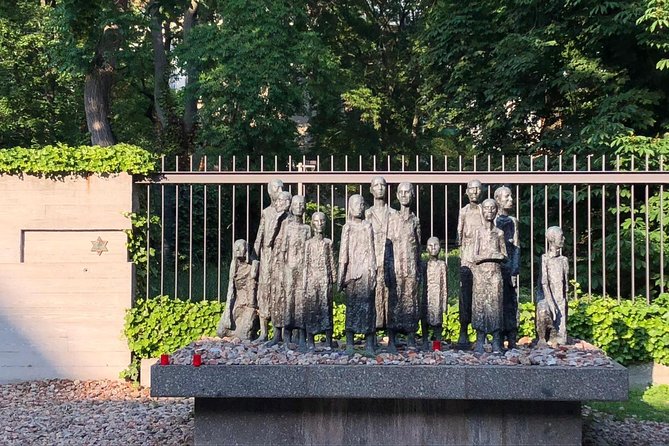
The first stop is the memorial marking the site of Berlin’s oldest synagogue. You spend about 15 minutes here discussing the early Jewish settlement in the city.
Do not expect a grand intact building at this stop. The point is the location and the story attached to it. This opening gives you a useful foundation before the tour moves into the twentieth century. You begin with Jewish life as part of Berlin’s development, rather than starting only with the Nazi era.
That choice matters. A tour focused only on destruction can make Jewish history seem to begin and end with persecution. Here, the opening reminds you that communities, families, religious institutions, scholars, and businesses existed long before the Holocaust.
Rosenstrasse and an unusual act of protest
At the Rosenstrasse memorial, your guide explains the protest by non-Jewish women whose Jewish husbands had been detained. The women demanded their release, and their protest became one of the most important examples of public resistance to Nazi persecution in Berlin.
The stop lasts about 15 minutes, but the subject deserves your full attention. It raises difficult questions about courage, fear, marriage, and what ordinary people could do under a criminal government. The story is powerful because it is personal. Rather than discussing only laws and institutions, the guide can show how political terror entered family life.
This is also one of the places where the private format helps. You may want to ask about what is known of the protest, its limits, and the wider context. A small group makes that sort of conversation easier than a crowded public tour.
Hackesche Höfe and immigrant Berlin
The Hackesche Höfe courtyards show another side of Jewish Berlin. At the turn of the twentieth century, eastern European Jews who came to Berlin lived in and around this area.
The courtyards are visually attractive, but the tour should not reduce them to pretty architecture. Your guide uses the setting to discuss immigration, working life, crowded housing, and the changing character of Berlin’s Jewish population. You see a place that still functions as part of the city while learning about people whose lives have largely disappeared from view.
This is one of the better stops for understanding that Jewish Berlin was not one uniform community. Long-established German Jews and newer arrivals from eastern Europe brought different languages, customs, and social experiences. The route gives you a chance to place those differences within the city itself.
A few more Berlin half-days to weigh up
- Berlin Highlights 3-Hour Bike Tour
★ 5.0 · 948 reviews - Berlin Highlights: 3-Hour Bike Tour
★ 4.9 · 809 reviews - Berlin: 3-Hour Street Art Tour
★ 4.7 · 778 reviews - Berlin: 3-Hour Secret Food Tour
★ 4.8 · 269 reviews
Otto Weidt’s workshop and rescue work
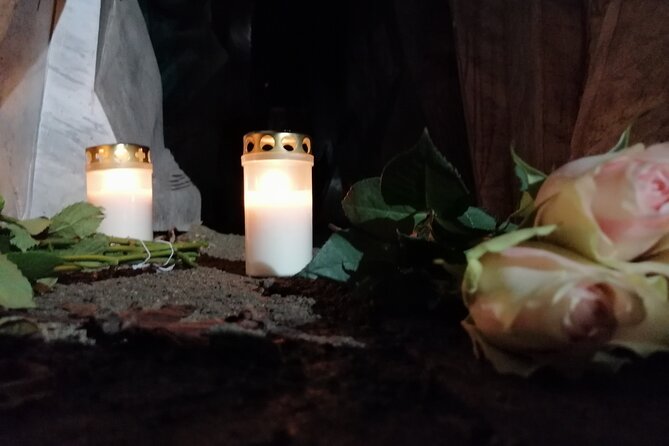
The Museum Blindenwerkstatt Otto Weidt is one of the tour’s most personal stops. You spend roughly 20 minutes learning about Otto Weidt, a German man who risked his life to protect Jewish employees in his workshop.
The museum adds a close human focus after the broader street history. Instead of considering only what governments and armies did, you examine the choices made by one person working with people under threat. The story is not presented as a simple tale of heroism. It opens questions about danger, compromise, responsibility, and the small acts that could save a life.
Admission is listed as free, but the visit still depends on the tour’s timing and the guide’s presentation. If the museum is a major reason for booking, confirm how the visit will work on your chosen date. The three-hour schedule leaves little spare time if access takes longer than expected.
The old Jewish cemetery and Moses Mendelssohn
The memorial Jewish Cemetery is another short stop, listed at about 15 minutes. The site is associated with Moses Mendelssohn, one of the major Jewish thinkers connected with Berlin.
Cemeteries can be easy to rush through on a city tour, but this one helps you think about the people who shaped Berlin before the twentieth-century catastrophe. The guide explains who was buried there and what the cemetery tells you about the city’s earlier Jewish community.
There is an important practical point here. Entrance to the cemetery is optional, and men should bring or wear a head covering if they plan to enter. Dress respectfully, and ask your guide about the entry arrangements. The tour information does not promise a long cemetery visit, so consider it a focused historical stop rather than a full cemetery tour.
The Missing House and the power of absence
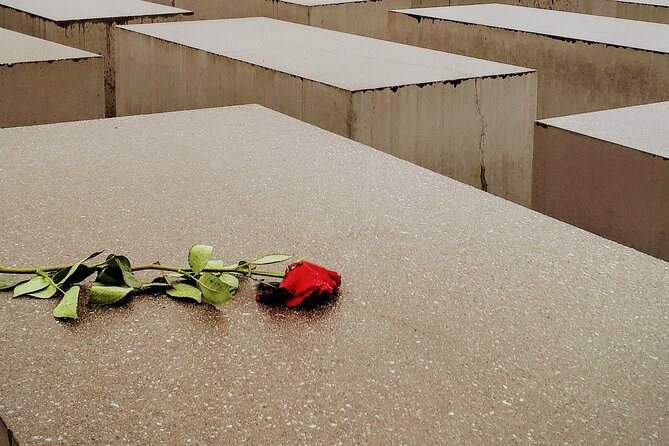
The Missing House is a five-minute memorial by artist Christian Boltanski. It marks a building whose former residents are no longer there, turning an absence into the subject of the artwork.
This is a very different experience from the cemetery or synagogue sites. There may be no large monument demanding your attention. The memorial asks you to notice what is missing, and your guide supplies the historical frame that makes the place meaningful.
Because the stop is brief, you will want to listen closely. Five minutes can pass quickly, especially on a walking route, but the idea is direct: a normal residential building can hold the traces of people erased from the neighborhood. It is a good example of how Berlin often remembers through gaps in the city rather than through grand structures.
The New Synagogue and its changing history
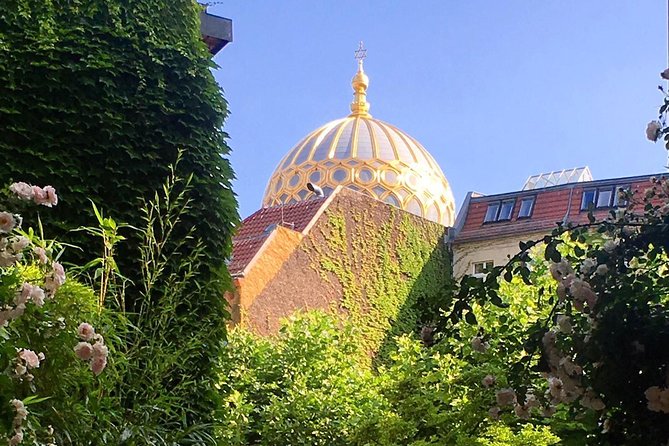
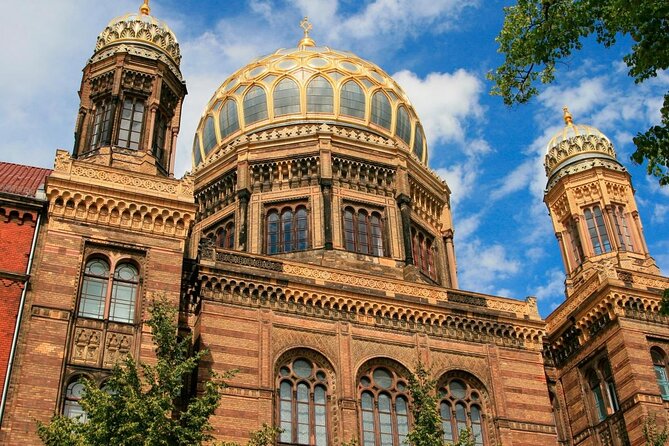
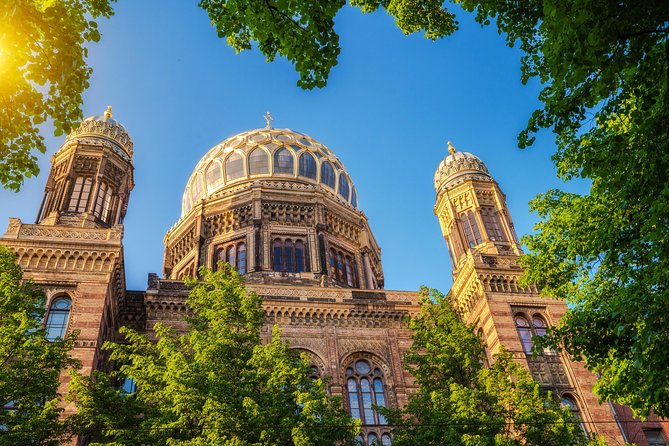
The route ends at the New Synagogue, officially connected with the Centrum Judaicum. You spend about 15 minutes seeing the synagogue and hearing about its history.
The building is an important symbol of Jewish Berlin, but the guide’s explanation is what gives the stop weight. Its story connects religious life, the growth of the Jewish community, wartime destruction, and the effort to preserve Jewish memory in modern Berlin.
The stop is mainly an exterior and historical visit based on the information provided. Do not assume that this walking tour includes a full interior visit or admission to every part of the complex. If entering the synagogue or museum is essential to your plans, ask before booking.
Ending here works well. After seeing smaller memorials and personal stories, you finish with a major public institution that represents both Jewish life and the city’s attempt to remember what was lost.
A private guide makes the difference
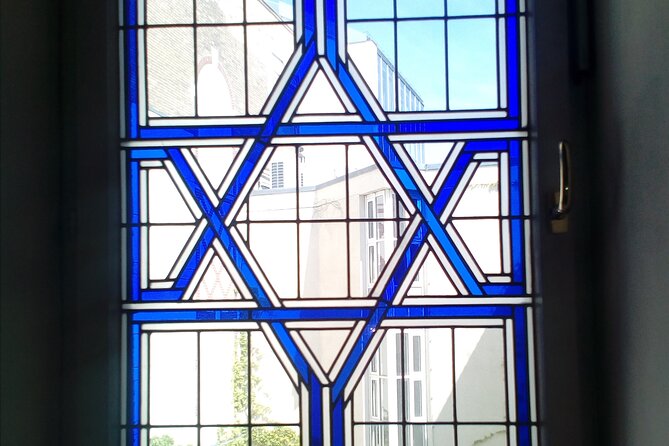
This tour sells interpretation rather than admission tickets. Every listed stop is free, and there is no food, drink, or transportation between attractions included. The value comes from having a professional local guide explain what you are seeing and adapt the discussion to your group.
That difference is especially important for this subject. Plaques and memorials rarely provide enough context on their own. A guide can explain why a site matters, how it fits into the timeline, and what remains uncertain or debated.
The guide’s background may also shape the experience. Nadav is described as Israeli-German, and one account praised the way he brought historical material, including a notebook, to the walk. Adi’s personal experience as a Jewish person and Israeli in Berlin added a contemporary perspective for one couple. Zvi, Sharona, Orr, and other guides have also led the route.
Personal perspective can make a difficult subject more immediate, but you should remember that guides will differ in style. Some may focus on a clear historical sequence. Others may spend more time on personal reflection, present-day Jewish life, or the emotional side of the subject. If you prefer a particular approach, mention it when arranging the tour.
Three hours, hotel pickup, and walking demands
The experience lasts about three hours and offers morning or afternoon departure times. Hotel pickup is included from your lobby, which is useful in Berlin, where a private guide can save you the trouble of navigating to a starting point.
Transportation to and from the attractions is not included. This is fundamentally a walking tour, not a driving tour. You should wear comfortable shoes and expect to remain on your feet for much of the time. A moderate fitness level is required.
The route contains seven stops, but the timing shows how quickly it moves:
- About 15 minutes at the oldest synagogue site
- About 15 minutes at Rosenstrasse
- About 15 minutes at Hackesche Höfe
- About 20 minutes at the Otto Weidt Museum
- About 15 minutes at the cemetery
- About 5 minutes at the Missing House
- About 15 minutes at the New Synagogue
The listed stop times add up to less than three hours, leaving time for walking and explanation between locations. Even so, this is not a leisurely half-day exploration. You will cover selected sites and rely on the guide to build the larger story.
Children must be accompanied by an adult unless a different arrangement has been made. The private setup can work well for families, but the subject matter is serious, and parents should decide if their children are ready for it.
Is $356.62 good value for up to eight people?
The price is $356.62 per group, with up to eight people allowed. For a full group, that works out to about $45 per person. For two people, the cost is about $178 each, so the value changes sharply depending on your group size.
For six to eight people, I consider the price reasonable for a private three-hour tour with hotel pickup and a professional guide. You are paying for personal attention, a flexible discussion, and historical explanation at places that do not always speak for themselves.
For a couple, the price is harder to justify unless this subject is a top priority. A shared walking tour may cost less, but it will not offer the same privacy or the same ability to shape the conversation. If you are traveling with family or friends, the group rate becomes much more attractive.
Remember that the price does not include food, drinks, admission charges, or transport between the attractions. The listed sites are free, which keeps extra costs low, but you should not book this expecting a museum-heavy experience with all entries covered.
Who should book this walk?
I would choose this tour if you want Jewish Berlin presented as a connected story, not as a list of monuments. It suits visitors who value context, personal stories, and a guide who can answer questions at the moment they arise.
It is also a good choice if you have limited time in Berlin. The hotel pickup and three-hour length make it easy to fit into a busy itinerary. The morning or afternoon options add useful flexibility.
You may want another option if you prefer a fast overview, a large group atmosphere, or a tour built around extensive museum interiors. This route gives fewer sites more attention, but several stops are short and the walking pace may feel brisk.
The subject can be painful. Stories of Nazi persecution, disappearance, and loss are central to the route, even though the tour also covers earlier Jewish life and acts of rescue. Go prepared for a serious experience, not light sightseeing.
FAQ
How long is the Jewish Berlin walking tour?
The tour lasts approximately three hours.
How many people can join the private tour?
The private tour is available for one group of up to eight people.
Is hotel pickup included?
Yes. Pickup is offered from the lobby of your Berlin hotel.
Are food, drinks, and transportation between attractions included?
No. Food and drinks are not included, and transportation to and from the attractions is also not included.
Is the tour offered in English?
Yes. English is offered, along with German, Hebrew, and other languages by arrangement. A multilingual guide may conduct the tour.
Do men need a head covering?
Men should wear a head covering for the optional entrance to the Jewish cemetery.
Should you book Jewish Berlin: The Old Jewish Quarter?
Book it if you want a serious, personal look at Jewish life in Berlin and can fill the group to spread the cost. The strongest feature is the way the guide links early settlement, immigration, protest, rescue, remembrance, and synagogue life across several city blocks.
I would especially recommend it for families or friends who want to talk through the history at their own pace. If you are a couple watching your budget, compare the private price with a shared tour first. But if privacy, hotel pickup, and a thoughtful guide matter more than seeing a long list of sights, this three-hour walk offers a useful and moving introduction to Berlin’s Jewish past.
Just added around Berlin
- eSIM for Germany and 34 European Countries★ 4.5 · 16 reviews
- Your ticket to The Wall Museum Berlin★ 3.0 · 60 reviews
- Walking on the Wall: 3-Hour Tour in Berlin★ 4.5 · 34 reviews
- Rickshaw Tours Berlin – Groups of up to 16 people with several rickshaws★ 4.0 · 97 reviews
- Warnemuende Shore Excursion: Private Berlin Tour★ 4.5 · 27 reviews
- Love and War in Berlin: Self-Guided Story Puzzle Walk★ 5.0 · 7 reviews
- Warnemuende Shore Excursion: Berlin Private Sightseeing Tour from Rostock★ 5.0 · 4 reviews
- Berlin’s Gay, Lesbian, and Queer Scene Small-Group Walking Tour★ 4.5 · 66 reviews
Berlin Tours, compared.

Reichstag, Dome and Government District Guided Tour
Read our review →
1-Hour City Tour by Boat with Guaranteed Seating
Read our review →

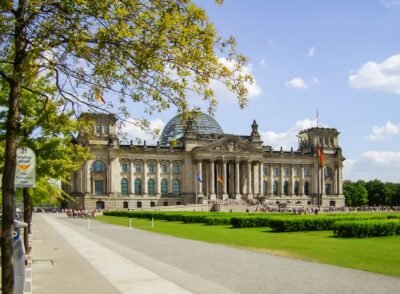
Reichstag, Plenary Chamber, Cupola & Government Tour
Read our review →
Browse the lists this tour appears in