Review · BERLIN TOURS
Jewish Life in Berlin – Private Walking Tour
Berlin’s Jewish story is written into ordinary streets, courtyards, schools, cemeteries, and workshops. This private walk connects those scattered places, moving from 17th-century Jewish immigration through the Nazi period and into present-day Berlin. The most affecting stop is the small Museum Blindenwerkstatt Otto Weidt, where a workshop owner protected blind and deaf Jewish employees during the Holocaust.
I like the personal guide format, which lets you ask questions and adjust the conversation to your group. I also like the focus on daily life, not only famous memorials: Scheunenviertel, Sophienstraße, Grosse Hamburger Strasse, and Auguststrasse show how a community lived and worked. The main consideration is that this is a walking and outdoor tour, and the New Synagogue stop may not include time inside the Centrum Judaicum.
Key points to know before you book
- Otto Weidt’s workshop: See the former factory linked to a rare story of protection and resistance during the Nazi era.
- A former Jewish neighborhood: Walk through Scheunenviertel and nearby streets where Berlin’s Jewish community once lived.
- A serious, human story: The route covers Moses Mendelssohn, Albert Einstein, Jewish schools and cemeteries, deportation, propaganda, and the Holocaust.
- Private and flexible: Your group alone takes part, with up to 15 people sharing one guide.
- Flat but substantial walking: The route lasts about three hours and is mostly easy underfoot, though hot or wet weather can make it tiring.
- A clear museum caveat: The final stop is the New Synagogue and Centrum Judaicum, but you should not assume a full museum visit is included.
From Hackescher Markt into Berlin’s Jewish story

Meet your guide outside Starbucks near Hackescher Markt, at Neue Promenade 3. This is a useful central starting point, with the Hackescher Markt S-Bahn station nearby and good public transport connections.
The first few minutes are used to set the historical frame. Berlin’s Jewish community did not begin with the 20th century, and this tour makes that clear. You hear about the first Jewish immigrants in the 17th century, then follow the community’s growth, its institutions, its achievements, and its destruction under Nazi rule.
That broad time span matters. A Holocaust-focused walk can sometimes make Jewish life seem to begin and end with persecution. Here, you also hear about people who shaped German and European culture. Moses Mendelssohn, the philosopher, founded the first modern public school for Jewish boys. Albert Einstein is another reminder that Berlin’s Jewish residents were part of the city’s intellectual and civic life long before the Nazi period.
The private format is especially useful at this opening stage. Guides including Caroline, Carlos, Finn, and Marriette have been praised for explaining difficult subjects clearly and for handling questions with patience. The guide assigned to your date will vary, but the strongest experience depends on an open conversation rather than a memorized speech.
More walking tours in Berlin:
- Discover Berlin Half-Day Walking Tour
★ 5.0 · 9,624 reviews - Berlin: Third Reich and Cold War 2 Hour Walking Tour
★ 4.9 · 6,830 reviews - Berlin: Discover Berlin Walking Tour
★ 4.9 · 5,998 reviews
Hackesche Höfe and the memory of protest
The walk continues to Die Hackeschen Höfe, a series of courtyards with a complicated connection to Berlin’s past. Your guide explains the history of the site and discusses the memorial to the women’s protest.
This is one of the tour’s useful changes of pace. You are not simply taken from one Holocaust marker to the next. The courtyards help place Jewish life within the changing city, while the protest memorial introduces the subject of ordinary people challenging Nazi persecution.
The stop itself is brief, around 10 minutes. That is enough for an explanation and a few questions, but not enough for a long architectural visit. Treat the courtyards as part of the route rather than as a separate sightseeing stop.
Otto Weidt’s workshop, a small place with a large story
The Museum Blindenwerkstatt Otto Weidt is one of the most important stops. Otto Weidt ran a workshop in the 1940s and employed blind and deaf Jewish workers. He also tried to protect them from persecution.
The subject is handled through a specific place and a specific person. That gives the Nazi-era story a human scale. Instead of hearing only about policies and dates, you learn how one workshop owner used his position to help people facing arrest and deportation.
Your guide explains Otto Weidt’s actions and the wider resistance against the Nazis. This is a serious stop, and the guide’s judgment matters. One of the strongest qualities repeatedly praised in the guiding is the ability to handle sensitive questions with calm, facts, appropriate humor when suitable, and candid explanation.
Allow yourself to pause here. The itinerary lists about 10 minutes, but the emotional weight can make the stop feel longer. If your group includes teenagers or several generations, the private setting lets you ask for extra context without worrying about interrupting a larger party.
Scheunenviertel and the vanished neighborhood
From there, you walk into Scheunenviertel, the former Jewish quarter. The name is familiar to many visitors, but the streets are more revealing than a name on a map. The guide explains how Berlin’s Jewish community lived in the old city and points out what remains.
Do not expect a preserved historic quarter with every building intact. Much of the story survives in fragments, changes of use, and traces that are easy to miss without explanation. That is exactly why this part works best with a guide.
You learn about the community before World War II, including its social life and place in Berlin. The route gives needed balance to the Holocaust material. Jewish residents were not only victims of Nazi persecution. They were workers, students, parents, business owners, religious leaders, and neighbors who helped shape the city.
One practical point: a few minutes in each place means the guide has to select carefully. If you want a long architectural tour or extensive time at each address, this route may feel brisk. If you want a connected introduction to the area, the pace is useful.
A few more Berlin half-days to weigh up
- Berlin: Reichstag, Dome and Government District Guided Tour
★ 4.7 · 18,288 reviews - Berlin: 1-Hour City Tour by Boat with Guaranteed Seating
★ 4.3 · 16,993 reviews - Berlin: Boat Tour Along the River Spree
★ 4.4 · 11,252 reviews - Berlin: Hop-on Hop-off Bus Tour with Live Commentary
★ 4.3 · 8,579 reviews
Sophienstraße and Sophia Church
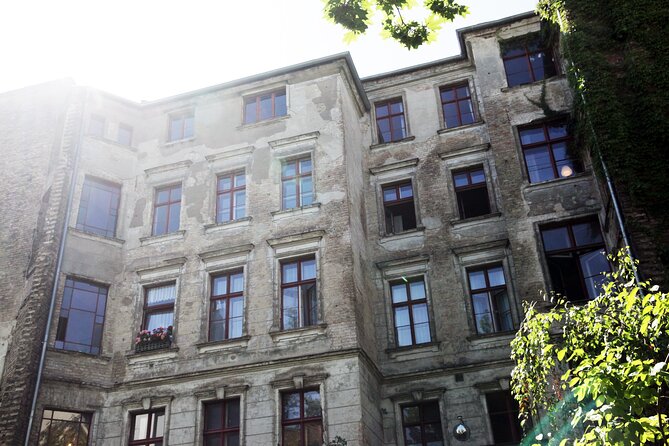
Sophienstraße brings a quieter, more picturesque stretch of Berlin Mitte into the walk. The guide explains the history of the street, named after Queen Sophie, and shows how this part of the city fits into the wider story.
The tour then reaches Sophia Church. This stop broadens the discussion beyond Jewish institutions. You hear about the church’s history and its connection to Martin Luther King.
The value here is the sense of a shared urban setting. Jewish life developed beside other religious and civic institutions, not in isolation. The route asks you to consider how different communities occupied the same city and how Berlin’s streets changed across centuries.
Again, the stop is short. You are there for interpretation rather than a full church tour. If you are especially interested in Martin Luther King’s connection to the church, ask your guide to explain the point in detail while you are there.
Grosse Hamburger Strasse, cemetery, school, and deportation
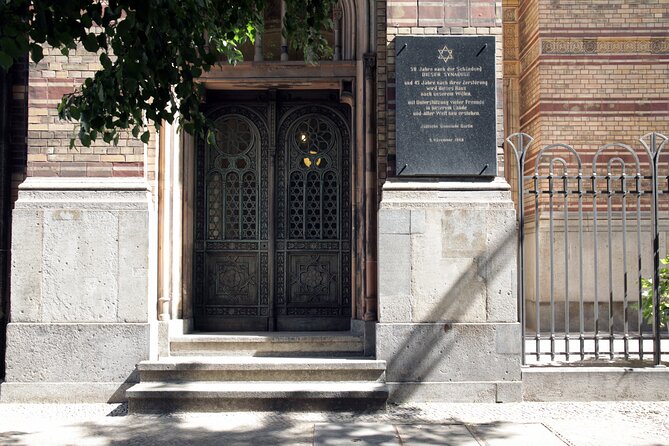
Grosse Hamburger Strasse carries some of the walk’s heaviest history. Here, the guide explains the Jewish cemetery, the Jewish school, and the deportation of Jewish people during the Nazi era.
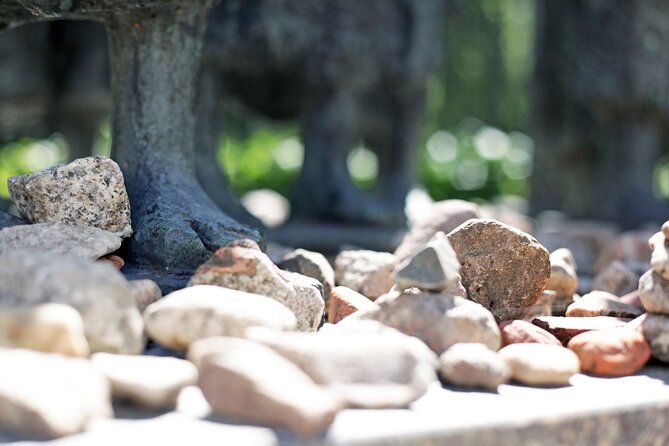
The combination is powerful because it links three parts of community life: remembrance, education, and destruction. A cemetery points to generations who lived before the Holocaust. A school shows the effort to build a future. Deportation reveals how that future was violently taken away.
This is also a place where the route’s emphasis on lesser-known details pays off. Several people who choose this experience expect only the New Synagogue or major Holocaust memorials. Instead, the walk spends time on daily Jewish life and on locations that can be difficult to understand without local context.
The famous Holocaust Memorial is not part of this route. That is worth knowing before booking. You are getting a focused walk through the old Jewish quarter, not a general tour of every major Jewish-related site in central Berlin.
Auguststrasse and the surviving traces of community life
Auguststrasse is known for art galleries and important buildings connected with Berlin’s former Jewish community. The guide explains the history of the street and its role in the old neighborhood.
This section helps you see how little a casual visitor might notice. Contemporary Berlin continues to use these streets, and their present-day appearance does not always reveal what happened there. The guide supplies the missing layer.
I like this part because it avoids treating history as something locked behind museum glass. You are walking through streets still used today, while learning how institutions, homes, and community spaces once fit together.
The route can feel less dramatic here than at the Otto Weidt workshop or New Synagogue. That is not a weakness, but it does require attention. The reward is a fuller picture of Jewish Berlin, one that includes routine places as well as famous monuments.
The New Synagogue and Centrum Judaicum
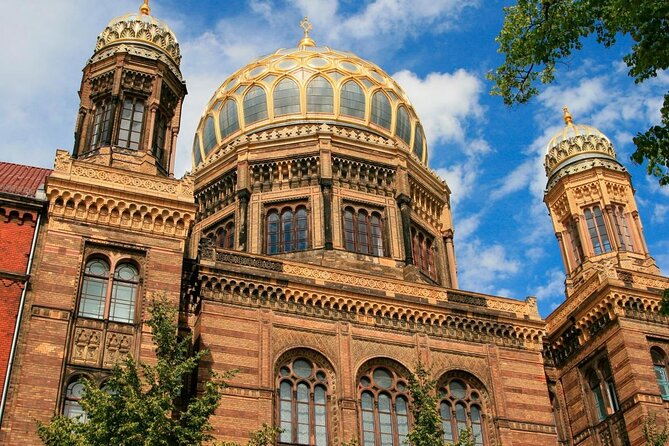
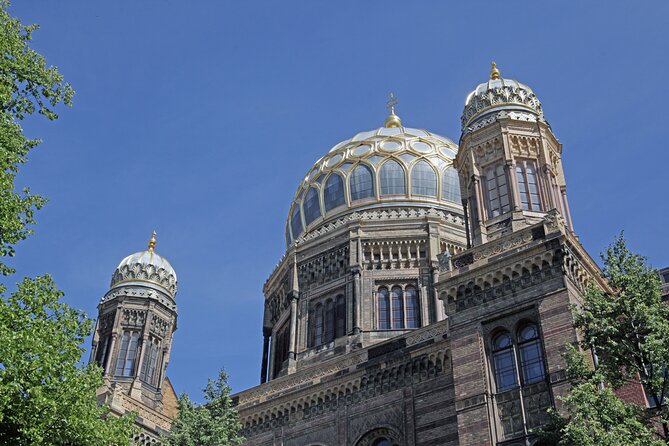
The final stop is the New Synagogue on Oranienburger Strasse, at Oranienburger Strasse 28 to 30. Built in the 19th century, it was the main synagogue of Berlin’s Jewish community and an important example of late 19th-century Berlin architecture.
The guide explains the synagogue’s history, the events of Kristallnacht in 1938, and the people who helped Jews during the Nazi period. The building gives the tour a strong closing point because it brings together religious life, architecture, persecution, and survival.
Today, the building is home to the Centrum Judaicum, which traces the synagogue’s history and the lives connected with it. But plan carefully: the walking tour itself is not a substitute for a museum visit. The listed stop is brief and free, and one person who took the walk specifically wished there had been time to enter the museum in the old synagogue.
If the interior and exhibitions are important to you, schedule a separate visit rather than assuming the guide will provide one. The stated opening hours are Monday through Sunday, 9:00 a.m. to 3:00 p.m., for the period shown in the tour information. Check current hours when planning, since museum schedules can change.
What three hours on foot really feels like
The tour lasts about three hours and covers several locations across central Berlin. The walking is on flat ground, which makes the route manageable for most people, but it is still a substantial walk.
Wear comfortable shoes. Bring water in warm weather and rain protection in wet weather. The experience operates in all weather conditions, and heavy rain has affected the final part of some walks. Hot weather can also put extra strain on the group, even when the route itself is easy.
There are no admission charges listed for the individual stops, and the professional guide is included. That means the main cost pays for interpretation and the private format, not a package of museum tickets.
Is $355.25 good value for a private group?
The price is $355.25 per group of up to 15 people. For one or two people, that is a significant outlay. For a family or group of friends, the per-person cost drops quickly, and the private structure becomes more appealing.
A group of 10 pays about $35.53 per person. A full group of 15 pays about $23.68 per person. Those figures make the experience easier to justify if several people are sharing the booking.
The value rests on the guide. You are paying for someone to connect the streets, explain the historical sequence, answer questions, and handle a painful subject with care. Strong guides such as Carlos, Caroline, and Finn have been praised for clear explanations, patience, enthusiasm, and the ability to keep the discussion interesting for people of different ages.
This is not the best choice if you want a ticket-heavy sightseeing tour. It is a good choice if you want context that you would probably miss while walking the area alone.
Who will get the most from this walk?
I would choose this tour for anyone who wants Jewish history in Berlin placed within the city’s wider story. It suits adults, families with older children, and groups with different levels of background knowledge.
The private format helps when your party has specific interests. You can ask about Moses Mendelssohn, Albert Einstein, Nazi propaganda, Jewish education, resistance, religious buildings, or the present-day community. Several guides have handled mixed-age groups and sensitive questions well.
It may be less suitable for anyone who wants a slow museum visit, extensive time inside the New Synagogue, or a tour centered on the Holocaust Memorial. It also asks for three hours of walking in weather that may be hot or wet.
The overall rating is 4.5 out of 5, with 95 percent recommending the experience. The praise centers on the guides’ command of the subject, friendliness, enthusiasm, and care with difficult material. The less positive reactions focus mainly on the pace, the outdoor conditions, and the lack of a full old-synagogue museum visit.
Practical booking advice
Your confirmation normally arrives at booking. If you book within three days of the tour, confirmation can take up to 48 hours and depends on availability.
The meeting point is outside Starbucks near Hackescher Markt S-Bahn station. The tour ends at the New Synagogue, so you finish near Oranienburger Strasse rather than returning to the starting point.
The tour is private, and only your group takes part. Service animals are allowed, public transport is nearby, and most people can participate. Free cancellation is available if you cancel at least 24 hours before the start time. Inside 24 hours, refunds are not provided and changes are not accepted.
Should you book Jewish Life in Berlin?
Book it if you want a thoughtful, guide-led walk through the former Jewish quarter, with strong attention to daily life, community institutions, and the people affected by Nazi rule. The Otto Weidt workshop, Grosse Hamburger Strasse, and the New Synagogue provide a meaningful arc without reducing Berlin’s Jewish story to a handful of memorials.
Before booking, accept two limits: you will walk for three hours, and you should not count on a full Centrum Judaicum visit. For a group sharing the cost, the private format offers good value. For a solo visitor or couple, the price is harder to defend unless this subject is a major priority.
FAQ
How long is the Jewish Life in Berlin private walking tour?
The tour lasts approximately three hours.
Where does the tour begin?
Meet your guide outside Starbucks near Hackescher Markt S-Bahn station, at Neue Promenade 3, 10178 Berlin.
Where does the tour end?
The walk ends at the New Synagogue Berlin, Centrum Judaicum, at Oranienburger Strasse 28 to 30, 10117 Berlin.
Is this a private tour?
Yes. Only your group participates, with up to 15 people in the group.
What places are visited?
The route includes Hackescher Markt, Hackesche Höfe, the Museum Blindenwerkstatt Otto Weidt, Scheunenviertel, Sophienstraße, Grosse Hamburger Strasse, Sophia Church, Auguststrasse, and the New Synagogue Berlin, Centrum Judaicum.
Is the Holocaust Memorial included?
No. The Holocaust Memorial is not included in the stated route.
Is entry to the Centrum Judaicum included?
The walking tour ends at the New Synagogue and explains its history, but you should not assume that a full indoor museum visit is included.
Does the tour operate in bad weather?
Yes. It operates in all weather conditions, so you should dress appropriately.
Can I cancel for a full refund?
Yes, if you cancel at least 24 hours before the experience starts. Cancellations within 24 hours are not refunded, and changes made within that period are not accepted.
Just added around Berlin
- eSIM for Germany and 34 European Countries★ 4.5 · 16 reviews
- Your ticket to The Wall Museum Berlin★ 3.0 · 60 reviews
- Walking on the Wall: 3-Hour Tour in Berlin★ 4.5 · 34 reviews
- Rickshaw Tours Berlin – Groups of up to 16 people with several rickshaws★ 4.0 · 97 reviews
- Warnemuende Shore Excursion: Private Berlin Tour★ 4.5 · 27 reviews
- Love and War in Berlin: Self-Guided Story Puzzle Walk★ 5.0 · 7 reviews
- Warnemuende Shore Excursion: Berlin Private Sightseeing Tour from Rostock★ 5.0 · 4 reviews
- Berlin’s Gay, Lesbian, and Queer Scene Small-Group Walking Tour★ 4.5 · 66 reviews
Berlin Tours, compared.

Reichstag, Dome and Government District Guided Tour
Read our review →
1-Hour City Tour by Boat with Guaranteed Seating
Read our review →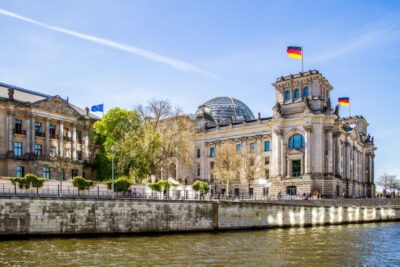
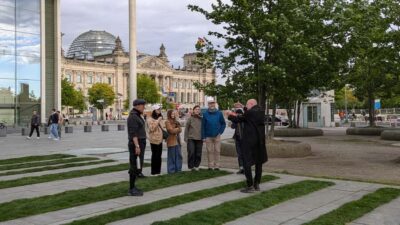
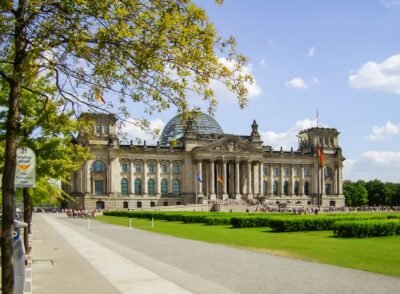
Reichstag, Plenary Chamber, Cupola & Government Tour
Read our review →