
Review · BERLIN TOURS
Daily First Rickshaw promotion in Combi Vehicle public Group 90€
Berlin is a city of wide boulevards, scattered monuments, and big historical distances. This private rickshaw tour solves a practical problem: you can cover much of central Berlin in four hours without wearing out your feet. You sit under the canopy while your guide steers between major sights and pulls over for photographs.
I like the small private format, limited to two people in the listed vehicle, and I like the steady mix of sightseeing and short stops. The supplied blanket, bottled water, WiFi, and the option to pause for snacks make the ride unusually comfortable. Guide Levi is praised for his humor, photography, and willingness to shape the route around your interests.
The main consideration is pace. You see many places, but most stops last only five to fifteen minutes, and admission to the TV Tower is not included. This is an excellent orientation tour, not a substitute for spending half a day inside Berlin’s museums.
Key points to know before booking
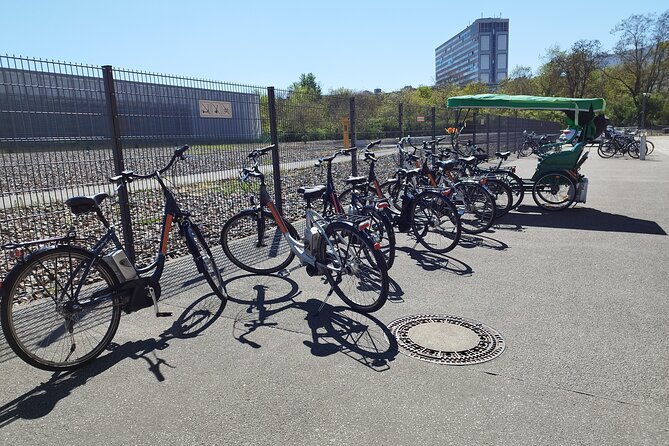
- Private rickshaw for up to two: You get a personal ride rather than a large coach or walking group.
- Four hours across central Berlin: The route links Alexanderplatz, Museum Island, former Cold War sites, Potsdamer Platz, and the Brandenburg Gate.
- Built-in photo stops: You can get close to monuments without long walks between them.
- A good early start: The guide recommends 9:00 a.m., when the sights are less crowded.
- Comfort in mixed weather: A roof and blanket help during rain or cooler weather.
- A guide-led overview: Levi is one named guide associated with the experience, and the route can reflect your interests.
Why a Berlin rickshaw works so well
Berlin rewards a tour that connects the dots. Alexanderplatz sits well east of the Brandenburg Gate, while Checkpoint Charlie, Potsdamer Platz, and the Holocaust Memorial fill the middle of the route. Walking between all of these places takes time, and public transport can leave you searching for the right exit or crossing busy streets.
A rickshaw gives you a different angle. You are low to the ground, close to the buildings, and able to stop when something catches your eye. You do not get the broad narration of a large bus tour, but you gain flexibility and a much more personal ride.
This is also useful if long walks are difficult. The activity notes that you enter the rickshaw in only a few steps, and you can get close to many monuments without leaving the seat. The tour is not presented as wheelchair accessible, so you should clarify your needs before booking, but it is designed to reduce walking for people with limited mobility.
The vehicle carries up to two people on the listed experience. Extra rickshaws can be added for larger groups, though the supplied details do not give a price for that option. For a couple, the arrangement feels more like a private city outing than a standard group excursion.
A few more Berlin half-days to weigh up
- Berlin: Reichstag, Dome and Government District Guided Tour
★ 4.7 · 18,288 reviews - Berlin: 1-Hour City Tour by Boat with Guaranteed Seating
★ 4.3 · 16,993 reviews - Berlin: Boat Tour Along the River Spree
★ 4.4 · 11,252 reviews
Alexanderplatz to Museum Island
The meeting point is Weinbergsweg 6 in the 10119 district, and the tour ends back there. The sightseeing route begins at the Berliner Fernsehturm, the familiar TV Tower rising 365 meters above Alexanderplatz. The tower is Berlin’s tallest structure and an easy landmark for getting your bearings.
You spend about five minutes at the tower. Admission is not included, so this stop is for seeing the building and taking photographs rather than going up to the viewing platform. If the tower is a priority, plan a separate visit and check the entry arrangements independently.
From Alexanderplatz, the rickshaw passes the Red Town Hall, Marien Church, and Neptune Fountain before reaching Museum Island. This opening stretch gives you a quick look at the old civic center and lets you settle into the ride without a long lecture or forced indoor visit.
Museum Island deserves more than the fifteen-minute stop allows, but the brief pause is still worthwhile. The UNESCO-listed complex includes Berlin Cathedral, the City Palace, the Altes Museum, the Bode Museum, and the Neues Museum. Together, these buildings cover major chapters of Berlin’s royal, religious, architectural, and museum history.
I would use this stop to photograph the cathedral and surrounding buildings, then return later if you want to enter a museum. The tour includes no museum admissions, and fifteen minutes is too short for anything more than a first look.
Bebelplatz and Gendarmenmarkt
Bebelplatz brings the tour into one of Berlin’s most important places of remembrance. The square forms part of the Forum Fridericianum, a group of major buildings that includes the State Opera, Humboldt University, the State Library, and St. Hedwig’s Cathedral.
The stop lasts about ten minutes. The key subject here is the Nazi book burning of May 10, 1933, when books judged un-German were destroyed in a public show of power. Bebelplatz is not simply a pretty square. It asks you to connect the elegant buildings around you with the political violence that took place there.
Your guide can give the site context while you stand in the square, but you may want more time if this part of German history matters to you. The tour moves quickly, so treat the stop as an introduction rather than a full historical visit.
Gendarmenmarkt follows, with about ten minutes to look around. The square is framed by the former Royal Concert Hall, the German Cathedral, and the French Cathedral. Statues and formal architecture give it a very different mood from nearby Checkpoint Charlie or the raw remains of the Wall.
The contrast is one of the pleasures of this route. In a short distance, you move from Prussian grandeur to Nazi-era memory and then toward Cold War Berlin. A rickshaw makes that change easy to grasp because you are not spending your energy on the transfer.
Checkpoint Charlie and the Topography of Terror
Checkpoint Charlie is a short five-minute stop, but its subject is enormous. This former crossing point recalls the 28 years when the Berlin Wall separated East and West Berlin. The Wall fell in 1989, yet the checkpoint remains one of the clearest places to discuss the city’s divided past.
Do not expect the stop alone to explain every detail of the Cold War. Five minutes is enough for a photograph and a compact explanation, not a full museum visit. The value comes from placing Checkpoint Charlie within the larger route, especially after seeing the historic center and before reaching the former border strip near Potsdamer Platz.
The Topography of Terror receives about ten minutes. This documentation center examines crimes committed during the Nazi era and is located beside the Martin-Gropius-Bau exhibition center. The building and the site carry a serious tone, and the stop gives you another chance to connect Berlin’s present streets with the institutions that shaped its darkest years.
The nearby Martin-Gropius-Bau has hosted exhibitions by artists such as Ai Weiwei and David Bowie. You do not enter it on this tour, and no admission is included, but its presence adds another layer to the area. The former Prussian Landtag is also nearby, a late nineteenth-century building linked to important political events in Prussian history.
This section of the route is dense with difficult subjects. I appreciate that the rickshaw allows you to pause at several locations without turning the outing into a long walk. Still, if you prefer slow, detailed museum visits, you will need extra time on another day.
Same city, a completely different sort of afternoon:
- Discover Berlin Half-Day Walking Tour
★ 5.0 · 9,624 reviews - Berlin: Hop-on Hop-off Bus Tour with Live Commentary
★ 4.3 · 8,579 reviews - Berlin: Government District around the Reichstag Guided Tour
★ 4.7 · 8,447 reviews - Berlin: Reichstag, Plenary Chamber, Cupola & Government Tour
★ 4.6 · 8,422 reviews
Potsdamer Platz and the former border zone
Potsdamer Platz shows how dramatically Berlin changed after reunification. Once damaged and divided, the area became one of Europe’s largest construction sites after 1990. Its skyscrapers and modern buildings now create a sharp contrast with the older streets around Museum Island and Gendarmenmarkt.
The Sony Center is the main visual anchor, and the stop lasts about ten minutes. This is a good place to photograph modern Berlin and consider how quickly a vacant or neglected zone can become a major urban center.
The tour’s quick movement through Potsdamer Platz is part of its strength. You do not need to navigate between historic and modern districts yourself. Your guide keeps the vehicle moving while explaining how the former border area changed after Germany reunited.
The tradeoff is that the stop is mostly visual. If you want shops, cafés, architecture, or film history in detail, arrange time to return. On the rickshaw ride, you get the broad story and a chance to see the area without committing a separate half-day.
The Holocaust Memorial and Brandenburg Gate
The Memorial to the Murdered Jews of Europe is one of the tour’s most important stops. The field of concrete slabs covers a large area near the former border strip and commemorates the six million Jews murdered under National Socialism.
You have about ten minutes here. That is enough to walk among part of the memorial if you are able, take in its stark design, and hear why the site matters. It is not a place to rush through for a quick photograph, so I would ask the guide for a little quiet time if the schedule permits.
The memorial is powerful partly because it sits so close to the center of modern government and tourism. Berlin does not hide its past behind a distant museum wall. You encounter it beside major streets and famous landmarks, which gives the stop added force.
Brandenburg Gate comes next, also with about ten minutes. This is Berlin’s best-known landmark and a natural place for photographs. The gate once marked a boundary between parts of the city, but today it serves as a symbol of a reunited Berlin.
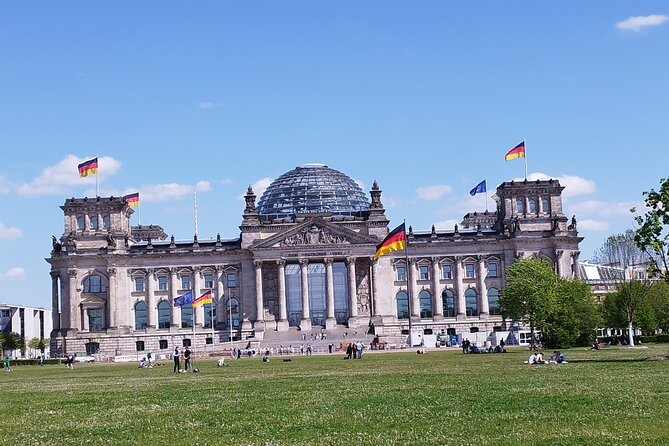
From here, the route includes the Memorial to the Murdered Sinti and Roma, the Reichstag and Bundestag, the Chancellery, and the government district. These sights help complete the story that began at the Wall: Berlin moved from monarchy to dictatorship, division, and reunification, with the seat of government now gathered near the former fault line.
The supplied itinerary does not give a separate time allowance for every government building, so your exact photo stops may depend on the guide and traffic. That flexibility is useful, but you should not expect an interior visit to the Reichstag or Chancellery.
What the guide adds to the ride
The best part of a small vehicle tour is the person at the wheel. Guide Levi is specifically named in the available comments, and his approach sounds particularly suited to this format. He is described as friendly, funny, flexible about interests, and willing to point out places that standard routes often skip.
One especially useful detail is his photography. If you want pictures of both people in your group, ask him to help during the stops. The ride also includes frequent opportunities for photos, so you are not limited to taking hurried snapshots from the moving vehicle.
The guide’s flexibility matters most when your interests do not fit a fixed sightseeing script. You might want more time near the Wall, a better view of a square, or a stop for a snack. The available details indicate that the guide can accommodate such requests, subject to the four-hour schedule.
Weather does not have to ruin the outing. The rickshaw has a roof, and a blanket is provided. One account describes the guide pulling over during a rainstorm to continue explaining Berlin, rather than simply hurrying through the route. That is a small but meaningful sign of care.
You should still dress for Berlin’s weather. A roof is helpful, but it is not the same as sitting inside a heated vehicle. The tour includes bottled water and WiFi, and alcoholic beverages are listed among the inclusions. Since the details do not explain the beverage selection or serving arrangements, ask the provider if that matters to you.
Timing, price, and what you actually receive
The listed price is $216.74 per group of up to two, while the promotion title refers to a daily first rickshaw price of 90 euros. Those figures do not match, so check the price shown for your selected date before paying. The important comparison is the cost of a private four-hour ride, not a per-seat coach fare.
For two people, the price can make sense if you value personal attention, reduced walking, and a route that covers many central sights in one outing. You are paying for the vehicle, driver-guide, planning, and convenience. You are not paying for museum entry, a TV Tower ticket, or a long visit inside any attraction.
I would be more cautious if you are a solo visitor or a strict budget traveler. The group price does not become cheaper simply because one seat is empty, and Berlin’s public transport can cover many of these districts for far less. The rickshaw earns its price through comfort and personal service.
The tour is offered in English and uses a mobile ticket. Confirmation arrives at booking, and the meeting point is near public transportation. Most people can participate, but the provider specifically presents the ride as useful for less mobile people because it limits walking.
The four-hour length is well chosen for an overview. You get enough time to see the major markers of Berlin’s center, but not enough time to linger at every memorial or enter the museums. If you start at 9:00 a.m., you may find the early part of the route calmer, a tip repeated by the guide and especially useful at popular squares.
Free cancellation is available until 24 hours before the start time. A cancellation within the final 24 hours is not refunded, and changes during that period are not accepted. Cutoff times follow local Berlin time, so keep that in mind if you are booking from another time zone.
Who should book this Berlin ride?
I would choose this tour for a couple who wants a comfortable first look at Berlin, especially if one person dislikes long walks. It also suits repeat visitors who have already seen the main museums and want a guide to connect familiar places in a more personal way.
Families may appreciate the private format, though the listed vehicle holds only two people. Larger parties can request extra rickshaws, but you should confirm the arrangement and total cost before booking.
This is a particularly good choice if you want photographs, light conversation, and a flexible route. It is less suitable if your main goal is entering museums, studying memorials at length, or hearing a long academic lecture at each site.
The 100 percent recommendation rate and five-star score from 11 ratings are encouraging, though the sample is small. The strongest praise centers on the guide’s humor, safe driving, clear explanations, photography, and ability to keep the ride pleasant in rain. Those are exactly the qualities that matter most in a private rickshaw.
Should you book it?
Book this experience if you want to cover Berlin’s key central sights without a tiring walk and you like having a guide who can adapt the outing to your interests. The route gives you a useful framework: Alexanderplatz and Museum Island, Prussian squares, Nazi memorials, Cold War sites, reunification architecture, and the government district.
Skip it if you want substantial time inside museums or a low-cost way to move around town. Before confirming, check the current price because the stated 90 euro promotion and $216.74 group price differ, and request the 9:00 a.m. start if you prefer quieter streets.
FAQ
How long is the Berlin rickshaw tour?
The tour lasts approximately four hours.
How many people can ride in the rickshaw?
The listed activity has a maximum of two travelers. Extra rickshaws may be added for larger groups.
What language is the tour offered in?
The tour is offered in English.
Where does the tour start and end?
It starts at Weinbergsweg 6, 10119 Berlin, Germany, and ends back at the meeting point.
Are attraction admission tickets included?
Admission to the Berliner Fernsehturm is not included. The listed stops at Museum Island, Bebelplatz, Gendarmenmarkt, Checkpoint Charlie, the Topography of Terror, Potsdamer Platz, the Holocaust Memorial, and Brandenburg Gate are shown as free stops, but the tour does not include interior admissions.
Is the tour suitable for people with limited mobility?
The experience is described as suitable for less mobile people because you enter the rickshaw in only a few steps and can get close to monuments without leaving the vehicle. Confirm your specific access needs with the provider before booking.
What happens if I need to cancel?
You can receive a full refund if you cancel at least 24 hours before the start time. Cancellations or changes made less than 24 hours before the start are not accepted for a refund.
Just added around Berlin
- eSIM for Germany and 34 European Countries★ 4.5 · 16 reviews
- Your ticket to The Wall Museum Berlin★ 3.0 · 60 reviews
- Walking on the Wall: 3-Hour Tour in Berlin★ 4.5 · 34 reviews
- Rickshaw Tours Berlin – Groups of up to 16 people with several rickshaws★ 4.0 · 97 reviews
- Warnemuende Shore Excursion: Private Berlin Tour★ 4.5 · 27 reviews
- Love and War in Berlin: Self-Guided Story Puzzle Walk★ 5.0 · 7 reviews
- Warnemuende Shore Excursion: Berlin Private Sightseeing Tour from Rostock★ 5.0 · 4 reviews
- Cold War Berlin – Private Live Virtual Experience★ 5.0 · 4 reviews
Berlin Tours, compared.

Reichstag, Dome and Government District Guided Tour
Read our review →
1-Hour City Tour by Boat with Guaranteed Seating
Read our review →




Reichstag, Plenary Chamber, Cupola & Government Tour
Read our review →