
Review · BERLIN TOURS
Historic Berlin: Exclusive Private Tour with a Local
Berlin’s past is packed into this walk: democracy at the Reichstag, Nazi crimes at the Memorial to the Murdered Jews of Europe and Topography of Terror, Cold War division at Checkpoint Charlie, and medieval Berlin in Nikolaiviertel. It is a lot of ground for two hours, but the private format lets you set the pace.
I like the custom itinerary and the chance to ask direct questions instead of following a fixed script. I also like that the route connects major sights with harder history, including the 1953 East German uprising and the Nazi book burning at Bebelplatz. The main drawback is time: two hours gives you an excellent outside overview, not a full museum visit.
Key points to know before booking
- Private from start to finish: Only your group takes part, with a local host rather than a large scheduled tour.
- A strong historical route: You cover Nazi Germany, the Holocaust, the Cold War, reunification, Prussian Berlin, and the city’s medieval center.
- Guide Abie received special praise: Abie was described as well informed, balanced, and skilled at shaping the walk around the group.
- Flexible pace and focus: The itinerary can change to match your interests, walking speed, and weather.
- The walk ends in Nikolaiviertel: You finish near Berlin’s oldest city center, a useful place to continue exploring on your own.
- Admission costs are extra: Transportation, museums, and monument tickets are not included in the $151.41 per-person price.
Starting at the Academy of Arts on Pariser Platz
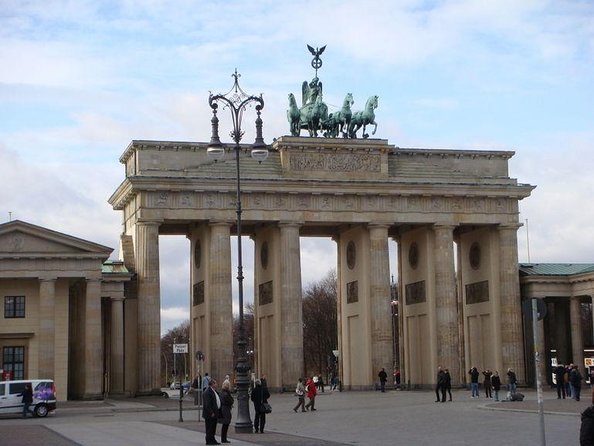
The walk begins at the Academy of Arts, at Pariser Platz 4, beside one of Berlin’s most recognizable ceremonial spaces. This is a practical starting point because you are already close to the Brandenburg Gate, the Reichstag, the Memorial to the Murdered Jews of Europe, and the boulevard Unter den Linden.
The Academy of Arts also fits the tone of the tour. It is a center for artistic and intellectual life, and the opening stop gives your guide room to explain Berlin as a city shaped by ideas, power, war, and creative change. You might find this opening more useful than a quick photo stop because it frames the rest of the walk.
Your host is an independent local, not a museum employee or a government guide. That means the experience can feel more like a conversation. Abie, the guide specifically praised for this tour, adjusted the route to the group’s needs while making sure the main sights were not skipped.
Meet your guide with comfortable shoes and a clear idea of what interests you most. If you care more about the Nazi period than architecture, say so early. If you want more about divided Berlin or the city’s royal past, the private format gives you room to ask.
More history-led days in Berlin:
- Berlin: Natural History Museum Entrance Ticket
★ 4.6 · 3,382 reviews - Berlin: World Heritage Cruise to Potsdam
★ 4.5 · 1,435 reviews - Berlin Historical Highlights Walking Tour
★ 4.9 · 657 reviews
Reichstag and the meaning of German democracy
The Reichstag Building on Platz der Republik is one of the essential Berlin sights. Its glass dome has become a symbol of open government and modern German democracy, while the building itself carries the weight of Germany’s political past.
On this walk, expect to see and discuss the building from the outside. The tour price does not include monument admission, and the description does not promise entry into the dome. That distinction matters if you are hoping for the famous interior view.
The Reichstag works well early in the route because it introduces the idea of a country confronting its past while building a new political identity. Your guide can connect the building’s role in German democracy with the later stops dealing with dictatorship and division.
You will not get a long architectural lecture unless you ask for one. The private setup is better for focused questions, such as how Berlin’s political center changed after reunification or why the Reichstag remains such a potent symbol.
The Memorial to the Murdered Jews of Europe
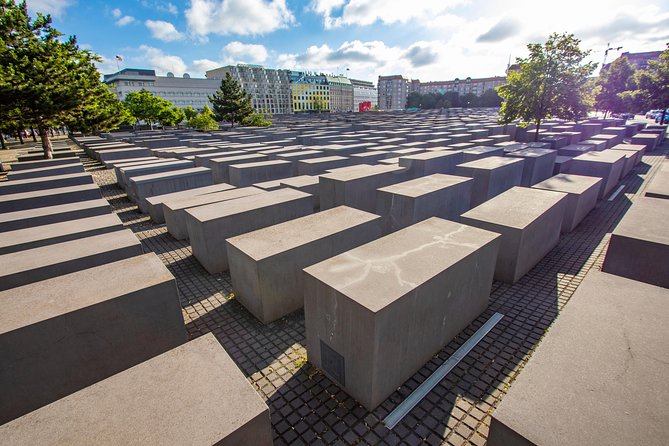
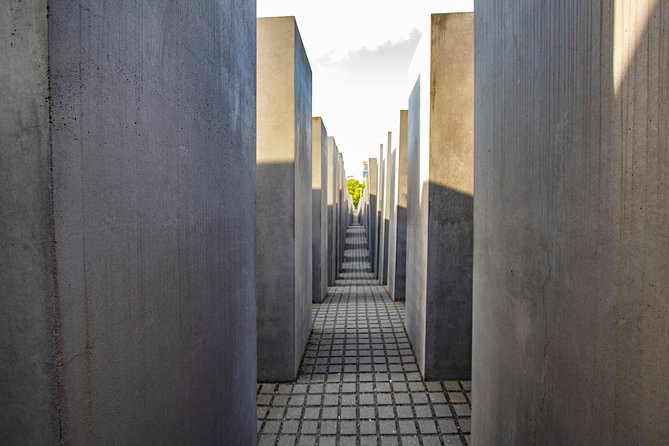
The Memorial to the Murdered Jews of Europe, near Cora-Berliner-Straße, is one of Berlin’s most serious stops. Its field of concrete blocks creates a spare, unsettling space close to the city’s grand political center.
This is not a place to rush through while taking a quick photograph. Give yourself a moment to look, listen, and think. The memorial’s power comes from its open setting and its lack of a simple slogan. Your guide can provide context, but the site also asks you to form your own response.
The tour presents this stop as part of Berlin’s effort to confront the Holocaust in public view. That makes the location important. It is not tucked away in a distant museum quarter. It sits near major government buildings and tourist routes, forcing the city’s past into the middle of the present.
The short duration means you may not have time for a full visit to every related exhibit. If this subject is central to your trip, tell your host. The route can adapt, but entry to museums is not included.
The 1953 uprising and Berlin’s divided years
The stop at Platz des Volksaufstandes von 1953 shifts the focus from Nazi Germany to East German rule. The square commemorates the East German uprising, an important event in the story of public resistance under the communist government.
It is a useful correction to the idea that Berlin’s Cold War story begins and ends with the Wall. The 1953 uprising shows that tension was already visible in East Germany years before the Wall went up. A private guide can make this connection quickly and clearly, especially if you ask how the uprising fits into the larger division of the city.
This stop may feel less visually dramatic than the Reichstag or Berlin Cathedral. Its value is historical rather than spectacular. You are visiting a place that helps explain the pressure building inside East Germany, not simply checking off a famous monument.
A few more Berlin half-days to weigh up
- Berlin: Reichstag, Dome and Government District Guided Tour
★ 4.7 · 18,288 reviews - Berlin: 1-Hour City Tour by Boat with Guaranteed Seating
★ 4.3 · 16,993 reviews - Berlin: Boat Tour Along the River Spree
★ 4.4 · 11,252 reviews - Discover Berlin Half-Day Walking Tour
★ 5.0 · 9,624 reviews
Topography of Terror and the Nazi machinery
The Topography of Terror is a museum and memorial on the former grounds of the Gestapo and SS headquarters. It documents the crimes of the Nazi regime and gives the tour a more direct connection to the institutions that carried out persecution and terror.
This is one of the most important stops on the route, but two hours is not enough for a full museum visit. Treat the stop as an introduction unless your guide and the day’s schedule allow more time. Admission is not included, so any interior visit would require additional planning and cost.
The site is especially valuable because it focuses on the structures behind Nazi crimes. You are not only hearing about Hitler and broad political events. You are being pointed toward the agencies and offices that organized repression.
I appreciate the balance of the route here. Berlin’s history is not presented as a string of pretty squares and famous facades. The walk places difficult sites beside major civic ones, which is closer to the way the city actually feels.
Checkpoint Charlie and the road to reunification
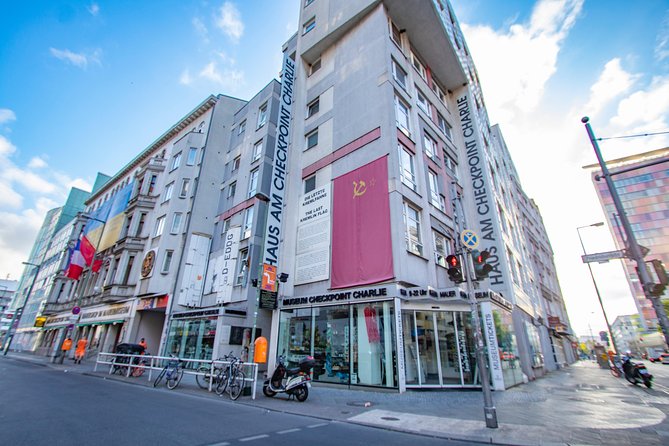
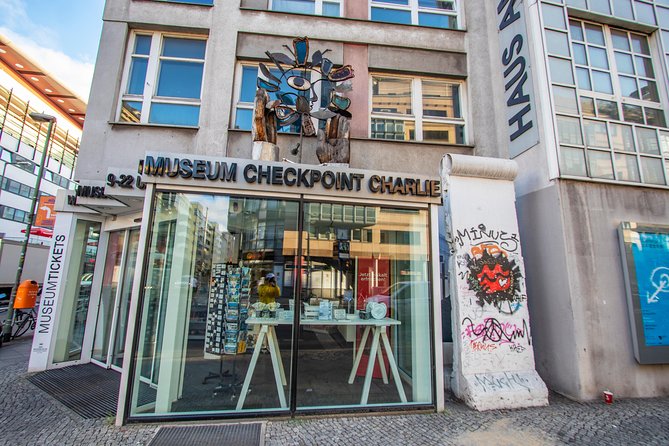
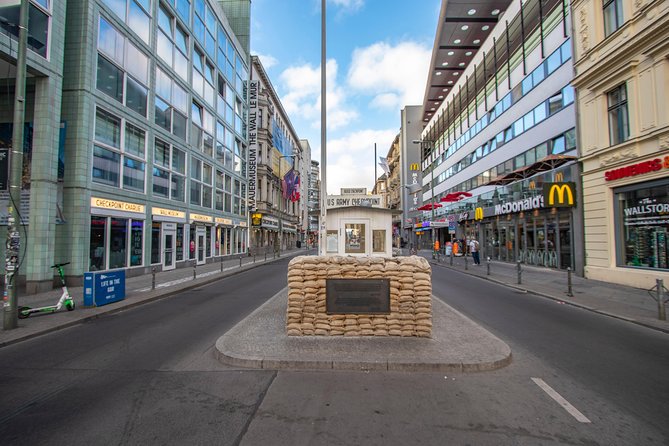
Checkpoint Charlie marks one of the best-known crossing points between East and West Berlin. It symbolizes the city’s division and its eventual reunification, making it a natural stop after the discussion of East German resistance.
The site is useful as a visual shorthand for the Cold War. Your guide can explain how crossing points shaped daily life and why this location became so famous. Still, you should keep expectations sensible. Checkpoint Charlie is a symbolic place, not a preserved border crossing that lets you step back into the 1960s.
Its location also shows how Berlin mixes serious history with modern tourism. The private format helps because you can ask for context rather than simply pausing for a photograph. If you want a longer treatment of the Wall, tell your host at the beginning, since the route has several competing themes.
Gendarmenmarkt and Berlin’s classical face
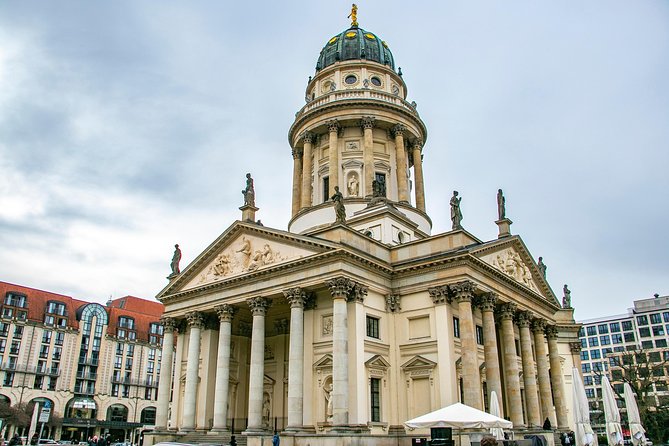
Gendarmenmarkt is a picturesque square framed by major architectural works. It offers a change of mood after the memorials and Cold War sites, showing the formal, classical side of Berlin.
This is a good place to slow down and look upward. The square’s value is not only in one building. It is the relationship between the open space and the surrounding architecture. Your guide can explain how this part of Berlin reflects the city’s older ambitions and public grandeur.
Because the tour is private, you can decide how much time to spend on architecture. That flexibility matters for mixed groups. One person may want the political story, while another wants to understand Berlin’s buildings and city planning.
Gendarmenmarkt also provides a visual pause in a serious route. That does not make it filler. It helps you see the many versions of Berlin that exist within a short walk.
Bebelplatz and the Nazi book burning
Bebelplatz on Unter den Linden is one of the most quietly disturbing sites on the route. It is remembered for the Nazi book burning and is surrounded by significant historic buildings, giving the square a polished appearance that contrasts with what happened there.
The stop is a reminder that censorship and political control can take place in the middle of an educated, cultured city. Your guide can explain the event and its place in Nazi history without requiring a long detour.
This is another location where context makes the difference. Without a guide, you might admire the architecture and move on. With a local host, you can connect the square to the broader story of propaganda, repression, and the destruction of independent thought.
The stop also works well for visitors interested in literature, architecture, or German intellectual history. It is a compact site, but it carries more meaning than its size suggests.
Berlin Cathedral and Lustgarten
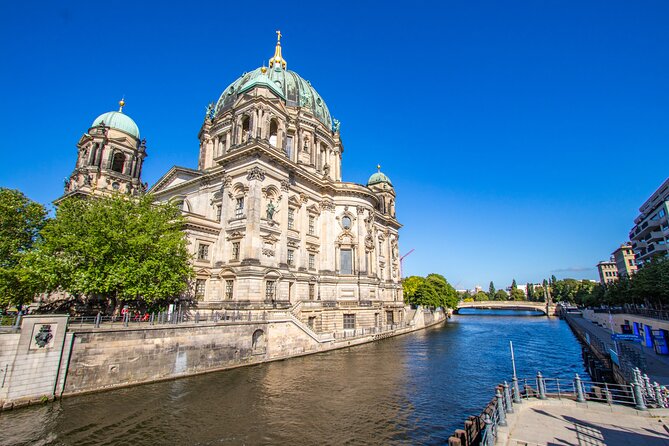
Berlin Cathedral at Am Lustgarten brings the route into the area of Museum Island and the city’s historic center. Its scale and religious architecture offer a strong contrast to the stark memorials and political sites earlier in the walk.
The cathedral is primarily an exterior stop unless you arrange and pay for entry separately. The tour does not include admission tickets for museums or monuments, so do not assume you will climb inside or reach the dome during the two-hour route.
Even from outside, the cathedral helps explain Berlin’s older power structure. It belongs to the monumental center along Unter den Linden, where religion, monarchy, museums, and government once gathered close together.
This is a place where your guide’s ability to adjust the pace is useful. You might spend only a few minutes here, or pause longer to discuss the surrounding buildings and the role of Lustgarten in Berlin’s public life.
Finishing in Nikolaiviertel
The walk ends in Nikolaiviertel, around Rathausstraße 21. This district represents the historical heart of Berlin and offers a look at the city’s medieval beginnings through traditional buildings and narrow streets.
The ending is well chosen. After seeing Berlin as a capital of empires, dictatorships, and divided politics, you finish with the city’s older roots. It is also a practical handoff point. From here, the rest of central Berlin is available for your own exploration.
Do not expect a vast medieval quarter. The value is in the contrast and the sense of an older city center within modern Berlin. You can use the final stop to ask your host for suggestions for the rest of the day, though personal expenses and any further admissions are your responsibility.
What $151.41 per person buys you
At $151.41 per person, this is not a budget walking tour. The price needs to be judged against the private format, the local host, and the ability to shape the route around your group.
For two people, the cost is a significant outlay for two hours. For a larger group, group discounts may improve the value, and a private tour can cost less per person than booking several separate guided experiences. The important benefit is not simply exclusivity. It is control over time and attention.
You are paying for a connected story across ten major points, not for entry into museums or monuments. Transportation tickets, museum tickets, monument tickets, and personal expenses are excluded. If you want interiors, budget for them separately and confirm timing with your host.
I would consider the price reasonable for a group that values a private guide and has limited time in Berlin. I would hesitate if you mainly want a cheap orientation walk or plan to spend several days studying each site independently.
Pace, access, and practical planning
The route lasts about two hours and is built around walking. Most people can take part, and the tour is near public transportation. Service animals are allowed.
The experience is not recommended for people with impaired mobility. That warning matters because the route covers many central sites and may change with weather. The itinerary can adapt to your walking pace, but it is still a city walk, not a vehicle-based sightseeing tour.
Weather can alter the stops. Ask at the start how the route will be handled if conditions are poor. Since the tour is private, you have a better chance of making sensible adjustments than you would on a fixed group schedule.
Confirmation is provided when you book. Free cancellation is available until 24 hours before the start time. Cancellations or changes made inside that window are not accepted for a refund.
Who should book this Berlin walk?
I would choose this tour if you are visiting Berlin for the first time and want a fast, serious introduction to the city’s central landmarks. It also suits families or friends who want to ask their own questions and avoid a large group.
It is especially useful for people interested in the links between the Nazi period, the Holocaust, East Germany, the Berlin Wall, and reunification. The route does not treat these subjects as separate attractions. It places them in one connected walk.
You may want something else if you need long museum visits, a wheelchair-friendly route, or a low-cost tour. Two hours goes quickly, and the many stops mean some places receive only a short explanation.
The strongest reason to book is the guide relationship. Abie was praised for being balanced, well educated, and able to tailor the walk without losing the essential stops. That is exactly what a private Berlin tour should do: give you a clear framework, then leave room for your questions.
Should you book Historic Berlin?
Book it if you want a private, flexible introduction to Berlin’s central history and are comfortable paying extra for personal attention. The route is unusually strong in its range, moving from democracy and architecture to genocide, dictatorship, division, and medieval Berlin.
Skip it if your priority is entering every major attraction or keeping costs low. In that case, a self-guided walk combined with separate museum visits may serve you better.
For most first-time visitors with only a short window, this is a smart orientation. Arrive ready to walk, tell your host what matters most, and remember that the best part is the conversation and context, not simply the number of famous addresses.
FAQ
How long is the Historic Berlin private tour?
The tour lasts approximately two hours.
What is the price of the tour?
The listed price is $151.41 per person.
Is this an exclusive private experience?
Yes. Only your group participates in the private tour.
Who leads the tour?
The experience is hosted by an independent local. Abie is the guide specifically associated with the praised tour experience and tailored the route to the group’s needs.
Where does the tour begin?
It begins at the Academy of Arts, Pariser Platz 4, 10117 Berlin, Germany.
Where does the tour end?
It ends in Nikolaiviertel at Rathausstraße 21, 10178 Berlin, Germany.
Which major places are included?
The route can include the Academy of Arts area, the Reichstag Building, the Memorial to the Murdered Jews of Europe, Platz des Volksaufstandes von 1953, Topography of Terror, Checkpoint Charlie, Gendarmenmarkt, Bebelplatz, Berlin Cathedral, and Nikolaiviertel.
Are museum and monument tickets included?
No. Entry tickets for transportation, museums, and monuments are excluded.
Can the itinerary change?
Yes. The itinerary adapts to your interests and walking pace, and stops may vary with weather conditions.
Can I cancel for a full refund?
Yes, if you cancel at least 24 hours before the experience start time. Cancellations or changes made less than 24 hours before the start time are not accepted for a refund.
Just added around Berlin
- eSIM for Germany and 34 European Countries★ 4.5 · 16 reviews
- Your ticket to The Wall Museum Berlin★ 3.0 · 60 reviews
- Walking on the Wall: 3-Hour Tour in Berlin★ 4.5 · 34 reviews
- Rickshaw Tours Berlin – Groups of up to 16 people with several rickshaws★ 4.0 · 97 reviews
- Warnemuende Shore Excursion: Private Berlin Tour★ 4.5 · 27 reviews
- Love and War in Berlin: Self-Guided Story Puzzle Walk★ 5.0 · 7 reviews
- Warnemuende Shore Excursion: Berlin Private Sightseeing Tour from Rostock★ 5.0 · 4 reviews
- Karl-Marx-Allee Tour: Life and Architecture in East Berlin★ 5.0 · 19 reviews
Berlin Tours, compared.

Reichstag, Dome and Government District Guided Tour
Read our review →
1-Hour City Tour by Boat with Guaranteed Seating
Read our review →




Reichstag, Plenary Chamber, Cupola & Government Tour
Read our review →
Browse the lists this tour appears in