Review · BERLIN TOURS
The Best Private Berlin Tour with a Car, Tour Guide and Pick up
Berlin’s past is packed into a surprisingly large city, and this private tour gives you a quick way to connect the major pieces. You move between sites by car, then get out for short walks at places such as Brandenburg Gate, the Holocaust Memorial, and Checkpoint Charlie.
I like the efficient mix of driving and walking, especially for a first visit or a short stay. I also like the private format: guides such as Natalie, Walid, Nick, and Jochen can adjust the pace and explain the city in a personal way. The tradeoff is simple: the two-hour option gives you a brisk overview, not time for long museum visits or quiet reflection at every stop.
Key points to know before booking
- A private car covers a lot of ground: You can see central Berlin’s major historical sites without working out several public transport connections.
- The tour can be customized: Guides have adjusted routes for families, train schedules, repeat visits, and requests to see a less familiar side of Berlin.
- The history is serious and detailed: Expect strong coverage of Nazi Germany, World War II, the Holocaust, and the Cold War.
- Walking is short but important: You leave the vehicle at key monuments, so you get closer to the sites instead of viewing everything through a window.
- Three hours is the sweet spot: It allows a useful survey without the relentless pace of the shortest option.
- Rausch adds a welcome change of mood: The famous chocolatier at Gendarmenmarkt can provide a pleasant finish after a heavy historical route.
Why a private car makes sense in Berlin
Berlin’s sights are spread across a broad central area. Brandenburg Gate, the Reichstag, Museum Island, Checkpoint Charlie, and Gendarmenmarkt are not impossibly far apart, but walking between all of them takes time. Public transport works well in Berlin, yet each connection adds another decision to a short sightseeing day.
Here, a professional driver handles the transfers while your guide focuses on the story. That division matters. Guides such as Nick, Jochen, Natalie, and Walid have been praised for explaining dates, names, architecture, and political context while the driver waits nearby.
The vehicle also helps in poor weather. One family specifically valued returning to a warm van on a chilly day, and another private group completed the tour during cold, snowy conditions without feeling hurried. You still walk at each main stop, but you are not exposed to the weather for the whole experience.
The tour is private, so only your group participates. That makes it a better fit for families, older relatives, or anyone who wants to ask questions without holding up strangers. It also gives the guide room to adjust the balance between driving and walking.
A few more Berlin half-days to weigh up
- Berlin: Reichstag, Dome and Government District Guided Tour
★ 4.7 · 18,288 reviews - Berlin: 1-Hour City Tour by Boat with Guaranteed Seating
★ 4.3 · 16,993 reviews - Berlin: Boat Tour Along the River Spree
★ 4.4 · 11,252 reviews
Choosing between two, three, four, and six hours
The advertised duration is approximately two to six hours. Your choice will shape the whole experience.
The two-hour version is a fast introduction. You can expect short stops at key places, photo opportunities, and plenty of commentary from the vehicle. It suits a tight schedule, a layover-style visit, or a first look before exploring Berlin on foot later.
The three-hour option appears to offer the best balance. It gives you enough time to get out at the main sites, hear the basic story of Berlin’s twentieth century, and still cover a wide section of the center. Several families and short-stay visitors found this length useful because it packed in a lot without feeling too rushed.
A four-hour tour gives the guide more breathing room. You may have better opportunities for questions and a slower look at sites connected with Nazi Germany and the Cold War. It remains a survey tour rather than a museum day.
The six-hour option is for you if Berlin is a main focus of your day. It allows a fuller circuit of the listed sights and more time for tailored stops. One six-hour outing also included Sachsenhausen Concentration Camp, but that is not part of the standard itinerary provided here, so you should confirm any special request before booking.
The longer option is not automatically better. If your group tires easily, has young children, or mainly wants orientation, three hours may be enough. If you have a strong interest in twentieth-century history, six hours gives the guide room to go beyond short explanations.
Brandenburg Gate and the Reichstag
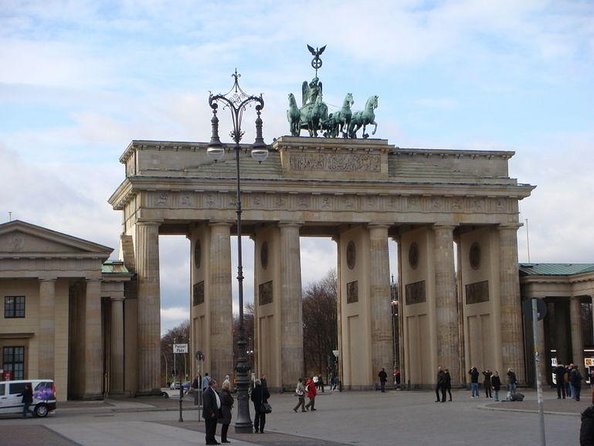
The tour usually begins with Brandenburg Gate, Berlin’s most recognizable monument. You walk through its columns and hear why this former royal gateway carries such weight in German culture and politics.
The stop is listed at about 15 minutes, with no admission charge. That is enough to take in the structure, look along the boulevard, and get your bearings. It is not enough for an extended architectural study, but the guide can give the monument a place in the larger story of Berlin.
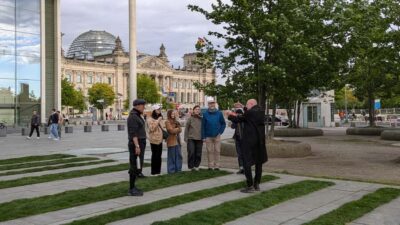
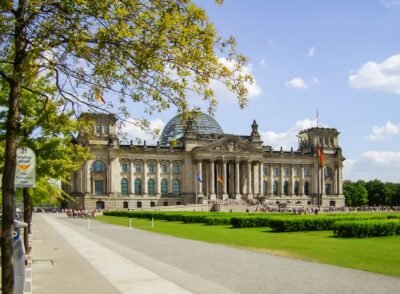
The Reichstag is nearby. You spend about 10 minutes outside, in the shadow of the German parliament building. Its past includes the 1933 fire and the political upheaval that followed Hitler’s rise to power. Its present role as Germany’s parliament gives the building a useful connection to modern democracy.
The Reichstag stop does not include admission. The tour does not require paid entrance for the listed route, so you should think of this as an exterior visit rather than a chance to see the dome or parliamentary interior.
The Holocaust Memorial and the difficult center of Berlin

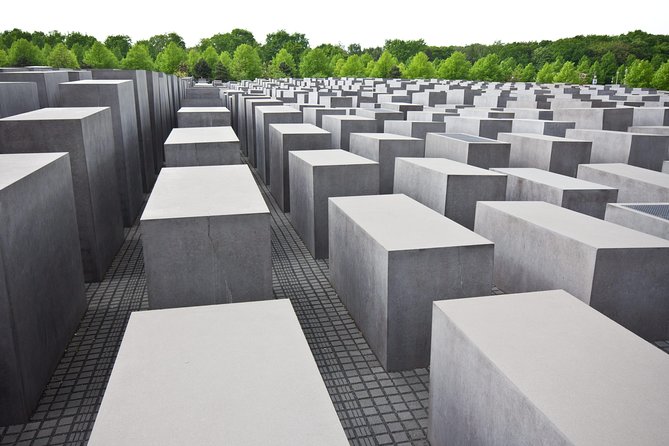
The Memorial to the Murdered Jews of Europe is one of the tour’s most important stops. You walk through the field of concrete stelae, which creates a stark setting for the guide’s discussion of Nazi persecution and the people affected by it.
The listed time is about 15 minutes, and no ticket is required. I would treat this as a place where the guide’s tone matters more than the number of facts delivered. The strongest guides described in the tour material, including Natalie, Jochen, and Nick, are praised for combining dates and political context with human stories.
The nearby Führerbunker site takes about 10 minutes. There is no visible bunker interior to visit. Instead, you stand at the location where Hitler died by suicide at the end of World War II. The site is deliberately understated, which makes the guide’s explanation important.
This part of Berlin can become too focused on Hitler if the guide does not widen the frame. One poor experience raised exactly that concern, noting that too much attention went to Hitler and not enough to Berlin’s broader story. That is a fair point to keep in mind. The tour covers the Nazi period heavily, but you can ask for more architecture, Prussian history, postwar Berlin, or everyday life in the divided city.
Same city, a completely different sort of afternoon:
- Discover Berlin Half-Day Walking Tour
★ 5.0 · 9,624 reviews - Berlin: Hop-on Hop-off Bus Tour with Live Commentary
★ 4.3 · 8,579 reviews - Berlin: Government District around the Reichstag Guided Tour
★ 4.7 · 8,447 reviews - Berlin: Reichstag, Plenary Chamber, Cupola & Government Tour
★ 4.6 · 8,422 reviews
Checkpoint Charlie and the Berlin Wall
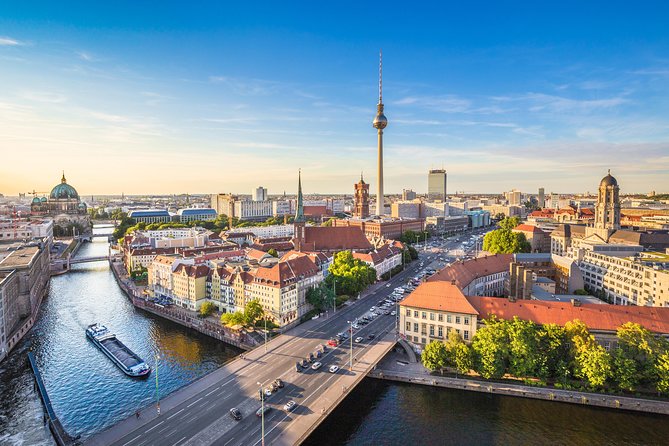
Checkpoint Charlie offers a compact look at the Cold War. You cross the former border point where American and Soviet forces faced each other during the 1961 crisis. The stop lasts about 15 minutes and is free.
Today, the location is easy to visit, but it can feel more like a busy sightseeing point than a preserved border crossing. That is where a guide adds value. You can learn what the checkpoint represented, how Berlin was divided, and why this small point became such a potent symbol of the Cold War.
The Topography of Terror gives the historical story more weight. It occupies the former headquarters area of the SS and Gestapo and includes excavated torture-cell remains and sections of the Berlin Wall. The listed stop is about 15 minutes.
That is a short visit for a site with a great deal to say. You will see the setting and receive an introduction, but you should not expect to read every display in detail. If this subject is central to your trip, you may want to return independently for a longer visit.
Together, Checkpoint Charlie and the Topography of Terror show two sides of the Cold War and Nazi past. One is a famous public symbol. The other connects state terror to the institutions and buildings that carried it out.
Museum Island and Bebelplatz
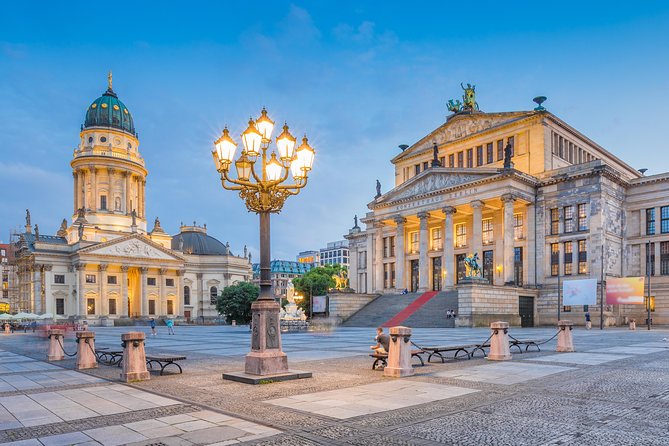
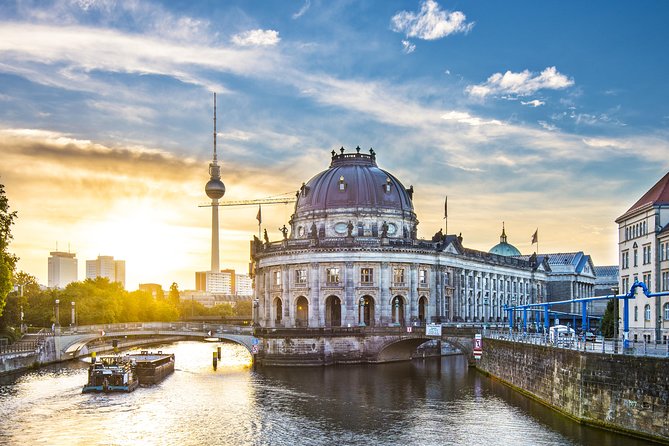
Museum Island brings a welcome change in tone. From the vehicle and during a short stop, you see the Old Museum, Berlin City Palace, Berlin Cathedral, and other grand buildings on the UNESCO-listed island.
The stop lasts about 10 minutes, so this is an architectural overview, not a museum visit. No admission is included, and the tour does not require entrance tickets. If you want to see the Pergamon Museum or another collection inside, plan a separate visit.
Bebelplatz takes you back into the political history of the city. Here you see the former Prussian Royal Opera House, St. Hedwig’s Cathedral, and the former Prussian Royal Library, buildings that reflect Frederick the Great’s eighteenth-century Berlin.
The square is also the site of the Nazi book burning on May 10, 1933. The stop lasts about 10 minutes and is free. The contrast between elegant architecture and a memory of censorship and persecution gives the square unusual force.
These two stops help prevent the tour from becoming only a World War II route. They connect Berlin’s royal past, cultural institutions, religion, architecture, and the destruction of public freedoms.
Driving Berlin’s royal mile
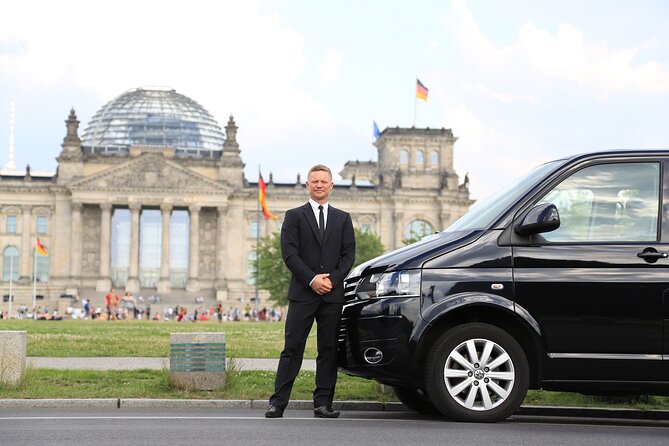
At one point, you cruise along Berlin’s major historic boulevard in the private vehicle. This gives you a chance to see how the central districts fit together instead of experiencing each monument as an isolated stop.
The car is particularly useful here because the guide can point out buildings and urban changes while you cover ground. You may see more than you could on foot in the same period, though the tradeoff is that some details pass quickly outside the window.
Ask questions as you go. The best use of this section is not simply to count buildings, but to understand how royal Berlin, Nazi Berlin, divided Berlin, and present-day Berlin occupy the same streets.
Gendarmenmarkt and a chocolate finish
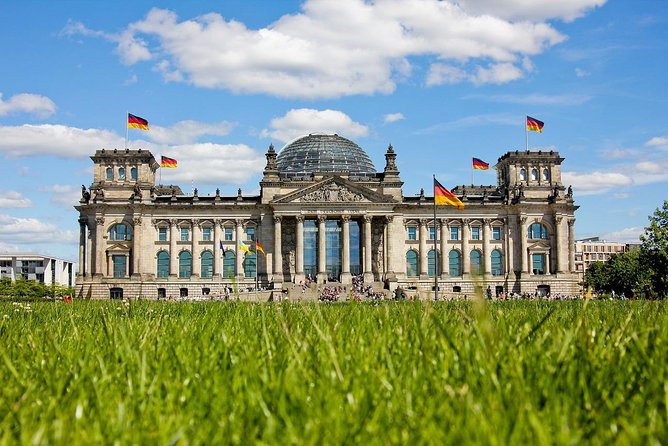
Gendarmenmarkt is the final listed stop. You have about 15 minutes to see the French and German Domes and the Concert House, making this one of the most visually striking squares in central Berlin.
The buildings frame the square in a way that feels more polished and classical than the stark memorial sites earlier in the day. It is a good place to shift from political history to architecture and city life.
The tour also points you toward Rausch, Berlin’s well-known independent chocolatier. One customized three-hour route ended here, and it sounds like a smart finish. A stop for chocolate does not erase the difficult subjects covered earlier, but it gives the group a lighter moment and a taste of Berlin’s present-day culture.
Rausch is not listed as an included food stop, so plan to pay for anything you choose to buy. Food and drinks are not included in the tour price.
What the guides do best
The strongest part of this experience is the guide. The named guides include Natalie, Walid, Nick, Jochen, Joana, Scott, Tal, Jamie, Joerg, Campbell, Wally, and others, so the individual style can vary.
Several guides are praised for bringing photographs and historical images to the commentary. That can make a major difference in Berlin, where many sites were destroyed, rebuilt, renamed, or altered. Seeing how a square looked before the war helps you understand what remains.
Nick has been described as especially strong on German history from the Prussian era through World War I and World War II. Jochen is praised for explaining World War II and the Cold War in an organized way. Natalie is noted for architecture, culture, and stories that made a six-hour tour pass quickly.
The experience is not only for history specialists. An 11-year-old reportedly found the three-hour tour more useful than a month of school study, while older family members appreciated the vehicle and the manageable walking. That suggests the format works well across generations, provided the guide keeps the explanation clear.
I would still make your interests known at the start. Ask for more Prussian history, architecture, the Cold War, Jewish Berlin, or present-day culture if that is what you want. The tour can be customized, and direct guidance should help avoid an overly narrow focus.
Price, comfort, and overall value
The listed price is $106.93 per person. That is not a budget way to see Berlin, especially for a solo participant or a couple. You are paying for a private vehicle, a professional driver, and a local English-speaking guide, not just admission to monuments.
The value improves with a larger group because the experience is private and group discounts are offered. It also improves when your time is limited. Covering this many central sites by public transport and on foot would take planning, waiting, and route changes. Here, the driver is ready while you visit each stop.
There are no required entrance fees on the standard tour, but the price does not include food or drinks. The Reichstag visit is also an exterior stop, with admission not included.
Confirmation is normally provided at booking. If you book within nine days of the date, confirmation can take up to 48 hours and remains subject to availability. Free cancellation is available up to 24 hours before the start time. Changes or cancellations inside that window are not accepted for a refund.
Pickup is offered, and the tour is near public transportation. Most people can participate, but the route still includes getting out and walking at several monuments. If someone in your group has physical limits, mention that when arranging the tour so the pace and stop pattern can be discussed.
Who should book this Berlin tour?
I would choose this tour if you have only 48 hours in Berlin, are arriving by train, are traveling with older relatives or children, or want a clear first orientation before exploring alone.
It also suits you if history is a main reason for visiting. The guides cover Nazi Germany, World War II, the Holocaust, the Cold War, Prussian Berlin, architecture, and modern democracy. The private setting gives you room to ask questions that a large group tour might not handle well.
I would hesitate if you prefer long museum visits, quiet time at memorials, or a slow neighborhood walk. The standard route is built around many short stops, and the two-hour version moves quickly. You should also be ready for a serious focus on Germany’s twentieth-century history.
Should you book it?
Book it if you want to see the major central sights efficiently, have a private group, and value a guide who can connect Berlin’s monuments to the events that shaped them. Three hours is the practical choice for most people, while six hours suits a fuller, customized day.
Before you commit, decide what kind of Berlin day you want. If you need a broad introduction with little transport stress, this is a strong choice. If you want to spend half a day inside museums or focus on one neighborhood, use the money for a specialist walking tour or museum visit instead.
FAQ
Where does this private Berlin tour take place?
The tour takes place in Berlin, Germany, and visits major central sights including Brandenburg Gate, the Reichstag, the Holocaust Memorial, Checkpoint Charlie, Museum Island, Bebelplatz, and Gendarmenmarkt.
How long does the tour last?
The available tour lengths range from approximately two to six hours.
Is hotel pickup offered?
Yes. Pickup is offered, and the tour is also near public transportation.
Is the tour private?
Yes. Only your group participates in the private tour or activity.
What language is offered?
The tour is offered in English.
Is a guide included?
Yes. A professional local guide is included.
Is a driver included?
Yes. A private vehicle with a professional driver is included.
Are entrance fees included?
No entrance fees are included. The standard route does not require admission tickets, and the listed stops are primarily exterior visits or free-access locations.
Is food included?
No. Food and drinks are not included. The route may include a visit to Rausch at Gendarmenmarkt, but purchases there are separate.
Can I cancel for a full refund?
Yes. You can cancel at least 24 hours before the experience start time for a full refund. Cancellations or changes made less than 24 hours before the start time are not accepted for a refund.
When will I receive confirmation?
Confirmation is normally received at booking. If you book within nine days of travel, confirmation may arrive within 48 hours, subject to availability.
Just added around Berlin
- eSIM for Germany and 34 European Countries★ 4.5 · 16 reviews
- Your ticket to The Wall Museum Berlin★ 3.0 · 60 reviews
- Warnemuende Shore Excursion: Private Berlin Tour★ 4.5 · 27 reviews
- Walking on the Wall: 3-Hour Tour in Berlin★ 4.5 · 34 reviews
- Rickshaw Tours Berlin – Groups of up to 16 people with several rickshaws★ 4.0 · 97 reviews
- Love and War in Berlin: Self-Guided Story Puzzle Walk★ 5.0 · 7 reviews
- Warnemuende Shore Excursion: Berlin Private Sightseeing Tour from Rostock★ 5.0 · 4 reviews
- Cold War Berlin – Private Live Virtual Experience★ 5.0 · 4 reviews
Berlin Tours, compared.
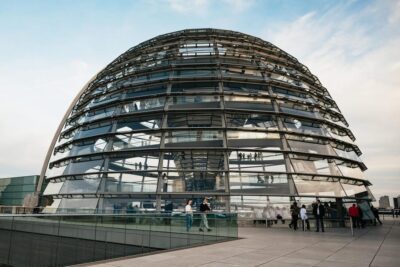
Reichstag, Dome and Government District Guided Tour
Read our review →
1-Hour City Tour by Boat with Guaranteed Seating
Read our review →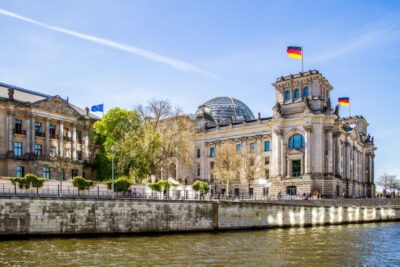
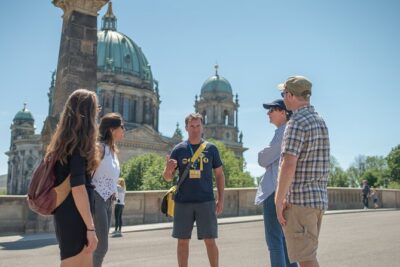
Reichstag, Plenary Chamber, Cupola & Government Tour
Read our review →