
Review · BERLIN TOURS
The Old Berlin Tour: Travel Through Time With a Historian
Berlin’s old center is not a single preserved town. It is a puzzle of vanished streets, rebuilt churches, wartime scars, and political ideas. This walking tour with historian Sean Stewart helps you read those clues, from medieval Berlin to the Berlin Wall era.
I like the small group of no more than eight, which should make questions and conversation easier. I also like the focus on meaning rather than photo stops: Sean’s approach is to show how Berlin’s buildings and empty spaces reveal a city repeatedly rearranged by power, war, and ideology.
The main point to consider is that this is a history-led walk, not a full tour of every famous Berlin sight. The pace is easy, but two hours can only introduce the city’s story, and some travelers may prefer a tour with more interiors or more time at each landmark.
Key points at a glance
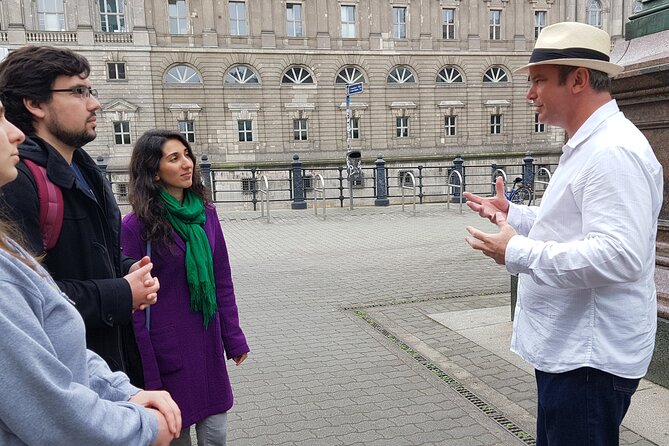
- A historian leads the walk: Sean Stewart brings a strong focus on European and German history, not just dates and names.
- Berlin’s missing pieces matter: Alexanderplatz becomes a lesson in vanished buildings and streets.
- Medieval Berlin gets unusual attention: You visit Franziskaner Klosterkirche, St. Mary’s Church, and Nikolaiviertel.
- The route is easy to follow: Meet at Alexanderplatz Station and finish near Berlin Cathedral.
- The group stays small: A maximum of eight people allows a more personal feel.
- The price is modest: At $23, the tour offers a useful introduction for the cost of a casual meal or museum visit.
Why this Berlin walk is different
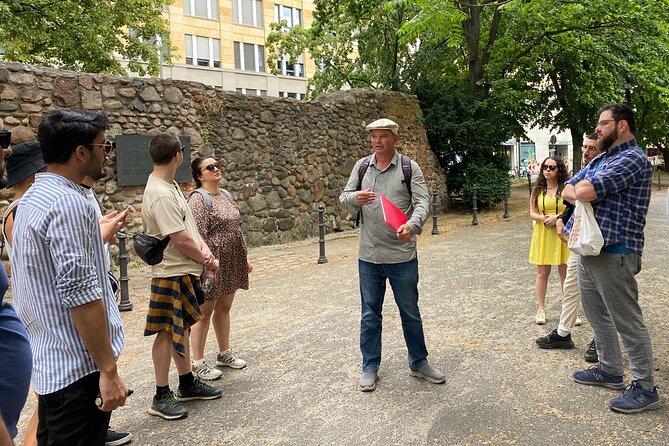
Many city walks move from monument to monument. This one asks you to notice what is no longer there. That matters in Berlin, where war, political change, rebuilding, and the Wall have altered the city’s center again and again.
Sean’s style, based on the way the tour is described, is less about collecting postcard views and more about teaching you how to interpret the city. He explains Berlin as a place where buildings can vanish, return in altered form, or survive as fragments with a new meaning.
That approach gives the walk a useful theme: Berlin is a city of moving pieces. A square may look ordinary until you learn which streets once crossed it, which buildings were removed, and why the present layout was chosen.
I especially like this for a first visit, because it gives you a framework for later sightseeing. I also see value for people who already know the main landmarks. One participant who had previously seen the standard sights asked for an alternative walk, and Sean adjusted the focus accordingly.
The tour is conducted in English and lasts about two hours. It is not designed as a formal lecture. You walk between central locations while building a timeline that reaches from the Middle Ages to the modern city and the Berlin Wall.
A few more Berlin half-days to weigh up
- Berlin: Reichstag, Dome and Government District Guided Tour
★ 4.7 · 18,288 reviews - Berlin: 1-Hour City Tour by Boat with Guaranteed Seating
★ 4.3 · 16,993 reviews - Berlin: Boat Tour Along the River Spree
★ 4.4 · 11,252 reviews
Alexanderplatz: beginning with a vanished city
The meeting point is Espresso House Alea 101 at Rathausstraße 6, near Alexanderplatz Station. The location is practical, especially if you are using Berlin’s public transport, and the start time is 11 a.m.
Alexanderplatz is often treated as a place to meet, shop, or admire the television tower. On this tour, it becomes a starting point for asking what used to occupy the site. The first stop lasts about 15 minutes and focuses on streets and buildings that disappeared.
That is a smart opening. You begin with an absence rather than a grand monument. Berlin’s center does not always tell its own story clearly, so you need someone to point out how the present space relates to the older city.
You might find this part especially useful if you have already walked across Alexanderplatz and wondered why it feels so open and modern. The answer is tied to destruction, rebuilding, and changing ideas about how a capital should look.
The drawback is that Alexanderplatz itself is not a preserved medieval square. If you expect an intact old town, this stop will feel more like an urban history lesson than a visual spectacle. I think that is the point, but it is worth knowing before you book.
Franziskaner Klosterkirche and the power of a ruin
The next stop is Franziskaner Klosterkirche, described as Berlin’s only medieval romantic ruin. You spend about 15 minutes here, with no admission charge.
A ruined church can tell a clearer story than a perfect reconstruction. Missing walls, exposed stone, and incomplete spaces make it easier to see how time and conflict have shaped Berlin. The site gives Sean a physical place to explain the city’s medieval beginnings and later destruction.
This is also one of the tour’s more unusual stops. Many first-time visitors head straight for the Brandenburg Gate, Museum Island, or the Berlin Wall. A medieval church ruin is less obvious, but it gives the route a stronger sense of place.
I would not expect a long interior visit or an extended architectural survey. The stop is short, and the focus is on context. You will get more from it if you listen for how the ruin connects to the city around it rather than treating it as a standalone monument.
St. Mary’s Church and Berlin’s medieval roots
St. Mary’s Church, or Marienkirche, is the third stop. It is an important medieval church and receives another 15 minutes of attention.
This stop helps connect the earlier ruin to a building that remains part of Berlin’s working city. The contrast is useful. One church survives as a fragment, while the other continues to mark the old center as a major religious and historic site.
Sean’s skill appears most useful here because the church is not simply an old building to photograph. Its importance depends on the political and social role churches played in medieval Berlin, as well as on how later periods changed the surrounding city.
You should keep your expectations practical. The supplied details do not promise a special interior entry, a private visit, or a long look inside. Treat this as an outdoor history stop unless the guide tells you otherwise.
The short timing also means you will not receive every detail about the church. Instead, you get a place in the larger story. That is a fair trade on a two-hour walk, especially if your goal is to understand Berlin rather than study one monument in depth.
Same city, a completely different sort of afternoon:
- Discover Berlin Half-Day Walking Tour
★ 5.0 · 9,624 reviews - Berlin: Hop-on Hop-off Bus Tour with Live Commentary
★ 4.3 · 8,579 reviews - Berlin: Government District around the Reichstag Guided Tour
★ 4.7 · 8,447 reviews - Berlin: Reichstag, Plenary Chamber, Cupola & Government Tour
★ 4.6 · 8,422 reviews
Nikolaiviertel: a reconstructed old town
The route continues to Nikolaiviertel, often described as Berlin’s reconstructed medieval Disneyland. The phrase is pointed, and it captures the central question: how much of an old town can be called authentic after rebuilding?
Nikolaiviertel is valuable precisely because it raises that problem. You see an area presented as medieval Berlin, but the modern version is reconstructed. Sean can use the district to explain the difference between surviving history, recreated history, and history shaped for public use.
I like this stop because it avoids a common trap. Visitors often assume that an old-looking street must have survived unchanged. In Berlin, that assumption is especially risky. The appearance of a district may be recent even when the historical idea behind it is much older.
The area also gives the walk a change of mood. After vanished streets, a church ruin, and a medieval church, you reach a place that attempts to restore a sense of old Berlin. That contrast makes the city’s rebuilding choices easier to understand.
Still, some people may find the reconstructed setting less satisfying than an untouched historic quarter. If you want genuinely preserved medieval streets, this is not that. If you want to understand how Berlin has represented its past, it is a useful stop.
From medieval Berlin to the modern capital
The route is centered on four named stops, but the tour’s stated scope is much wider. Sean covers German history from the Middle Ages through the modern era and includes the Berlin Wall in the larger story.
That means the value is not in spending a long time at every site. It is in linking periods that are often presented separately. Medieval Berlin, imperial Berlin, wartime destruction, postwar division, and reunification are treated as parts of one changing city.
I like that broad frame. Berlin can be confusing if you visit each landmark as an isolated attraction. The Brandenburg Gate belongs to one era, the Wall to another, and the reconstructed center to yet another. A guide who connects them helps you understand why the city looks so uneven.
The tour may also appeal to people interested in Northern Europe and European political history. Sean’s background as a professional historian gives the walk a wider frame than a simple local sightseeing route.
At the same time, do not expect a full chronology of every event in German history. The two-hour format requires selection. The tour is best seen as a strong orientation, not a complete course.
Sean Stewart’s guiding approach
The guide is the heart of this experience. Sean Stewart is presented as a professional historian who knows Berlin’s courtyards and lesser-seen corners. His approach is to teach you how to read the city, rather than encourage you to photograph everything without a reason.
That distinction matters. A good history walk should leave you with questions you can continue exploring on your own. Why did this street disappear? Why was this district rebuilt? Why does a ruin remain in one place while another site is restored?
Sean also brings out Berlin’s contradictions and irony. That tone suits the city. Berlin is both old and new, carefully restored and heavily altered, proud of its past yet often wary of how that past is displayed.
The small group helps here. With a maximum of eight people, you are not likely to be lost in a large crowd. You can ask about a building, connect the discussion to your own interests, or mention that you have already visited the usual sights.
The available information does not promise a private tour, so do not assume you will have the guide entirely to yourself. But eight people is still a much more manageable number than a large city group.
What the $23 price gets you
At $23, this is a low-cost way to add historical context to your Berlin visit. The price includes the professional historian and guide. Food, drinks, and admission charges are not included, though the listed stops are free to visit.
I see the best value here in the interpretation. You are not paying for an expensive attraction ticket or a special access arrangement. You are paying for someone to connect places that might otherwise seem unrelated.
That value is strongest if you are curious about why Berlin looks the way it does. It is weaker if you want a packed list of paid attractions, museum entry, or a long stop at every famous landmark.
Because the tour takes about two hours, you can also fit it neatly into a morning. The finish near Berlin Cathedral leaves you in a central area for further sightseeing, though the tour itself does not include entry to the cathedral.
The group limit adds value, too. A small group can make a history walk less passive. You hear the guide clearly, have room to ask questions, and get a better chance to discuss what you are seeing.
Practical details before you book
The tour starts at Espresso House Alea 101, Rathausstraße 6, 10178 Berlin, near Alexanderplatz Station, at 11 a.m. It ends at Berlin Cathedral in the Lustgarten area.
You receive a mobile ticket, and booking confirmation is provided at the time of purchase. The route is near public transportation, which makes it simple to reach from other parts of central Berlin.
Most people can participate, and service animals are allowed. The walk requires good weather, so dress for an outdoor activity and keep the forecast in mind.
Food and drinks are not included. Since the tour lasts about two hours, you may want to eat beforehand or plan a meal after the walk. No special admission fee is listed for the stops.
Free cancellation is available up to 24 hours before the start time for a full refund. Inside that 24-hour window, you cannot receive a refund or make changes. If poor weather or a failure to meet the minimum group size cancels the tour, you are offered another date or experience, or a full refund.
Who will get the most from this walk
I would choose this tour if you enjoy history, urban change, and the stories behind ordinary-looking spaces. It is a good fit for someone who wants more than a checklist of Berlin icons.
It also suits repeat visitors. Sean’s approach can move beyond the usual sights, and the route includes places even a Berlin resident may not have noticed before.
Families with older children and teenagers may find the vanished streets and rebuilt districts easier to discuss than a long museum visit. The easy walking pace helps, though the tour still depends on attention and interest in history.
I would think twice if your priority is entering major attractions. The experience is built around walking and explanation, not private access, meals, or long indoor visits. I would also avoid booking it as your only Berlin sightseeing plan. It gives you a useful foundation, but you will still need separate time for Museum Island, the Wall sites, the Brandenburg Gate, or other places you want to enter.
Should you book The Old Berlin Tour?
Book it if you want Berlin to make more sense. The tour’s strongest feature is Sean Stewart’s habit of connecting ruins, rebuilt streets, churches, and empty spaces into one story. At $23, that is a fair price for a small-group introduction led by a historian.
Skip it if you want a fast run through every major landmark or a tour packed with ticketed interiors. For everyone else, especially history buffs and repeat visitors, this is a thoughtful way to begin or deepen a Berlin stay. Meet at Alexanderplatz, listen for the city’s missing pieces, and finish near Berlin Cathedral with a better sense of how Berlin became the complicated capital you see today.
FAQ
How long does The Old Berlin Tour last?
The tour lasts approximately two hours.
Where does the tour begin?
It begins at Espresso House Alea 101, Rathausstraße 6, 10178 Berlin, Germany, near Alexanderplatz Station.
Where does the tour end?
The tour ends at Berlin Cathedral, Am Lustgarten, 10178 Berlin, Germany.
What time does the tour start?
The stated start time is 11 a.m.
Is the tour conducted in English?
Yes. The tour includes an English-speaking guide.
How many people can join the tour?
The group has a maximum of eight participants.
Can I cancel for a full refund?
Yes, if you cancel at least 24 hours before the experience begins. Cancellations or changes made less than 24 hours before the start time are not refunded or accepted.
Just added around Berlin
- eSIM for Germany and 34 European Countries★ 4.5 · 16 reviews
- Your ticket to The Wall Museum Berlin★ 3.0 · 60 reviews
- Walking on the Wall: 3-Hour Tour in Berlin★ 4.5 · 34 reviews
- Rickshaw Tours Berlin – Groups of up to 16 people with several rickshaws★ 4.0 · 97 reviews
- Warnemuende Shore Excursion: Private Berlin Tour★ 4.5 · 27 reviews
- Love and War in Berlin: Self-Guided Story Puzzle Walk★ 5.0 · 7 reviews
- Warnemuende Shore Excursion: Berlin Private Sightseeing Tour from Rostock★ 5.0 · 4 reviews
- Cold War Berlin – Private Live Virtual Experience★ 5.0 · 4 reviews
Berlin Tours, compared.

Reichstag, Dome and Government District Guided Tour
Read our review →
1-Hour City Tour by Boat with Guaranteed Seating
Read our review →




Reichstag, Plenary Chamber, Cupola & Government Tour
Read our review →