Review · BERLIN TOURS
Hitler’s Berlin – the rise and fall (Small Group)
Berlin’s Nazi past is not tucked away in one museum. It is spread across a compact stretch of central Berlin, where a parliament building, memorials, government offices, and an unmarked bunker site help explain how a modern state fell under dictatorship. This small-group walking tour links those places into one clear story, from Hitler’s political rise to his final days.
I especially like the visit to the Johann Georg Elser Memorial, since it brings attention to German resistance rather than focusing only on Hitler. I also like the thoughtful range of memorials, including those for Jewish, Sinti and Roma, and homosexual victims of Nazi persecution. The main consideration is the pace: you walk outdoors for about two and a half hours, often listening while standing, and one poor review noted that a guide was hard to hear in street noise.
Key points to know before booking
- Nine stops in central Berlin: The route covers the Reichstag, major memorials, former Nazi government sites, the Führerbunker location, and the Topography of Terror.
- A compact but serious history lesson: The tour connects political power, persecution, wartime destruction, resistance, and postwar memory.
- Small groups of up to 15: You get more room for questions than on a large city walk, though 15 people can still feel like a sizable group.
- Guides bring different strengths: Scott, Johan, Roshana, Jochen, and Matt are among the guides praised for clear explanations, discussion, and sensitivity.
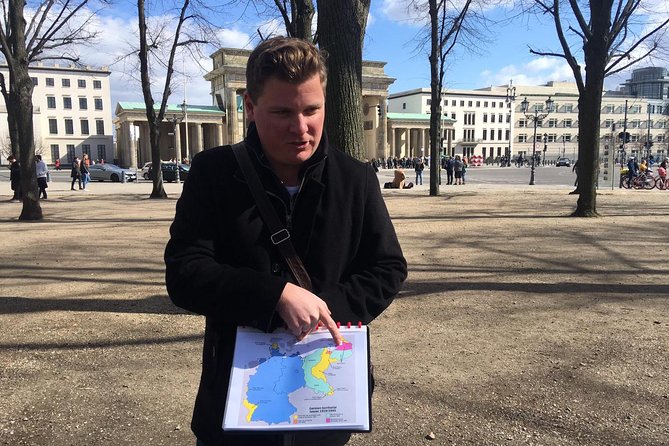
- Historic visuals add useful context: Then & Now photographs and historic maps help you picture buildings and streets that have changed.
- Plan for weather and firm footwear: The tour runs in all weather, includes several surfaces, and requires a moderate level of fitness.
Starting at Brandenburg Gate and the Sinti and Roma memorial
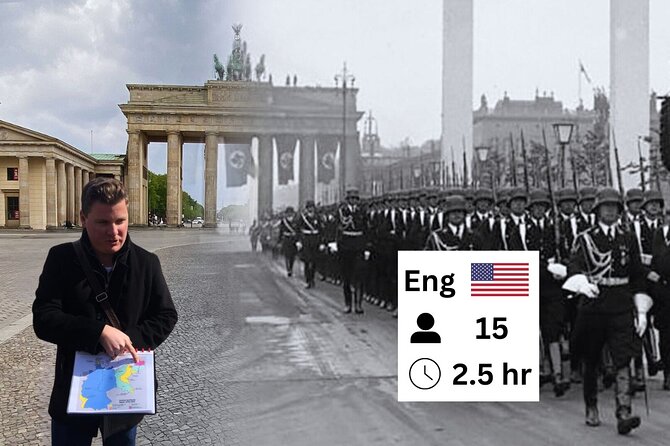
The tour begins at Brandenburg Gate, on Pariser Platz. This is a useful meeting point because you are already in the political heart of Berlin, surrounded by places tied to Germany’s modern history.
The first stop is the Memorial to the Sinti and Roma Victims of National Socialism. The visit lasts about 10 minutes, but its purpose is important. It introduces Nazi racial thinking and the persecution of Sinti and Roma, helping you understand that the Holocaust was part of a wider system that classified entire groups as enemies.
I appreciate this early stop because it prevents the tour from narrowing Nazi crimes to one victim group alone. You begin with the machinery of exclusion and dehumanization before moving into the story of Hitler’s government.
The memorial is outdoors, so your first explanation comes while standing. Bring a coat in cold weather and rain protection when needed. This is not a museum visit with indoor seating, and the entire route follows that outdoor format.
A few more Berlin half-days to weigh up
- Berlin: Reichstag, Dome and Government District Guided Tour
★ 4.7 · 18,288 reviews - Berlin: 1-Hour City Tour by Boat with Guaranteed Seating
★ 4.3 · 16,993 reviews - Berlin: Boat Tour Along the River Spree
★ 4.4 · 11,252 reviews
The Reichstag and Hitler’s legal path to power
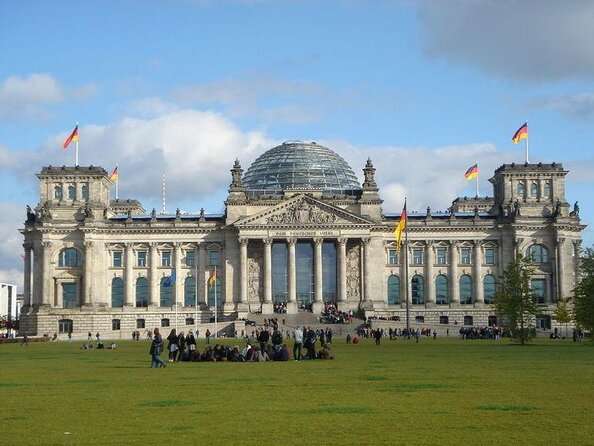
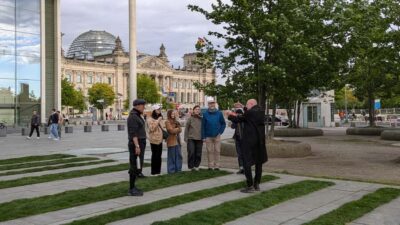
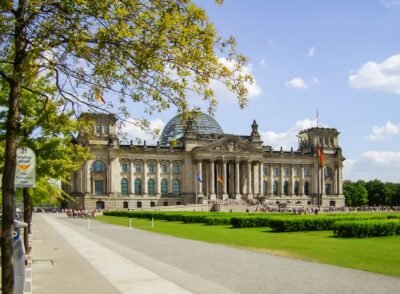
At the Reichstag, Germany’s parliament building, the guide explains how the Nazi Party was elected into power and how Hitler became Führer. This is one of the most useful parts of the walk because it addresses a question many people carry into Berlin: how could dictatorship take control through a political system?
The building gives the discussion a strong setting. You are not simply hearing dates in a classroom. You are looking at the seat of German government while considering the collapse of parliamentary rule.
The stop lasts around 15 minutes. A guide with a strong academic background in Second World War history can make this section especially helpful, since the subject involves elections, political pressure, emergency powers, and the gradual destruction of democracy. Guides such as Scott, Jochen, and Matt have been praised for presenting the material clearly and answering questions, though the guide you receive depends on the departure.
This is also where you should ask questions if you want to understand the difference between being elected and then taking dictatorial control. The small group format makes that more practical than it would be on a large walk.
The Soviet Memorial and the Battle of Berlin
The route continues to the Soviet Memorial in Tiergarten. Here the subject shifts from political takeover to the final, brutal phase of the war. The guide discusses the Battle of Berlin, including the scale of the fighting and the way these events have been remembered after 1945.
The memorial itself is a major piece of Soviet wartime remembrance. It gives the guide a place to explain the last battles for Berlin and the enormous human cost of the city’s capture.
You spend about 15 minutes here. The material can be grim, and the transition from Nazi political history to battlefield history is direct. That is part of the tour’s value, but it may feel heavy if you are looking for a lighter introduction to Berlin.
The route is concentrated in central Berlin. One review described much of the walk as covering only a few city blocks, which helps explain how the tour can visit so many sites in a short time. Still, short distances do not mean a short physical outing. You are frequently on your feet and moving between stops.
The Holocaust Memorial and the questions it raises
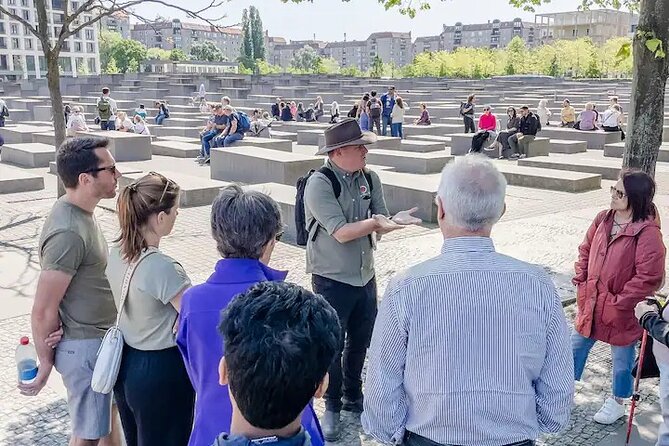
The Memorial to the Murdered Jews of Europe is one of Berlin’s most recognizable sites. The tour spends about 15 minutes here, using the memorial to examine the murder of Europe’s Jewish population and to discuss what the design means.
This is a place where your guide’s tone matters. The memorial is open to public interpretation, but a good explanation gives you historical grounding without telling you what you must feel. The best guides on this tour, including Scott and Roshana according to the guide feedback available, are described as sensitive and willing to discuss difficult questions.
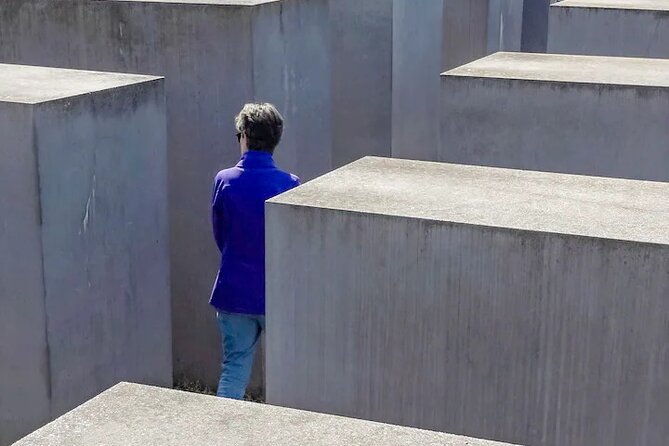
The memorial is made up of concrete slabs arranged across an uneven surface. The route may involve different types of paving and walking surfaces, so comfortable shoes are more than a polite suggestion.
You will not get a full museum visit here. The scheduled time is focused on the outdoor memorial and conversation. If you want to visit the underground Information Centre, plan separate time before or after the walking tour, since it is not listed as part of this experience.
Same city, a completely different sort of afternoon:
- Discover Berlin Half-Day Walking Tour
★ 5.0 · 9,624 reviews - Berlin: Hop-on Hop-off Bus Tour with Live Commentary
★ 4.3 · 8,579 reviews - Berlin: Government District around the Reichstag Guided Tour
★ 4.7 · 8,447 reviews - Berlin: Reichstag, Plenary Chamber, Cupola & Government Tour
★ 4.6 · 8,422 reviews
Recognizing victims beyond the central narrative
A brief stop at the Monument to Homosexuals Persecuted Under National Socialism lasts about five minutes. It is shorter than the other memorial visits, but it widens the story once again.
The monument helps show how Nazi persecution reached people targeted for their identity, not only for political activity or ethnicity. Because the stop is short, the guide can offer an introduction rather than a long examination of the subject.
This sequence of memorials is one of the tour’s strongest features. You move from the Sinti and Roma memorial to the Jewish memorial and then to the monument for homosexual victims. Together, they show the breadth of Nazi persecution and the different ways present-day Germany remembers those who suffered.
The Führerbunker site and the end of Hitler’s rule
At the Führerbunker location, the guide explains where Hitler spent his final days in the Second World War. The site is notable partly because there is no dramatic surviving bunker interior to tour. The focus is on the place, the events that occurred there, and what happened as Berlin fell.
You spend about 15 minutes here. This is a good moment to separate historical fact from the myths that often surround Hitler’s last days. The guide can put the bunker into the wider story of the Battle of Berlin, the collapse of the regime, and the destruction around it.
Do not expect an underground attraction or a preserved Nazi command centre. The value comes from standing at the location and hearing how the final stage of the dictatorship unfolded. Historic maps and Then & Now photographs are particularly useful at stops like this, where the modern city does not always make the wartime setting obvious.
Johann Georg Elser and German resistance
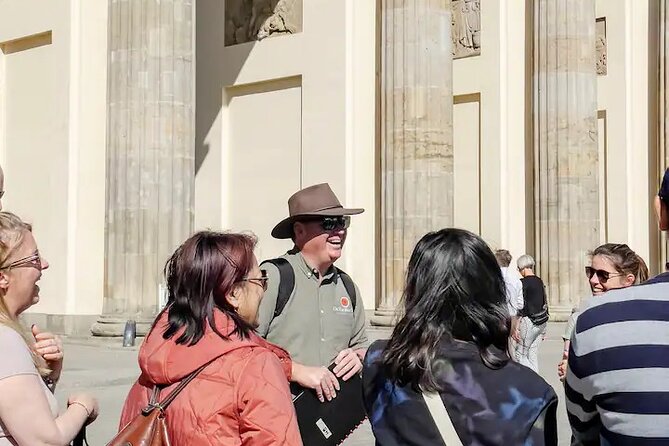
The Johann Georg Elser Memorial is one of the tour’s most distinctive stops. The guide tells the story of Elser and discusses his attempt to assassinate Adolf Hitler, along with the roles played by others who opposed the Nazi regime.
I like this stop because it complicates the lazy idea that all Germans supported Hitler or that resistance began only at the very end of the war. Elser’s story points to the risks taken by people who recognized the danger of the regime and tried to act against it.
The visit lasts around 15 minutes. This gives enough time for a proper explanation and for questions. A guide who invites discussion can make this part especially memorable, since it opens the door to broader questions about courage, political resistance, and the cost of acting under dictatorship.
Several guides have been praised for adapting the discussion to the group, including families with teenagers. That is useful here, since the subject can be discussed at a basic level or with more detail depending on your interests.
The former Aviation Ministry and surviving Nazi architecture
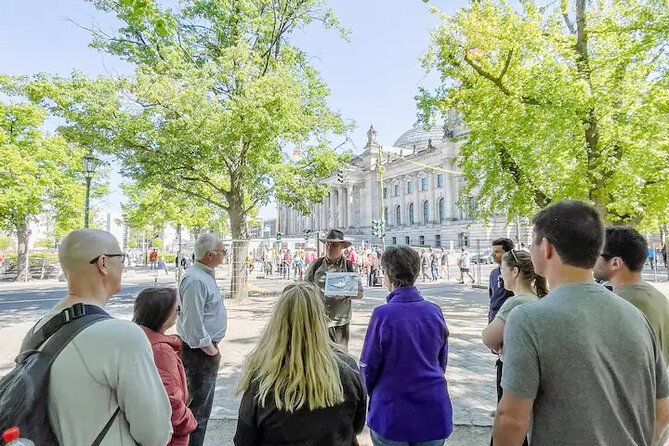
The Aviation Ministry of Berlin was built in 1936 to house the German Ministry of Aviation under Hermann Göring. At the time, it was the largest office building in Europe.
The stop lasts about five minutes. That is enough to point out the building’s role and architectural scale, but not enough for a full architectural tour. The building’s survival gives you a direct connection to the Nazi state’s administrative power, rather than only its military actions and memorials.
This is an important contrast with the nearby memorials. You are looking at a functioning office building tied to the regime, not a monument created afterward. The guide can help you read the building as part of the machinery of government and war.
If architecture is your main interest, keep your expectations modest. The tour is about the building’s historical role, not a detailed study of its design or current use.
Ending at the Topography of Terror
The tour ends at the Topography of Terror, on Niederkirchnerstraße. This site once held the headquarters of the Gestapo, the SS, and other Nazi security offices. The location makes a strong final stop because it turns the story toward organized terror and state persecution.
You have about 20 minutes here, including time for a break, a tea or coffee, and the use of restrooms. That pause matters. The tour covers difficult material, and a short chance to sit or refresh yourself can make the ending more manageable.
The Topography of Terror is also a practical place to continue your study after the walk. The tour itself ends here, so you can ask your guide about the best connection to your next destination. The experience does not include food or drinks, but the scheduled break gives you a chance to buy something yourself.
The end point is well chosen for anyone who wants more detail. The outdoor walk gives you the broad story and the physical locations. The documentation centre can then help you examine the Gestapo, SS, and police system at greater length.
How the small-group format affects the experience
The maximum group size is 15 people. That is small enough for direct questions and a more personal exchange, though it is not the same as a private tour. One critical assessment considered 11 people larger than expected for a small group, so you should keep your expectations realistic.
The guide is the main variable. Strong guides such as Scott have been praised for making the subject accessible, tailoring the discussion to the group, and encouraging questions. Johan, Roshana, Jochen, and Matt have also received specific praise for clear or engaging presentations.
There are limits to any outdoor history walk. Street traffic and city noise can make a guide hard to hear, particularly if the group is spread out. One person found a non-native English-speaking guide difficult to follow, while most of the guide feedback highlighted clear explanations and strong command of the subject.
Stay near the guide, listen closely, and speak up if you cannot hear. The tour includes a great deal of information in a short time, so it rewards concentration more than casual sightseeing.
Price, timing, and practical value
At $54.44 per person, this is not the cheapest way to spend two and a half hours in Berlin. Its value depends on how much structure and explanation you want.
You could walk past several of these places on your own for free. The paid element is the connection between them: how Nazi ideology became government policy, how the regime organized persecution, how resistance appeared, how Berlin was destroyed, and how Germany remembers the victims today.
For a history-focused visitor, that structure can make the price worthwhile. The tour includes an expert local guide, a small group, historic maps, Then & Now images, and time for questions. It also saves you the work of researching the route and interpreting sites that often look ordinary without context.
The tour is often booked about 33 days ahead, which suggests that you should reserve early if your Berlin dates are fixed. Confirmation is provided when you book. Free cancellation is available until 24 hours before the start time, while late cancellations and late changes are not accepted.
It runs in all weather, though poor weather can lead to cancellation and a choice of another date or a full refund. Dress for the forecast, wear comfortable shoes, and remember that you will be outside for most of the experience.
Who should book Hitler’s Berlin
I would choose this tour if you want a serious introduction to Nazi-era Berlin and prefer learning through places rather than reading only in museums. It suits history buffs, first-time Berlin visitors who want a strong historical foundation, and families with older children or teenagers who can handle difficult material.
It is also useful if you have limited time. In about 150 minutes, you see nine significant locations and finish at the Topography of Terror, where you can continue independently.
I would not choose it if you want a relaxed sightseeing walk, frequent cafés, or long indoor museum visits. You need a moderate level of fitness, should be ready for all-weather walking, and must be comfortable discussing genocide, dictatorship, war, and political violence.
Should you book it?
Book this tour if you want Berlin’s Nazi past explained with care, context, and a clear route through the city. The most valuable parts are the links between the memorials and the political sites, plus the attention given to resistance figures such as Johann Georg Elser.
At $54.44, the tour earns its price through interpretation, not admission tickets. If you stay close to the guide, wear good shoes, and allow extra time at the Topography of Terror afterward, you will get a focused and meaningful history lesson from one of Berlin’s most important areas.
FAQ
Where does the tour start?
It starts at Brandenburg Gate, at Pariser Platz, 10117 Berlin, Germany.
Where does the tour end?
It ends at the Topography of Terror, Niederkirchnerstraße 8, 10963 Berlin, Germany.
How long does the experience last?
The walking tour lasts approximately 2 hours and 30 minutes.
What language is the tour offered in?
The tour is offered in English.
How many people can join the tour?
The maximum group size is 15 people.
Is the tour suitable for someone with average fitness?
You should have a moderate level of physical fitness because the experience involves walking between several sites and standing outdoors during explanations.
Does the tour run in bad weather?
The tour operates in all weather conditions, so you should dress appropriately. If poor weather causes cancellation, you will be offered another date or a full refund.
Are admission tickets included?
The listed stops have free admission, and the experience includes guided visits to the sites and memorials. Food and drinks are not included.
Can I cancel for a full refund?
Yes. You can cancel at least 24 hours before the experience start time for a full refund. Cancellations or changes made less than 24 hours before the start time are not accepted for a refund.
Does the tour visit the inside of the Führerbunker?
The tour visits the Führerbunker location and discusses Hitler’s final days there. The provided details do not state that the tour enters a preserved bunker interior.
Just added around Berlin
- eSIM for Germany and 34 European Countries★ 4.5 · 16 reviews
- Your ticket to The Wall Museum Berlin★ 3.0 · 60 reviews
- Walking on the Wall: 3-Hour Tour in Berlin★ 4.5 · 34 reviews
- Rickshaw Tours Berlin – Groups of up to 16 people with several rickshaws★ 4.0 · 97 reviews
- Warnemuende Shore Excursion: Private Berlin Tour★ 4.5 · 27 reviews
- Love and War in Berlin: Self-Guided Story Puzzle Walk★ 5.0 · 7 reviews
- Warnemuende Shore Excursion: Berlin Private Sightseeing Tour from Rostock★ 5.0 · 4 reviews
- Cold War Berlin – Private Live Virtual Experience★ 5.0 · 4 reviews
Berlin Tours, compared.
Reichstag, Dome and Government District Guided Tour
Read our review →
1-Hour City Tour by Boat with Guaranteed Seating
Read our review →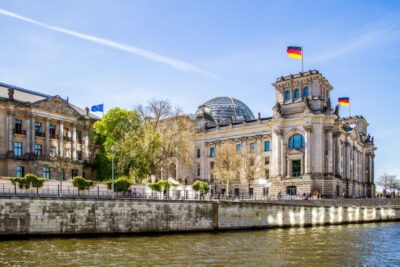
Reichstag, Plenary Chamber, Cupola & Government Tour
Read our review →