
Review · BERLIN TOURS
Berlin: Experience the Alternative Kreuzberg on a Bike Tour
Berlin’s alternative side is best understood by bicycle, and this three-hour ride through Kreuzberg and Friedrichshain gives you a lively look at neighborhoods shaped by migration, the Berlin Wall, squatting, art, nightlife, and constant change. You move well beyond the usual sights while still seeing major landmarks such as East Side Gallery and Oberbaum Bridge.
I like the way the tour joins big political history with ordinary street life, from the Wall and former borderland to Turkish markets, community spaces, and rough-edged streets. I also like the guide-led storytelling, with past guides including Jake, Bjorn, Rico, Rufus, Vincent, and Karl, who have been praised for humor, personal stories, and careful cycling. The main drawback is that this is not a fast bike ride. You stop often for explanations, and some riders may find there is more talking than pedaling.
Key things to know before you book
- Kreuzberg is the main event: Expect migration stories, alternative culture, political history, changing architecture, and the everyday contrasts of a famous Berlin district.
- The route reaches several Wall landmarks: East Side Gallery, Oberbaum Bridge, Osthafen, and the former border zone give the ride a strong historical thread.
- Frequent stops keep the ride manageable: The pace is relaxed rather than athletic, making it suitable for many visitors and families.
- The route is designed by the guide: Free Berlin’s concept lets each guide shape the ride, so the exact feel can vary.
- You get the essential equipment: A bicycle and helmet are included, with infant seats available on request.
- Allow for rough edges: Bike chains may mark loose clothing, and the tour runs in all weather, so dress with care.
Starting in Nikolaiviertel, then leaving postcard Berlin behind
The tour begins at Free Berlin Bike Tours and Rental, at Poststraße 11 in central Berlin. The opening stop is Nikolaiviertel, a small historic quarter near the Spree. You spend only about five minutes here, and that short pause has a purpose: it sets up a contrast between the restored, visitor-friendly Berlin most people see first and the more complicated city ahead.
From there, you ride toward Kreuzberg. I find this transition useful because Berlin changes quickly. The tour does not treat the city as one polished historic center. Instead, it follows the story of a divided capital and the communities that made their own spaces inside it.
You receive a bicycle, helmet, and guide. The group size is limited to 15 people, with a stated minimum of four. That is small enough for questions and group control without promising a private ride. The start time is listed as 2:24 pm, and the activity returns to the original meeting point after roughly three hours.
More bike days around Berlin:
- Berlin: Sights and Highlights Bike Tour with a Local Guide
★ 4.8 · 2,698 reviews - Berlin Highlights 3-Hour Bike Tour
★ 5.0 · 948 reviews - Berlin City Bike Tour with Beer Garden Stop
★ 5.0 · 917 reviews
Kreuzberg in 30 minutes: migration, change, and contradiction
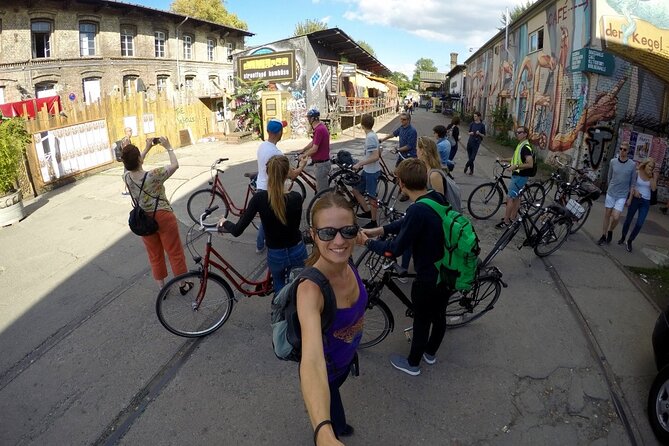
Kreuzberg gets the longest single stop, about 30 minutes, and rightly so. It is not just a neighborhood with murals and bars. It is a place where Turkish migration, left-wing politics, squatting, redevelopment, nightlife, poverty, and creative businesses all meet within a small area.
Your guide uses the streets to explain how Kreuzberg developed and how quickly it is changing. The most useful part is the contrast. You may hear about anarchists, artists, and survival artists, but the neighborhood is also home to families, shopkeepers, workers, and people simply trying to get through the day.
That balance matters. A tour of alternative Berlin can easily turn into a collection of colorful anecdotes. This one appears to work best when the guide connects each story to the people who live there. Past guides such as Bjorn, Jake, Rico, Rufus, Vincent, and Karl have been praised for humor, personal stories, thoughtful explanations, and the ability to make difficult historical terms clear.
Engelbecken and Das Baumhaus by the Wall
At Engelbecken, you get about ten minutes in an unexpected pocket of calm. The site sits among prefabricated apartment buildings, older structures, and newer architecture, making it a useful place to read Berlin’s layers side by side.
The stop is less about one famous monument than about understanding the district. You can pause, look around, and consider how a neighborhood can contain several eras at once. The relaxed pace helps here. You are not being hurried from one photo stop to the next.
Das Baumhaus, or the Treehouse by the Wall, brings a more personal story. The tale concerns a guest worker who adapted quickly to Kreuzberg’s independent spirit, claimed a gardenhouse beside the Wall, and marked out a place through sheer boldness. It is exactly the sort of small-scale story that gives the Wall era a human face.
You will hear about Berlin’s guerilla attitude and the way people created unofficial spaces beside a heavily guarded border. The stop lasts around ten minutes, so expect an introduction rather than a full historical lecture.
Squatted buildings, artists, and the view near YAAM
The route also includes a former squatted building that became a place for artists. Multiple squattings helped shape its role, first during the major alternative scene of the 1980s and again in the early 2000s. Today, its importance comes from the work of people who turned a contested building into space for artists of many kinds.
This is a good example of the tour’s wider theme: alternative culture is not only a style. It can also mean fighting for room to work, live, meet, and make decisions outside normal systems.
Near YAAM, the view becomes one of the tour’s visual highlights. From this point, you can see the TV Tower, Holzmarkt, Oberbaum Bridge, and the Spree. YAAM itself is known as a club, but the scene from nearby offers a broader look at Berlin’s riverfront and redevelopment.
I would not book this tour expecting a club visit or a nightlife experience. The value here is the view and the explanation of how former industrial and border areas have become social, creative, and commercial spaces.
A few more Berlin half-days to weigh up
- Berlin: Reichstag, Dome and Government District Guided Tour
★ 4.7 · 18,288 reviews - Berlin: 1-Hour City Tour by Boat with Guaranteed Seating
★ 4.3 · 16,993 reviews - Berlin: Boat Tour Along the River Spree
★ 4.4 · 11,252 reviews - Discover Berlin Half-Day Walking Tour
★ 5.0 · 9,624 reviews
East Side Gallery and Oberbaum Bridge
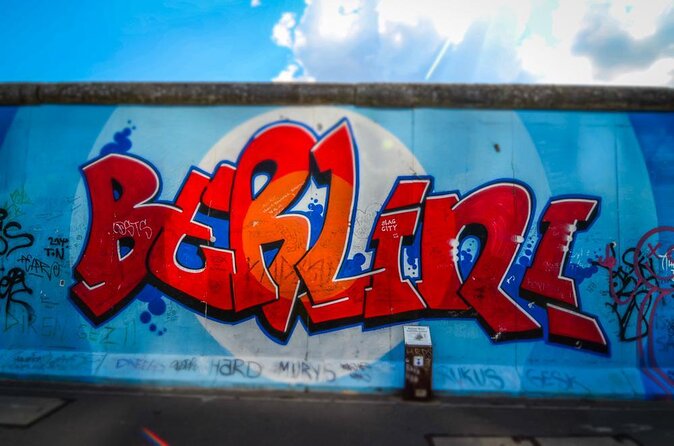
East Side Gallery is one of the clearest anchor points on the ride. It is the longest remaining section of the Berlin Wall, covered with large-scale artwork and surrounded by a newly designed business quarter.
The setting is important. You see a piece of the Wall not in isolation, but beside modern offices, new construction, restaurants, and riverfront development. That contrast lets you think about memory and redevelopment at the same time. The Wall is preserved as art and history, while the surrounding area keeps changing.
The stop lasts about ten minutes. That is enough to take in the setting and hear the main story, but not enough for a detailed examination of every painting. If East Side Gallery is a top priority for you, plan to return later for a slower look.
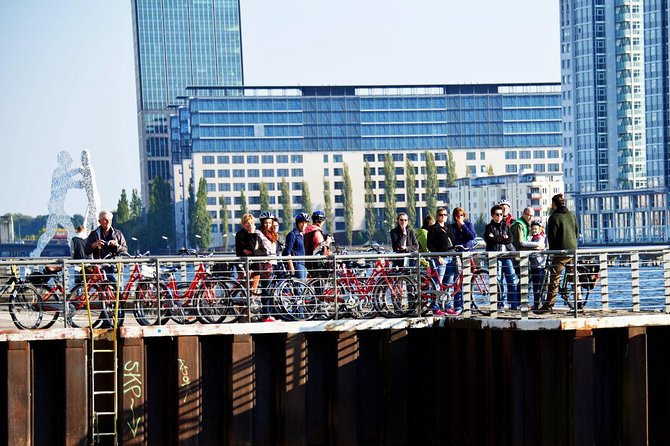
Oberbaum Bridge follows, with another ten-minute stop. The bridge is a landmark of Kreuzberg and Friedrichshain, but its meaning goes beyond architecture. It represents crossing borders, both in the literal sense of the former divided city and in the social sense of moving between districts, identities, and ways of life.
Osthafen and the old border zone
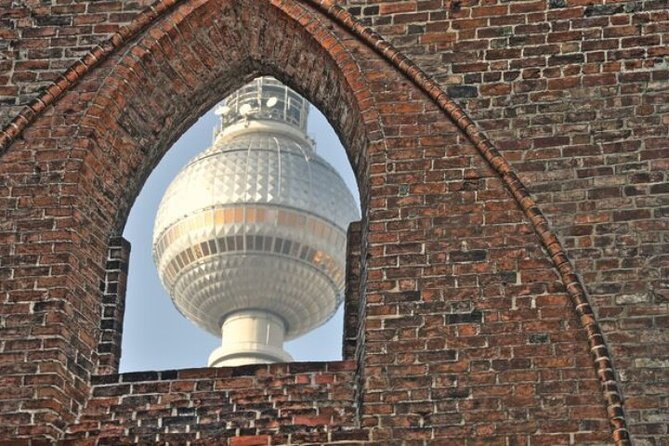
At Osthafen, the tour reaches a former restricted border area that has become attractive to young urban creatives. The river Spree provides a natural pause, with about five minutes to stop and look out.
The guide’s story here connects the physical Wall to the wider machinery of East Germany’s border controls. From the riverbank, the need for barriers and restrictions becomes easier to grasp. You are looking at a pleasant waterfront, yet the same area once belonged to a tightly controlled frontier.
That tension runs through much of Berlin. A place can be calm and attractive today while still carrying memories of surveillance, separation, and limited freedom. The bike makes it easier to connect these sites because you move through them in sequence rather than seeing each one as an isolated attraction.
The route also includes a distinctive sculpture whose meaning has prompted several interpretations. The official explanation is described as less convincing than some of the alternatives. This sounds like a brief, curious pause rather than a major sight, but it adds the kind of odd local detail that is easy to miss on your own.
Falckensteinstraße and the everyday Kreuzberg mix
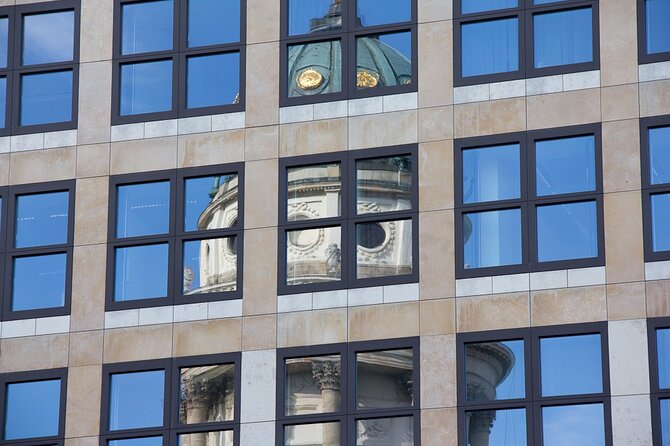
Falckensteinstraße offers another close look at Kreuzberg’s mix of buildings, people, and history. The street represents a big-city contradiction: it can feel rough, creative, crowded, and strangely escapist at the same time.
This is where the tour moves away from headline sights and into the texture of the neighborhood. You may see how old buildings, newer uses, political activity, nightlife, and ordinary residential life sit close together. The guide’s role matters greatly here, since the street itself will not explain its past.
The ride is not presented as a sports workout. Stops are frequent, and the French-language feedback especially points out that most people can manage the cycling, with more explanation than expected. That will suit you if you want context. It may disappoint you if you want three hours of continuous riding.
Görlitzer Park and Liegnitzer Straße
Görlitzer Park was created from a former railway station site. Its current role as a park reflects Berlin’s ability to reuse difficult urban spaces, but the area also shows the thin line between alternative living and disorder.
The tour does not present Kreuzberg as a spotless creative district. Görlitzer Park is part of the harder side of the neighborhood, and Kottbusser Tor later adds another dose of heavy traffic, drug activity, and stark 1970s architecture. That honesty is useful. You see why some people are drawn to Kreuzberg’s freedom and community life, while others find its roughness difficult.
At Liegnitzer Straße, the car loft offers a sharp visual joke and a serious point about wealth. The building allows cars to be taken up to balconies, an unmistakable display of private luxury located among political activism, alternative residents, and long-established Berliners.
That contrast is one of the strongest ideas in the tour. Kreuzberg is not frozen in its counterculture past. Capital and redevelopment are arriving in the same streets where people once fought for squats and community spaces.
Waterfront life, Turkish markets, and Admiral Bridge
The ride includes a waterfront section with a Dolce Vita feel, plus a Turkish market held on Tuesdays and Fridays. The market is schedule-dependent, so you should not assume it will be operating on another day.
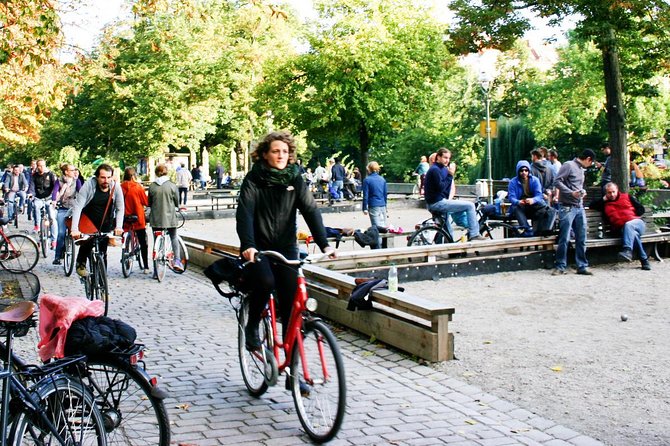
A further stop offers a short break in a bohemian neighborhood where people play boule. These pauses show a gentler side of Kreuzberg. After stories of the Wall, squatting, political action, and social problems, you see residents simply enjoying public space.
Admiral Bridge is another five-minute stop with a different mood. It can be a place to begin an evening in a bar or watch the summer sunset with a crowd of strangers. The point is not a grand monument. It is the way Berliners use a bridge and its surroundings as a shared social room.
If you are taking the tour early in your visit, make a note of places you might want to revisit later. Several stops, especially the riverfront and neighborhood streets, are more useful as orientation points than as attractions you finish in one brief pause.
Kottbusser Tor brings the route back to hard-edged Berlin
The final stop is Kottbusser Tor, known locally as Kotti. It offers a strong contrast with the waterfront and boule stops.
Here, heavy traffic and imposing 1970s architecture replace the relaxed river views. The area also has a visible drug scene, so this is not a polished final photo stop. It is a direct look at the social pressures that exist beside Kreuzberg’s cafes, clubs, markets, and creative spaces.
Ending with Kotti makes the tour more honest. You are not left with the idea that alternative Berlin is only murals, gardens, and friendly bars. You get a city that is generous and difficult, inventive and unequal, welcoming and sometimes intimidating.
How the tour handles cost, comfort, and weather
At $42.33 per person, I consider the tour a fair value if you want both transport and interpretation. You receive the bicycle, helmet, and guide, and you cover a large area that would take much longer to connect on foot. The real value is the guide’s local framing, since the route includes places that are easy to pass without understanding.
Food and drinks are not included. One review refers to a relaxing river ride with a cold beer on board, but that should not be treated as part of this listed bike tour unless specifically confirmed. Bring your own water and budget separately for anything you want along the way.
The tour operates in all weather. Rain has not stopped the experience from being enjoyable, but you should dress for conditions and avoid clothing that can catch or rub against the bike chain. Tight or close-fitting trousers are a sensible choice, and a chain guard cannot be assumed.
Children are welcome, but they must be accompanied by an adult. Infant seats can be provided on request. Most people can participate, although the operator gives no promise that every individual bike setup will suit every need, so ask ahead if equipment is important to you.
English and German options are available depending on the selection you make. The group range is four to 15 people, and the tour requires a minimum number. If that minimum is not reached, you may be offered another date or experience, or receive a full refund.
Free cancellation is available up to 24 hours before the start time. Changes or cancellations inside that period are not accepted for a refund.
Who should book this Kreuzberg bike tour?
I would choose this ride if you have already seen, or plan to see, central Berlin’s major monuments and want the city’s less polished side. It is especially useful for first-time visitors who want an overview of Kreuzberg and Friedrichshain before exploring them on their own.
You should also book if you enjoy history told through streets and personal stories rather than long museum displays. The guides are the heart of the experience, and the strongest feedback points to their humor, care with cycling safety, personal anecdotes, and ability to explain Berlin’s past in an accessible way.
I would hesitate if you want a fast, athletic ride or a full visit at each stop. The route covers plenty of ground, but frequent pauses mean this is primarily a story-and-orientation tour with bicycles, not a cycling challenge.
For $42.33, the combination is hard to dismiss: a bike, helmet, three hours, a small group, and a route through places you might not reach by wandering alone. Book it for context and variety, not speed. You will come away with a clearer sense of why Kreuzberg feels so different from Berlin’s postcard center, and you may leave with several neighborhoods worth returning to at your own pace.
FAQ
Where does the Berlin alternative Kreuzberg bike tour start?
It starts at Free Berlin Bike Tours & Rental, Poststraße 11, 10178 Berlin, Germany.
What time does the tour start?
The listed start time is 2:24 pm.
How long does the bike tour last?
The experience lasts approximately three hours and ends back at the meeting point.
Are bicycles and helmets included?
Yes. Bicycle use and a helmet are included in the tour price.
Is the tour available in English?
Yes. It is offered in English, and German options are available depending on the selection made at booking.
Can children join the tour?
Yes. Children are welcome, but they must be accompanied by an adult. Infant seats can be provided on request.
Just added around Berlin
- eSIM for Germany and 34 European Countries★ 4.5 · 16 reviews
- Your ticket to The Wall Museum Berlin★ 3.0 · 60 reviews
- Walking on the Wall: 3-Hour Tour in Berlin★ 4.5 · 34 reviews
- Rickshaw Tours Berlin – Groups of up to 16 people with several rickshaws★ 4.0 · 97 reviews
- Warnemuende Shore Excursion: Private Berlin Tour★ 4.5 · 27 reviews
- Love and War in Berlin: Self-Guided Story Puzzle Walk★ 5.0 · 7 reviews
- Warnemuende Shore Excursion: Berlin Private Sightseeing Tour from Rostock★ 5.0 · 4 reviews
- Cold War Berlin – Private Live Virtual Experience★ 5.0 · 4 reviews
Berlin Tours, compared.

Reichstag, Dome and Government District Guided Tour
Read our review →
1-Hour City Tour by Boat with Guaranteed Seating
Read our review →




Reichstag, Plenary Chamber, Cupola & Government Tour
Read our review →
Browse the lists this tour appears in