
Review · MUNICH TOURS
Munich: Third Reich Guided City Walking Tour
Munich was the birthplace of the Nazi movement, and this 2.5-hour walking tour follows that story through the city streets where it took shape. From Marienplatz to Königsplatz, you’ll connect political speeches, failed coups, propaganda, and acts of resistance to places you can still see today.
I like the clear route through Munich’s most important Third Reich sites, and I like that the tour gives the German Resistance proper space alongside Hitler’s rise. The main consideration is language: this tour is only for Spanish speakers, and it requires at least four participants to run.
Key points at a glance
- Start at Marienplatz: Meet in front of the Tourist Information Office before setting out through central Munich.
- Follow the Beer Hall Putsch: Learn how the Hofbräuhaus connects to Hitler’s early political movement and failed 1923 coup.
- See Nazi propaganda in stone: The Haus der Kunst offers a direct lesson in regime control over art.
- Remember the Resistance: Hear about Georg Elser and the White Rose, two very different forms of opposition.
- Finish at Königsplatz: Visit the Führerbau, linked to the 1938 Munich Agreement, before the tour ends.
- Spanish only: The guide leads the tour in Spanish, and children under 13 cannot participate.
Why Munich is the right place for this difficult story
Munich is not just a backdrop for this tour. It was where Adolf Hitler built his early political career and where the National Socialist German Workers’ Party began to gain force. That makes a walking route especially useful: you are not studying isolated dates on a page, but placing speeches, marches, buildings, and political failures on the city map.
The tour begins at Marienplatz, a sensible meeting point in the center. From there, the guide takes you through the events that shaped the Third Reich, explaining how Munich became a center of Nazi activity. You should expect a serious lesson rather than a light city stroll. The subject is political violence, dictatorship, propaganda, and resistance, so the quality of the explanation matters as much as the buildings themselves.
I also appreciate that the route does not treat Hitler as the only figure worth discussing. The German Resistance receives attention, including Georg Elser and the White Rose. That broadens the story from the rise of a dictator to the people who opposed him, at great personal risk.
More WWII History Tours in Munich
- Munich: Third Reich & WWII Walking Tour
★ 4.6 · 6,181 reviews - Dachau Concentration Camp Memorial Site Tour from Munich by Train
★ 4.5 · 5,637 reviews - Third Reich Walking Tour Munich
★ 4.5 · 4,291 reviews
Marienplatz and the political beginnings of the Nazi movement
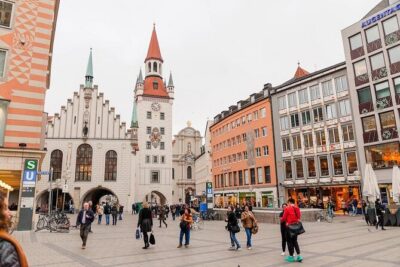
Your meeting point is in front of the Tourist Information Office at Marienplatz. This is a busy central square, so allow enough time to locate the guide and group before the scheduled start. The supplied details do not give a guide’s name, but the tour is led live in Spanish.
The opening section sets up Munich’s role in Hitler’s political rise. You’ll hear about the beginnings of the Nazi party in the city and the conditions that allowed its message to gain a foothold. This context is important because the later stops make little sense without it.
A walking tour can be strong here because the route gives you a sense of proximity. Marienplatz, the Hofbräuhaus, Odeonsplatz, and Königsplatz are linked by streets rather than presented as disconnected points. You can follow the movement of the story as the guide explains how political ideas became organized action.
The central square itself is not described as a museum stop, so do not expect indoor exhibits or a formal display at the start. Its value is as the launch point for the wider story. If you want a detailed look at objects, documents, or personal artifacts, you’ll need to add a separate museum visit to your Munich plans.
The Hofbräuhaus and the Beer Hall Putsch
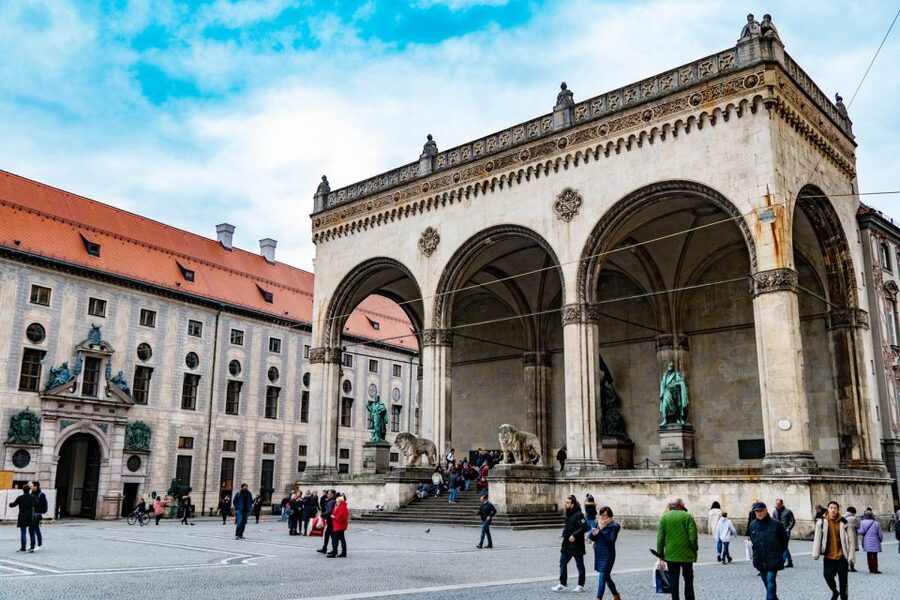
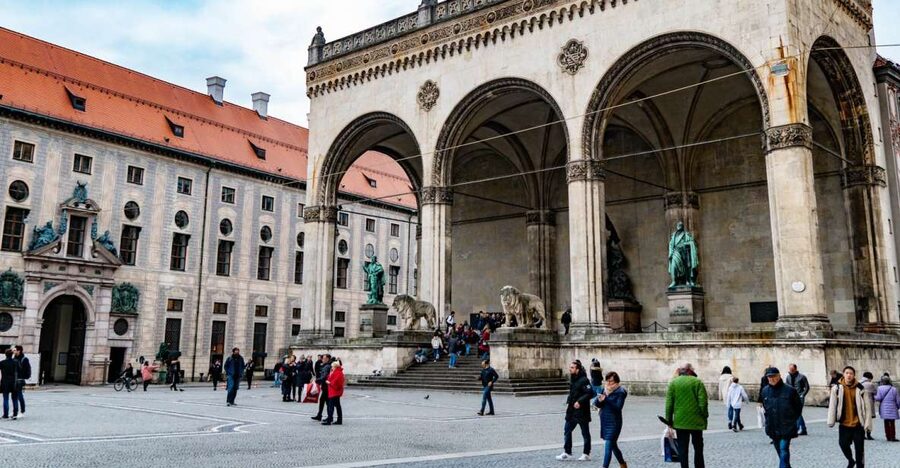
The tour continues toward Odeonsplatz and includes a visit to the Hofbräuhaus. This stop is tied to Hitler’s putsch and the early history of the National Socialist German Workers’ Party.
The Beer Hall Putsch was Hitler’s failed attempt to seize political power in Bavaria in 1923. A guide can make this episode easier to understand by linking it to the places where the movement organized and presented itself. The Hofbräuhaus is therefore more than a famous beer hall on this route. It helps explain how political meetings and public speeches helped the Nazi movement build support.
You should keep your expectations practical. The experience is a guided walk, not a meal or a beer tasting. Food and drinks are not included, and the emphasis remains on political history. If you are hoping to stop for lunch during the tour, plan to eat before or afterward rather than count on a long break.
This part of the walk may be particularly useful if you know the broad outline of Hitler’s career but want a firmer sense of the early stages. The guide covers the party’s beginnings and the failed putsch, showing that Hitler’s path to power was not a simple march to success. The failure of 1923 is an important part of the story.
Haus der Kunst and the politics of Nazi art
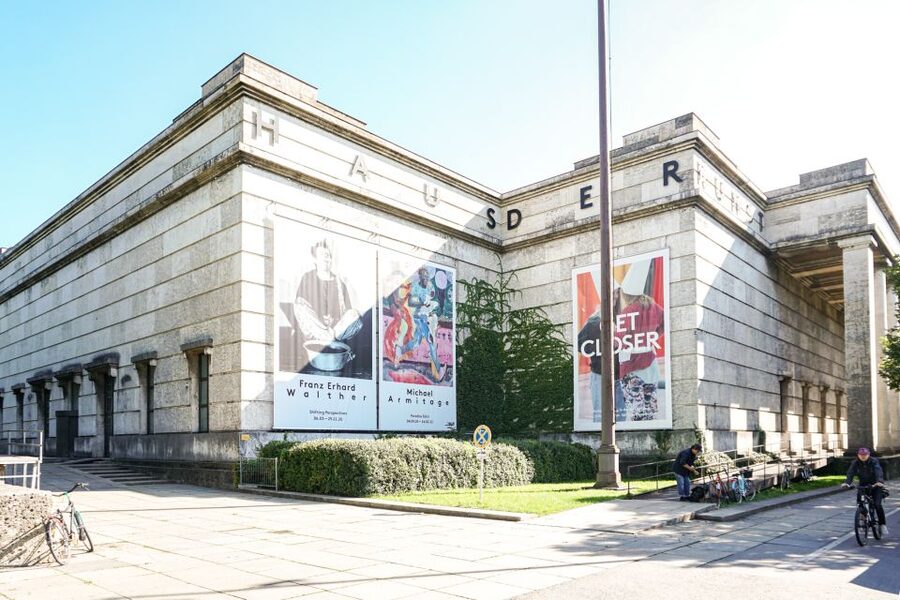
One of the most revealing stops is outside the Haus der Kunst. The building was the first propaganda building in Nazi Germany, and the guide explains how the regime used art to support its political message.
This is where the tour moves beyond speeches and attempted coups. Nazi rule reached into culture, deciding which forms of art could be shown and which artists or styles were condemned. The discussion of degenerate art gives you a clear example of how dictatorship tries to control public taste, artistic freedom, and the way people see the world.
The stop is viewed from the front of the building, according to the itinerary. That means the explanation relies heavily on the guide rather than an indoor exhibition. I see this as both a strength and a limitation. A good guide can connect the architecture and the regime’s cultural goals in a focused way, but you should not expect entry to Haus der Kunst as part of the tour.
For me, this is one of the route’s most useful shifts. A tour focused only on military or political sites can leave out how ordinary public life was shaped by propaganda. Here, you learn that the regime wanted control not just over government, but over public culture and artistic expression.
More wartime history tours in Munich:
- From Munich: Dachau Memorial Site Day Tour
★ 4.8 · 2,723 reviews - From Munich: Dachau Memorial Site Half-Day Trip
★ 4.7 · 2,526 reviews - From Munich: Dachau Memorial Site Full-Day Tour
★ 4.9 · 1,406 reviews - Dachau Concentration Camp Memorial Tour with Train from Munich
★ 4.5 · 955 reviews
Georg Elser, the White Rose, and German resistance
The Resistance section gives the tour a needed change in focus. You’ll learn about Georg Elser and the White Rose, two names connected with opposition to the Nazi regime.
The itinerary does not provide a separate building or memorial for this portion, so the guide’s account is central. That is not a weakness by itself. Resistance stories often need explanation to show the choices, risks, and limits involved. You’ll hear about people who challenged the regime rather than simply following its growth through official buildings.
Including both Georg Elser and the White Rose also helps show that resistance was not one single movement. The two examples represent different people and forms of opposition. You should listen closely here, since this section adds human scale to a route otherwise dominated by party institutions, official buildings, and major political events.
I like that the tour does not end with Nazi power at its peak. By making room for resistance, it avoids presenting the period as an unstoppable political success story. It reminds you that individuals did oppose the regime, even when the consequences were severe.
Führerbau and the Munich Agreement
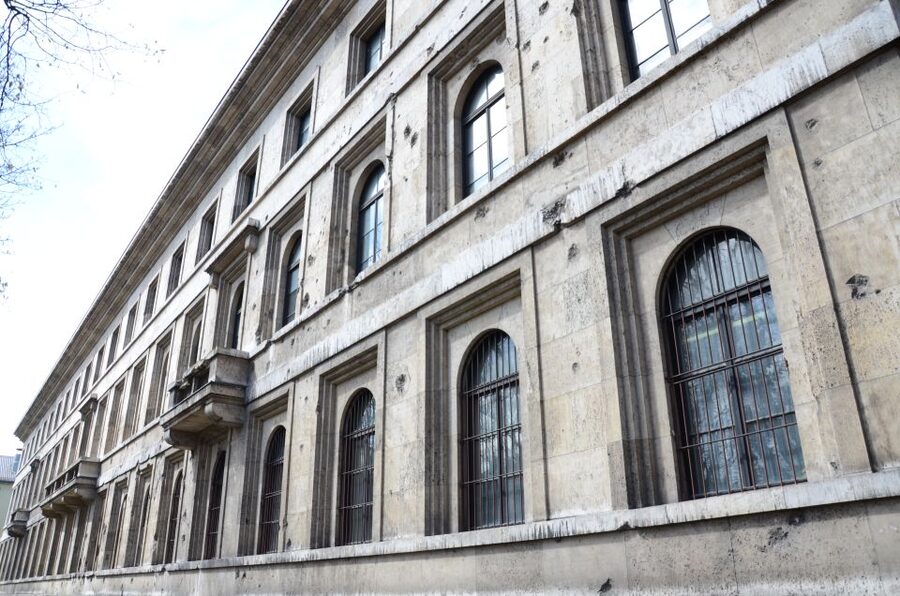
The walk then reaches the Führerbau. This building is linked to the Munich Agreement, which was signed there in 1938. The guide uses the site to explain one of the most important diplomatic events associated with Munich during the Nazi period.
The building’s importance comes from what happened inside it. The Munich Agreement is a key point in the story of prewar Europe, and seeing the location gives the event a physical setting. You are standing outside a place tied to high-level negotiations, not merely hearing the name in a timeline.
The tour does not state that you enter the Führerbau, so plan to view it from outside. As with Haus der Kunst, the guide’s interpretation will carry much of the educational value. The route is strongest for people who want a connected narrative while walking through central Munich, rather than an indoor museum experience.
The advertised route concludes at Königsplatz. The meeting information also says the activity ends back at the meeting point, so check the exact end arrangement when you book. Either way, allow a little flexibility after the scheduled 2.5 hours, especially if you have a timed reservation elsewhere.
Königsplatz as the final stop
Königsplatz provides a fitting end to the route because it is associated with the Nazi period and its public presentation of power. After the earlier discussion of party origins, the Beer Hall Putsch, propaganda, art, and resistance, the final square brings those themes together in a highly visible urban setting.
You’ll have moved from the movement’s early political activity to the institutions and public spaces used by the regime. That progression is one of the tour’s main strengths. It gives you a basic framework for understanding how a political movement developed into a dictatorship.
The end point also makes practical sense for continuing your day in Munich, although the supplied details do not provide onward transport or a list of nearby attractions. The activity remains on foot from start to finish, so you should wear comfortable shoes. The full duration is 2.5 hours, with no food or drink included.
What the $23 price gets you
At $23 per person, this is a reasonably priced way to spend half a day on a serious subject. You are paying for a live guide and a focused walking route through several important locations, rather than admission to museums or special buildings.
The value is best if you want interpretation. You can walk past Marienplatz, the Hofbräuhaus, Haus der Kunst, the Führerbau, and Königsplatz on your own, but the links between them are not obvious without historical background. The guide gives those places a sequence and explains why each one matters.
The price is less compelling if you want interior access, refreshments, or a small specialist group with extensive personal attention. None of those are included in the supplied details. Still, the tour’s high rating of 4.9 from 34 reviews and repeated praise for the amount of information and steady pace suggest that the strongest feature is the teaching itself.
One short assessment describes the tour as full of important historical information and praises the friendly guide. Another highlights the amount of information and the well-paced format. That matches what this itinerary promises: a lot of content spread across a manageable 2.5-hour walk, without turning the route into an all-day commitment.
Pace, language, and who should book
The tour is conducted in Spanish, and the booking information is very clear that it is not open to people who do not speak Spanish. This is not a multilingual walk where you can expect occasional English explanations. If you are comfortable learning in Spanish, the format should suit you well. If not, choose another tour.
The route requires walking for 2.5 hours, so comfortable shoes are essential. No age-specific family features are listed, and children under 13 are not allowed. The difficult subject matter also makes this a better fit for older teenagers and adults who want a serious account of Munich’s Nazi past.
The tour requires at least four participants to operate. If that minimum is not reached, the local partner will contact you and offer an alternative. Keep this in mind if your Munich schedule is tight or you are booking close to a fixed departure.
Free cancellation is available up to 24 hours in advance for a full refund, and you can reserve now and pay later. Those terms help if your itinerary is still shifting, but they do not change the need to confirm the starting time and language before you commit.
Is this Munich history walk worth booking?
Book this tour if you speak Spanish and want a structured introduction to Munich’s role in the rise of Hitler and the Nazi movement. The route covers more than party origins: it includes the Beer Hall Putsch, Nazi control of art, the Munich Agreement, and the German Resistance.
I would choose it for a first serious look at this part of Munich’s past, especially at $23. You’ll get the most from it if you value clear historical explanation over museum entry, food, or entertainment. Skip it if you do not speak Spanish, need a family tour for children under 13, or prefer indoor exhibits to a long walk between exterior sites.
FAQ
Where does the tour begin?
Meet the guide in front of the Tourist Information Office at Marienplatz.
How long does the tour last?
The walking tour lasts 2.5 hours.
What language is the tour conducted in?
The live tour guide speaks Spanish. The activity is not open to people who do not speak Spanish.
What locations are included?
The route includes Marienplatz, Odeonsplatz, the Hofbräuhaus, the front of Haus der Kunst, the Führerbau, and Königsplatz.
Does the tour cover the Beer Hall Putsch?
Yes. The guide explains Hitler’s putsch and the origins of the National Socialist German Workers’ Party.
Does the tour discuss the German Resistance?
Yes. The tour includes information about the German Resistance Movement, including Georg Elser and the White Rose.
Is entry to Haus der Kunst included?
The itinerary specifies a visit to the front of Haus der Kunst. It does not state that admission inside the building is included.
Are food and drinks included?
No. Food and drinks are not included.
Are children allowed to join?
Children under the age of 13 are not allowed to participate.
What should I bring?
Wear comfortable shoes for the 2.5-hour walking route.
More Walking Tours in Munich
- Munich: Old Town & Viktualienmarkt City Walk in German
★ 4.7 · 2,304 reviews - Munich: Night Watchman Walking Tour
★ 4.7 · 2,092 reviews - Munich Ghosts and Spirits Evening Walking Tour
★ 5.0 · 1,900 reviews - Munich Old Town Walking Tour
★ 4.5 · 1,287 reviews
Just added around Munich
- Pub crawl incl. Oktoberfest museum guided tour with beer tasting (private)★ 5.0 · 5 reviews
- South Tyrolean specialties and wine tasting★ 5.0 · 5 reviews
- Size Matters Beer Tour Munich★ 4.6 · 105 reviews
- Secret Food Tours Munich★ 4.8 · 5 reviews
- Short & sweet: Tasting the Viktualienmarkt★ 4.8 · 37 reviews
- Residence of Munich private tour with skip the line ticket★ 5.0 · 4 reviews
- Munich: Romantic Wine Experience for Two at Viktualienmarkt★ 4.2 · 14 reviews
- Munich: Resistance against Hitler – Historical Walking Tour★ 5.0 · 5 reviews
Munich Tours, compared.

Neuschwanstein & Linderhof Castle-Fairytale Day Tour from Munich
Read our review →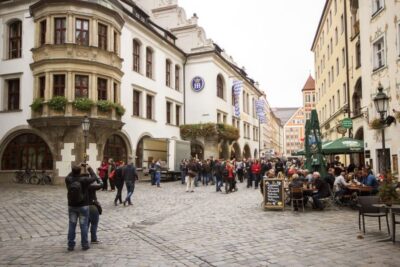
Dachau Concentration Camp Memorial Site Tour from Munich by Train
Read our review →
Munich Hop-On Hop-Off Tour: 1-Day or 2-Day Ticket
Read our review →Browse the lists this tour appears in