
Review · MUNICH TOURS
Munich: Private or Group Third Reich and WWII Walking Tour
Munich’s Nazi past is not tucked away in a museum. It is written into the streets, squares, grand buildings, and memorials of the city center. This two-hour walk follows the rise of National Socialism from Marienplatz to Königsplatz, showing you where the movement gained a foothold and how Munich became its official headquarters.
I like the use of original locations and the guide’s historic photographs, which help you compare today’s streets with the city under Nazi rule. I also like the attention given to people who resisted Hitler, not just to Hitler himself. The main drawback is the short running time: two hours can introduce this difficult subject well, but it cannot cover every part of Munich’s wartime story.
Key points about Munich’s Nazi history walk
- Starts at the Mariensäule: Meet at the golden statue on its tall red marble column in Marienplatz.
- Follows a central route: Walk from Marienplatz toward Königsplatz and former Nazi power centers.
- Uses original images and documents: Your guide adds visual proof to the buildings and streets around you.
- Covers both perpetrators and resistance: The story includes Hitler’s rise, Nazi violence, victims, and opponents.
- Runs for two hours: A compact introduction that fits neatly into a Munich sightseeing day.
- Works best for adults and older children: The activity is not suitable for children under 10.
Why Munich is the right place for this subject
Munich is often presented through palaces, churches, beer halls, and polished squares. Those sights are real, but they tell only part of the city’s story. Munich was also Adolf Hitler’s adopted home, the birthplace of the Nazi Party, and the place where his early public career took shape.
The city was later given the title Hauptstadt der Bewegung, or Capital of the Movement. That was not a casual label. Munich served as the official center of the Nazi Party, and many key locations connected with its rise were concentrated in and around the old city.
This tour is useful because it links political events to ordinary streets. You are not only hearing about a failed coup or a party headquarters in the abstract. You are seeing the places where speeches were made, pressure was applied, violence took place, and Nazi power was put on display.
The subject is heavy, and the tour does not pretend otherwise. It also avoids making Munich’s past into a simple story about one man. The guide explains the post-World War I setting, the appeal of extremist politics, the growth of the movement, and the people who opposed it.
More WWII History Tours in Munich
- Munich: Third Reich & WWII Walking Tour
★ 4.6 · 6,181 reviews - Dachau Concentration Camp Memorial Site Tour from Munich by Train
★ 4.5 · 5,637 reviews - Third Reich Walking Tour Munich
★ 4.5 · 4,291 reviews
Meeting at the Mariensäule in Marienplatz
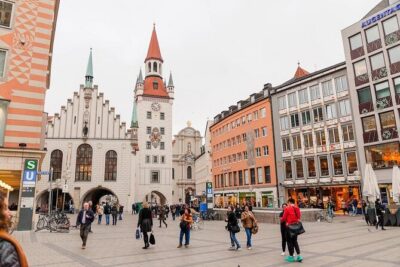
The tour begins at the Mariensäule, the golden statue on a tall red marble column in the middle of Marienplatz. Look for the guide carrying a blue bag marked Weis(s)er Stadtvogel. This is a useful landmark in one of Munich’s busiest public spaces, though you should allow a little time to find the statue if the square is crowded.
Marienplatz is a fitting starting point. It is one of Munich’s best-known public squares, but on this walk it becomes a place for discussing political gatherings, Nazi public displays, and the way mass movements used central civic spaces.
Your guide supplies documents and photographs during the walk. That matters here because modern Munich can look orderly and restored. Historic images show how the same streets and buildings appeared during the Nazi period, making the change easier to grasp.
The meeting point is central and easy to reach on foot, but transportation is not included. Plan to arrive independently. Comfortable shoes are important, since this is a walking tour rather than a seated lecture. Bring a drink, especially if you are joining during warmer weather.
From beer halls to political power
A central part of the story is Hitler’s early career in Munich. Before he became a national figure, he was known locally as a forceful beer hall speaker. His small circle of followers treated him as their leader, and the city’s beer halls gave him an audience and a place to sharpen his public style.
The guide points out original buildings and locations tied to this early phase. You should expect the focus to be on what happened at each site, rather than on a general tour of Munich’s food and drink culture. The beer halls matter here as political meeting places, not simply as traditional Bavarian attractions.
That distinction is helpful. It shows how extremist ideas moved from small gatherings into public life. You also get a clearer sense of how local political frustration after World War I created room for radical voices.
One of the most important episodes covered is the Beer Hall Putsch, Hitler’s first failed attempt to seize power. Munich was the scene of this reckless coup, and its failure did not end Hitler’s political career. The walk uses the city itself to explain how defeat could later be turned into propaganda.
Seeing the physical marks of Nazi rule and war
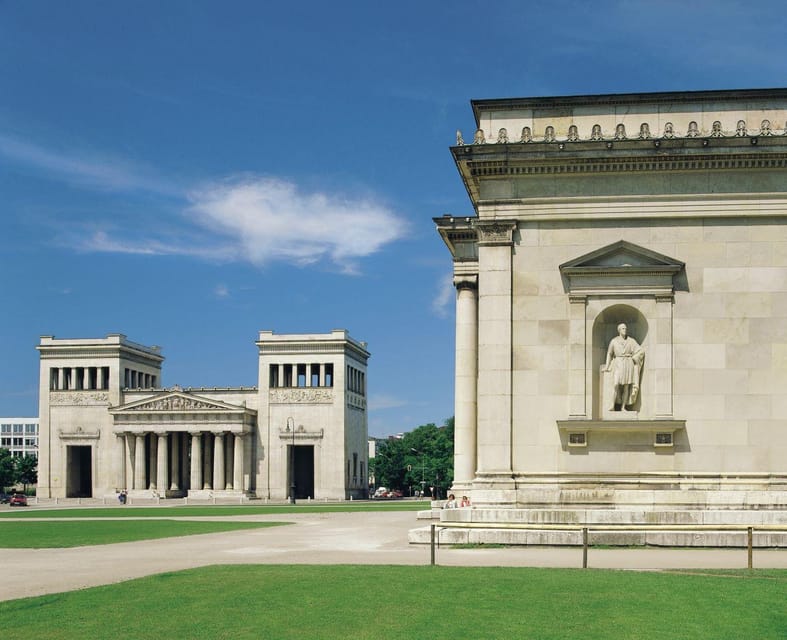
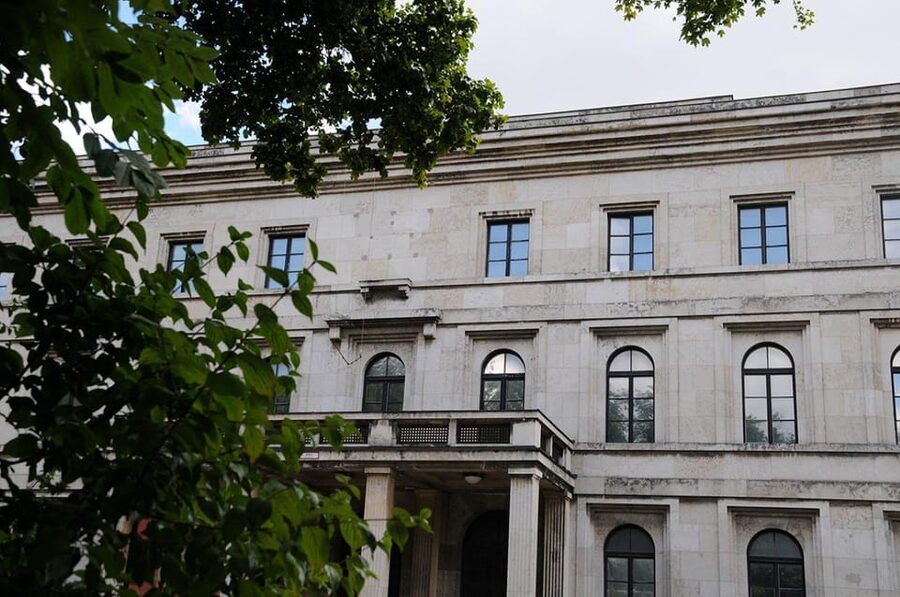
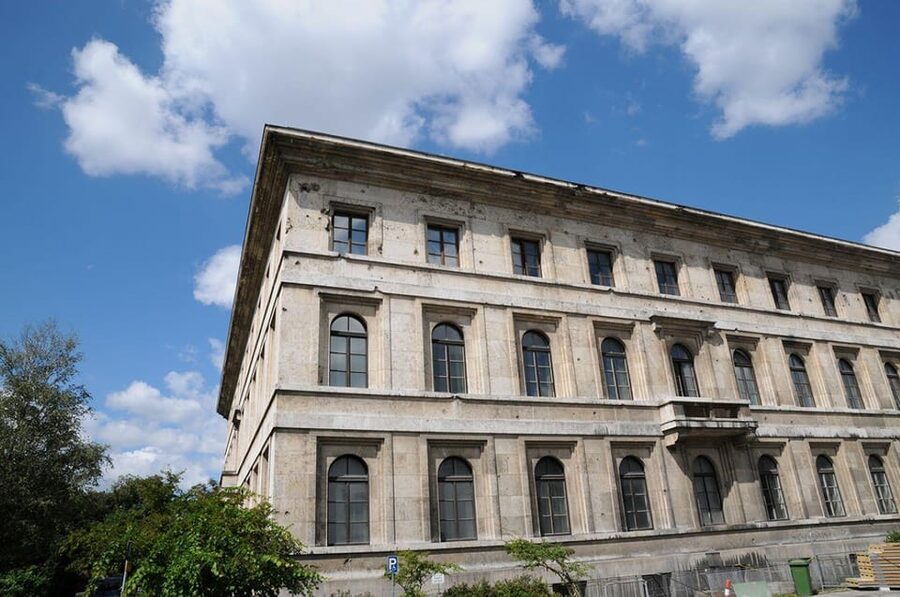
Many of the buildings connected to the Third Reich are still present. Some were built or altered to project Nazi power. Others survived the destruction of World War II and now sit beside memorials or ordinary modern city life.
This contrast is one of the strongest parts of the experience. Central Munich suffered extensive Allied bombing, yet several grand structures commissioned or favored by Hitler remained standing. Walking among them can feel unsettling. The buildings were designed to suggest order, strength, and permanence, and the guide explains how architecture served that purpose.
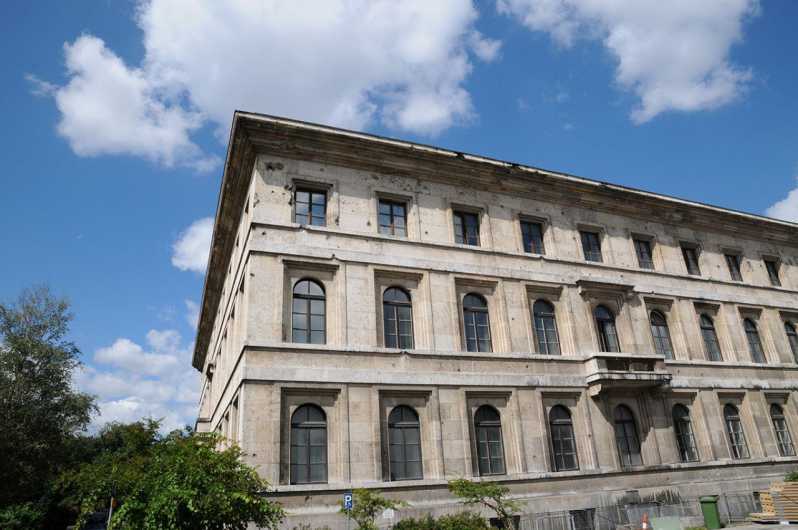
You will also see places that still carry physical scars from the years of terror and war. The tour does not treat damaged walls or surviving facades as curiosities. Their value lies in the questions they raise: what was destroyed, what was preserved, and how should a city live with buildings connected to dictatorship?
The original sites make this different from a standard museum visit. You are moving through places that still function as part of Munich, even when their earlier meaning has been changed or contested.
More wartime history tours in Munich:
- From Munich: Dachau Memorial Site Day Tour
★ 4.8 · 2,723 reviews - From Munich: Dachau Memorial Site Half-Day Trip
★ 4.7 · 2,526 reviews - From Munich: Dachau Memorial Site Full-Day Tour
★ 4.9 · 1,406 reviews - Dachau Concentration Camp Memorial Tour with Train from Munich
★ 4.5 · 955 reviews
Former Nazi headquarters and the city’s grand monuments
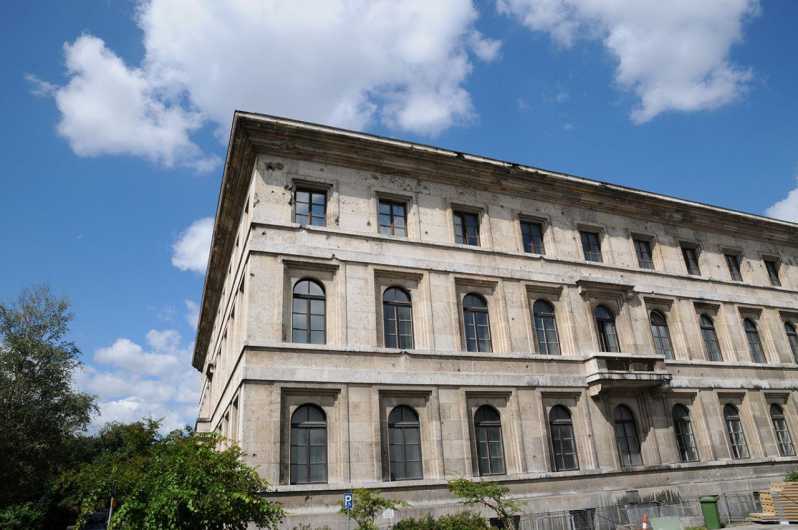
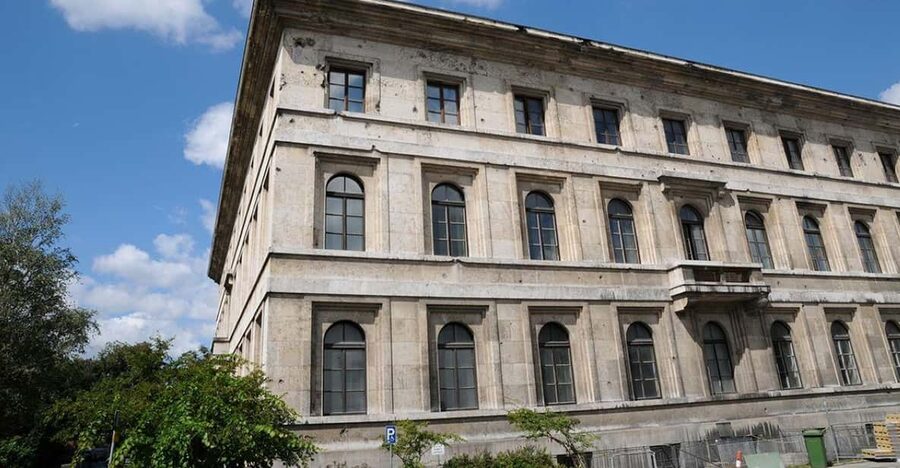
The route includes the former Nazi Headquarters, where Hitler exercised political power. Seeing this location helps connect the local story to the wider dictatorship. Munich was not merely where Hitler began. It became a base from which the Nazi leadership shaped policy, propaganda, and terror across Germany and beyond.
The walk also reaches Königsplatz, a major ceremonial area associated with Nazi architecture and public display. Its grand scale suited the regime’s taste for monuments, processions, and dramatic political theater.
The guide’s role is especially important at these locations. Without context, large stone buildings can appear impressive but politically neutral. With the history explained, their design and placement take on a more disturbing meaning.
At the same time, the tour does not suggest that every building gives up its meaning at once. You will need to listen closely and ask questions. Two hours gives enough time for a strong overview, but not for a long architectural study of every structure.
Victims, resistance, and the cost of looking only at Hitler
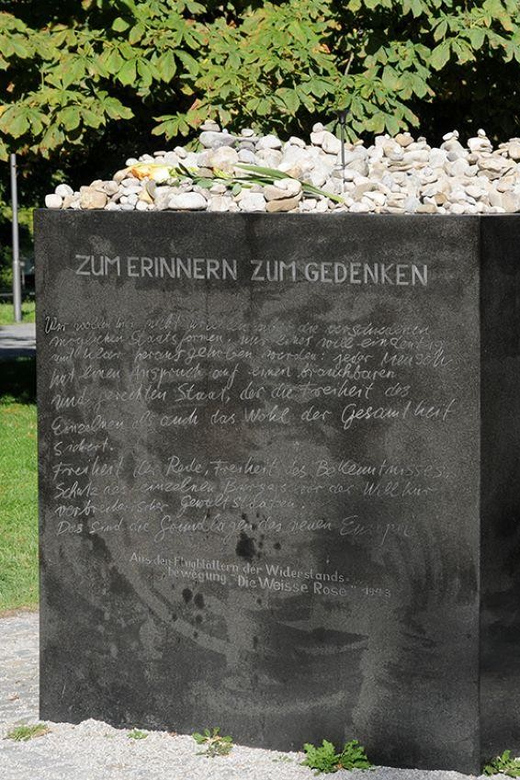
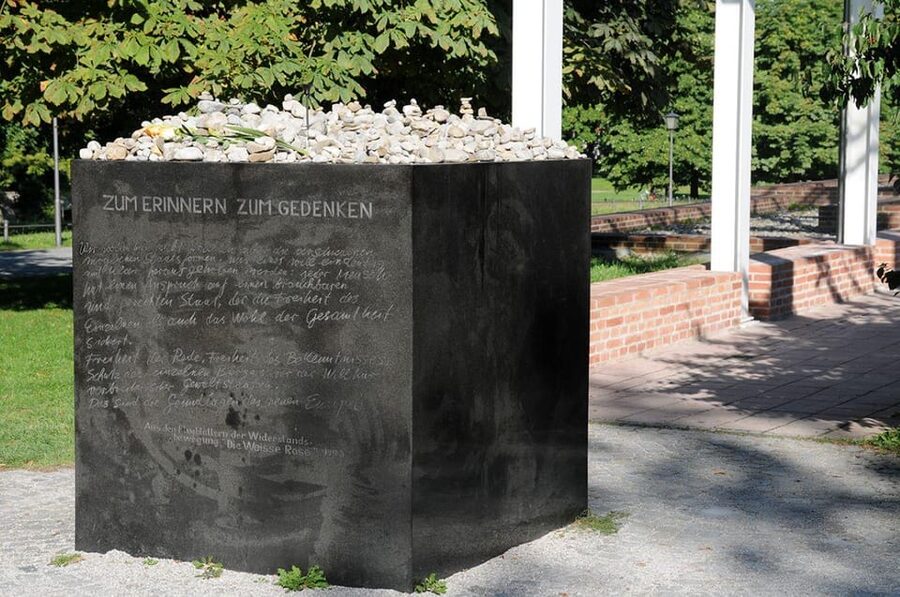
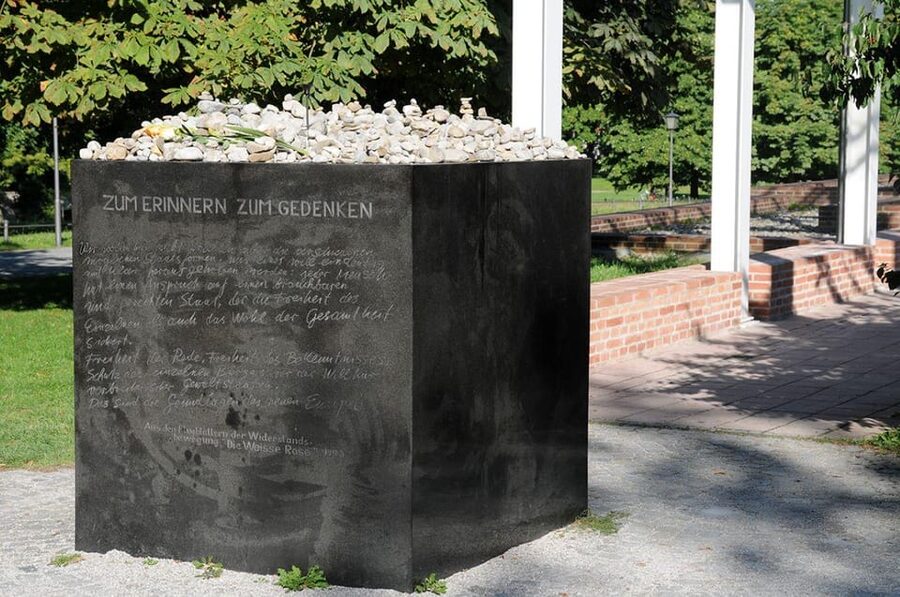
A good historical tour cannot stop with Hitler’s rise, and this one includes the people who resisted Nazi rule. That balance is important. It reminds you that dictatorship was not accepted by everyone and that democracy had defenders, even when opposing the regime was dangerous.
The walk addresses anti-Semitic pogroms, the destruction of synagogues, and the public burning of books. These events show how persecution moved from hateful speech into organized public action and physical destruction.
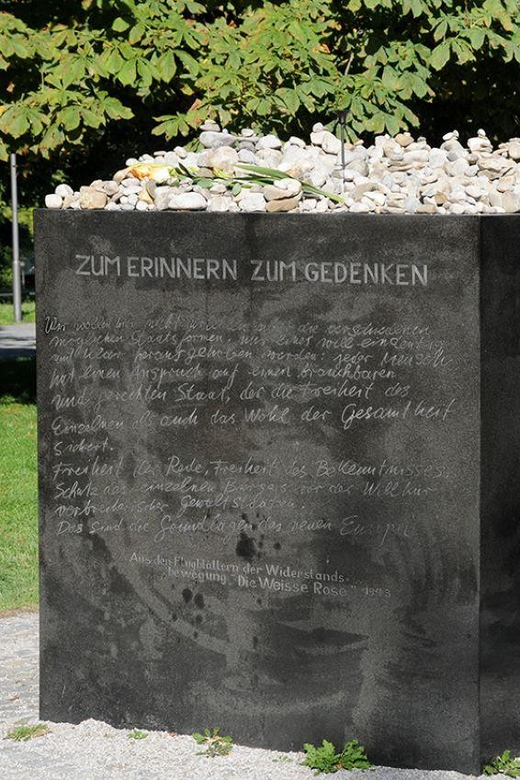
You also encounter memorials dedicated to victims of Nazism and to people who lost their lives opposing Hitler’s ideology. These sites change the tone of the walk. Instead of treating the period as a sequence of political victories and military events, they bring attention back to individual lives and moral choices.
I would pay close attention during this portion. It is easy for a tour about the Third Reich to become a list of dates, leaders, and battle plans. The strongest moments here are the ones that connect political decisions with the people who suffered under them.
How the guides shape the experience
The tour is led in English or German by a certified guide. The quality of the guide matters greatly with a subject this serious, and the available feedback points to a strong record. Karl has been praised for making the material welcoming and clear, while Ina has been described as personal and heartfelt rather than mechanical.
That does not mean every tour will feel identical. A private group can ask more questions and adjust the pace more easily. A group setting may feel less personal, but it can also bring a wider mix of questions and reactions.
The guides use photos and documents to support the spoken explanation. This is more useful than relying on dramatic storytelling alone. You can see how places looked during the Nazi period and compare those images with the buildings in front of you.
The best approach is to treat the walk as a serious conversation. Ask about the purpose of a building, the difference between Nazi propaganda and historical fact, or how Munich remembers the period today. The format allows for questions, and an engaged guide can make the experience more tailored to your interests.
Timing, group size, and value at $259
The listed price is $259 for a group of up to 25 people. That price makes more sense for a private party than for one or two individuals. If you are sharing the cost among a larger family or friend group, the per-person rate can be reasonable for a certified two-hour guide in central Munich.
For a solo visitor or a small pair, the same group price is a much bigger commitment. Before booking, check whether the available option is private and how the cost applies to your party. The activity information identifies the format as a private group, although the title also presents private or group choices.
Two hours is a useful length. You get a focused introduction without giving up half a day of sightseeing. I would place it early in your Munich visit if you want the political background to inform later walks through the Old Town.
The tradeoff is coverage. You will visit significant locations, but you will not receive an entire academic course on National Socialism, World War II, or the Holocaust. If you want detailed museum displays, original artifacts, or long time at each memorial, you will need a separate visit elsewhere.
The tour is wheelchair accessible, and no transportation is included. The route is on foot, so comfortable footwear remains wise even if you use a wheelchair. Video recording is not allowed, and you should plan to take in the explanation without filming it.
Who should book this walking tour?
This experience suits you if you want historical context tied to real places. It is a strong choice for adults, history students, solo visitors, and families with older children who can handle the subject thoughtfully.
It also works well for first-time visitors who want more than Munich’s standard postcard sights. The tour shows how the city’s political past sits beside its churches, squares, and restored architecture.
The age limit matters. Children under 10 are not considered suitable for the tour, and the topics include persecution, violence, book burnings, destroyed synagogues, and war. Families with older children should judge their own readiness, although the guide can respond to questions and adjust the discussion within the tour’s format.
You may want to skip it if you are looking for a light introduction to Munich or if you find walking and serious political history tiring. This is not a casual sightseeing loop with a few dark anecdotes added for drama.
Practical tips before you go
Meet at the Mariensäule, not simply somewhere in the broad area of Marienplatz. Look for the blue Weis(s)er Stadtvogel bag, and arrive with comfortable shoes and a drink.
Bring a questioning mind. The photographs and documents are most useful when you compare them with the buildings around you, so stay close enough to see the material the guide is showing.
Allow extra time around the tour if you want to reflect or visit related sights afterward. The walk ends with a better sense of Munich’s Nazi past, but the subject may leave you needing a quieter pause before moving on to another attraction.
Cancellation is free up to 24 hours before the tour for a full refund, and you can reserve now and pay later. Starting times vary, so check availability for your date.
Should you book the Munich Third Reich and WWII walk?
Book it if you want a clear, place-based account of how Munich helped the Nazi movement grow. The original buildings, historic images, former headquarters, memorials, and discussion of resistance give the tour more weight than a simple list of Nazi sites.
I would be especially inclined to book for a private group large enough to share the $259 cost. For a solo visitor or couple, compare the price carefully with other Munich history options. Still, if a personal guide, an English or German tour, and a compact two-hour route fit your plans, this is a useful way to understand a difficult part of the city that ordinary sightseeing can easily miss.
FAQ
Where does the tour meet?
Meet at the Mariensäule in the center of Marienplatz. It is the golden statue on a tall red marble column.
How do I identify the guide?
Look for a tour guide carrying a blue bag marked Weis(s)er Stadtvogel.
How long does the walking tour last?
The tour lasts two hours.
Is the tour offered in English?
Yes. The live tour is available in English and German.
Is this a private tour?
The activity information identifies the group type as private, with a price of $259 for a group of up to 25 people. The tour title also presents private or group options, so check the booking choice for your date.
Is transportation included?
No. Transportation is not included. You make your own way to the meeting point in Marienplatz.
Is the tour wheelchair accessible?
Yes, the activity is listed as wheelchair accessible.
What should I bring?
Bring comfortable shoes and drinks for the two-hour walk.
Are children allowed?
The tour is not suitable for children under 10 years old.
Can I record the tour?
Video recording is not allowed.
Can I cancel for a refund?
Yes. You can cancel up to 24 hours in advance for a full refund.
Can I pay later?
Yes. The reserve now and pay later option lets you book without paying immediately.
More Walking Tours in Munich
- Munich: Old Town & Viktualienmarkt City Walk in German
★ 4.7 · 2,304 reviews - Munich: Night Watchman Walking Tour
★ 4.7 · 2,092 reviews - Munich Ghosts and Spirits Evening Walking Tour
★ 5.0 · 1,900 reviews - Munich Old Town Walking Tour
★ 4.5 · 1,287 reviews
Just added around Munich
- Pub crawl incl. Oktoberfest museum guided tour with beer tasting (private)★ 5.0 · 5 reviews
- South Tyrolean specialties and wine tasting★ 5.0 · 5 reviews
- Size Matters Beer Tour Munich★ 4.6 · 105 reviews
- Secret Food Tours Munich★ 4.8 · 5 reviews
- Short & sweet: Tasting the Viktualienmarkt★ 4.8 · 37 reviews
- Residence of Munich private tour with skip the line ticket★ 5.0 · 4 reviews
- Munich: Romantic Wine Experience for Two at Viktualienmarkt★ 4.2 · 14 reviews
- Munich: Resistance against Hitler – Historical Walking Tour★ 5.0 · 5 reviews
Munich Tours, compared.

Neuschwanstein & Linderhof Castle-Fairytale Day Tour from Munich
Read our review →
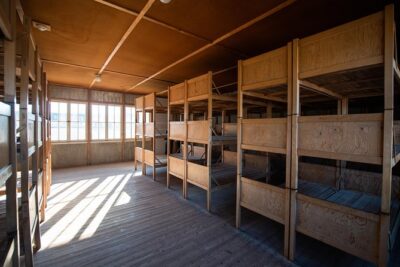
Dachau Concentration Camp Memorial Site Tour from Munich by Train
Read our review →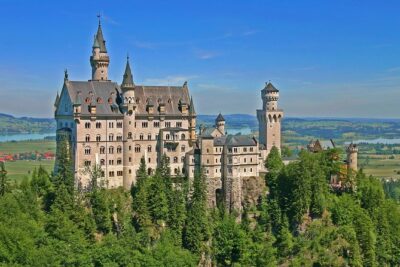
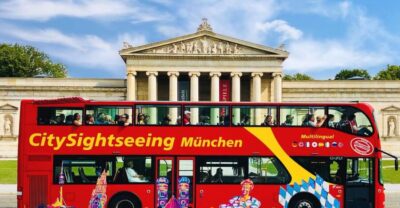
Munich Hop-On Hop-Off Tour: 1-Day or 2-Day Ticket
Read our review →Browse the lists this tour appears in