
Review · MUNICH TOURS
Munich: Private Walking Tour of the Historical City Center
Munich’s center is a history book you can walk through. On this private tour, you move from Marienplatz and its famous clock tower to Odeonsplatz, where Hitler’s first attempted power grab took place, then on to beer halls, markets, churches, and royal sights. Georg Elser’s brave attempt to stop Hitler is one of the most compelling stories on the route.
I like the private format, which lets you ask questions and adjust the pace, and I like the mix of grand landmarks with less familiar human stories, including Eva Braun and the Munich carpenter who planned an assassination attempt. The main caution is guide quality: Tom is praised as a natural storyteller, but one small group found its guide too quiet and difficult to understand.
Key points to know before you book
- Three hours on foot: The tour covers Munich’s central sights without a bus or train, so comfortable shoes matter.
- A strong WWII focus: You hear about Georg Elser, the Beer-Hall Putsch, and Munich’s role in the rise of the Nazi movement.
- Private pricing: The $288 rate covers a group of up to 15, making it far better value for a larger party than for just one or two people.
- Residenz option: You can choose an itinerary that includes the Residenz Museum, but entrance fees are not included.
- Classic Munich stops: The route includes Marienplatz, the Rathaus-Glockenspiel, St. Peter’s, Frauenkirche, Odeonsplatz, Hofbräuhaus, and Viktualienmarkt.
- English or German guiding: The tour is offered in both languages, with guide Tom singled out for his storytelling ability.
Starting at Marienplatz and the fish fountain
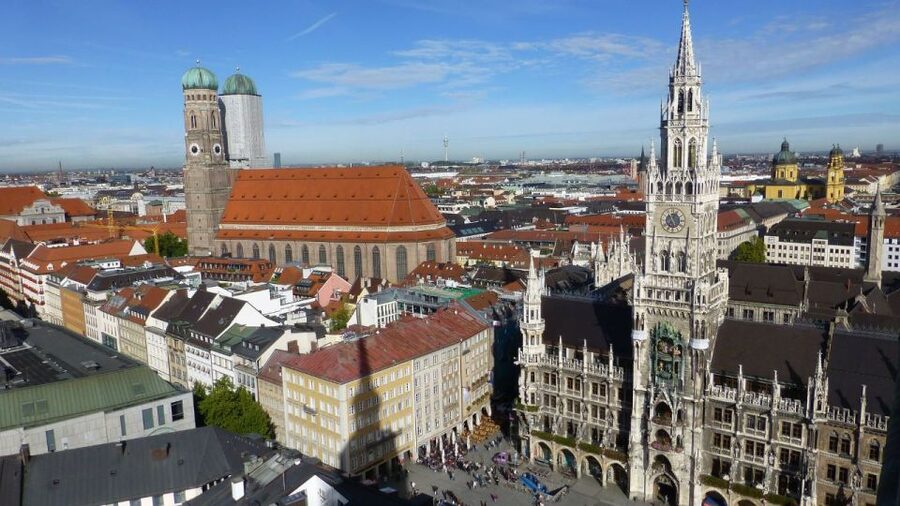
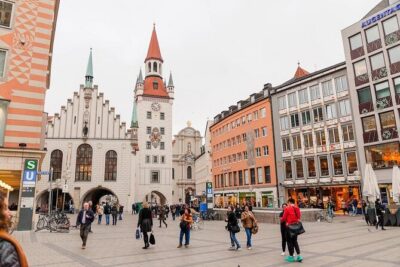
Your meeting point is the fish fountain in front of Munich’s Town Hall at Marienplatz 8. This is a sensible place to begin because Marienplatz is the city’s central square and puts several major sights within a short walk.
Your guide explains why the square carries Mary’s name. The answer is tied to Mary’s Column, a tall monument in the middle of the square. That small piece of context changes the way you see the square. Instead of treating it as a photo stop, you understand how religion, civic life, and Munich’s identity meet here.
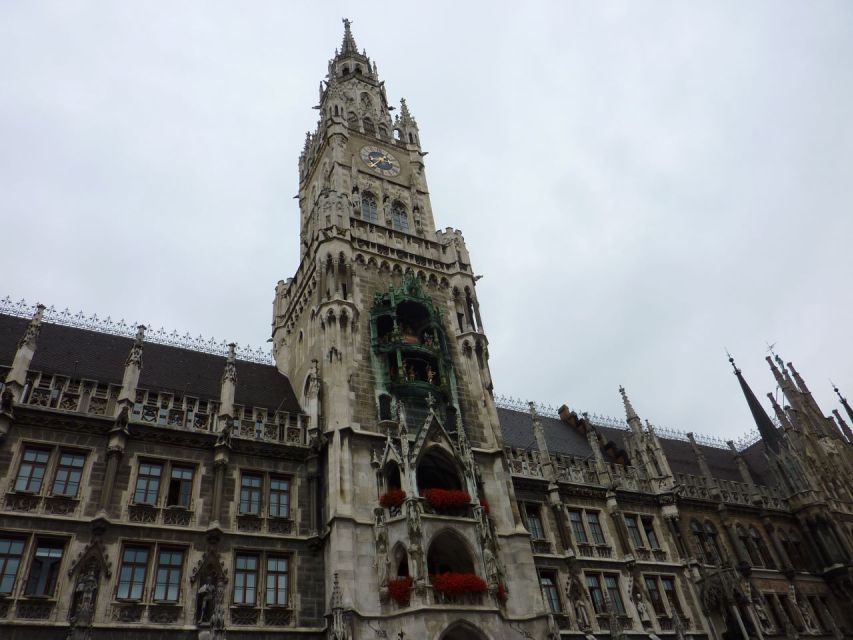
You also see the Old Town Hall and the New Town Hall. The New Town Hall is the showier building, with its ornate Gothic-style facade and famous clock tower. The Old Town Hall has a different character and helps you see that Munich’s civic center was not built all at once.
The private setup is useful here. Marienplatz can be crowded, and a guide can point out details that are easy to miss when you are focused on the large facade. You can also ask for a slower start if you need time to get oriented after arriving in Munich.
More history-led days in Munich:
- Munich: Guided Tour of the historic Town Hall on Marienplatz
★ 4.8 · 63 reviews - Munich and Nazi History Combination Day Tour Small Group
★ 5.0 · 31 reviews - Munich: Nazi History 2-Hour Small Group Walking Tour
★ 5.0 · 30 reviews
Reading the Rathaus-Glockenspiel
The Rathaus-Glockenspiel is more than a decorative clock. Your guide explains the meaning behind the figures and scenes that appear in the tower. The display is one of Munich’s best-known attractions, but without context it can feel like a short mechanical show surrounded by cameras.
The tour gives the clock a place in Munich’s story. That is valuable because the Glockenspiel is often treated as a quick stop, with little explanation beyond its performance times. Here, you learn why the figures are there and what they represent.
The activity details do not specify a particular time for the Glockenspiel performance. If seeing the moving figures is important to you, check the start time when booking and ask whether the route will coincide with a show. The guide can explain the landmark even if the timing does not line up.
St. Peter’s and the city’s monastic beginning
The walk continues to St. Peter, described as Munich’s oldest Catholic church. This stop connects the modern city to the monks who helped give Munich its start. It is a useful correction to the idea that Munich was founded only by royal power or beer culture.
St. Peter also gives the tour a religious layer before it turns more heavily toward royal and political subjects. Your guide can explain the church’s place in the city and help you notice how close Munich’s major historic institutions sit to one another.
The walk is not only about entering every building. Entrance fees are not included, and the activity description does not promise admission to St. Peter’s. Think of the church as part of the guided street route unless your guide tells you otherwise.
Frauenkirche and the devil’s footprint
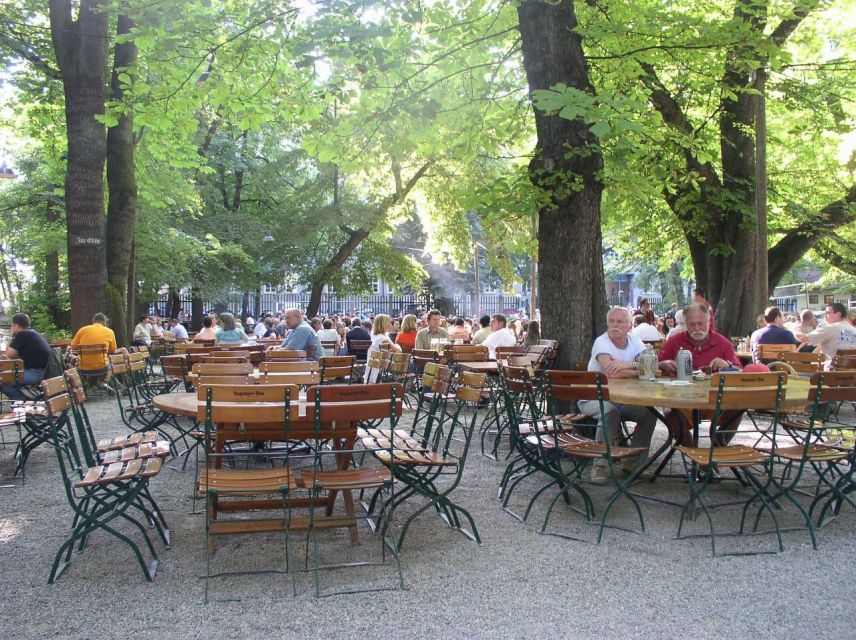
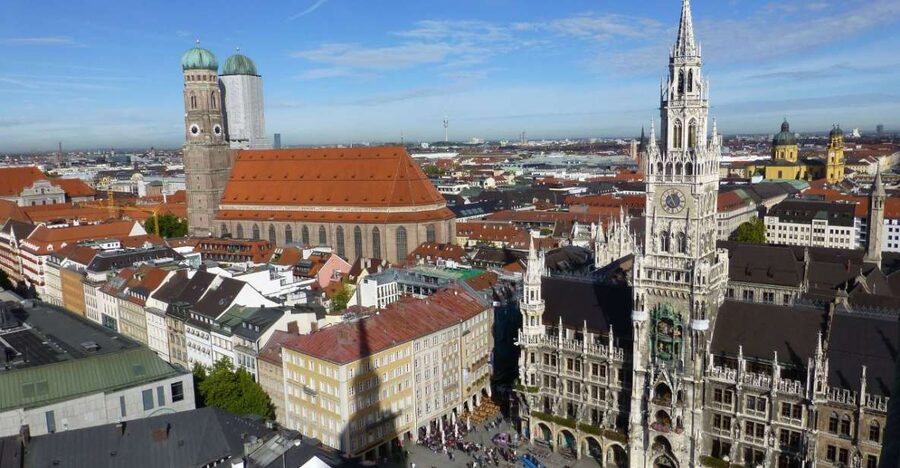
From the center, you get a good view of the twin towers of Frauenkirche, Munich’s largest church. The towers are among the city’s clearest visual markers, and they help you understand the scale of the old center.
Your guide also describes the church’s devil’s footprint and the legend connected to it. This is the sort of story that gives a walking tour its local character. You are not only collecting dates and building names. You are hearing the tale that people attach to a place.
Keep the nature of the story in mind. The devil’s footprint is presented as a legend, not as a documented historical event. That mix of fact and folklore is part of what makes old European city centers fun to explore, especially when a guide can explain how the story fits the building.
More walking tours in Munich:
- Munich: Third Reich & WWII Walking Tour
★ 4.6 · 6,181 reviews - Third Reich Walking Tour Munich
★ 4.5 · 4,291 reviews - Munich: Old Town & Viktualienmarkt City Walk in German
★ 4.7 · 2,304 reviews - Munich: Night Watchman Walking Tour
★ 4.7 · 2,092 reviews
Munich, Hitler, and the story of Georg Elser
The tour gives serious attention to Munich’s role in the Nazi period. You learn about the Beer-Hall Putsch at Odeonsplatz, when about 2,000 men led by Adolf Hitler marched toward the center of Munich in the Nazi Party’s first attempt to seize power.
This is one of the most important parts of the route. Munich is often marketed through palaces, churches, and beer halls, but its 20th-century history cannot be separated from the city streets. Hearing about the failed putsch at the actual site makes the political story easier to follow.
You also hear about Georg Elser, a Munich carpenter who planned a daring attempt to assassinate Hitler in an effort to prevent the outbreak of World War II. His story gives the tour a different view of the period. It reminds you that opposition existed, and that one individual tried to act before the war began.
The wording of the tour presents Elser’s attempt as a plan to stop the war, not simply an attack on one political leader. That distinction matters. Ask questions if this subject interests you, since a private guide can spend more time on it than a large group tour usually allows.
The route also includes a story about Eva Braun, a young German woman from Munich who later became Hitler’s wife. This detail adds a personal connection to the city’s wartime story, though the activity information does not identify the exact location associated with her youth. Treat it as part of the guide’s wider historical explanation rather than a guaranteed house visit.
Odeonsplatz and the Beer-Hall Putsch
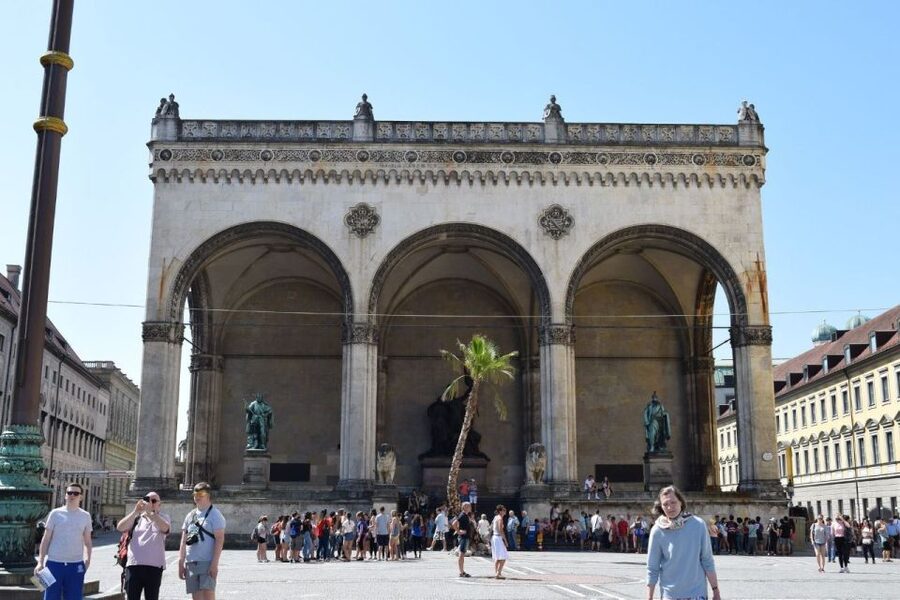
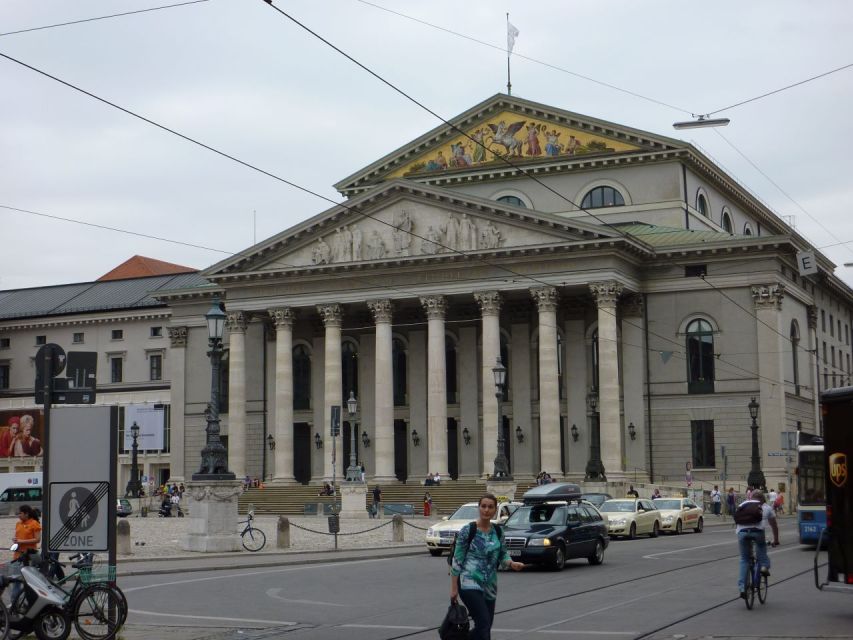
Odeonsplatz is one of the tour’s most meaningful stops because the setting is elegant while the history is tense. Here, your guide places the Beer-Hall Putsch in the physical center of Munich, showing how a political movement tried to turn a march into a seizure of power.
This is a good example of why walking works. You are not looking at an isolated museum display. You are standing in the square where the event unfolded, then walking through the surrounding streets where Munich’s public life continued.
The tour does not claim to visit every Nazi-era site in Munich, and three hours is not enough for a full study of the city’s wartime past. Still, the route offers a useful introduction, especially if you want the political background before visiting museums or memorials on your own.
Hofbräuhaus and nearly 450 years of beer culture
Munich’s beer culture gets its own part of the story. You hear about the Hofbräuhaus, the royal brewery established in 1589, and see some of the city’s famous beer gardens, whose traditions reach back nearly 450 years.
This is not just a food-and-drink detour. Beer shaped Munich’s social life, royal institutions, and public image. The Hofbräuhaus is an easy place to reduce the city to oversized glasses and loud music, but learning about its royal brewery background gives it more weight.
Food and drinks are not included, so plan to pay separately if you decide to stop for a beer or meal. The activity is a walking tour rather than a tasting experience. That can be an advantage if you want historical context without paying for a set menu, but you should not book it expecting a guided food tour.
Because the tour is private, you can ask your guide about local beer customs and the difference between a beer garden and a beer hall. The supplied details do not promise a seated tasting or reserved table, so treat the beer stops as sightseeing points unless your guide arranges something else.
Viktualienmarkt and Munich’s everyday side
The final part of the route passes Viktualienmarkt, a public food market with local delicacies and fresh produce. It also includes one of the most central beer gardens in Munich.
This is a welcome change of mood after the heavier political material. At the market, you see the city through food, shopping, and daily routines rather than monuments alone. It is also a practical place to note things you may want to return to later.
The tour does not include food or drinks, but Viktualienmarkt gives you plenty of ideas for a later stop. If you are hungry at the end of three hours, you can make your own choice instead of being tied to a group meal.
Ending here also makes logistical sense. The market is central, so you remain close to the historic core and can continue sightseeing after the guide leaves.
The optional Residenz Museum visit
You can choose an option that includes a guided visit to the Residenz Museum. Munich’s Residenz was the city’s royal palace, and adding it shifts the tour toward court life, interiors, and Bavarian rulers.
The tradeoff is time. A three-hour walking tour already covers many outdoor landmarks and several difficult historical subjects. If you choose the Residenz option, expect the indoor visit to take attention away from some street-level discussion, or ask how the guide plans to balance both.
Entrance fees are not included. This is important when comparing the options, since the advertised group price is for the guide and private tour rather than a complete package of admissions, meals, and drinks.
The Residenz option suits you if you want a first look at Munich’s royal past along with the city walk. If your priority is the Nazi-era story, churches, markets, and beer culture, you may prefer to keep the tour focused on the streets.
How the private format affects value
The price is $288 per group of up to 15 people. For a full group, that works out to about $19.20 per person before any entrance fees. For 10 people, it is $28.80 each. For two people, it is $144 each, which is a much steeper price for a three-hour walk.
That makes the tour particularly appealing to families, friends, or a small organized group. You receive a private guide rather than sharing the route with strangers, and you can ask questions about the subjects that interest you most.
For a couple, the value depends on how much you care about privacy and flexibility. A standard group tour may cost less, but it may not give you as much freedom to pause over Georg Elser, the Glockenspiel, or the Residenz.
The private format also makes guide communication more important. One verified booking described the guide as accommodating enough to meet earlier than planned, but found her quiet, hard to understand, and not very engaging. That is a fair warning for any walking tour, especially when the group is small and there is no crowd noise to blame.
Another verified booking praised Tom as a natural storyteller with a great deal to share about Munich. If you are able to request or confirm Tom, his reported strength matches this tour’s best material: the stories behind the places.
Pace, language, and practical fit
The tour lasts three hours and is conducted on foot through Munich’s historical center. The listing does not give a precise walking distance or a complete accessibility plan, but it clearly says the experience is not suitable for wheelchair users.
You should wear comfortable shoes and expect to remain outdoors for much of the route. The route includes squares, churches, markets, beer landmarks, and political sites, with the Residenz Museum available as an added option.
English and German are available. If you book in English, clear communication is worth confirming, particularly because one small group found its guide difficult to hear. A private tour gives you a simple way to ask the guide to speak up or slow down, but it cannot guarantee that every guide will have the same presentation style.
The activity offers free cancellation up to 24 hours before the start time, and you can reserve now and pay later. Those terms are useful if your Munich schedule is still shifting, but they do not change the main calculation: the tour is priced for a private group, and admissions and refreshments cost extra.
Who will get the most from this Munich walk
I would choose this tour if you want a broad first look at Munich and prefer stories to a list of dates. It covers religious beginnings, royal life, political violence, beer culture, local legends, and food markets in one route.
It is especially suitable for:
- Families or friends who can share the $288 group price
- First-time visitors who want to get oriented in the old center
- History-minded visitors interested in Munich’s Nazi-era role
- People who prefer a private guide and the chance to ask questions
- Visitors considering the Residenz but wanting more than a museum-only visit
I would hesitate if you want a deep museum experience, a food tour, or a specialist study of World War II. The route is wide rather than narrow. It gives you many useful starting points, but three hours cannot give each subject equal time.
Should you book this private Munich tour?
Book it if your group wants a private introduction to Munich that connects famous sights with less familiar stories. The strongest material is the combination of Georg Elser, the Beer-Hall Putsch, the Glockenspiel, the devil’s footprint, and Munich’s old beer institutions.
The value is excellent for a larger group and less convincing for one or two people. If you are a couple, compare the $288 private rate with other guided options before committing.
I would also confirm the language and guide arrangements, and ask how the Residenz option changes the walking route. If you can have Tom, his storytelling reputation is a promising match for the tour’s subject matter. If not, go in knowing that the guide’s volume and style may shape the experience as much as the sights themselves.
FAQ
How long is the Munich private walking tour?
The tour lasts three hours.
Where does the tour begin?
It begins at the fish fountain in front of the Town Hall at Marienplatz 8, 80331 München.
What languages are available?
The live tour guide is available in English or German.
Is this a private group experience?
Yes. The price covers a private group of up to 15 people.
Does the tour include the Residenz Museum?
You can choose an option that includes a visit to the Residenz Museum. Entrance fees are not included.
Are food and drinks included?
No. Food and drinks are not included in the tour price.
Is the tour suitable for wheelchair users?
No. The activity is listed as not suitable for wheelchair users.
Just added around Munich
- Pub crawl incl. Oktoberfest museum guided tour with beer tasting (private)★ 5.0 · 5 reviews
- South Tyrolean specialties and wine tasting★ 5.0 · 5 reviews
- Size Matters Beer Tour Munich★ 4.6 · 105 reviews
- Secret Food Tours Munich★ 4.8 · 5 reviews
- Short & sweet: Tasting the Viktualienmarkt★ 4.8 · 37 reviews
- Residence of Munich private tour with skip the line ticket★ 5.0 · 4 reviews
- Munich: Romantic Wine Experience for Two at Viktualienmarkt★ 4.2 · 14 reviews
- Munich: Resistance against Hitler – Historical Walking Tour★ 5.0 · 5 reviews
Munich Tours, compared.
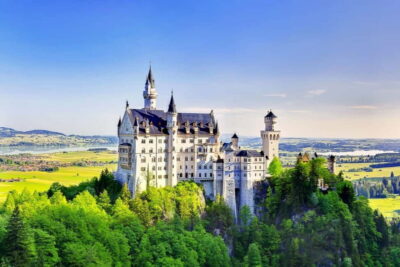

Neuschwanstein & Linderhof Castle-Fairytale Day Tour from Munich
Read our review →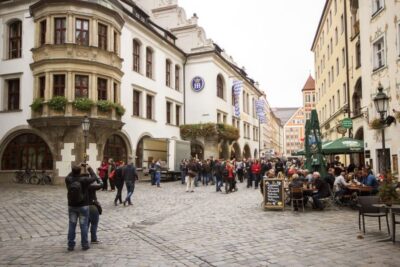
Dachau Concentration Camp Memorial Site Tour from Munich by Train
Read our review →
Munich Hop-On Hop-Off Tour: 1-Day or 2-Day Ticket
Read our review →Browse the lists this tour appears in