
Review · MUNICH TOURS
Munich: Historical Walking Tour on the Rise of Hitler
Munich’s postcard image of beer halls, art, and handsome squares hides a grim fact: this was the city where Hitler built his political career. This 2.5-hour historical walk follows that story through the streets, squares, and surviving buildings that helped turn Munich into the Nazi movement’s center.
I like two things right away. First, Alex presents the story in chronological order, so you can follow the shift from obscure political activity to dictatorship without getting lost in a pile of dates. Second, he is a Munich native who treats the city as a place to understand, not simply admire. The main drawback is that the tour is in German, so it is best suited to German-speaking visitors.
Key points at a glance
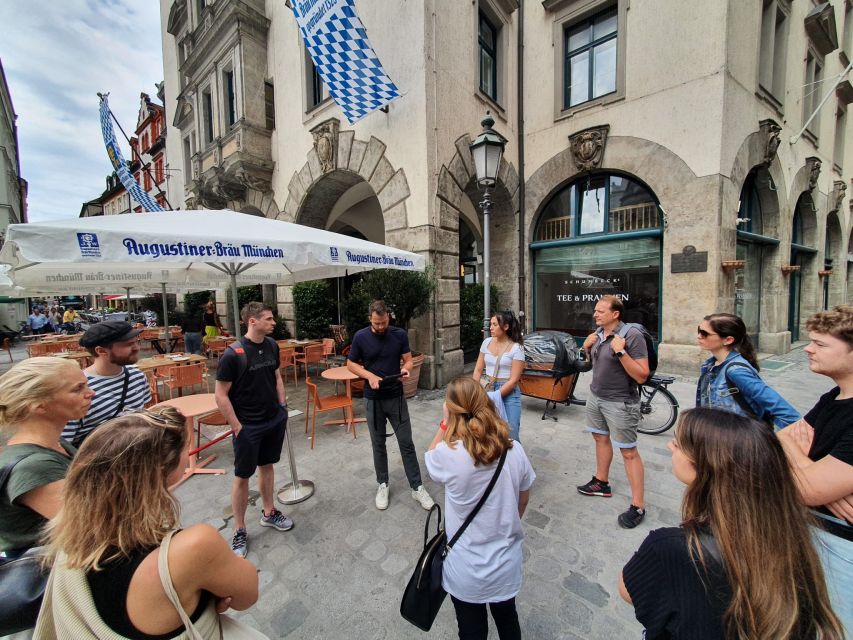
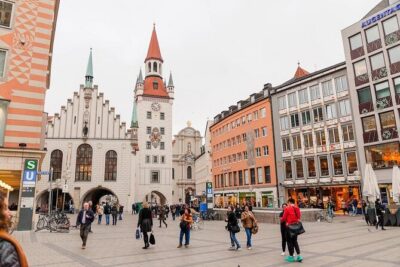
- Begin at Marienplatz: Meet Alex at the Marian Column, the large column with the small golden statue in the middle of Munich’s central square.
- Follow Hitler’s rise in sequence: The walk connects places and events so the political story develops step by step.
- See Nazi-era buildings: Munich’s propaganda architecture survived the war in large part, leaving visible traces in the modern city.
- Visit places used for speeches and parades: The route examines sites where Nazi power was presented, celebrated, and imposed.
- Learn from a Munich local: Alex brings personal knowledge of the city and responds to questions along the way.
- Plan for outdoor conditions: Wear comfortable shoes and expect the tour to run rain or shine.
Why Munich matters to this story
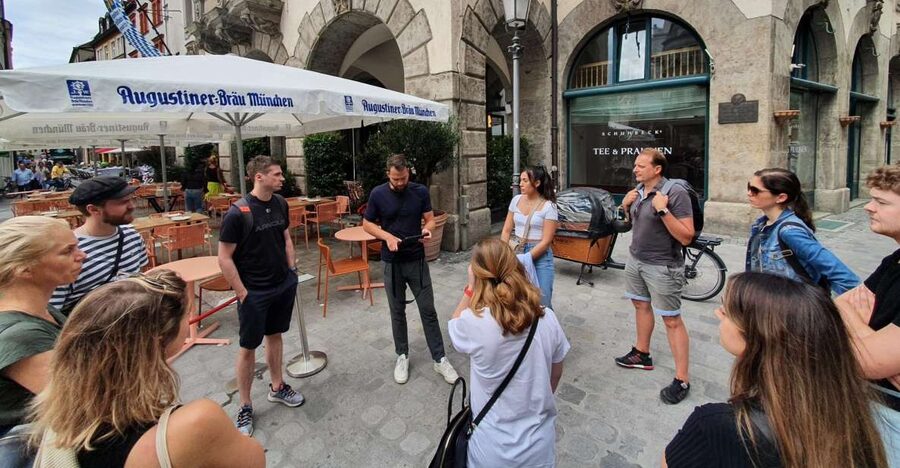
Munich can feel open, calm, and easygoing today. That makes the city’s Nazi past especially jarring. The tour begins from the idea that the rise of National Socialism was not an event that happened somewhere far away. It developed in this city, among ordinary streets and familiar public spaces.
That local focus gives the walk its value. You are not only hearing about Hitler as a dictator at the height of his power. You are looking at the places where an unknown Austrian soldier found an audience, where political messages were tested, and where a movement learned how to use public space.
Munich later received Hitler’s honorary title of the capital of the movement. It was a sinister label, but it had a practical effect. The Nazis filled the city with buildings and ceremonial sites designed to project authority. Many survived the bombing war, so the physical setting still helps explain how power was displayed.
I find this more useful than a general lecture about the Third Reich. A city walk forces you to connect an idea with a location. A square becomes a place where speeches took place. A building becomes evidence of propaganda. A route through central Munich becomes a sequence of political choices.
More history-led days in Munich:
- Munich: Guided Tour of the historic Town Hall on Marienplatz
★ 4.8 · 63 reviews - Munich and Nazi History Combination Day Tour Small Group
★ 5.0 · 31 reviews - Munich: Nazi History 2-Hour Small Group Walking Tour
★ 5.0 · 30 reviews
Starting at the Marian Column on Marienplatz
The meeting point is easy to find. Alex meets you at the Marian Column on Marienplatz, Munich’s large central square. Look for the tall column with the small golden statue in its middle.
This is a practical starting point because you are already in the historic center, close to major transport links and many hotels. There is no hotel pickup, so you need to make your own way to the square. Give yourself a few extra minutes, especially if you are unfamiliar with the center or arriving by public transport.
The setting also makes an important point before the tour even begins. Munich’s main square is not an isolated historical exhibit. It is part of daily city life. People cross it, shop nearby, meet friends, and take photographs. The Nazi past sits within this active modern setting, which helps avoid treating history as something safely sealed away.
At the beginning, Alex establishes the basic timeline and explains why Munich became so important to the movement. Since the tour is chronological, you should get a clear framework before moving on. That matters with this subject, where the names, organizations, and dates can quickly blur together.
Tracing the early political movement
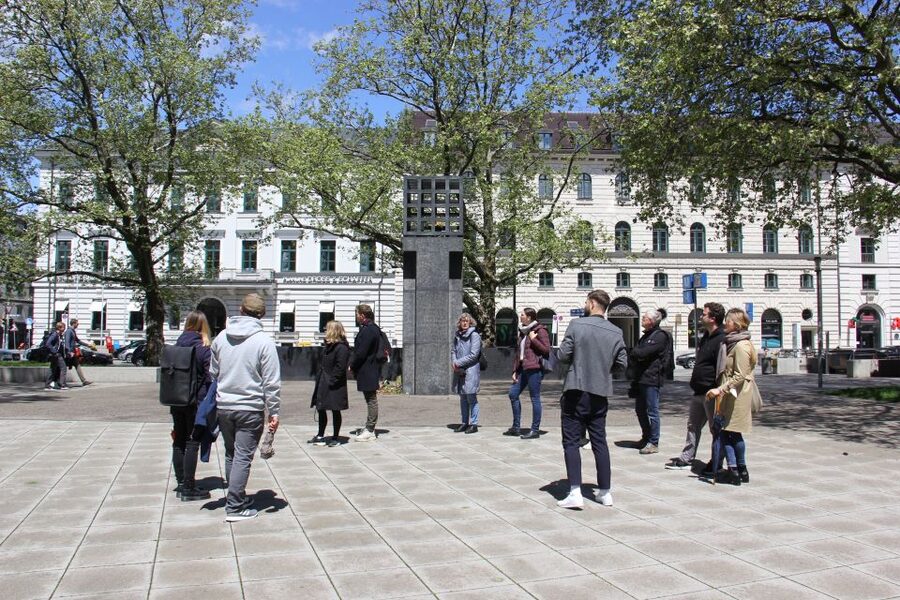
The heart of the walk is the question of how Munich became the birthplace of National Socialism. Alex’s approach is not simply to list Nazi sites. He aims to explain the conditions and developments that allowed Hitler to gain influence.
That distinction is important. A tour about Hitler can easily become a parade of famous names and ugly symbols. A stronger approach asks how political ambition, public gatherings, propaganda, and social conditions worked together. Based on the tour’s structure, you will move from the early period toward the later dictatorship rather than starting with the finished regime.
Alex has worked on this subject since his youth because he wanted to understand how National Socialism became possible and how quickly the dictatorship destroyed so much of Europe. That personal reason for leading the tour gives the subject a clear purpose. The goal is understanding and remembrance, not fascination with Hitler.
You do not need to be a history specialist to follow the walk. Alex presents the story for a general audience, and his style includes room for questions and occasional humor. That lighter touch can help a serious tour feel human, but the subject is never treated as a joke. The balance matters.
The buildings that turned propaganda into stone
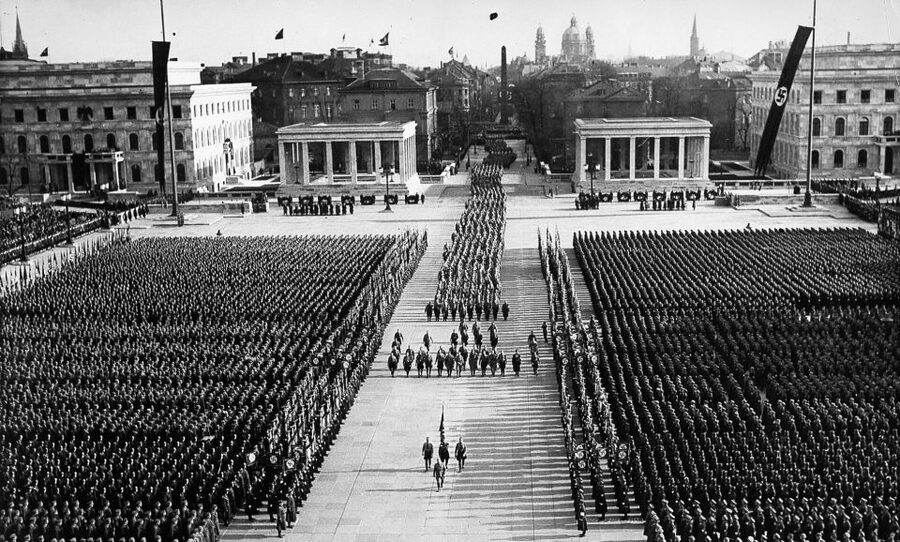
One of the most useful parts of this experience is the attention to buildings. Nazi architecture was not decoration added after the fact. It was a tool for shaping how people saw the movement and its leaders.
The tour visits important buildings constructed by the National Socialists, along with sites that were used as places of political worship and display. These locations help you see how a government tried to make its ideology look permanent. Large forms, official spaces, and carefully chosen settings gave political power a physical presence.
Many of these propaganda buildings survived the war with little damage. That creates a difficult but valuable experience. You can walk past them as part of modern Munich while knowing why they were built and what they were meant to communicate.
I appreciate this focus because architecture can reveal motives that speeches alone do not. A building tells you about scale, control, movement, and the intended audience. It also raises a question that Alex can help you consider: what should a city do with structures created by a dictatorship?
Do not expect every building to look dramatic at first glance. Some may seem ordinary until you know their purpose. That is one reason a guide matters. Alex can point out what you are seeing and connect it to the political story rather than leaving you with a collection of façades.
More walking tours in Munich:
- Munich: Third Reich & WWII Walking Tour
★ 4.6 · 6,181 reviews - Third Reich Walking Tour Munich
★ 4.5 · 4,291 reviews - Munich: Old Town & Viktualienmarkt City Walk in German
★ 4.7 · 2,304 reviews - Munich: Night Watchman Walking Tour
★ 4.7 · 2,092 reviews
Squares, speeches, and public ceremonies
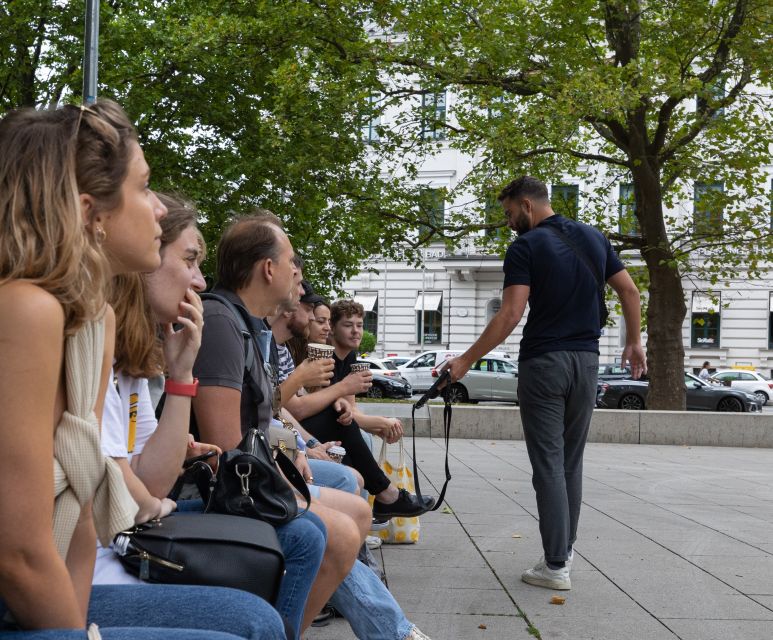
The tour also visits squares and public spaces linked to Nazi activity. These are places where Hitler gave speeches, where the Nazis held parades, and where public attention was turned into political force.
A square can look neutral when you arrive alone. With context, it becomes easier to picture how crowd size, sight lines, buildings, banners, uniforms, and ceremony worked together. The movement did not rely only on private meetings or printed messages. It used the city itself as a stage.
Alex’s chronological method should help here. You first learn about the movement’s growth, then see how public spaces were used once it had more power. This gives you a way to distinguish early political organizing from later state-sponsored spectacle.
The route also addresses places where Munich had to endure the bombing war. That widens the story beyond Hitler’s rise. The walk is not only about political beginnings. It also follows the damage caused by the regime and the war it helped unleash.
Because this is a walking tour, the locations are encountered in their present setting. You will not be inside a museum exhibit with every object labeled. Instead, you will be standing outdoors, listening to the past while modern Munich continues around you. That can be less polished than a museum visit, but it is often more direct.
Alex’s style and what it means for the tour
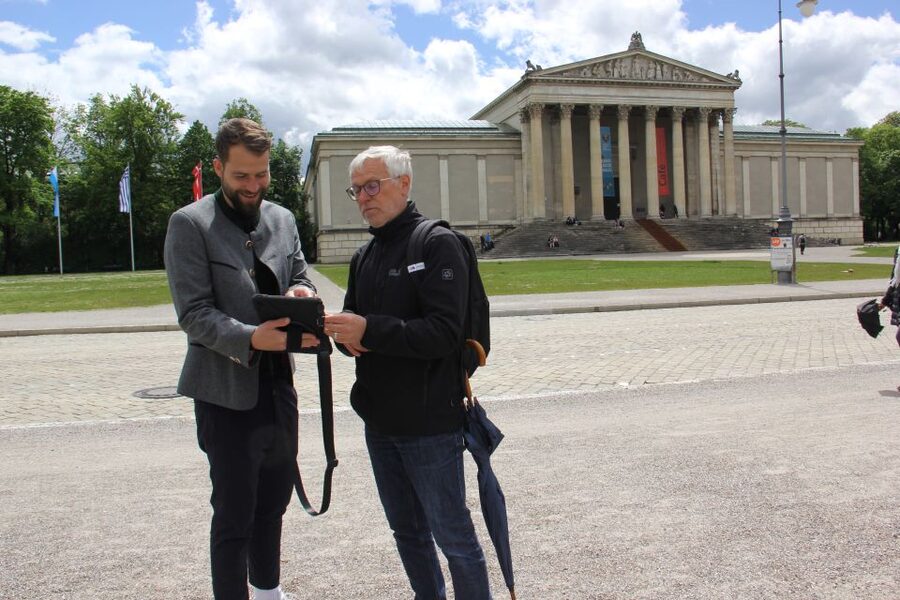
Alex is a 32-year-old professional guide, born and raised in Munich. He brings a local connection to a topic that can otherwise feel distant or abstract.
His style is described as engaged, sympathetic, and relaxed while remaining serious. That combination suits this subject. A guide who sounds cold can turn history into a list of facts. A guide who is too casual can make the material feel shallow. Alex aims for a middle ground, using humor where it helps people stay attentive without reducing the human cost.
You can also expect him to respond to questions rather than deliver a fixed speech and move on. Short pauses are built into the walk, which is useful both for concentration and for the physical demands of standing outdoors. One report of the tour lasting almost three hours suggests that Alex may allow the discussion to run longer when there is much to explain. Treat the advertised 2.5 hours as the planned duration, not a guarantee that the group will leave precisely on time.
That flexibility can be a strength if you want context. It may be less convenient if you have a tightly packed afternoon schedule. I would avoid booking a major timed attraction immediately after the walk.
Alex also offers personal recommendations for exploring Munich like a local. Those suggestions are a useful extra, especially if you take the tour near the beginning of your stay. You can use the final part of the experience to ask about other areas or activities that fit your interests.
The walking conditions you should expect
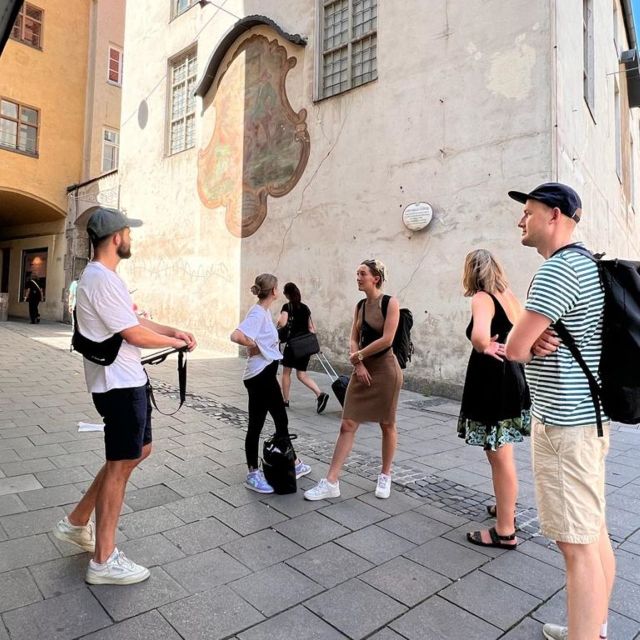
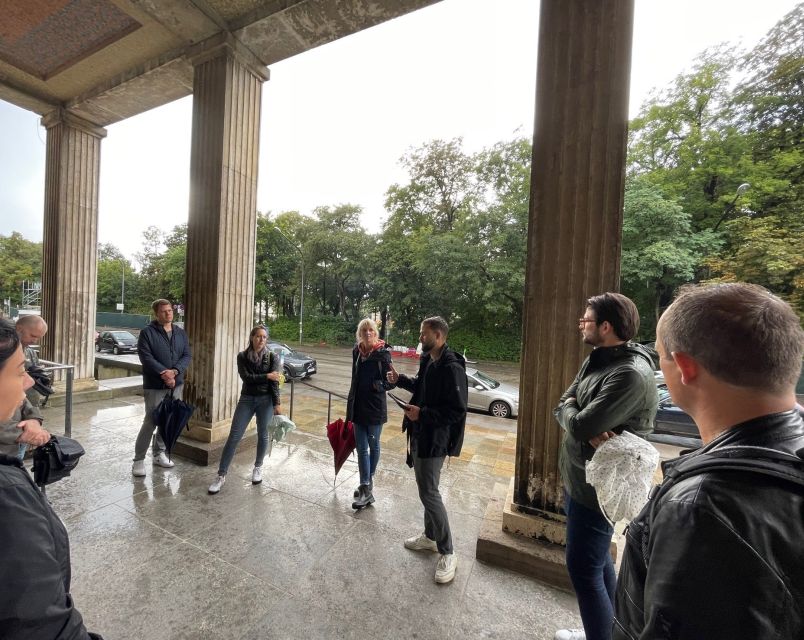
This is an outdoor city walk, not a coach tour. Comfortable shoes are essential. The route includes central streets, squares, and stops at buildings, so you should expect periods of standing as Alex explains each location.
The tour runs rain or shine. Munich weather can change, and the historical subject does not become easier to absorb when you are cold or wet. Bring suitable clothing and consider a compact rain layer if the forecast looks uncertain.
The activity is wheelchair accessible. Still, accessibility in a historic city walk can depend on the exact streets, crossings, and crowd conditions on the day. If you use a wheelchair and have specific mobility needs, it is sensible to confirm the details before booking.
At $30 per person, the price is fair for a 2.5-hour guided walk led by a local specialist. You are paying for interpretation, not entrance tickets or transport. The value is strongest if you want to understand why the sites matter rather than simply photograph them.
The cost also compares well with the amount of time involved. A private history lecture of this length would usually require more planning, while a short self-guided route would leave you to research every location yourself. Here, Alex connects the stops and handles the chronology.
The price is less compelling if you already have a strong grasp of Munich’s Nazi history, speak little or no German, or prefer to explore at your own speed. In those cases, the tour’s main asset, guided explanation, may not work for you.
Who should book this historical walk
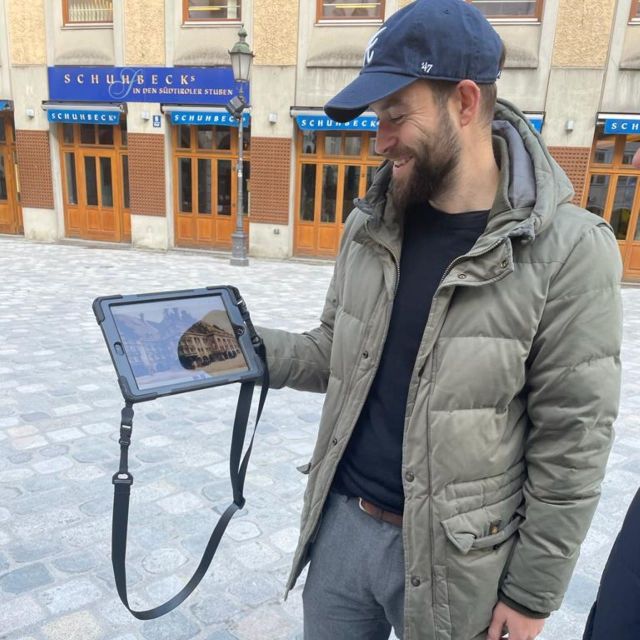
I would recommend it most strongly to German-speaking visitors with an interest in modern European history, politics, architecture, or memory culture. It also fits people who want to see Munich beyond its usual beer-hall and palace image.
It can work well for local residents, too. The route is not limited to first-time sightseers. Familiar streets can look different once you understand how they were used during the Nazi period. A local review of the experience described it as worthwhile even for someone from Munich, which matches the tour’s focus on places that are easy to pass without noticing.
Families with older teenagers may find it useful, provided they are ready for the subject. The tour is open to young and old, but the material concerns dictatorship, war, persecution, and destruction. Parents should decide how much historical detail suits their children.
I would not choose this as a casual sightseeing walk between shopping stops. The subject requires attention, and the tour’s value comes from the links between locations. You should be ready to spend two and a half hours thinking about difficult events.
How to fit it into a Munich visit
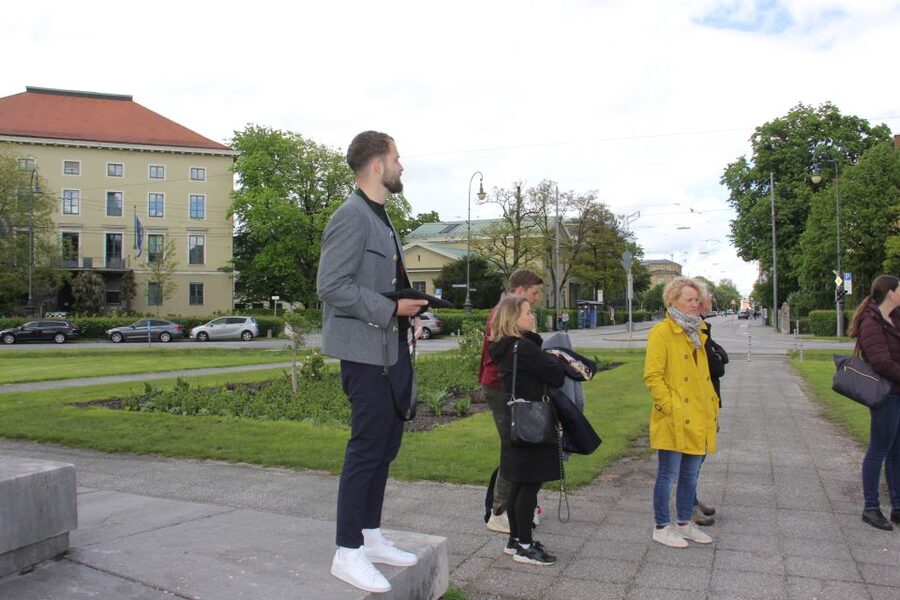
Book this early in your stay if you want Alex’s local suggestions to shape the rest of your plans. Starting at Marienplatz also makes it easy to continue exploring central Munich afterward.
Allow a little breathing room before and after the tour. The walk may run close to three hours if questions and explanations extend along the route. You will get more from it if you are not watching the clock.
The tour can also serve as a useful counterweight to Munich’s lighter attractions. Pairing it with museums, food markets, or traditional city sights is possible, but I would avoid scheduling another demanding history activity immediately afterward. The material is serious, and a pause helps.
You can cancel for a full refund up to 24 hours in advance, and the reserve-now, pay-later option keeps your plans flexible. Those policies are helpful if your Munich schedule is still changing. Just remember that flexibility does not remove the need to reach the meeting point on time.
Should you book the Rise of Hitler walking tour?
Book this tour if you want a clear, place-based explanation of Munich’s role in the rise of Hitler, and if you can follow a German-language guide. Alex’s local roots, chronological structure, and attention to surviving propaganda buildings give the walk a strong sense of purpose.
Skip it if you want an English tour, a short general introduction to Munich, or a route built mainly around famous attractions. This is a serious historical experience, and rain, standing, and difficult subject matter are part of the deal.
For German-speaking visitors who want to understand the city’s darkest chapter without losing sight of modern Munich, $30 is a sensible price. I would wear good shoes, leave your afternoon open, and come ready to ask questions.
FAQ
Where does the Munich historical walking tour begin?
The meeting point is at the Marian Column on Marienplatz. It is the large column with the small golden statue in the middle of the square.
How long does the tour last?
The scheduled duration is 2.5 hours. The tour may run longer if the discussion and explanations take extra time.
Which language is the tour conducted in?
The live tour guide language is German.
Who leads the tour?
Alex leads the tour. He is a professional guide born and raised in Munich and has focused on the subject of National Socialism since his youth.
What should I bring?
Wear comfortable shoes. The tour takes place outdoors and runs in all weather, so suitable clothing for rain or sun is also practical.
Is the tour wheelchair accessible?
Yes, the activity is listed as wheelchair accessible. There is no hotel pickup, so you need to reach the Marienplatz meeting point yourself.
Just added around Munich
- Pub crawl incl. Oktoberfest museum guided tour with beer tasting (private)★ 5.0 · 5 reviews
- South Tyrolean specialties and wine tasting★ 5.0 · 5 reviews
- Size Matters Beer Tour Munich★ 4.6 · 105 reviews
- Secret Food Tours Munich★ 4.8 · 5 reviews
- Short & sweet: Tasting the Viktualienmarkt★ 4.8 · 37 reviews
- Residence of Munich private tour with skip the line ticket★ 5.0 · 4 reviews
- Munich: Romantic Wine Experience for Two at Viktualienmarkt★ 4.2 · 14 reviews
- Munich: Resistance against Hitler – Historical Walking Tour★ 5.0 · 5 reviews
Munich Tours, compared.
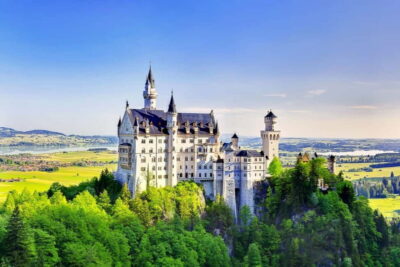

Neuschwanstein & Linderhof Castle-Fairytale Day Tour from Munich
Read our review →
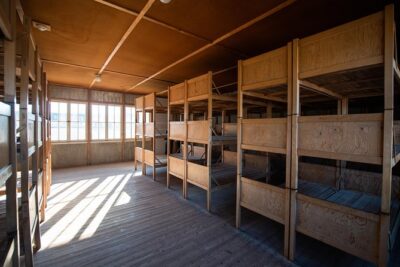
Dachau Concentration Camp Memorial Site Tour from Munich by Train
Read our review →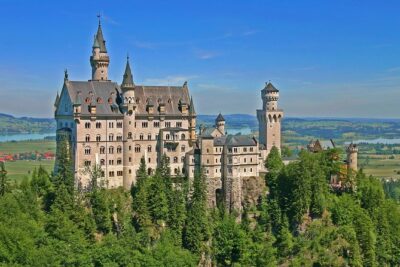
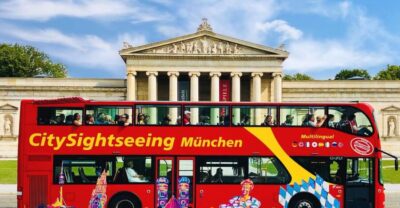
Munich Hop-On Hop-Off Tour: 1-Day or 2-Day Ticket
Read our review →Browse the lists this tour appears in