
Review · HISTORICAL TOURS
Güstrow: Guided tour of the historic city center
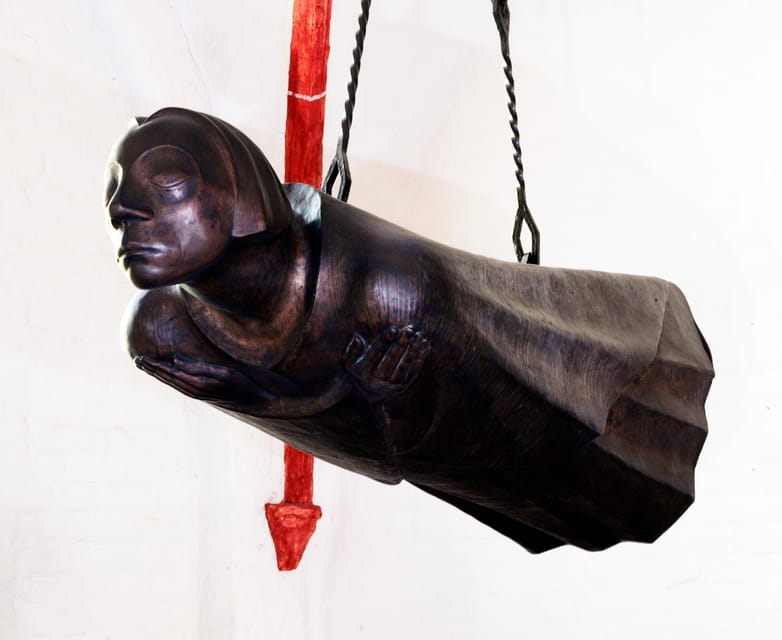
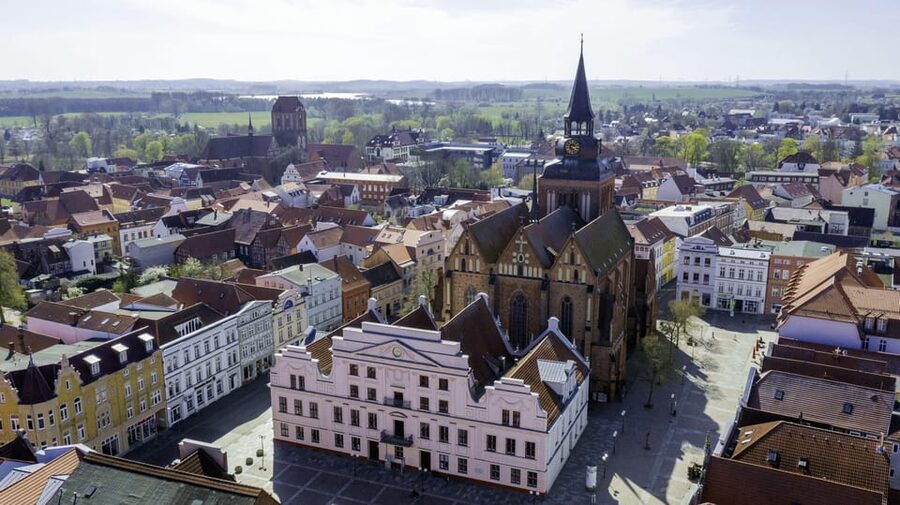
Güstrow’s star attraction is a haunting bronze figure that appears to float inside its brick Gothic cathedral. Ernst Barlach’s Floating gives this small northern German town an artistic punch, while the surrounding old center brings together Gothic brickwork, Renaissance buildings, classicist houses, and a market square that has survived remarkably intact.
I like the low $10 price, especially since a free city museum visit is included before or after the walk. I also like the guide-led focus on people who shaped Güstrow, from Wallenstein and Tsar Peter the First to Barlach and writer Uwe Johnson. The main caution is pace: some visitors wanted to see more of the center, while others felt the cathedral received too much attention.
Key points to know before you go
- Ernst Barlach’s Floating: The cathedral visit centers on one of Germany’s best-known modern sculptures.
- A remarkably preserved old town: Güstrow’s historic center was left largely intact for 500 years.
- Renaissance castle stories: You learn about one of northern Europe’s major Renaissance castles, currently under restoration.
- A useful 90 minutes: The compact walking tour covers the cathedral, market square, old streets, and major architecture.
- Good value at $10: Your ticket includes a free visit to the city museum before or after the tour.
- German-language guiding: The live tour is conducted in German and is wheelchair accessible.
Why Güstrow deserves a guided walk
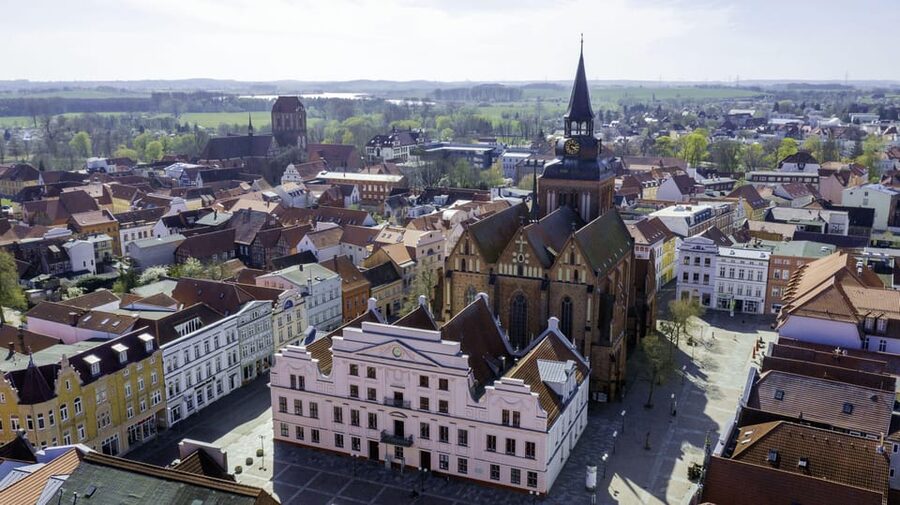
Güstrow is not a quick photo stop with one handsome building and little else. It was once a residential town and an administrative center, so its streets carry several layers of power, religion, art, and civic life.
That mix is what makes the town interesting. You see brick Gothic church architecture beside Renaissance forms, then classicist town houses from a later age. The result is not a single grand style, but a town where each square and street offers another piece of the story.
I find a guide especially useful here because Güstrow’s importance is easy to miss if you simply wander from the station or parking area to the market square. Names such as Wallenstein, August the Strong, and Tsar Peter the First connect the town to much larger European events. Local figures including Georg Friedrich Kerting, John Brinkmann, Ernst Barlach, and Uwe Johnson add a cultural side that a casual walk may not reveal.
The tour begins at Güstrow Information on Franz-Parr-Platz 10. From there, you follow a guide through winding streets and across historic squares, returning to the same information office after about 90 minutes. That simple start and finish makes the experience easy to fit into a day of sightseeing.
More history-led days in Germany:
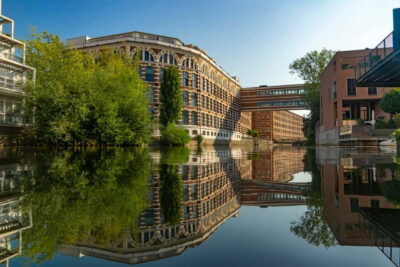
- Leipzig: City History Canal Sightseeing Tour on a Motorboat
★ 4.7 · 6,232 reviews - Berlin: Natural History Museum Entrance Ticket
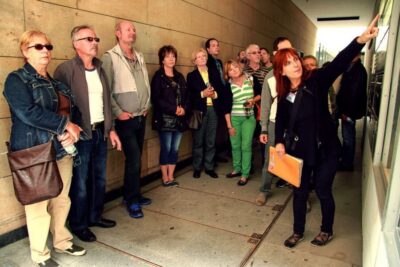
★ 4.6 · 3,382 reviews - Leipzig: 1.5-Hour Historical Walking Tour in German
★ 4.7 · 2,217 reviews
The cathedral and Barlach’s Floating
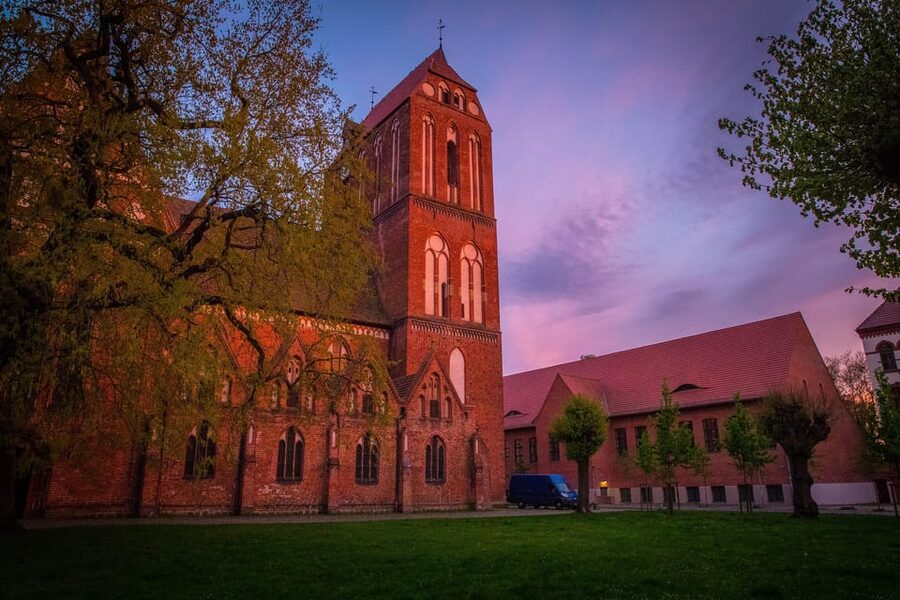
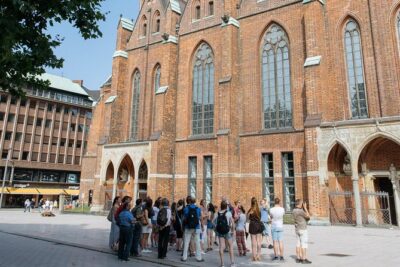
The cathedral is the emotional center of the walk. It is built in the brick Gothic style common across northern Germany, where local building traditions relied on shaped brick rather than the pale stone used farther south.
Inside, you see Ernst Barlach’s Floating, a stark human figure suspended in the cathedral. The work is not a decorative church ornament. Its spare form and serious expression create a strong contrast with the older Gothic setting, and the guide explains why Barlach matters to Güstrow.
This is the part of the tour that can hold your attention longest. One guide may spend a good deal of the 90 minutes explaining the cathedral and the sculpture, which is worthwhile if you enjoy art, religious spaces, or twentieth-century German culture. If your main goal is to cover every street in the center, that emphasis may feel a little heavy.
I would give the cathedral your full attention rather than treating it as a quick stop. The sculpture is the kind of work that looks different once you know its story, and the setting adds weight to the experience. You are not just checking off a church. You are seeing a modern artwork placed in an old sacred space.
The market square and Güstrow’s changing styles
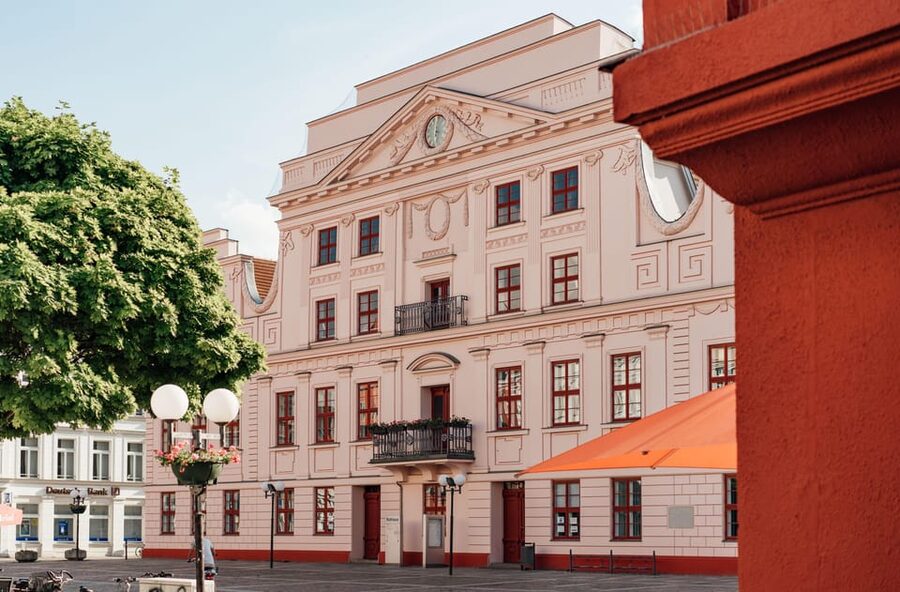
The market square gives you the clearest picture of Güstrow as a working town. The town hall, parish church, and surrounding town houses form a useful lesson in changing architectural taste.
Look for the contrast between the older brick Gothic elements and the later classicist façades. The buildings are not all from the same period, and that is precisely the point. A guided explanation helps you understand how a town changes over time without losing its basic street plan.
The square also gives you a chance to pause and take in the town’s scale. Güstrow is compact enough to explore on foot, but its buildings have enough variety to keep the walk from feeling repetitive. You might find that the guide’s stories about civic buildings and local figures are more useful here than a long list of dates.
The feedback on the tour suggests that the guides are a real strength. One guide was described as especially lively and clearly pleased to be doing the work. Another impressed the group with extensive knowledge and patiently answered questions. That matters on a walking tour: facts are easier to remember when the person telling them has a sense of place and a clear interest in the town.
Renaissance castle under restoration
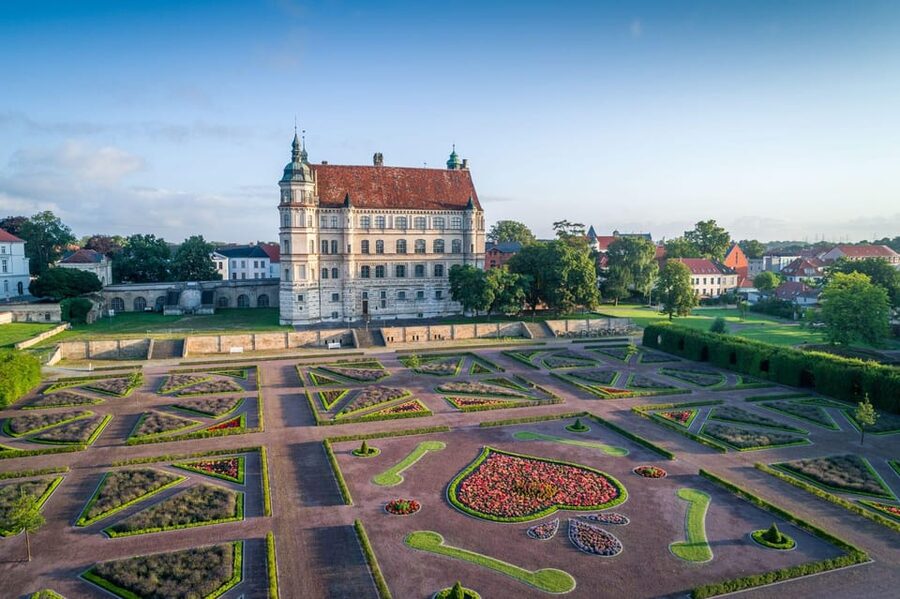
Güstrow’s Renaissance castle adds a grander note to the walk. It is described as the most important Renaissance castle in northern Europe, though it is currently under restoration.
That restoration is an important practical detail. You should expect stories and exterior sightseeing rather than a fully open, polished palace experience. The castle still matters because it explains Güstrow’s former status as a residential and administrative town, but the current condition may limit what you can see.
For me, the value here is context. The castle is not an isolated monument. It helps explain why Güstrow has such a strong collection of civic and religious buildings. Powerful residents and administrators needed a suitable center, and the town’s architecture reflects that role.
The guide’s account of the castle may appeal most to anyone interested in Renaissance architecture, regional politics, or the lives of the people connected with Güstrow. If you are mainly looking for open rooms, restored interiors, or a long palace visit, keep your expectations modest. This is one part of a city walk, not a separate castle tour.
A few more Germany half-days to weigh up
- Berlin: Reichstag, Dome and Government District Guided Tour
★ 4.7 · 18,288 reviews - Dresden: Semperoper Tickets and Guided Tour
★ 4.7 · 12,102 reviews - Berlin: Government District around the Reichstag Guided Tour
★ 4.7 · 8,447 reviews - Hamburg: Elbphilharmonie Plaza Guided Tour
★ 4.7 · 5,882 reviews
What the 90-minute route feels like
Ninety minutes is enough time to gain a clear sense of Güstrow without turning the outing into an all-day commitment. You begin at the tourist information office, follow the guide into the old town, stop for sightseeing and photos, and finish back at the starting point.
The route takes you through narrow, winding streets and historic squares. That gives the walk a pleasant rhythm: a close look at façades, a broader view across a square, then another architectural detail around the corner.
The trade-off is coverage. A few people who enjoyed the tour still wished for one or two additional stops, and one person wanted to see more of the city center. Another guide reportedly extended the tour beyond the planned time, which suggests that questions and discussion can stretch the walk.
I would treat the published 90 minutes as a firm planning guide, but allow a little extra time if you want to ask questions or visit the museum afterward. The walk is not designed to rush through every notable building. It gives selected highlights and the stories that connect them.
The guides are the main value
At $10 per person, the ticket is inexpensive for a live, guided introduction to a town with several architectural periods and a major art landmark. The best part of the value is not simply the number of stops. It is the explanation that turns separate buildings into a connected story.
The guides are praised for being friendly, committed, and able to explain a lot without making the walk dull. One particularly personal tour took place with a very small group, and the guide’s enthusiasm made the experience feel more like a conversation than a formal lecture.
That said, the quality of any guided walk depends partly on the balance between detail and movement. Here, you may get a generous amount of information about the cathedral. If you prefer a broad overview with many short stops, say so early and ask whether the guide can adjust the emphasis.
The tour is conducted in German. That is a key point when deciding. If you understand German, you can make good use of the guide’s local detail and ask questions along the way. If you do not, the architecture and sculpture are still visible, but the main benefit of the booking, the explanation, will be limited.
The free city museum adds useful value
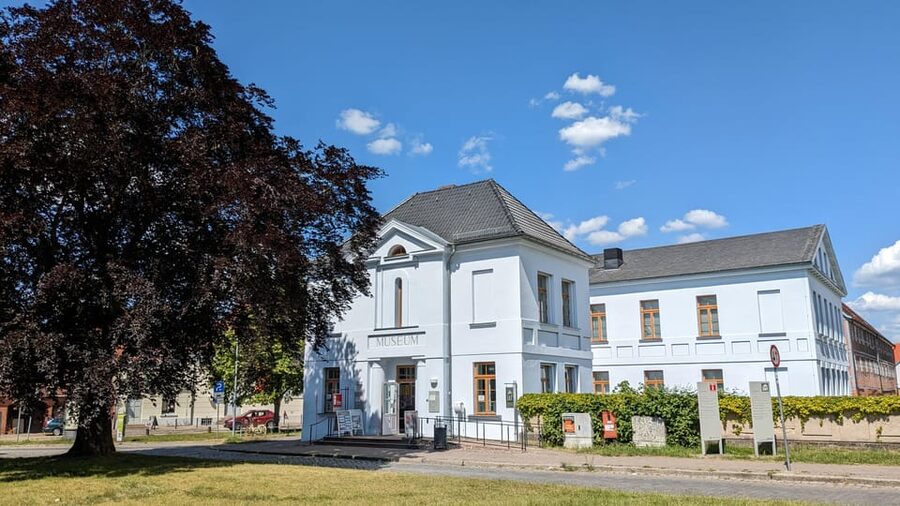
Your ticket includes free admission to the city museum before or after the walk. The available details do not specify the museum’s galleries or opening hours, so you should check those locally rather than build a tight schedule around it.
Still, the inclusion improves the value of the $10 ticket. The museum can give you a place to continue learning about Güstrow after the guide has shown you the streets and major buildings. Visiting before the tour may help you recognize names and themes during the walk. Going afterward lets you follow up on places that caught your interest.
I would favor visiting the museum after the tour if time allows. The guide gives you a framework first, and the museum can then add detail. If your schedule is short, the walking tour itself remains the core experience.
Who should book this tour?
This walk suits you if you like towns that reward attention rather than speed. It is a good choice for people interested in architecture, German art, regional history, and the way political and religious life shape an urban center.
It also works well for a first visit to Güstrow. You get your bearings quickly, learn which buildings deserve a closer look, and leave with enough context to explore on your own. Families and older visitors may appreciate the manageable 90-minute length, while the stated wheelchair accessibility makes the tour available to more people.
You may want to skip it if you need an English-language guide, want extensive access inside the Renaissance castle, or prefer a fast route with many short photo stops. You should also be ready for a fair amount of explanation at the cathedral.
The rating of 4.6 from 12 ratings points to a consistently positive experience, but the individual scores also show the main limitation clearly: the tour’s depth can come at the expense of breadth. That is not a flaw for everyone. It simply means you should choose it for interpretation, not for seeing every corner of Güstrow.
Practical details that affect your day
Meet at Güstrow Information, Franz-Parr-Platz 10, 18273 Güstrow. The walk begins and ends there, which makes the meeting point easy to use as your planning anchor.
The duration is 1.5 hours, and starting times depend on availability. The live guide speaks German. The tour is wheelchair accessible, although the supplied information does not give details about the exact street surfaces or any route-specific access points.
The $10 price is per person. Entrance fees are not included, apart from the free city museum visit provided with the tour. If you want to enter other attractions separately, plan to pay those costs on the day.
You can cancel up to 24 hours in advance for a full refund, and you can reserve now while paying later. Those terms are useful if your northern Germany plans are still shifting.
Should you book the Güstrow city tour?
Book it if you want a well-explained introduction to Güstrow, especially if German is comfortable for you. The cathedral and Barlach’s Floating alone give the walk a clear purpose, while the market square, old houses, and Renaissance castle add enough variety for a satisfying 90 minutes.
I would book it early in your visit, then use the free museum admission and your own walk to follow up. Just remember that the castle is under restoration and that the guide may spend substantial time at the cathedral.
For $10, this is an easy recommendation for architecture and art lovers. If you want maximum street coverage or an English-language tour, it is less certain. In that case, use the walk only if the German guiding and cathedral focus match what you want from Güstrow.
FAQ
Where does the Güstrow city tour begin?
The meeting point is Güstrow Information, Franz-Parr-Platz 10, 18273 Güstrow.
How long does the tour last?
The guided walk lasts 1.5 hours, or 90 minutes.
What language is the tour offered in?
The live tour guide speaks German.
What is the price?
The tour costs $10 per person.
Is the city museum included?
Yes. Free admission to the city museum is included and can be used before or after the tour.
Is the Renaissance castle included?
The tour includes sightseeing and stories about Güstrow’s Renaissance castle. The castle is currently under restoration, and entrance fees are not included.
Will I see Ernst Barlach’s Floating?
Yes. The tour visits the brick Gothic cathedral where Ernst Barlach’s Floating is located.
Is the tour wheelchair accessible?
Yes. The activity is listed as wheelchair accessible.
Where does the tour finish?
The walk returns to Güstrow Information, the same place where it begins.
Can I cancel for a refund?
Yes. You can cancel up to 24 hours in advance for a full refund.
Just added around Germany
- Konstanz Scavenger Hunt and Sights Self-Guided Tour★ 4.5 · 14 reviews
- e-Scavenger hunt Koblenz: Explore the city at your own pace★ 4.0 · 20 reviews
- Private city tour in Constance★ 4.0 · 5 reviews
- Koblenz Guided tour of the Ehrenbreitstein Fortress★ 4.5 · 7 reviews
- Koblenz – Old Town with the Ehrenbreitstein Fortress★ 4.0 · 7 reviews
- Koblenz – Old Town including the Deutsches Eck★ 4.5 · 16 reviews
- Kiel – Private Historic Walking Tour★ 5.0 · 4 reviews
- Lubeck Private Walking Tour With A Professional Guide★ 4.5 · 10 reviews
Historical Tours, compared.
City History Canal Sightseeing Tour on a Motorboat
Read our review →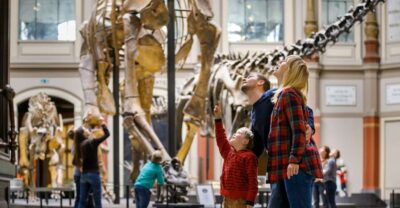

Browse the lists this tour appears in