
Review · FRANKFURT TOURS
Frankfurt: Museum of Communication Exhibitions
The most interesting part of Frankfurt’s Museum of Communication is its huge sweep. You move from cuneiform tablets and early telegraphs to telephones, television, fax machines, and data glasses, seeing how each new tool changed daily life. The displays are built for looking and interacting, not just reading labels.
I like the 2,500-square-meter permanent exhibition, which gives you plenty of room to follow the story at your own speed. I also like the Main River terrace, a useful place to sit with coffee after a busy museum visit. The main drawback is noise: the lobby can get very loud, especially when school-age children are visiting, so choose a weekday if you want a quieter look.
Key points to know before you go
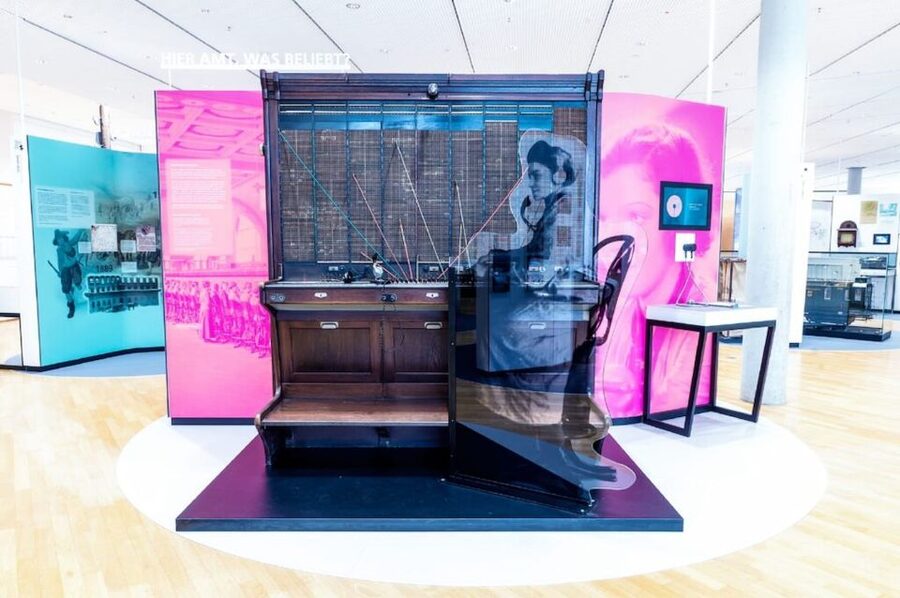
- From cuneiform to data glasses: Follow communication across centuries, with old telegraphs, telephones, radios, fax machines, and television sets.
- Four ideas organize the permanent exhibit: Acceleration, networks, control, and participation help connect the objects to larger changes in society.
- KLIMA_X turns communication toward climate action: The temporary exhibit asks you to consider practical ways to respond to the climate crisis.
- The terrace faces the Main River: Plan a coffee break after the galleries, but bring a bank card that works at the café, since Visa and Mastercard were not accepted during one recent visit.
- The visit is self-guided: Your ticket covers entry only. No guide, food, or drinks are included.
- A $10 ticket can fill much of a day: This is a good value if you enjoy museums that mix historic objects with interactive displays.
Frankfurt’s Museum of Communication tells a story bigger than gadgets
Many technology museums feel like warehouses of old machines. This one tries to explain what those machines changed. The central question is simple: how do people send messages, share information, organize groups, and influence one another?
That makes the museum useful even if you are not fascinated by telephones or television sets. A telegraph is not only an old device. It marks a moment when messages began moving much faster than people. A telephone is not only a household object. It changes the idea of distance. A fax machine, now nearly forgotten in many homes, shows another step in the long effort to send words and images across borders.
The permanent exhibition, titled Mediengeschichte|n neu erzählt!, covers 2,500 square meters. Its four main themes are acceleration, networks, control, and participation. These themes give the galleries a clear thread, so you are not simply walking past unrelated equipment.
I like that approach because communication is rarely just about a machine. It is also about who can use it, who controls it, how quickly information moves, and who gets left out. You can look at the objects as design pieces, but the displays also encourage you to think about their effects on ordinary life.
More museums and galleries in Frankfurt:
- Frankfurt: Struwwelpeter Museum Entry Ticket w/Audio Guide
★ 4.5 · 22 reviews - Berlin: Jewish Museum Berlin Entrance Ticket
★ 4.5 · 8,393 reviews - Berlin: DDR Museum Tickets
★ 4.3 · 3,443 reviews
Start with the permanent exhibition and take your time
The main exhibition is the heart of your visit. Give it most of your time, especially if you want to read the explanations and try the interactive parts rather than make a quick circuit.
You will encounter a long sequence of communication tools, beginning with very early methods and moving toward current technology. The story reaches from cuneiform tablets to data glasses, a span that helps place modern devices in context. The old objects are appealing on their own, but the museum is at its best when it links them to human behavior.
Expect to see historic telegraphs, phones, fax machines, radios, and television sets. Some will be familiar from childhood or from older family homes. Others may look surprisingly strange, especially when you realize that a device once considered advanced is now obsolete.
The interactive displays matter here. They give you a chance to do more than admire equipment behind glass. The museum uses curious experiences and unusual personal stories to make media history easier to grasp. I would plan on stopping often, since the exhibition rewards attention rather than speed.
The museum also has a playful visual side. One recent visitor especially enjoyed the atmosphere, bookshelves, old trunks, and whimsical sheep connected with telephones. Those details suggest that the presentation is not all wires, dates, and technical terms. You might find small visual touches that make the galleries feel less formal and more approachable for children and adults together.
What the four themes add to the visit
The four organizing ideas are worth keeping in mind as you walk through the museum. They help you connect one object to the next.
Acceleration is easy to spot. Communication moved from messages carried by hand or horse to signals sent over wires and then to nearly instant electronic contact. The museum lets you see how each jump shortened the time between sending and receiving.
Networks explain why a device becomes more powerful when more people use it. One telephone is useful. A connected telephone system changes how a city, company, or family stays in touch. The same principle applies to radio, television, and digital communication.
Control raises harder questions. Information can be stored, directed, restricted, or used to influence people. The museum’s objects show that communication technology has never been neutral in practice. The same tool can connect people or give power to the person who manages the system.
Participation brings the story closer to the present. Modern communication allows more people to create and share information, but it also asks you to consider responsibility, access, and the quality of what spreads. These ideas make the museum more useful than a simple display of old electronics.
You do not need technical training to follow any of this. The story is aimed at a general audience, and the combination of objects, explanations, and hands-on elements gives you several ways to understand it.
Old phones, radios, and televisions make the past feel close
The collection of older equipment is one of the most approachable parts of the museum. Telephones are especially effective because almost everyone recognizes the basic purpose, even when the shape and operation look unfamiliar.
You can see how bulky early equipment gave way to smaller, more familiar forms. Fax machines and radios show how quickly a once-important tool can fade from everyday use. Television sets offer another clear example of changing design and changing habits. A set that once occupied a major place in a room eventually became thinner, more portable, and part of a much larger media system.
The value is not just nostalgia. These objects help you measure technological change in human terms. You can ask how people waited for news, how they shared family updates, and how their sense of distance changed as communication became faster.
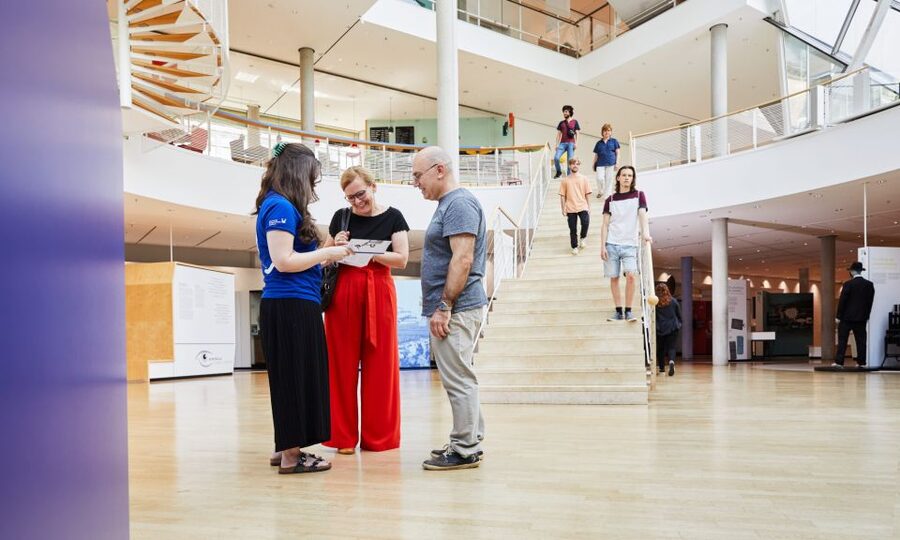
If you are visiting with children, the old machines may provide a useful contrast with the devices they use now. The interactive elements should help keep the visit from becoming a long parade of unfamiliar equipment. Still, noise can affect the experience. The lobby has been extremely loud at times, and that sound can make it harder to concentrate before you even reach the galleries.
For a calmer visit, a weekday is the sensible choice. The museum may be more comfortable then for anyone who prefers to read carefully or spend time with the interactive displays.
A few more Frankfurt half-days to weigh up
- Frankfurt: River Main Sightseeing Cruise with Commentary
★ 4.3 · 5,127 reviews - Frankfurt: Hop-On, Hop-Off Grand or Express Bus Ticket
★ 3.9 · 2,088 reviews - Frankfurt: 1-Hour Panorama Boat Cruise on the river Main
★ 4.4 · 1,822 reviews - From Frankfurt: Rhine Valley Day Trip
★ 4.4 · 1,317 reviews
KLIMA_X asks how communication can change behavior
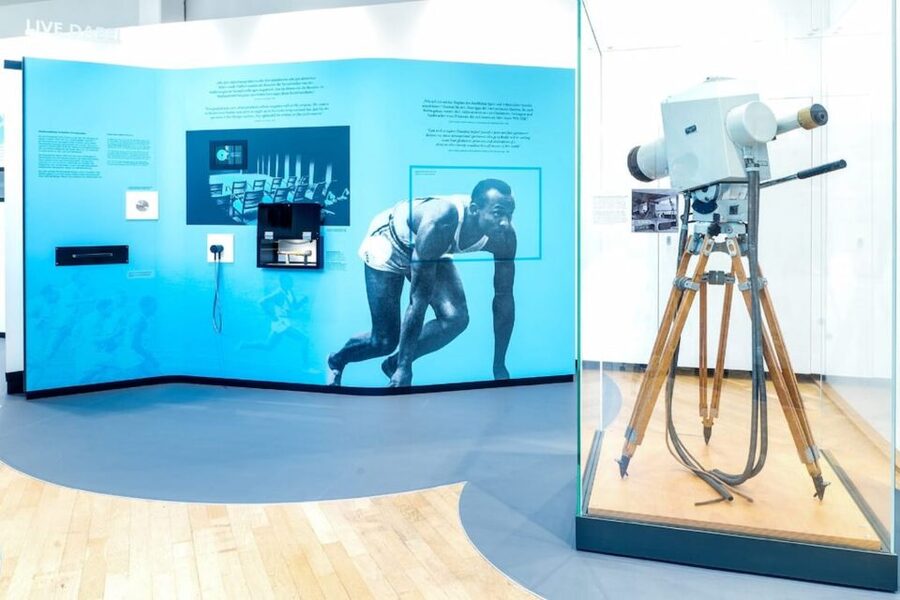
The temporary exhibition KLIMA_X shifts the subject from communication technology to climate action. It invites you to look at your own behavior and think about simple methods that may help address the climate crisis.
This section is useful because it does not treat climate change as a distant scientific topic only. It asks how information, public discussion, and personal decisions can help move people toward change. The focus is reflective as well as practical.
You should allow time for KLIMA_X if it is still on display during your visit. Temporary exhibits can change, so the exact arrangement and details may vary. Based on the information available, its central purpose is clear: to help you consider how individual actions connect with a larger environmental problem.
The exhibit also fits the museum’s wider subject. Climate action depends partly on how well ideas are communicated, how widely they spread, and how people respond to them. In that sense, KLIMA_X is not a random extra. It extends the museum’s interest in the power of messages and networks into a current issue.
Some visitors will find this section more thought-provoking than entertaining. That is worth knowing before you go. If you want only old machines and technical displays, KLIMA_X may feel like a change of pace. If you like museums that connect objects to present-day choices, it adds purpose to the visit.
The Main River terrace is part of the experience
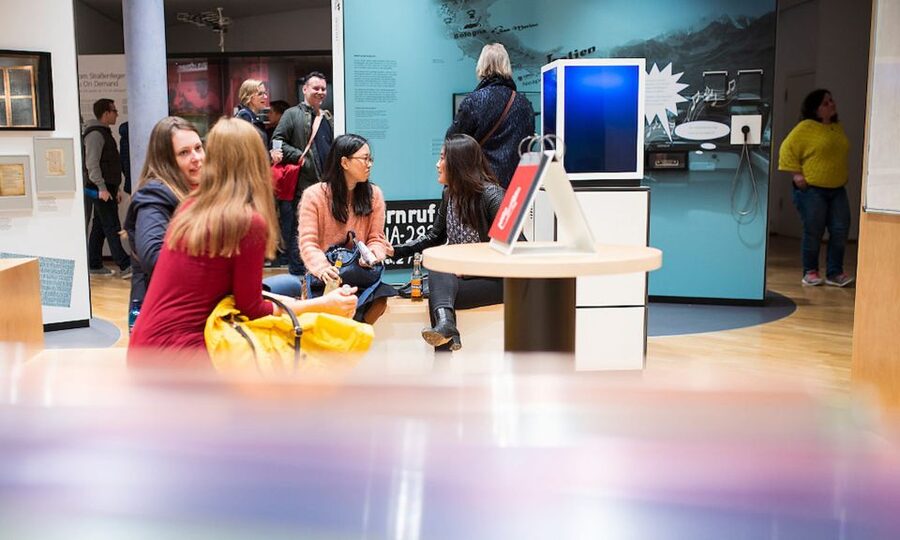
After several hours indoors, the café terrace is a welcome finish. It offers a view of the Main River and gives you a chance to sit with a coffee rather than rush straight to your next stop.
Food and drinks are not included with admission. Plan to pay separately, and keep in mind that Visa and Mastercard were not accepted at the café during one recent visit. Bring another payment option if you want to count on a drink or snack afterward.
The terrace also helps break up the museum visit. You can explore the permanent galleries, pause outside, and then decide if you want to return for more. That is one reason the one-day validity is useful. You are not forced to treat the museum as a short, single-pass stop.
The river view is a modest feature, but it improves the rhythm of the day. Communication history can involve a lot of labels and machines. A quiet seat outdoors gives you room to sort through what you have seen.
How much time should you allow?
The ticket is valid for one day, and the museum can reasonably fill a full day for a careful visitor. You do not need to stay that long, but the size of the permanent exhibition makes a rushed hour less satisfying.
For a quick visit, focus on the major stages from early writing to modern digital tools, then see the most appealing interactive displays. For a fuller visit, read the explanations, examine the older equipment, spend time with KLIMA_X, and use the terrace as a break.
The best pace depends on your interests. Families may prefer shorter stretches in the galleries with pauses between them. Adults interested in media, design, or social change may want several hours for the permanent exhibition alone.
The museum does not include a tour guide. That gives you freedom, but it also means the experience depends on your own pace and attention. You can move quickly through familiar material and linger over subjects that catch you.
Is the $10 admission good value?
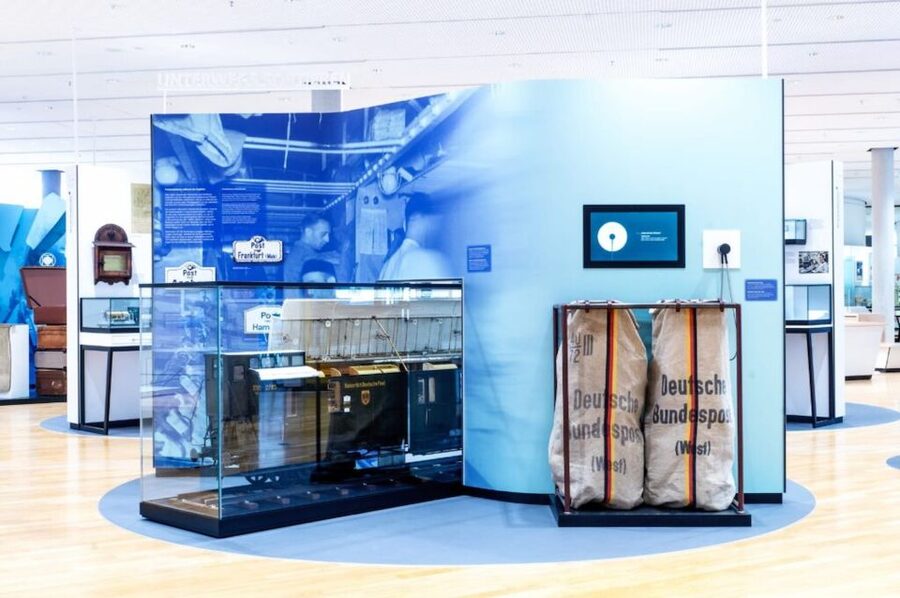
At $10 per person, I consider this a strong-value museum visit, especially if you use the full day. You are paying for entry to a large permanent exhibition, interactive displays, and a temporary exhibit, with the option of spending time on the terrace afterward.
The value is highest for people who enjoy museums that explain connections rather than simply display objects. You get more from the ticket if you want to understand why communication tools mattered, not just see what they looked like.
It may be less appealing if you want a small, quiet collection that can be finished in 30 minutes. Noise is a real consideration, and the museum can feel less peaceful when the lobby is crowded with loud children. Food and drinks cost extra, and the café payment issue is worth planning around.
The ticket also offers practical flexibility. You can reserve now and pay later, and cancellation is available up to 24 hours before the visit for a full refund. The ticket allows you to skip the ticket line, and the museum is wheelchair accessible. These details make the low admission price easier to use as part of a busy Frankfurt day.
Who will enjoy this museum most?
I would recommend it to families, technology fans, students, and anyone curious about how ordinary life changed through communication. The mix of old devices and interactive displays gives different age groups something to notice.
It also suits visitors who want an indoor activity with a clear subject but do not want a specialist museum. You can enjoy the telegraphs, phones, radios, and television sets at a visual level, then read further if the social questions interest you.
The museum is a good choice for a rainy day or for a slower day in Frankfurt. It can also work well for a family group because the subject is familiar to everyone, even when the objects are not.
I would be more cautious if you need a very quiet setting. The noise issue can affect how much you absorb, particularly in the lobby and on busy days. Choose a weekday if possible, and give yourself enough time so you do not feel pressured.
Practical details for planning your visit
Head directly to the Museum of Communication Frankfurt on Schaumainkai. The ticket is for museum entry, and no guide is included, so you can begin exploring at your own pace.
The museum is open from 10:00 AM to 6:00 PM on public holidays. For other opening times, check availability when choosing your visit date, since the activity is valid for one day rather than tied to a fixed tour schedule.
Wheelchair access is available. Food and drinks are separate from admission, and the café terrace is best treated as an optional break rather than part of the ticket.
If you want a quieter visit, avoid the busiest periods when possible. A weekday is the clearest practical tip. Also bring a payment option other than Visa or Mastercard for the café, since card acceptance there has been an issue.
Should you book the Museum of Communication?
Book it if you like hands-on museums, old technology, and exhibits that connect inventions with social change. The permanent exhibition gives you a broad route from early writing to digital tools, while KLIMA_X brings the subject into the present.
The $10 price is fair, and the one-day validity lets you set your own pace. I would choose a weekday, plan a few hours, and bring an alternative payment method for the café.
Skip it only if you want a silent museum or have no interest in how communication affects daily life. For most people, especially families and curious adults, it offers a useful and entertaining look at how humans have learned to send messages farther and faster.
FAQ
Where is the Museum of Communication Frankfurt?
The museum is located on Schaumainkai in Frankfurt, Hessen, Germany.
How much does admission cost?
The listed admission price is $10 per person.
How long is the ticket valid?
The ticket is valid for one day.
Is a tour guide included?
No. The ticket includes museum entry, but no tour guide is included.
What can I see in the permanent exhibition?
You can see the development of communication from cuneiform tablets to data glasses, along with historic telegraphs, phones, fax machines, radios, and television sets.
What is KLIMA_X?
KLIMA_X is a temporary exhibition about climate change. It encourages you to consider simple actions that may help improve the current climate crisis.
Are food and drinks included?
No. Food and drinks are not included in the museum ticket.
Is the museum wheelchair accessible?
Yes. The museum is wheelchair accessible.
What are the public holiday opening hours?
On public holidays, the museum is open from 10:00 AM to 6:00 PM.
Can I cancel my booking?
Yes. You can cancel up to 24 hours in advance for a full refund. You can also reserve now and pay later, keeping your plans flexible.
Just added around Frankfurt
- Frankfurter Kunstverein: Admission ticket★ 3.7 · 54 reviews
- Welcome to Frankfurt: Private Tour with a Local★ 4.7 · 81 reviews
- Frankfurt: Verbrecherjagd und gefährlich leckeres Schnitzel★ 4.4 · 22 reviews
- Frankfurt: Private or Shared Walking Tour★ 4.8 · 156 reviews
- Frankfurt: Walking Tour – discover the city with VR glasses★ 4.2 · 12 reviews
- Frankfurt: Struwwelpeter Museum Entry Ticket w/Audio Guide★ 4.5 · 22 reviews
- Frankfurt: “The Sandman” Nightmarish Walking Tour★ 4.4 · 45 reviews
- Frankfurt: Unique E-Bikes Tours★ 4.8 · 22 reviews
Frankfurt Tours, compared.
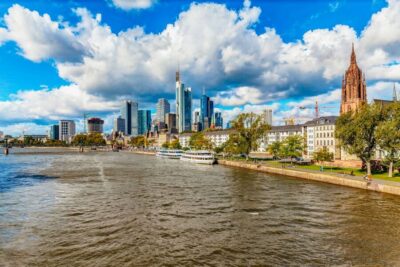
River Main Sightseeing Cruise with Commentary
Read our review →
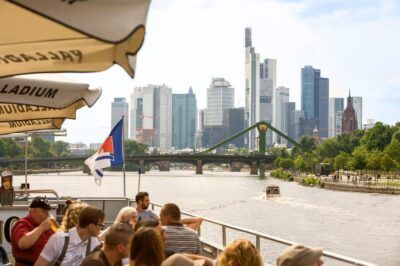
1-Hour Panorama Boat Cruise on the river Main
Read our review →
New Old Town and Highlights German-Language Tour
Read our review →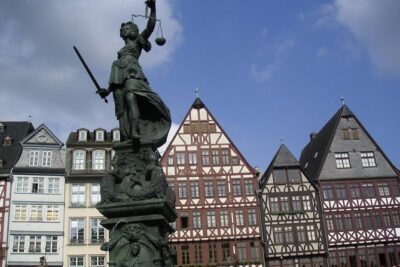
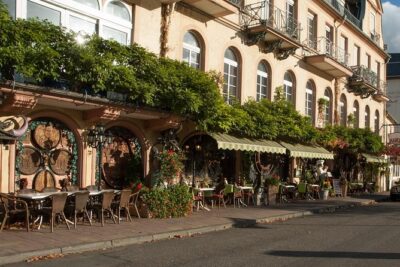
Rhine Valley Trip from Frankfurt including Rhine River Cruise
Read our review →
Browse the lists this tour appears in